The 9 Eco-Friendly Laundry Hacks That Actually Work

Looking to stop relying on toxic chemicals to clean your clothes?
These nine essential eco-friendly laundry hacks will not only help reduce your environmental impact but also save you money and clean your clothes better!
From natural fabric softeners like vinegar to energy-saving techniques, these simple swaps have upped our laundry game with ingredients we already had at home.
Here we go!
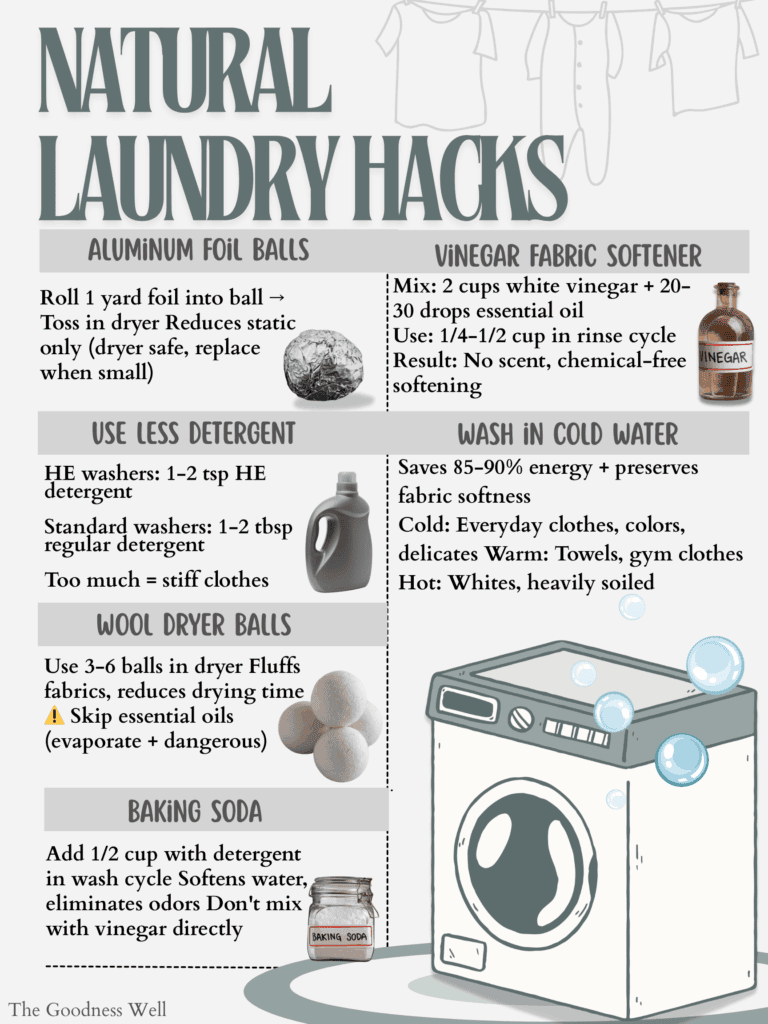
Print this infographic and hang in your laundry room! ⬇️
1. Vinegar Fabric Softener
Conventional fabric softeners are the worst!
They not only contain phthalates and other chemicals linked to hormone disruption but are also notorious for causing buildup in washing machines.
Trust me, vinegar is an all natural fabric softener that actually works- it’s all you need.
What You Need:
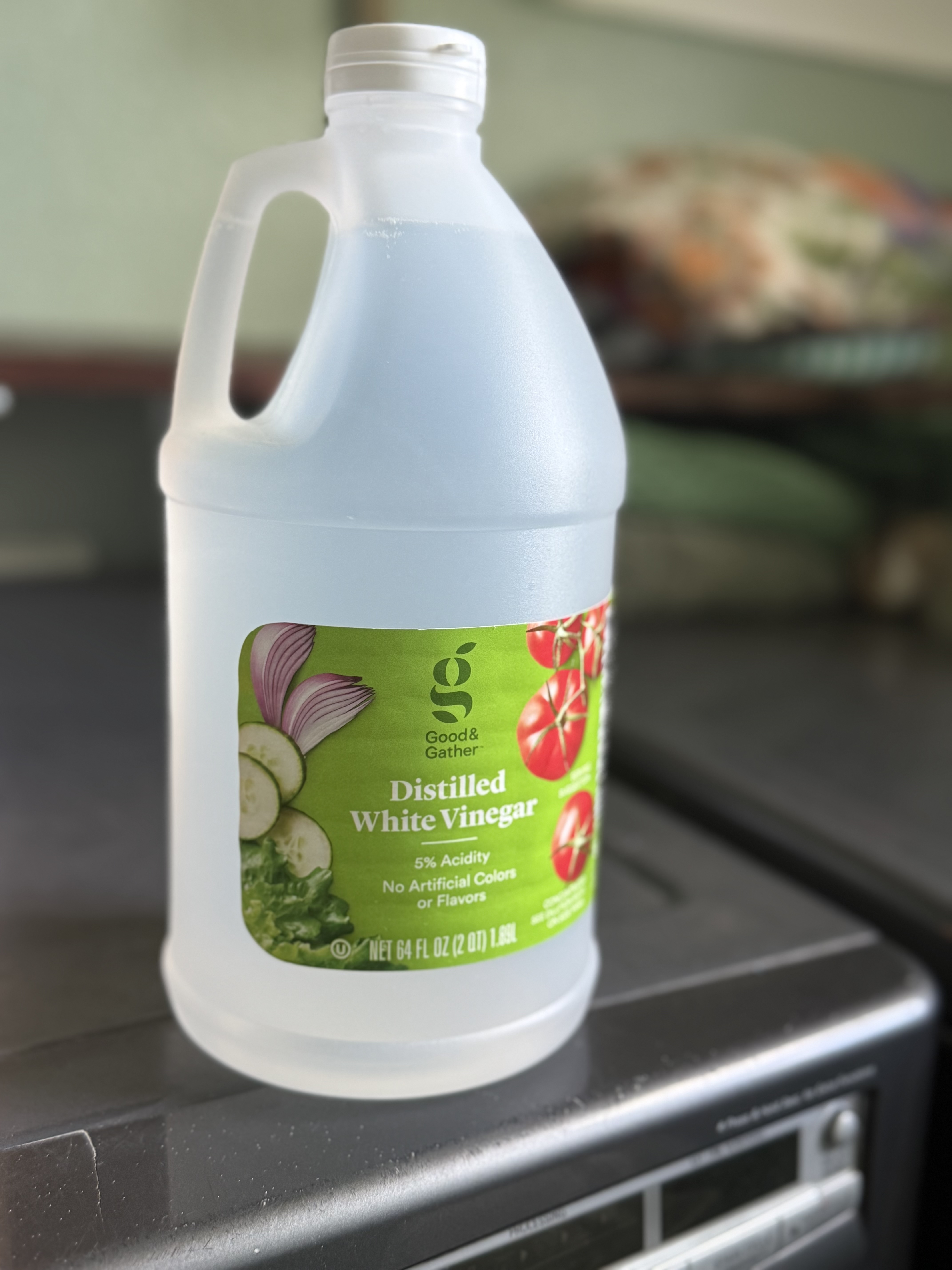
- 2 cups distilled white vinegar
- 20-30 drops essential oil (optional)
- Empty container or bottle with lid
How to Use:
- Mix vinegar and essential oil in container
- Shake before each use
- Add 1/4 to 1/2 cup to rinse cycle dispenser of washing machine
2. Aluminum Foil Balls
Replace single-use dryer sheets with this zero-waste static elimination method that you can reuse for months before recycling.
What You Need:
- About 1 yard of aluminum foil (avoid thin, cheap brands)
How to Use:
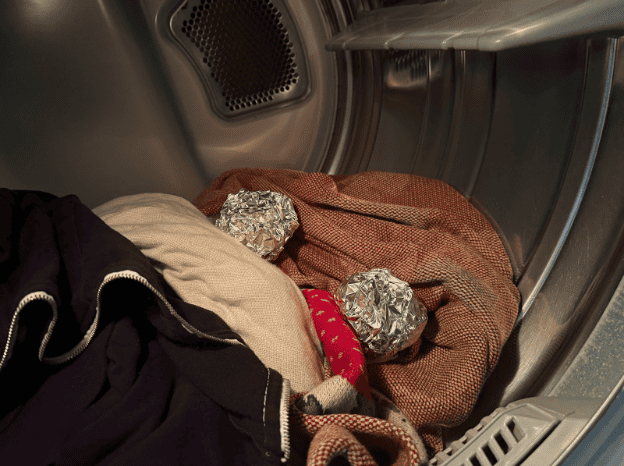
- Roll foil into a ball, avoiding jagged edges
- Don’t compact it very hard!
- Toss in dryer with wet clothes
- Dryer only – never use in washer
Important Notes:
- Only helps with static (doesn’t soften)
- Replace when ball becomes very small and compact
- Recycle when done
3. Use Less Detergent
Limiting detergent use will not only save you money but also reduce packaging waste and minimize the chemicals in our waterways.
Why It Matters: Too much detergent makes clothes more stiff and less soft
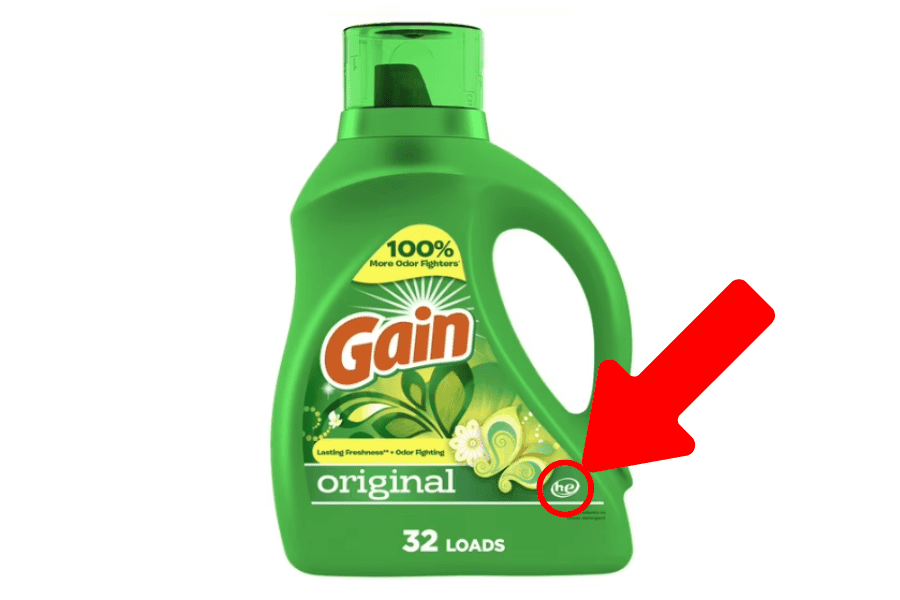
High Efficiency (HE) Washers:
- Use HE detergent: 1-2 teaspoons per load
- Never use regular detergent (creates too many suds)
Standard Washers:
- Use regular detergent: 1-2 tablespoons per load
- 1 tablespoon for 8-pound loads
- 2 tablespoons max for 12+ pound loads
- HE detergent: 1–2 tbsp per average load
4. Wash in Colder Water
Washing in hot water not only degrades your clothes faster and causes colors to fade but also uses way more energy than washing in cold water.
Aside from heavily soiled or contaminated clothing, cold water will wash your clothes just fine!
85-90% of the energy used by a washing machine goes to heating the water.
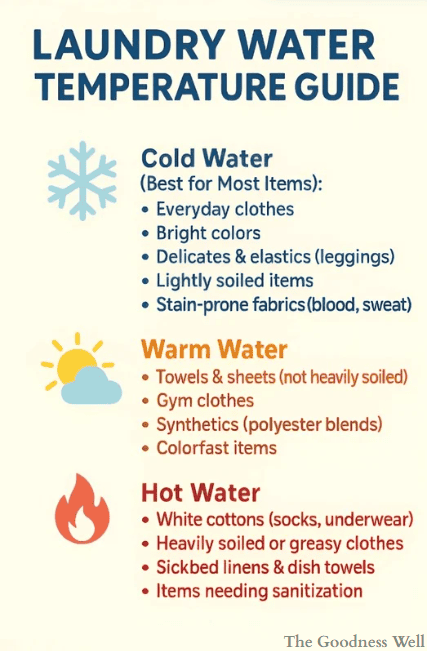
Temperature Guide:
❄️ Cold Water (Best for Most Items):
- Everyday clothes
- Bright colors
- Delicates & elastics (leggings)
- Lightly soiled items
- Stain-prone fabrics (blood, sweat)
🌤️ Warm Water:
- Towels & sheets (not heavily soiled)
- Gym clothes
- Synthetics (polyester blends)
- Colorfast items
🔥 Hot Water:
- White cottons (socks, underwear)
- Heavily soiled or greasy clothes
- Sickbed linens & dish towels
- Items needing sanitization
Benefits:
- Preserves fabric elasticity and softness
- Reduces energy use by 85-90%
- Lowers electric bills
- Keeps clothes looking newer longer
5. Wool Dryer Balls
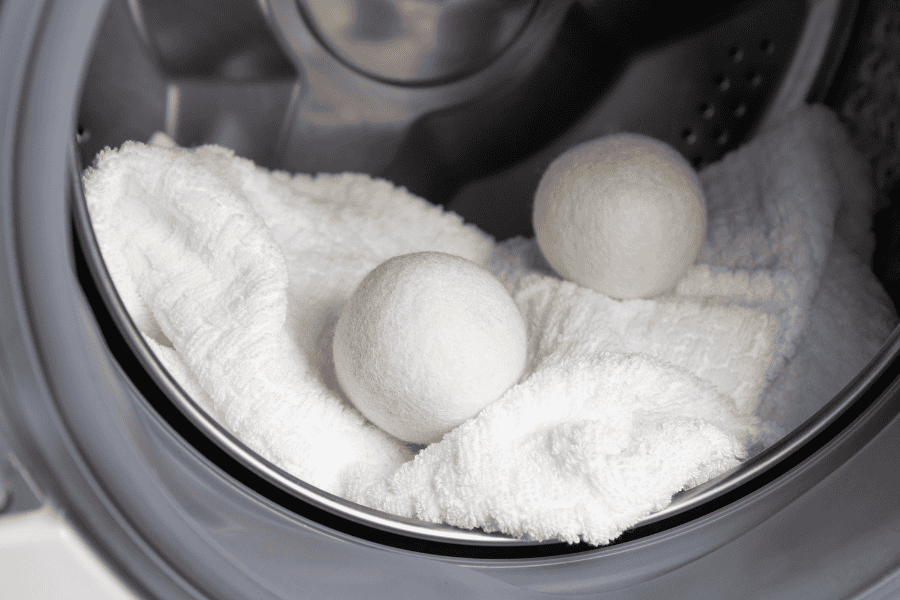
These reusable, chemical-free alternatives to dryer sheets naturally fluff clothes, reduce drying time, and eliminate static without any synthetic fragrances.
Not bad, huh?
How to Use:
- Add 3-6 balls to dryer with wet clothes
- Reusable for years
Benefits:
- Physically agitate fabrics for fluffiness
- Reduce drying time and static
- Chemical-free option
6. Baking Soda
We already know about baking sodas many uses in the kitchen but it is also great for your laundry!
It helps boost your detergent’s cleaning power and eliminates odors naturally!
How to Use:
- Add 1/2 cup directly with clothes and detergent
- Use extra for towels and sheets
Benefits:
- Natural fabric softener
- Eliminates odors
- Softens hard water for better cleaning
- Makes clothes feel cleaner and fresher
Don’t mix directly with vinegar – they cancel each other out. Use baking soda in wash cycle and vinegar in rinse cycle instead.
7. Proper Washing Machine Loading
Don’t overstuff that washer!
It doesn’t allow clothes to clean properly and strains the machine, potentially leading to a shorter lifespan (of the washer, of course).
Optimizing your load sizes reduces water and energy waste while ensuring your clothes get properly clean without needing rewashing.
How Much to Fill:
- Front-loaders: ¾ full (leave a hand’s width at top)
- Top-loaders with agitator: ½ to ⅔ full
- Top-loaders without agitator: ¾ full
Load Size Guide:
- Small: ¼ full (clothes cover bottom)
- Medium: ½ full
- Large: ¾ full (maximum)
Why It Matters:
- Too little: Wastes water and detergent
- Too much: Clothes can’t move, poor cleaning
- Just right: Clothes rub together and rinse clean
🔑 Key Rule: Keep clothes loose, never packed tight
Adjust detergent amount based on load size – small loads need less, large loads need the full amount
8. Microfiber Filter
This is a bigger problem than many of us realize.
Synthetic clothes (polyester, nylon, acrylic) shed tiny plastic fibers during washing that end up in waterways and oceans, a result of our overconsumption and consumerism culture.
A solution to this is microfiber filters, with the most popular choice being special washing bags that prevent microfibers from being washed into the water.
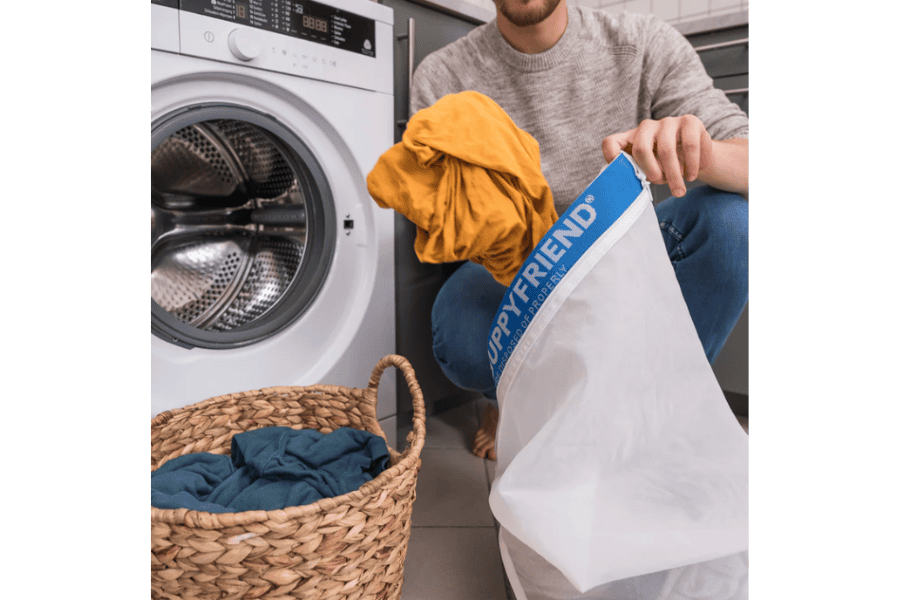
- Special mesh bag that catches microfibers during wash cycle
- Put synthetic clothes inside bag before washing
- Remove collected fibers and throw in trash (not down drain)
- Reusable for hundreds of washes
Other Filter Options:
- External filters that attach to washing machine drain hose
- Built-in washing machine filters (some newer models)
- Require periodic cleaning and fiber disposal
When to Use:
- Workout clothes and activewear
- Fleece jackets and blankets
- Any clothing made from synthetic materials
- New synthetic items (shed more in first few washes)
Benefits:
- Reduces ocean plastic pollution
- Protects marine life
- Simple way to make laundry more eco-friendly
Cost: One-time investment that lasts for years
This is especially important if you have a lot of athletic wear or synthetic clothing in your wardrobe!
9. Eco-Friendly Laundry Boosters
These natural mineral-based alternatives to chemical brighteners and softeners work with hard water and boost cleaning power without environmental harm.
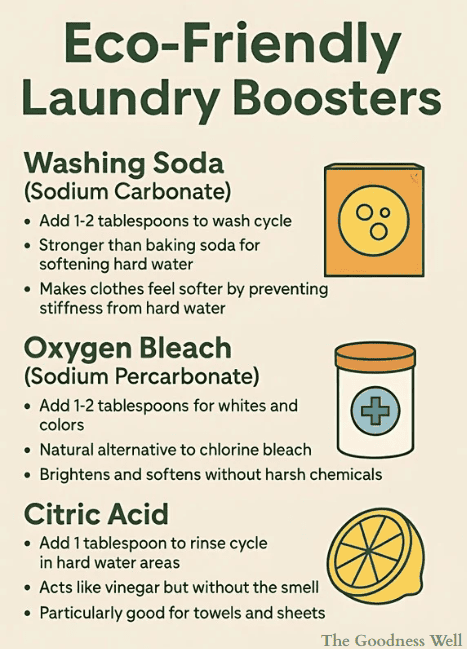
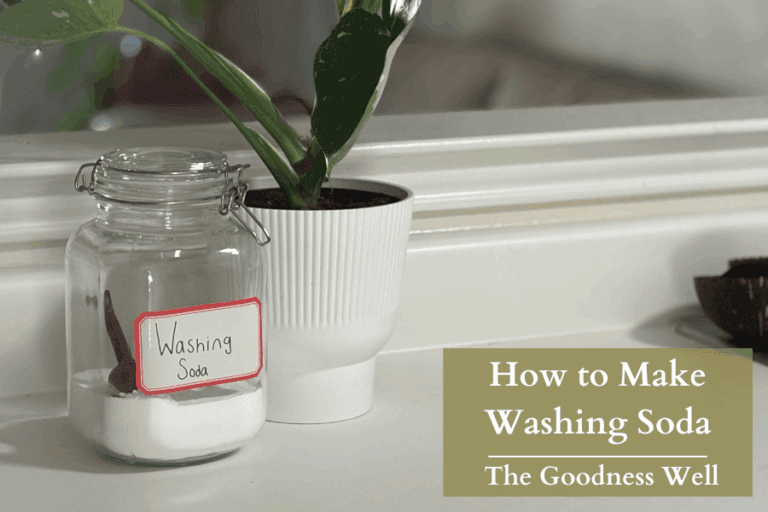
Washing Soda (Sodium Carbonate):
- Add 1-2 tablespoons to wash cycle
- Stronger than baking soda for softening hard water
- Makes clothes feel softer by preventing stiffness from hard water
Oxygen Bleach (Sodium Percarbonate):
- Add 1-2 tablespoons for whites and colors
- Natural alternative to chlorine bleach
- Brightens and softens without harsh chemicals
Citric Acid:
- Add 1 tablespoon to rinse cycle in hard water areas
- Acts like vinegar but without the smell
- Particularly good for towels and sheets
When to Use:
- Hard water areas (washing soda and citric acid work best)
- Clothes that feel stiff or look dingy
- As a monthly “reset” wash for buildup removal
- With homemade or eco-friendly detergents that need a boost