
How to Do a Digital Detox + My Experience

If you’ve ever found yourself checking your phone for no reason—scrolling through reels, opening your email “just to check,” or refreshing the news, sports scores, Amazon deals, Reddit threads, YouTube recommendations, text messages, or your banking app—even when you’re not looking for anything specific—you’re not alone.
I recently went through a digital detox myself, and it completely reshaped my relationship with technology.
Below, I’ll share my personal experience, what I learned, and a step-by-step process for doing your own digital detox.
I’ll also give you guidelines for after your detox that will help you phone back into your life in a way that maximizes its value—without letting all the digital clutter and distractions sneak back in.
Why I Knew I Needed a Digital Detox
I’ve never been a huge social media person and am also not a fan of any news unless it’s sports related.
My main downfall was the habitual checking—email, messages, weather, stocks, sports news, Marketplace listings, you name it.
It wasn’t that I was glued to nonsense all day (well, I guess I was); it was that I couldn’t stop checking things.
Even though my screen time wasn’t extreme (some days reaching 7–8 hours, but averaging around 3–4), I noticed it was taking a mental, spiritual, and relational toll
Recent data has shown that the average person taps or swipes their phone over 2,600 times a day—and for heavy users, that number can reach 5,400 times daily. Even short, “harmless” checks throughout the day can add up to nearly 4 hours of screen time without us realizing it.
Another bad habit I had was my to-do list on my phone.
On my days off, I’d open it “just to check,” and before I knew it, my rest day had turned into another workday.
I’d check off one task, and somehow new ones would appear. By the end of the day, I hadn’t truly relaxed once.
I’d even justify being on my phone by telling myself, “At least I’m being productive,” while answering messages or emails—but it was the same cycle of busyness.
But I realized it didn’t matter—whether I was scrolling reels or replying to emails, the result was the same: distraction from the people in front of me and disconnection from the moment I was living in.
Our devices are designed that way—built to keep us hooked, scrolling, shopping, or giving our attention to screens so companies can advertise to us.

I didn’t want to play into this system anymore.
So I decided to take action.
Now don’t get me wrong — it’s not like I’ve gone completely off the grid or ditched all my technology to live in a cabin somewhere.
My phone is still a useful tool in my life; I’ve just learned to set boundaries so it stays a tool, not a distraction, crutch, or source of constant noise.
The Psychology of Tech Addiction

Once I started paying attention, I realized that my phone wasn’t just a tool—it was triggering a cycle that felt a lot like addiction.
💬 “I’ll just check one thing…”
But it was never just one thing.
One check led to another: a text, an email, the weather, maybe a sports score—and before I knew it, 20 minutes had disappeared.
It just felt automatic.
That’s because our phones are designed to work exactly like a slot machine.
Every time we scroll, refresh, or check a notification, our brain releases a tiny hit of dopamine, the same chemical that makes gambling so addictive.
In a 1970s psychology experiment, researchers found that pigeons who received rewards on an unpredictable schedule would peck a lever almost nonstop. This same principle is now used in app design—every “refresh” or notification is another pull of the lever.
When the reward is unpredictable—like finding a funny reel, a good deal, or a new message—it makes the urge to check even stronger.
I also noticed I was much more vulnerable to falling into this trap when I was tired, bored, or stressed.
My phone became a source of comfort, something to fill every quiet moment or give my mind a quick distraction.
But ironically, it was actually making me more anxious and restless.

Even when I wasn’t using my phone, I felt that subtle pull—like my brain was waiting for the next “hit.”
That’s when I realized that simply trying to “cut back” wasn’t going to work.
What I needed was a complete reset—a period of time to step away entirely and rewire my relationship with technology.
That’s when I decided to do a 30-day digital detox.
The 30-Day Digital Declutter
This method, inspired by the book Digital Minimalism, involves taking a 30-day break from optional technologies. That means:
- Removing all social media apps from your phone
- Eliminating unnecessary screen time (TV, gaming, etc.)
- Restricting phone use to essential communication and work tasks
The goal isn’t to “punish” yourself—it’s to create enough mental distance to see what you truly value and what’s been quietly draining your time and attention.
By stepping away, you’ll start to break free from the addictive pull of your phone and give your mind a chance to reset.

This space allows you to reconnect with the things you actually value more—things that leave you feeling actually fulfilled instead of overstimulated (many of us are so desensitized we don’t realize we’re constantly overstimulated)
You’ll also gain clarity on what you actually need your phone for versus what’s just been filling empty space.
And at the end I’ll share some practical tips on how to bring your phone back into your life in a way that maximizes its value—without letting all the digital clutter and distractions sneak back in.
Preparing for Your Digital Detox
Before starting, take some time to plan. Here’s what helped me:
1. Make a “Replacement List” 📝
Write down things you enjoy (or might enjoy) that don’t involve screens.
Here are some of the activities I rediscovered or started:
🧺 Everyday Joys
- Caring for our chickens
- Organizing around the house
- Visiting the library
🎶 Creative Outlets
- Playing piano
- Learning to sew
- Writing in a journal
🏀 Movement & Play
- Basketball, biking, tennis
- Taking nature or gratitude walks
- Playing board games or puzzles
💛 Connection & Presence
- Spending time with my wife and son
- Calling or visiting friends
- Having deeper, face-to-face conversations
The more time you fill with real life, the less pull your phone will have.
2. Set Clear Boundaries ✅
Here were my personal electronic rules:
- No social media
- No unnecessary texts
- Phone only for work
- No TV except 2–3 football games per week
- Put phone to bed at 8:30 PM
- Check messages only at 4 set times: morning, noon, and 3 PM, 7PM (this is when I put my phone to “bed”)
- Phone on Do Not Disturb (allowing only 4–5 important contacts)
- Email only on computer
- Use GPS only when needed
Keep your phone away from you. If it’s within reach, you’ll use it without even realizing it. For example, while at work, I keep mine in my backpack and check during allotted times
3. Optimizations and Rules 📃
Your detox rules don’t have to look exactly like mine.
What matters is setting boundaries that work for you and still support your goals.
- If you tend to binge-watch shows, make a rule not to stream alone—turn isolating activities into social ones instead.
- Keep your restrictions realistic and clear. If they’re too vague, you’ll find loopholes; if they’re too strict, you’ll burn out and quit.
- Have a plan for what to replace your tech time with during the detox, so you don’t slip into boredom or anxiety.
- If a piece of technology consistently gives you that “addictive pull,” it belongs on your detox list.
- Streaming services and TV should be mostly cut out, except for specific, intentional uses.
The clearer your rules are, the easier it will be to stick to them.
Instead of saying, “I’ll watch less TV,” try, “I’ll only watch one football game on Sundays.” Clarity creates freedom!
Here are some examples of how others approached their 30 day detox:
📱 Everyday Boundaries
- Limit social media to 30 minutes a day
- Turn off all notifications except calls from family or essential apps
- No phone until after breakfast
- Use your phone only in designated spots (like a desk), never in bed or at meals
- No screens after dinner — use that time for reading, journaling, or conversation
- One TV show per night max
☀️ Other Lifestyle Changes
- Try weekend phone-free mornings for walks, coffee, or hobbies
- Move social apps to a hidden folder or log out daily
- Delete or block news apps and check updates only once a day
- Go screen-free every Sunday to reset and reconnect
There might also be some more exceptions that allow you to use technology while still being intentional about it.

Here are a few realistic examples:
- If you FaceTime or video chat with a spouse, family member, or friend who lives far away.
- If you need to check work or school email during specific time blocks.
- If you shop for household essentials on Amazon or another site once a week.
- If you have a long commute and listen to educational, faith-based, or motivational podcasts.
- If you use Facebook Marketplace to sell items, post listings, then delete the app until you need to respond to messages.
- If you rely on music or ambient sounds to focus while working or studying.
- If you use navigation apps while driving somewhere new.
- If you attend online classes, therapy sessions, or meetings that require your phone or computer.
The point isn’t to eliminate every bit of technology—it’s to define what’s essential and intentional so that your phone serves your life, not the other way around.
I put my phone on airplane mode two hours before bed. If you need yours on, use Do Not Disturb instead.This prevents distractions and reduces blue light, which improves sleep
The goal isn’t perfection—it’s awareness. These small, intentional rules help you take back control and make your tech work for you, not the other way around.
4. Avoiding Replacement Addictions ❌
Here’s something I didn’t expect: when I removed technology, I found myself wanting to replace that stimulation with something else.
From my own experience—and from researching others’ digital detox journeys—I learned it’s easy to fill the gap with new habits like:
- Over-exercising or using fitness as an emotional escape rather than a health tool
- Snacking or eating mindlessly to cope with boredom or stress
- Shopping or “retail therapy” as a quick mood boost
- Overworking to avoid stillness or uncomfortable emotions
- Constantly planning or optimizing every moment of the day instead of resting
- Compulsively cleaning or organizing as a way to control anxiety
- Socializing nonstop or always having background noise to avoid solitude
- Drinking alcohol or relying on stimulants to unwind or “feel productive”
💭 Takeaway: The goal isn’t to swap one distraction for another—it’s to rediscover what real rest and focus feel like again.
What I Learned During My Digital Detox
The first few days did feel a bit weird!
I’d reach for my phone out of habit—mostly during idle moments —only to realize I didn’t even know what I was trying to do with it.
It’s crazy how much of our behavior becomes automatic.
This experience forced me to be more engaged in what I was doing and to stay present—even in those so-called “boring” moments.
📘 Keep a book with you to fill downtime rather than grabbing your phone
Instead of numbing out with my phone, I started using that time to do more meaningful things: reading a book, getting things done around the house, throwing the ball with my son, or taking a walk at our favorite park with my wife.
Those small, simple things ended up being far more fulfilling than any scroll session ever was.
The detox didn’t just help me use my phone less—it helped me appreciate stillness, connection, and awareness more.
More Productive
I always thought my phone made me more efficient but not using it actually made me more efficient.
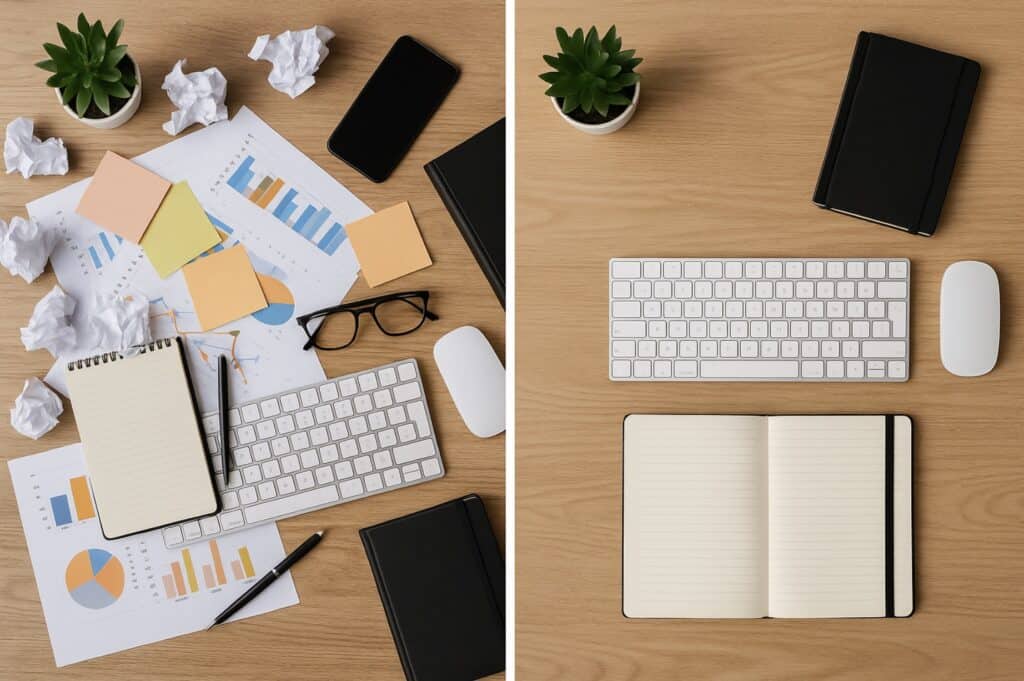
I used to feel like there was never enough time in the day—but once I stopped constantly checking my phone, I realized the time was always there.
I’d just been giving it away in tiny, mindless fragments.
I also organized areas of the house and got things done that had been needing to get done for a while and even had the mental energy to start and finish other projects.
My focus returned, and tasks that used to feel overwhelming became more manageable.
What Life Felt Like After the Detox
By the end of the 30 days, I felt like I had hit a mental reset button.
Life did feel lighter.

I mostly didn’t feel so rushed, and I wasn’t constantly chasing stimulation.
There were even moments when I’d go half the day without knowing where my phone was—and that used to be unimaginable.
I felt more present with my wife and son. Conversations went deeper.
Even small things—like taking care of our chickens, cooking, or reading—became moments I actually enjoyed rather than tasks to check off a list.
That’s when it hit me:
I didn’t need my phone nearly as much as I thought I did!
Reintroducing Technology (Without Slipping Back)
After a detox, the real challenge begins—deciding what to let back in.
I knew I couldn’t just go back to the same habits that led me here in the first place.
I needed to reform my relationship with my phone and use it with purpose.
Here are some questions to ask:
1️⃣ Does this serve something I deeply value?
Not just “Is it useful?”—but “Does this actually matter to me?”
💡 Example:
I kept Facebook only for Marketplace since it helps me buy or sell locally.
But I no longer scroll the feed or check notifications “just because.”
Once I’m done posting or messaging, I delete the app until I need it again.
2️⃣ Is this the best way to achieve that value?
Sometimes we justify certain technologies because they feel helpful, when in reality there’s a better or healthier alternative.
✅ To stay connected → call or meet in person
✅ To find inspiration → read or listen to podcasts instead of scrolling
3️⃣ Can I define exactly when and how I’ll use it?
🧭 Vague boundaries lead to vague habits—and vague habits eventually take over again.
These are the boundaries I’ve come to develop after going through my digital detox that keep my phone use to minimum:
📵 Work & Daily Use
- Keep my phone in my backpack at work on Do Not Disturb (only a few contacts allowed through).
- Check messages only at set times: morning, noon, 3 PM, and 6 PM.
- Phone goes to airplane mode at 8:30 PM for the night.
🗺️ Practical Use
- Use GPS only when necessary.
- Keep only essential tools (maps, calculator, etc.) grouped in one folder.
- Handle email and social media on my computer, not my phone.
👁️ Awareness
- If it’s in front of me, I’ll use it — so I keep it out of sight.
🌀 A Quick Reminder
Many people—including myself—learn that this isn’t a one-and-done thing.
You might fall back into scrolling. I still do sometimes.
But the difference now is that I recognize it sooner.
When that happens, I don’t beat myself up—I just become aware of it and recommit.
This process is about progress, not perfection. Every time you course-correct, you strengthen your ability to live intentionally again.
4️⃣ Recognizing Hidden Replacements
It’s easy to replace one source of stimulation with another. That’s why reintroducing technology also means setting boundaries beyond your phone:
⚠️ Common Hidden Replacements
- Over-exercising or using fitness as an emotional escape rather than a health tool
- Snacking or eating mindlessly to cope with boredom or stress
- Shopping or “retail therapy” as a quick mood boost
- Overworking to avoid stillness or uncomfortable emotions
- Constantly planning or optimizing every moment of the day instead of resting
- Compulsively cleaning or organizing as a way to control anxiety
- Socializing nonstop or always having background noise to avoid solitude
- Drinking alcohol or relying on stimulants to unwind or “feel productive”
🧠 All of these provide short, shallow hits of stimulation—leaving you drained instead of fulfilled.
5️⃣ Rethinking Your Relationship With the News

If you say you need to stay informed because it’s “responsible,” I’d challenge you to pause and ask yourself this question:
📰 When was the last time something you saw on the news actually helped you or your family make an important decision—or made you safer?
For most people, the answer is almost never.
We often justify constant news consumption as “staying responsible,” when it really just feeds anxiety and steals focus from what we can actually change—our immediate circles, communities, and families.
💡 Being informed doesn’t mean being overwhelmed. Focus on what’s local, actionable, and truly matters to you.
Just 14 minutes of watching negative news has been shown to trigger increased anxiety and mood symptoms.
Now, if there’s something important I need to know—like before an election or a big decision—I’ll take a little time to research it intentionally a week or so in advance.
That’s plenty. I don’t need a constant stream of updates to live a thoughtful or responsible life.
So if you find yourself clinging to the news out of a sense of duty, try taking a break and see how your mind feels.
Chances are, you won’t miss much—and you might gain back a whole lot of peace.
6️⃣ The Real Lesson
This process taught me that detoxing from technology isn’t just about cutting things out—it’s about replacing them with something better.
✨ Meaningful activities. Real connection. True rest.
After my detox, I found joy in things that actually filled me up—throwing the ball with my son, taking walks with my wife, playing piano, reading, or working on small projects around the house.
I realized my phone wasn’t giving me connection- it was stealing it.
Now, whenever I think about adding a new app, tool, or screen-based activity, I run it through the same filter:
- Does it serve something I deeply value?
- Is it the best way to achieve that value?
- Can I clearly define when and how I’ll use it?
If it doesn’t pass all three, it stays out.
How You Can Start Today

If this all feels a little intimidating, don’t overthink it.
You don’t need to have it all figured out before you start—just commit to one step at a time.
If you’re ready to try your own digital detox, here’s how to begin:
- Pick your start date – Choose a 30-day window and let your friends/family know.
- Delete or disable distractions – Social media, games, and any app you check mindlessly.
- Set a few essential rules – Define when you’ll check messages or use screens for work.
- Replace screen time – Plan things that bring real fulfillment: walking, reading, conversation, creating (check out our list above).
- Reflect and reintroduce intentionally – After the detox, bring back only what adds true value.
📘 Remember: the goal isn’t perfection—it’s awareness. The more aware you are of how you use your time, the more freedom you’ll feel
