Is Performance Fabric Toxic? What the Label Really Means

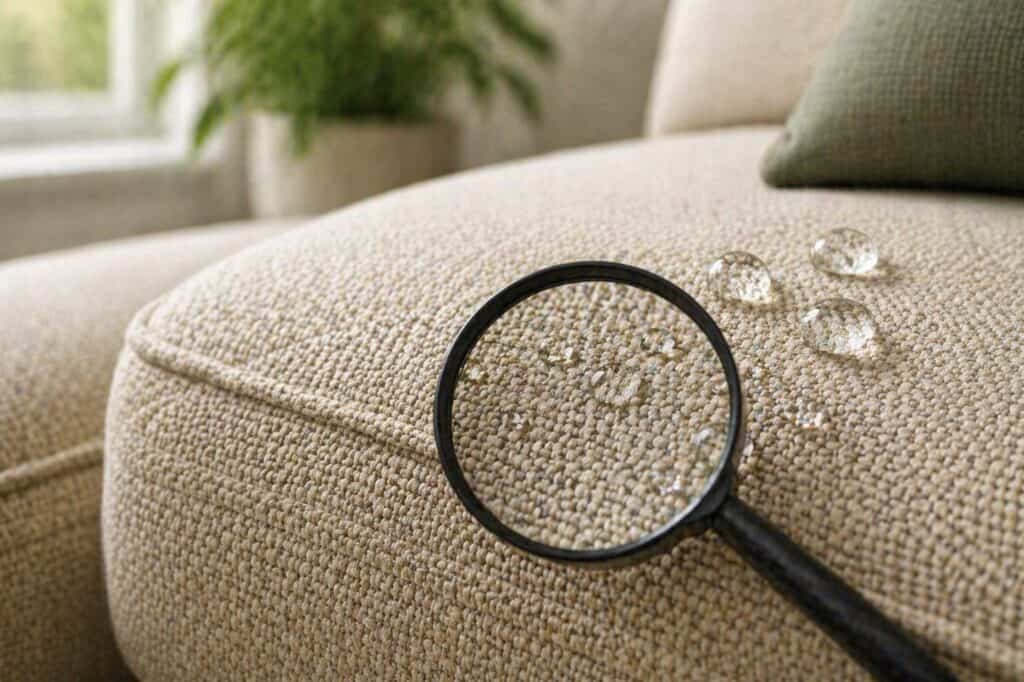
Performance fabric is designed to resist stains, moisture, and everyday wear, but that does not automatically make it non-toxic.
This matters because some upholstery fabrics rely on synthetic fibers or added treatments that can release chemicals into indoor air and dust, and the EPA notes that indoor air can contain pollutants released from furnishings and other household materials.
This article breaks down what “performance fabric” usually means, when it involves added chemical treatments, and how to choose lower-risk options without overreacting.
Performance fabric is not automatically toxic, but many are made with chemical treatments that can be harmful.
Some use coatings for stain and water resistance (like PFAS or other finishes), while others use safer materials without those chemicals.
So the term “performance fabric” does not mean safe or non-toxic — it depends entirely on what was used to make and treat it.
Is Performance Fabric Toxic?
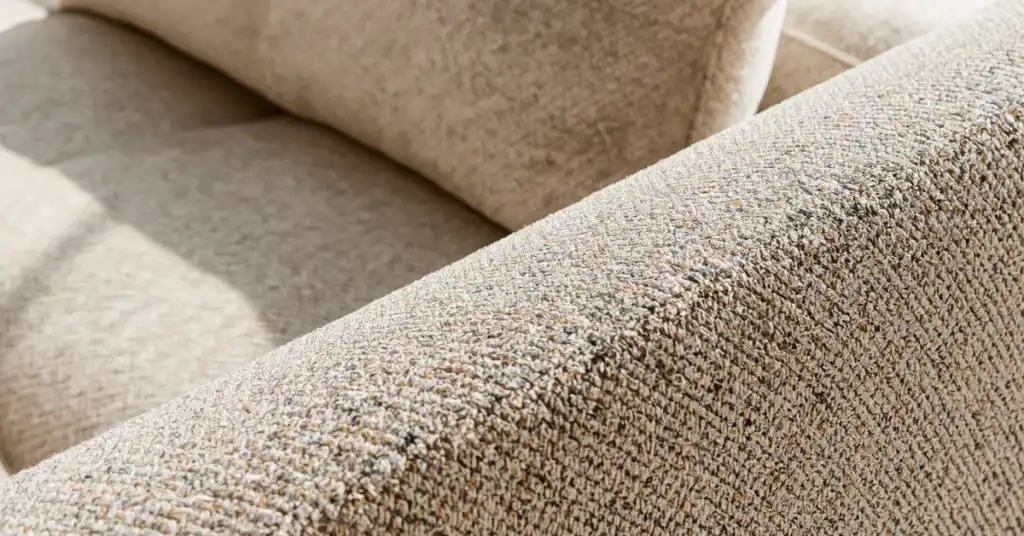
Performance fabric is not automatically toxic.
The risk usually comes from the materials and finishes used to make the fabric resist stains, moisture, and wear, not from the word “performance” itself.
PFAS-based textile treatments have been widely studied because they can persist in the environment and move from treated products into indoor dust over time.
A recent PubMed Central review on PFAS in consumer products explains why these chemicals remain a concern in treated textiles.
Upholstery can gain stain or moisture resistance from the fiber, a surface finish, or both.
That does not mean every performance fabric contains PFAS or is equally risky.
Many newer products are marketed as PFAS-free, and some rely more on the fiber structure itself than on a heavy surface treatment.
But PFAS-free still does not mean chemical-free, and it does not automatically tell you how low-emission or skin-friendly the fabric is.
To understand safety, you need to look at the fiber, any added treatments, and whether the fabric is tested or certified.
Key Takeaway: A performance label tells you about function, not full ingredient safety.
What Makes It Performance
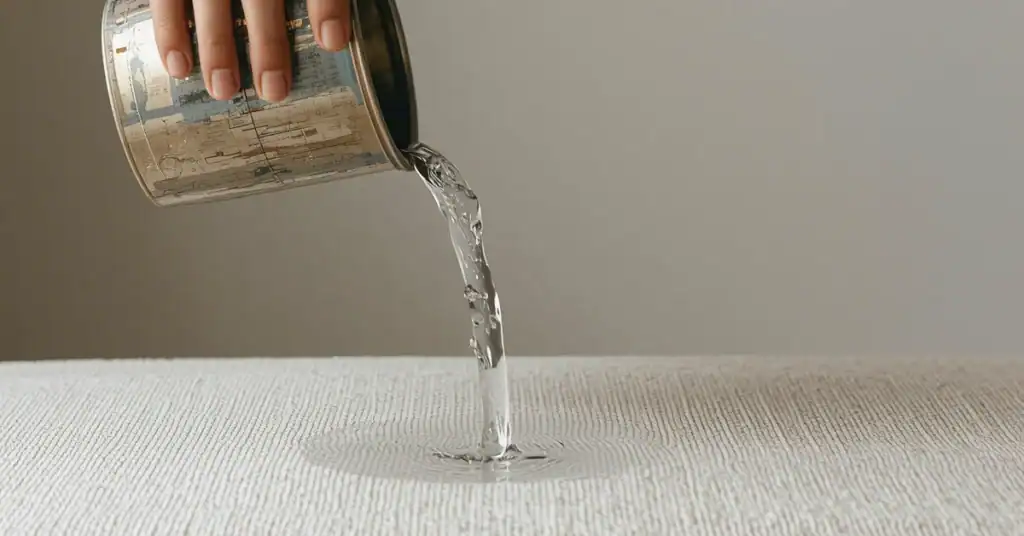
Performance fabric is built to handle everyday messes better than standard upholstery. That usually means it resists stains, moisture, fading, or abrasion better than a basic decorative fabric.
The “performance” part can come from the fiber itself, from a finish added later, or from both.
One common path is built-in performance. This happens when the fiber structure and weave do most of the work.
Tighter weaves and durable fibers can help spills sit on the surface longer instead of soaking in right away.
Tighter weaves and durable synthetic fibers like polyester, nylon, or olefin can make a fabric harder to stain and easier to clean without relying as heavily on a surface treatment.
The other path is a coated or treated fabric. In that case, the fabric gets an added finish to repel water, oil, or stains.
PFAS have been used for this because they create highly durable repellent films on textiles, and a major review of functional textiles describes these treatments as polymer films designed to resist water, oil, and degradation.
A fabric described as “performance” may be durable because of the yarn and weave, or because it was treated after manufacturing.
Product pages often do not explain which method is used.
Why does this show up in health and environmental research?
- Some textile finishes are designed to stay on the fabric through use and cleaning.
- PFAS-based finishes have been studied because they can persist in the environment long after use.
- Newer PFAS-free coatings exist, but they are still coatings, not plain untreated fabric.
That is why “PFAS-free” is helpful, but not the full story. It tells you one group of stain- and water-repellent chemicals was avoided.
PFAS-free does not automatically mean untreated, natural, or low-emission.
To understand what you are buying, you need to know whether the performance comes mostly from the fiber and weave or from an added finish.
When To Be More Careful

Higher-Concern Signs
Pay attention when a brand relies on performance claims without explaining how the fabric works.
If a product page promises stain resistance but does not explain how, treat that as missing information.
If the product page says “stain resistant,” “spill proof,” or “water repellent” but does not explain the finish, you are missing key information.
These are clear red flags:
- vague stain-resistant or water-resistant claims with no finish disclosure
- no fiber content listed
- no PFAS-free statement when the fabric is marketed for repellency
- a strong chemical smell when the item is new
- no third-party certification for emissions or textile testing
PFAS-based textile treatments also get extra attention in research because they can move from products into indoor dust.
Reviews of household dust and consumer products describe treated furnishings and textiles as one indoor source of PFAS exposure.
Lower-Risk Signs
Lower-risk options usually give you more detail, not less. They tell you what the fabric is made from, whether it is PFAS-free, and whether any certification backs up the claim.
Look for signs like these:
- clear fiber disclosure, such as polyester, olefin, cotton blend, or linen blend
- plain language about whether the fabric is treated or untreated
- a specific PFAS-free statement
- OEKO-TEX STANDARD 100 for the textile component
- GREENGUARD Gold when low chemical emissions matter to you
A certification does not make a fabric perfect, but it gives you something concrete to verify.
REAL-LIFE EXAMPLE

You compare two sofas online, and both say “performance fabric.” One also says PFAS-free and lists OEKO-TEX STANDARD 100, while the other gives no finish details at all. That tells you the first brand is giving you more useful safety information.
How To Choose Safer Options

Start with the product page, not the marketing headline. “Performance” is a useful feature word, but it does not tell you enough on its own.
Performance fabric is only one factor to consider when evaluating furniture. The foam, adhesives, flame retardants, frame materials, and overall chemical emissions can all play a role in whether a couch is considered non-toxic.
Look for the exact fiber content, finish details, and certification names before you trust a performance claim.
At The Goodness Well, we look for certifications and fiber type before we trust a performance claim.
A safer option usually gives you plain details like:
- the full fiber content
- whether the fabric is treated or untreated
- whether it is PFAS-free
- whether a certification backs up the claim
- simple care instructions that match the fabric story
Two certifications can be especially helpful here.
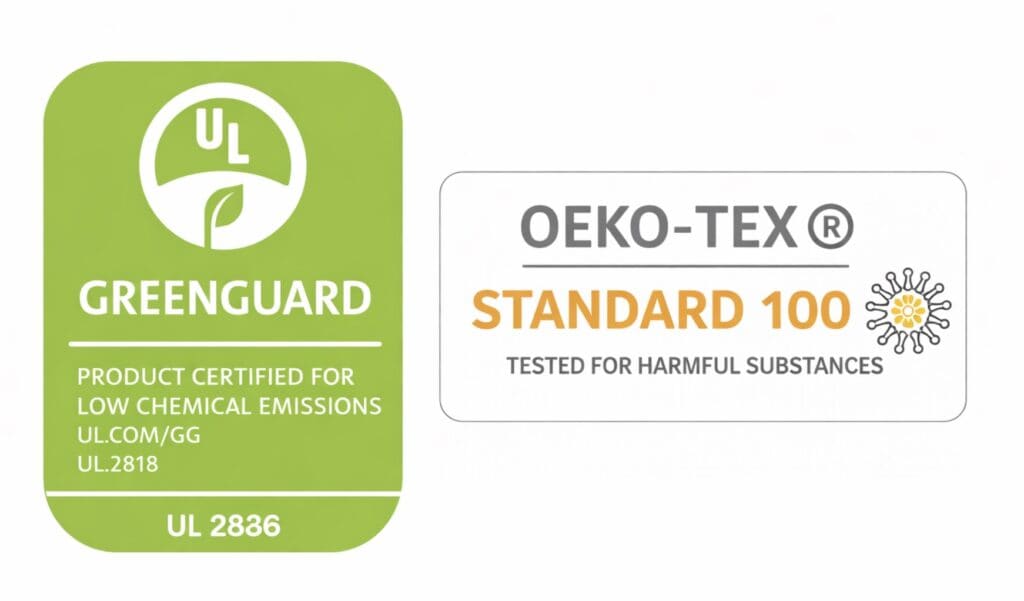
OEKO-TEX STANDARD 100 tells you the textile was tested for harmful substances. OEKO-TEX says every certified item has passed safety tests for the presence of harmful substances, from yarn to finished product.
That helps with textile safety screening, but it does not mean the fabric is natural, untreated, or low-VOC by default.
GREENGUARD Gold focuses on low chemical emissions. UL says GREENGUARD Gold sets lower VOC emission limits and is designed for more sensitive indoor environments.
A low-emissions certification and a PFAS-free claim answer two different questions, so it helps to check for both.
A fabric that is clearly PFAS-free, fully disclosed, and backed by OEKO-TEX or GREENGUARD Gold gives you more useful information than a fabric that only says “high performance.”
A practical filter looks like this:
- choose brands that clearly explain how the fabric resists stains or moisture
- prefer PFAS-free disclosure when repellency is part of the pitch
- use OEKO-TEX STANDARD 100 to screen for harmful substances in the textile
- use GREENGUARD Gold when lower indoor emissions matter to you
- skip products with vague claims like “family-proof” or “easy clean” and no details
You do not need a perfect fabric. You need one that tells you clearly what it is, how it performs, and what evidence supports the claim.
Conclusion
Performance fabric is not automatically toxic, but it is also not a shortcut for non-toxic.
What matters most is how the fabric gets its stain resistance or durability, and whether the brand clearly explains that.
You do not need to avoid every performance fabric. You want clear details so you can make a more informed choice and skip products that hide too much behind the label.