Caraway Ceramic Pan Review: How It’s Held Up After One Year

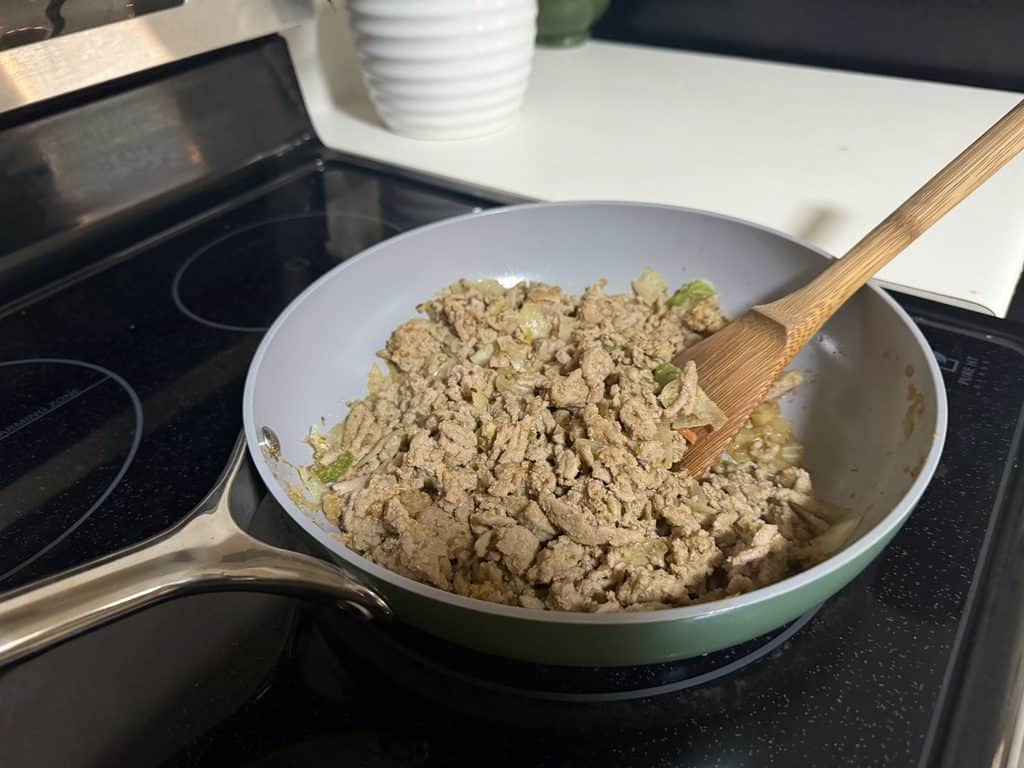
We’ve used our Caraway ceramic pan roughly 4–8 times a week for about a year, cooking everything from eggs to chicken and ground turkey.
While it’s picked up some scratches and dings along the way, its nonstick performance hasn’t noticeably changed.
That doesn’t mean food never sticks and honestly we could be much more careful in handling it over time.
We usually reach for a silicone spatula, but we’ve occasionally used harder utensils (especially when our silicone spatula needs to be cleaned), and our pan shares cabinet space with other cookware. These photos show what a year of use looks like in our kitchen—scratches and all.
Here’s how our 10.5-inch Caraway Fry Pan in Sage has held up, and whether we’d buy it again.
Caraway gifted us this pan. This review reflects our own experience using it over the past year.
The Goodness Well is reader-supported. Some links in this article may be affiliate links, but every recommendation follows our editorial standards and independent review process. Learn more about our editorial standards and review methodology.
Our Pan and How We’ve Used It
We have the 10.5-inch Caraway Fry Pan in Sage, an individual pan rather than the full ceramic cookware set.
It has an aluminum body with a ceramic nonstick coating, plus a stainless steel handle and base plate.
So while we call it our “ceramic pan,” the ceramic is a coating over metal—not the material the entire pan is made from.
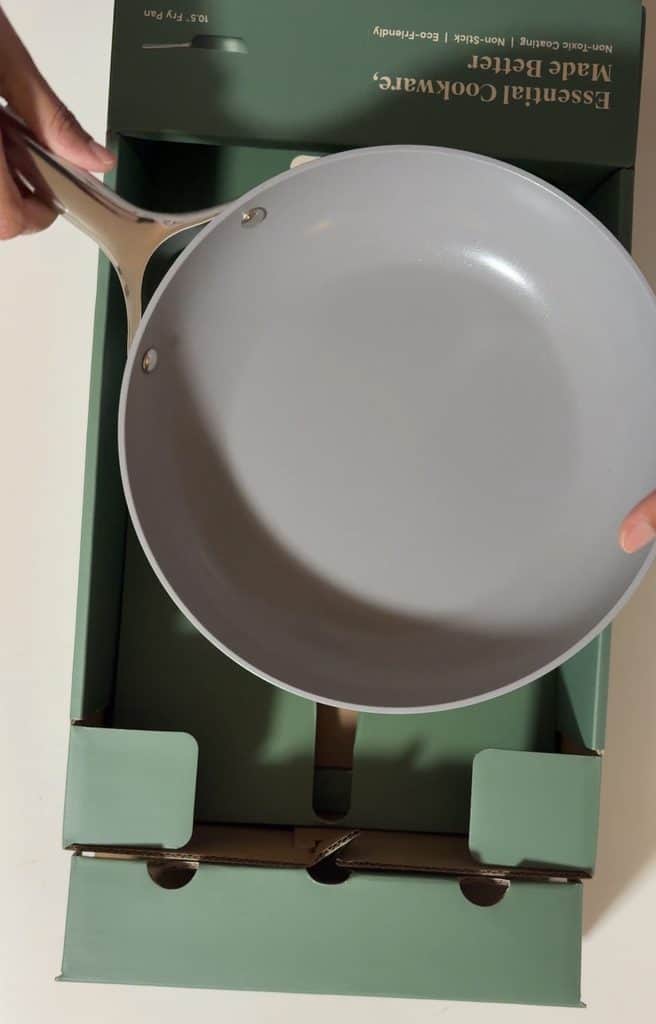
This is how many pans marketed as “ceramic nonstick” are constructed. Solid ceramic cookware does exist, but it’s a different category and shouldn’t be confused with ceramic-coated pans like this one.
Over the past year, we’ve used it roughly 4–8 times a week, mainly for eggs, chicken, and ground turkey. We alternate between this and our stainless steel pan, and honestly, the decision usually comes down to whichever one is clean!
We also own Caraway’s stainless steel cookware set and mini bakeware set, so we’ve had experience with a few of the brand’s products. For this review, though, we’re focusing on how this one frying pan has held up through regular cooking, washing, and cabinet storage.
Is It Still Nonstick After One Year?
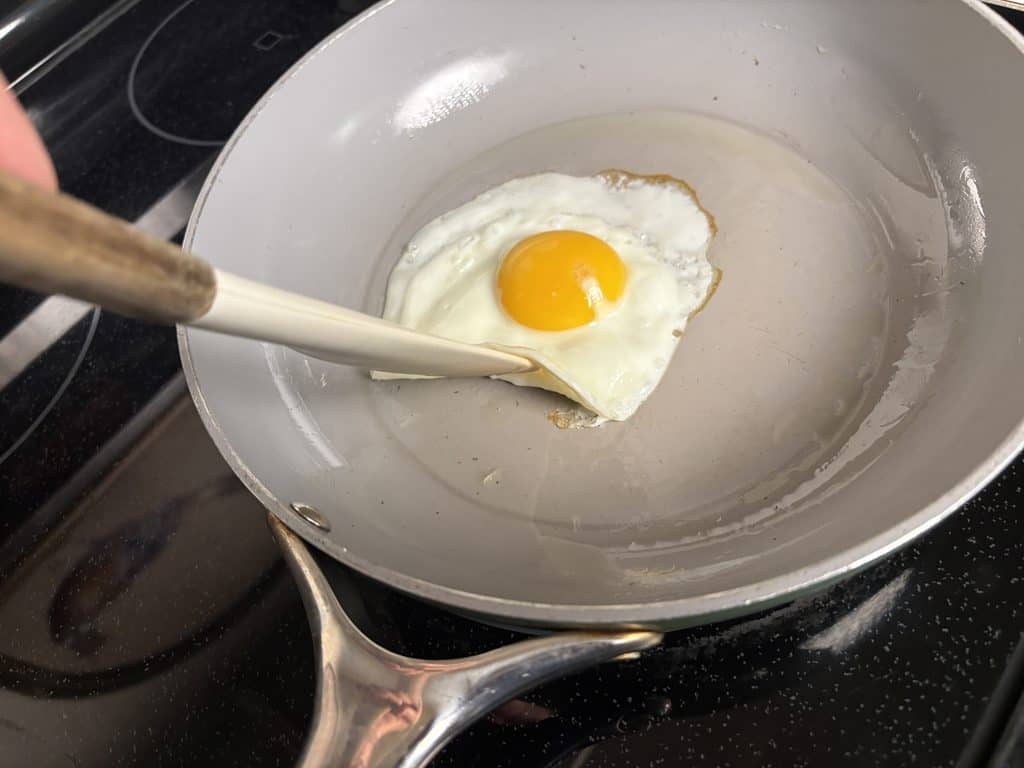
Yes—we haven’t noticed a decline in its nonstick performance after about a year of use. While it does have some visible scratches and wear, food seems to release much the same way it did when the pan was new.
What has worked best for us is cooking over low to medium heat, letting the pan warm up first for about a minute or two, and adding enough olive oil to lightly coat the bottom, which is what Caraway also recommends- low to medium heat, with up to 90 seconds of preheating before adding oil.
On our stove, we typically use a setting around 4.5 out of 10. Your stove may heat differently, so treat that as an example rather than an exact setting to copy. We’ve noticed that turning the heat higher tends to cause more sticking.
Chicken and ground turkey generally release well, while egg whites can be a little more prone to sticking. Even with oil and moderate heat, a few spots sometimes need help from a silicone spatula.
It’s still easy to cook with, but a little sticking happens here and there
It also cooks evenly, and overall, we like it much more than our previous ceramic pans, including the GreenPan ceramic pan we owned years ago.
How We Cook an Egg in Our Caraway Pan
Here’s what cooking an egg looks like in our pan after about a year of use. We used olive oil and a silicone spatula, which is what we normally reach for.
1. Warm the Pan and Add Olive Oil
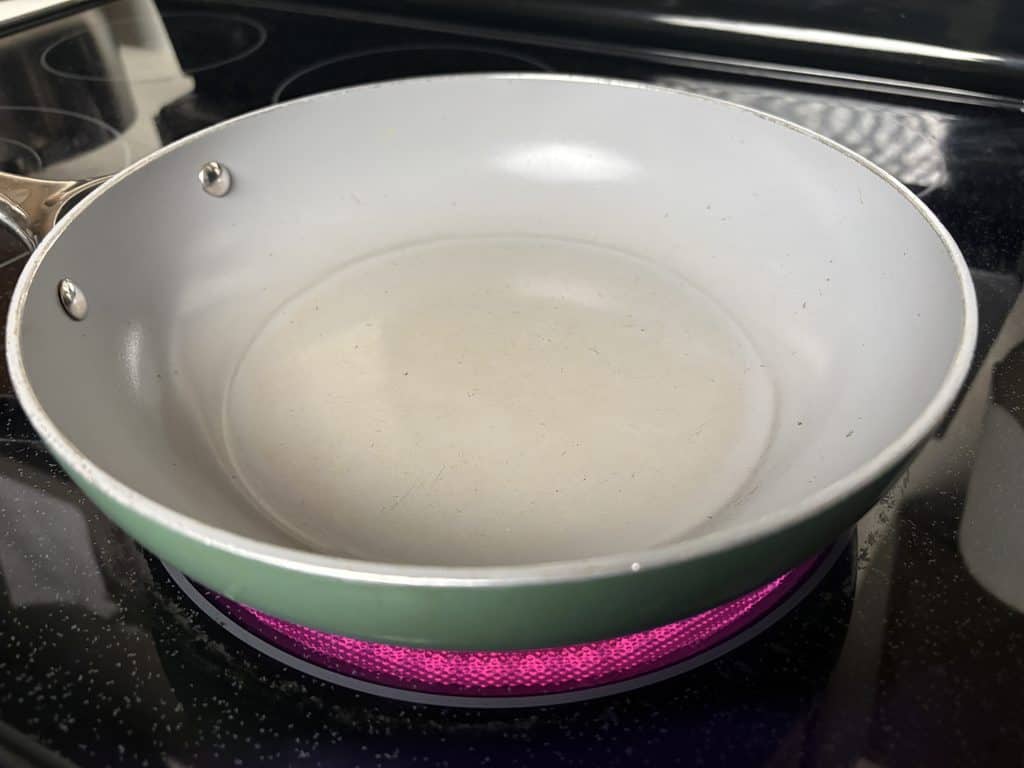
First, I turn the stove to low-medium heat—around 4.5 out of 10 on ours—and let the pan warm up. Then I add olive oil, using a little more than enough to coat the bottom.
We’ve usually let ours warm for about a minute or so which Caraway also recommends- up to 90 seconds before adding oil. Start with their guidance, since your stove may heat faster than ours.
2. Add the Egg and Let It Cook
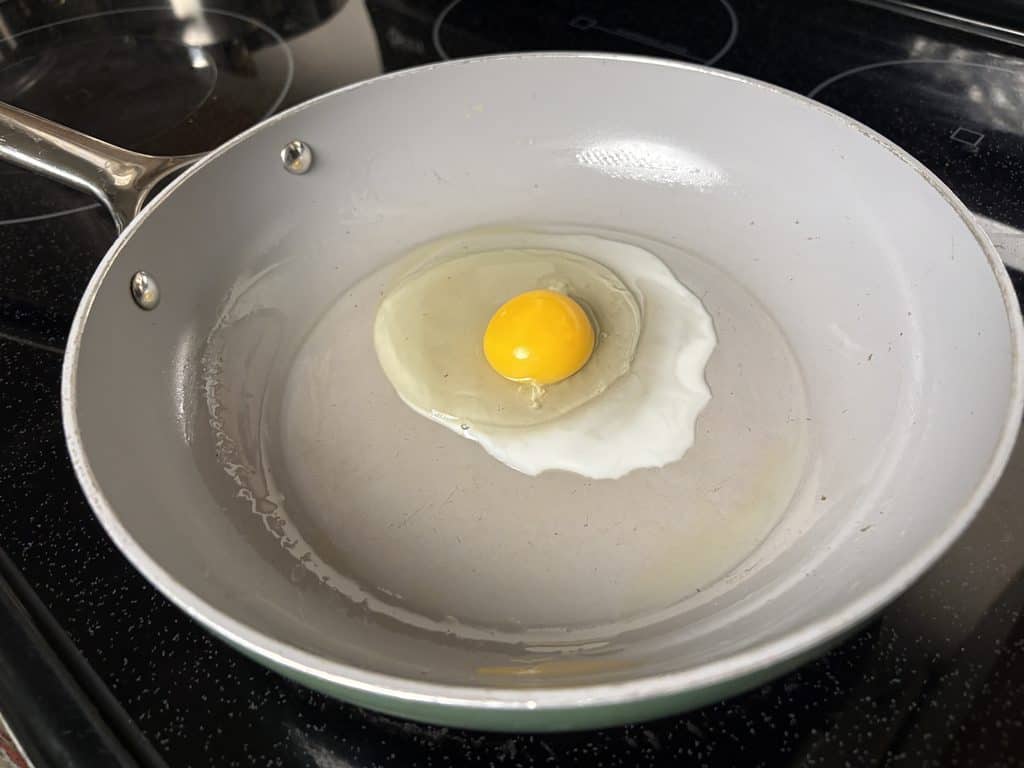
Next, I crack the egg into the pan and let it cook at the same heat setting.
3. Gently Slide a Silicone Spatula Underneath
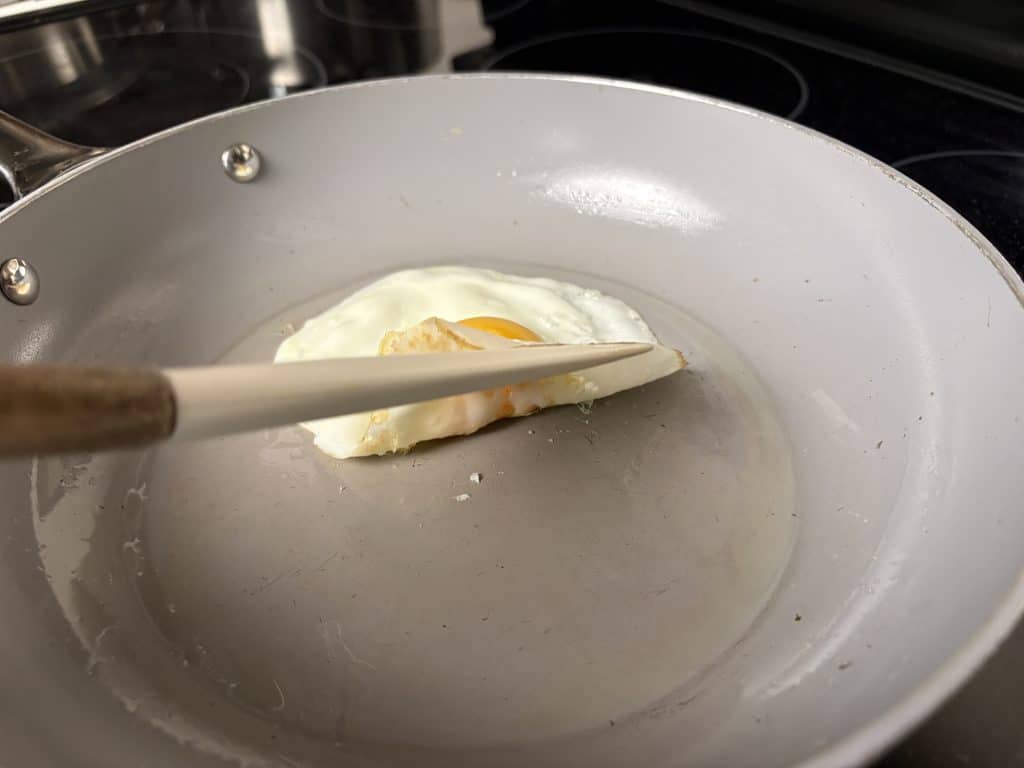
Once the egg has set enough to lift, I gently work the silicone spatula underneath it. If a little spot catches, I loosen it rather than scraping hard against the coating.
4. Lift It Out
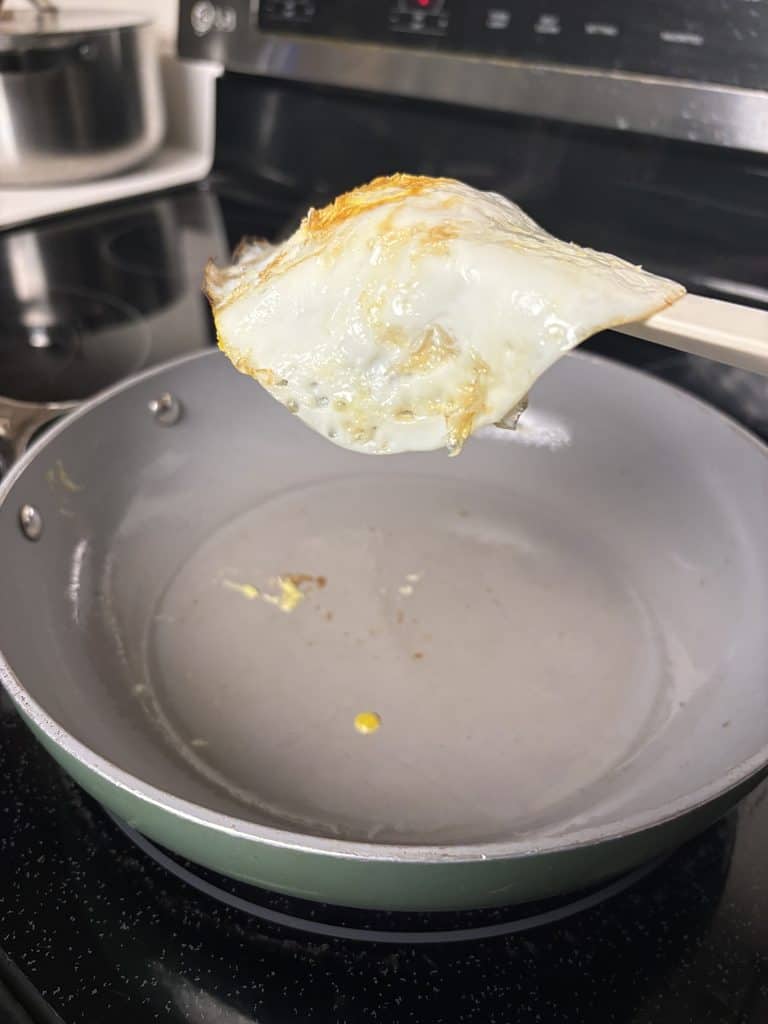
Here’s the finished egg! It came out in one piece, with just a few small bits left in the pan.
We don’t get a perfect release every single time, but this approach has worked well for us. A little olive oil, moderate heat, and a silicone spatula go a long way—even with the wear our pan has picked up over the past year.
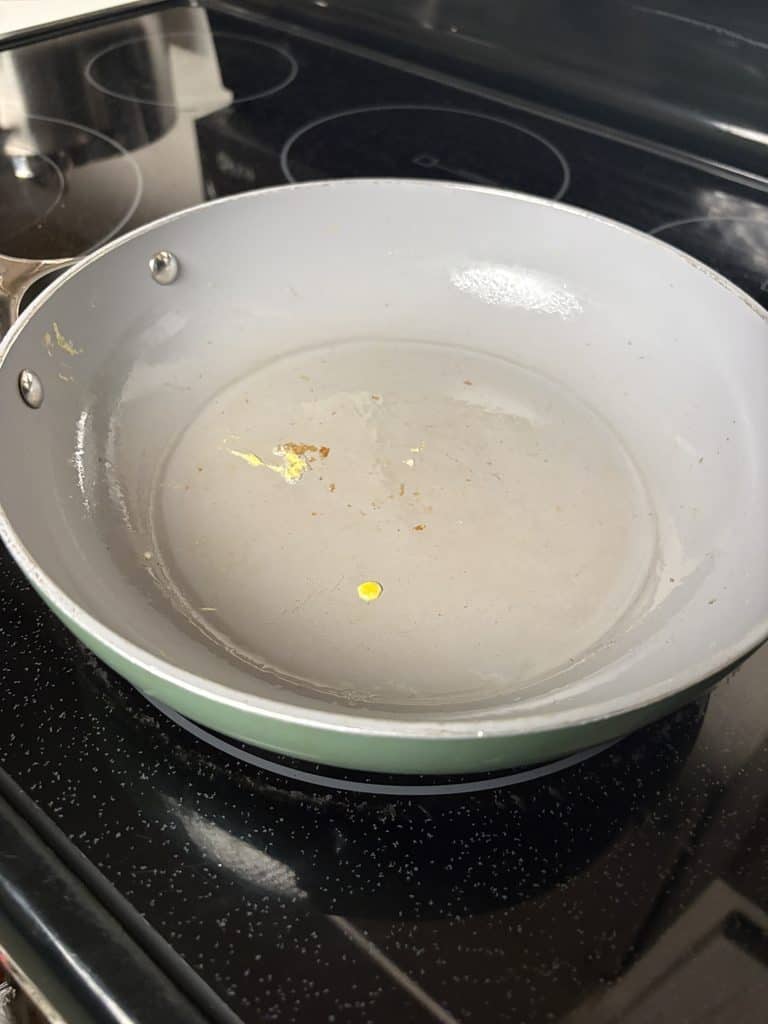
Scratches, Dings, and Other Wear After One Year
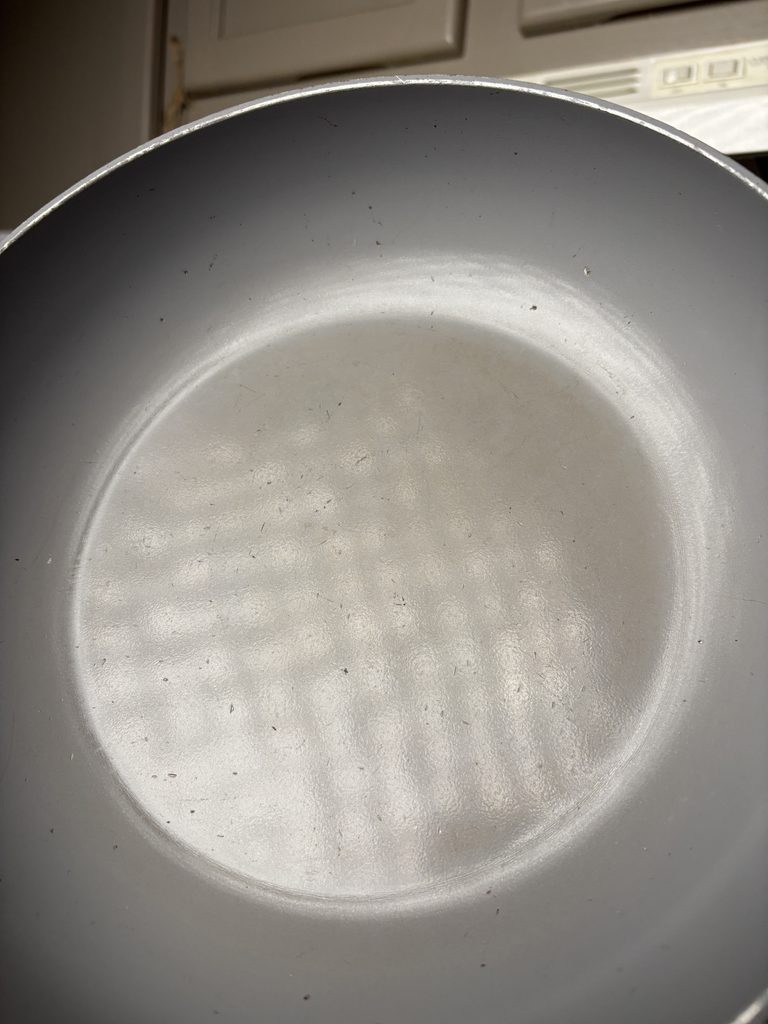
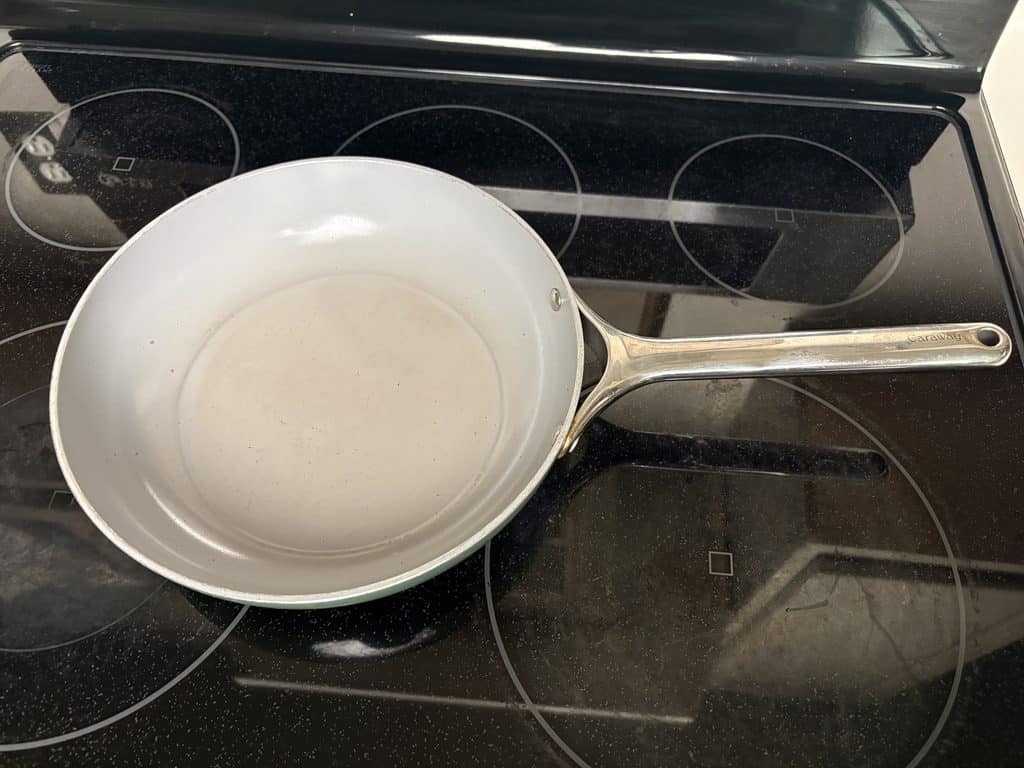
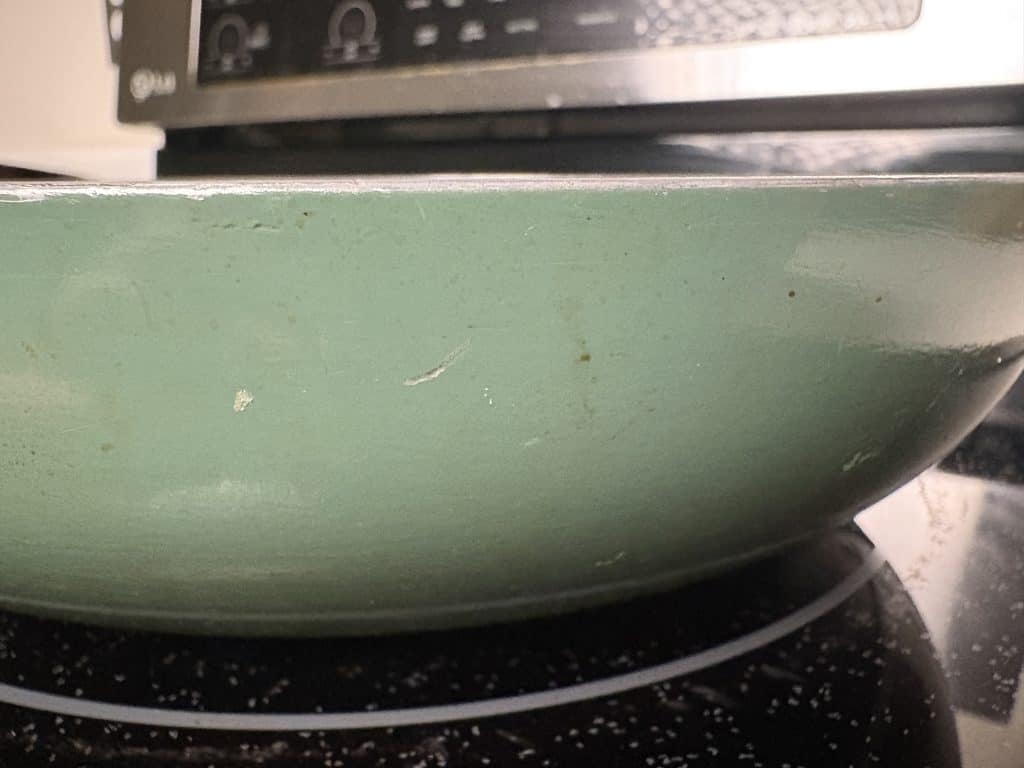
As you can see from the photos, our pan definitely doesn’t look brand new anymore. There are small scratches and marks inside, wear around the rim, a few dings in the sage exterior, and quite a bit of discoloration on the bottom.
We’ll be the first to admit we haven’t always been the most careful with it. We use a silicone spatula most of the time, but if it’s dirty, we’ve sometimes grabbed a harder wooden utensil or a metal spatula. We also keep the pan in a cabinet with other cookware, so it hasn’t exactly had its own protected spot.
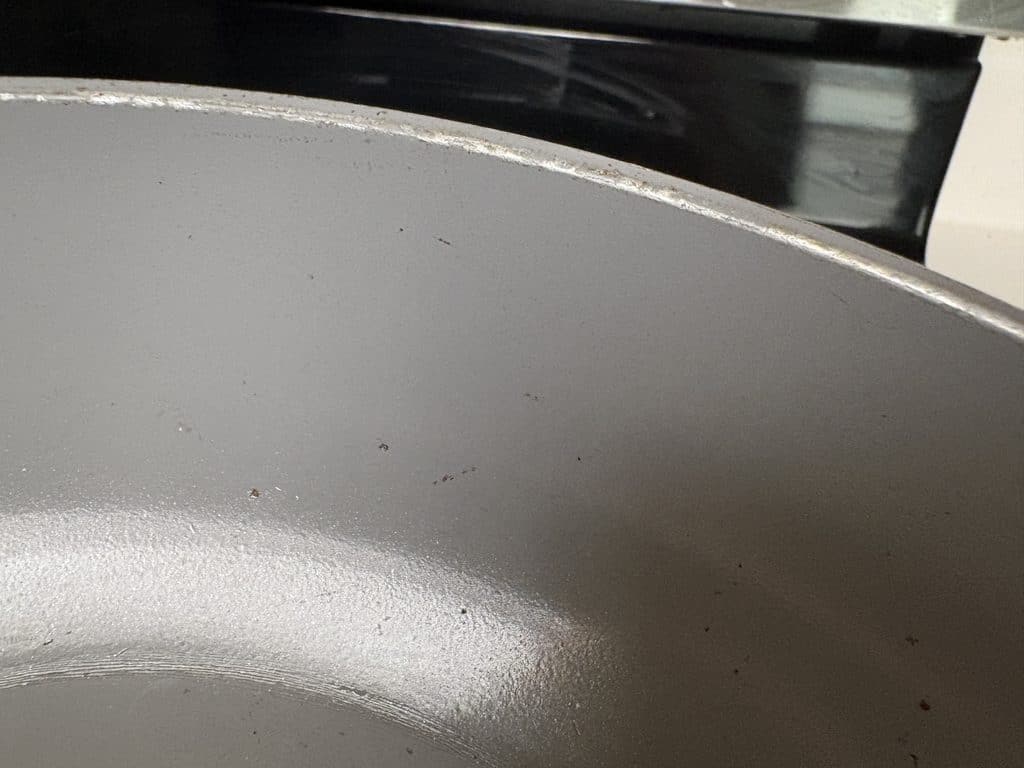
We can’t pinpoint when each scratch appeared or what caused every mark. Our utensils and storage habits probably haven’t helped. This is how the pan has held up with our care habits, which have been far from perfect!
The bottom has changed the most in appearance, with plenty of brown discoloration and surface marks. We’re showing it here so you can see the whole pan, including the part that usually stays out of sight.
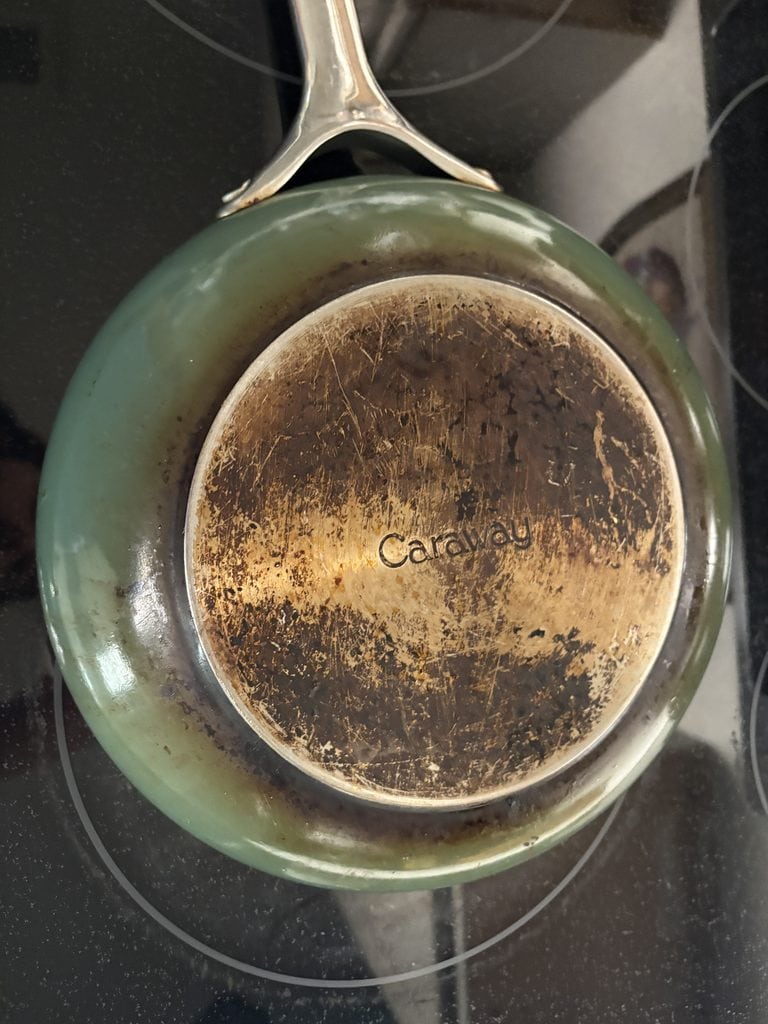
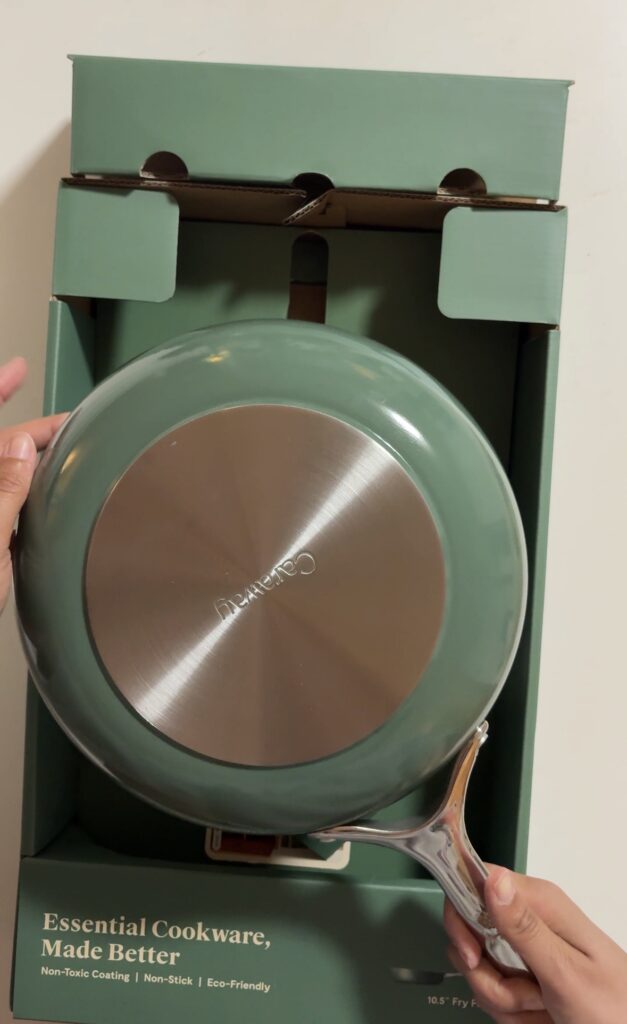
We could probably get some of that browning off with a little extra cleaning, but honestly, we’ve been a bit lazy about it—the bottom of the pan isn’t something we worry too much about!
The good news is that, despite how it looks, we haven’t noticed a drop in its nonstick performance or how evenly it cooks.
It looks pretty worn, but it still cooks well for us
If we were starting over, we’d stick with silicone utensils every time and give the pan a protected spot in the cabinet, or use a pan protector between stacked pieces.
More careful handling could help yours stay looking better than ours, though we can’t promise it will stay scratch-free.
The Trade-Off: Easy Cooking, Shorter Lifespan
With ceramic-coated nonstick pans, you’re trading some longevity for easy food release and cleanup. This applies to all pans in this category, not just Caraway, though how long the coating lasts varies with its quality and how you treat it.
The coating gradually wears with use, and overheating, scraping, or abrasive cleaning can speed that up. The metal underneath may still be fine, but once the nonstick performance fades, you lose a big part of the convenience.
Uncoated stainless steel has no coating to wear out, and traditional cast iron can be reseasoned. Both can last for decades with proper care.
We just see it as a convenient everyday pan, not a lifetime purchase
Cleaning and Everyday Handling
For everyday cleanup, we let the pan cool completely before washing it. We’ve found that any food left behind is easier to remove once it has cooled, so we usually leave it while we eat and come back to it afterward.
From there, I remove any bits that come off easily and wash it by hand. I’ve sometimes used the rougher side of our sponge for a light scrub before finishing with the soft side. That’s our actual routine, but Caraway recommends a nonabrasive sponge, so I’d stick with that to be gentler on the coating. We save the stainless steel scrubbers for our stainless steel cookware!
The pan has a little weight to it, but it’s still easy to handle. The handle hasn’t gotten hot during our usual stovetop cooking, though we’d still keep an oven mitt handy—especially when using it in the oven
That’s just our experience, though—don’t assume it will stay cool in every situation, especially if you’re using the pan in the oven.
Let it cool, give it a gentle handwash, and it’s ready for the next meal.
Why Caraway’s Third-Party Testing Matters to Us
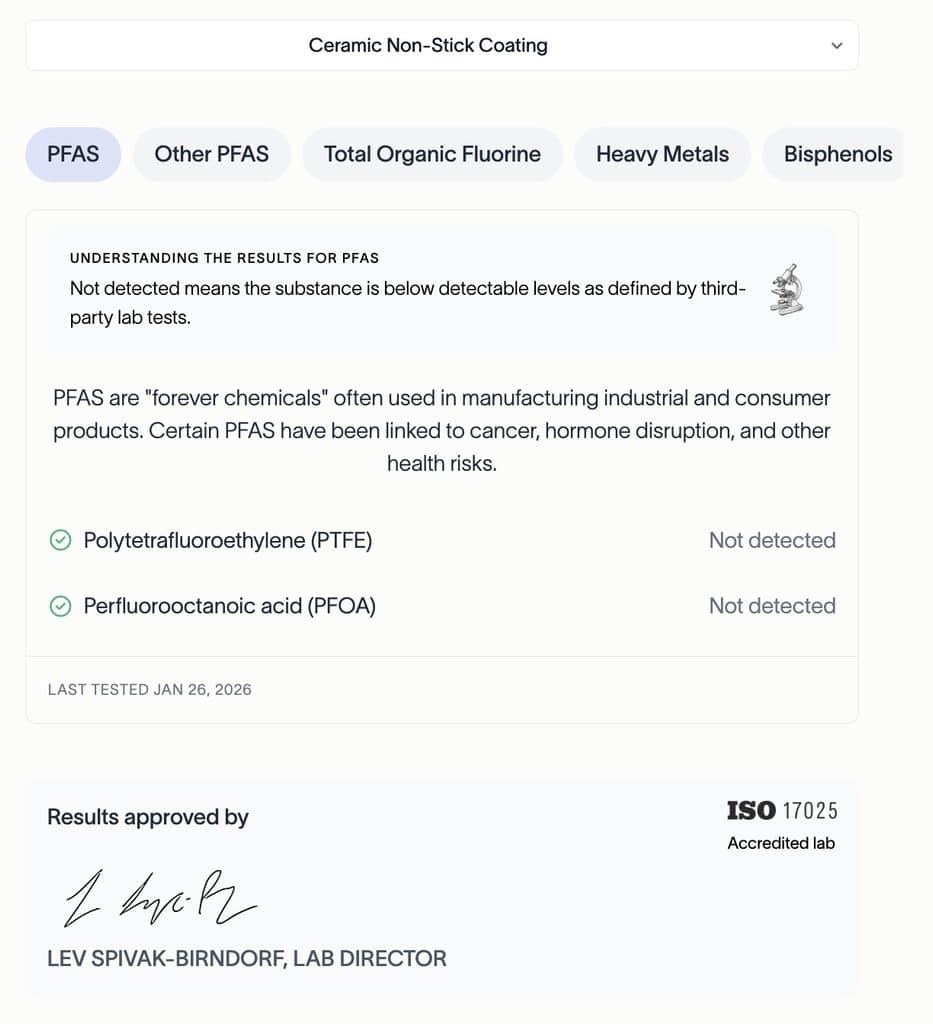
With so many ceramic pans to choose from, why would we buy this one again? Caraway’s third-party testing is a big part of it. Cooking performance matters, of course, but we also appreciate being able to look beyond the claims on the box.
Caraway says its ceramic cookware is made without PFAS, including PTFE and PFOA, and that independent labs test the materials that touch your food. The brand also makes testing information available on its third-party testing page, so you can take a look yourself.
We like being able to see what a company actually tests for instead of just taking “non-toxic” at face value. The reports only cover the substances and conditions tested, but having that information available matters to us.
Caraway isn’t the only brand that uses third-party testing. Still, its willingness to share testing information adds to the reasons we like this pan, alongside how it has performed in our kitchen over the past year.
Would We Buy This Caraway Pan Again?
Yes—even though Caraway gifted us this pan, we would buy it with our own money. After about a year of regular use, it still cooks evenly, and we haven’t noticed a decline in its nonstick performance. Caraway’s published third-party testing is another reason we’d choose it again.
It has picked up some wear, and food occasionally sticks. We haven’t been the gentlest owners, either, so we’d be more consistent with silicone utensils and protected storage if we started over.
Caraway’s stainless steel cookware is still our favorite overall. With no nonstick coating to wear out, it has more potential to last, and fewer replacements make it the more sustainable choice in our eyes. But food sticks more in our experience, and cleaning takes more effort.
That’s why we like having the ceramic pan handy when we’re in a rush, especially on busy weekdays. Easier food release and quicker cleanup make getting a meal on the table a little simpler. We’d choose stainless steel for longevity, but our ceramic pan still gets plenty of use—there’s room for both in our kitchen.