The 7 Essential Non-Toxic Kitchen Swaps in 2026: The Ultimate Guide




Since adopting a more sustainable lifestyle, one place we’ve really focused on cutting out unnecessary waste and toxic chemicals is a place we spend a TON of time—the kitchen.
Many basic kitchen products contain chemicals like BPA, phthalates, PFAS, and other compounds that can leach into our food and potentially affect our health over time.
In this guide, we’re showing you the best non-toxic alternatives for every aspect of your kitchen—from cookware and food storage to cleaning products and appliances.
We’ve researched the safest materials, vetted sustainable brands, and personally tested many of these swaps in our own kitchen, and found practical options that perform just as well as (or better than) their conventional counterparts.
Here we go!
We are reader-supported. So some links in this post may be affiliate links, which means we may earn a small commission if you make a purchase. Learn more
Why Make Non-Toxic Kitchen Swaps?
When we cook with non-stick pans that contain PFAS, store leftovers in plastic containers with BPA, or clean with products full of harsh chemicals, we’re potentially exposing ourselves to substances linked to hormone disruption, reproductive issues, and other issues we don’t want.
This is especially true for those of us with little ones!
Beyond the health concerns, making these swaps also does a great deal of good for the environment.
Reusable kitchen products don’t just reduce chemical exposure — they also cut waste, save money over time, and lower your overall footprint.
These products last longer, create less waste, and have a smaller carbon footprint overall.
For example, replacing single-use plastic bags with silicone alternatives prevents hundreds of plastic bags from entering landfills each year (and saves a bunch of money over time).
Taking a Gradual Approach
First things first, take it easy on yourself. Making all these changes at once can feel overwhelming both logistically and financially.
Remember that this is a journey, not a race.
Simply replace items as they wear out, starting with the products you use most frequently or those in direct contact with your food.
Higher-quality non-toxic products often last longer, meaning fewer replacements and lower costs over time.
As you replace these items, also consider how your new tools can help you reduce food waste and save money in the long run.
Even implementing just one or two swaps can make a big difference in reducing your exposure to potentially harmful chemicals.
Over time, you’ll create a much healthier kitchen environment that is also easier on your pocket book!
But I digress, let’s get into it!
1. Cookware & Bakeware
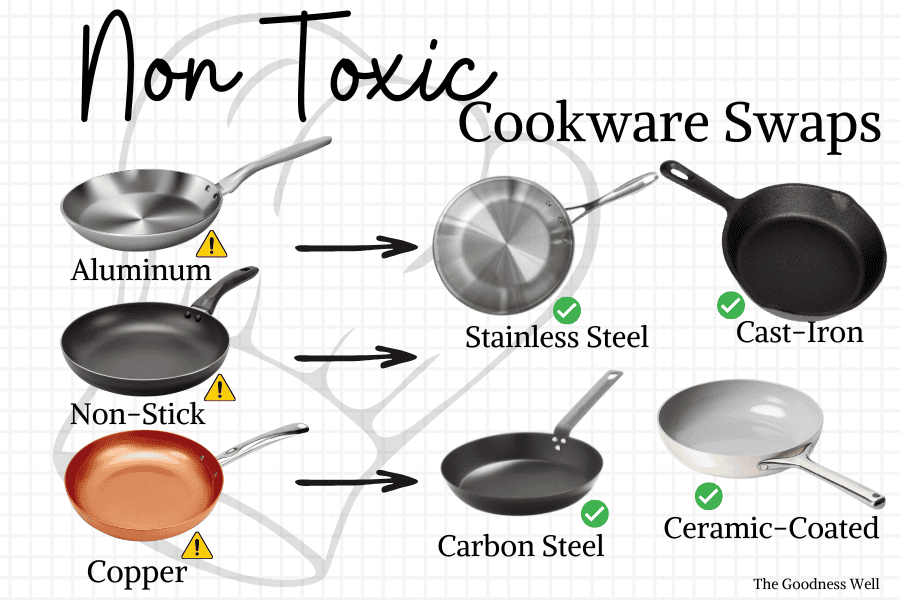
First place to start will be your cookware as this can hide some of the nastiest chemicals in your kitchen, known as PFAS.
PFAS (per- and polyfluoroalkyl substances) are manufactured chemicals linked to hormone disruption, immune system damage, and various cancers. These “forever chemicals” are not only a threat to health but also remain in the environment for generations.
Today’s non-stick pans typically come in two varieties: PTFE-based (Teflon) or ceramic-coated.
While Teflon has the best non-stick performance, it has historically contained PFAS, and efforts to replace this has come with chemicals found to also be toxic.
Ceramic coatings are a true non-toxic PFAS-free alternative but generally lose their non-stick properties more quickly.
This is why cast iron is king. It creates a natural non-stick surface when seasoned, adds beneficial iron to food, and lasts for generations.
Unlike chemical coatings, cast iron’s cooking surface actually improves with use through oil polymerization. Just be sure to coat with your favorite oil after every wash.
The other types of non-toxic cookware include:
- Ceramic-coated
- Carbon steel
- Stainless steel
Non-Stick Pan Alternatives
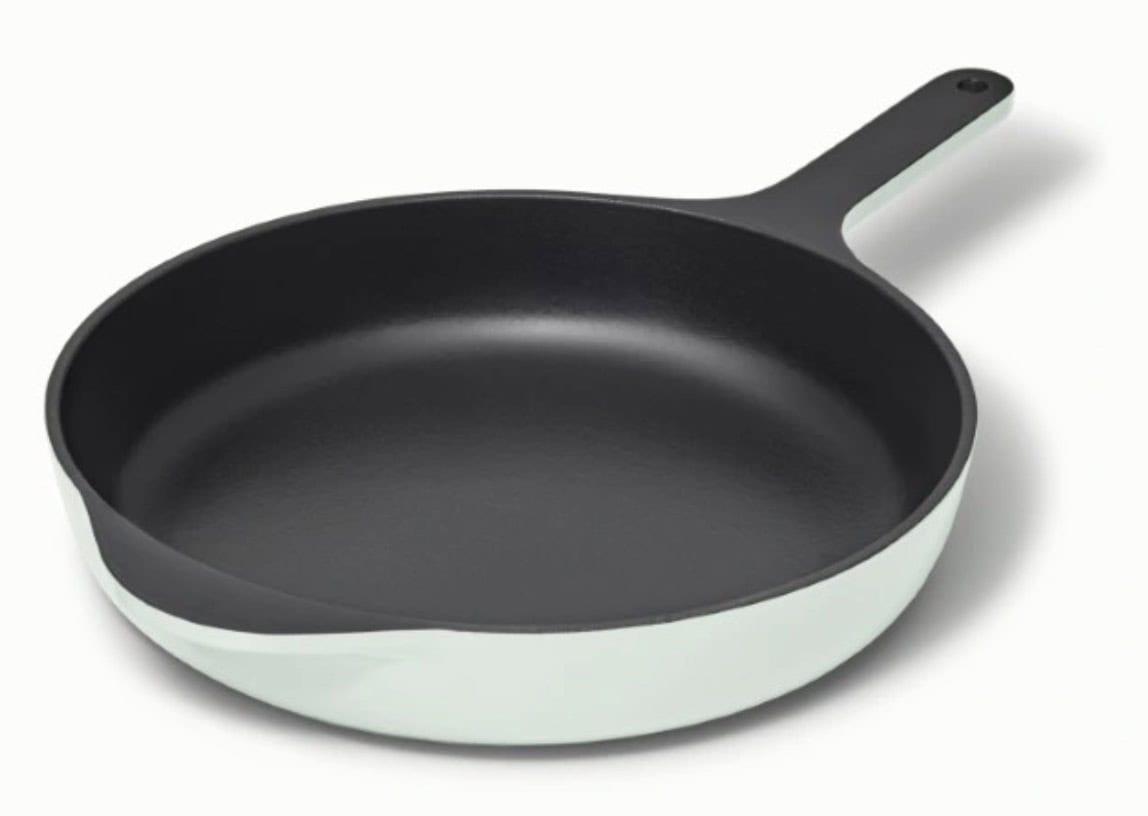
🏆 Caraway 10.5” Cast Iron Skillet
- Durable cast iron with a smooth, non-toxic enamel coating
- Free from PFAS, PTFE, PFOA, lead, and cadmium
- Best heat retention for searing, sautéing, baking, and roasting
- No seasoning required; easy to maintain enamel finish
- Oven-safe and compatible with all stovetops
- Price: $185 (often discounted to ~$157 during sales)
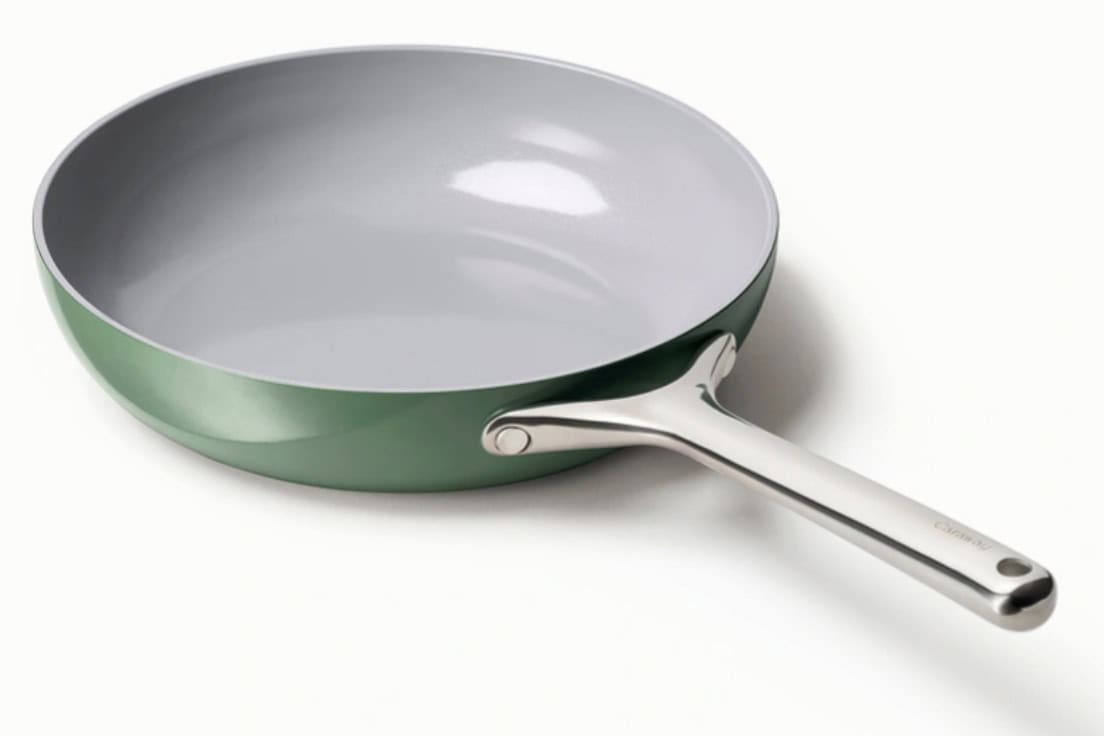
🏆 Caraway Ceramic-Coated 10.5″ Fry Pan
- PFAS-, PFOA-, PTFE-free ceramic nonstick coating (no “forever chemicals”)
- Non-toxic & third-party tested for safety
- All-stovetop compatible (gas, electric, induction)
- Oven safe up to 550°F
- Smooth, naturally nonstick surface for easy cooking & cleanup
- Modern design with multiple color options
- 30-day risk-free trial with free shipping & returns
- Price: $106.25
Other Great Options:
Bakeware Alternatives
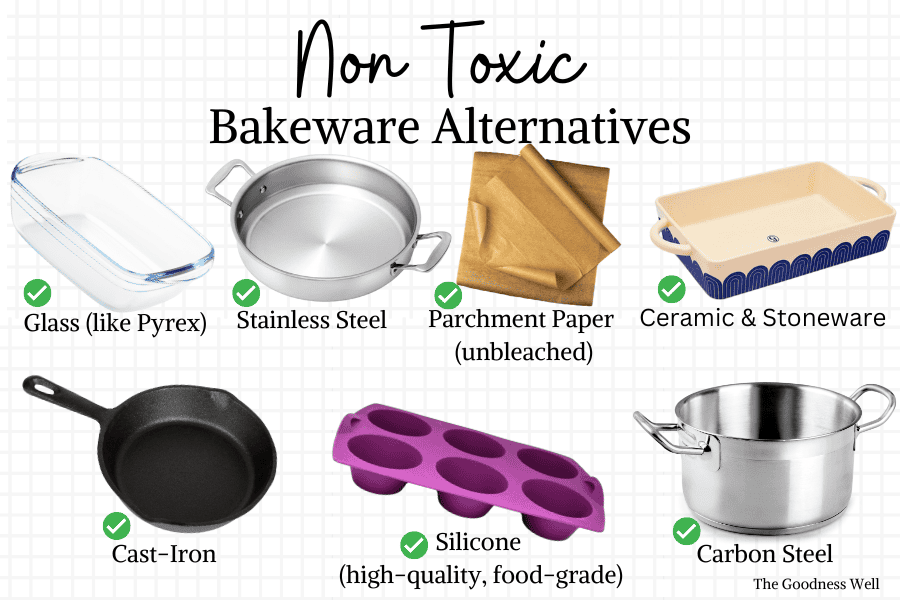
When it comes to bakeware, non-stick coatings are still an issue.
Muffin tins, baking sheets, and cake pans often contain PTFE coatings (or their toxic substitutes) that can release harmful compounds when heated.
Fortunately, there are much safer alternatives such as:
- Glass (like Pyrex)
- Ceramic and stoneware
- Cast iron
- Carbon Steel
- Stainless steel
- Silicone (high-quality, food-grade)
- Parchment paper (unbleached)

- Materials: Stainless steel, ceramic-coated aluminized steel, cast-iron enamel, and stoneware
- Made without: PTFE, PFOA (coatings), and other harmful chemicals
- Oven-safe: Up to 450°F for stoneware; varies for stainless steel + enamel
- Nonstick: Ceramic-coated pans offer PTFE-free nonstick
- Price Range: $20 to $110
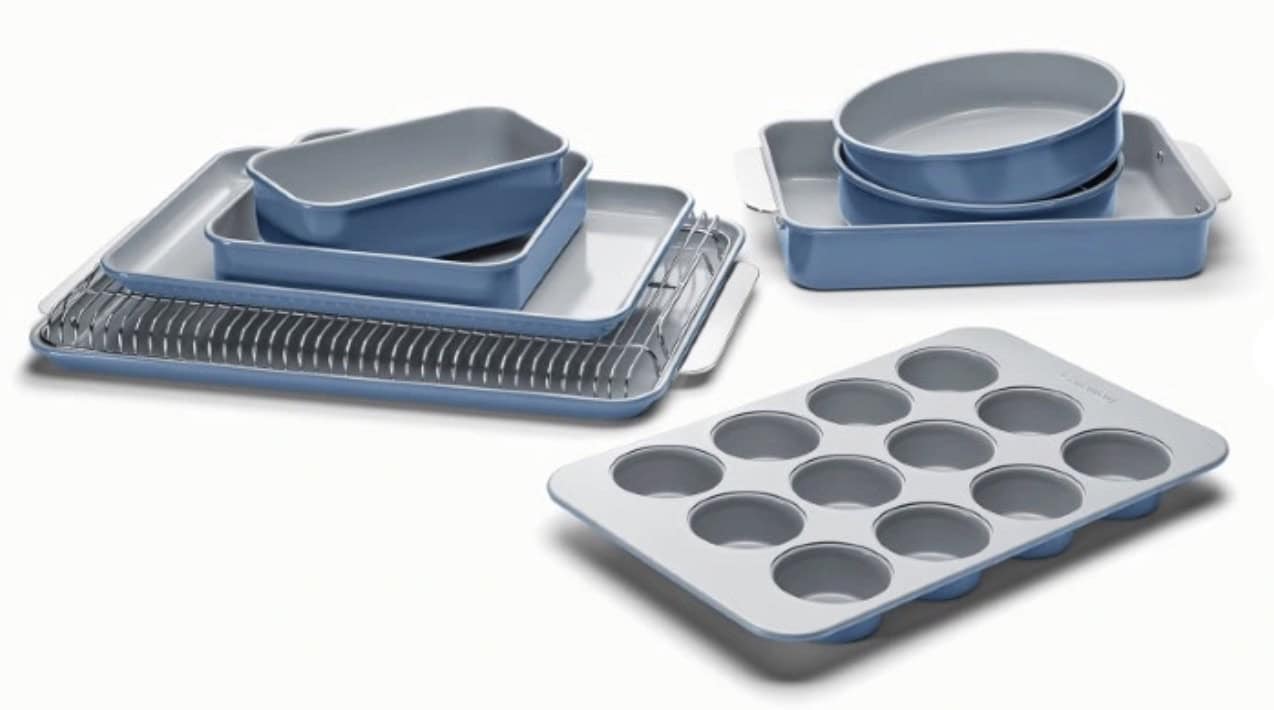
- Made with a PFAS-, PTFE-, and PFOA-free ceramic non-stick coating for safer baking
- Aluminum core for even heat distribution and consistent baking results
- Naturally non-stick and easy to clean, with no harsh chemicals or metal leaching
- Many options: baking sheets, muffin pans, loaf pans, cake pans, and full bakeware sets
- Available in multiple colors
- Price range: ~$35 for individual pans to ~$600 for full bakeware sets (often 30–40% off during sales)
Other Options:
- Healthier Homes Bakeware Line
- Amazon Carbon Steel Cookie Sheet Bakeware Set
- Amazon Ceramic Baking Dish Set
- Amazon Silicone Muffin Pan
2. Kitchenware & Disposables
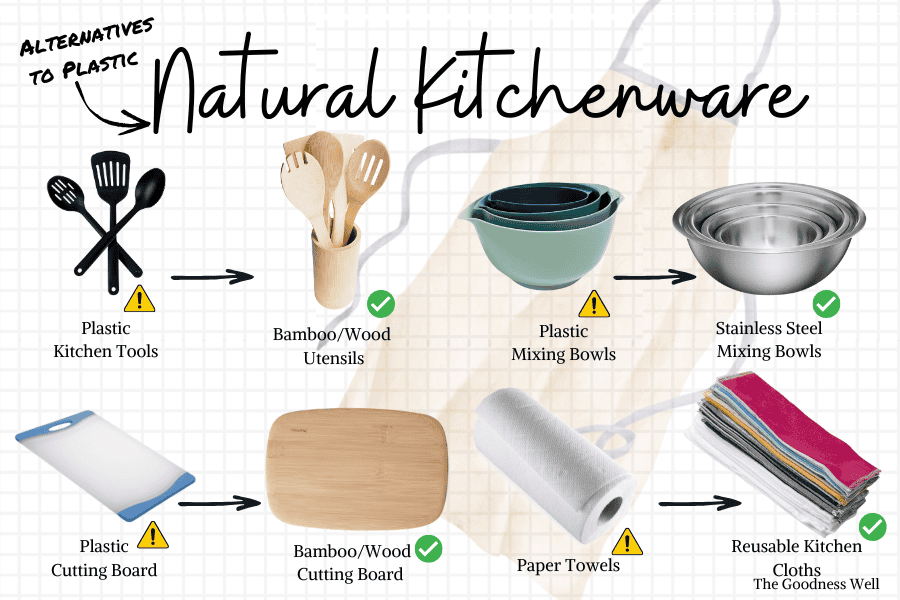
After cookware, the next step is the tools you use to prepare, serve, and store your food.
Plastic kitchenware items can release microplastics and chemicals like BPA, BPS, and phthalates—especially when they come in contact with hot foods or liquids.
These chemicals have been linked to hormone disruption and other health issues
Plastic utensils wear down with heat and use, which can increase chemical exposure and lead to more frequent replacements — creating extra waste over time.
We’ll also touch on trash bags and paper towels in this section, which I think we all can guess how much waste this creates.
Cooking Utensils
Why make the swap: Plastic cooking utensils can melt or warp when exposed to high heat, releasing microplastics and chemicals into your food.
Better alternatives:
- Bamboo – Naturally antimicrobial, heat-resistant, won’t scratch your cookware
- Wood – Durable, naturally food-safe, and long lasting
- Silicone – Heat-resistant up to 600°F, flexible for multiple uses, non-reactive
- Stainless Steel – Virtually indestructible, dishwasher-safe, perfect for high-heat cooking

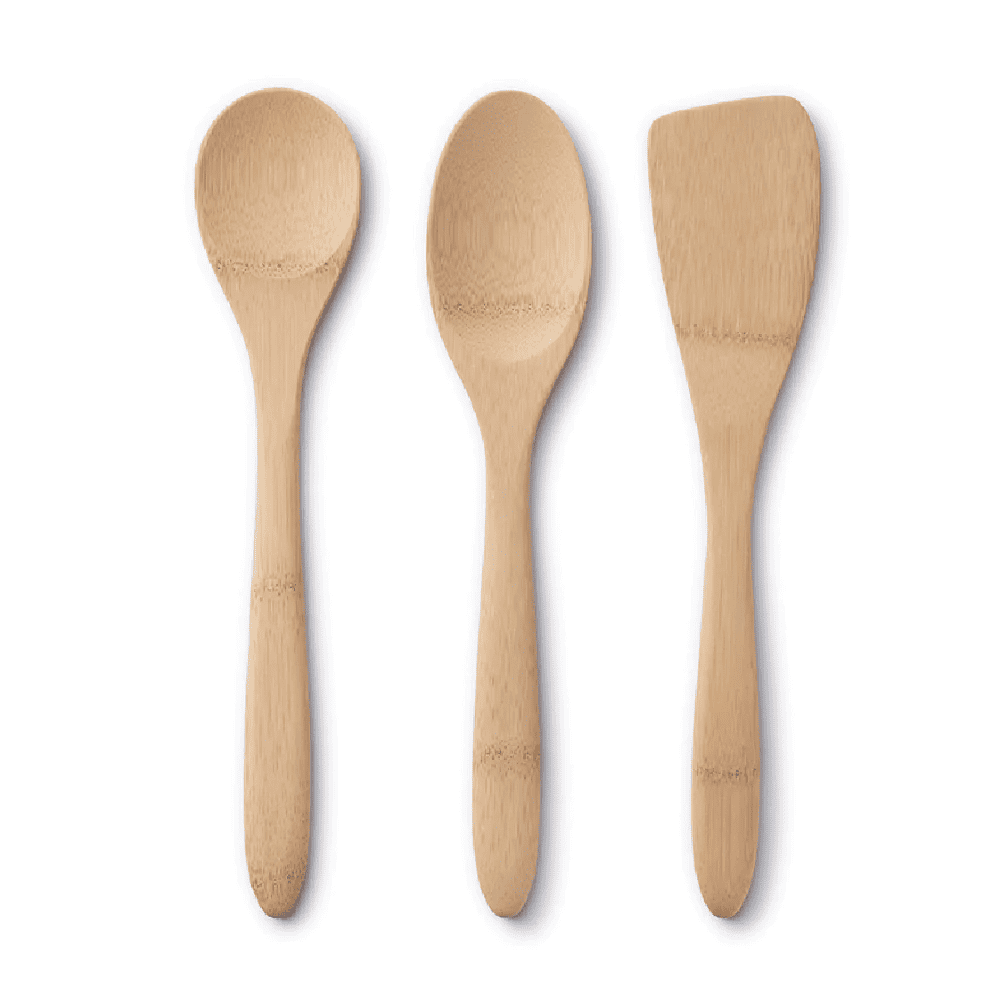
🏆 Bambu’s Kitchen Utensils & Dinnerware
- Materials: FSC®-certified 100% organic bamboo
- Carved from a single piece of bamboo — no glues, lacquers, coatings, or chemical binders
- Hand-finished with a natural, food-safe process for durability and long-term use
- Naturally non-toxic, lightweight, and gentle on cookware (safe for nonstick, cast iron, and stainless steel)
- Wide selection including spatulas, spoons, spoontulas, wok spatulas, tasting spoons, and utensil sets
- Price range: ~$6.75 for individual utensils to ~$33 for full utensil sets
- Bonus: 10% off with code THEGOODNESSWELL
*When shopping Bambu, Use code “THEGOODNESSWELL” to get 10% off your entire order.
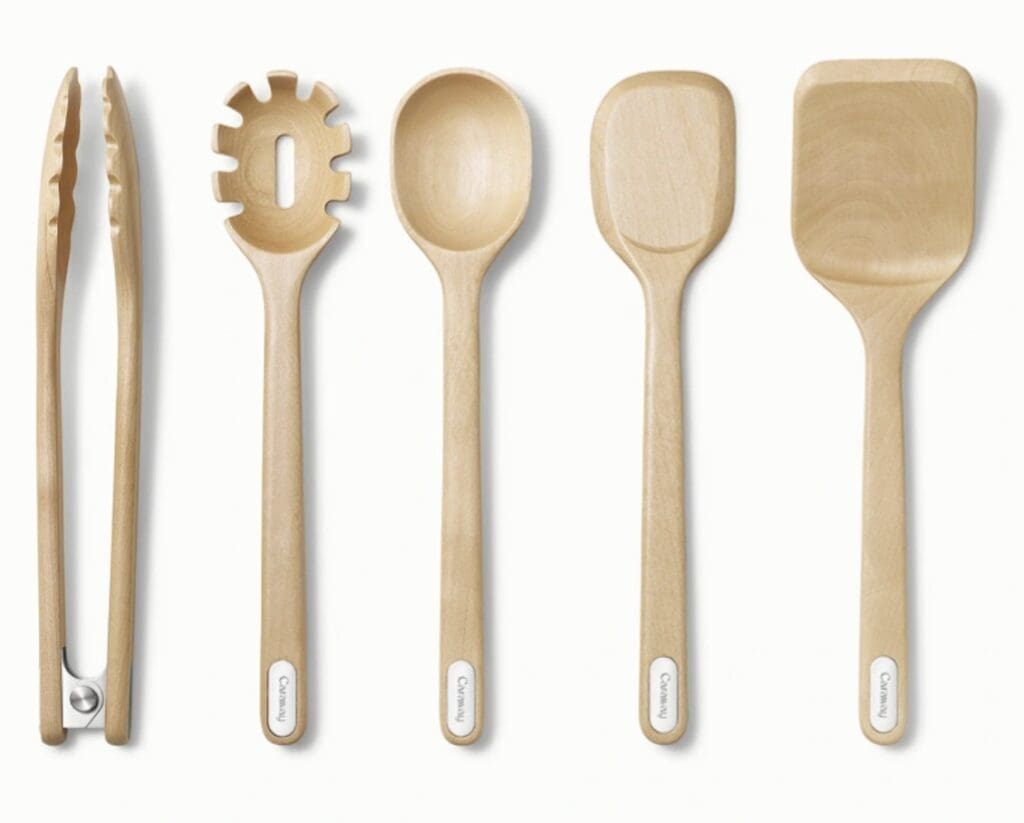
- Materials: FSC-certified birch wood; no plastic, no PFAS, no coatings
- What’s included: Spatulas, spoons, pasta server, tongs, and mini tools (varies by set)
- Safety: Non-toxic, food-safe, third-party tested finishes
- Design: Solid wood, cookware-safe, minimalist aesthetic
- Care: Hand wash only; oil occasionally to maintain finish
- Price: ~$106 (4-pc Mini), ~$123 (5-pc Utensil Set), ~$229 (9-pc Utensils & Minis)
Other alternatives:
- Healthier Homes Line of Dinnerware
- Amazon Stainless Steel Cooking Utensil Set
- Amazon Wood Cooking Utensil Set
Cutting Boards
Why make the swap: Plastic cutting boards harbor bacteria in knife cuts and can release microplastics into food.
Better alternatives:
- Bamboo – Naturally antimicrobial, sustainable, gentle on knives
- Maple or Walnut – Self-healing properties, won’t dull knives, extremely durable
- Composite Materials – Dishwasher safe options made from natural fibers
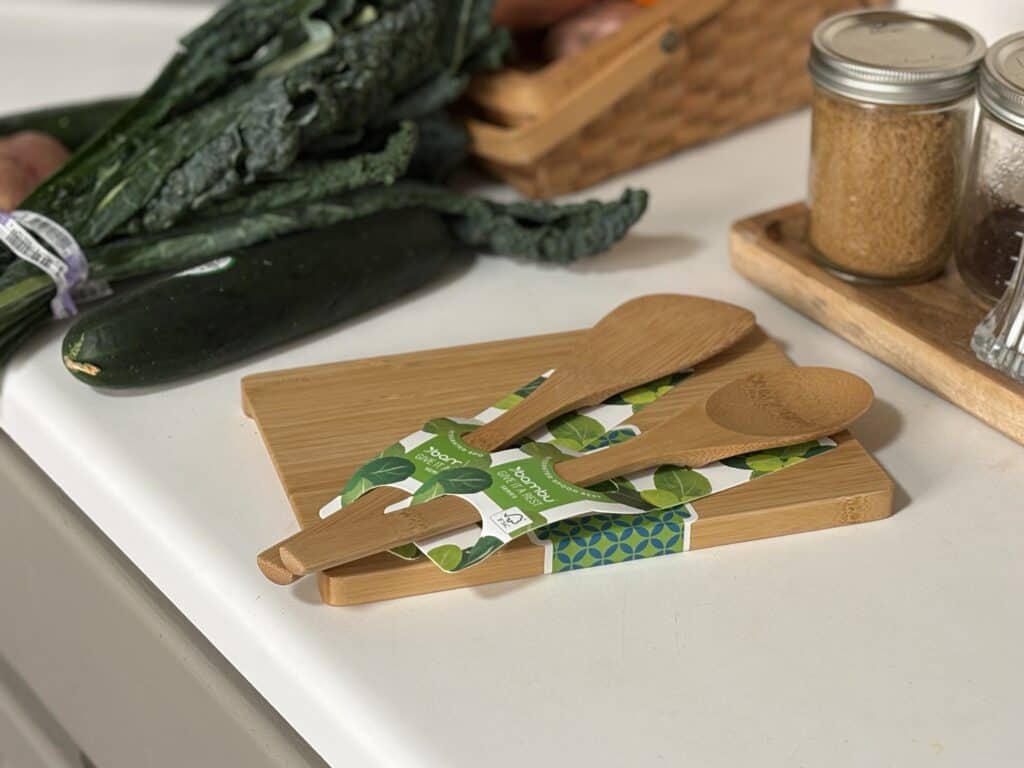
- FSC®-certified 100% bamboo from responsibly managed forests
- Naturally antibacterial & stain-resistant for safer food prep
- Durable yet lightweight — strong enough for daily use
- Finished with food-safe oils and water-based adhesives
- Available in multiple sizes & styles for prep and serving
- Price range: ~$13.95–$32.95
- Bonus: 10% off with code THEGOODNESSWELL
*When shopping Bambu, Use code “THEGOODNESSWELL” to get 10% off your entire order.
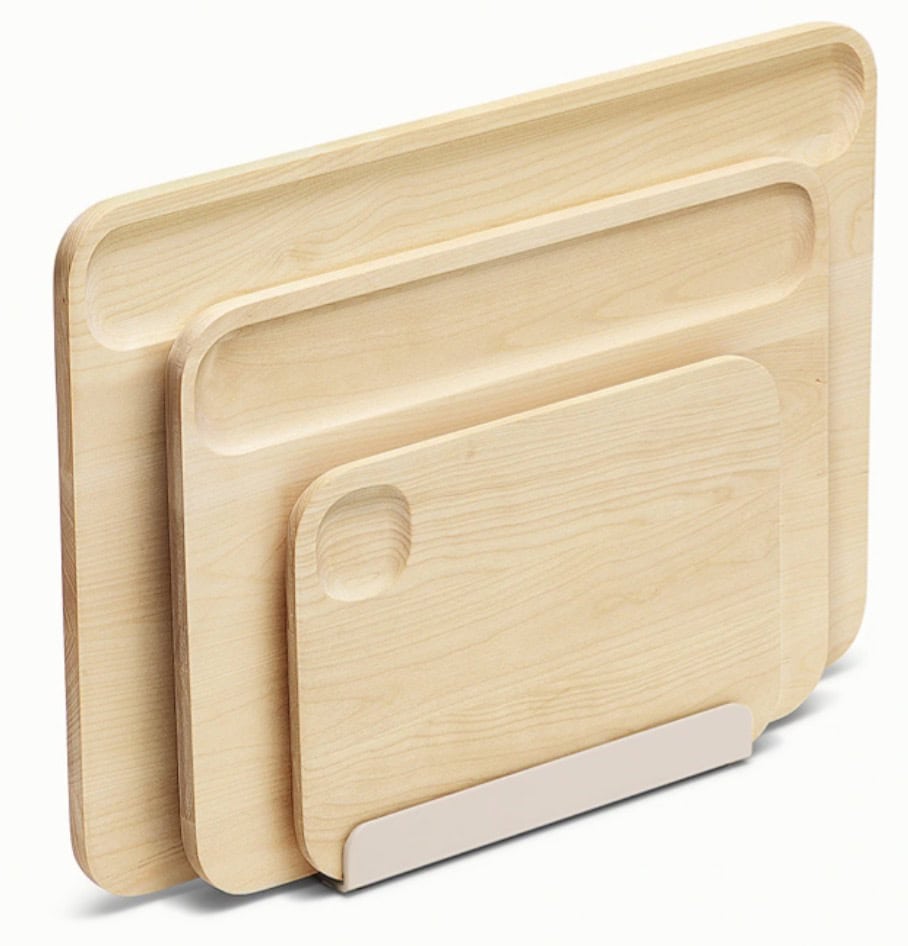
🏆 Caraway’s Wooden Cutting Board Set
- Materials: FSC®-certified birch wood or solid maple/walnut
- Safety: Plastic-free, PFAS-free, third-party tested, non-toxic
- Design: Knife-friendly wood, dual-sided boards, juice grooves, storage options
- Options: Single boards, butcher blocks, and prep/serve/hosting bundles
- Best for: Everyday prep, carving, serving, and plastic-free kitchens
- Price range: ~$50 (single boards) to ~$660+ (large bundled sets, often discounted)
Other great options:
Don’t forget to properly care for your wood cutting board!
Mixing Bowls
Why make the swap: Plastic bowls can leach chemicals, especially when used with hot ingredients, acidic foods, or in the microwave.
Better alternatives:
- Glass – Nonreactive, microwave safe, can see contents easily
- Stainless Steel – Lightweight, durable, won’t break if dropped
- Ceramic – Looks great and retains temperature well
- Bamboo– Eco friendly, durable, and stylish!

- Materials: Astrik® plant-based composite; plastic-free, BPA-free, and petroleum-free
- What’s included: 5 nesting mixing bowls in multiple sizes for everyday prep
- Safety: Non-toxic, food-safe, microwave-safe, and dishwasher-safe
- Sustainability: Made from renewable plant materials; designed for lower environmental impact
- Price: $60 for 5-piece set (free U.S. shipping over $60)
*We love Zero Waste Store also because they ship carbon neutral and plastic free!
Other great options:
Trash Management
Why make the swap: Conventional plastic trash bags never fully decompose and contribute to plastic pollution.
However, it’s important to know that many “biodegradable” or “compostable” bags come with their own issues—they often require specific industrial composting conditions to break down properly and may not decompose in landfills as advertised.
To put it simply, “biodegradable” trash bags are not a good alternative.
The best option is actually recycled plastic bags when considering the full lifecycle impact.
Better alternatives:
- Compostable Trash Bags – Can break down in proper composting conditions, but be aware they require industrial composting facilities and won’t decompose in typical landfills
- Recycled Plastic Bags – Often the more environmentally responsible choice as they give existing plastic a second life and typically have a lower carbon footprint than producing new materials
- Paper Bags – For dry waste, fully biodegradable but with higher manufacturing impacts
- Compost Bins – Reduce overall waste by composting food scraps, decreasing the amount of trash generated

🏆 100% Recycled Plastic Trash Bags
- Materials: 100% post-consumer recycled plastic; no virgin plastic used
- Safety: Fragrance-free and dye-free—better for sensitive households
- Performance: Durable, tear-resistant bags with easy-tie drawstring closure
- Fit: 13-gallon size designed for standard tall kitchen trash cans
- Sustainability: Made from recycled plastic and supports U.S. waterway cleanups via Living Lands & Waters
- Price: ~$6.79 for a 20-count box (subscription discounts available)
Paper Towel Alternatives
Why make the swap: Paper towels create significant waste and often contain bleach and other chemicals.
We realized simply buying a large set of cotton cloths, using those, and then washing them really wasn’t as big of a hassle as we thought.
It’s a great replacement for paper towels!
Better alternatives:
- “Unpaper” Towels – Reusable cloth alternatives that work just like paper. We learned that using and washing a stack of cotton cloths is simpler than we thought—and they’re a great substitute for paper towels!
- Swedish Dishcloths – Super-absorbent, biodegradable cloths that replace dozens of paper towels
- Bamboo Towels – Washable, reusable sheets that last for months

🏆 Zero Waste Store Reusable Paper Towels
- Reusable cotton flannel towels that replace single-use paper towels
- Plastic-free & low-waste alternative for everyday kitchen and home cleanup
- Certified responsible materials: OEKO-TEX®, GOTS organic cotton, and 1% for the Planet
- Absorbent and durable for spills, drying hands, and surface cleaning
- Available in 12- or 24-pack (pre-rolled) with multiple color options
- Price: $27.99 (12-pack) or $47.99 (24-pack)
Other great options:
3. Food Storage
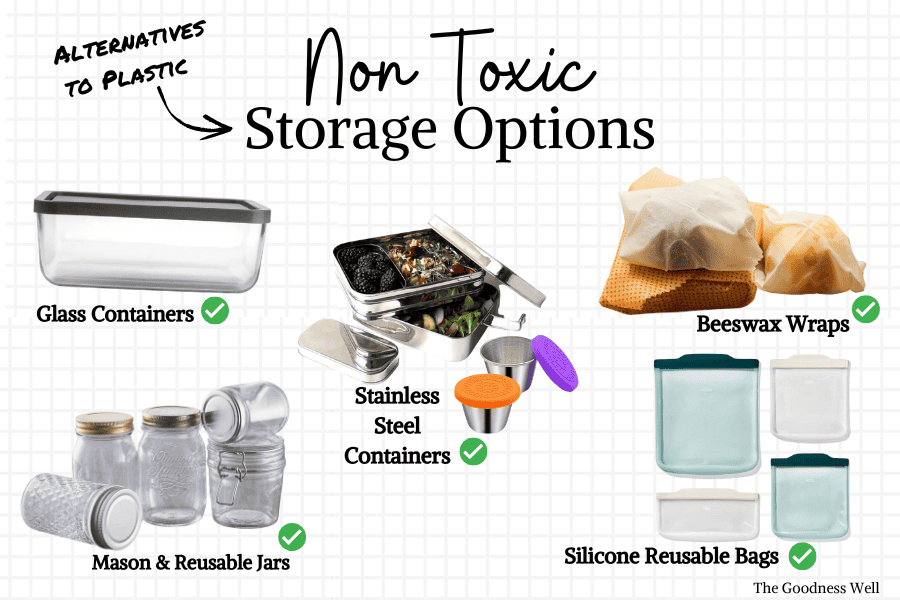
Most basic food storage contains chemicals that can leach into your food, especially when heated or in contact with acidic ingredients.
Plastic containers can contain, phthalates, and other endocrine disruptors linked to hormonal issues and other health concerns. Also, heating plastic accelerates the release of microplastics
Beyond the health risks, plastic storage doesn’t last that long and eventually contributes to non-biodegradable waste.
Here are safer alternatives that are much better for your family and the planet:
Glass Containers
Why make the swap: Glass is our go-to in the kitchen. It’s non-reactive, doesn’t leach chemicals, and handles both hot and cold temperatures without degrading. It’s perfect for meal prep, leftovers, and pantry storage.
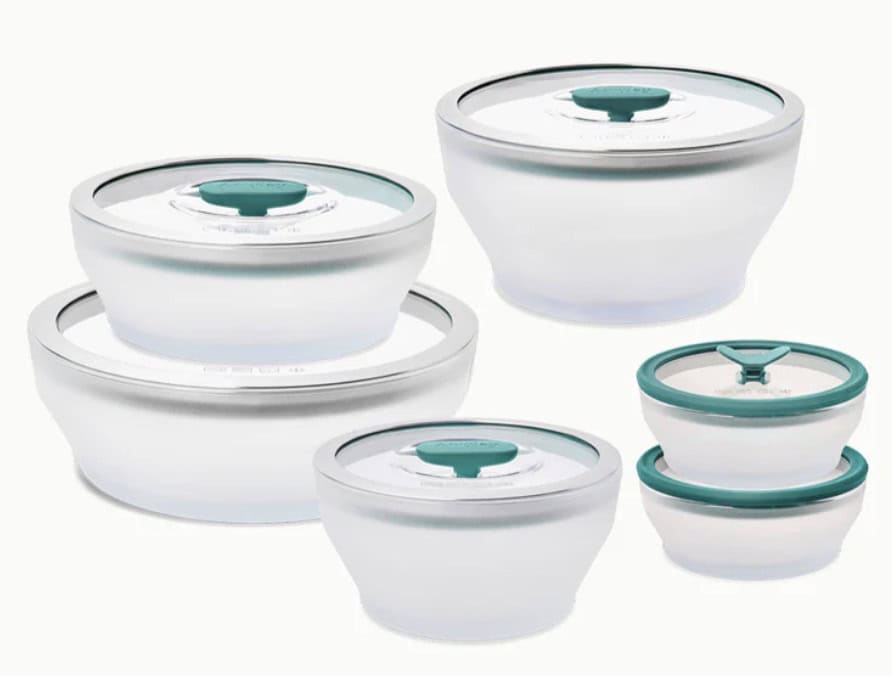
- Plastic-free glass cookware & storage for cooking, reheating, storing, and serving in one dish
- Borosilicate glass + glass lids with food-grade silicone (no plastic contact with food)
- Microwave, oven, freezer, and dishwasher safe
- Stackable, space-saving design with optional lid organizers
- Non-toxic alternative to plastic containers—won’t stain, warp, or leach
- Price range: approx. $28–$200+, depending on pieces vs. bundles
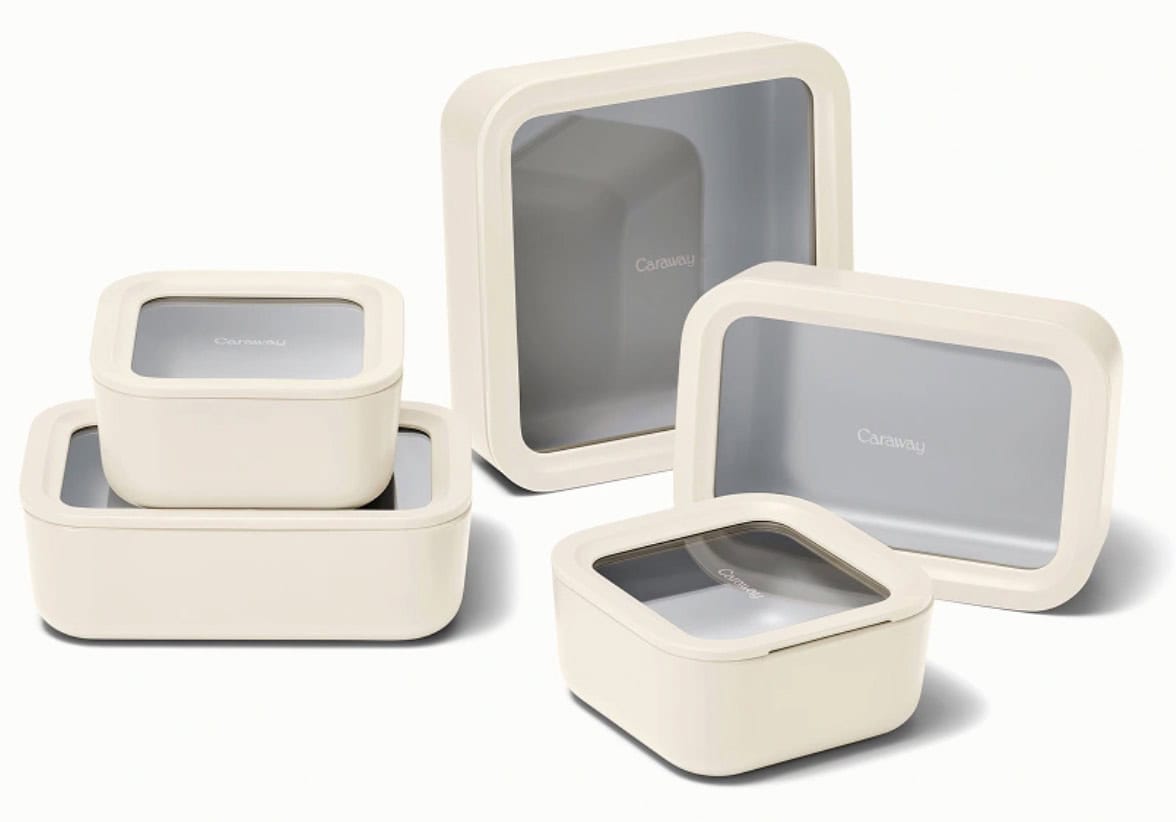
- Non-toxic glass: Ceramic-coated glass, free from BPA, PFAS/PTFE, lead, and cadmium
- Everyday safe: Microwave, oven, freezer, fridge, and dishwasher safe
- Fresh-seal lids: Air-release glass lids help lock in freshness and reduce odors
- Built-in organization: Includes storage organizers; optional Dash & Dot inserts
- Set options: 13-pc or 22-pc sets in multiple neutral colors
- Price: ~$225 (13-pc set; regular ~$360, discounts vary)
Other great options:
- Amazon Glass Storage Container Set (comes with plastic lids)
Stainless Steel Containers
Why make the swap: Stainless steel doesn’t contain any harmful chemicals, is virtually indestructible and won’t break like glass or degrade like plastic. The small ones are the best for packing dressings and sauces for lunch!

🏆 ZWS Stainless Steel Lunch Containers
- Material: Food-grade stainless steel (plastic-free, BPA-free, toxin-free)
- Leak-resistant designs: Many options include secure seals for meals, snacks, and travel
- Use cases: Ideal for lunches, leftovers, meal prep, travel, and on-the-go storage
- Durability: Lightweight, rust-resistant, and built to last for years
- Sustainability: Reusable alternative to plastic containers; low-waste packaging
- Price range: ~$9–$55 depending on size, style, and set
Other Great Options:
Beeswax Wraps
Why make the swap: Plastic wraps and aluminum foil create constant waste and can transfer chemicals to food.

- Material: Organic cotton infused with beeswax, tree resin, and jojoba oil (plastic-free)
- Use: Covers bowls, wraps produce, bread, and snacks; breathable to keep food fresh
- Reusable & compostable: Lasts up to ~1 year with regular use; compostable at end of life
- Care: Wash in cool water with mild soap; air dry
- Design options: Multiple prints (Honeycomb, Fruit, Veggies, Pollinators) and size packs
- Price: $14- $20.99
Other great options:
Mason Jars
Why make the swap: Versatile, airtight glass jars that create a great seal to keep food fresh.

- Material: Glass jars with metal lids; plastic-free food contact surface
- Use: Great for dry goods, leftovers, pantry storage, fermenting, and meal prep
- Non-toxic: No BPA, phthalates, or chemical leaching
- Versatile: Refrigerator, freezer, dishwasher, and (most) canning-safe
- Longevity: Extremely durable, reusable, and recyclable
Silicone Reusable Bags
Why make the swap: Eliminate single-use plastic bags and save money

🏆 Stasher Reusable Ziploc Bags
- Material: 100% platinum silicone; BPA/BPS/PVC-free
- Use: Fridge, freezer, microwave, dishwasher safe
- Seal: Strong pinch-lock; reliably leak-resistant
- Durability: Thicker and longer-lasting than most brands
- Sustainability: Replaces hundreds of disposable bags
- Our take: We’ve tried many—Stasher performs best, but costs more
- Price: $14- $26
Repurposed Glass Jars
Why make the swap: Free storage containers that give packaging a second life.
Best practices:
- Save jars from pasta sauce, jam, pickles, and other food products
- Remove labels with a mixture of baking soda and oil
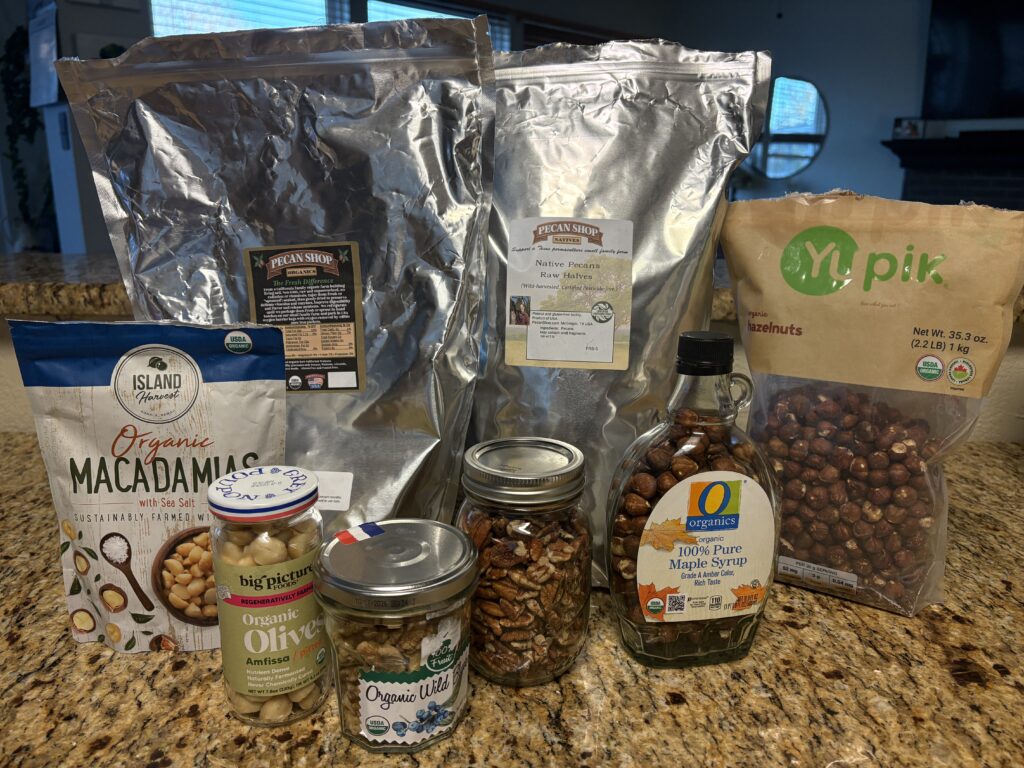
This option has given us plenty of free jars for many various uses!
4. Cleaning Products
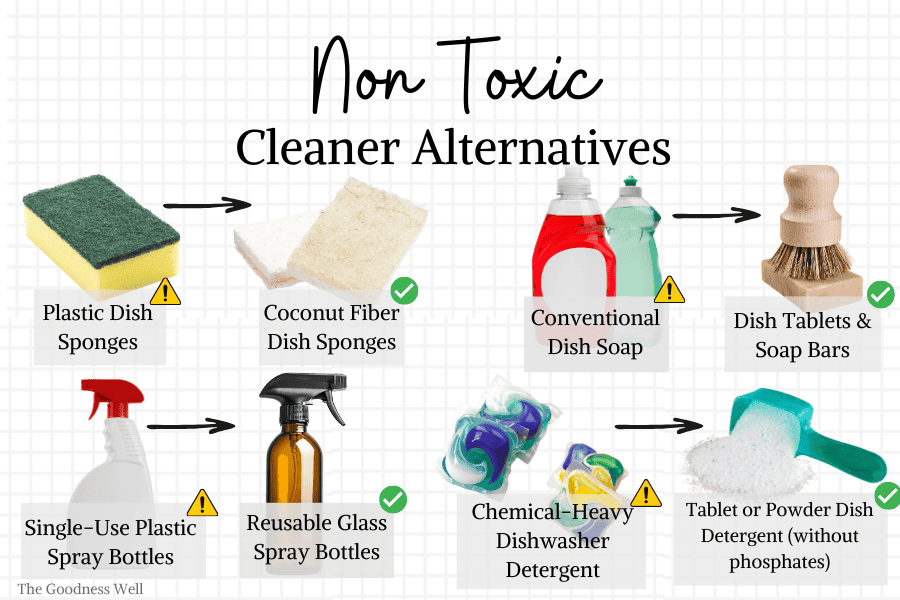
Conventional cleaning products contain toxic chemicals that can are irritate respiratory systems, harm skin, and contribute to indoor air pollution.
Even worse, manufacturers aren’t required to list all ingredients on their labels, making it hard to know exactly what you’re bringing into your home.
Kitchen cleaning essentials worth swapping:
- Basic yellow plastic dish sponges → coconut fiber scrubbers or Swedish dishcloths
- Conventional dish soap → concentrated tablets or dish soap bars
- Chemical-heavy dishwasher detergent → tablet or powder options without phosphates
- Single-use plastic bottles → Refillable glass spray bottles with concentrated cleaners
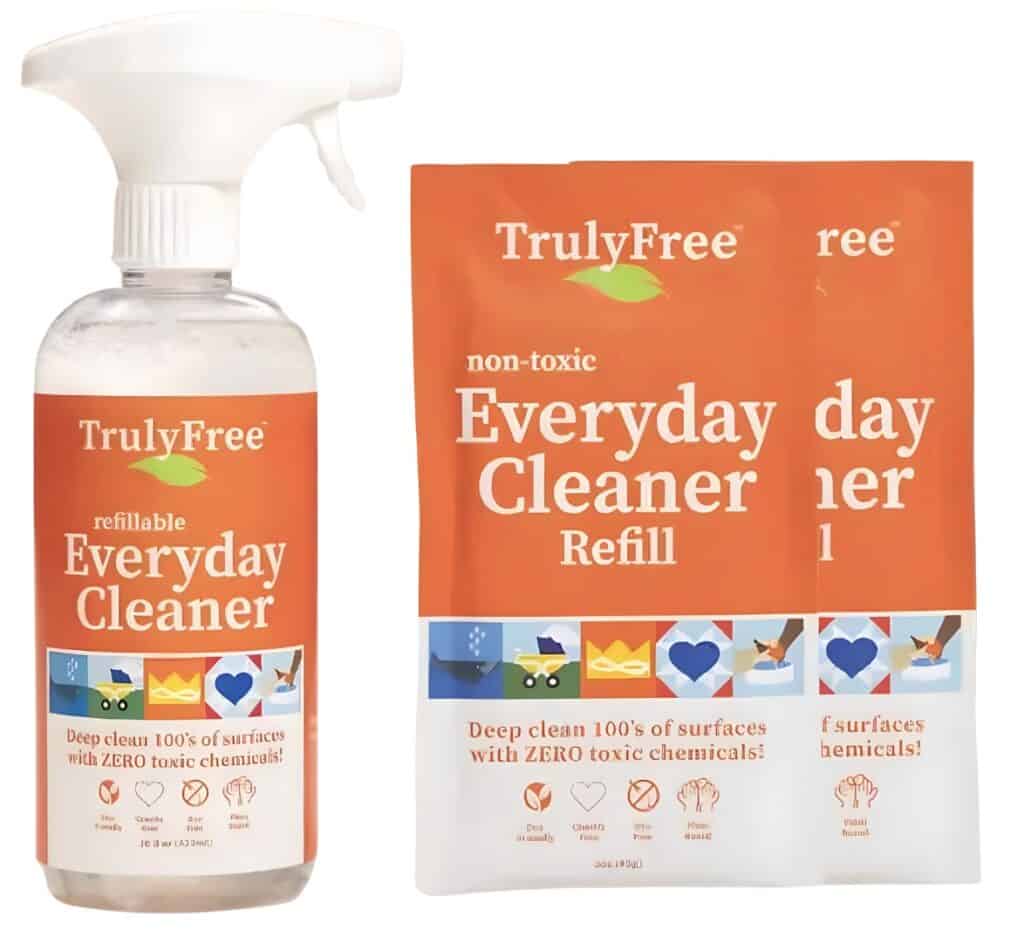
- Non-toxic cleaning and laundry brand
- Focuses on plant-based, family-safe formulas
- Free from ammonia, chlorine, PFAS, and synthetic fragrances
- Safe for kids, pets, and sensitive skin
- Sells cleaners, laundry wash, stain removers, and dishwasher products
- Built around refillable, reusable bottle systems
- Uses low-waste, eco-friendly packaging
- Transparency: Has a full list of every ingredient used and its impact
Other great options:
- Force of Nature – Uses electrolyzed water technology to transform salt, water, and vinegar into a powerful multi-purpose cleaner and disinfectant
- Zero Waste Store – Carries a wide variety of non toxic cleaning products
- Branch Basics – Offers a line of human-safe, plant- and mineral-based cleaning products built around a single concentrated formula that replaces multiple cleaners with refillable bottles.
5. Water Filtration
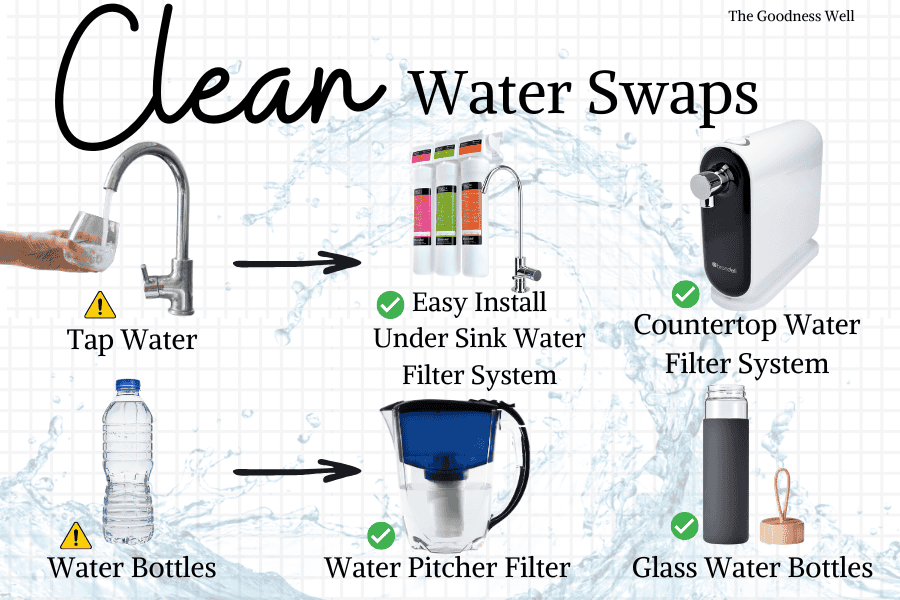
Depending on where you live, tap water can contain contaminants that you’d rather not drink—from heavy metals like lead and mercury to agricultural runoff, pharmaceuticals, and chlorine byproducts.
While municipal water treatment removes many harmful substances, water can pick up contaminants like lead after they leave these treatment centers.
Investing in a quality water filter will not only ensure your water is safe, but will save you on all those plastic water bottles!
Water Filter Options:


🏆 Brondell
- Home water filtration brand
- Offers countertop, under-sink, and reverse osmosis systems
- Reduces chlorine, lead, VOCs, pharmaceuticals, and sediments
- WQA Gold certified to NSF/ANSI standards
- Designed for easy DIY installation
- Wide range from budget to advanced systems
- Price range: $69–$600+
*Whatever brand you choose, look for NSF certifications (especially Standards 53 and 58) to make sure you’re getting what you pay for.
6. Appliances
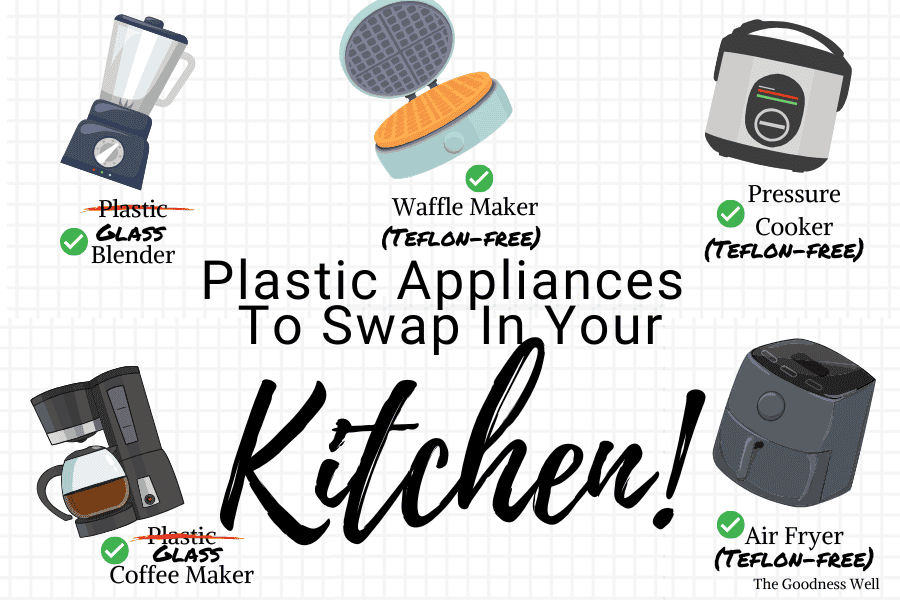
Many kitchen appliances contain plastic parts or toxic non stick parts that come into direct contact with your food, especially when heated.
These plastics release microplastics into your food over time.
Fortunately, you can find safer alternatives that use more inert materials like glass, stainless steel, and ceramic.
Look for options with minimal plastic food contact, especially for components that heat up or touch hot foods. Here are some of the best swaps to consider:
Blenders
The issue: Most blenders use plastic containers that can leach chemicals when blending hot ingredients or after years of tiny scratches from blending.
Better alternatives: Look for blenders with glass containers or stainless steel bases and blades.

🏆 Amazon 1500 Watt Glass Blender
We love this glass blender as it’s affordable, powerful, and has stood the test against everything we put in it including nuts.
Coffee Makers
The issue: Most coffee makers contain plastic components that come in contact with hot water, leaching microplastics and potential chemicals into your morning brew.
Plastic water reservoirs, brew baskets, and even internal tubing can all do the same.
Better alternatives: Look for coffee makers with glass, stainless steel, or ceramic components that touch water and coffee. Pour overs are the way to go

We love our french press! It’s plastic free and easy to use. Others love the pour over options too. Can’t go wrong with either!
Other Great Options:
Air Fryers & Toaster Ovens
The issue: Many air fryers use PFAS coated baskets and plastic components that can degrade with heat.
Better alternatives: Look for stainless steel interiors and minimal plastic parts.

This miniature oven from Our Place can do it all- air fry, toast, roast, bake, reheat & broil, all without those PFAS coated parts that traditional air fryers have.
Other Great Options:
Pressure Cooker
The issue: Some electric pressure cookers use non-stick coated inner pots.
Better alternatives: Models with stainless steel inner pots and minimal plastic.

🏆 Stainless Steel Pressure Cooker
This pressure cooker is made of durable stainless steel and plastic free without any toxic non-stick parts.
Electric Kettles & Teapots
The issue: Plastic kettles or those with plastic components contacting water.
Better alternatives: Glass or stainless steel models with minimal plastic contact.

🏆 Glass Teapot with Removable Infuser
This glass teapot has been a perfect way for us to brew tea without any unnecessary plastic or other questionable materials.
*This is for loose leaf tea
Other Great Options:
Wrapping It All Up
Remember, a healthier kitchen won’t happen all at once!
Even using a few of these swaps can help reduce waste and unnecessary chemicals in your kitchen. Start with items that come into direct contact with food and expand as your budget allows.
Thanks for reading!
FAQ
The safest materials for a non-toxic kitchen include glass, stainless steel, cast iron, carbon steel, and high-quality ceramic or ceramic-coated products. These materials are stable, don’t leach chemicals into food, and hold up well to heat, acidity, and long-term use—making them safer than plastic-based alternatives.
Start with items that touch your food most often or are exposed to heat, such as non-stick cookware, plastic food storage containers, and plastic cooking utensils. These are more likely to release chemicals or microplastics, especially when heated, scratched, or worn down.
Yes—non-toxic kitchen products made from glass, stainless steel, or certified silicone are significantly safer than plastic. Plastics can release chemicals like BPA, BPS, phthalates, and microplastics over time, even if labeled “BPA-free.” Non-toxic materials are more chemically stable and don’t degrade the same way.
Some of the biggest offenders include traditional non-stick cookware (PFAS/PTFE), plastic food containers, plastic utensils, cling wrap, and disposable food storage bags. These items are often exposed to heat, oils, or acidic foods—conditions that increase chemical leaching.
High-quality silicone is safer than plastic and works best for food storage (bags, lids, freezer use). It’s BPA-free and doesn’t create microplastics, but since it’s still synthetic, we recommend glass or stainless steel for cooking and high-heat use.
Yes. Glass is non-toxic and chemically inert, meaning it won’t leach chemicals, absorb odors, or break down over time. It’s the safest choice for food storage and reheating, especially compared to plastic.