4 Ways to Clear Clogs Without Chemicals | Natural Drain Cleaner

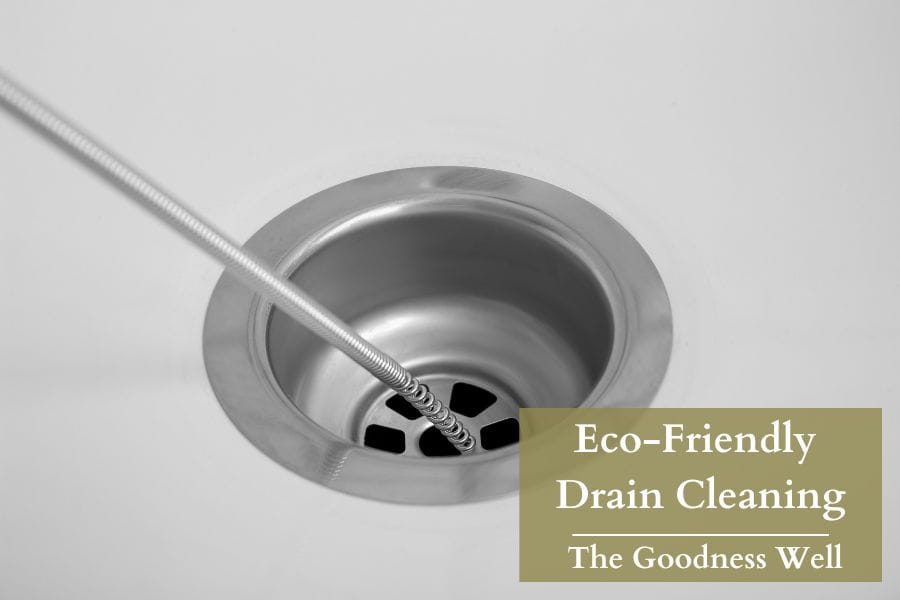
With both me and my wife having long hair, clogged drains are something we deal with all the time.
Instead of reaching for Draino or some other harsh, chemical-laden drain cleaner that can damage pipes and harm the environment, we’ve discovered these eco-friendly alternatives that tackle everything from minor hair clogs to serious blockages—no harsh chemicals required!
Here’s what to do, step-by-step.
We are reader-supported. So some links in this post may be affiliate links, which means we may earn a small commission if you make a purchase. Learn more
Why Choose Natural Drain Cleaning Methods?
Traditional chemical drain cleaners contain toxic ingredients that can:
- Damage your pipes over time
- Harm the environment when they enter water systems
- Create toxic fumes in your home
- Cost significantly more than natural alternatives
Our methods here are not only safer and more sustainable, but much more effective!
Prevention First: Stop Clogs Before They Start
Before we dive into clearing existing clogs, let’s talk about the best solution: preventing them in the first place!
If you’re dealing with frequent hair clogs (like we used to!), these simple drain catchers will save you all the trouble of drain cleaning:
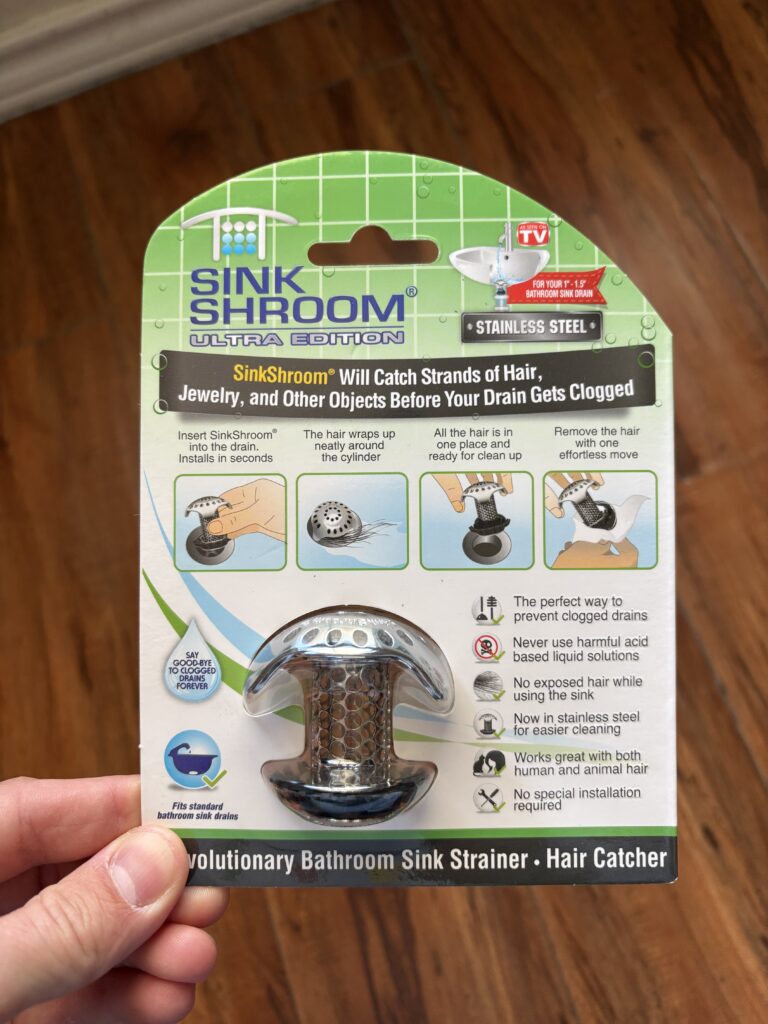
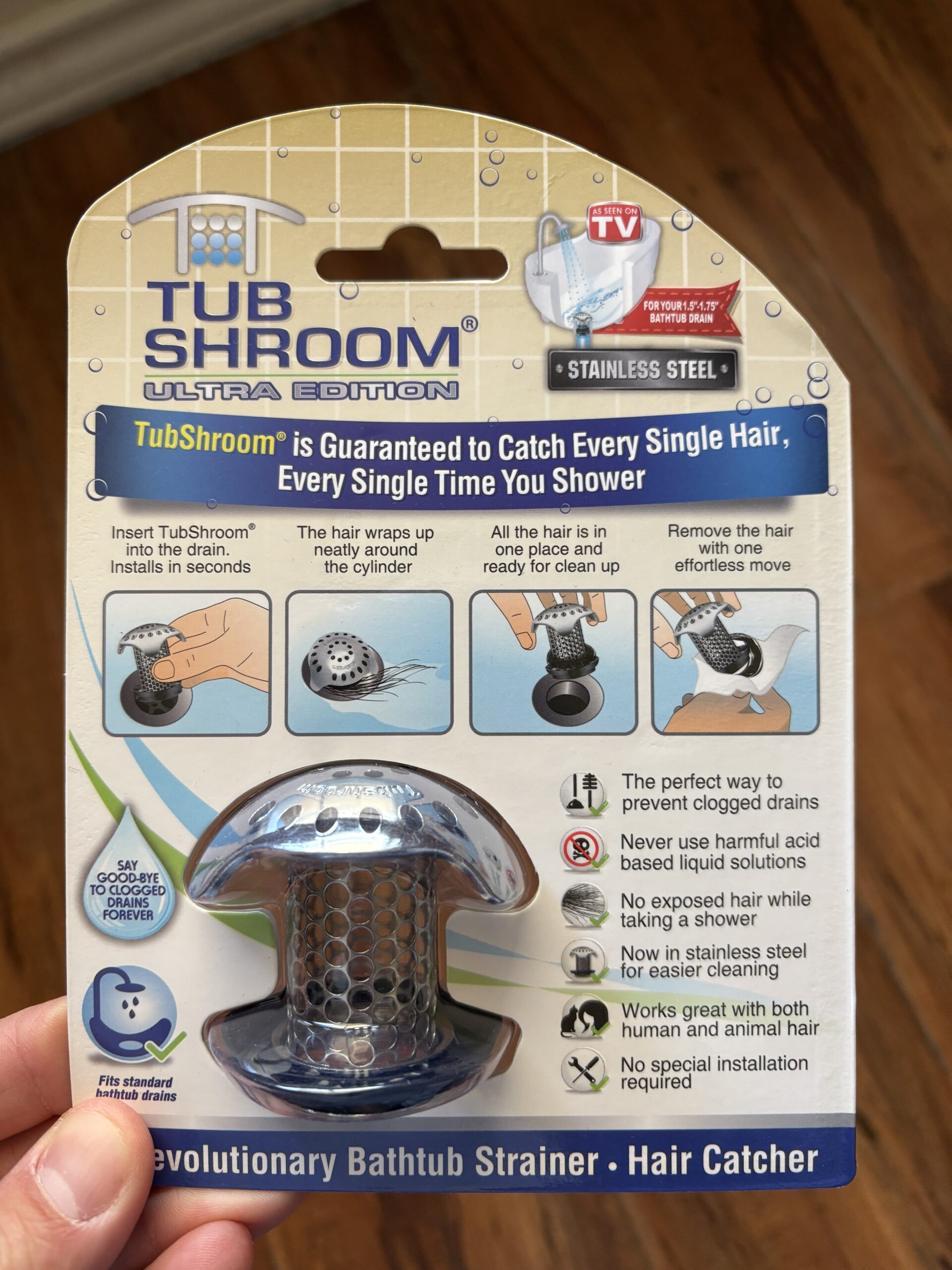
They are called the “Sink/Tub Shroom” and we love them.
They sit inside your drain and catch hair, jewelry, and small objects before they can create blockages. They are pretty easy to install too!
Because of the size difference of the drains, they create one for the sink and a seperate one for the bathtub drain.
The 4-Step Eco-Friendly Drain Cleaning Method
If you’re already dealing with a clog, here’s our proven approaches that work.
Using them in order will do the best job on fully clearing your drain:
Step 1: Manual Removal of Blockages (Choose Your Level)
Start with mechanical removal based on the severity of your clog. Think of blockages in three levels, each requiring a different approach:
Level 1: Surface Blockages – Wire Hanger Method
Say hello to my super sophisticated homemade drain unblocker!
This method has always worked great for any hair clogs you can see near the surface.
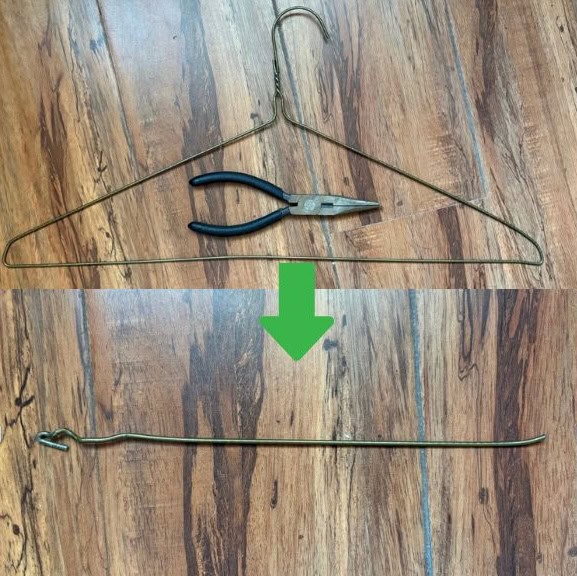
Best for: Visible debris you can see near the drain opening
What you’ll need: An old wire coat hanger
How to do it:
- Straighten out a wire coat hanger, leaving a small hook at one end
- Carefully insert the hook end into the drain
- Insert into drain and twist to fish out hair, food particles, and other visible debris
- Be gentle to avoid pushing blockages further down
Level 2: Shallow Clogs – Plastic Drain Snake
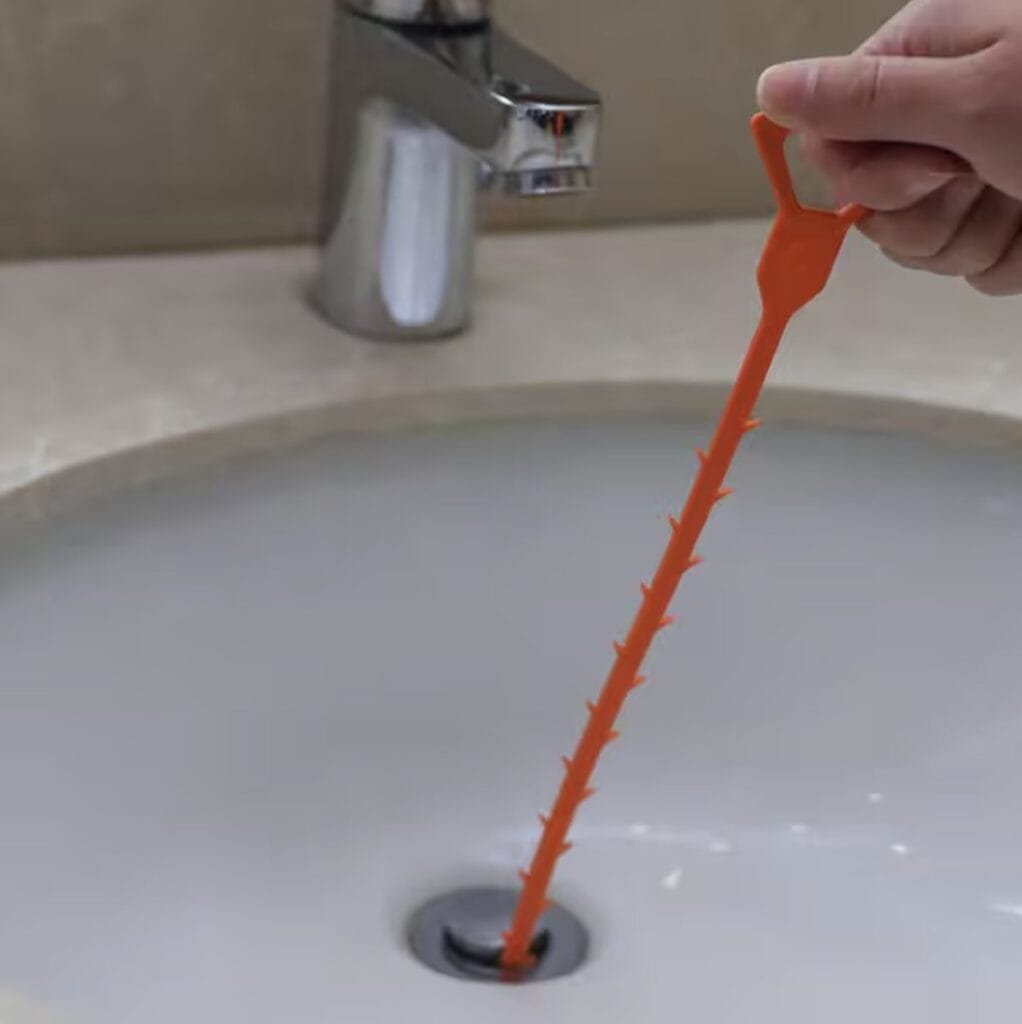
Best for: Hair and soap buildup in bathroom sinks, showers, and tubs
What you’ll need: Plastic hair snake (18-20 inches, available at most stores for $2-5)
How to do it:
- Push the thin, flexible plastic strip down the drain
- The barbs will snag hair and soap scum as you go
- Slowly pull it back out, bringing the clog with it
- Dispose of the debris and rinse the tool
Why plastic snakes work well: They’re specifically designed for hair clogs and are gentle on pipes.
Level 3: Deep or Stubborn Clogs – Metal Drain Auger
We had to use one of these before for a clog deep in our pipes and it wasn’t the funnest experience, but it does get the job done.

Best for: Kitchen sinks with grease buildup, food particles, or clogs deep in the pipe
What you’ll need: Metal drain auger/plumber’s snake (25-33 feet, $15-30 at hardware stores)
How to do it:
- Insert the coiled steel cable into the drain
- Crank the handle while feeding the cable down the pipe
- When you hit resistance, continue cranking to break up or hook the clog
- Slowly pull the auger back out
- Run water to test if the blockage is cleared
The good thing is, clearing any debris using these methods is the hard part.
These next few steps just help to flush out the remaining residue and are much easier to do.
Step 2: Apply Dish Soap
Dish soap is a powerful degreaser that can help break down soap scum and grease buildup.
What you’ll need: Regular liquid dish soap (about 2-3 tablespoons)
How to do it:
- Squirt a generous amount of dish soap directly into the drain
- Let it sit for 20-30 minutes to penetrate and break down greasy residue
- The soap will help lubricate the pipes for easier flushing
Step 3: Flush with Boiling Water
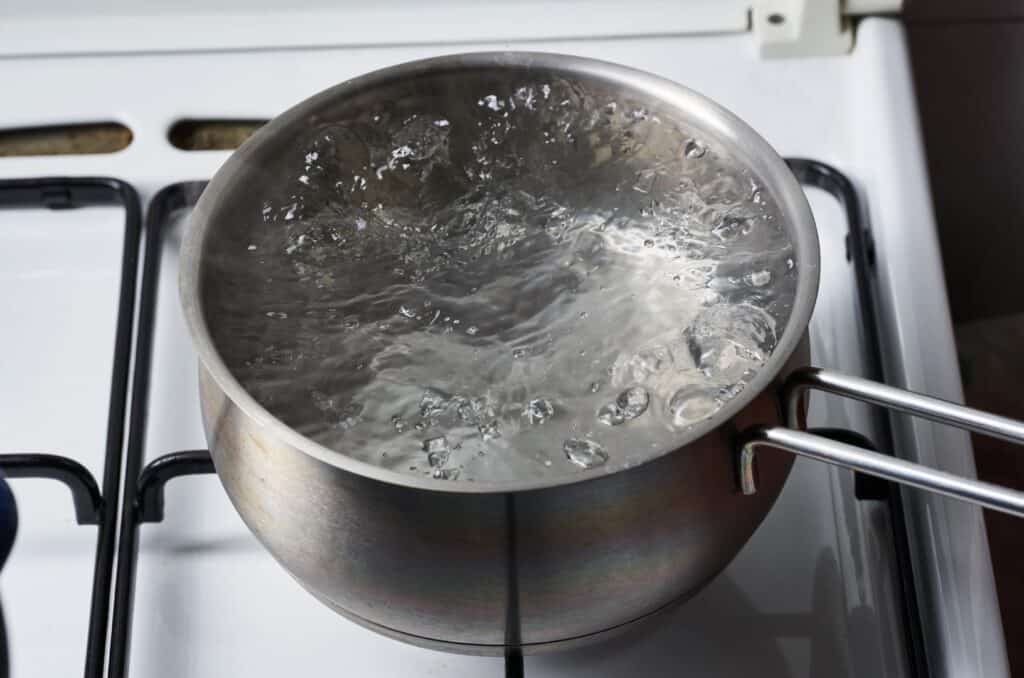
This is where the magic happens – boiling water can dissolve soap residue and flush away loosened debris.
What you’ll need: A pot of boiling water
How to do it:
- Boil a pot of water
- Slowly pour the boiling water down the drain in 2-3 stages
- Allow a few seconds between pours to let the hot water work
- The heat will help dissolve grease and wash everything away
While boiling water leaves the pot at 212°F, it cools as it moves through air and into the drain. It doesn’t stay at that temperature or sit in your pipes — it passes through in seconds. PVC pipes are rated for up to ~140°F continuously and can easily handle short bursts well above that. If they can take the heat of your pasta water week after week, they can handle a pot of boiling water for drain cleaning.
Step 4: Use an Enzyme Cleaner
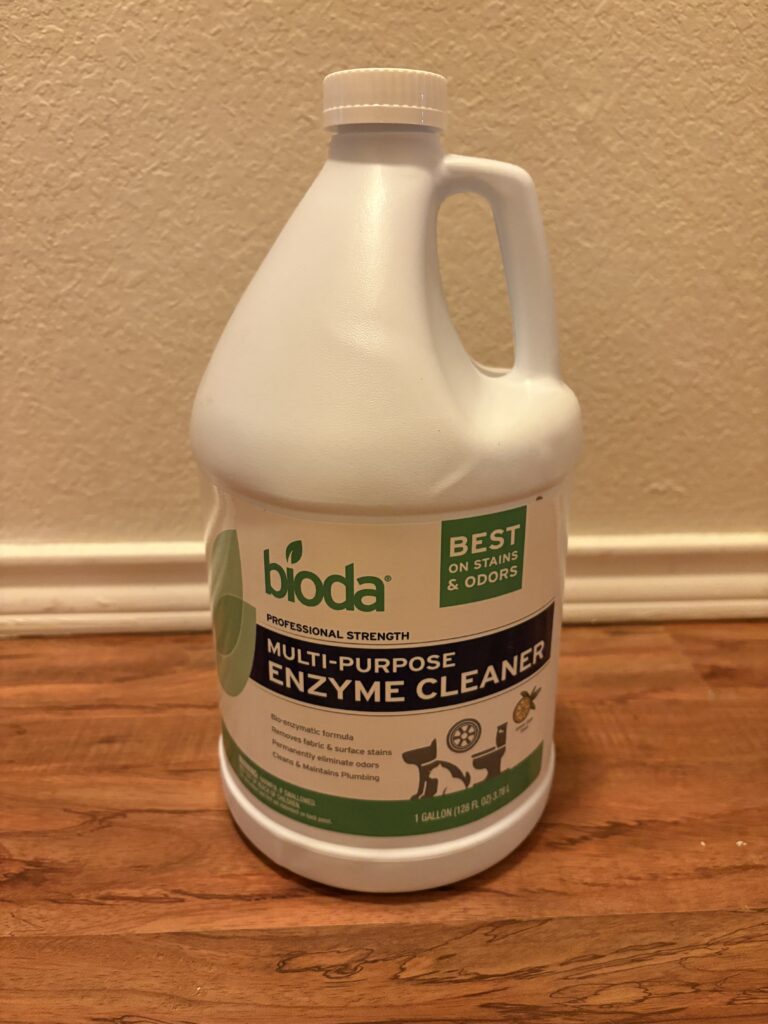
We use enzyme cleaners on our drains a couple times a month to help keep the pipes clean.
Enzyme drain cleaners are great because they use probiotics to break down organic buildup like grease and food scraps, keeping pipes clear without harsh chemicals.
They’re safe for plumbing and the environment but won’t clear fully blocked drains or clogs caused by non-organic materials (like plastic, hair ties, or mineral deposits).
What you’ll need: Commercial enzyme drain cleaner
How to do it:
- Pour the recommended amount of enzyme cleaner into the drain
- Let it sit overnight (8-12 hours) for maximum effectiveness
- Flush with warm water in the morning
- Repeat monthly for preventive maintenance
Enzyme cleaners are also great for things like trash bins, carpets, and grout because the enzymes actually break down the leftover food bits, spills, and grime that cause stains and odors in the first place.
What About Baking Soda & Vinegar?
I know a lot of people recommend the classic baking soda and vinegar combination for drain cleaning, but this method is more show than anything.
When baking soda (a base) meets vinegar (an acid), they immediately neutralize each other, creating a brief fizzing reaction. Once the fizzing stops—which only lasts seconds—you’re left with salt water that has zero cleaning power.
The bubbling might look impressive, but it won’t tackle grease, hair clogs, or any real blockages. You’re better off using the methods above instead.
When to Call a Professional
While these methods are effective for most drain issues, contact a plumber if you encounter:
- Completely blocked drains that won’t respond to treatment
- Recurring clogs in the same location
- Multiple drains backing up simultaneously
- Sewage odors or unusual sounds from drains