Do Natural Cleaners Really Work? Here’s The Facts

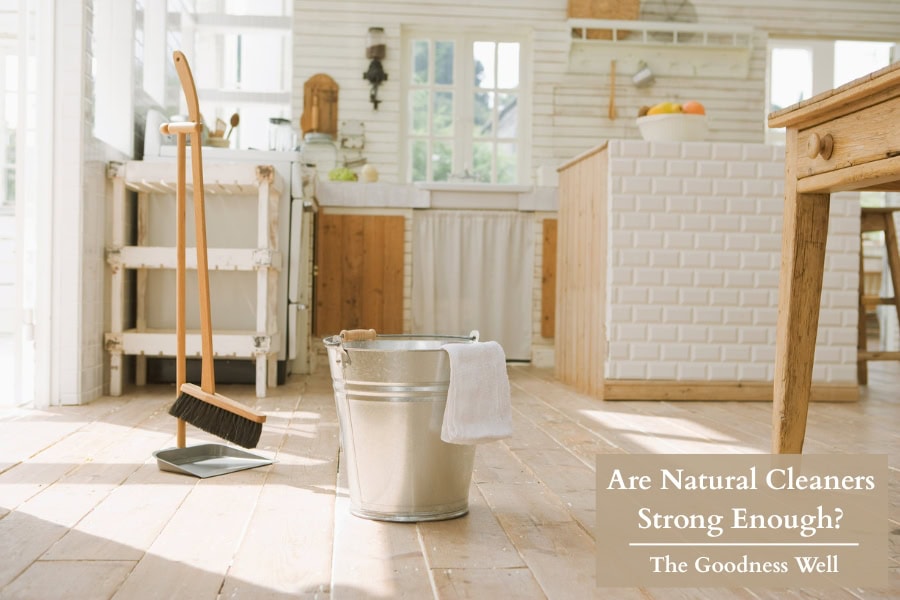
Just like we care about what we use to clean our body, it’s important considering what products are not only safe but also effective at cleaning our home.
With growing concerns about harsh chemicals in our homes, more people are turning to natural cleaning alternatives.
…But do these homemade cleaner solutions actually work, or are we just fooling ourselves?
After researching and testing natural cleaners ourselves, we’ve got the answers. Lets get into what actually works and whether or not natural cleaners are even effective.
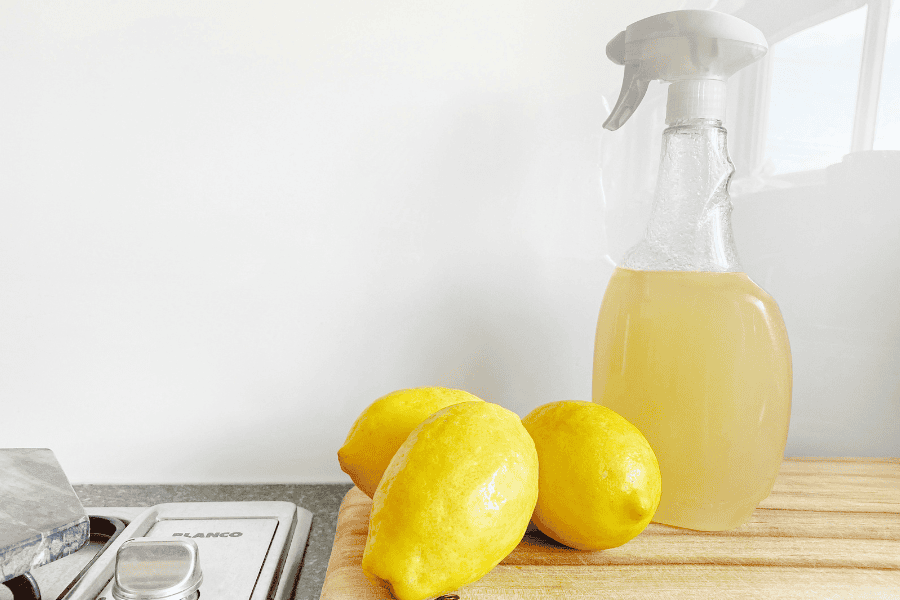
What Are Natural Cleaners?
First off, lets talk about what is considered a natural cleaner.
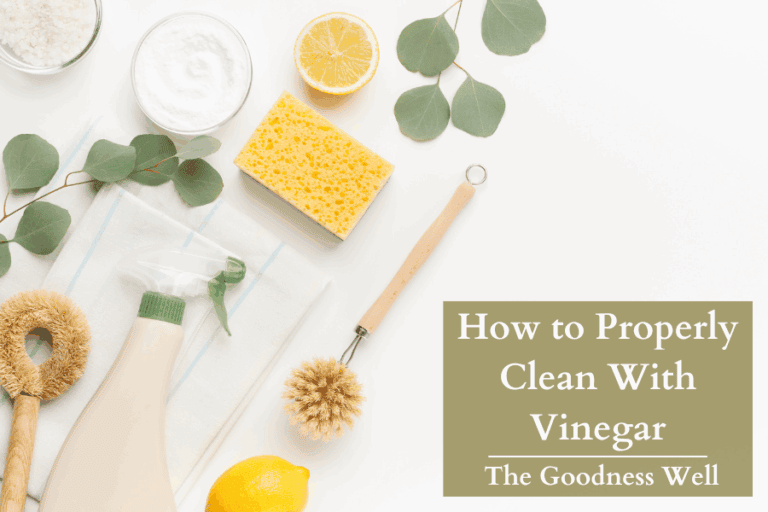
Natural cleaners are cleaning solutions made from common household ingredients like vinegar, baking soda, lemon juice, and sometimes essential oils.
You can usually find natural cleaners in store but more often than not this is something you make at home.
Main reasons people choose natural cleaners instead of conventional cleaners:
- Safety: No harsh chemicals around kids, individuals with sensitivites and pets
- Cost: Often much cheaper than commercial products
- Environmental impact: Biodegradable and eco-friendly
- Transparency: Fewer mysterious ingredients with unpronounceable names
Cleaning vs. Disinfecting
Before we dig into specific natural cleaners, it’s crucial to understand that cleaning and disinfecting are two different things:
- Cleaning removes dirt, grime, and some germs
- Disinfecting kills bacteria, viruses, and other pathogens
Many natural cleaners excel at cleaning but struggle with true disinfection. This is important to know when looking for a natural product.
Consider are you wanting a natural disinfectant or a natural cleaner?
Natural Cleaners That Actually Work
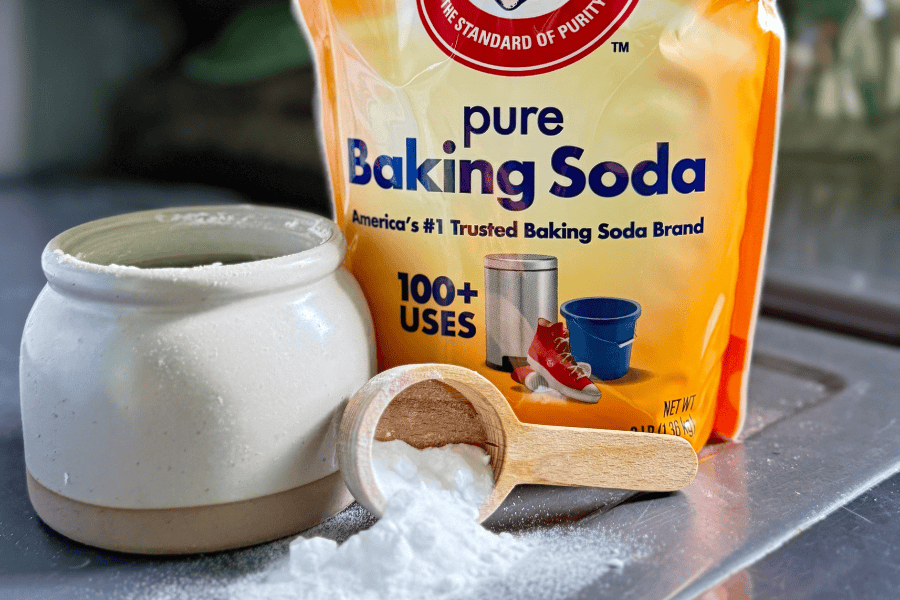
Baking Soda: The $1 Cleaning Powerhouse
Baking soda is arguably one of the most versatile and effective natural cleaners available.
The alkaline properties help break down acids and neutralize odors, while its mild abrasive nature scrubs away grime without scratching surfaces.
Baking soda is effective at…
- Produce washing: Research shows baking soda is more effective than commercial produce washes at removing pesticide residues (use ½ teaspoon per cup of water, soak for 12-15 minutes)
- Deodorizing: Absorbs odors in refrigerators, carpets, and mattresses
- Scrubbing power: Removes burnt-on food from pots and stubborn stains from walls
- Laundry boost: Brightens whites and neutralizes persistent odors
Vinegar: Effective, But Only When Used Correctly
Here’s where things get interesting.
Most people use regular 5% white vinegar for cleaning, but research reveals this isn’t actually effective for disinfection.
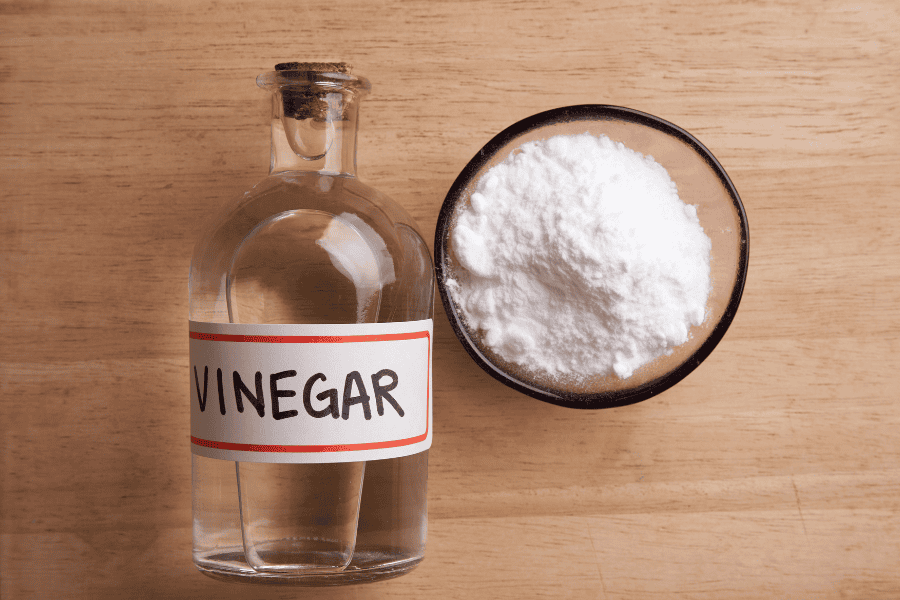
A 2020 study by BMC Microbiology found that 5% vinegar alone isn’t reliably effective as a disinfectant. However, the study showed that 10% acetic acid combined with 1.5% citric acid can effectively kill bacteria, fungi, and some viruses.
To make an effective vinegar disinfectant:
- Buy 30% cleaning vinegar (available on Amazon or at Home Depot/Walmart)
- Dilute: Mix 1 part 30% vinegar with 2 parts water (creates 10% solution)
- Optional but recommended: Add 1 tablespoon citric acid per cup of final solution
- Allow 5+ minutes of contact time for disinfection
What this solution can kill:
- Common household bacteria (E. coli, Salmonella, Staph)
- Some enveloped viruses
- Household molds and fungi
The key is remembering that contact time matters – don’t spray and immediately wipe. Give it those crucial 5 minutes to do its job.
Where Natural Cleaners Fall Short
While natural cleaners have their place, they’re not cure-alls. Here’s when you might need something stronger:
- Tough pathogens: Even properly formulated vinegar solutions can’t kill bacterial spores (like C. difficile), hardy viruses (like norovirus), or handle high-risk contamination from raw meat or bodily fluids.
- Heavy-duty jobs: For serious mold infestations, sewage cleanup, or sanitizing after illness, commercial disinfectants are more reliable.
The Myth of Vinegar + Baking Soda
Despite popular belief, mixing vinegar and baking soda creates a reaction that neutralizes both ingredients, making them less effective as cleaners.
The only exception? Drain cleaning, where the fizzing action can help loosen debris.
Natural cleaners work well when used correctly, but aren’t magic solutions for everything.
Baking soda excels at cleaning and deodorizing, while, when used correctly, vinegar can handle everyday disinfection needs.
For daily cleaning tasks, natural options often outperform commercial cleaners at a fraction of the cost.