What’s Really in Memory Foam — Is It Toxic?

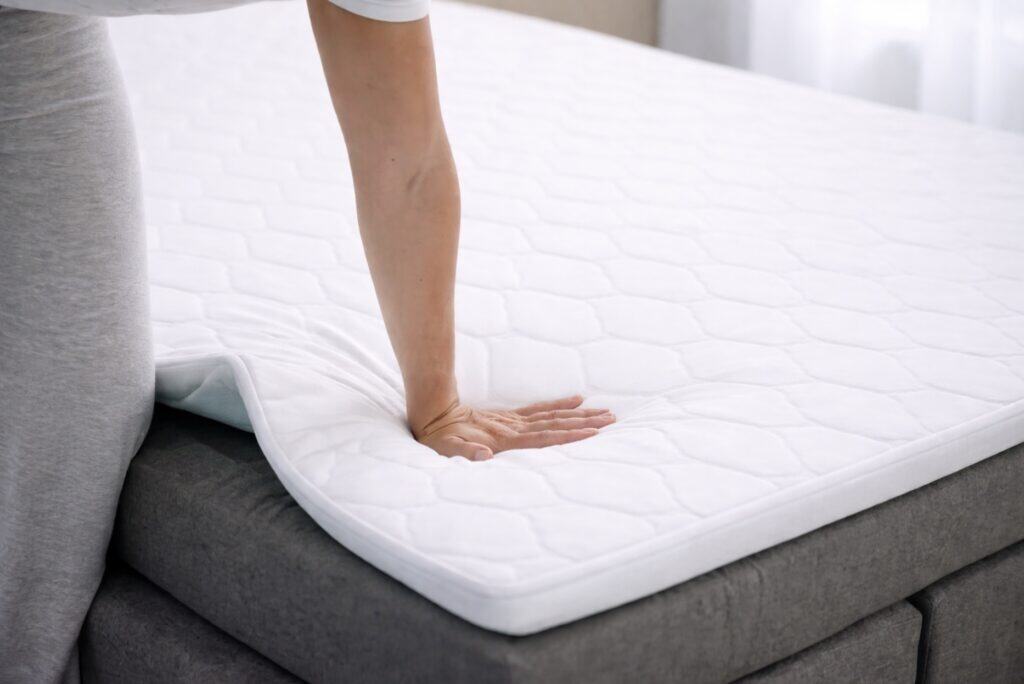
Memory foam gets called “toxic” a lot, but the real question is whether a specific product is something to be concerned about.
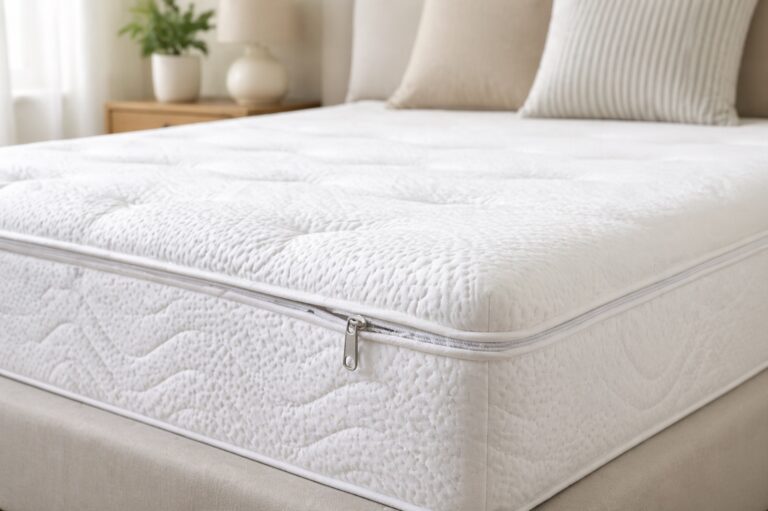
Memory foam is made from polyurethane-based foam, and some products can release volatile organic compounds, especially when new.
Indoor chemical exposures are worth paying attention to, since the EPA notes that VOCs are emitted by many everyday products like memory foam and can have short- and long-term health effects.
In this article, we’ll look at when memory foam is more concerning, when it is less concerning, and how to make a lower-risk choice.
Memory foam can be considered toxic and can release chemicals and microplastic particles, but some products are much lower concern than others.
For shoppers, that usually means the real issue is product quality, off-gassing, and whether the foam has credible certifications.
It does not automatically mean every memory foam mattress is unsafe, but it also does not mean every option is equally low-risk.
When Memory Foam Is More Concerning
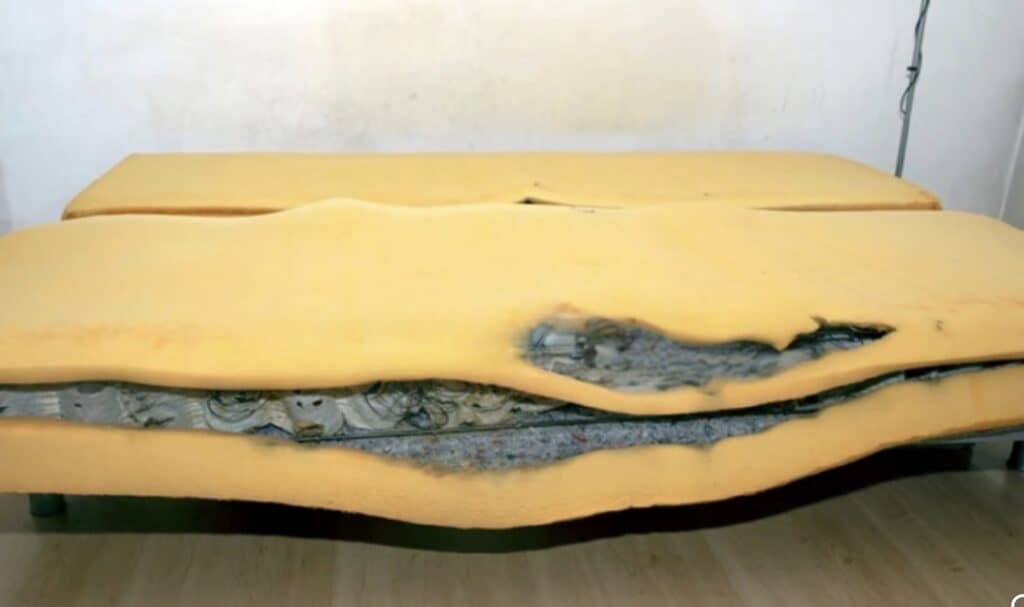
Memory foam raises more concern when the foam is low quality, heavily scented, or breaking down in daily use.
The issue is that memory foam is a form of polyurethane foam, and polyurethane foams can release chemicals into indoor air and wear down over time.
Concern is higher in these situations:
- The mattress or topper has a strong chemical smell that lasts for days
- The product came compressed in a box and smells intense right after opening
- The room has little ventilation
- The manufacturer gives little material information
- The foam is old and starts crumbling, shedding, or forming dust-like particles
- The product is used every night, close to your face, for many hours
Memory foam also deserves a closer look because it is not just one simple material. It is polyurethane foam with additives that change how soft, dense, or slow-moving it feels.
Those added ingredients vary by product, which is one reason one mattress may smell mild while another smells harsh.
VOCs are part of this discussion because new foam can release them into indoor air. That matters most in small bedrooms, nurseries, and other spaces where air does not move well.
Off-gassing means chemicals move out of a product and into the air around it. This usually happens most when the product is new.
Research on indoor materials has found that polyurethane soft foams can release odorous compounds during degradation and oxidation, which helps explain why some foam products smell stronger and stay bothersome longer than others.
Physical breakdown matters too. When foam gets old or damaged, it breaks down into microplastics.
But it does mean the material is no longer staying contained well, and that raises the chance of breathing in or touching breakdown particles during normal use.
A mattress can stop looking “new” long before it fully fails. Crumbling or dust-like shedding is a sign the foam is no longer holding together well.
This matters more for:
- Babies and young children
- People with asthma
- People sensitive to odors
- Anyone sleeping on the product every night for long periods
Why Off-Gassing Matters
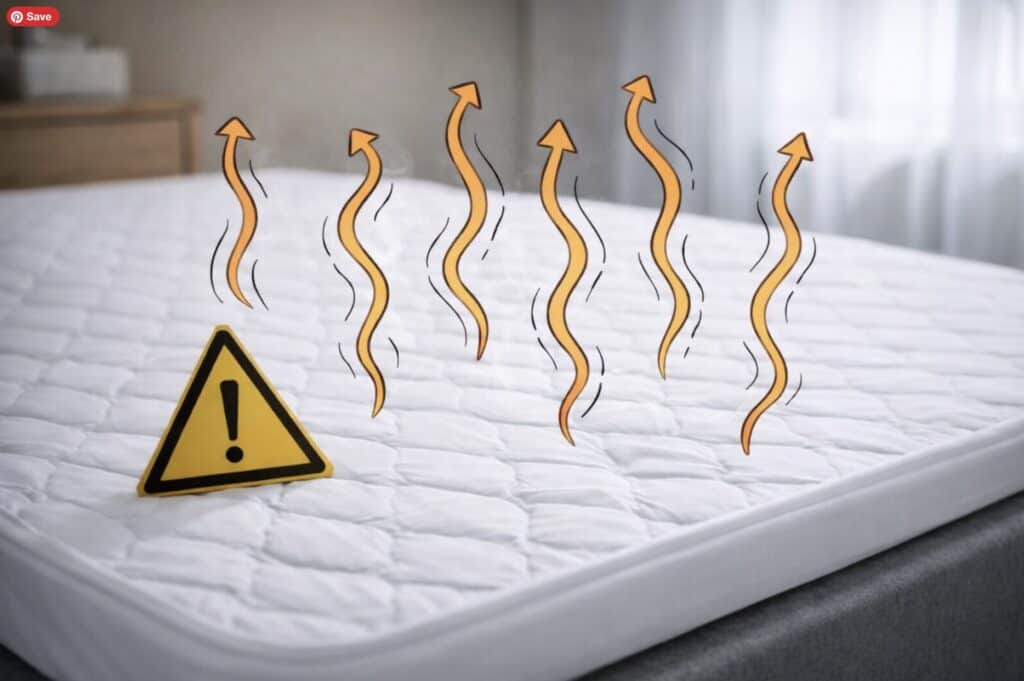
Off-gassing is the release of chemicals from a product into the air. With memory foam, this usually happens most when the product is new.
These chemicals are often called VOCs, or volatile organic compounds.
VOCs are a major part of indoor air pollution, and indoor sources include furnishings and household materials, as described in this NIH-hosted review on indoor air pollution and vulnerable groups.
A strong smell does not prove a product is highly toxic. But smell still matters. It can tell you the product is releasing chemicals into the room right now.
Off-gassing matters most because memory foam sits close to your body for hours at a time.
You are not just walking past it. You are sleeping on it, often with your face a short distance away.
Short-term problems are usually the main issue people notice first, such as:
- headaches
- eye irritation
- throat irritation
- feeling bothered by the smell
A mattress affects exposure differently than a shelf or table because you stay close to it for hours at a time.
So when people ask about memory foam and toxicity, off-gassing is one of the first practical things to look at.
It tells you how much the product affects your indoor air during the period when emissions are highest.
How to Spot Less Toxic Memory Foam

Memory foam is less concerning when the product has been tested for lower emissions and the manufacturer tells you what is in it.
That does not make it chemical-free. It does reduce some of the biggest unknowns.
Two labels matter most here:
- CertiPUR-US for the foam itself
- GREENGUARD Gold for low chemical emissions from the finished product or material category
CertiPUR-US says the foam is made without certain substances, including formaldehyde, ozone depleters, regulated phthalates, and certain heavy metals.
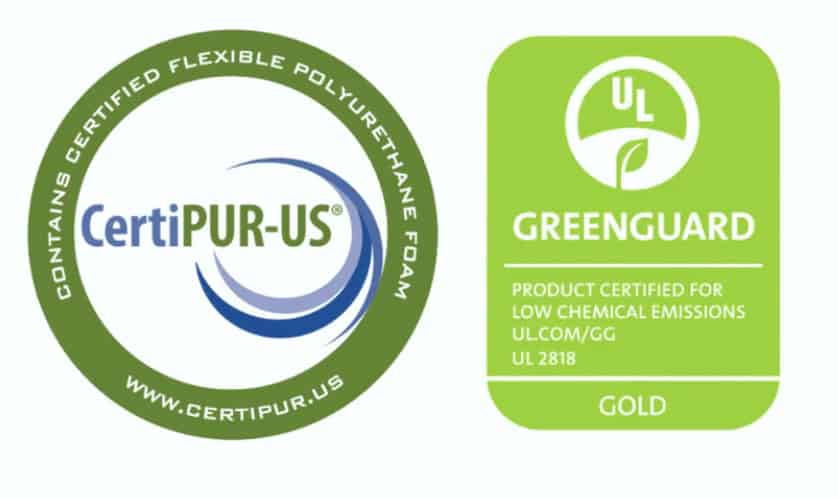
It also sets a low-VOC emissions limit for the foam.
GREENGUARD Gold focuses on chemical emissions.
UL describes it as a certification for low chemical emissions that supports healthier indoor air, which is why it gets attention in indoor air research and product screening.
That lowers concern in real life because you are buying with fewer blind spots. A certified product has gone through third-party testing instead of relying only on marketing claims.
Marketing words like “clean,” “safe,” or “eco” are not the same as third-party certification.
Memory foam is also less concerning when:
- the smell fades fairly quickly
- the company lists the materials clearly
- the foam stays intact and does not crumble
- the cover and other layers are also disclosed
- you can air it out before regular use
A well-made certified product is usually a lower-concern choice than a cheap foam product with no testing details. The difference is not small.
One gives you verified emissions or content limits, while the other asks you to trust the label on the box.
REAL-LIFE EXAMPLE

You are comparing two boxed memory foam mattresses online, and one lists CertiPUR-US and GREENGUARD Gold while the other gives no certification details. Those labels tell you the foam or product has been tested for certain chemical and emissions standards, not just described as “safe” by the seller. However, they do not guarantee zero odor or zero chemicals.
More Practical Tips
Choosing lower-risk foam is mostly about reducing avoidable exposure. You are looking for better testing, better disclosure, and fewer surprises once the product is in your home.
Start with these basics:
- Choose foam with CertiPUR-US
- Prefer products with GREENGUARD Gold when possible
- Read the full materials page, not just the headline claims
- Avoid vague phrases like “eco foam” with no testing details
- Be cautious with products that hide the foam type or additives
Ventilation also matters after purchase. The EPA says indoor pollutant levels rise when fresh air is limited, and it recommends source control and ventilation to reduce exposure to indoor pollutants.
If a product page makes big safety claims but hides the materials, skip it and keep looking.
That is why airing out a new foam product before regular use can lower the amount of VOCs trapped in your bedroom air.
A few practical habits help:
- Unbox it near open windows if you can
- Let it air out before sleeping on it
- Use extra caution for kids’ rooms and small bedrooms
- Return or replace it if the odor stays strong
Look beyond the foam itself. The cover, adhesives, and added treatments matter too.
A certified foam core is better than an uncertified one, but the whole product still deserves a quick check.
At The Goodness Well, we look at memory foam as a material where product quality, clear labeling, and home setup matter more than marketing words.
Key Takeaway: Lower-risk foam usually comes down to tested materials, clear labels, and good ventilation early on.
The Bottom Line

Memory foam is not the highest-concern material in every home. But it is also not a material to treat as automatically harmless.
The main concerns are practical ones:
- new foam can release VOCs into bedroom air
- low-quality foam can smell stronger and longer
- older foam can break down and add synthetic particles to dust
- daily, close contact makes these issues more relevant than they would be for a rarely used item
Bedroom materials matter more than many people realize because they stay close to your breathing space for long periods.
That is why memory foam shows up in indoor air discussions. Indoor materials and household products can release VOCs, and ventilation affects how much stays in the air you breathe.
For most people, the better question is not “Is all memory foam toxic?” It is “How much uncertainty does this specific product bring into my home?”
A lower-risk choice looks like this:
- third-party certifications
- clear material disclosure
- manageable or short-lived odor
- no visible crumbling or shedding
- time to air it out before regular use
If a memory foam product smells harsh, lacks testing details, or starts breaking down, concern goes up. If it is well-made, tested for lower emissions, and stays intact, concern goes down.