Is Microfiber Upholstery Safe for a Low-Tox Home?

Microfiber upholstery is often marketed as practical and low-maintenance, but what does that convenience mean for your health and home exposure?
That question matters because indoor materials can contribute to the mix of particles and chemicals people live with every day, and the EPA notes that indoor pollutant sources that release gases or particles are a primary cause of indoor air quality problems.
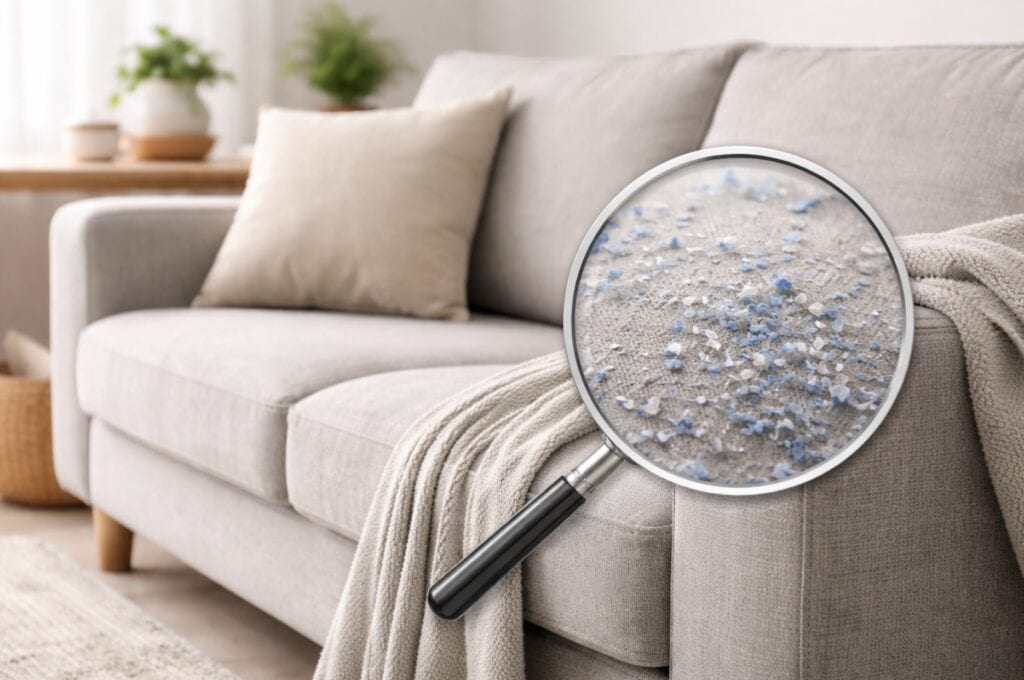
With microfiber, the conversation usually comes down to two things: synthetic fibers and whether they shed microplastics over time.
The harder part is that “safe” is not one fixed label. It depends on what kind of risk a person is trying to avoid.
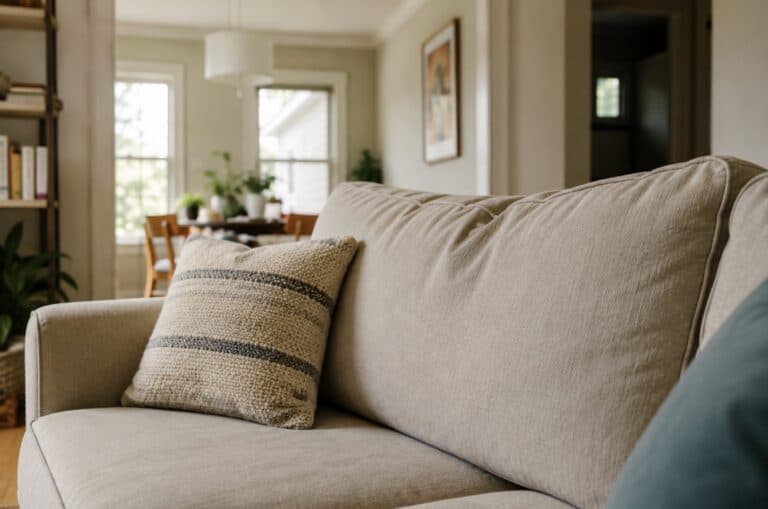
Microfiber upholstery is a synthetic fabric that may shed tiny plastic fibers over time.
For most homes, it is not the highest-risk upholstery choice, but it is also not the lowest-exposure option.
It tells you the fabric is usually plastic-based and durable, but it does not automatically tell you whether the product is free from added treatments or the best fit for a low-tox home.
What Raises Concern
Two things usually raise the most questions:
- The fabric itself
- Anything added to the fabric
Most microfiber upholstery is made from polyester, nylon, or a blend of synthetics. These are forms of plastic.
With daily use, the surface gets rubbed by clothes, skin, pets, and cushions. Over time, that friction can release tiny fibers into household dust.
As microfiber rubs and wears down, small plastic fibers can break loose and settle into dust, air, and soft surfaces around the home.
Researchers study this because indoor textiles are a known source of microfibers.
Similar to bedding materials like down alternative, microfiber gets flagged because:
- It is made from very fine synthetic fibers
- Those fibers can break loose with use
- Dust can carry those fibers through the home
- Some products include added performance treatments
It explains why microfiber comes up in health and environmental research in the first place.
The concern starts with what the fabric is made of, then grows if extra coatings are part of the product.
When Risk Is Higher

Higher-Concern Situations
Microfiber becomes more of a concern when the fabric is breaking down, heavily handled, or treated with extra coatings.
Risk is higher when you have:
- Older upholstery with visible wear, thinning, or pilling
- High-friction use from kids, pets, or people sliding across the same spots daily
- “Performance” claims such as stain-resistant or water-repellent finishes
- Heavy dust buildup in the room, especially around soft furniture
- Sensitive households trying to reduce synthetic materials as much as possible
The more a plastic-based fabric rubs, ages, and sheds, the more fibers end up in dust and air.
REAL-LIFE EXAMPLE
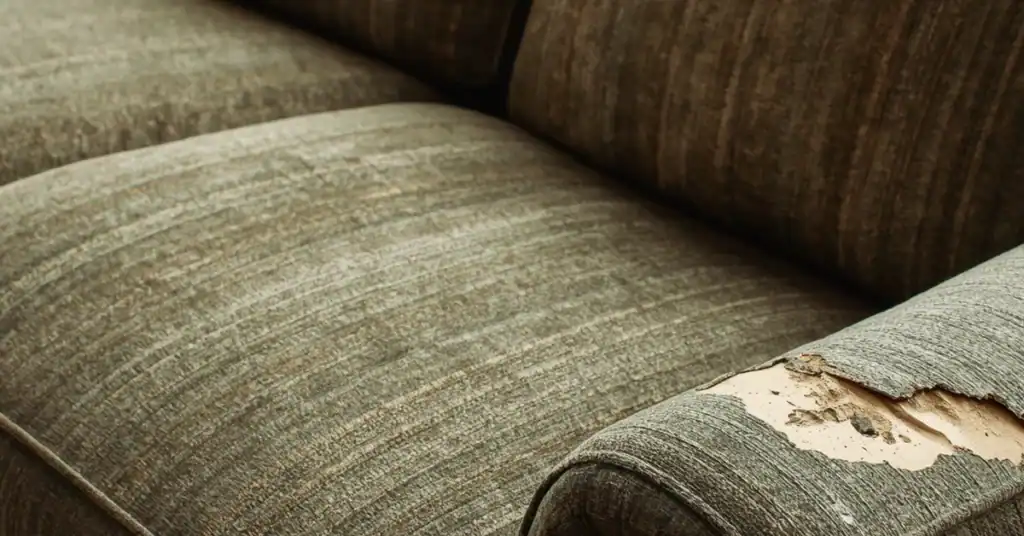
A family has an older microfiber sofa in the TV room where the armrests look fuzzy and the seat cushions feel rough. That wear tells you the fabric surface is breaking down, so it is more likely to shed fibers into dust than a tightly woven couch that still feels smooth. It does not prove the couch is coated with PFAS or another finish, so the family still needs to check product details if chemical treatments are part of their concern.
Lower-Concern Situations
Risk is lower when the upholstery is intact, plain, and not marketed with heavy treatment claims.
That usually looks like:
- A newer fabric with no peeling, fuzzing, or visible damage
- A product without stain-guard or water-repellent marketing
- A room where dust is managed well
- A household that values durability and does not aim to avoid all synthetics
This does not make microfiber “clean” in the same way as untreated natural fiber.
It just means the exposure potential is lower when the fabric stays stable and the product has fewer added features.
Key Takeaway: Intact, untreated upholstery has lower exposure potential than worn or heavily treated microfiber.
How To Make a Safer Choice

Start with simple questions:
- What is the fabric made from?
- Does it have stain-resistant or water-repellent treatment?
- Is it marketed as “performance fabric” without saying what that means?
- Does the company list any third-party certifications?
If a brand cannot clearly explain its fabric treatments, skip the vague marketing and keep looking.
Here is the most practical checklist:
- Choose plain upholstery over heavily treated upholstery
- Ask whether the fabric contains PFAS or stain-resistant finishes
- Look for low-emission certifications for the finished product
- Look for textile certifications for the fabric itself
- Skip vague marketing terms unless the brand explains them clearly
- Choose tightly woven, durable fabric that is less likely to fuzz or pill quickly
It also helps to understand how different couch fabrics, foams, and treatments affect exposure potential when choosing a safer couch for your home.
Certifications can help, but they do different jobs.
- OEKO-TEX STANDARD 100 applies to textiles and tests for harmful substances in the finished textile product. It is useful when you want more confidence in the fabric itself.
- UL GREENGUARD Gold focuses on low chemical emissions. It is useful when you want to reduce VOCs released into indoor air from furniture and other indoor products.
A textile can be tested for harmful substances without telling you much about total furniture emissions.
That is why it helps to look for both kinds of information when available.
If stain resistance is part of the sales pitch, be wary.
EPA says PFAS have been used in consumer products including textiles and stain-resistant furniture, and these chemicals break down very slowly and can remain in the body over time.
Stain resistance does not come from microfiber itself. It often comes from an added finish or treatment.
For many families, the clearest path is this:
- Pick upholstery with fewer treatment claims
- Prefer transparent brands
- Use certifications as a filter, not a final answer
- If microplastics are your top concern, consider untreated natural fibers instead
The best choice depends on what matters most to you.
If your top concern is indoor air, low-emission certifications matter more. If your top concern is plastic-based fabric and fiber shedding, natural materials may be a better fit.
Better Alternatives
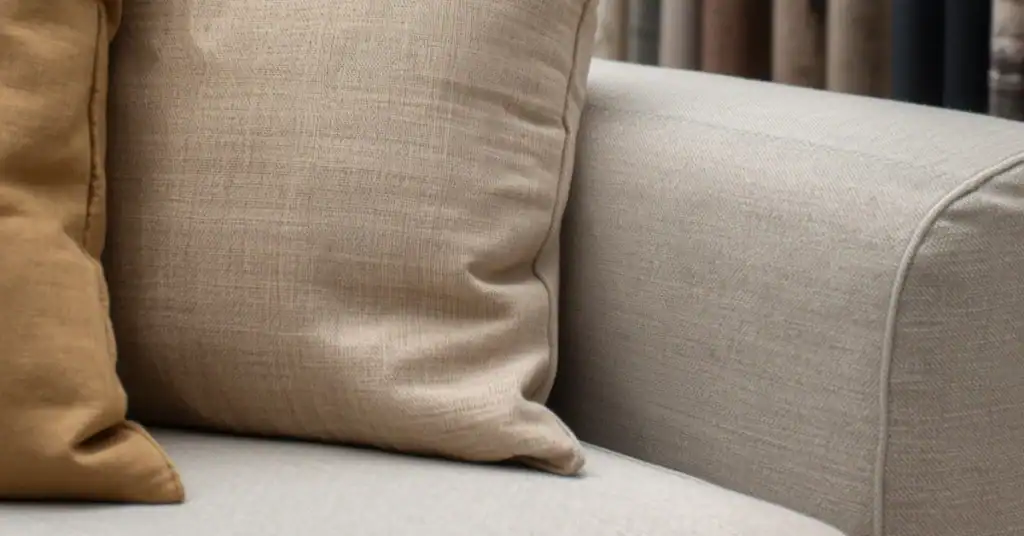
If your main goal is to reduce plastic-based fabric in your home, untreated natural fibers are usually the better place to start.
That often means looking at:
- Cotton
- Linen
- Wool
- Hemp blends
These materials do not shed plastic fibers the way polyester or nylon upholstery can.
Upholstery is a daily-contact material, so fabric choice matters more here than it does for items you rarely touch.
That does not mean every natural fabric is automatically low-tox. Natural upholstery can still come with stain treatments, dyes, or finishes.
The better alternative is usually plain, untreated natural fabric, not just any fabric made from a natural source.
If you still want a synthetic option, look for one that is:
- not marketed as stain-proof or water-repellent
- tightly woven and less likely to pill
- backed by clear fabric and emissions information
Microfiber is usually more durable and easier to spot-clean, but it has higher plastic exposure potential in a daily-contact item because the fabric itself is made from fine synthetic fibers.
Wool can also be a useful option for some homes. It is natural and durable. But it may cost more, feel warmer, and still needs careful review for added finishes.
The cleanest shortcut is this: choose the least treated fabric in the clearest material category.
When comparing two sofas, choose the one with the clearest fabric description and the fewest treatment claims.
Conclusion
For many people, the real question is not whether microfiber is simply “safe” or “unsafe,” but whether a plastic-based fabric fits their comfort level around microplastics, wear, and added treatments.
If you already have microfiber furniture, there is no need to panic.
A more helpful approach is to look for clear product details, avoid heavily treated fabrics when possible, and choose materials that align with your definition of a lower-exposure home.