
PFAS Are Being Phased Out of Furniture — Here’s What That Means


PFAS (often called “forever chemicals”) have been widely used in furniture to create stain- and water-resistant fabrics—but growing health concerns have changed that.
Research has linked PFAS exposure to potential health effects, which is why agencies like the National Institutes of Health highlight their persistence in the body and environment.
As new laws begin phasing PFAS out of furniture starting in 2025, you might be wondering what this actually means for furniture in your home.
The reality is a bit more nuanced—and understanding it can help you make better choices moving forward.
PFAS are being phased out of furniture starting in 2025, but are not fully eliminated yet.
Most new furniture made after 2025 is shifting to PFAS-free materials, and by the late 2020s to early 2030s, most furniture is expected to be PFAS-free by default. However, older inventory, secondhand items, and some imports may still contain PFAS, so checking labels and certifications is still important.
Where PFAS Are Still Found

PFAS are being phased out, but they haven’t disappeared overnight. You can still find them in certain types of furniture depending on when and how the product was made.
Older Furniture
Furniture made before recent regulations is the most likely to contain PFAS.
- Couches, chairs, and carpets labeled “stain-resistant” or “water-repellent”
- Fabric treated with coatings like PTFE (a type of PFAS used for durability)
- Pieces bought before 2025, especially from major retailers
Imported or Unregulated Products
Not all countries follow the same rules.
- Imported furniture may still use PFAS-based treatments
- Online marketplaces often lack clear material disclosure
- Lower-cost products are less likely to list chemical treatments
If a product doesn’t clearly state what it’s treated with, there’s no way to confirm it’s PFAS-free.
Existing Inventory Still Being Sold
Even in the U.S., older stock is still on shelves.
Some furniture can sit in warehouses or showrooms for years before being sold, meaning “new” doesn’t always mean recently made.
- Retailers may sell furniture made before PFAS bans took effect
- Clearance or discounted items are more likely to be older inventory
- Product pages may not reflect updated materials
This creates a transition period where both PFAS-treated and PFAS-free furniture exist side by side.
Why This Matters
PFAS are discussed in health research because they do not break down easily and can build up over time.
- These chemicals persist in the environment for years
- They accumulate in the human body with repeated exposure
- Studies have identified concerns related to immune function and cholesterol levels
This doesn’t mean every piece of furniture is a major risk. But it explains why these chemicals are being removed and why older products are still worth paying attention to.
Key Takeaway: PFAS are still present mainly in older or unclear products, not most newly made furniture.
What Changed With New Laws

New state laws are the main reason PFAS are being removed from furniture. These laws focus on stopping the use of PFAS in stain- and water-resistant treatments.
State Bans Starting in 2025
Several U.S. states have passed laws that restrict PFAS in furniture and textiles.
Some companies removed PFAS nationwide instead of making separate products for different states.
- California, New York, and others now limit or ban PFAS in upholstered furniture
- These laws target added PFAS used for stain resistance
- Most take effect starting in 2025
This means manufacturers can no longer rely on PFAS-based coatings for new products sold in these states.
Industry Is Reformulating Fast
Furniture brands are already changing how products are made.
- Performance fabrics are being redesigned without fluorinated chemicals
- Alternative coatings are being used for spill resistance
- Many brands now advertise “PFAS-free” materials
PFAS work by creating a barrier on fabric that repels liquids, which is why they were widely used in stain-resistant materials.
This shift is happening across the entire market, not just in regulated states.
When PFAS Is Still a Concern

Even with new laws, there are still situations where PFAS exposure is more likely. This usually comes down to how transparent the product is and what claims it makes.
Stain-Resistant Without Details
“Stain-resistant” is still a common marketing term.
- Some brands do not explain what treatment they use
- PFAS-based coatings were historically the default for this feature
- These “stain-resistant” materials could also potentially be toxic
- If no alternative is named, the treatment is unclear
If a company doesn’t disclose the chemistry, you’re left guessing.
No Material Transparency
Lack of detail is a major red flag.
- Product pages that list only “performance fabric”
- No mention of coatings, finishes, or treatments
- No certifications or testing information
This matters more when you’re buying upholstered items you use daily, like couches or dining chairs.
Lower-Cost or Fast Furniture
Budget furniture often prioritizes cost over disclosure.
- Materials and treatments are rarely listed in detail
- Sourcing is harder to trace
- Chemical use is less likely to be verified
These products are more likely to rely on older or cheaper treatment methods.
PFAS stay in the body because they resist breakdown, so small exposures can add up over time.
How to Choose PFAS-Free Furniture

Choosing PFAS-free furniture is mostly about transparency. The more clearly a brand explains its materials, the easier it is to avoid unwanted treatments.
Look for Clear PFAS-Free Claims
Start with what the product explicitly says.
- “PFAS-free” or “no added fluorinated chemicals”
- Details about fabric treatments or finishes
- Brands that explain how stain resistance is achieved
Search the product page for exact phrases like “PFAS-free” instead of relying on general terms like “performance.”
If a product clearly states this, you know PFAS were not intentionally added.
Certifications, Certifications, Certifications
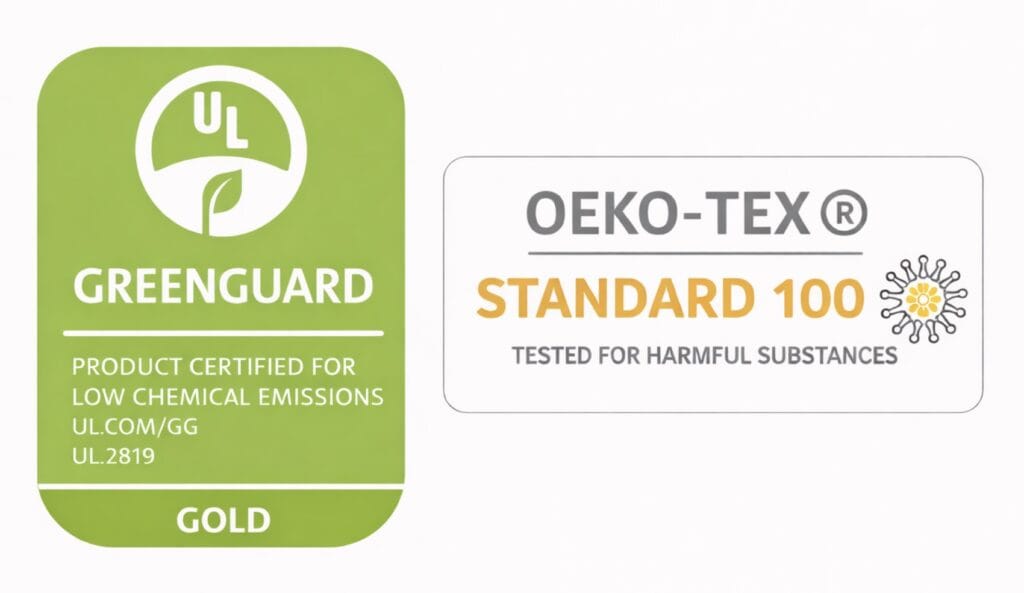
Certifications make brands prove what they are claiming, which is why we at The Goodness Well emphasize them so strongly.
- GREENGUARD Gold → tests for low chemical emissions
- OEKO-TEX → screens for harmful substances in textiles
- Some brands now include PFAS-specific disclosures
These don’t test only for PFAS, but they reduce the chance of hidden treatments.
REAL-LIFE EXAMPLE

You’re comparing two sofas and one lists “PFAS-free fabric with OEKO-TEX certification.” This tells you the fabric has been tested for harmful substances and avoids fluorinated treatments. It does not confirm every part of the sofa is chemical-free, so you still need to review the full material breakdown.
Choose Simpler Materials
Fewer treatments usually mean fewer unknowns.
- Natural fabrics like cotton, wool, or linen
- Untreated or minimally treated upholstery
- Solid wood over heavily coated composites
These options are less likely to rely on chemical coatings for performance.
Key Takeaway: Clear labeling and certifications are the most reliable way to avoid PFAS in furniture today.
Conclusion
PFAS are being phased out of furniture, and most new products are moving in a safer direction. But because of older inventory and inconsistent labeling, they haven’t fully disappeared yet.
The good news is that you have more control than before. By focusing on clear claims, verified certifications, and simple materials, you can make confident choices without overcomplicating the process.