How to Get Rid of New Furniture Smell Fast (5 Methods That Work)

New furniture can release volatile organic compounds (VOCs), which contribute to indoor air pollution and that familiar “new” smell.
According to the United States Environmental Protection Agency, VOC levels are often higher indoors than outdoors, making exposure a practical concern in everyday living spaces.
While you can’t completely eliminate VOCs once they’re present, there are simple ways to reduce their levels and limit your exposure.
This guide walks through what actually works, what doesn’t, and how to make better furniture choices from the start.
Removing VOCs from furniture means reducing exposure by speeding up off-gassing and improving airflow.
In simple terms, you do this by using ventilation, time, gentle heat with airflow, and air purifiers with activated carbon. It does not completely eliminate VOCs, but it helps lower how much you’re exposed to over time.
What Actually Works (and What Doesn’t)
You can’t completely “remove” VOCs present in furniture. What you can do is speed up off-gassing and reduce how much you’re exposed to.
That distinction matters, because many common tips focus on masking smells rather than actually lowering VOC levels.
What actually works
- Ventilation: Fresh air dilutes and carries VOCs out of your home
- Time: Emissions naturally decrease over days to weeks
- Heat (with airflow): Speeds up how quickly VOCs are released
- Activated carbon: Helps capture VOC gases from the air
These methods work because they either move VOCs out or reduce their concentration in the air.
What doesn’t work (or is very limited)
- Baking soda: May reduce odor slightly, but doesn’t remove VOC gases
- Essential oils: Only mask the smell, don’t reduce exposure
- Vinegar wiping: Doesn’t affect VOCs trapped in materials
- Ozone generators: Can be harmful to your lungs and are not recommended
Key Takeaway: If you’re trying to get rid of VOCs, focus on airflow, time, and proper filtration—not quick fixes that just cover up the smell.
5 Ways to Remove VOCs from Furniture
1. Ventilation
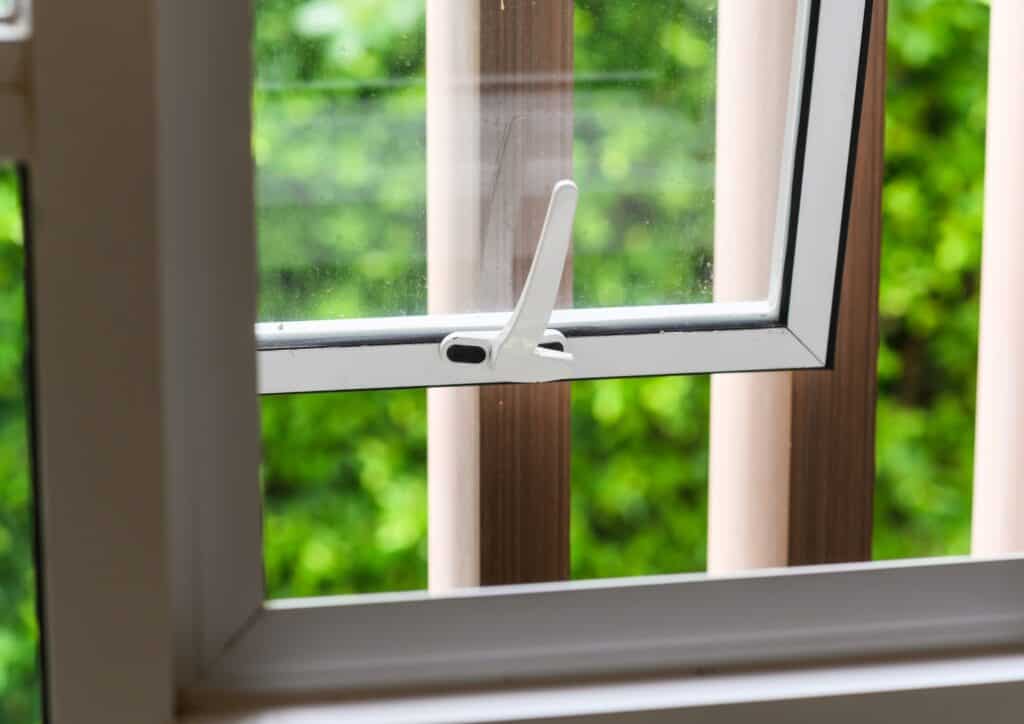
Ventilation is one of the best ways to lower VOC levels because it helps move those gases out of your home instead of letting them build up indoors.
- Open windows on opposite sides of the room to create a cross-breeze
- Use a fan to push indoor air outward
- If possible, isolate the room so VOCs do not spread through the rest of the home
This is especially helpful when furniture is brand new and off-gassing is at its highest.
2. Time
One of the simplest ways to reduce VOC exposure is to give furniture time to off-gas.
New furniture tends to release the most VOCs in the beginning, especially during the first few days and weeks.
Exactly how long furniture off-gasses depends on its materials, construction, and indoor conditions, but those emissions usually decline over time.
If you can, let new furniture sit in a well-ventilated space before bringing it into heavy daily use.
3. Heat
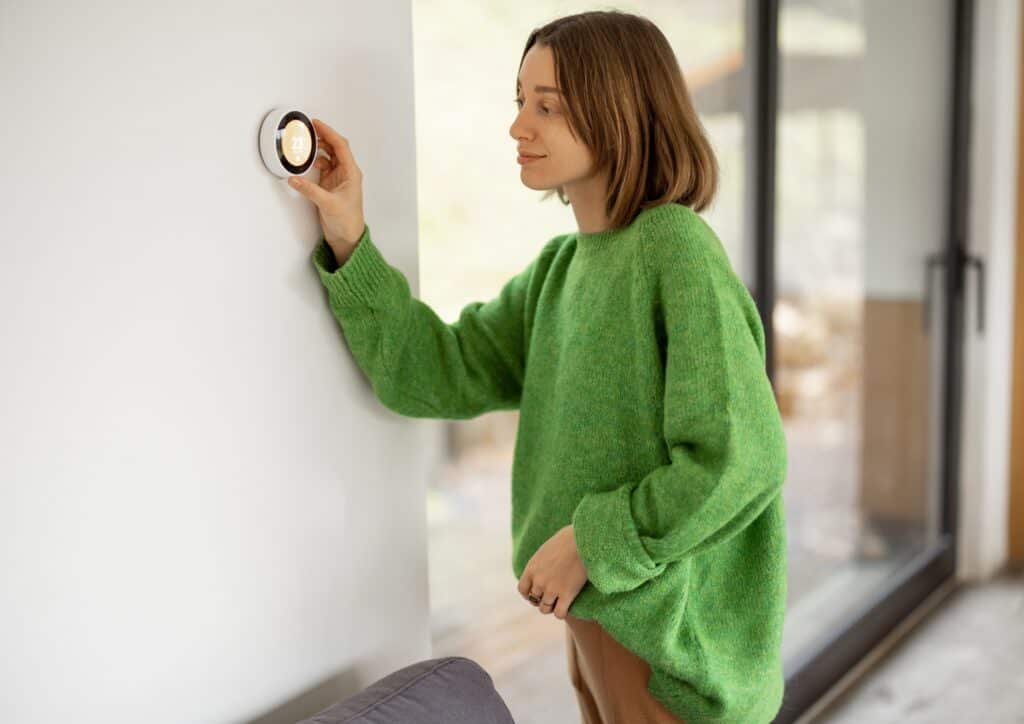
Because VOCs off-gas more quickly in higher temperatures, heat can help speed up the process.
One approach people use is sometimes called the cookout method:
- Close the windows
- Turn up the heat for about 4 to 8 hours to 85–95°F (29–35°C)
- Keep people out of the space during this time
- Close vents to other rooms if possible
- Then open the windows and air the space out thoroughly
This works because VOCs have a high vapor pressure, which means they more easily turn into gas and enter the air when temperatures rise.
That said, heat should always be paired with strong ventilation. Otherwise, you may just concentrate those chemicals indoors instead of helping remove them.
4. Activated Carbon
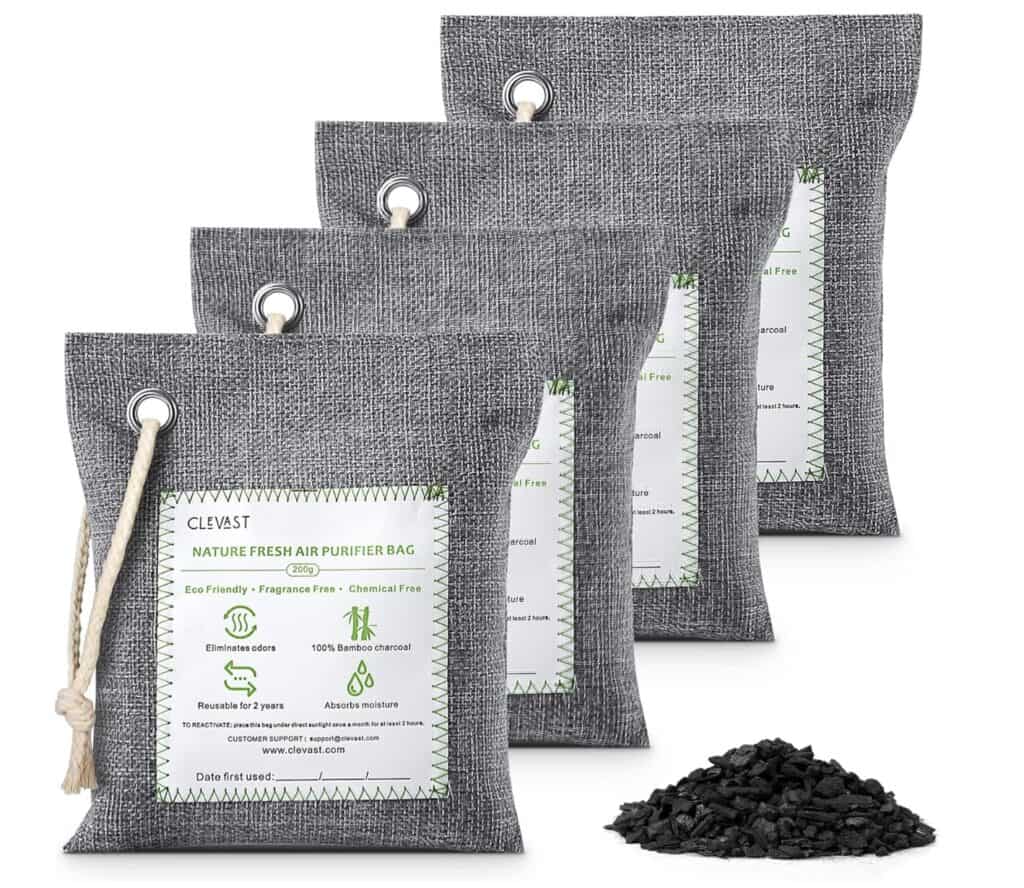
Activated carbon can help reduce VOCs because it is able to trap certain gases in the air.
In practice, this usually means using charcoal bags placed directly around the furniture that is off-gassing.
- Place 2–4 bags on, under, or next to the furniture
- Keep them close to the source, not across the room
- Leave them in place for several days to weeks
Charcoal bags can help capture some of the gases as they are released, but they work best as a supporting method alongside ventilation and time.
5. Air Purifiers
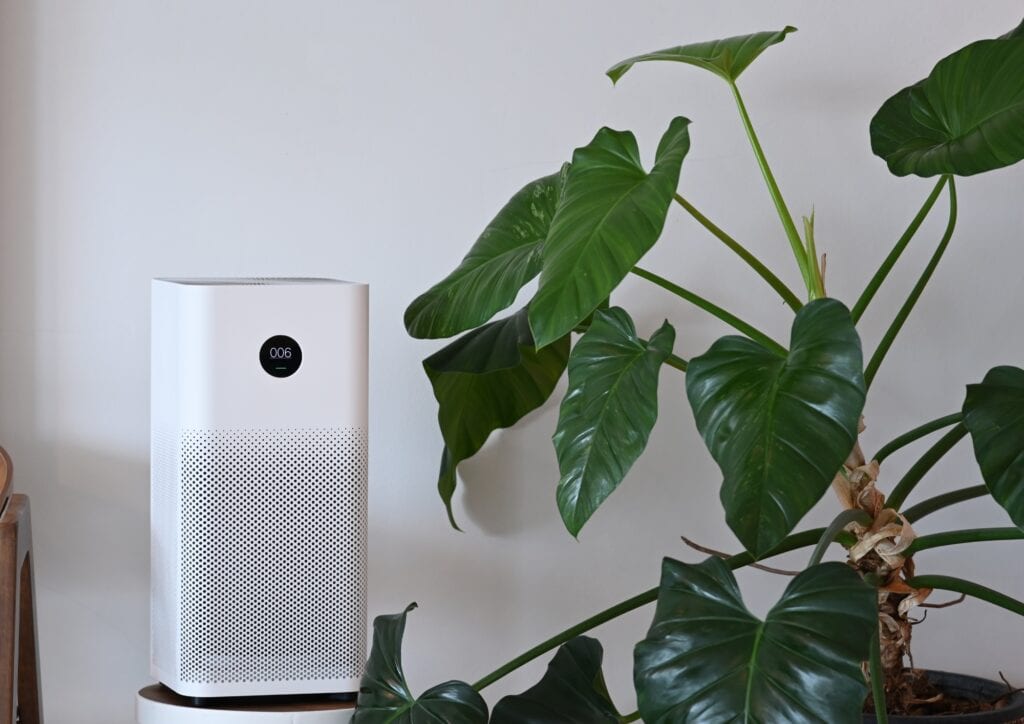
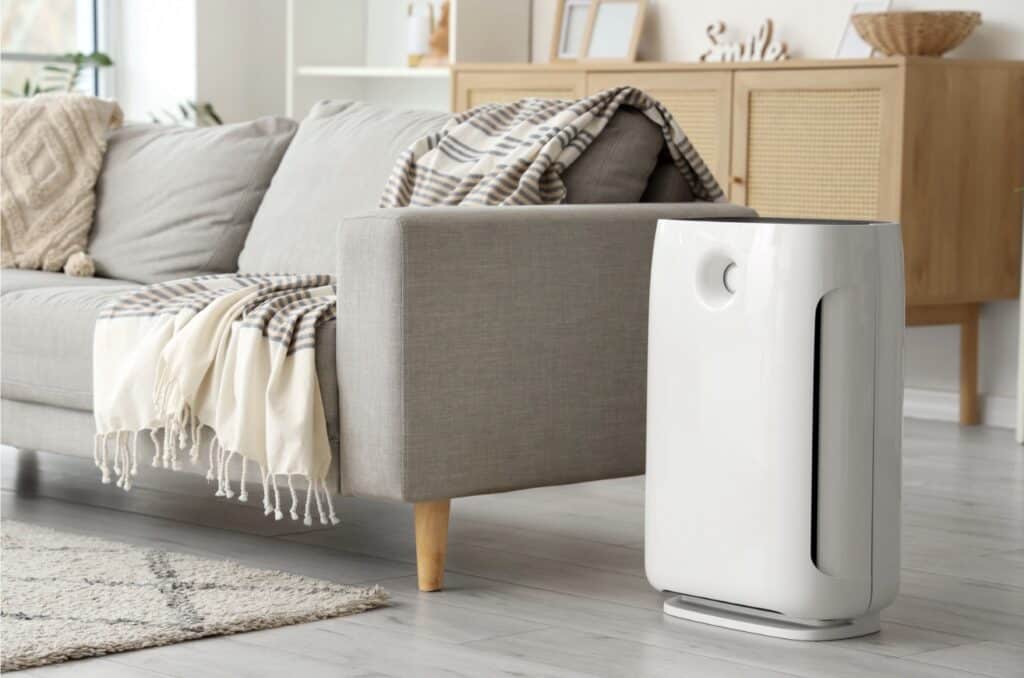
An air purifier may help, but not just any air purifier will do.
Research from MIT found that for at least some consumer-grade portable air cleaners that claim to remove VOCs, VOC removal may be minimal, and some units may even release additional VOCs or oxidation byproducts that can be harmful.
That is why it is best to choose an air purifier with an activated carbon filter. A HEPA filter alone is mainly designed for particles, not gases like VOCs.
To use it effectively:
- Place the purifier within a few feet of the furniture, not across the room
- Run it continuously during the first few days of off-gassing
- Use it in smaller or enclosed spaces where airflow is limited
Air purifiers work best when combined with ventilation and time, not as a standalone solution.
The Most Effective VOC Removal Process
If you want the fastest and most effective results, the key is to combine a few of these methods instead of relying on just one.
Here’s a simple step-by-step process:
- Isolate the furniture (if possible)
Place it in a single room, garage, or area you can control. This helps prevent VOCs from spreading through your home. - Heat the space (cookout method)
Raise the temperature to around 85–95°F for 4–8 hours to accelerate off-gassing.
Keep people and pets out during this step. - Ventilate aggressively
After heating, open windows and create a strong cross-breeze.
Use fans to push air outward, not just circulate it. - Add carbon filtration
Run an air purifier with activated carbon or place charcoal bags nearby to help capture remaining VOCs. - Repeat if needed
You can repeat this process over a few days for stronger odors or heavily treated furniture.
How to Choose Low VOC Furniture

Reducing VOC exposure is much easier when you start with better materials.
Even though you can speed up off-gassing, some furniture can continue releasing small amounts of VOCs for months or longer. Choosing lower-VOC options from the beginning helps limit that exposure altogether.
Materials to prioritize
Certain materials tend to have lower VOC emissions than others:
- Solid wood: Especially when finished with low-VOC or water-based finishes
- Natural fibers: Cotton, wool, and linen instead of synthetic fabrics
- Low-VOC finishes and adhesives: Water-based or explicitly labeled low-VOC
These materials are generally simpler and less chemically treated than many mass-produced options.
Certifications to look for
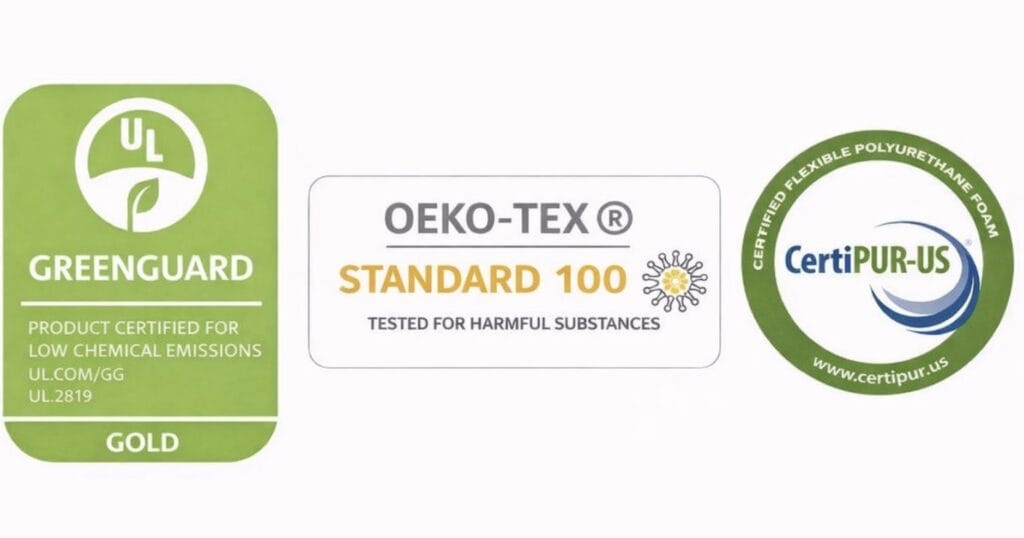
Certifications can help verify that a product has been tested for emissions or harmful substances.
- GREENGUARD / GREENGUARD Gold: Tests for low chemical emissions and indoor air quality
- OEKO-TEX: Screens textiles for harmful substances
- CertiPUR-US: Ensures foam is made without certain harmful chemicals and has low emissions
While no certification guarantees a product is completely “non-toxic,” they can help reduce risk and add transparency.
Red flags to watch for
Some signs may indicate higher VOC exposure risk:
- Strong chemical smell: Especially if it lingers for days or weeks
- MDF or particleboard without disclosure: Often made with adhesives that can release formaldehyde
- “Stain-resistant” or “performance” fabrics without transparency: May involve chemical treatments with limited disclosure
A strong “new furniture smell” is often a sign that VOCs are actively being released into the air.
Bottom line
The best way to deal with VOCs is to limit them upfront.
Look for simple materials, verified certifications, and brands that are transparent about what they use.