Are Couches Toxic? A Simple Guide to Choosing a Safer Couch


Your couch is one of the largest pieces of furniture in your home, so it makes sense to ask what it is made from and whether it can affect your indoor environment.
Some couches may contain materials or treatments that release odors, VOCs, formaldehyde, flame retardants, or stain-resistant chemicals into the air or dust over time.
This matters because indoor air can contain pollutants from building materials and household products, and the NIH notes that indoor air quality can affect comfort and health.
The good news is that choosing a safer couch does not have to be complicated once you understand how to choose safer furniture and what materials, certifications, and product claims to look for.
Some couches can be toxic, depending on their materials and treatments.
The biggest issues are strong VOC odors, stain-resistant coatings, added flame retardants, uncertified foam, and formaldehyde-containing wood products.
A safer couch has clear material details, fewer chemical treatments, and third-party certifications that verify lower chemical emissions and the use of safer materials.
Why Couches Can Be Toxic

Couches are not toxic just because they are couches. The issue is that they are large, layered products made with foam, fabric, wood, glue, and finishes.
Some of those materials can release chemicals into indoor air or collect in household dust.
This usually matters most when a couch is new, strongly scented, heavily treated, or made with low-transparency materials.
A couch in a small room with little airflow can also smell stronger than the same couch in a larger, well-ventilated space.
Some common sources include:
- Foam cushions, especially polyurethane foam, which can release VOCs from manufacturing.
- Adhesives and finishes, which may release odors or VOCs after the couch is delivered.
- Engineered wood frames, which can contain formaldehyde-based resins.
- Stain-resistant fabrics, which may use PFAS or similar water-repellent treatments.
- Flame retardants, especially in older foam furniture or products with unclear material disclosures.
Off-gassing happens when chemicals from a material evaporate into indoor air. This is why a new couch may smell stronger during the first days or weeks.
Research on upholstered furniture has found that chemicals used in foam and flame retardant systems can move into indoor air, dust, and surface contact samples.
One study listed in the EPA’s HERO database found a flame retardant chemical in air, settled dust, and dermal transfer samples from upholstered chairs, showing how couch materials can leave the product and enter the home environment.
That does not mean every couch is unsafe. It means the material details matter.
A couch with certified foam, untreated fabric, and clear low-emission information gives you more control than one with vague labels and a strong chemical smell.
REAL-LIFE EXAMPLE

You buy a new couch and notice a sharp smell that fills the living room for several days. That smell usually means materials in the couch are releasing VOCs into the air. Open windows, run ventilation, and ask the brand for foam, fabric treatment, and emissions details if the odor does not fade.
Common Couch Materials
A couch is built in layers. The fabric, cushions, frame, and joining materials all affect how the couch feels, wears, and behaves in your home.
Looking at each layer helps you ask better questions before buying.
Upholstery Fabrics
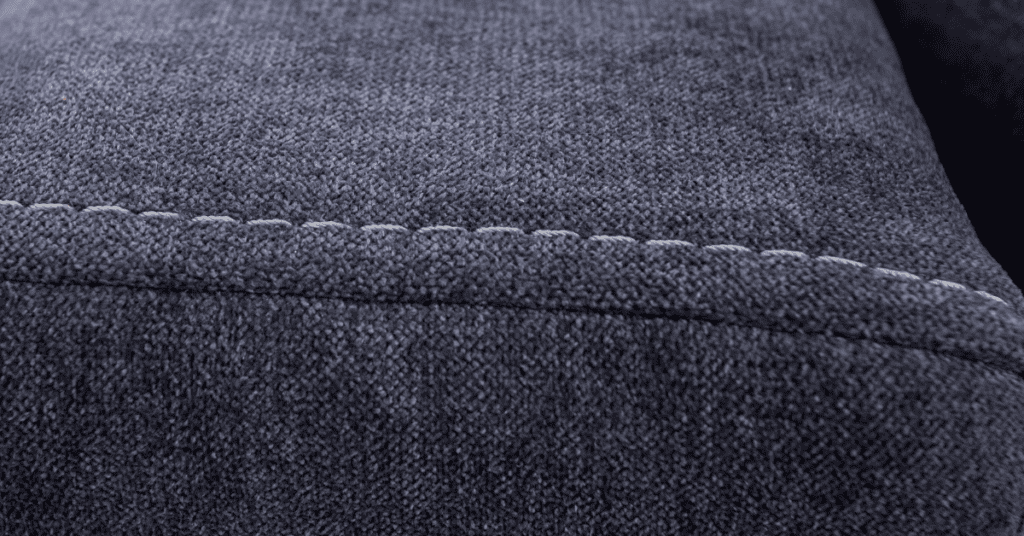
The upholstery is the part your family touches every day. It affects comfort, cleaning, durability, and chemical treatments.
Common couch fabrics include:
- Cotton: breathable and soft, but may stain easily without treatment
- Linen: natural and airy, but can wrinkle and show wear
- Hemp: durable and plant-based, but less common
- Wool: naturally resilient and less likely to need heavy chemical coatings
- Polyester or microfiber: durable and easy to clean, but usually synthetic
- Faux leather: often made from polyurethane or PVC layers
- Leather: durable, but tanning, dyeing, and finishing methods vary
Fabric labels do not always tell the whole story. A “performance” or “stain-resistant” fabric may be treated with water-repellent chemistry.
Cushion Foam
Most modern couches use polyurethane foam inside the cushions. It is popular because it is soft, affordable, and easy to shape.
Some couches also use:
- Memory foam: a softer polyurethane foam that contours more closely
- Synthetic latex blends: elastic and supportive, but not fully natural
- Natural latex: made from rubber tree sap, often used in higher-end couches
- Wool or cotton batting: used as padding around the cushion core
- Down or feathers: soft, but often paired with foam for structure
Foam matters because it sits close to your body for long periods. Older foam furniture may also contain flame retardants.
In one PubMed-indexed study, researchers found that flame retardants used in polyurethane furniture foam were measured in both house dust and residents’ serum samples, showing that some chemicals can move from furniture into the home environment (PubMed).
For a safer choice, look for clear foam details. A brand should be able to tell you whether the foam is certified, whether added flame retardants are used, and what materials surround the foam.
Most modern couches use polyurethane foam because it is soft, affordable, and easy to shape.
Frames and Adhesives
The frame gives the couch its shape and strength. It is usually hidden, but it still matters.
Common frame materials include:
- Solid wood: durable and simple to understand
- Plywood: made from wood layers bonded together
- Particleboard: made from wood particles and resin
- MDF: made from wood fibers and resin
Solid wood is often the simplest option. Plywood can also be durable, especially when the brand discloses low-formaldehyde materials.
Particleboard and MDF use more resin, so ask about formaldehyde standards if those materials are listed.
Adhesives hold parts of the couch together. Water-based, low-VOC, or certified lower-emission adhesives are preferable.
The best brands make this information easy to find or answer directly when asked.
Chemicals to Watch For

A couch can contain several chemical categories, depending on how it is made. Some are part of the base materials. Others are added for stain resistance, flame resistance, odor control, or durability.
The goal is not to avoid every chemical. That is not realistic. The goal is to reduce unnecessary chemical treatments and choose materials with clear safety testing.
Key chemicals to look for include:
- VOCs: These can release from foam, adhesives, fabric finishes, and coatings. A strong “new furniture” smell often comes from VOCs.
- Formaldehyde: This can come from pressed wood, particleboard, MDF, plywood, glues, and some fabric finishes.
- PFAS: These are sometimes used to make fabric resist stains, water, or grease.
- PTFE: This is one type of fluorinated coating sometimes used in stain-resistant finishes.
- Flame retardants: These may be added to foam or fabric to meet flammability requirements.
- Antimicrobial treatments: These may be added to reduce odor or microbial growth on fabric.
Formaldehyde is discussed in indoor air research because it can release from pressed wood and adhesives.
The CDC notes that formaldehyde sources include some furniture, plywood, particleboard, glues, and permanent-press fabrics, and low-level exposure can irritate the eyes, nose, throat, airways, or skin in sensitive people.
Formaldehyde can slowly release from certain pressed wood products and adhesives into indoor air.
PFAS are discussed because they break down slowly. If a couch fabric is marketed as stain-proof, water-repellent, or grease-resistant, ask whether it is PFAS-free.
A fabric can be easy to clean without using fluorinated treatments.
Flame retardants matter most with older couches or unclear product labels. Some older foam furniture used added flame retardants that could leave the foam and collect in dust.
For a new couch, ask whether the foam or fabric contains added flame retardant chemicals.
A few words on a product page should prompt better questions:
- “Stain-resistant”
- “Water-repellent”
- “Performance fabric”
- “Antimicrobial”
- “Odor-resistant”
- “Easy-clean coating”
- “Meets flammability standards”
Ask the brand how the feature is achieved, not just whether the couch is “safe” or “non-toxic.”
These terms do not automatically mean the couch is unsafe. They mean the brand should explain how the feature is achieved.
If the brand cannot answer, choose a couch with clearer material details or stronger certifications.
Safer Couch Materials

Safer couch materials are usually simple, clearly labeled, and less heavily treated. The best choice is not always the most expensive couch. It is the couch with materials you can understand and verify.
At The Goodness Well, we look for couches that reduce unnecessary chemical exposure without making the shopping process feel overwhelming.
For upholstery, look for fabrics such as:
- Organic cotton
- Linen
- Hemp
- Wool
- Untreated or minimally treated leather
- PFAS-free performance fabric, if you need easier cleaning
Natural fabric is best when it is also untreated, minimally finished, or clearly labeled PFAS-free.
Natural fibers are not automatically perfect. Some are dyed, finished, blended, or coated. Ask whether the fabric has stain-resistant, water-repellent, antimicrobial, or odor-resistant treatments.
For cushions, look for:
- Natural latex
- Wool padding
- Cotton batting
- Down or feather blends
- Certified low-emission polyurethane foam
Natural latex, wool, and cotton are often used in cleaner couch designs. It may be easier to find and more affordable than fully natural cushions.
For frames, look for:
- Solid wood
- FSC-certified wood
- Low-formaldehyde plywood
- Metal frames, when available
Solid wood uses fewer bonded layers than particleboard or MDF. Low-formaldehyde plywood can also be a reasonable choice when the brand shares clear material details.
For adhesives and finishes, look for:
- Water-based adhesives
- Low-VOC finishes
- Plant-based oils or waxes
- Third-party emissions testing
PFAS-free fabric is worth checking for daily-use couches.
The NIH explains that PFAS are used in some products to resist stains, grease, and water, and these chemicals break down slowly in the environment and can build up in the body over time.
A safer couch does not need to meet every ideal. Start with the parts your family touches most: the upholstery and cushions.
Key Takeaway: Safer couches are usually easier to verify, not just more natural-looking.
Couch Certifications That Help
Certifications make couch shopping easier because they give you something to verify.
They are especially helpful when a product page uses broad words like “clean,” “eco,” “natural,” or “non-toxic.”
No single certification covers the whole couch. Some labels apply to foam. Some apply to fabric. Others apply to wood, latex, or finished-product emissions.
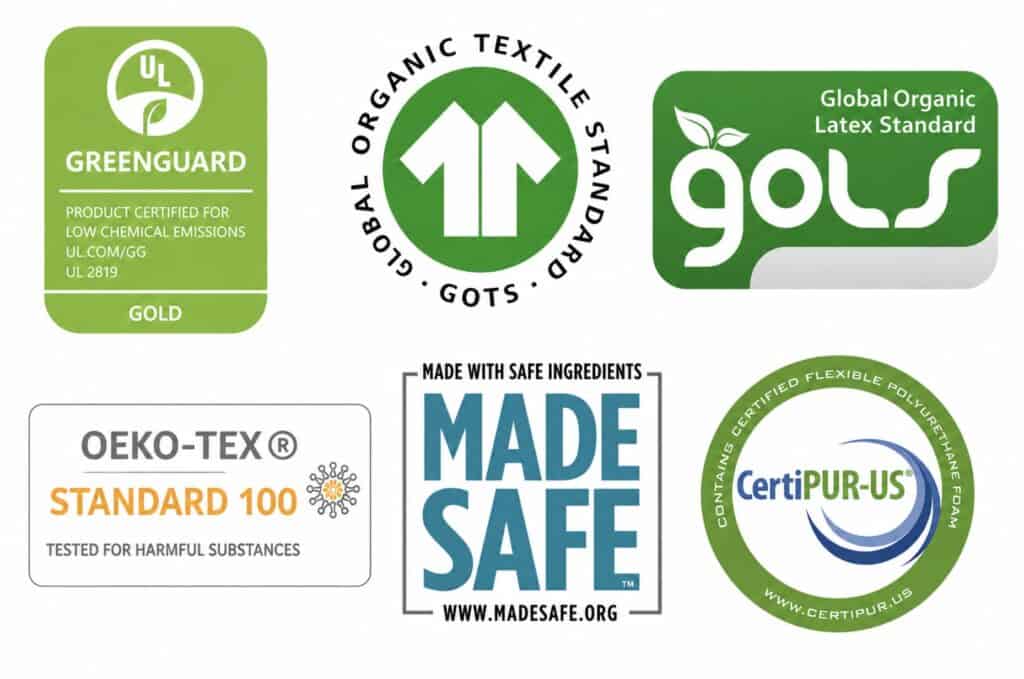
Useful certifications include:
- GREENGUARD Gold: Tests finished products for chemical emissions into indoor air. This is helpful for couches, nursery furniture, and other large indoor items.
- CertiPUR-US: Applies to flexible polyurethane foam. Certified foam is tested for content, durability, and low VOC emissions.
- OEKO-TEX Standard 100: Applies to textiles. It means the fabric or textile component has been tested for a list of harmful substances.
- GOTS: Applies to organic textiles, such as organic cotton. It covers fiber content and processing standards.
- GOLS: Applies to organic latex. This is useful when a couch uses natural latex cushions.
- FSC: Applies to wood sourcing. It helps identify wood from responsibly managed forests.
- MADE SAFE: Screens products and materials against a broad restricted substances list, when available.
Match the certification to the material you are checking before relying on the label.
For example, CertiPUR-US tells you about the foam, not the fabric. OEKO-TEX tells you about textiles, not the wood frame.
CertiPUR-US states that certified foam is made without formaldehyde, certain regulated phthalates, mercury, lead, and other heavy metals, and must meet low VOC emissions limits.
Use certifications as a filter, not a final answer. A certified couch can still use synthetic fabric, dyes, glues, or coatings. If a couch has only one certification, check what part of the couch it covers.
A good product page should make this clear:
- Which certification the couch has
- Which material or component is certified
- Whether the full couch or only one part was tested
- Whether the fabric has added stain, water, or odor-resistant treatments
- Whether the certificate number is listed or verifiable
If the brand lists a certification but gives no details, ask for clarification. A clear answer is better than a vague “eco-friendly” claim.
How to Choose One

Choosing a non-toxic couch is easier when you follow a simple order. Start with the parts you touch and breathe around most. Then check the hidden materials.
Use this step-by-step framework before buying:
Save or screenshot the product details before buying so you can compare claims across brands.
- Read the full material list.
Look for details about the fabric, cushions, frame, adhesives, and finishes. Vague words like “premium materials” or “eco-friendly design” are not enough. - Check the fabric treatment.
Ask whether the fabric is treated for stains, water, odor, or microbes. If it says “performance fabric,” look for PFAS-free confirmation. - Look at the cushion fill.
Choose natural latex, wool, cotton, down blends, or certified low-emission foam when possible. If the couch uses polyurethane foam, check for a foam certification. - Review the frame materials.
Solid wood is usually easier to evaluate. If the couch uses plywood, MDF, or particleboard, ask whether it meets low-formaldehyde standards. - Look for useful certifications.
Match the certification to the material. GREENGUARD Gold helps with finished-product emissions. CertiPUR-US helps with polyurethane foam. OEKO-TEX helps with textiles. - Be careful with broad claims.
Words like “green,” “clean,” “natural,” and “non-toxic” should come with proof. The FTC says broad environmental claims should be clear, specific, and supported by evidence, not used as vague marketing language. - Use smell as a practical clue.
A strong chemical odor does not tell you which chemical is present. It does tell you the couch needs ventilation and more material transparency. - Balance safety with real life.
A fully natural couch may cost more and offer fewer style options. A certified foam couch with untreated or PFAS-free fabric can still be a practical improvement.
REAL-LIFE EXAMPLE
You compare two couches online: one says “stain-resistant performance fabric,” and the other says “PFAS-free fabric with CertiPUR-US certified foam.” The second label tells you more about the fabric treatment and cushion testing. You should still check whether the full couch has emissions testing, such as GREENGUARD Gold.
What to Avoid

A safer couch is easier to choose when you know which red flags to skip. These do not always mean a couch is unsafe, but they do mean you should ask more questions before buying.
Try to avoid:
- Strong chemical odors that do not fade. A new couch may smell at first, but a sharp smell that lingers can mean materials are still releasing VOCs.
- Vague performance fabric claims. If a couch says “stain-resistant” or “water-repellent,” ask whether the fabric is PFAS-free.
- Uncertified foam. If the couch uses polyurethane foam, look for clear foam testing or certification.
- Added flame retardants. Ask whether the foam or fabric contains added flame retardant chemicals, especially with older or unclear furniture.
- Heavy use of MDF or particleboard with no details. These materials can use formaldehyde-based resins. Look for low-formaldehyde information.
- Broad “non-toxic” claims with no proof. A brand should explain the materials, treatments, and certifications behind the claim.
- No answers from the brand. If the company cannot explain the fabric, foam, frame, or treatments, choose a more transparent option.
If a brand cannot answer basic questions about fabric, foam, or frame materials, keep looking.
PFAS claims deserve extra attention because these chemicals are often used for stain and water resistance.
The NIH explains that PFAS break down slowly and can build up in people, animals, and the environment over time.
Also be careful with older secondhand couches. Some older upholstered furniture may contain flame retardants that are no longer used in many newer products.
If you are buying used, ask about the age, foam condition, odor, and whether the couch still has its original tags.
Focus on avoiding the biggest unknowns: strong smells, vague coatings, uncertified foam, unclear wood materials, and brands that will not answer basic safety questions.
Best Non-Toxic Couches

If you want specific product ideas, a separate Best Non-Toxic Couches guide can help you compare brands, materials, certifications, price points, and styles in one place.
This article gives you the framework for judging any couch. A buying guide can take the next step by showing which couches already meet many of these criteria.
When comparing the best non-toxic couches, look for options with:
- Clear fabric and cushion details
- PFAS-free or untreated upholstery
- Certified foam or natural cushion materials
- Solid wood or low-formaldehyde frame materials
- Low-VOC or emissions-tested construction
- Transparent answers from the brand
When reviewing product roundups, prioritize couches with clear material disclosures over vague “eco” claims.
The best couch for your home may not be the most “natural” option on the market. It should fit your budget, lifestyle, cleaning needs, and comfort preferences while reducing avoidable chemical exposure.
Conclusion
Couches can contain materials and treatments that release chemicals into indoor air or dust, but that does not mean every couch is unsafe.
The key is to look for clearer materials, fewer unnecessary treatments, and certifications that match the fabric, foam, frame, or finished product.
You do not need a perfect couch to make a better choice. Start with the biggest priorities, ask simple questions, and choose the option that feels safer, more transparent, and realistic for your home.