The Non-Toxic Furniture Guide: How to Choose Safer Furniture for Your Home


Furniture can play a bigger role in your indoor environment than most people realize.
From pressed wood and foam to finishes, adhesives, and fabric treatments, the materials used in furniture can affect what your home smells like, how it feels, and what you may be exposed to over time.
The National Institute of Environmental Health Sciences notes that chemicals used in certain furnishings can affect indoor air quality and health, which is why choosing safer materials is worth understanding.
This guide will help you make lower-tox furniture choices without feeling like every purchase has to be perfect.
Non-toxic furniture is safer furniture made with lower-emission, clearly disclosed materials.
It usually means fewer unnecessary chemical treatments, better material transparency, and helpful third-party certifications.
It does not automatically mean chemical-free, so shoppers should still check the frame, foam, fabric, finish, and labels.
What Makes Furniture Less Safe

Furniture becomes less safe when its materials release chemicals into indoor air or carry treatments you touch every day.
This is most common with furniture made from many layers, coatings, foams, glues, or stain-resistant finishes.
The main issue is not that one material is always “bad.” It is how the whole piece is made.
A couch, dresser, or bed frame may include:
- foam cushions
- pressed wood
- adhesives
- paints, stains, or sealants
- synthetic fabrics
- stain-resistant or water-resistant treatments
- flame retardants
Some of these materials can release VOCs into indoor air. VOCs are gases that evaporate from certain materials at room temperature.
This matters more when furniture is new, heavily treated, foam-filled, or made with pressed wood. It also matters more in bedrooms, nurseries, and small rooms with poor airflow.
Key Takeaway: The most important furniture to check is new, heavily treated, foam-filled, or used in rooms with poor airflow.
Furniture details are not always easy to find. A product page may say “performance fabric” or “engineered wood” without explaining the treatment, adhesive, or finish.
That makes it harder to know what you are bringing into your home.
At The Goodness Well, we look at non-toxic furniture as a way to make better material choices without expecting every home to be perfect.
A safer approach is to look for furniture that uses simpler materials, clearer labels, and verified low-emission standards through third-party certifications.
You do not need to avoid every modern material. You just need to know which details are worth checking before you buy.
Common Furniture Materials
Furniture is usually made from a mix of materials. The frame, cushion, fabric, coating, and backing may all be different.
This is why material labels matter. A “wood dresser” may be solid wood, plywood, MDF, particleboard, or a mix of several materials.
Do not stop at the word “wood.” Look for the exact wood type before comparing furniture options.
Solid Wood and Metal

Solid wood is one of the simpler furniture materials. It is made from natural wood boards instead of wood fibers bonded together.
Common solid wood options include:
- oak
- maple
- walnut
- pine
- rubberwood
- teak
Solid wood is less likely to rely on heavy binding resins. The finish still matters, though. A solid wood table may use paint, stain, lacquer, oil, or a protective sealant.
Metal furniture is also simple in structure. It does not need wood glue or foam unless it includes cushions, upholstery, or coated surfaces.
Metal is common in:
- bed frames
- dining chairs
- shelving
- desks
- outdoor furniture
Powder-coated metal is often used for durability. Painted or coated metal can still have an odor when new, but the base material is not the same issue as pressed wood or foam.
Engineered Wood and Foam
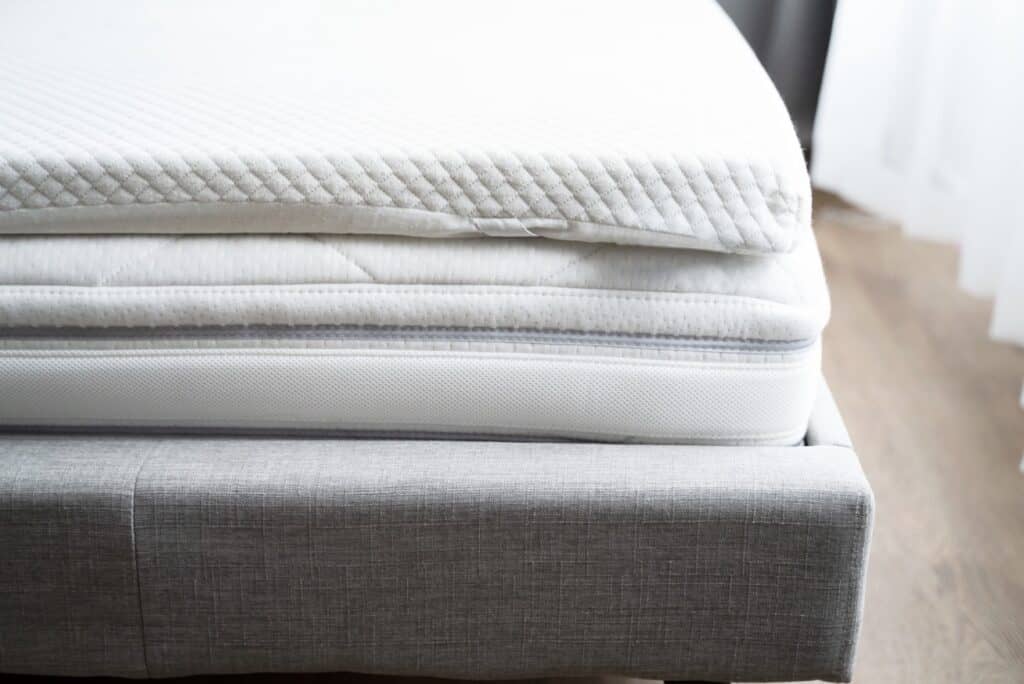
Engineered wood is made by bonding wood pieces, fibers, or veneers together. It is common because it is affordable, lightweight, and easy to shape.
Common types include:
- plywood
- MDF
- particleboard
- veneer-covered composite wood
These materials are not automatically unsafe. The main thing to check is emissions. Some pressed wood products use adhesives that release formaldehyde into indoor air.
Pressed wood is made by bonding wood pieces together. The adhesive used in that process is why emissions standards matter.
The National Institute of Environmental Health Sciences notes that urea-formaldehyde resins are used in adhesives for pressed wood products, including particleboard and furniture.
Foam is common in soft furniture. You will usually find it in:
- couches
- armchairs
- mattresses
- dining chair pads
- office chairs
- headboards
Polyurethane foam is the most common cushion foam. Memory foam is a softer type of polyurethane foam.
These materials can vary by density, additives, flame-retardant use, and emissions testing.
Natural latex is another cushion material. It comes from rubber tree sap. It is often used in mattresses, pillows, and some cushions.
Latex can be a better fit for shoppers who want to avoid polyurethane foam. Still, check the full product.
A “latex mattress” may also include adhesives, fabric covers, or blended materials.
Fabrics, Leather, and Vinyl
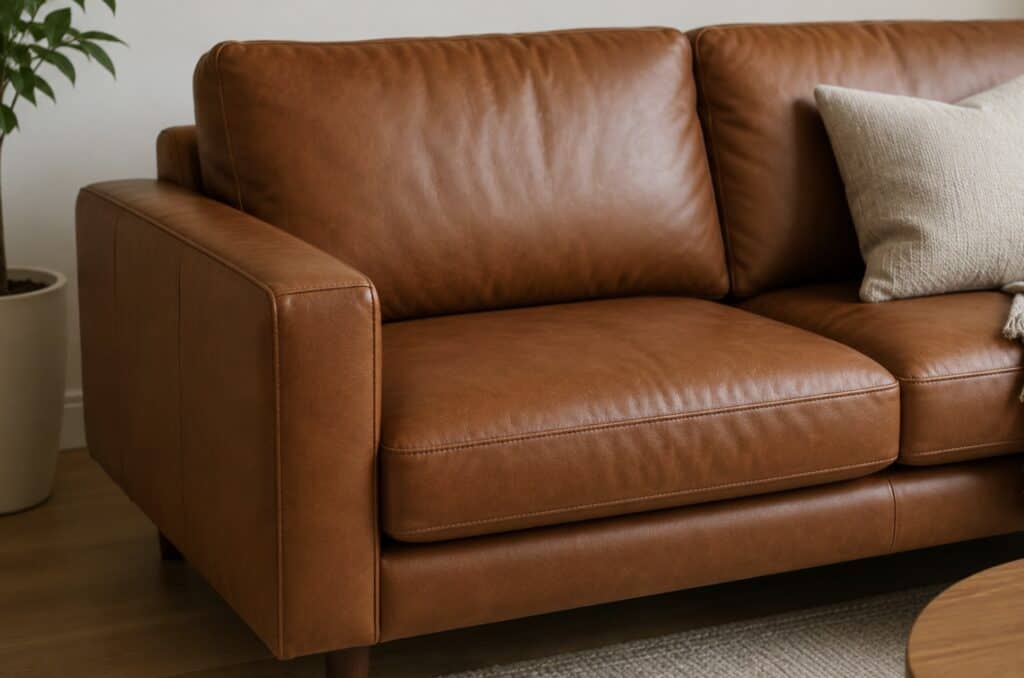
Upholstery changes how furniture feels, wears, and cleans. It also affects what touches your skin every day.
Natural fabric options include:
- cotton
- linen
- hemp
- wool
These fabrics are often easier to understand when the brand shares clear material details. Wool also works well in furniture because it is naturally flame resistant.
Synthetic fabrics include polyester, nylon, acrylic, and microfiber. These are common in couches and chairs because they are durable and stain resistant.
The fabric itself is only part of the picture. Some performance fabrics use added coatings to repel water, oil, or stains. Be more careful when the brand does not explain how the fabric is treated.
Leather is made from animal hide. It is durable, but it goes through tanning, dyeing, and finishing. Ask about the finish if odor, dyes, or coatings are a concern.
Vinyl and faux leather are usually plastic-based materials. Many faux leather products use PVC or polyurethane coatings over a fabric backing.
Vinyl can be easy to clean, but it is not the same as leather. It is more likely to use plasticizers and synthetic coatings. For daily-use seating, look for clear material disclosures before buying.

Chemicals Worth Knowing
Furniture can contain chemicals that serve a purpose. They may make a product softer, stronger, stain resistant, water resistant, or easier to manufacture.
The goal is not to memorize every chemical name. It is to know which categories are worth checking before you buy.
A few categories matter most in furniture:
- VOCs from finishes, adhesives, and some foams
- formaldehyde from some pressed wood products
- PFAS from some stain-resistant treatments
- flame retardants in some older or foam-filled furniture
- plasticizers in some vinyl or faux leather pieces
A review in Environmental Health explains that furniture and other household products can release chemicals into indoor air and dust, including flame retardants, phthalates, and PFAS.
VOCs and Formaldehyde
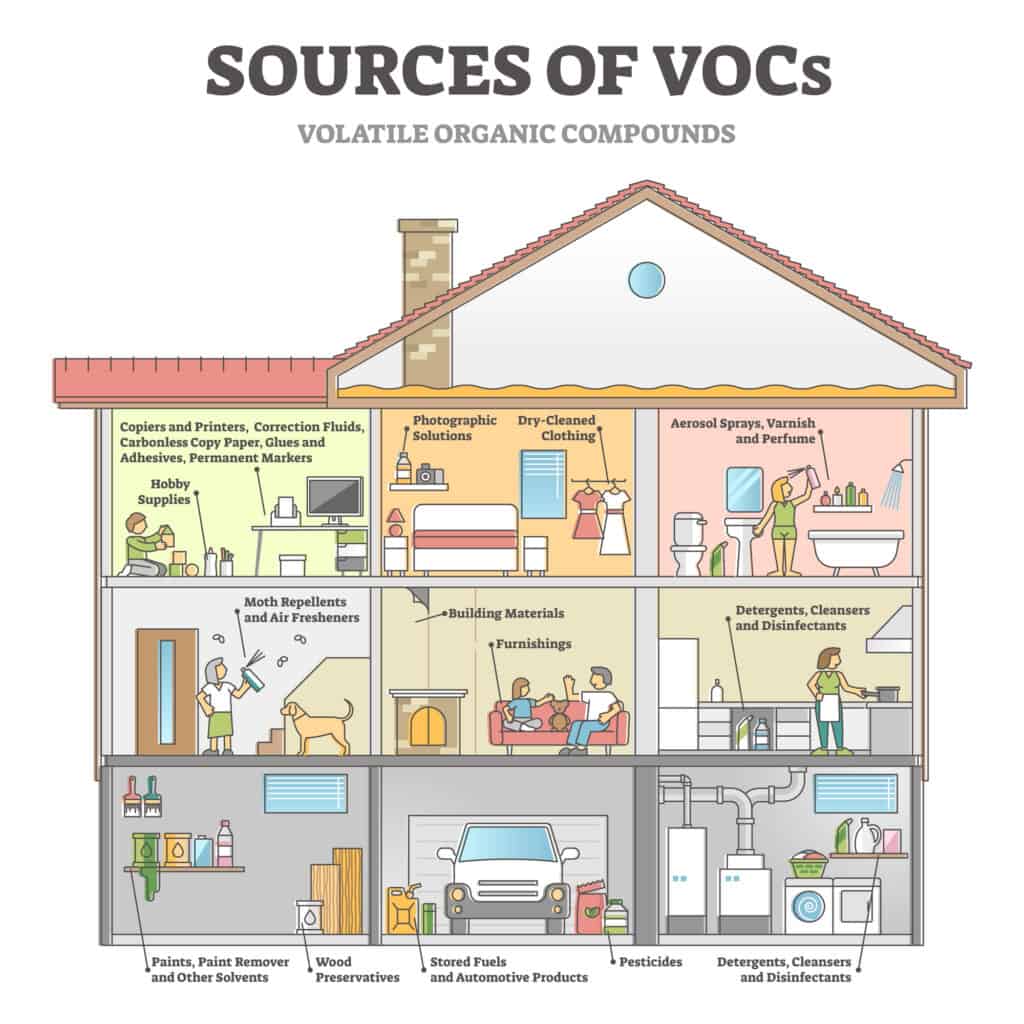
VOCs are gases released by some materials at room temperature. In furniture, they may come from paints, stains, sealants, adhesives, foam, or composite wood.
Formaldehyde is one VOC that gets special attention. It is used in some resins and adhesives, especially in pressed wood products.
You may see formaldehyde discussed with:
- MDF
- particleboard
- plywood
- laminate furniture
- veneer furniture
- some cabinets and dressers
New furniture usually releases the most VOCs at first. Levels often drop over time, especially with good ventilation.
New furniture often smells strongest in the first days or weeks because some chemicals release faster when the product is new.
A strong smell does not prove a product is unsafe. No smell does not prove a product is clean, either. Use smell as one clue, not the only test.
For a safer choice, look for furniture with:
- solid wood or metal construction
- low-VOC or water-based finishes
- verified composite wood emissions standards
- GREENGUARD Gold or similar emissions testing
PFAS and Flame Retardants
PFAS are sometimes used to make fabric resist stains, water, oil, or grease. In furniture, they are most relevant in “performance,” “easy-clean,” or stain-resistant fabrics.
When a couch says “performance fabric,” ask whether the fabric is PFAS-free before buying.
These treatments matter because PFAS break down slowly. Some PFAS also build up in people, animals, and the environment over time.
This is especially helpful for couches, dining chairs, nursery chairs, and other daily-use seating.
Flame retardants are another category to check. They were commonly added to some foam furniture for many years.
They may still appear in certain products, depending on the material and brand.
Flame retardants matter most when:
- the furniture is older
- the item contains polyurethane foam
- the product label does not explain what is added
- foam is exposed, torn, or crumbling
You do not need to reject every upholstered piece. Look for brands that clearly state whether flame retardants are added.
For older foam furniture, damaged cushions are worth replacing or covering properly.
Certifications That Help
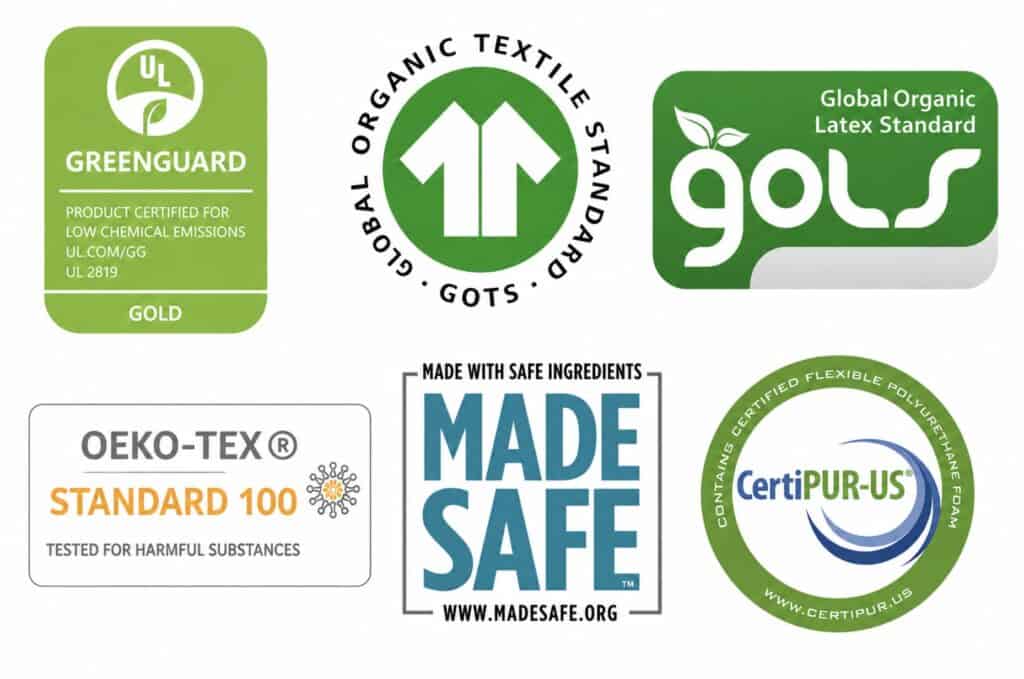
Certifications make furniture shopping easier. They show that a product has been tested against a specific standard.
They do not all check the same thing. One label may focus on indoor air emissions. Another may focus on textiles, organic fibers, wood sourcing, or foam.
Use certifications as filters, not as a promise that every part of the product is perfect. The best label depends on the material you are buying.
Helpful furniture certifications include:
- GREENGUARD Gold: tests products for low chemical emissions into indoor air
- OEKO-TEX STANDARD 100: tests textiles for harmful substances
- GOTS: verifies organic textiles and processing standards
- GOLS: verifies organic latex
- FSC: verifies responsibly sourced wood
- CertiPUR-US: tests polyurethane foam for specific emissions and restricted substances
- MADE SAFE: screens products for a wider list of restricted chemicals
- TSCA Title VI: applies to formaldehyde emissions from composite wood products
Match the certification to the material. For example, use OEKO-TEX for textiles, FSC for wood, and GOLS for organic latex.
For upholstered furniture, look for emissions and textile labels together. A couch might have certified fabric but uncertified foam. A mattress might have certified foam but a treated outer cover.
For wood furniture, check both the wood type and the emissions standard.
The EPA explains that composite wood products sold in the United States must meet TSCA Title VI formaldehyde emission standards, including particleboard, MDF, and hardwood plywood.
A few simple ways to use labels:
- Choose GREENGUARD Gold when indoor air emissions are your main concern.
- Choose OEKO-TEX when checking fabric, covers, or textile parts.
- Choose GOTS for organic cotton, wool, or other organic textiles.
- Choose GOLS for organic latex mattresses or cushions.
- Choose FSC when you want responsibly sourced wood.
- Choose CertiPUR-US when a product contains polyurethane foam.
- Check TSCA Title VI for furniture made with composite wood.
No certification replaces a clear product description. If a brand uses vague terms like “eco-friendly,” “clean,” or “natural,” look for the actual label and certificate number.
Key Takeaway: The best choice combines clear materials, relevant certifications, and honest product details.
Also check what part of the product is certified. A label may apply only to the fabric, foam, wood, or finish. The full piece is only as transparent as its least explained part.
How to Choose Safer Furniture

Choosing safer furniture gets easier when you use a simple order of priorities. Start with the parts that make up most of the piece. Then check the smaller details, like finishes and treatments.
Start with the biggest parts of the furniture first. The frame, cushion, and fabric usually matter more than small decorative details.
You do not need the “perfect” product. Choose the best option for your budget, room, and daily use.
Start With the Material
Look at the main material first. This tells you more than marketing words like “natural,” “clean,” or “eco.”
For hard furniture, prioritize:
- solid wood
- metal
- glass
- certified composite wood
- low-VOC finishes
For soft furniture, prioritize:
- natural latex
- wool
- organic cotton
- linen
- hemp
- clearly labeled foam
- untreated or PFAS-free fabric
Be more careful when a product uses vague material descriptions. Phrases like “wood product,” “premium foam,” or “performance fabric” need more detail.
Ask what the frame, cushion, cover, and backing are made from. A sofa may have a solid wood frame but still use synthetic fabric, foam, and fabric treatments.
Check Treatments and Finishes
Treatments and finishes affect how furniture looks, cleans, and lasts. They also affect what the product releases into indoor air.
For wood furniture, check for:
- water-based finishes
- low-VOC stains
- low-VOC paints
- plant-based oils or waxes
- clear formaldehyde emissions compliance
For upholstered furniture, check for:
- PFAS-free fabric
- no added flame retardants
- no antimicrobial treatment
- no unnecessary waterproof coating
- clear foam certifications
The EPA recommends extra fresh air and ventilation when using products that may release VOCs, including paints, finishes, and building materials.
Be careful with vague stain-resistance claims. “Easy clean” does not always mean PFAS. But it should prompt one question: what treatment makes it easy to clean?
For children’s rooms, bedrooms, and daily-use seating, choose clearer labels over mystery treatments.
REAL-LIFE EXAMPLE

You are comparing two dressers: one is made from MDF with a strong smell, and one is GREENGUARD Gold certified. GREENGUARD Gold tells you the product was tested for low chemical emissions into indoor air. It does not tell you every material used, so still check whether the dresser is solid wood, composite wood, painted, stained, or sealed.
Ventilate New Furniture
New furniture often smells strongest during the first days or weeks. Airflow helps carry released chemicals out of the room.
When possible:
- unbox furniture outside or in a garage
- remove plastic wrapping quickly
- open windows during the first few days
- use fans to move air outdoors
- keep new foam items out of bedrooms at first
- let strong-smelling items air out before daily use
If a new piece smells strong, keep it out of bedrooms at first and air it out in a well-ventilated space.
Ventilation is not a substitute for better materials. It is a practical step when new furniture enters your home.
This step matters most for upholstered pieces, foam products, painted furniture, and newly finished wood. It also matters in small rooms with closed windows.
Room-by-Room Priorities

You do not have to replace every piece of furniture at once. Start with the rooms where your family spends the most time.
Bedrooms and living rooms are often the best places to start because furniture there gets long daily use.
The EPA notes that people in the U.S. spend about 90% of their time indoors, so long-term indoor materials deserve attention. Focus first on furniture used for sleep, rest, and daily contact.
Good first priorities include:
- mattresses
- couches
- nursery furniture
- upholstered chairs
- desks and office chairs
- rugs and padded play areas
Bedrooms and Nurseries
Bedrooms are a smart place to start because people spend hours there every night. Choose the safest options you can for the items closest to the body.
Prioritize:
- mattresses
- pillows
- upholstered headboards
- bed frames
- dressers
- cribs
- nursery chairs
If you can only replace one item first, start with the piece closest to the body for the longest time.
You can spot a non-toxic mattress by looking closely at the foam, latex, fabric cover, and flame barrier.
For cribs and dressers, check the wood type and finish. Solid wood or certified composite wood is easier to evaluate than vague “wood product” descriptions.
For nursery chairs, check both comfort and material details. A glider may include foam, fabric treatments, adhesives, and a wood or metal frame.
Living and Work Spaces
Living rooms matter because couches and chairs get daily use. These items often have large surface areas, thick cushions, and treated fabrics.
You can spot non toxic couches and upholstered chairs by checking:
- frame material
- cushion foam
- fabric type
- stain-resistant treatment
- flame-retardant policy
- emissions certifications
If a couch is labeled “performance fabric,” ask whether it is PFAS-free. If the brand cannot answer, choose a clearer option.
Work spaces deserve attention too. Desks, office chairs, and shelving can sit in small rooms for hours each day.
For home offices, check:
- desk material
- chair foam
- chair fabric
- laminate surfaces
- finish type
- ventilation in the room
A simple metal or solid wood desk is easier to assess than a laminate desk with unclear materials. For office chairs, the cushion and fabric details matter most.
Better Furniture Questions

A good product page should tell you more than color, size, and style. Safer furniture shopping means asking what the furniture is made from, how it is finished, and whether it has been tested.
The CDC notes that some PFAS are used in stain-resistant fabrics and other consumer products. That is why vague terms like “performance fabric” or “easy-clean finish” deserve a closer look.
Copy these questions into your notes app before shopping online or visiting a furniture store.
Before buying, ask:
- What is the frame made of?
- Is the wood solid wood, plywood, MDF, or particleboard?
- Does the composite wood meet formaldehyde emissions standards?
- What type of foam is used in the cushions?
- Are flame retardants added?
- Is the fabric treated for stain, water, or oil resistance?
- Is the fabric PFAS-free?
- What paint, stain, sealant, or finish is used?
- Are the finishes low-VOC or water-based?
- Does the product have GREENGUARD Gold, OEKO-TEX, GOTS, GOLS, FSC, or CertiPUR-US certification?
- Which part of the product is certified?
- Can the brand provide a full material list?
Clear answers make shopping easier. If a company can explain the frame, cushion, fabric, finish, and certifications, you have more to work with.
Be careful with broad claims like:
- non-toxic
- natural
- eco-friendly
- green
- clean
- chemical-free
They also do not replace testing, certification, or a clear product description.
A helpful brand should answer simple questions without making you dig. If the details are missing, choose the product with clearer materials and better documentation.
Best Non-Toxic Brands

The best non-toxic furniture brands are usually the ones that make materials easy to verify. They do not rely only on words like “clean,” “natural,” or “eco-friendly.”
Look for brands that clearly share:
- full material lists
- fabric treatment details
- foam type
- wood type
- finish type
- flame-retardant policy
- PFAS-free claims, if relevant
- third-party certifications
- where each certification applies
This matters most for couches, mattresses, nursery furniture, upholstered chairs, and desks used every day.
A brand may sell some safer pieces and some less transparent pieces. Check the specific item before buying.
Check each product individually, even when you trust the brand. Materials and certifications can change from item to item.
For a full list of vetted options, see our guide to the best non-toxic furniture brands. Use that roundup as a starting point, then compare materials, certifications, and treatments for the exact piece you want.
Simple Shopping Checklist

Use this checklist when comparing furniture online or in-store. It keeps the process simple and helps you focus on the details that matter most.
Use this checklist to compare two similar products side by side. The clearer product is usually easier to trust.
Before buying, look for:
- Clear material lists for the frame, cushion, fabric, fill, and finish
- Solid wood, metal, glass, or certified composite wood for hard furniture
- Natural latex, wool, cotton, linen, or hemp when choosing softer materials
- Low-VOC or water-based finishes on wood furniture
- PFAS-free fabrics for stain-resistant or performance upholstery
- No added flame retardants when choosing foam-filled furniture
- GREENGUARD Gold, OEKO-TEX, GOTS, GOLS, FSC, CertiPUR-US, or MADE SAFE where relevant
- TSCA Title VI compliance for furniture made with composite wood
- Clear brand answers about treatments, adhesives, finishes, and certifications
Be extra selective with furniture used every day. This includes mattresses, couches, nursery furniture, office chairs, and desks.
After buying, give new furniture time to air out. Open windows, remove plastic packaging, and let strong-smelling pieces ventilate before heavy use.
The easiest rule is this: choose the product with the clearest materials, the fewest unnecessary treatments, and the best third-party testing for its category.
Key Takeaway: Safer furniture shopping comes down to clear materials, fewer unnecessary treatments, and testing that matches the product.
Conclusion
Choosing non-toxic furniture does not mean every item in your home has to be perfect.
It means understanding the materials, asking better questions, and choosing clearer, lower-emission options when you can.
Start with the pieces your family uses most, then make safer swaps over time. A calmer, healthier home is built through practical choices, not pressure.