Are Flame Retardants Still Used in Furniture?

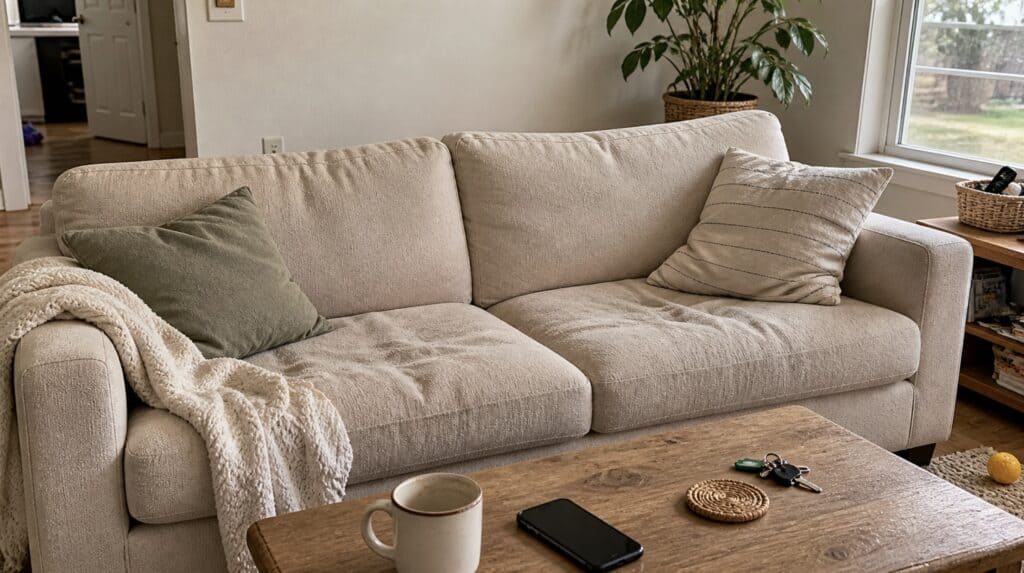
Flame retardants in furniture are not as common as they once were, but they have not disappeared completely.
For years, these chemicals were added to many upholstered products to help meet fire-safety standards, especially in foam cushions.
That matters because some flame retardants can move out of products over time and contribute to everyday indoor exposure through off-gassing and and the release of volatile organic compounds (VOCs), which the EPA notes as one reason flame retardants continue to be evaluated for potential risk.
Today, the better question is not simply whether furniture contains harmful chemicals or not, but how old it is, what materials it uses, and whether flame retardants were added in the first place.
Yes, flame retardants are still used in some furniture.
They are less common in newer residential furniture, especially when brands use barrier fabrics or label products “no added flame retardants”.
A fire-safety label does not automatically mean chemicals were added, so shoppers should check the product label or ask the brand directly.
Are Flame Retardants Still Used?

Yes, flame retardants are still used in some furniture. But they are not used as widely as they were in the past.
Older upholstered furniture often relied on chemical flame retardants, especially in polyurethane foam cushions.
Today, many furniture brands make residential sofas, chairs, and mattresses without adding them.
You are more likely to find added flame retardants in:
- older foam furniture
- some low-cost upholstered furniture
- some imported furniture
- certain commercial or specialty furniture
- products made for stricter fire-safety settings
You are less likely to find them in:
- newer furniture labeled “no added flame retardants”
- higher-end non-toxic or low-tox furniture
- furniture made with natural materials
- products that use barrier fabrics instead of treated foam
Key Takeaway: The most accurate answer is that flame retardants are still used in some furniture, but many newer residential products avoid them.
What Changed in Furniture

The biggest shift was how furniture could meet fire-safety rules.
For years, many manufacturers added flame retardants to polyurethane foam. Foam was tested in a way that made chemical additives common, especially in couches and padded chairs.
California Technical Bulletin 117-2013 changed that approach.
Older standards made foam testing a major focus. Newer testing allows furniture makers to use fabric choices, barrier materials, or construction methods instead of relying only on treated foam.
The CPSC explains that TB117-2013 provides test methods for cover fabrics, barrier materials, resilient filling, and decking materials.
That change gave manufacturers more ways to pass fire tests without adding flame retardants directly to foam. For example, a brand may use:
- a smolder-resistant outer fabric
- a barrier fabric under the upholstery
- different furniture construction methods
- foam without added flame retardants
This is why a newer couch can meet flammability rules and still be labeled “contains no added flame retardants.”
REAL-LIFE EXAMPLE

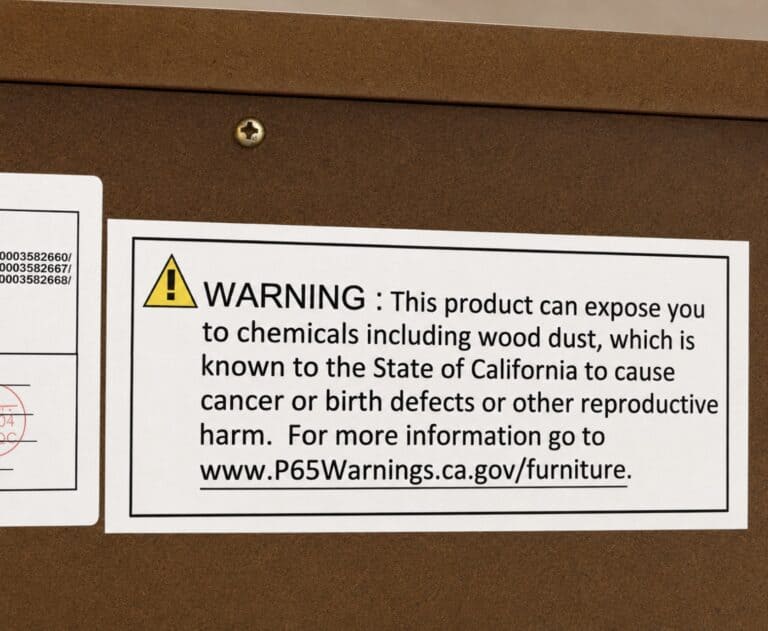
You may see a couch label that says it meets TB117-2013. That label tells you the furniture meets a smolder-resistance standard for upholstered furniture. It does not tell you whether flame retardants were added, so you still need to check the product label.
Health and Exposure Context

Flame retardants are one of several toxic chemicals used in furniture that are discussed in health research because they do not always stay locked inside furniture.
That dust can get on hands, floors, toys, and soft surfaces.
Dust matters because it collects tiny particles from furniture, flooring, fabrics, and everyday household materials. Regular cleaning can lower the amount of dust people touch and breathe indoors.
Small children may have more contact with dust because they crawl, play on the floor, and put their hands in their mouths.
Exposure can happen through:
- dust on hands
- dust on floors and rugs
- old or damaged foam particles
- frequent contact with treated upholstered furniture
Researchers have studied certain flame retardants because some interfere with hormone activity or nervous system development.
The National Institute of Environmental Health Sciences notes that research has found links between some flame retardants and effects on the endocrine, immune, reproductive, and nervous systems.
This does not mean one couch will make a home unsafe. The bigger issue is repeated contact with dust and treated materials over time.
At The Goodness Well, we treat flame retardants as an exposure to reduce where possible, not a reason to panic over every piece of furniture.
For most homes, the practical goal is simple: choose clearly labeled furniture when buying new, and be more careful with old foam that is breaking down.
Use a HEPA vacuum on rugs, around sofas, and under cushions. This is a simple way to reduce household dust without replacing every item in your home.
How to Choose Safer Furniture

When buying new furniture, look for clear material details. A brand should tell you what the cushions, fabric, and fire-safety approach are made from.
Start with the product label or product page. Look for phrases like:
- “no added flame retardants”
- “made without added flame retardant chemicals”
- “TB117-2013 compliant”
- “CertiPUR-US certified foam”
- “wool barrier” or “barrier fabric”
- natural materials like wool, cotton, latex, or solid wood
When shopping online, search the product page for “flame retardant,” “TB117-2013,” and “foam.” These terms can help you find the most useful safety details quickly.
“TB117-2013 compliant” means the furniture meets a flammability standard, not whether flame retardants were added.
The CPSC explains that upholstered furniture labels may state whether added flame retardant chemicals are present, so the label can help shoppers check beyond the fire standard itself.
CertiPUR-US can also be useful for foam products. It checks flexible polyurethane foam for certain substances and emissions.
For older furniture, focus on condition. Replace foam cushions that are crumbling, powdery, or shedding.
If replacement is not realistic, use a washable cover and vacuum nearby dust with a HEPA filter.
A simple shopping rule: choose brands that explain their materials clearly. If the product page uses vague claims like “safe,” “eco,” or “clean” without details, ask whether flame retardants were added.