Is Polyurethane Foam Toxic? What You Should Know

Polyurethane foam shows up in mattresses, cushions, upholstered furniture, and many everyday products, so it is reasonable to wonder whether it is something you should avoid.
Part of the concern comes from indoor air: the EPA notes that volatile organic compounds, or VOCs, are common indoor pollutants and that indoor concentrations can be higher than outdoor levels, especially from products used inside the home.
That does not mean all polyurethane foam is equally risky, but the details matter. In this article, we will look at when polyurethane foam is more concerning, when it is less so, and what helps you choose lower-risk options.
Yes, polyurethane foam is considered toxic as it is a synthetic cushioning material that can release chemicals and shed microplastic particles
For most people, the main concerns are stronger VOC emissions when it is new and more dust or fragments when it is old and breaking down.
It is not automatically unsafe, but lower-emission certifications and clear product details help you choose a lower-risk option.
Why People Worry
People worry about polyurethane foam because it is not just “soft padding.” It is a petroleum-based material made with chemicals that can vary by product and by use.
The main concerns usually fall into four buckets:
- VOCs in indoor air: New foam can release volatile organic compounds, especially when it is first unpacked.
- Microplastics: Foam can release tiny particles (under 5mm) due to wear, tear, or UV exposure.
- Added chemicals: Some foam products have used flame retardants or other additives.
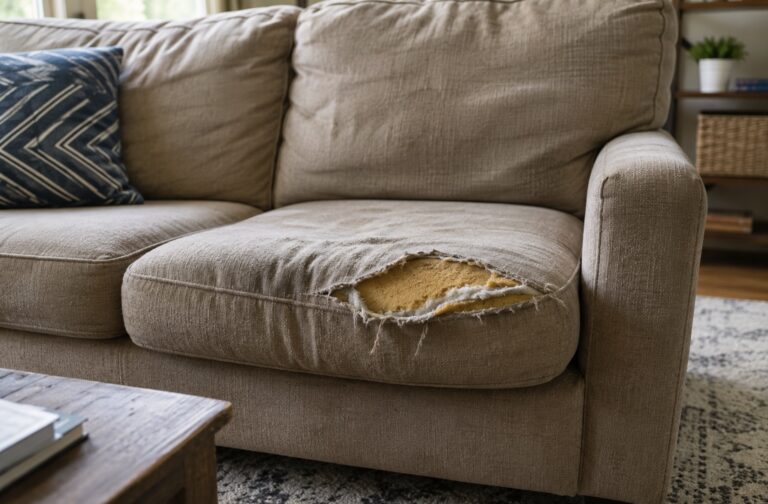
- Foam dust as it ages: Old or damaged foam can break apart and add more particles to household dust.
“Off-gassing” means a product releases chemicals into the air, especially when it is new. That is why smell often gets attention first.
Polyurethane foam is often used in places with long daily contact. Think mattresses, crib mattresses, couch cushions, upholstered chairs, and mattress toppers—especially memory foam, which has its own set of considerations around off-gassing, product quality, and indoor exposure.
Research also looks at polyurethane foam because it has been a source of flame retardant chemicals in homes.
In one NIH-hosted study, the presence of certain flame retardants in sofa foam matched higher levels of those same chemicals in house dust, which helps explain why older foam furniture gets scrutiny.
That does not mean every foam item contains the same chemicals.
Microplastic exposure also comes up in this conversation. Polyurethane foam is a plastic material.
Foam often gets more scrutiny than hard materials because people sit, lie, or sleep on it for hours at a time.
When it starts to crumble, flake, or shed, those small pieces do not stay neatly inside the cushion. They can end up in dust, on floors, and on fabrics around the home.
When Risk Is Higher

Risk is not the same across all foam products. It rises in a few very practical situations.
- The item is brand new. Fresh foam usually releases more VOCs at the start. Emissions drop with time, which is why the first days or weeks matter most.
- The smell is strong and persistent. A noticeable chemical odor often means more VOCs are entering the room air right then.
- The room has poor airflow. Closed bedrooms, nurseries, and small apartments trap more of what the product releases.
- The foam is low quality or poorly made. Lower-quality foam is more likely to break down faster and shed microplastics sooner.
- The product gets long daily contact. Mattresses, mattress toppers, crib mattresses, and couch cushions put the material near your body for hours at a time.
New foam usually releases more VOCs at first. As the product airs out, those emissions often drop.
A NIH-hosted paper on flexible polyurethane foams notes that fresh foams emit VOCs and that emission rates decline over time, which is why the early use period gets the most attention.
Some people also have a lower tolerance for exposure. This matters more for:
- infants and young children
- people with asthma
- people who get headaches from strong odors
- anyone with chemical sensitivity
REAL-LIFE EXAMPLE

You buy an inexpensive foam mattress topper online and open it in a small bedroom. The strong smell tells you the topper is releasing more VOCs right now, so this is a product you should air out well before sleeping on it. It does not tell you whether the foam meets any low-emission standard, so you still need to check for certifications and product details.
What Makes Some Foam Lower Risk

Some foam products are easier to live with because they have lower emissions or stricter material screening. That does not make them perfect. It does help narrow the field.
There are two certifications you want to look for when buying polyurethane:
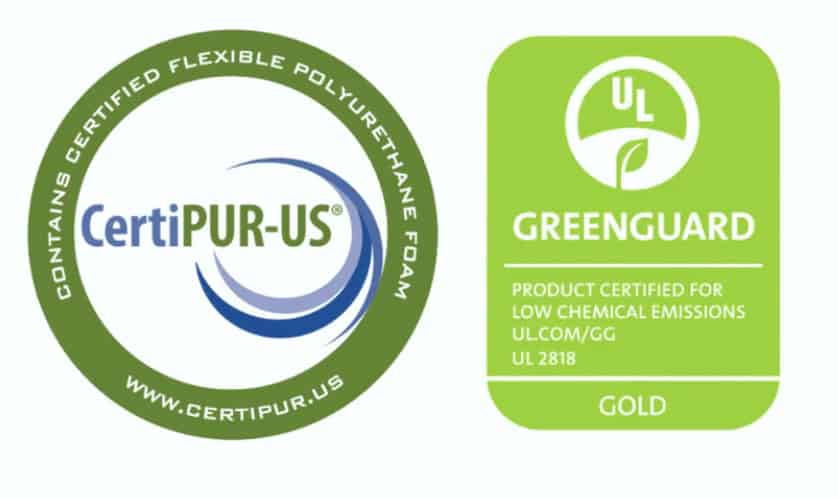
- CertiPUR-US
- GREENGUARD Gold
CertiPUR-US applies to the flexible polyurethane foam itself.
According to the program, certified foam meets standards for content, emissions, and durability, and is tested by independent labs.
The program also says certified foam is made without formaldehyde, certain heavy metals, ozone depleters, and specific phthalates, with low VOC emissions for indoor air quality.
GREENGUARD Gold focuses on finished product emissions, not just the foam inside.
UL says GREENGUARD Gold sets lower VOC emission limits and is designed for spaces used by more sensitive groups, including children.
That makes it especially useful for products like mattresses, crib mattresses, and upholstered furniture.
This distinction matters:
- CertiPUR-US tells you something important about the foam
- GREENGUARD Gold tells you something important about the whole product’s emissions
If a mattress has certified foam but the cover, glue, or fire barrier adds more emissions, the full product can still smell stronger than expected.
A mattress can use certified foam but still have other materials that affect how much the finished product emits indoors.
If the whole product is GREENGUARD Gold certified, that gives you a better read on what the finished item releases into indoor air.
Emission testing matters most for items used for long hours and at close range, like bedding and seating.
That is why low-emission certifications are more helpful than vague words like “eco” or “natural.”
It means the product or foam met a defined standard. You still need to read the full product details, especially for added flame retardants, adhesives, and waterproof layers.
Key Takeaway: Certifications help narrow your options, but they do not replace reading the full product details.
How To Reduce Exposure

You do not need a perfect home to lower exposure. A few simple steps do most of the work.
- Air out new items before heavy use. Open windows, run fans, and give the product time before sleeping on it or using it all day.
- Improve room ventilation. Fresh outdoor air helps dilute indoor VOCs and move them out of the room.
- Do not keep deteriorating foam. If foam is cracking, flaking, or turning dusty, replace it instead of patching it up.
- Prioritize close-contact items. Focus first on products you use for hours at a time, like mattresses, toppers, pillows, and couch cushions.
- Choose certified products when possible. Look for lower-emission or better-screened options, then read the full product details.
- Check the whole product, not just the foam. Covers, adhesives, waterproof layers, and fire barriers can all affect what the item releases indoors.
- Vacuum and dust regularly. This matters more if older foam is shedding particles into the room.
The EPA’s indoor air guidance is straightforward: source control is often the most effective step, and ventilation lowers the concentration of indoor pollutants by bringing in more outdoor air.
That is why replacing crumbling foam and airing out new products are more useful than trying to “mask” the smell with sprays or candles.
Source control means removing or replacing the product causing the problem. Ventilation helps dilute what stays in the room.
At The Goodness Well, we look for materials that stay stable, have lower emissions, and are clearly documented.
A product does not need to sound trendy. It needs to be transparent.
One practical mindset helps here: reduce the biggest exposures first. A foam mattress you sleep on every night deserves more scrutiny than an occasional guest-room cushion.
Conclusion
Polyurethane foam is not something most people need to panic about, but it is also not a material to ignore.
The bigger concerns usually come from strong early off-gassing, added chemicals that vary by product, and old foam that is shedding microplastics.
No product is completely exposure-free, and labels only tell part of the story.
If you’re dealing with a new product that smells or feels strong, it can help to follow a simple step-by-step approach to reduce exposure rather than just waiting it out.