Are Mattresses Toxic? How to Choose a Non-Toxic Mattress

Mattresses are something we use every night, so it makes sense to wonder what they’re made of and whether those materials affect the air we breathe while we sleep.
This matters because many household products can release chemicals into indoor air, and the EPA notes that some indoor pollutant levels are often higher indoors than outdoors.
The good news is that not every mattress is a high-risk product, but materials like foam, adhesives, covers, and fire barriers can vary widely.
Understanding what’s inside your mattress can help you choose a non-toxic, lower-exposure option and apply the same principles used to choose safer furniture for your home.
Most mattresses are not automatically toxic, but many contain materials worth checking.
The main things to review are the foam, fire barrier, adhesives, cover fabric, and chemical emission testing.
A “non-toxic” mattress should have clear material details and credible certifications, but the label does not automatically mean every part is organic or chemical-free.
Are Mattresses Toxic?

Most mattresses are not automatically toxic.
The better question is what the mattress is made from, how clearly the brand explains those materials, and whether the finished product has been tested for chemical emissions.
A mattress may deserve a closer look if it contains:
- Polyurethane foam or memory foam that releases VOCs
- Chemical adhesives between layers
- A fiberglass fire barrier
- Added stain-resistant or water-resistant treatments
- Vague “eco” or “green” claims without material details
VOCs matter because they evaporate from materials into indoor air.
For mattresses, this matters most with new foam products, strong odors, poor ventilation, and people who are more sensitive to indoor air pollutants.
Key Takeaway: A mattress is easier to trust when the brand clearly explains what is inside it and how it was tested.
For most healthy adults, a new mattress is usually a low daily risk when it is well-made, ventilated, and certified for low emissions.
The risk is harder to judge when a brand does not disclose the foam type, fire barrier, adhesives, or cover treatments.
A safer mattress does not have to be perfect or fully chemical-free.
It should give you clear answers about what is inside it, how it meets flammability rules, and whether the full product or key materials were tested by a credible third party.
What Mattresses Contain
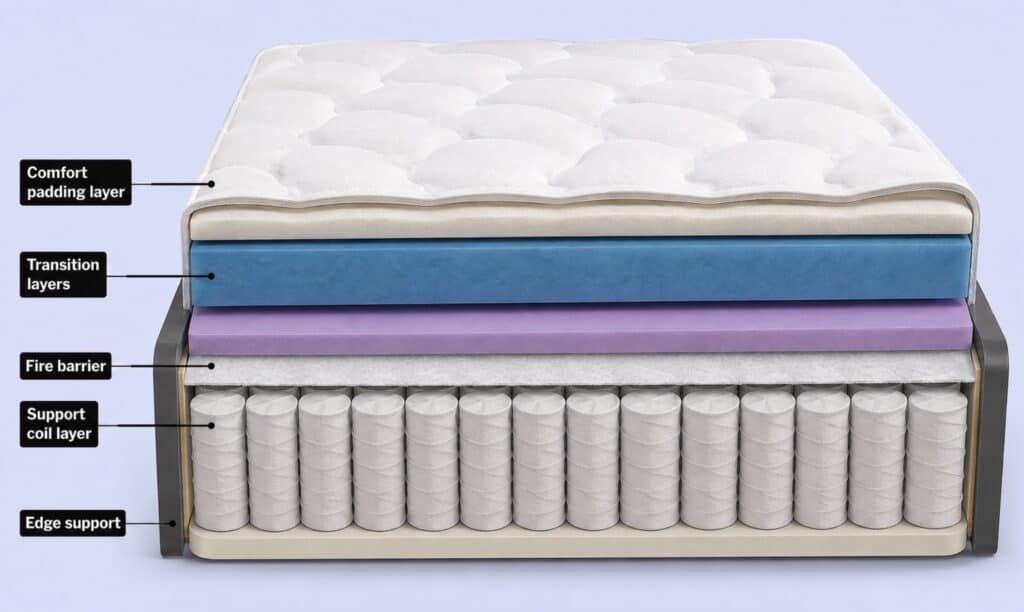
Most mattresses are built in layers. Each layer has a job, such as support, comfort, fire resistance, or durability.
Common mattress parts include:
- Comfort layers: Usually foam, latex, cotton, wool, or fiber padding.
- Support core: Often springs, dense foam, or a mix of both.
- Fire barrier: A layer that helps the mattress meet flammability rules.
- Adhesives: Glues that hold foam, fabric, and inner layers together.
- Outer cover: The fabric you see and touch, often made from cotton, polyester, wool, or blended fabric.
Two mattresses can look similar on the outside but use very different materials inside, especially in the comfort layers and fire barrier.
The materials can vary a lot. Two mattresses may both be called “hybrid,” but one may use several foam layers while another may use more latex, wool, and coils.
Foam Layers
Foam layers add softness, pressure relief, and support. Most foam mattresses use polyurethane foam, memory foam, or both.
Memory foam is a type of polyurethane foam. It is designed to soften with body heat and mold around your shape. This is why it can feel cushy and slow-moving.
Natural latex is different. It comes from rubber tree sap and has a springier feel. Certified natural latex is usually easier to evaluate because the material source is clearer.
Foam matters because it is one of the main places shoppers see emission testing claims. New foam products can release VOCs into indoor air, especially right after unboxing.
The next section explains off-gassing in more detail.
Before buying, search the product page for “fire barrier,” “fiberglass-free,” or “flame retardant.” If the answer is unclear, ask the brand directly.
Fire Barriers
Mattresses sold in the U.S. must meet federal flammability standards.
The CPSC lists separate standards for mattress smoldering resistance and open-flame mattress sets, so brands need some way to slow ignition or heat release.
Fire barriers may be made from:
- Wool
- Rayon or silica blends
- Fiberglass
- Cotton treated for flame resistance
- Other proprietary barrier fabrics
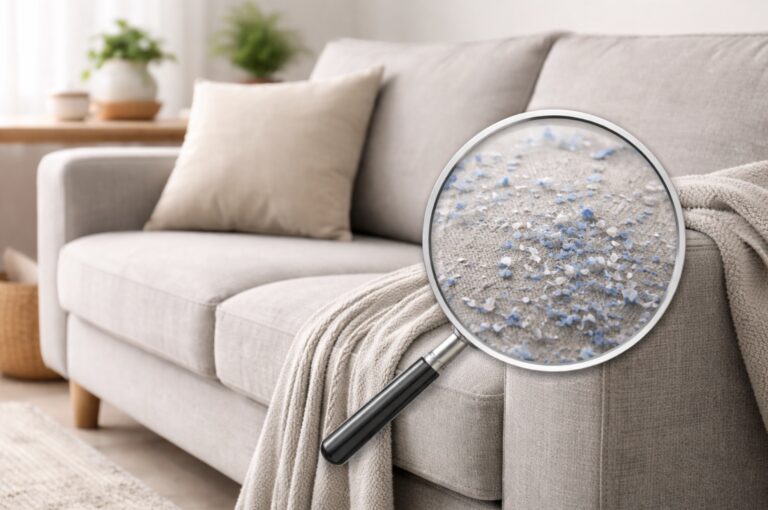
Fiberglass is used because it can help with fire resistance without adding certain chemical flame retardants. The problem starts when fiberglass escapes the inner cover.
The CDC’s ATSDR explains that airborne synthetic vitreous fibers can irritate the eyes, nose, throat, lungs, and skin when fibers are breathed in or touched.
REAL-LIFE EXAMPLE
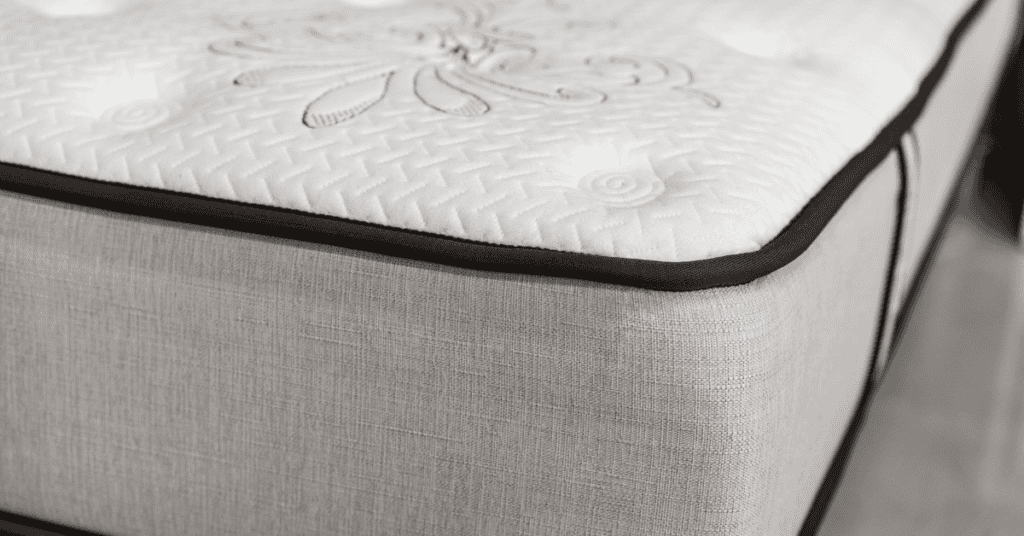
You find a mattress tag that says “do not remove cover.” That warning may mean the inner fire barrier should not be exposed. It does not tell you whether the mattress is fiberglass-free, so you still need to check the material list or ask the brand directly.
Why Mattress Materials Matter
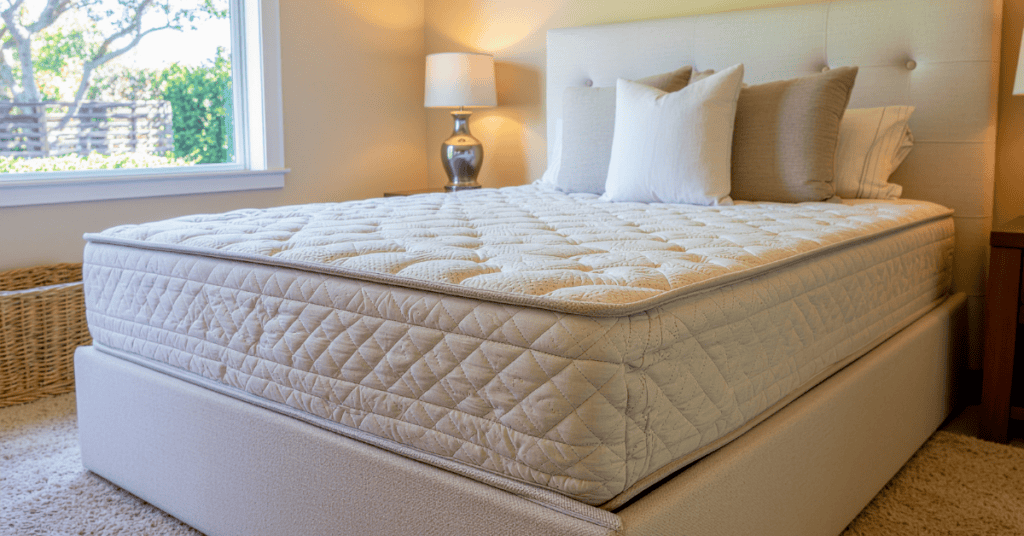
Mattress materials matter because your face and body stay close to them for hours. If a mattress releases chemicals into the air, you may breathe more of them while sleeping.
The main issue is off-gassing. This happens when materials release VOCs into indoor air.
Off-gassing happens when chemicals evaporate from a material into the surrounding air. This is why a new mattress smell is usually strongest soon after unboxing.
VOCs are gases that come from certain solids or liquids, including some foams, adhesives, and fabric treatments.
The EPA explains that VOCs can be higher indoors than outdoors and may irritate the eyes, nose, throat, or breathing passages in some people.
This is why new mattresses often smell strongest during the first few days.
A strong odor can mean the mattress is releasing more chemicals at first.
This matters more when:
- The mattress is brand new
- The room has poor airflow
- The sleeper has asthma or chemical sensitivity
- The mattress is for a baby or young child
- The brand does not share full material details
If possible, unbox a new mattress in a well-ventilated room and let it air out before the first night of sleep.
You do not need to panic over every new mattress smell. Open windows, use fans, and let the mattress air out before sleeping on it.
For future purchases, look for clear material lists and reliable emission testing instead of relying on scent alone.
Foam, Latex, and Hybrid Mattresses
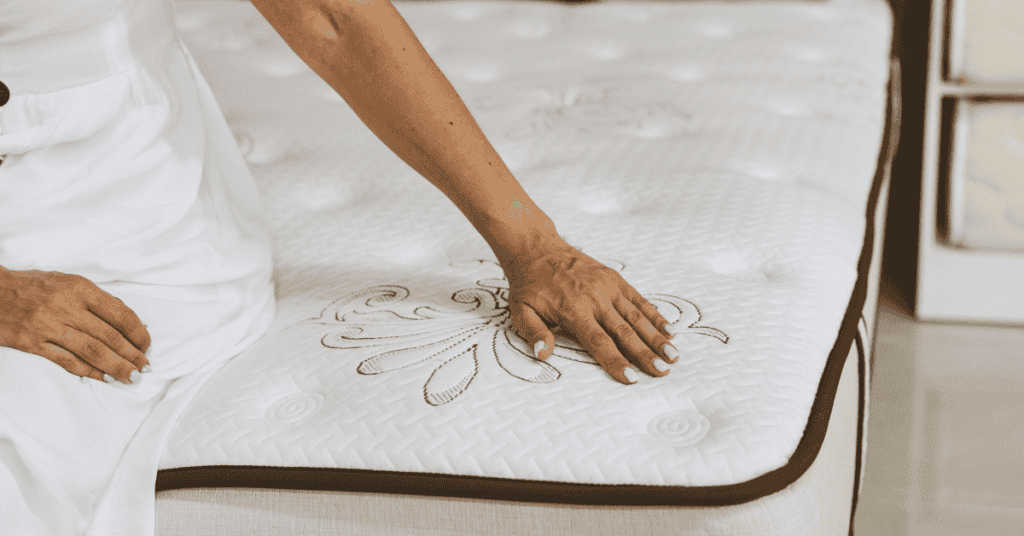
Mattress type matters because each one uses a different mix of materials. Some are mostly foam. Some are mostly latex. Others combine coils with foam or latex layers.
The safest choice depends less on the category name and more on the full material list.
- Memory foam: Usually uses polyurethane foam. It is soft and contouring, but it is more likely to have a strong new-mattress smell.
- Polyurethane foam: Common in many budget and mid-range mattresses. Emissions depend on the foam quality and testing.
- Latex: Natural latex usually has a springier feel and fewer synthetic foam layers. Look for certified natural or organic latex.
- Hybrid: Combines coils with foam, latex, or fiber layers. A hybrid mattress is not automatically safer.
Foam mattresses often need the closest review because they can release VOCs after unboxing.
Latex can be a simpler choice when the brand clearly lists natural latex, wool, cotton, and coils. But “latex mattress” does not always mean fully natural.
Some mattresses use only a thin latex layer over other materials. Always check the full layer-by-layer description.
Hybrid mattresses vary the most. One hybrid may contain coils, organic latex, wool, and cotton. Another may contain coils plus several layers of memory foam and synthetic fabric.
When comparing mattress types, do not stop at the label.
Check what is inside each layer, what the fire barrier is made from, and whether the finished product has credible certifications.
How to Choose Safer

Choosing a safer mattress starts with the same question every time: what is inside it? A brand should clearly explain the foam, fire barrier, cover fabric, adhesives, and certifications.
If a brand does not list the fire barrier material, foam type, and cover fabric, treat that as missing information.
At The Goodness Well, we focus less on perfect labels and more on transparent materials, credible certifications, and practical ways to lower everyday exposure.
Use this checklist before buying:
- Choose fiberglass-free. Look for the exact fire barrier material, not just “meets safety standards.”
- Check the full material list. Avoid brands that only say “premium foam” or “eco comfort layers.”
- Look for low-emission testing. This matters most for foam-based mattresses.
- Prefer certified latex when possible. GOLS or GOTS can help verify organic material claims.
- Watch for vague stain-resistant claims. If a cover says water-resistant or stain-resistant, ask if it uses PFAS.
- Choose removable covers carefully. A removable cover is useful only if removing it does not expose fiberglass.
- Air out new mattresses. Let the mattress ventilate in a well-aired room before sleeping on it.
- Prioritize children’s mattresses. Babies and young children sleep close to the surface and breathe more air for their body size.
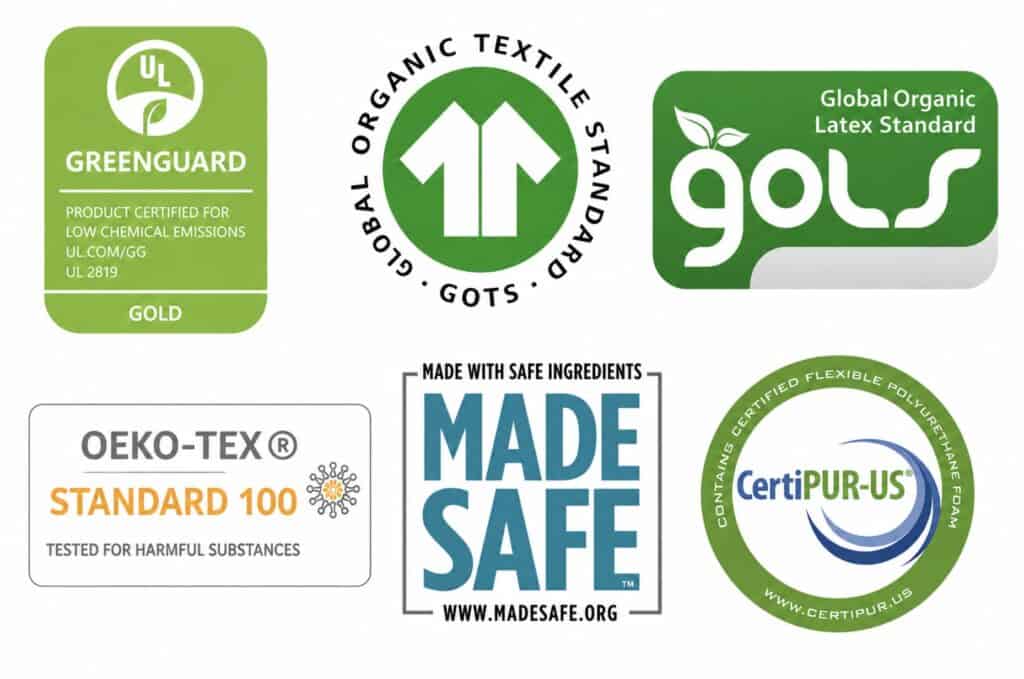
Helpful certifications include:
- GREENGUARD Gold: Tests finished products for low chemical emissions.
- GOTS: Verifies organic textiles, such as cotton or wool.
- GOLS: Verifies organic latex.
- OEKO-TEX Standard 100: Tests textile materials for certain harmful substances.
- MADE SAFE: Screens products for a wide range of chemicals.
- CertiPUR-US: Tests polyurethane foam for emissions and certain restricted substances. It does not mean the whole mattress is organic or fully non-toxic.
These labels are most useful when they match the part of the mattress you are evaluating. For example, CertiPUR-US helps assess foam, while GOTS helps assess organic fabrics.
The EPA explains that source control is one of the most effective ways to improve indoor air quality, which means choosing lower-emission products can reduce what enters your home in the first place.
A safer mattress should make its materials easy to verify. If a brand will not answer basic questions about the fire barrier, foam, or fabric treatments, choose a more transparent option.
Key Takeaway: The safest shopping strategy is to choose transparent brands with clear materials and credible third-party testing.
Conclusion
A mattress does not need to be perfectly chemical-free to be a safer choice. What matters most is whether the brand clearly explains its materials, fire barrier, cover, and certifications.
If you are shopping for a new mattress, focus on transparency, low-emission testing, and materials that match your comfort needs.
A few careful checks can help you choose a mattress that feels good, supports sleep, and lowers unnecessary exposure at home.