Are Furniture Materials Toxic? Safe vs. Unsafe Materials Explained


Furniture materials can affect more than how a room looks. They can also influence indoor air quality, durability, and the amount of chemical off-gassing that happens inside your home.
This matters because people spend most of their time indoors, and the EPA notes that indoor air can contain higher levels of some pollutants than outdoor air.
In this guide, we’ll break down common furniture materials in simple terms so you can better understand how to choose safer furniture materials, finishes, fabrics, and foam before buying.
Furniture materials can be toxic, but it depends on the full product.
Furniture is more likely to release chemicals when it uses pressed wood, uncertified foam, or heavy surface treatments.
Safer options usually have clear material labels, low-VOC finishes, tested foam, and trusted third-party certifications, but no single material label or certification guarantees the whole piece is completely non-toxic.
Why Furniture Materials Matter

Furniture is one of the largest product categories inside a home. A sofa, bed frame, dresser, desk, or dining table can stay in the same room for years.
Some furniture materials are simple and stable. Others rely on layers of glue, foam, fabric treatments, stains, paints, or sealants.
These added materials can change how much a piece smells, how long it lasts, and what it releases into indoor air.
The main concern is not that every piece of furniture is “toxic.” The concern is that some materials release more chemical vapors than others, especially when they are new.
For example, VOCs are gases released by some solids and liquids.
Research on indoor air quality has found that VOCs can come from building materials, furnishings, paints, coatings, and adhesives, which is why furniture materials are often part of indoor air discussions (PMC).
Furniture materials matter most when:
- A piece is new and still has a strong chemical smell
- The room has poor ventilation
- The furniture is used in a bedroom, nursery, or small apartment
- Someone in the home is sensitive to odors or indoor air pollutants
- The product label does not explain the materials, treatments, or finishes
Start with furniture used in bedrooms, nurseries, and small rooms. These spaces usually deserve the most careful material review.
At The Goodness Well, we look at safer furniture as a full-material decision, not just a style or price decision.
A better furniture choice usually starts with a few simple questions:
- What is the frame made of?
- Does it use pressed wood, glue, or laminate?
- Is the fabric treated for stains or water resistance?
- What type of foam or cushion fill is inside?
- What finish, paint, or sealant was applied?
These details help you understand whether a piece is more likely to release VOCs indoors, hold up over time, or need extra ventilation before use.
Safer Furniture Materials
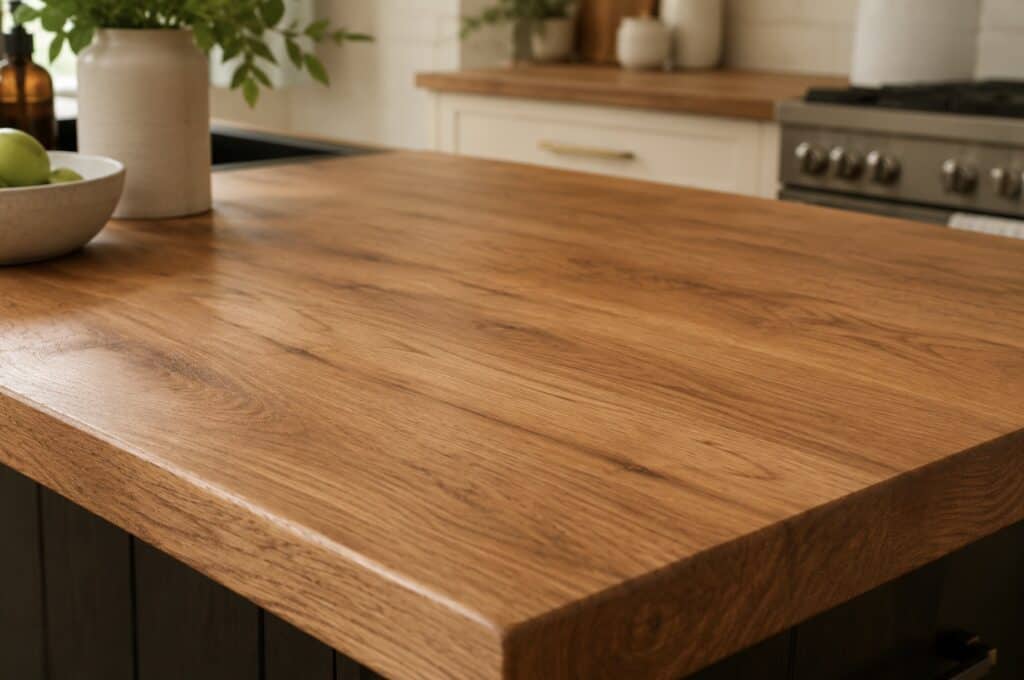
Some furniture materials are simpler by design. They use fewer layers, fewer binders, and fewer synthetic coatings. That usually makes them easier to evaluate before buying.
“Safer” does not mean chemical-free. It means the material is less likely to rely on heavy adhesives, stain treatments, or plastic-based layers.
For mixed-material furniture, check the hidden parts too. Shelves, back panels, drawer bottoms, and coatings may use different materials.
Good options often include:
- Solid wood
- Uncoated or powder-coated metal
- Glass
- Stone
- Natural upholstery fabrics
- Natural cushion fills, when available
The finish still matters. A solid wood table with a strong-smelling finish can release more VOCs than an unfinished or low-VOC version.
Solid Wood

Solid wood is often one of the easiest furniture materials to understand. It is made from real lumber, not wood fibers pressed together with resin.
That matters because solid wood usually needs less adhesive than particle board or MDF. The main things to check are the stain, paint, sealant, or topcoat.
Solid wood is also durable. A well-made solid wood dresser, bed frame, or dining table can often be repaired, sanded, or refinished instead of replaced.
Better solid wood choices include:
- Unfinished solid wood
- Solid wood with a water-based finish
- Solid wood finished with natural oils or waxes
- FSC-certified wood, when sustainability matters too
Be careful with vague labels like “natural wood,” “wood product,” or “wood veneer.” These may include engineered wood under a thin wood surface.
Formaldehyde is often discussed in furniture safety because it is used in some pressed-wood adhesives.
The EPA explains that composite wood products can release formaldehyde into indoor air, especially when emissions are not well controlled.
Metal, Glass, and Stone
Metal, glass, and stone are usually stable furniture materials. They do not rely on wood glue or foam to create their main structure.
These materials are common in:
- Dining tables
- Coffee tables
- Shelving
- Desks
- Bed frames
- Outdoor furniture
They are also easy to clean and long-lasting. This makes them practical for homes that want durable furniture with fewer soft materials.
Still, check the details. A metal bed frame may have a painted coating. A stone tabletop may use a sealant. A glass cabinet may still include particle board shelves or backing.
The safest version is usually simple: fewer mixed materials and clearer material information.
Key Takeaway: Safer furniture usually has fewer hidden layers, fewer added treatments, and clearer material details.
Higher-Concern Materials
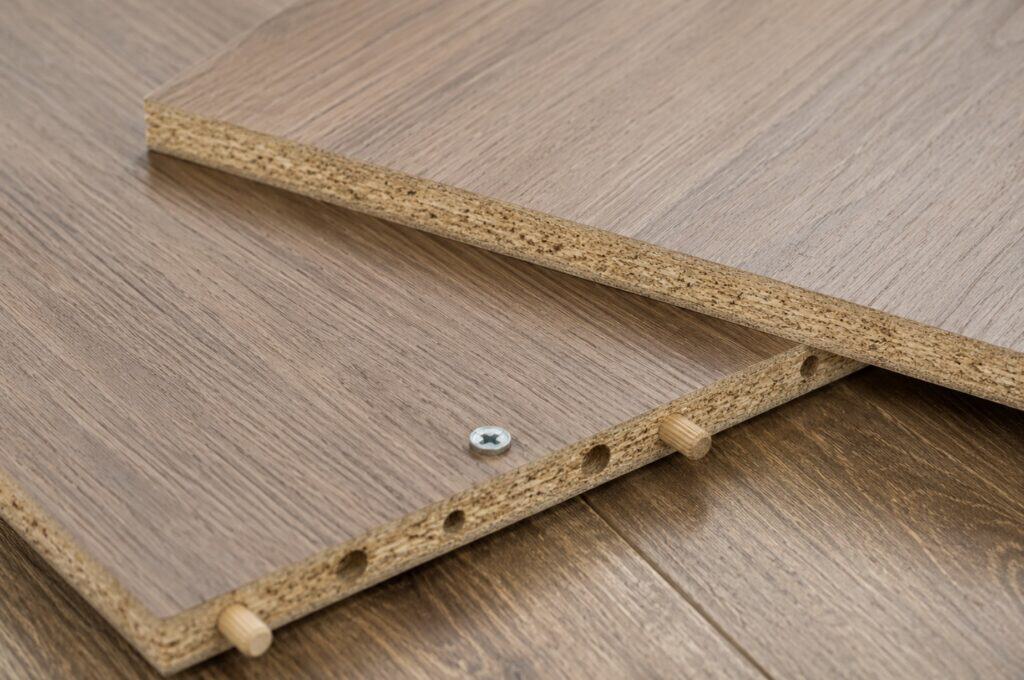
Some furniture materials need closer review before buying. This usually comes down to how they are made, not the material name alone.
The biggest issues often come from:
- Pressed wood made with resin
- Thin veneers over cheaper cores
- Synthetic upholstery with added treatments
- Plastic-based coverings
- Products with unclear material labels
Particle Board, MDF, and Plywood
Particle board, MDF, and plywood are engineered wood products. They are made by bonding wood pieces, fibers, or layers together.
It also means they usually depend on adhesives or resins.
Pressed wood is made by bonding smaller wood pieces together. The type of adhesive affects how much it releases into indoor air.
Particle board and MDF often use more adhesive than plywood. That is why they are more likely to release noticeable odors when new.
Be more careful when the label says:
- Composite wood
- Manufactured wood
- Engineered wood
- MDF
- Particle board
- Wood veneer over MDF
- Laminate over particle board
The main shopper question is simple: Is it certified low-emission?
Look for products that meet formaldehyde emission standards or carry indoor air quality certifications.
If the brand does not share this information, choose another product or air it out well before use.
Formaldehyde gets attention because it is used in some pressed-wood products and can enter indoor air as a gas.
The National Cancer Institute explains that formaldehyde is found in some pressed-wood products and household materials, which is why shoppers often see it discussed with furniture.
Plywood can be a better choice than particle board or MDF when it is well made. It often uses less resin by volume. Still, the adhesive type and certification matter.
Synthetic Fabrics and Faux Leather
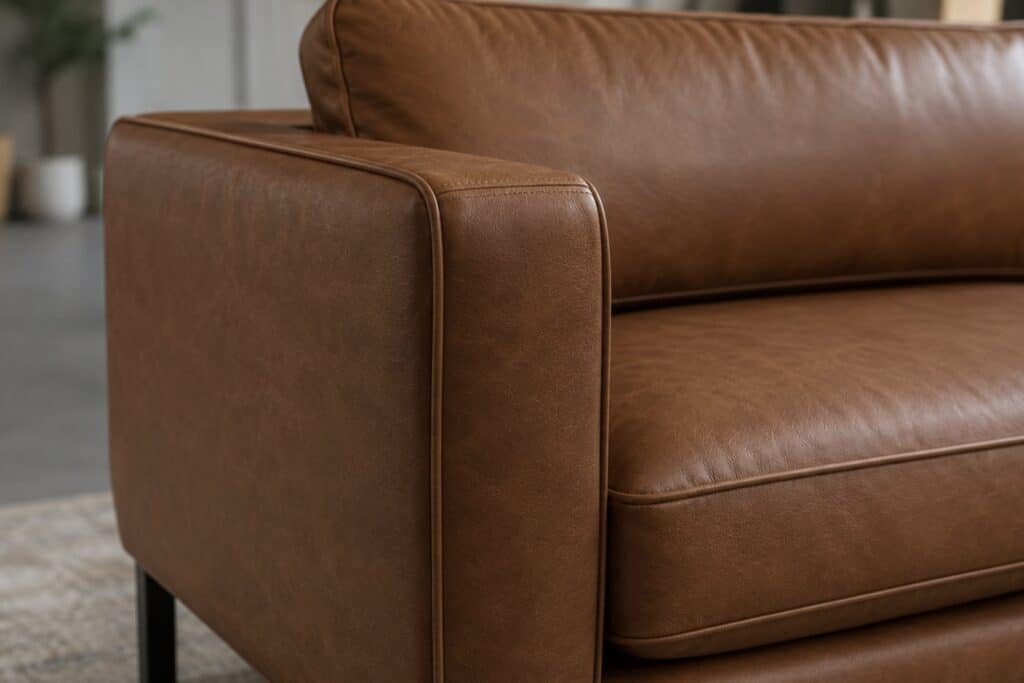
Synthetic upholstery is common in couches, dining chairs, office chairs, and headboards. These fabrics may include polyester, nylon, acrylic, vinyl, or polyurethane-based faux leather.
Synthetic fabrics can be durable and easy to clean. The issue is that some are treated for stain resistance, water resistance, wrinkle resistance, or flame resistance.
Be more careful when a product says:
- Stain-resistant
- Water-repellent
- Performance fabric
- Easy-clean coating
- Antimicrobial treated
- Faux leather
- Vinyl upholstery
They do mean you should ask what treatment was used.
Some stain-resistant and water-repellent treatments have used PFAS chemicals. PFAS are discussed in health and environmental research because they break down slowly and can build up over time.
The NIH notes that PFAS exposure has been connected in studies to several health concerns, which is why untreated or PFAS-free fabrics are often preferred.
For faux leather, check the exact material. Polyurethane faux leather is usually different from vinyl. Vinyl is made with PVC, a plastic that often needs additives to stay flexible.
Better choices include:
- Untreated cotton
- Linen
- Wool
- Hemp
- Clearly labeled PFAS-free performance fabric
- OEKO-TEX certified fabric
- GREENGUARD Gold certified furniture
Look for fabrics with clear treatment and material details.
Ask brands directly whether performance fabric is PFAS-free. A stain-resistant label alone does not tell you what treatment was used.
Foam and Cushion Materials

Foam and cushion fill matter because they sit inside the furniture you use most. Sofas, armchairs, dining chairs, benches, and headboards often contain cushioning under the outer fabric.
The most common cushion material is polyurethane foam. It is popular because it is soft, affordable, lightweight, and easy to shape.
The key question is how it was made, what it was treated with, and whether it has been tested for emissions.
Common cushion materials include:
- Polyurethane foam
- Memory foam
- Latex foam
- Cotton batting
- Wool batting
- Down or feather fill
- Recycled fiber fill
Conventional polyurethane foam may release VOCs when new. It may also contain added flame retardants, depending on the product, age, and regulations.
Researchers have studied flame retardants in foam furniture because these chemicals can migrate into house dust and increase indoor exposure.
Some additives do not stay locked inside foam forever. Over time, they can move into dust around the furniture.
For everyday shopping, certified foam is usually easier to evaluate than uncertified foam. CertiPUR-US certified foam, for example, is tested for emissions and certain restricted substances.
Natural cushion fills can be a better fit for people who want fewer synthetic materials. Wool, cotton, latex, and down are common examples.
A practical comparison:
- Uncertified polyurethane foam: harder to evaluate and more likely to have unknown additives
- Certified polyurethane foam: tested for specific emissions and restricted chemicals
- Natural fills: often use fewer synthetic inputs, but may cost more and need different care
When a sofa lists certified foam, check whether the certification applies only to the cushion or to the whole piece.
Latex foam can be a good middle option. Natural latex comes from rubber tree sap, while synthetic latex is made from petrochemicals.
Before buying upholstered furniture, ask:
- What type of cushion fill is inside?
- Is the foam certified?
- Does the product use added flame retardants?
- Is the fill treated for stains, moisture, or odor?
- Can the brand provide material details?
For bedrooms, nurseries, and small spaces, choose cushions with clearer material information and lower-emission certifications when possible.
Finishes, Paints, and Sealants
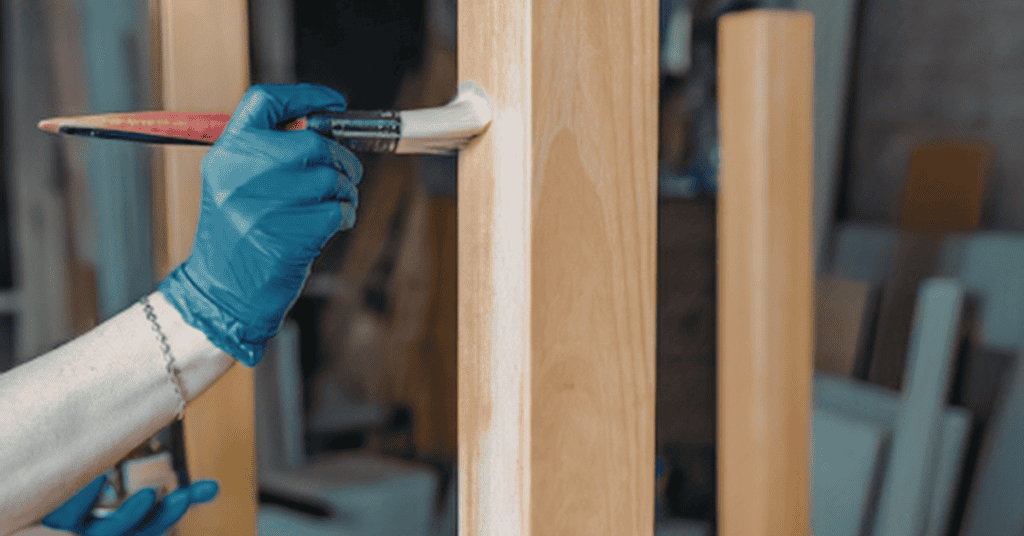
A furniture finish is the outer layer that protects the surface. It helps prevent stains, scratches, water damage, and everyday wear.
This layer matters because it sits on top of the material you touch and breathe near.
Common furniture finishes include:
- Paint
- Stain
- Varnish
- Lacquer
- Polyurethane
- Shellac
- Wax
- Natural oil finishes
- Water-based sealants
Finishes differ in how they are made and how long they take to cure. Drying means the surface feels touchable. Curing means the finish has fully hardened and released more of its early odor.
Solvent-based finishes usually smell stronger than water-based finishes. They are also more likely to release VOCs during and after application.
For safer furniture shopping, look for:
- Water-based finishes
- Low-VOC or zero-VOC paints
- Fully cured finishes
- Natural oil or wax finishes
- Clear finish details from the brand
- GREENGUARD Gold certification when available
Be careful with very strong odors. A strong smell does not tell you exactly which chemical is present, but it does tell you the product needs more ventilation before daily use.
Some finishes are more durable than others. A natural wax may have a simpler ingredient profile, but it may need more upkeep.
A harder sealant may resist water better, but it may also use stronger solvents.
REAL-LIFE EXAMPLE
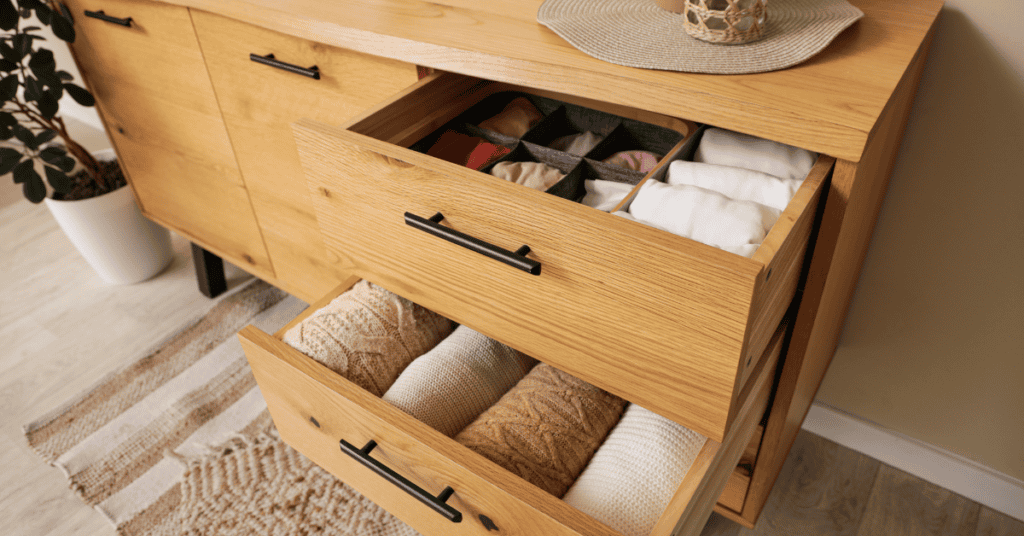
You buy a solid wood dresser, but it smells sharp when you open the drawers. That smell likely comes from the stain, paint, or sealant, not the wood itself. Ask the brand what finish was used, and let the dresser air out in a ventilated space before placing it in a bedroom.
When comparing finishes, do not stop at “solid wood” or “painted.” Ask what was applied to the surface. The safest choice is usually a durable, low-odor finish with clear low-VOC information.
Safe vs. Unsafe Materials

No furniture material is safe or unsafe in every situation. The better question is: what is it made from, how is it treated, and how clearly does the brand explain it?
This section gives you a simple way to compare common furniture materials. Use it as a starting point before checking the full product details.
| Material or Component | Better Choice | Be Careful With | What to Check |
|---|---|---|---|
| Wood frame | Solid wood or certified low-emission plywood | Particle board or MDF with no emission details | Ask if it meets formaldehyde emission standards |
| Upholstery fabric | Untreated cotton, linen, wool, hemp, or clearly labeled PFAS-free fabric | Stain-resistant or water-repellent fabric with no treatment details | Ask what coating or treatment was used |
| Cushion fill | Certified foam, natural latex, wool, cotton, or down | Uncertified foam with unknown additives | Look for foam certifications and flame-retardant details |
| Finish | Water-based, low-VOC, fully cured, natural oil, or wax finish | Strong-smelling lacquer, solvent-based stain, or unclear finish | Ask what finish was used and whether it is low-VOC |
| Faux leather | Clearly labeled polyurethane faux leather | Vinyl or PVC upholstery with limited material details | Ask whether it is PVC-free and phthalate-free |
| Metal, glass, or stone | Simple, durable pieces with minimal coatings | Painted, coated, or mixed-material pieces with hidden cores | Check coatings, sealants, shelves, and backing |
Use this simple filter when comparing furniture:
- Best: Clear materials, low-VOC finish, trusted certification, little or no odor
- Okay with review: Engineered wood, synthetic fabric, or foam with clear testing details
- Avoid when possible: Strong chemical smell, vague labels, no material details, or undisclosed treatments
How to Choose Safer Furniture

Choosing safer furniture for your home does not need to be complicated. You do not need to understand every chemical or material term.
Start with the parts that make up the furniture:
- Frame
- Fabric
- Cushion fill
- Finish
- Coatings or treatments
- Certifications
The product page should explain what these parts are made from. If it only says “premium materials” or “eco-friendly design,” look for more detail before buying.
Before buying online, scan the product page for frame, fabric, fill, finish, and certification details.
- Check the frame first.
Look for solid wood, metal, glass, stone, or certified low-emission engineered wood. For beds, dressers, desks, and tables, the frame usually makes up most of the product. - Read the fabric details.
Natural fabrics like cotton, linen, wool, and hemp are easier to understand. For performance fabrics, ask whether they are PFAS-free and what treatment was used. - Ask about the cushion fill.
For sofas and chairs, check whether the foam is certified. If the furniture uses latex, wool, cotton, or down, ask whether the fill was treated. - Review the finish.
Look for low-VOC, water-based, fully cured, natural oil, or wax finishes. Avoid pieces with a strong chemical smell when you need them for a bedroom or nursery right away. - Look for clear certifications.
Certifications help when they test a specific part of the product. - Air out new furniture.
If a new piece smells strong, place it in a ventilated room before daily use. Open windows when possible and keep packaging materials out of living spaces.
Helpful Certifications
Furniture labels can make shopping easier, but they do not all mean the same thing.
The FTC’s Green Guides are designed to help companies avoid misleading environmental claims, which is why shoppers should look for specific, verifiable labels instead of broad words like “green” or “eco-friendly”
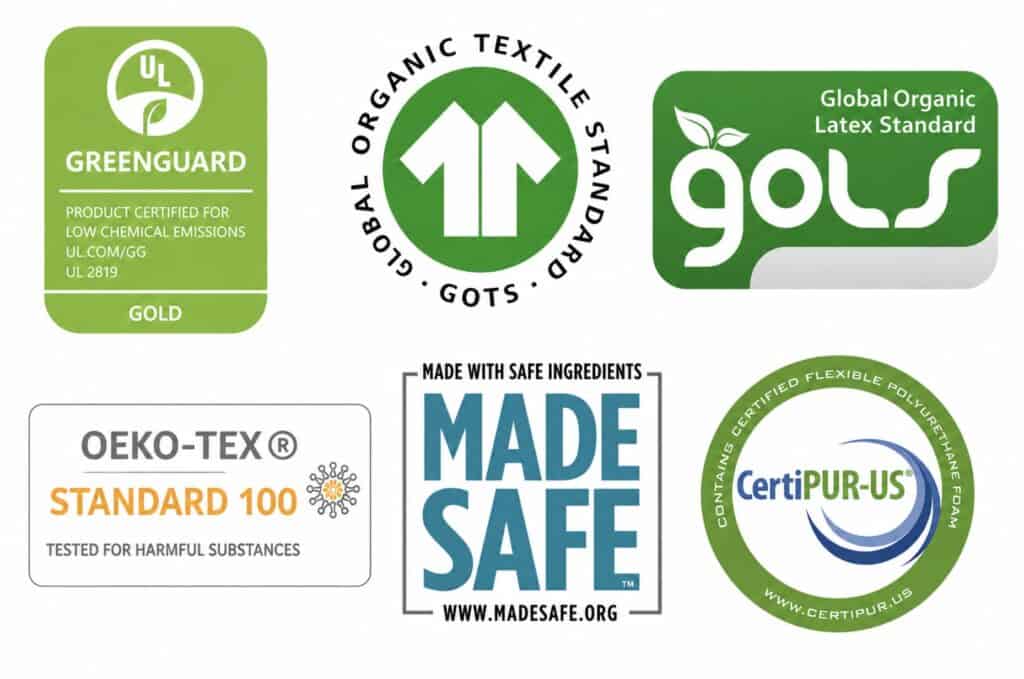
Helpful certifications include:
- GREENGUARD Gold: Tests products for low chemical emissions.
- CertiPUR-US: Applies to flexible polyurethane foam. It checks certain content, emissions, and durability standards.
- OEKO-TEX Standard 100: Applies to textiles. It tests for a list of restricted substances.
- FSC: Applies to wood sourcing. It tells you about forest management, not indoor air emissions.
- MADE SAFE: Screens products for certain ingredients of concern. Availability varies by product type.
Certifications work best when paired with full material information. For example, a sofa may have certified foam but still use a treated fabric or a strong-smelling finish.
Before buying, ask the brand:
- What does this certification apply to?
- Does it cover the whole product or only one part?
- Is the fabric PFAS-free?
- Is the foam flame-retardant-free?
- Is the finish low-VOC?
- Can you share a full material list?
Vague material answers usually deserve more caution.
Best Materials by Room

The best furniture material depends on where the piece will be used. A dining chair, nursery dresser, and home office desk do not need the same level of review.
Prioritize the rooms where people spend the most time. Bedrooms, nurseries, and small rooms deserve the most careful choices because furniture sits close to breathing space for long periods.
For each room, think about:
- How long people stay in the room
- Whether children use the furniture
- Whether the piece has fabric, foam, or a finish
- Whether the room has good airflow
- Whether the furniture has a strong odor
Focus your budget first on bedrooms, nurseries, sofas, and work chairs. These pieces get the most daily contact.
Bedrooms and nurseries
Choose simpler materials and lower-emission finishes when possible. These rooms are used for long stretches of rest and sleep.
Good options include:
- Solid wood bed frames
- Metal bed frames
- Solid wood dressers
- Low-VOC finishes
- Natural fiber rugs and textiles
- GREENGUARD Gold certified furniture when available
Prioritize lower-emission cribs, dressers, mattresses, and upholstered headboards. These pieces sit close to where babies, children, or adults sleep.
Living rooms
Living rooms often have the most upholstered furniture. Sofas, sectionals, recliners, and accent chairs may contain fabric, foam, backing, and treatments.
Better choices include:
- Certified foam cushions
- Natural fabric upholstery
- PFAS-free performance fabrics
- Solid wood or metal frames
- Washable slipcovers instead of heavy stain treatments
Remember, a “performance fabric” label does not tell you whether it is PFAS-free.
Buying a new desk, chair, and bookshelf at the same time can create a stronger new-furniture smell than buying one piece.
Dining rooms
Dining furniture is easier to evaluate because it often uses fewer soft materials.
Good options include:
- Solid wood tables
- Metal or wood chairs
- Glass or stone tabletops
- Water-based finishes
- Seat cushions with removable covers
Home offices
Home offices often combine desks, shelving, office chairs, and storage furniture. Desks and bookcases may use engineered wood, while office chairs often use foam and synthetic fabric.
Better choices include:
- Solid wood or metal desks
- Certified low-emission shelving
- Office chairs with certified foam
- Untreated or PFAS-free upholstery
- Low-odor finishes
This matters more if the office is small or poorly ventilated. Multiple new furniture pieces in a small office can increase indoor chemical exposure temporarily.
REAL-LIFE EXAMPLE

You are choosing between a nursery dresser, a living room sofa, and a dining table. The nursery dresser should have clear low-emission wood and finish details because it sits near a sleeping space. The sofa needs fabric and foam details, while the dining table mainly needs a durable, low-odor finish.
When to Replace Furniture

You do not need to replace every older piece of furniture. Many solid wood, metal, glass, and stone pieces can last for decades with basic care.
Replacement makes more sense when the material is breaking down, smells strong, or no longer gives you enough information to feel comfortable using it.
Watch for these signs:
- Peeling laminate or veneer
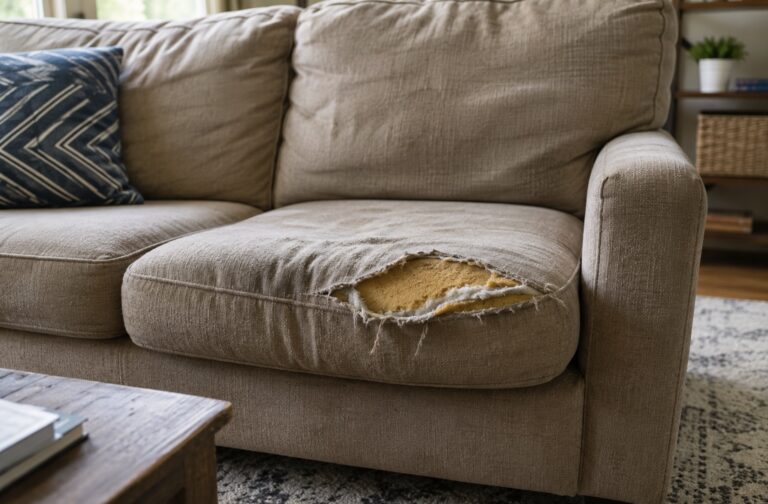
- Crumbling foam cushions
- Flaking paint or finish
- Sticky or cracked faux leather
- Water damage on pressed wood
- Musty odors that return after cleaning
- Upholstery that sheds dust or particles
Older upholstered furniture deserves extra review. Some older foam pieces were made before newer furniture flammability rules changed.
You may not need to replace the whole item if the structure is still solid. Some pieces can be improved with:
- New cushion inserts
- Untreated slipcovers
- Low-VOC refinishing
- Repairing damaged surfaces
- Removing old, crumbling foam
- Moving the item to a better-ventilated space
If the frame is sturdy, replacing cushions or adding washable slipcovers may be enough.
For painted vintage furniture, check for chipping or unknown old paint. If the paint may contain lead, avoid sanding it yourself. Use proper testing or professional help before refinishing.
A practical rule: replace furniture when cleaning, airing out, or repairing no longer solves the problem.
Keep pieces that are sturdy, low-odor, and easy to maintain. Prioritize replacing items that shed, smell, crumble, or sit close to where your family sleeps.