Is It Safe to Buy Furniture With a Prop 65 Warning? What It Means

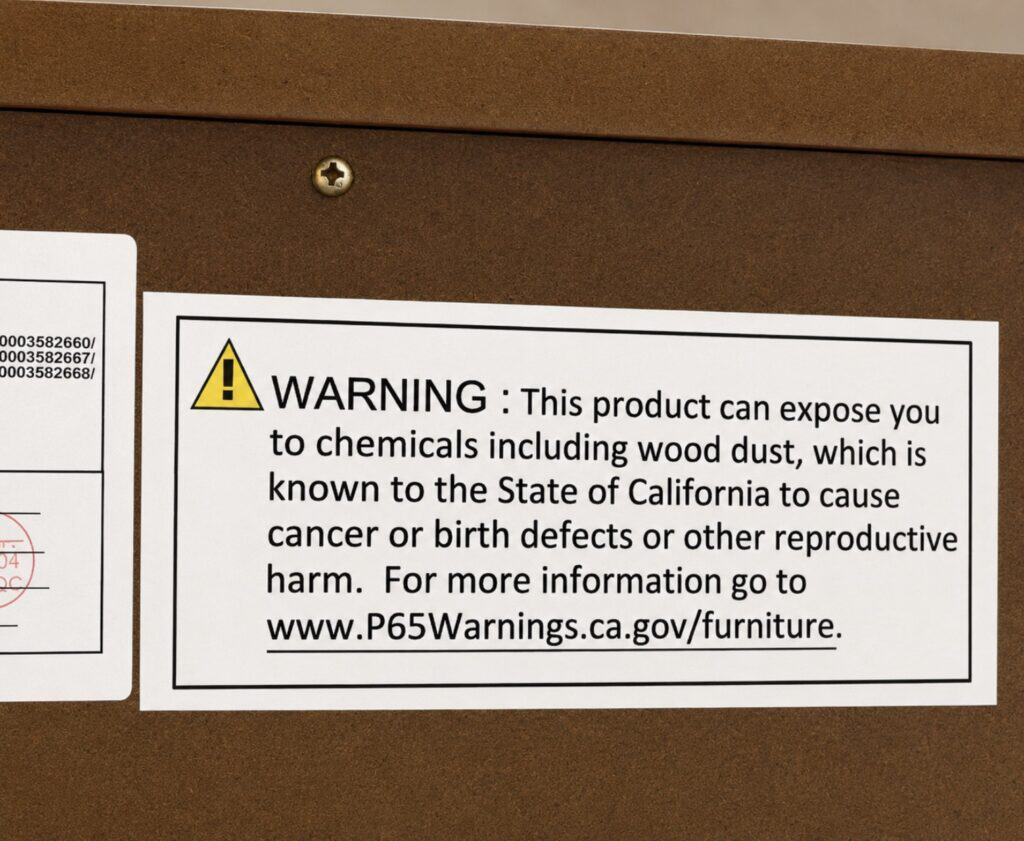
Seeing a Prop 65 warning on furniture can feel alarming, especially when you are trying to choose furniture for your home.
But the warning itself does not automatically mean the furniture is unsafe; it means the product may expose you to a chemical on California’s Prop 65 list.
This distinction matters because furniture can affect indoor air quality, and the EPA notes that many indoor products and materials can release VOCs into the air.
The key is learning how to interpret the warning in context, so you can tell the difference between a broad legal label and a meaningful exposure concern.
Furniture with a Prop 65 warning can still be safe to buy.
The warning means the product may expose you to a listed chemical, but it does not tell you the dose, source, or real-world exposure level.
Use it as a cue to check materials, finishes, emissions testing, and brand transparency before deciding.
What Prop 65 Means

A Prop 65 warning means a product may expose you to one or more chemicals on California’s Proposition 65 list.
That list includes chemicals the state has identified as causing cancer, birth defects, or reproductive harm.
California’s Office of Environmental Health Hazard Assessment says businesses must give a warning when they know or believe a product exposes people to a listed chemical above the law’s warning threshold.
That sounds serious, but the warning has limits. It does not tell you:
- Which material in the furniture triggered the warning
- How much of the chemical you may be exposed to
- Whether exposure happens through breathing, skin contact, or dust
- Whether the chemical is present in a small part, coating, foam, fabric, or finish
- Whether the furniture releases that chemical during normal home use
This is where the difference between hazard and risk matters.
A hazard means a substance has the ability to cause harm under certain conditions. Risk looks at real-world exposure.
Hazard means a chemical has the ability to cause harm under certain conditions. Risk depends on how much of it reaches you, how often, and through what route.
That includes the amount, how you come into contact with it, and how often that contact happens.
For furniture, this matters because some materials release chemicals like VOCs into indoor air.
That is why a warning label should lead you to ask better questions about the product.
At The Goodness Well, we treat labels like this as a starting point for better questions, not an automatic reason to panic.
Use it as a signal to look closer at the furniture’s materials, finishes, certifications, and how the brand explains the warning.
Why Furniture Has Warnings
Furniture can carry a Prop 65 warning because it is made from several material layers. A single product may include wood, glue, foam, fabric, stain, paint, or a protective coating.
The warning may come from one small part of the item. It does not always mean the entire piece is chemically treated.
One Prop 65 warning can come from a small part of the furniture, not necessarily the entire piece.
Some brands also use broad warnings across many products. This helps them meet California labeling rules, especially when the supply chain includes many parts or suppliers.
Engineered Wood
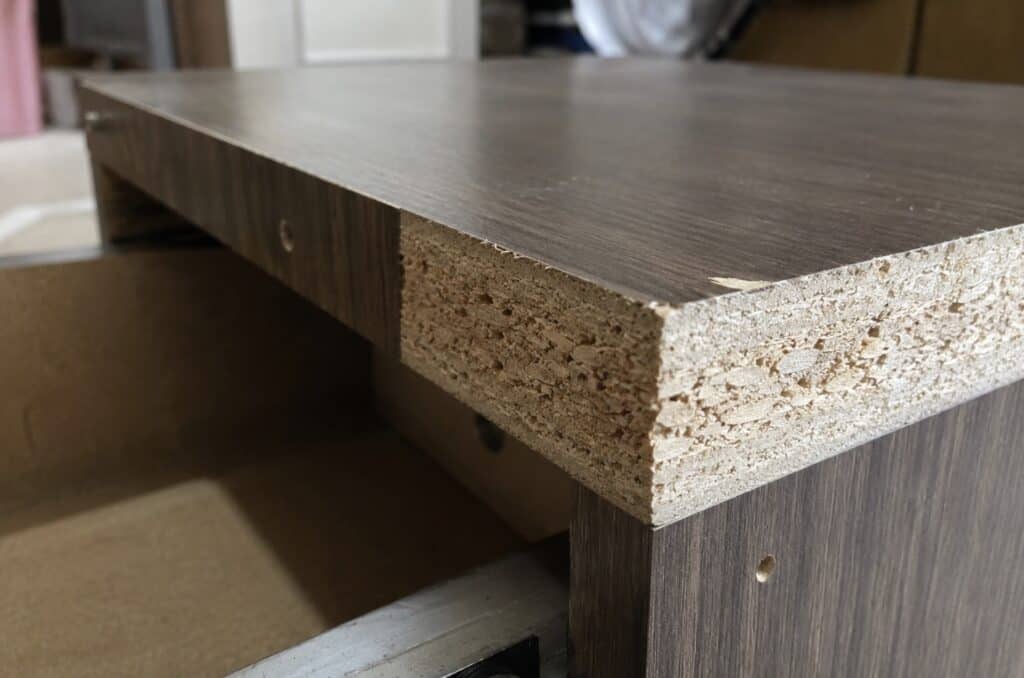
Engineered wood includes MDF, particleboard, and plywood. These materials are common in dressers, shelves, desks, cabinets, and bed frames.
The main issue is the resin used to hold wood fibers or layers together. Some resins release formaldehyde into indoor air, especially when the furniture is new.
Formaldehyde is discussed in indoor air research because it can irritate the eyes, nose, and throat at certain exposure levels.
A review in PubMed Central describes formaldehyde as a common indoor pollutant released from sources including pressed wood products and furnishings.
This does not mean every engineered wood product is unsafe. It means shoppers should check whether the product meets low-emission standards.
Foam and Fabric Treatments

Upholstered furniture often contains polyurethane foam, fabric, batting, and backing materials. Sofas, armchairs, padded headboards, and dining chairs may all use these layers.
Some warnings come from chemicals used in foam or fabric treatments, such as:
- Flame retardants
- Stain-resistant treatments
- Water-resistant coatings
- Fabric dyes or backing materials
These treatments are not all the same. A stain-resistant fabric, for example, may use PFAS or a different chemistry. The label alone does not tell you which one.
Be more careful when a brand does not explain how the fabric is treated. Clear material details are more useful than a warning label by itself.
Finishes and VOCs
Furniture finishes include stains, paints, sealants, lacquers, and varnishes. These finishes help protect the surface and change the look of the piece.
Some finishes release VOCs into indoor air as they dry or cure. This is why new furniture may smell stronger during the first few days or weeks.
VOCs are gases released from some finishes, adhesives, and coatings. New furniture often releases more VOCs at first, then emissions usually decrease over time.
The smell does not identify the exact chemical. It only tells you that the product is releasing something you can detect.
Low-VOC or water-based finishes usually release fewer solvent fumes than many traditional oil-based finishes.
This section matters most when you are buying large pieces. A full bedroom set or large upholstered sofa adds more material to the room than one small side table.
Is It Safe?

Yes, furniture with a Prop 65 warning can still be safe to buy and use. The warning alone does not prove that the furniture releases unsafe amounts of a chemical into your home.
The real question is exposure. A chemical matters more when it can leave the material and reach you through air, dust, or direct contact.
For furniture, exposure depends on:
- The size of the furniture
- The material used
- The chemical source
- How much time you spend near it
- Whether the room has fresh airflow
- Whether the item is used by babies, children, or sensitive people
Key Takeaway: A Prop 65 warning matters most when the product, room, and daily use create more exposure.
A small accent table in a ventilated room gives you less daily contact than a new bed frame, crib, sofa, or mattress.
Large furniture adds more material to the room. Daily-use items also keep the material closer to your breathing space.
Indoor air research focuses on furniture because some products release gases after they enter the home.
The EPA explains that indoor pollutant levels rise when ventilation does not bring in enough outdoor air to dilute emissions from indoor sources.
So, the warning is not the final answer. The material, room, and use pattern matter more.
REAL-LIFE EXAMPLE

You may see the same Prop 65 warning on a dining chair and a large dresser for a child’s bedroom. The label tells you both products may expose you to a listed chemical. It does not tell you whether the dresser uses high-emission composite wood or whether the chair has only a small treated part.
For most healthy adults, one labeled furniture item in a well-ventilated room is usually not a reason to panic.
Be more careful when:
- The furniture has a strong chemical smell
- The brand gives no material details
- The item is made mostly from low-cost MDF or particleboard
- The furniture will go in a nursery or bedroom
- The room has poor airflow
- Someone in the home reacts strongly to odors or indoor air pollutants
For these situations, ask more questions before buying. Look for material transparency, low-emission testing, and safer finish details.
How to Shop Smarter

Use the Prop 65 warning as a reason to check the product details. Do not use it as the only reason to buy or avoid a piece of furniture.
Start with the materials. A clear product page should tell you what the item is made from, not just describe the color or style.
Look for details such as:
- Solid wood instead of mostly MDF or particleboard
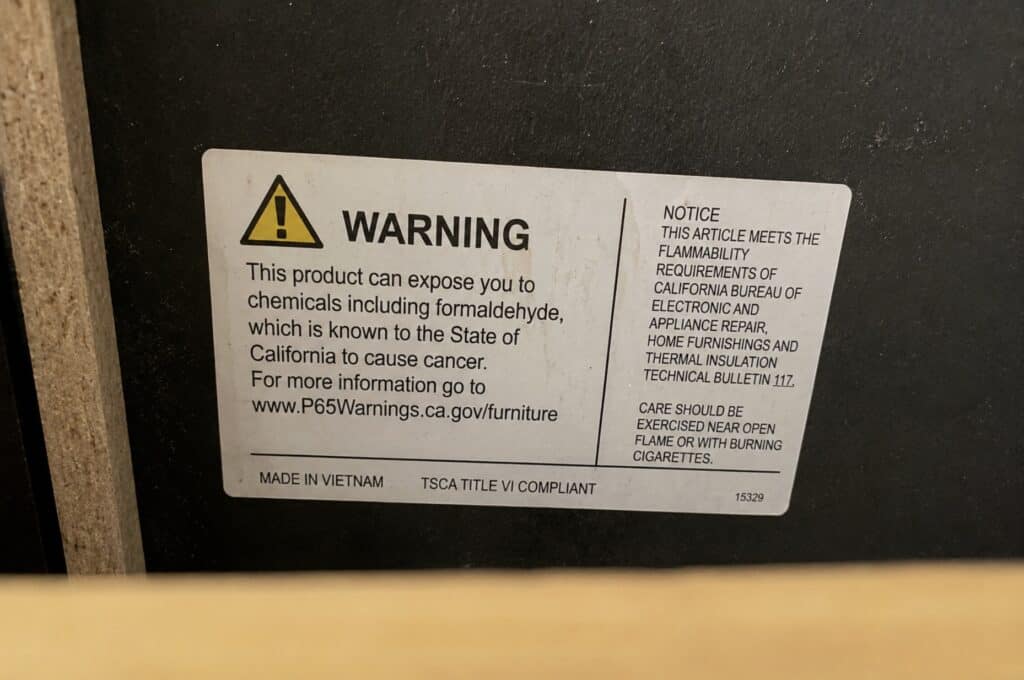
- TSCA Title VI compliant composite wood
- Water-based or low-VOC finishes
- Foam that has been tested for emissions
- Untreated or PFAS-free upholstery when available
- Clear answers about stain resistance or water resistance
Before buying, search the product page for words like “low-VOC,” “TSCA Title VI,” “PFAS-free,” and “GREENGUARD Gold.”
For finishes, choose low-VOC or water-based options when you can. These usually release fewer solvent fumes than many traditional oil-based finishes.
For upholstered furniture, ask how the fabric is treated. “Performance fabric” does not always explain the chemistry.
A better product page will say whether the fabric avoids PFAS or added flame retardants.
You can also reduce exposure after buying:
- Unbox furniture outside or in a garage when possible
- Let new pieces air out before placing them in bedrooms
- Open windows during the first few days
- Use an air purifier with activated carbon for strong odors
- Avoid adding several new large furniture pieces at once
Certifications to Look For

Certifications do not make furniture perfect. They do help you find products that went through extra testing or material screening.
Helpful labels include:
- GREENGUARD Gold: Tests for low chemical emissions. UL says GREENGUARD Gold uses lower VOC limits and is designed for spaces like homes, schools, and healthcare settings.
- MADE SAFE: Screens products for a wide range of substances of concern.
- OEKO-TEX: Useful for textiles. It checks fabric materials for restricted substances.
- CertiPUR-US: Applies to flexible polyurethane foam. Certified foam is tested for content and low VOC emissions.
- FSC: Focuses on responsible wood sourcing. It does not test chemical emissions.
- TSCA Title VI: Applies to composite wood formaldehyde emissions in the U.S.
A certified sofa may still use synthetic fabric. An FSC wood table may still have a finish that releases odor at first.
The best choice combines several clues: clear materials, low-emission testing, safer finishes, and a brand that answers direct questions.
Key Takeaway: Certifications are helpful filters, but the best choice still depends on materials, finishes, and product transparency.
Final Takeaway

Furniture with a Prop 65 warning is not automatically unsafe. The warning tells you that a listed chemical may be present or may create exposure under certain conditions.
The warning does not tell you the full story. It does not explain the dose, source, material, or real-world exposure level.
California’s OEHHA explains that Prop 65 warnings are meant to help consumers make informed choices about chemical exposure, not to rank every product by safety.
A better decision comes from looking at:
- What the furniture is made from
- Whether the brand explains the warning
- Whether the product has low-emission testing
- Where the furniture will be used
- How much daily contact your family will have with it
If a product has a Prop 65 warning and the brand will not explain why, choose a more transparent option.
The simplest rule: use the Prop 65 warning as a prompt to investigate further, not as the only reason to reject or trust a product.