Is Faux Leather Toxic? A Quick Breakdown

Faux leather can be a practical and animal-free material, but it is not automatically a low-tox option.
This also matters because many lower-cost “leather” couches are actually made with faux leather, bonded leather, or mixed synthetic materials
That matters because indoor materials and furnishings can contribute to chemical exposure in the home, and the EPA notes that many products release volatile organic compounds that can affect indoor air quality (EPA on VOCs).
In this article, we will look at when faux leather is toxic, what drives the risk, and how to choose lower-risk options without overcomplicating the decision.
Faux leather is a synthetic leather alternative, usually made with a plastic coating.
It is not automatically toxic, but some versions can be more toxic because they use PVC, release stronger odors, or break down and shed over time. PU faux leather is generally considered a safer option than PVC.
For shoppers, that means the material details, emissions testing, and product quality matter more than the term “faux leather” alone.
When Faux Leather Is a Concern
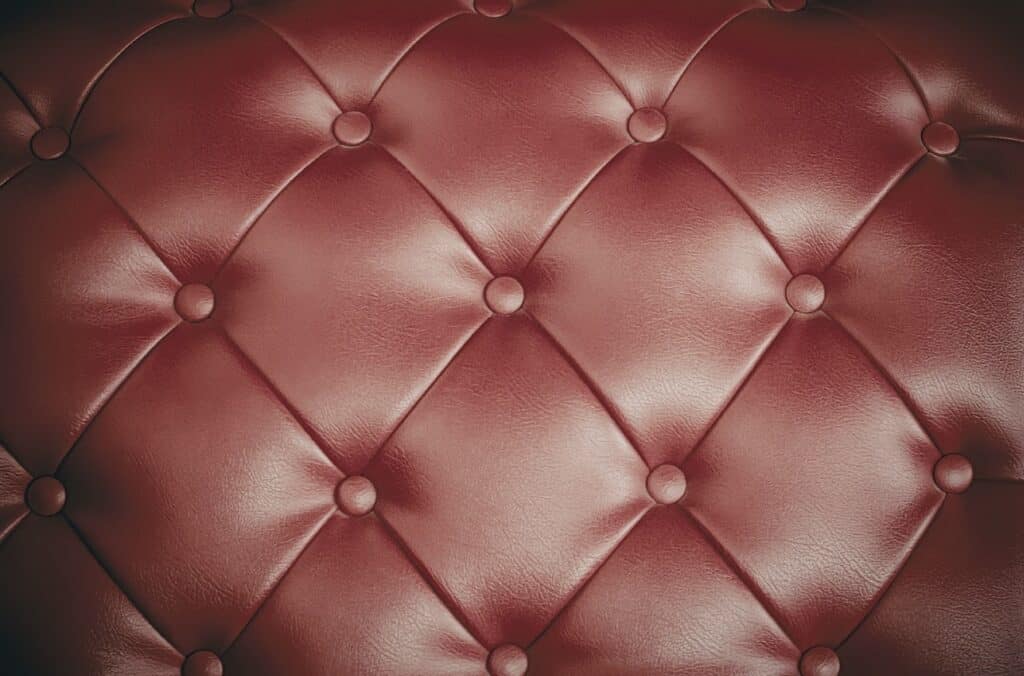
Faux leather can be more toxic when the product is cheap, heavily processed, or gives off a strong chemical smell when new.
That usually points to more solvents, plasticizers, or other additives in the coating or backing. The concern is higher with daily-contact items like couches, dining chairs, office chairs, car seats, and headboards, especially when trying to choose a couch with fewer added materials and lower emissions.
Risk also goes up when the material is already failing.
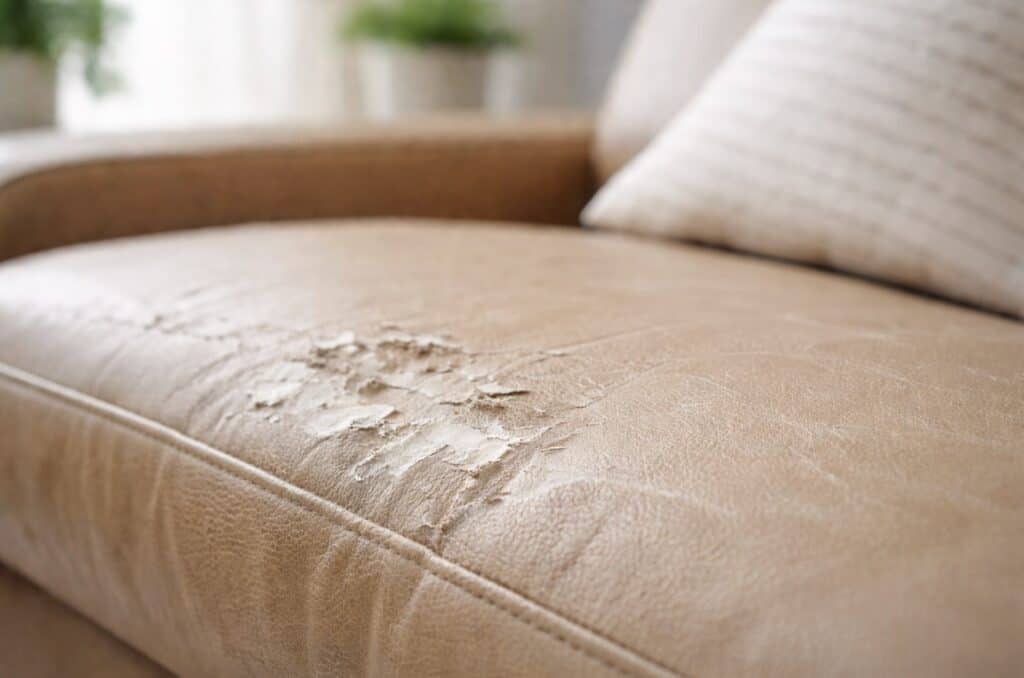
If faux leather is peeling, cracking, or flaking, the surface is no longer staying intact. That means small plastic particles and coating fragments can spread onto skin, clothing, and household dust.
Off-gassing happens when chemicals in a product move from the material into the air, especially when the item is new.
Concern is usually higher when you notice one or more of these signs:
- a strong odor that lasts for days or weeks
- no clear material disclosure
- very low price with vague terms like “vegan leather” only
- a slick or plasticky feel that suggests heavy surface coating
- peeling, cracking, or sticky surfaces
- use in hot, sunny, or poorly ventilated spaces
On the other hand, faux leather is less concerning when the item is well made, low odor, and stable in normal use.
This section is not the full why behind that. It is the practical line: concern rises when faux leather releases chemicals into indoor air or starts breaking down into dust and flakes.
Key Takeaway: Concern rises when faux leather smells strongly, sheds, or starts breaking down during normal use.
What Drives the Risk
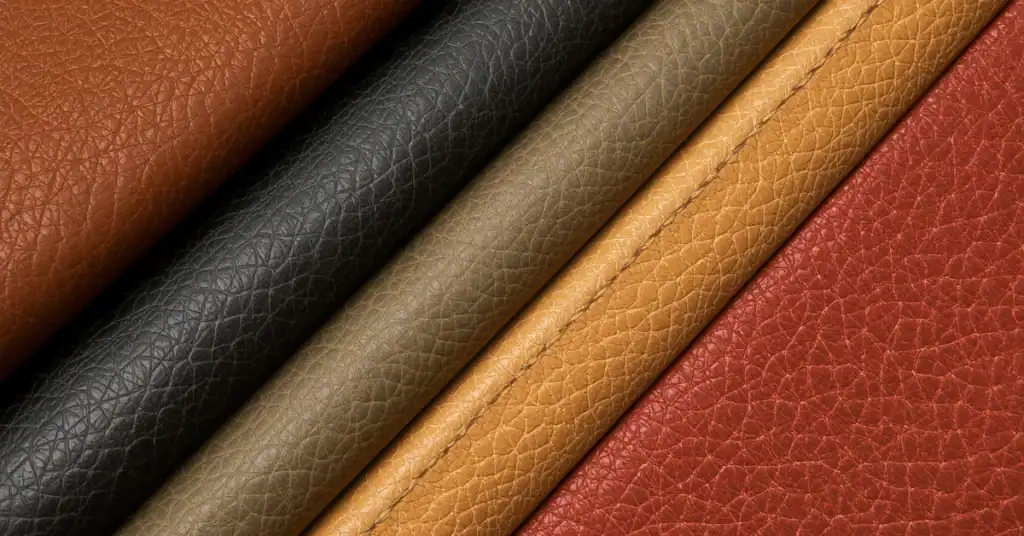
Base Material Differences
The main driver of risk is the plastic layer used to create the leather-like surface. Faux leather is not one material.
The coating can be made from PVC, PU, or newer bio-based blends, and those options do not behave the same way, similar to how different couch upholstery materials can vary in chemical exposure concerns.
PVC faux leather is considered more toxic than PU. PVC usually needs plasticizers to stay soft and flexible.
Some phthalates, a common plasticizer group used in PVC products, have been studied because they migrate into indoor dust and air over time.
PU faux leather is usually a lower-tox option than PVC, but it is not chemical-free. It is still a synthetic coating. It can still release VOCs when new, and quality varies a lot from one product to another.
A well-made PU item is usually a different category from a bargain product with little material disclosure.
PVC faux leather is often softer because extra chemicals are added to keep the plastic flexible.
Bio-based faux leather sounds cleaner, but the label can be misleading. Some products use plant content for part of the material, then add a synthetic topcoat or plastic backing.
That means the product may still rely on the same kinds of coatings and additives found in standard faux leather.
Off-Gassing and Additives
The second driver of risk is the chemical package used to make faux leather look and perform a certain way.
That can include solvents, plasticizers, stabilizers, pigments, flame retardants, and surface treatments. These are discussed in health and indoor-air research because some of them evaporate into air or collect in dust during normal home use.
Off-gassing matters most when the item is new. That is when leftover solvents and other VOCs are more likely to enter indoor air.
VOCs are gases released from certain materials. In a new product, leftover solvents and additives are more likely to enter indoor air.
A broad review of building and consumer materials found that indoor materials release VOCs that can create noticeable odor and irritation, especially in enclosed spaces with weak ventilation (PMC review on VOC emissions).
Odor is useful, but it is not a full safety test.
- A strong smell often means more VOCs are releasing right now.
- No smell does not prove the product is free of additives or emissions.
- A low-odor product with clear testing is usually easier to trust than a scented product meant to cover chemical smell.
For this section, the takeaway is simple: risk starts with the formula. PVC usually brings a higher additive burden than PU.
Any faux leather becomes harder to trust when the brand hides the material details or the product smells strongly out of the box.
Microplastics and Everyday Exposure
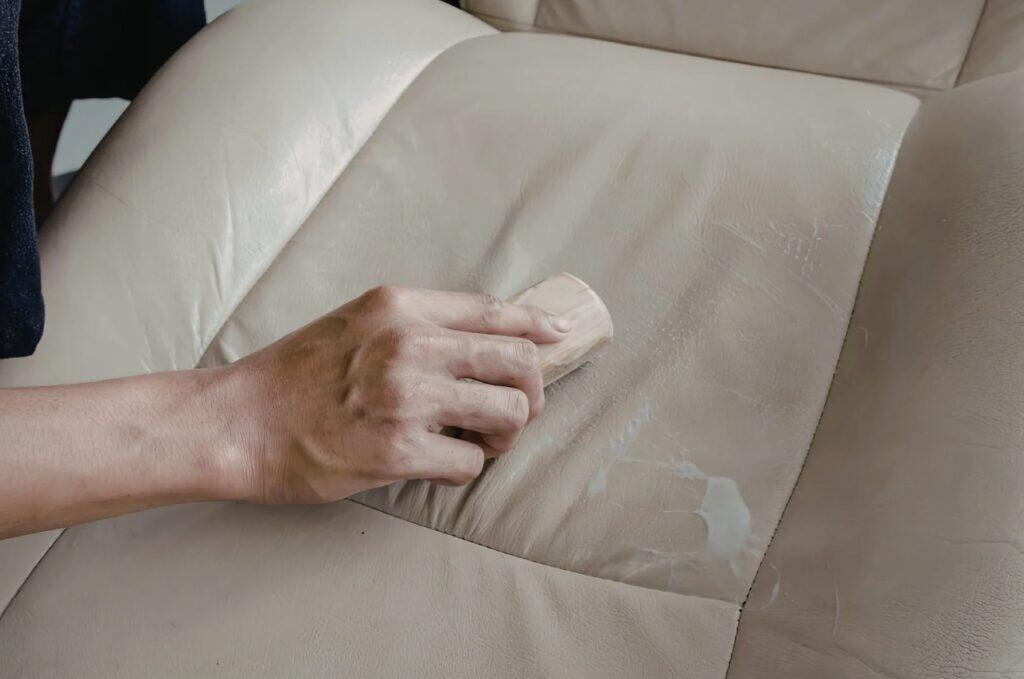
Microplastics become part of the faux leather conversation when the surface wears down. Faux leather does not usually shed all at once.
It breaks down through rubbing, flexing, body heat, sunlight, and cleaning. That wear creates small flakes and fragments that settle on floors, clothes, and house dust.
Microplastics form when larger plastic materials break into tiny pieces through daily wear, friction, and aging.
This matters most for items you touch every day. A decorative bench in a guest room has less exposure potential than a peeling office chair used eight hours a day.
A cracked dining chair, car seat, or couch arm also releases more fragments than an item that still has a stable surface.
Indoor microplastics are studied because people do not just throw them away and move on. They collect in dust and can be inhaled or swallowed during normal daily life, especially indoors where people spend most of their time.
Indoor dust can contain plastic particles from everyday household materials, not just packaging or outdoor litter.
A broad review in Microplastics and their Additives in the Indoor Environment explains that indoor air and house dust contain microplastics from synthetic materials and regular household wear.
Concern is higher when faux leather is:
- peeling or flaking
- used in hot or sunny rooms
- cleaned with frequent scrubbing
- on high-contact items like chairs, couches, and car interiors
- in homes with babies or young children who spend more time on floors
A smooth, intact surface does not create the same exposure as a damaged one. That is the key practical difference in daily life. For microplastics, age and condition matter as much as the original material.
REAL-LIFE EXAMPLE
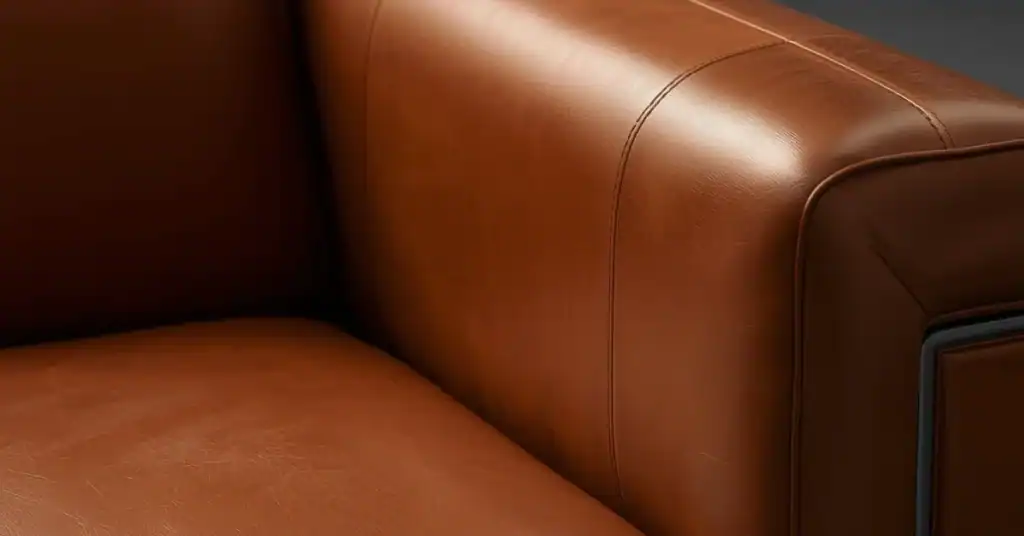
You have a faux leather desk chair that starts peeling where your back, arms, and legs rub every day. That tells you the plastic coating is breaking apart and leaving small fragments in your workspace and dust. It does not tell you exactly how much exposure that creates, but it does tell you the surface is no longer staying contained well.
How to Choose Better Options

What to Look For
Start with clear material disclosure. A product page should say whether the surface is PVC, PU, or a bio-based blend.
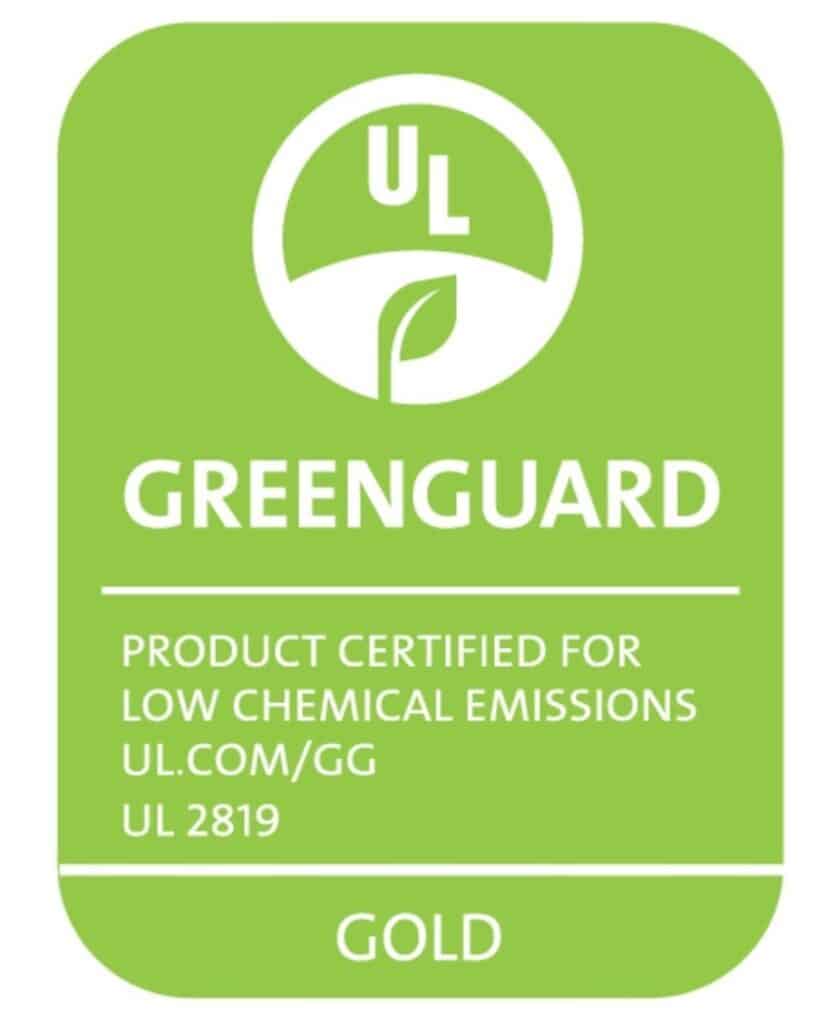
Look for low-emissions certifications when the item will live indoors. UL says GREENGUARD Certified products are tested for low chemical emissions, and GREENGUARD Gold uses stricter limits designed for spaces that include children and other sensitive groups.
A few practical signs help when you are shopping:
- full material details, not just marketing terms
- third-party emissions testing for indoor products
- little or no strong odor when unboxed
- a stable surface that does not feel sticky or overly thin
- brand answers to simple questions about coatings and backing
Lower-Risk Choices
If you want faux leather, PU is often the safer pick over PVC. It still is not chemical-free, but PVC usually carries a heavier additive burden.
That makes PU the more common lower-risk choice for indoor seating, headboards, and similar home items.
If a brand uses a bio-based claim, check how much of the material is actually plant-based. Some products still rely on synthetic topcoats or plastic backing.
A plant-based percentage without full construction details does not tell you enough.
Certifications also have limits. GREENGUARD focuses on chemical emissions, not durability or microplastic shedding.
OEKO-TEX LEATHER STANDARD applies to actual leather articles tested for harmful substances, so it is not the main label for most faux leather items.
If you already own the item, the best next steps are simple:
- air out new products in a well-ventilated space
- avoid placing them in hot, sunny spots when possible
- clean gently so the coating lasts longer
- replace items once the surface starts cracking or shedding
Key Takeaway: PU is usually the best faux leather choice, but it is also important to choose options with clear material details.