Is Formaldehyde Toxic? The Unseen Dangers in Your Home


You may notice a strong smell after bringing home new furniture, installing cabinets, or unpacking wrinkle-resistant clothing.
That odor often comes from chemicals released into indoor air, and the National Cancer Institute identifies formaldehyde as one of the most common examples.
Because this chemical is used in many household products, it helps to understand where it is found and when exposure may affect your health.
Yes, formaldehyde is toxic.
It is a known carcinogen and a volatile organic compound (VOC) that can be released from products like particleboard, plywood, and certain fabrics. Small exposures are common, but repeated exposure to higher levels can irritate the eyes and airways and increase cancer risk over time.
What Is Formaldehyde

Formaldehyde is a colorless chemical with a strong odor. At room temperature, it becomes a gas and mixes into indoor air.
Manufacturers use formaldehyde to make resins that bind wood fibers together. These resins are commonly found in engineered wood products and other household materials.
Where Is It Found?
Formaldehyde is found in many everyday products, including:
- Furniture
- Cabinets
- Flooring
- Carpets and textiles
- Paints and coatings
- Certain insulation materials
- Wrinkle-resistant clothing
- Personal care products such as nail polish
- Cigarette smoke
One of the biggest indoor sources of formaldehyde is engineered wood furniture.
One of the most common sources in the home is engineered wood furniture made with:
- Particleboard
- Medium-density fiberboard (MDF)
- Plywood

These materials can release formaldehyde into indoor air, especially when they are new.
Wrinkle-resistant clothing and curtains may also contain formaldehyde-based treatments that help fabrics hold their shape.
Why It’s Used In Products
Formaldehyde is widely used because it improves product performance.
Common uses include:
- Adhesive: Bonds wood fibers in products like particleboard and plywood
- Preservative: Helps prevent microbial growth
- Anti-wrinkle treatment: Keeps fabrics from creasing
- Disinfectant: Used in laboratories and medical settings
- Durability enhancer: Helps paints and coatings last longer
These uses make products stronger and more durable, but they also create a source of indoor chemical exposure.
Is Formaldehyde Toxic?
Yes, formaldehyde is toxic.
It is both:
- A volatile organic compound (VOC)
- A known human carcinogen
A VOC is a chemical that evaporates into the air at room temperature.
When products containing formaldehyde are new, they can release gas into the air through a process called off-gassing.
This is one reason many people choose furniture made with safer materials and lower-emission finishes.
Effects on the Body
Breathing formaldehyde can irritate:
- Eyes
- Nose
- Throat
- Lungs
Common symptoms include:
- Burning eyes
- Sore throat
- Cough
- Headache
- Nausea

Skin contact may cause:
- Redness
- Itching
- Burning
- Dry, cracked skin
Some people are more sensitive than others. Children, people with asthma, and individuals with chemical sensitivities may react more strongly.
Is Formaldehyde a Carcinogen?
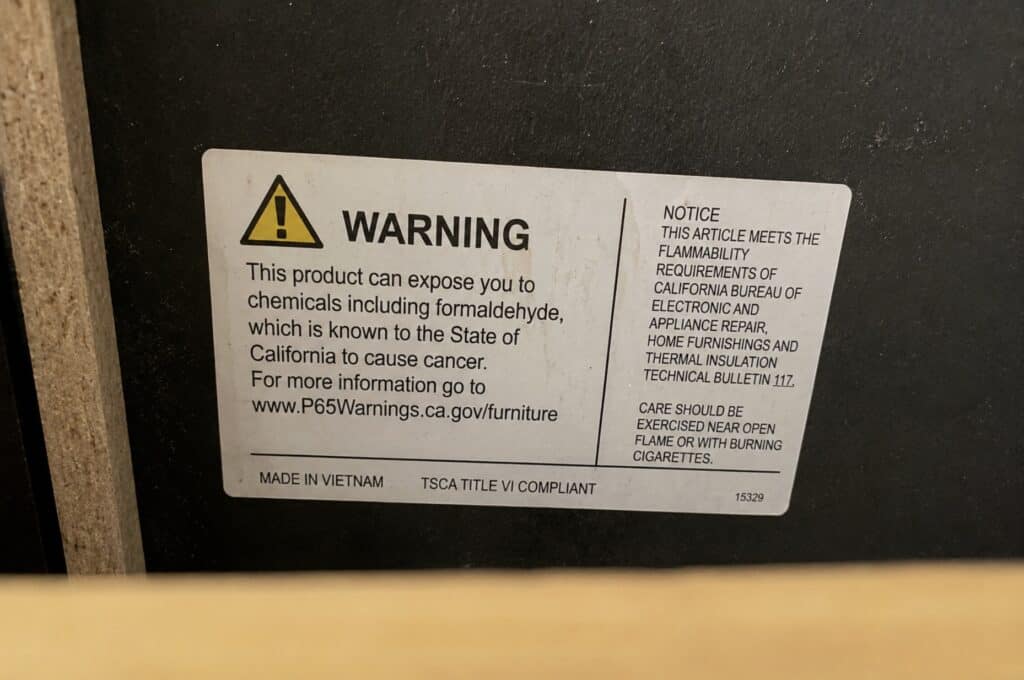
Yes. Formaldehyde is classified as a known human carcinogen.
It is listed under California’s Proposition 65 as a chemical known to cause cancer
Research has linked long-term exposure to certain cancers, including:
- Nasopharyngeal cancer
- Leukemia
The risk depends on how much formaldehyde you are exposed to and how often the exposure occurs.
What Are the Long-Term Effects?
Repeated exposure to elevated levels of formaldehyde can lead to:
- Chronic irritation of the eyes and airways
- Worsening asthma symptoms
- Skin sensitization
- Increased cancer risk
Not every exposure is dangerous.
For example, studies show that formaldehyde residues in clothing are usually low and are not considered a major health risk for most people.
However, exposure from multiple sources can add up over time.
Washing your clothes before you first wear them will reduce your risk of formaldehyde exposure. We also recommend choosing clothing made from natural materials which are usually made without any added chemicals.
Final Thoughts
Formaldehyde is used in many products, from furniture and cabinets to clothing and coatings.
It serves an important purpose, but it can also affect indoor air quality and irritate the body. Long-term exposure to higher levels increases cancer risk.
The best way to reduce exposure is to choose solid wood furniture, low-emission materials, and products with credible certifications. Small exposures are common, but reducing the biggest sources in your home can make a meaningful difference.