How Long Does Furniture Off-Gas?


Bringing home a new couch, dresser, or bed can also introduce volatile organic compounds, or VOCs, into your indoor air.
Research on newly produced household furniture shows that emission rates change over time, which is why there is no single off-gassing timeline that applies to every product.
Although emissions are often highest when furniture is new, lower levels may linger much longer than the noticeable “new furniture” smell.
Understanding this process can help you manage indoor air quality and make more informed furniture choices.
Furniture usually off-gasses most when new, then releases smaller amounts over time.
The timeline depends on materials, adhesives, finishes, foam, and ventilation, so it may last weeks, months, or longer.
A fading smell does not prove emissions have stopped, so choose tested low-emission furniture and air it out.
How Long Furniture Off-Gasses

Furniture does not stop off-gassing on a set day. Emissions are usually strongest when the piece is new. They then decrease gradually as the chemicals within the product are released.
A realistic timeline looks like this:
- First few days: Emissions are often at their highest, especially after removing the packaging.
- First few weeks: VOC levels usually fall as the furniture ages.
- Following months: Some furniture continues releasing smaller amounts of VOCs.
- Months or years: Certain chemicals can remain detectable at low levels for much longer.
Some furniture materials can release small amounts of VOCs for months or years, even after the noticeable smell fades.
For example, research reviewed in PubMed Central found that formaldehyde emissions from some particleboard can continue for months or years.
However, the amount generally decreases as the material ages.
This does not mean every new piece will off-gas for years at the same rate. A product may release a noticeable amount at first, followed by a much slower release that is difficult to detect without testing.
Researchers study furniture emissions because VOCs enter the surrounding air. Some VOCs can irritate the eyes, nose, or throat when indoor concentrations become high.
The product’s construction and the conditions inside the home determine how quickly emissions decrease.
What Changes the Timeline
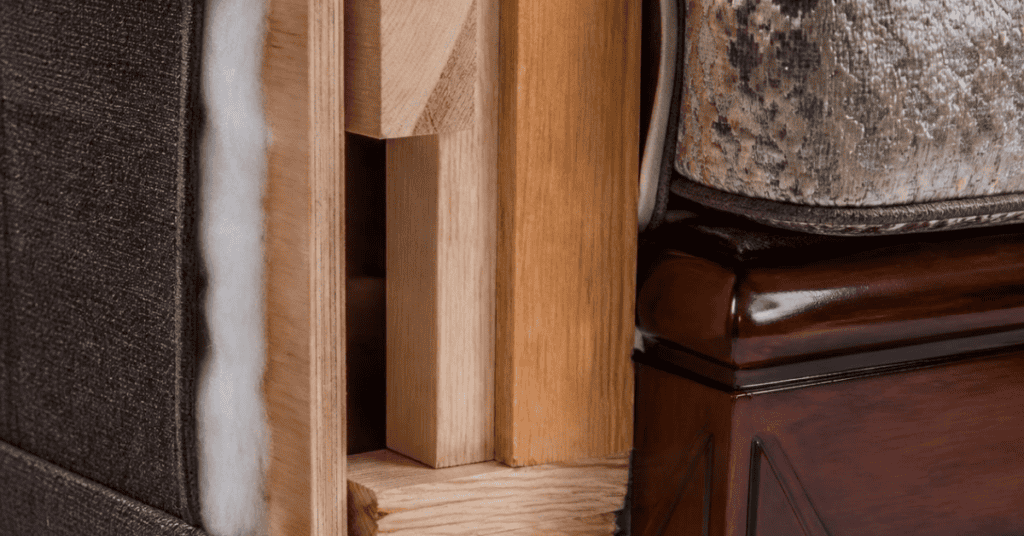
The off-gassing timeline depends on what the furniture contains and where it is placed. The size and age of the piece also affect how much reaches the room.
Materials and Construction
Furniture made with several layers, coatings, and bonded materials often has more emission sources than a simple, unfinished piece.
Each layer, adhesive, coating, and fabric can release its own chemicals. Furniture with more components often has more possible emission sources.
Key factors include:
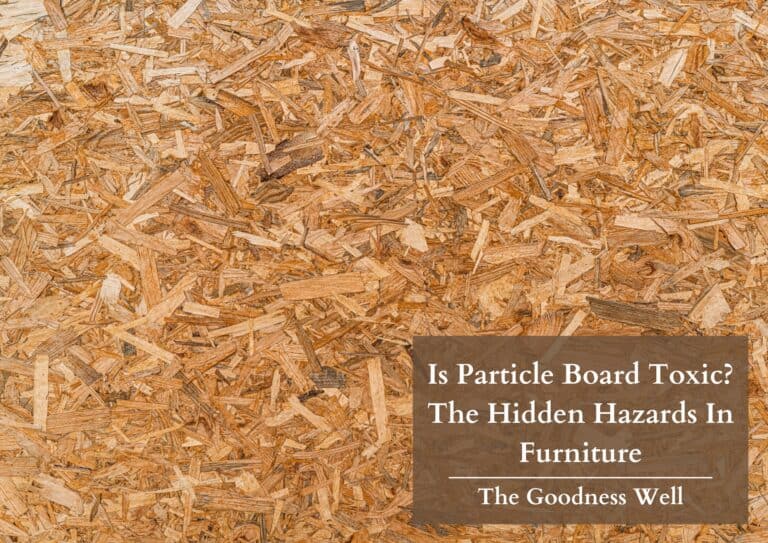
- Composite wood: Particleboard and MDF may use formaldehyde-based resins. Unsealed edges can release more formaldehyde than fully covered surfaces.
- Adhesives: Glue is often used in veneers, upholstery, and furniture frames. The formula and amount used affect emissions.
- Finishes: Solvent-based stains and lacquers usually release more VOCs than low-VOC, water-based, or UV-cured finishes.
- Upholstery: Polyurethane foam, synthetic fabric, backing, and fabric treatments can each release different chemicals.
- Furniture size: A large sectional has more emitting material than a small side table.
- Production age: Recently manufactured furniture usually releases more than an identical piece stored for several months.
Formaldehyde receives attention because it can irritate the eyes, nose, and throat at elevated indoor levels.
Research on wood-based materials also shows that material properties and surrounding conditions change how quickly VOCs are released.
Conditions Inside Your Home
Room conditions affect both the emission rate and the amount that remains in the air.
- Heat: Higher temperatures can make some materials release VOCs faster.
- Humidity: High humidity can increase emissions from certain wood products and coatings.
- Ventilation: Fresh-air exchange removes VOCs from the room. It does not stop the furniture from releasing them.
- Room size: VOCs build up faster in a small, closed room than in a large, ventilated space.
- Multiple new items: Adding a couch, rug, and cabinets together creates more indoor emissions than adding one item.
- Closed compartments: Packaging, drawers, and cabinets can trap vapors until opened.
Heat and humidity can speed up emissions, while fresh-air ventilation helps remove VOCs from the room.
These factors explain why the same furniture may smell stronger in a warm bedroom than in an airy living room. Deliberately heating a piece is not necessary.
Comfortable temperatures and steady ventilation provide a more practical approach.
Smell Is Not a VOC Test
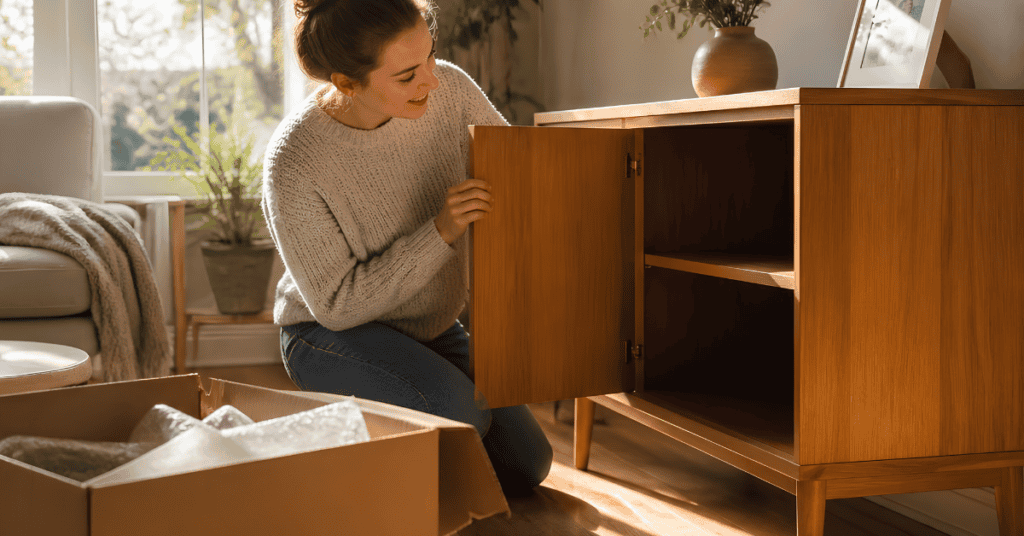
The “new furniture smell” may fade before emissions fully stop. Some VOCs have a noticeable odor, while others are difficult or impossible to smell.
Your nose detects odor, not chemical concentration. Some compounds smell strong at low levels, while others have little smell.
A strong smell also does not prove that a product has unsafe VOC levels. People can detect some chemicals at very low concentrations.
Other chemicals may reach higher concentrations without producing an obvious odor.
A medical toxicology review explains that odor perception is not a reliable substitute for measuring chemical exposure.
A person’s sense of smell also varies with age, health, smoking history, and natural sensitivity.
Smell cannot tell you:
- Which chemicals are present
- How much of each chemical is in the air
- Whether the concentration meets an emissions standard
- Whether emissions have stopped
- How another person may react to the same odor
Headaches or irritation after bringing in new furniture may mean the indoor air needs attention. However, symptoms alone cannot identify the chemical or measure its concentration.
Move away from the room and increase fresh-air ventilation if the smell causes discomfort.
Key Takeaway: A fading smell does not prove that furniture has stopped releasing VOCs.
How to Reduce Exposure
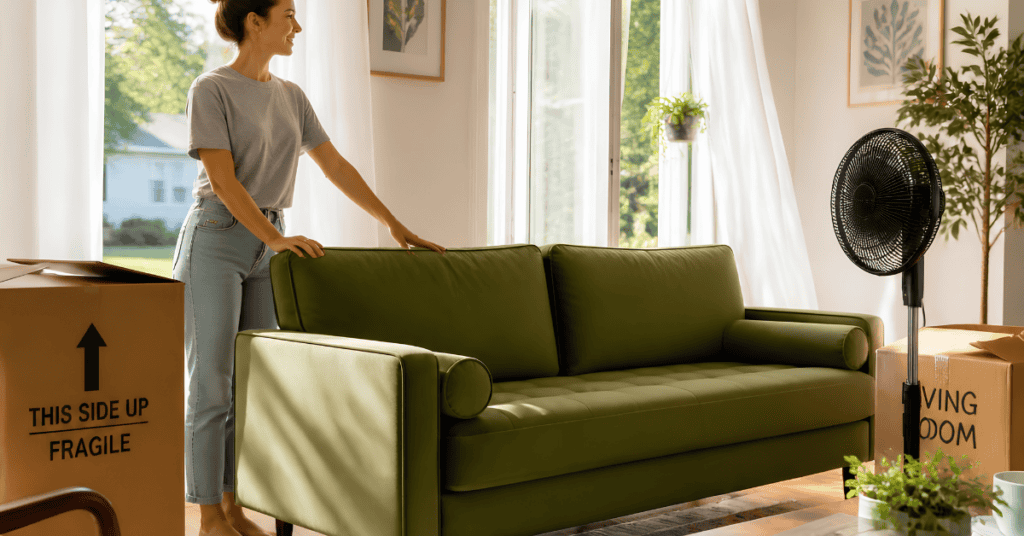
The most effective approach starts before the furniture enters your home.
If you’ve already brought new furniture home, see our guide on how to get rid of new furniture smell for practical steps to help reduce odors and improve indoor air quality.
When shopping for new furniture, choosing products with verified low emissions remains the most effective long-term strategy.
Start with source control: choose tested low-emission furniture before relying on ventilation to manage emissions later.
The EPA recommends source control and ventilation as key ways to improve indoor air quality.
Before You Buy
Look beyond broad claims such as “natural,” “green,” or “non-toxic.” These terms do not prove that a product has been tested for chemical emissions.
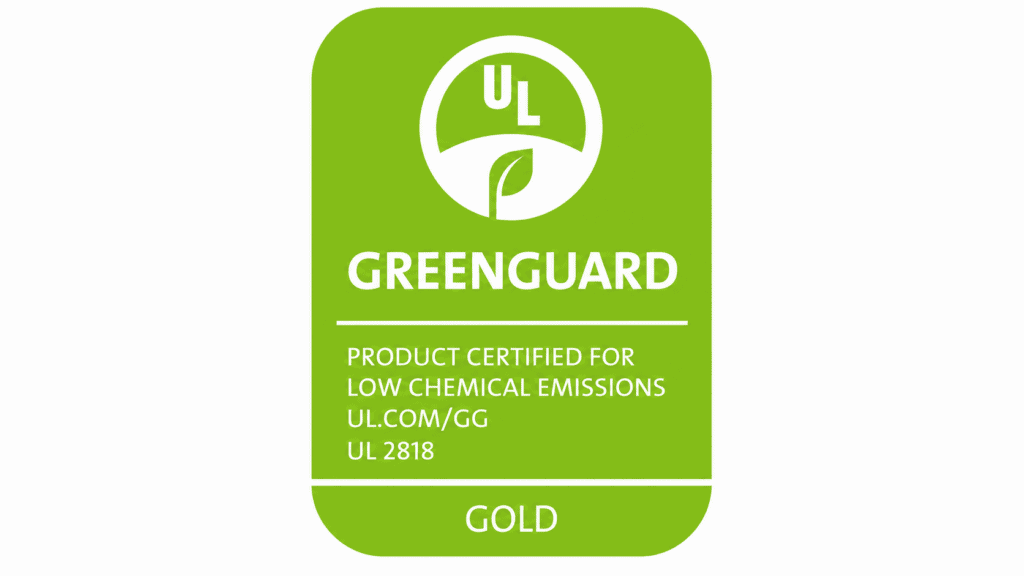
Instead, check for:
- GREENGUARD Gold certification: This verifies that the finished product meets strict chemical emission limits. It does not mean the furniture contains no chemicals or releases zero VOCs.
- Clear material details: Look for information about the frame, cushions, fabric, adhesives, and finishes.
- Solid wood: This avoids the formaldehyde-based resins commonly used in particleboard and MDF.
- Natural latex: This may replace some polyurethane foam in upholstered furniture.
- Minimally treated textiles: Ask whether fabrics contain stain-resistant, antimicrobial, or water-resistant treatments.
- Low-emission finishes: Ask for verified emissions testing instead of relying only on “water-based” or “low-VOC” claims.
UL Solutions explains that GREENGUARD Gold uses stricter VOC emission limits than standard GREENGUARD certification.
This makes it especially useful when shopping for nurseries, bedrooms, and other frequently used rooms.
At The Goodness Well, we consider verified emissions testing more useful than broad marketing language.
Conclusion
Furniture off-gassing is usually strongest when a piece is new, but the timeline varies by material, construction, and home conditions.
A fading smell does not always mean emissions have stopped, so verified low-emission products and good ventilation offer better guidance.
You do not need to panic about every new purchase. Choosing carefully and giving furniture time to air out can meaningfully reduce indoor exposure.