What Are VOCs in Furniture?


VOCs in furniture are chemicals that can evaporate from materials like finishes, adhesives, engineered wood, foam, and fabric treatments into the air inside your home.
This matters because indoor air can be affected by everyday household products, and the EPA notes that VOC exposure may cause irritation, headaches, and other health effects depending on the chemical and level of exposure.
Still, VOCs do not mean every furniture piece is unsafe. Understanding where they come from can help you choose lower-emission options with more confidence.
VOCs in furniture are chemicals that can evaporate into indoor air.
For shoppers, this means a furniture piece may release chemicals from its wood, glue, finish, foam, or fabric treatment.
A “low-VOC” or “no-VOC” label helps, but it does not automatically prove the whole product is low-emission unless testing or certification backs it up.
What VOCs Mean in Furniture

VOCs stands for volatile organic compounds. These are carbon-based chemicals that turn into gas at room temperature and move into the air.
In furniture, VOCs are not one single ingredient. They are a broad group of chemicals that may come from the materials used to build, bind, coat, or soften a furniture piece.
A furniture product may release VOCs from:
- Wood resins or composite wood materials
- Adhesives and glues
- Paints, stains, and clear finishes
- Upholstery treatments
- Foam cushions or backing materials
Formaldehyde is one of the best-known VOCs in furniture. It is often discussed because some engineered wood products use formaldehyde-based resins.
VOCs are studied in indoor air research because they evaporate from household materials and enter the air people breathe indoors.
“Organic” does not mean natural or safer in this context. In chemistry, organic simply means the compound contains carbon.
In chemistry, “organic” simply means carbon-based. It does not mean a material is healthy, natural, or non-toxic.
Not all VOCs carry the same risk. Some have little effect at typical indoor levels. Others can irritate the eyes, nose, throat, or lungs in some people, especially in rooms with poor airflow.
For shoppers, the key takeaway is simple: VOCs are not a furniture category. They are chemicals that may be released from different parts of a furniture piece.
This is why the full material list matters more than one label or one marketing claim.
Where Furniture VOCs Come From

Furniture VOCs usually come from the parts of a product that are pressed, glued, coated, softened, or treated.
Engineered Wood and Adhesives
Engineered wood is one common source. This includes:
- Particleboard
- MDF
- Plywood
- Veneered wood
- Laminated wood
These materials often use resins or adhesives to hold wood fibers, chips, or layers together. Some of those binders can release formaldehyde or other VOCs after manufacturing.
Composite wood is made by binding wood pieces, fibers, or layers together. The binders help create a stable material, but some can release VOCs after manufacturing.
Finishes, Paints, and Stains
Furniture surfaces are often coated to add color, shine, water resistance, or scratch protection.
Common examples include:
- Paint
- Wood stain
- Varnish
- Lacquer
- Sealant
- Clear topcoat
These coatings may release VOCs, especially when the furniture is newly made or freshly refinished. Strong odor is more common with solvent-based finishes.
Water-based finishes often smell less. They may also release fewer VOCs than many traditional solvent-based finishes, but the full product still matters.
Foam, Fabric, and Treatments
Upholstered furniture has more layers than it may seem. A sofa can include foam, batting, fabric, backing, thread, glue, and surface treatments.
VOC sources may include:
- Polyurethane foam cushions
- Fabric backing
- Adhesives between layers
- Stain-resistant treatments
- Water-repellent finishes
This matters more for furniture with daily close contact, like sofas, nursery chairs, and upholstered beds. You sit, lounge, or sleep near these materials for longer periods.
Real-Life Example

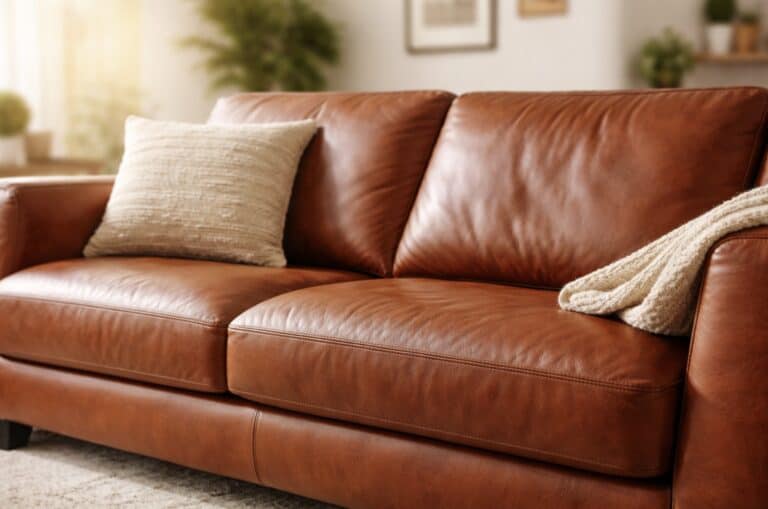
You buy a new sofa and notice a strong “new furniture” smell in the living room. That smell tells you some chemicals are leaving the materials and entering the air. While smell alone cannot identify specific chemicals, there are several ways to reduce new furniture odors and improve indoor air quality while the furniture airs out.
How Off-Gassing Works

Off-gassing is the release of chemicals from a material into the surrounding air. With furniture, this happens when leftover compounds from manufacturing slowly leave the surface.
Off-gassing happens when chemicals slowly leave a material and move into the air. This process is usually strongest when the product is new.
This release is often strongest when a piece is new. Emissions usually decrease as the furniture airs out, but the timeline depends on the material, coating, and room conditions.
A PubMed Central review on VOCs from wood and wood-based panels explains that furniture and interior materials can release VOCs into indoor air.
This is why indoor airflow matters after bringing home a new piece.
A few things can make off-gassing more noticeable:
- Heat: Warmer rooms can speed up chemical release.
- Humidity: Moist air can affect some wood products and coatings.
- Poor ventilation: Closed rooms trap released chemicals indoors.
- Large surface area: A big sofa or wall unit has more material exposed to air.
- Fresh finishes: Newly painted, stained, or sealed pieces often smell stronger.
A closed, warm room can make furniture odors more noticeable. Fresh air helps dilute what the furniture releases into the room.
Smell can be a clue, but it is not a complete test. Some VOCs have a strong odor. Others have little or no smell.
For everyday homes, the practical goal is not panic. It is simple reduction. Ventilate the room, unbox furniture early, and avoid placing strongly scented new pieces in bedrooms right away.
Low-VOC vs No-VOC Claims

“Low-VOC” usually means a product, material, or finish was made to release fewer VOCs than a conventional version. It does not always mean the entire furniture piece was tested.
“No-VOC” sounds stronger, but it can be narrow. It may refer only to one part of the product, such as the paint, finish, or adhesive.
A furniture label should tell you:
- What part of the furniture the claim covers
- Whether emissions were tested
- Which standard or certification was used
- Whether the whole product or only one material was evaluated
Look for specific wording like “whole product tested” or “certified for chemical emissions.” These details tell you more than broad claims like “green” or “safe.”
The FTC advises businesses to support environmental claims with competent and reliable scientific evidence, which is why clear testing matters more than vague wording.
Be careful with broad claims like “eco-friendly,” “green,” or “non-toxic.” These terms do not automatically tell you what was tested.
At The Goodness Well, we treat labels as a starting point, not the whole answer.
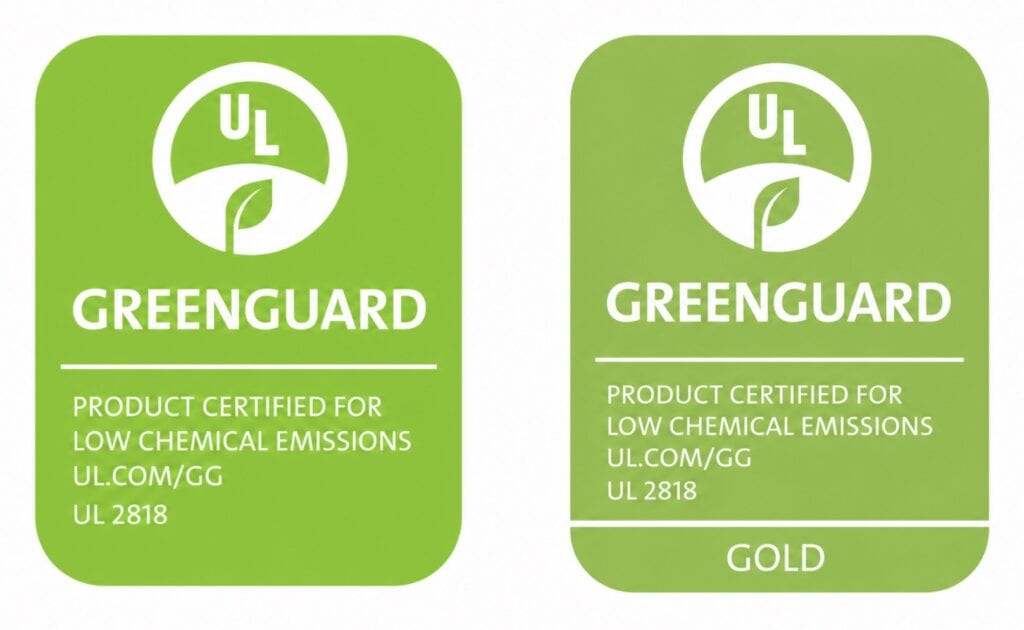
A better label gives specific details. For example, “GREENGUARD Gold certified” tells you more than “safe for the home.”
“Formaldehyde compliant composite wood” tells you more than “natural wood look.”
When a brand uses low-VOC or no-VOC language, look for proof. A clear product page should explain the material, the finish, and any emissions testing.
How to Choose Lower-VOC Furniture

Choosing lower-VOC furniture is about asking better questions. Do not rely on one phrase like “eco-friendly” or “non-toxic.”
Look at the main parts of the furniture piece:
- Frame or wood base
- Cushion material
- Fabric or upholstery
- Adhesives
- Paint, stain, or finish
- Added stain or water protection
A brand should be able to explain these details clearly. If the product page is vague, ask before buying.
Better Materials and Questions
For wood furniture, solid wood is often easier to evaluate than composite wood. It usually has fewer binders inside the material.
For composite wood, look for clear formaldehyde compliance.
The EPA says composite wood products sold in the U.S. must meet TSCA Title VI formaldehyde emission standards, including hardwood plywood, MDF, particleboard, and finished goods made with these materials.
For upholstered furniture, pay closer attention to daily-contact pieces. Sofas, nursery chairs, and upholstered beds sit close to your body for long periods.
If a new piece smells strong, give it time and airflow before using it heavily. Open windows when possible. Keep it out of bedrooms until the odor fades.
Certifications to Look For
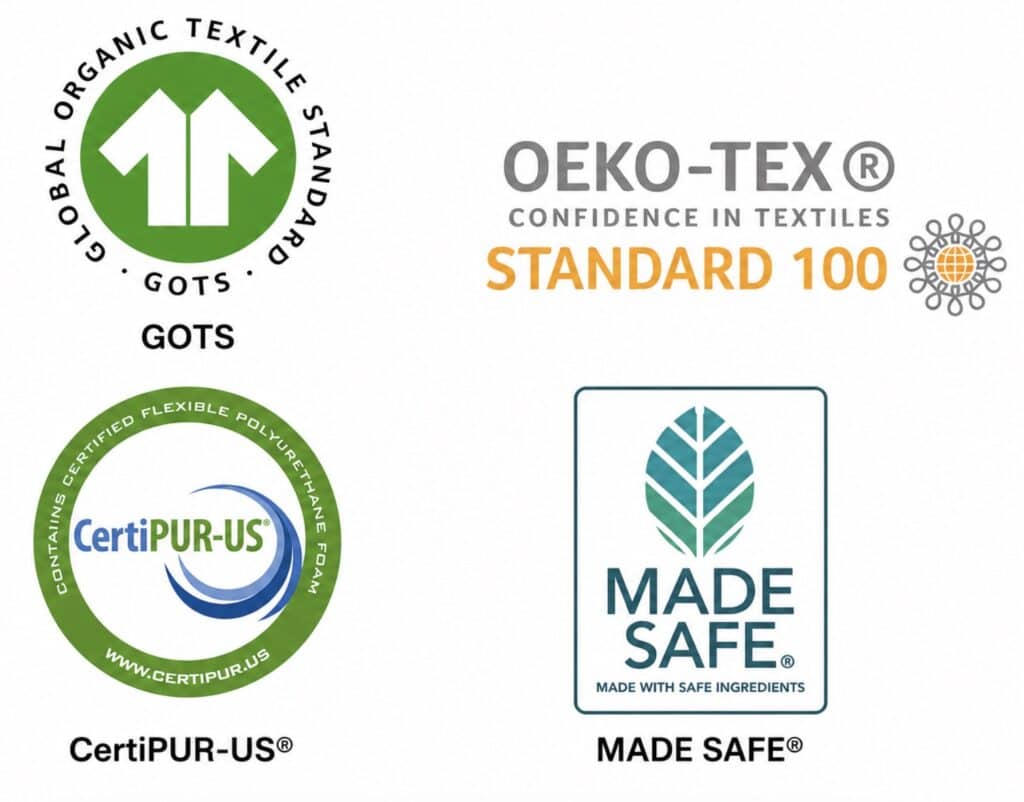
Certifications help when they test emissions or screen ingredients. They are more useful than broad marketing words.
Look for:
- GREENGUARD Gold: Tests products for chemical emissions. UL says GREENGUARD Certification helps show compliance with chemical emission standards for indoor environments.
- MADE SAFE: Screens ingredients against a large banned and restricted substance list. MADE SAFE says products are screened to avoid or restrict over 15,000 listed substances.
- TSCA Title VI: Useful for composite wood. It focuses on formaldehyde emissions from certain wood products.
- CertiPUR-US: Useful for polyurethane foam cushions. CertiPUR-US says certified foams meet low VOC emissions limits and are made without formaldehyde, certain phthalates, and certain heavy metals.
Use certifications as filters, not guarantees. Some labels cover only one material, such as foam or wood.
Key Takeaway: The best lower-VOC choice combines clear materials, relevant certifications, and good ventilation at home.
The best choice is a product with clear materials, clear finish details, and relevant third-party testing.
Conclusion
VOCs are a normal part of many furniture materials, but that does not mean every piece is unsafe.
The goal is to understand where emissions may come from and choose products with clearer materials, better ventilation, and trusted low-emission testing when possible.
You do not need a perfect, zero-VOC home to create a healthier space.
Small choices, like checking labels, asking better questions, and airing out new furniture, can make your home feel safer and easier to trust.