Do Couches Contain PFAS? What to Know About Stain-Resistant Fabrics

PFAS are often associated with nonstick pans and food packaging, but they can also be a concern in home textiles and furniture finishes.
Some couches may contain PFAS if the upholstery has been treated to resist stains, water, or everyday spills, though not every couch uses these chemicals.
The EPA explains that PFAS have been used in consumer products since the 1940s because of their useful properties, which is why they can show up in more places around the home than many people realize.
For anyone trying to create a healthier indoor space, understanding how and why PFAS may be used in couches can make furniture shopping much clearer.
Some couches contain PFAS, especially when treated for stain or water resistance.
Whether PFAS are present depends more on the upholstery treatment than the fabric itself. A “performance” or “easy-clean” label does not automatically mean PFAS-free, so look for clear PFAS-free or fluorine-free wording.
Where PFAS May Hide
PFAS are most likely to show up in a couch as a fabric treatment. They are not usually the main fabric, foam, or frame material.
These chemicals are often added to help surfaces resist:
- Spills
- Water
- Grease
- Stains
- Soil from everyday use
A couch can be made with the same fabric type as another couch, but the added finish can make the chemical profile different.
On a couch, PFAS may be found in:
- Stain-resistant upholstery: This includes fabrics marketed as “stain-proof,” “easy-clean,” or “family-friendly.”
- Water-repellent coatings: These finishes help liquid bead on the surface instead of soaking in quickly.
- Performance fabrics: Some performance fabrics use PFAS-based chemistry, while others use PFAS-free technology.
- Fabric protector sprays: These may be added by the manufacturer, retailer, or homeowner after purchase.
- Older treated couches: Older furniture may not clearly state what type of stain treatment was used.
PFAS are discussed in health and environmental research because they break down very slowly. Some PFAS remain in the environment and in the human body for years.
Research on PFAS in indoor dust has also noted their use in protective sprays and coatings for fabrics, carpets, and clothing, which helps explain why treated furniture gets attention.
The fabric name alone does not tell you whether PFAS are present. Cotton, polyester, microfiber, and blends can all be treated after the fabric is made. The treatment matters more than the fabric name.
Real-Life Example
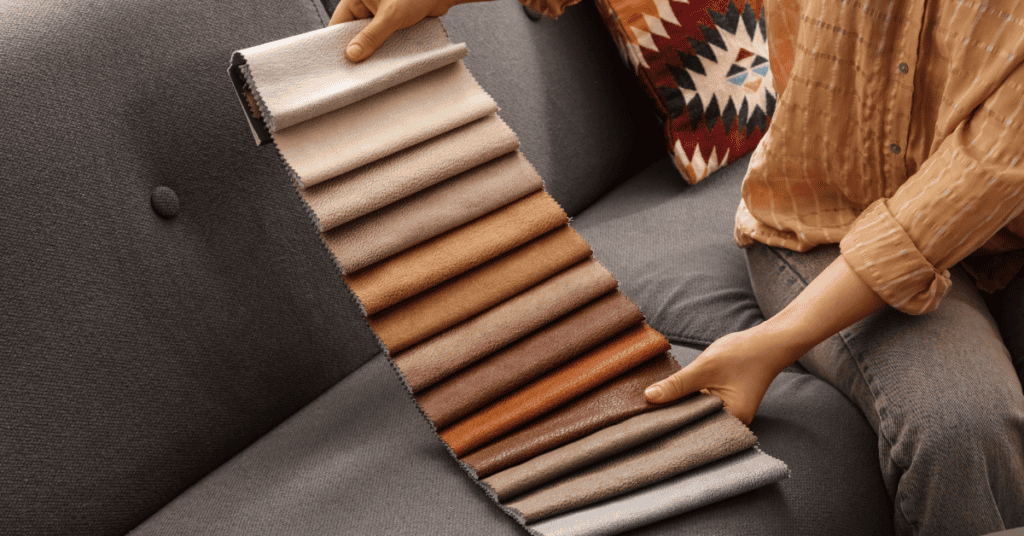
You find a couch labeled “stain-resistant performance fabric” and assume it is safer because it does not mention PFAS. That label tells you the fabric has been designed to repel spills, but it does not explain which chemistry creates that protection. Ask the brand whether the finish is PFAS-free or fluorine-free before you rely on the claim.
Why Furniture Matters

PFAS are not only a cookware or food packaging issue. They have also been used in products designed to resist water, grease, and stains.
Furniture matters because couches are large, high-contact items. Your family may sit, nap, eat, play, and relax on the same couch every day.
PFAS are only one piece of the puzzle. Upholstery treatments, foam, adhesives, flame retardants, and VOC emissions can all contribute to a couch’s overall chemical profile, which is why understanding how to choose a non-toxic couch can be just as important as avoiding PFAS.
A couch can also collect household dust. Dust can hold tiny particles from fabrics, finishes, and other indoor materials.
Dust acts like a small collection point for particles from fabrics, finishes, and indoor materials. Regular vacuuming and cleaning can help reduce what builds up.
A scientific review of PFAS exposure pathways describes indoor dust as one way people can take in PFAS, especially through hand-to-mouth contact and breathing small particles.
This matters more in homes with:
- Babies or toddlers who crawl, touch surfaces, and put hands in their mouths
- Pets that rest on furniture and track dust around the home
- Family members who spend long hours on the couch
- Older furniture with unknown stain-resistant treatments
This does not mean every couch is unsafe. It means furniture deserves the same careful look as cookware, cleaning products, and food packaging when building a healthier home.
When Risk Is Higher

The chance of PFAS exposure is greater when a couch relies on added chemical stain protection. This is especially true when the brand uses broad claims but does not explain the treatment.
Be more careful with couches described as:
- Stain-proof
- Water-repellent
- Spill-resistant
- Soil-resistant
- Easy-clean performance fabric
- Protected with a fabric guard
These claims do not automatically mean PFAS were used. Some brands use PFAS-free treatments. The problem is unclear labeling.
Older couches can also be harder to judge. Many older furniture tags do not list fabric finishes or chemical treatments.
This matters more when the couch gets heavy daily use. Babies, toddlers, and pets spend more time close to cushions, dust, and fabric surfaces.
Small children and pets often have closer contact with cushions, dust, and fabric surfaces than adults do.
PFAS are discussed in health research because some types stay in the body for a long time.
The National Institute of Environmental Health Sciences explains that PFAS exposure has been studied for immune, cholesterol, liver, and developmental effects, though risk depends on the type and amount of exposure.
A couch is less likely to use heavy chemical coatings when the brand clearly says the fabric is PFAS-free, fluorine-free, untreated, or washable without added stain protection.
How to Choose Safer

Start with the fabric treatment, not just the fabric name.
Look for clear wording such as:
- PFAS-free
- Fluorine-free
- No fluorinated stain repellents
- Untreated fabric
- No added fabric protector
Save or screenshot product pages that mention PFAS-free or fluorine-free claims before buying.
The EPA recommends learning how to limit PFAS exposure in daily life, so shopping questions can make a real difference.
Choose options that are easier to verify:
- Untreated cotton, linen, or wool upholstery
- Removable and washable covers
- Brands that explain their fabric treatments
- Products with clear PFAS-free claims
- Retailers that can answer chemical questions in writing
Performance fabric is not automatically a bad choice. Some brands now use PFAS-free stain resistance.
At The Goodness Well, we look for furniture that balances safer materials, clear labeling, and real-life function.
Questions to Ask Brands
Before buying, ask simple and direct questions:
- “Is this fabric treated with PFAS?”
- “Is the stain-resistant finish fluorine-free?”
- “Was a fabric protector applied after manufacturing?”
- “Do you have a chemical disclosure for this couch?”
- “Can you confirm this in writing?”
Ask brands to confirm their answer in writing so you have a clear record before purchasing.
If the brand cannot answer, choose a simpler fabric or a more transparent company.
Labels That Help
Certifications can help, but they do not all check the same things. Use them as shopping tools, not as a full guarantee.
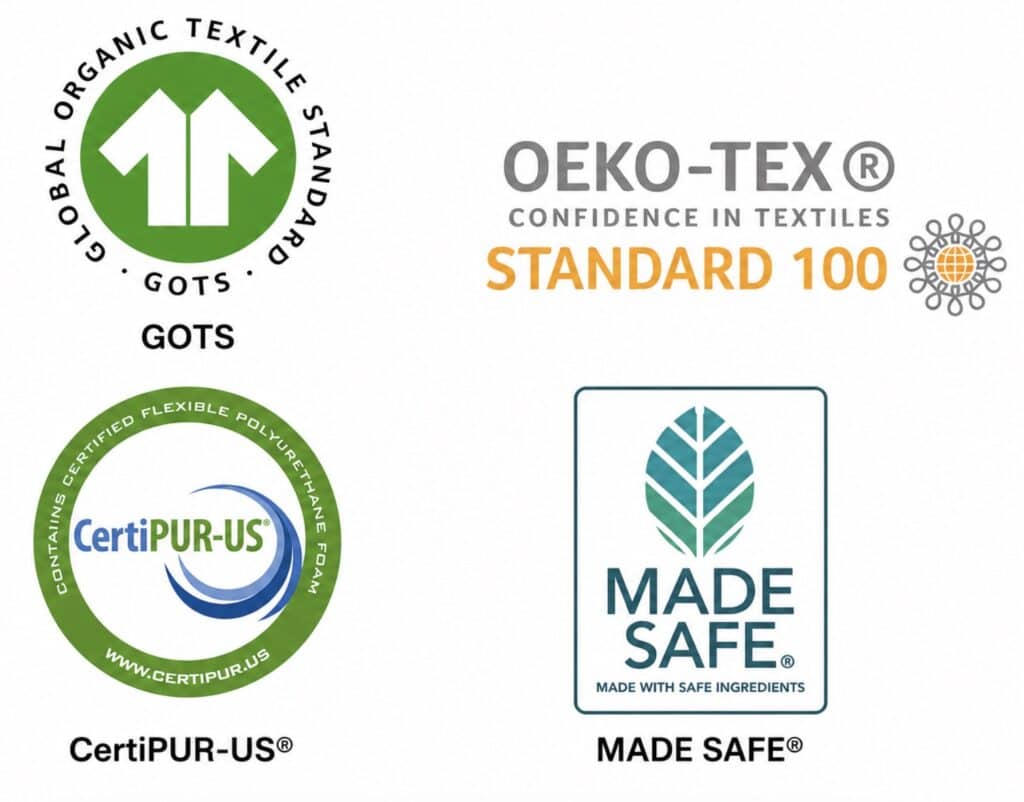
Helpful labels may include:
- OEKO-TEX: Tests textiles for many restricted substances.
- GREENGUARD Gold: Focuses on low chemical emissions into indoor air.
- MADE SAFE: Screens products for a broader range of ingredient concerns.
- GOTS: Applies to organic textiles and restricts certain chemical inputs.
These certifications can support a broader safer-materials search, but they do not necessarily verify that a couch is PFAS-free.
For PFAS, the strongest wording is still direct. Look for “PFAS-free” or “fluorine-free” on the product page. If the couch only says “stain-resistant,” ask how that protection is made.