Is The Wood Used In Couches Toxic? A Simple Breakdown


When you see “wood frame” on a couch label, it can sound reassuring, but that phrase can mean anything from solid hardwood to plywood, MDF, particleboard, or a mix of engineered wood products.
From a non-toxic home perspective, the bigger question is usually not whether a couch contains wood, but what adhesives, resins, finishes, and treatments were used with it.
This matters because the EPA’s formaldehyde standards for composite wood products apply to materials like hardwood plywood, MDF, and particleboard, which can be used in finished goods such as furniture.
In this guide, we’ll break down the most common couch frame woods and how to spot lower-emission options without getting lost in marketing claims.
Couch wood is not usually toxic by itself.
The bigger issue is whether the frame uses composite wood, formaldehyde-based resins, strong-smelling finishes, or unclear “engineered wood” materials.
For shoppers, “wood frame” does not automatically mean healthier, so look for clear materials and low-emission certifications.
Common Couch Frame Woods

Couch frames are usually made from solid wood, engineered wood, or a mix of both. The material affects durability, price, weight, and how clearly a brand can explain what is inside the frame.
The most common couch frame materials include:
- Solid hardwood: oak, maple, beech, ash, birch, or poplar
- Softwood: usually pine
- Plywood: thin wood layers glued together
- MDF: wood fibers pressed into dense panels
- Particleboard: wood chips or particles bonded into sheets
- Engineered wood: a broad term for manufactured wood products
Solid Wood Frames
Solid hardwood is often the strongest couch frame option. It is commonly used in higher-quality sofas because it holds screws and joints well.
Common hardwoods include oak, maple, ash, beech, birch, and poplar. These woods are usually more durable than softwoods and less likely to crack under daily use.
Softwood, such as pine, is also used in couch frames. It is lighter and usually cheaper than hardwood. It can still work well, but it depends on the frame design and joinery.
Hardwood frames are often chosen because they hold screws and joints well, which helps a couch stay sturdy over time.
The part to check is whether the wood has been heavily stained, sealed, treated, or glued in ways the brand does not explain.
Engineered Wood Frames
Engineered wood is made by pressing wood pieces, fibers, veneers, or particles into panels. These materials help manufacturers make frames that are cheaper, lighter, and easier to produce at scale.
Common engineered wood materials include:
- Plywood: often stronger than MDF or particleboard because it uses layered wood veneers
- MDF: smooth and dense, but made from wood fibers and resin
- Particleboard: usually cheaper and less durable than plywood
- Mixed engineered wood: a general label that may include several composite wood materials
The main thing to understand is that engineered wood uses binders.
Some composite wood products have historically used formaldehyde-based resins, which is why formaldehyde often comes up in furniture discussions.
Research on formaldehyde in the indoor environment describes it as a common indoor air pollutant from building materials and some pressed-wood products.
This does not mean every engineered wood couch is unsafe.
It means shoppers should look for clear material details and low-emission standards when a couch uses MDF, particleboard, plywood, or other composite wood.
Is Couch Wood Toxic?

Couch wood is not usually the main problem by itself. Plain wood is a natural material, and solid wood frames often contain fewer added binders than composite wood frames.
The bigger issue is what gets added to the wood or used around it. This can include:
- Adhesives that hold wood layers or particles together
- Resins used in MDF, particleboard, or plywood
- Stains, sealants, or paints
- Preservative or pest-resistant treatments, if used
Some pressed-wood products release formaldehyde into indoor air.
Formaldehyde is discussed in health research because it can irritate the eyes, nose, throat, and skin at higher levels, and the National Institute of Environmental Health Sciences recommends ventilation after bringing new formaldehyde sources into the home.
VOCs are gases released from some finishes, paints, adhesives, and coatings.
When possible, air out a new couch in a well-ventilated room before using it heavily, especially in bedrooms or nurseries.
A strong chemical smell does not always mean a couch is dangerous, but it does mean the couch is releasing something into your indoor air.
New couches usually release the most emissions during the first days or weeks.
This matters more in small rooms, poorly ventilated spaces, nurseries, bedrooms, or homes with people who are sensitive to odors or air pollutants.
It’s also worth remembering that the frame is only one part of a couch.
Upholstery fabrics can contain stain-resistant treatments, synthetic materials, dyes, and other chemical additives that may affect indoor air quality. If you’re looking for a healthier couch, the fabric can be just as important as the wood frame.
Lower vs Higher Concern Materials
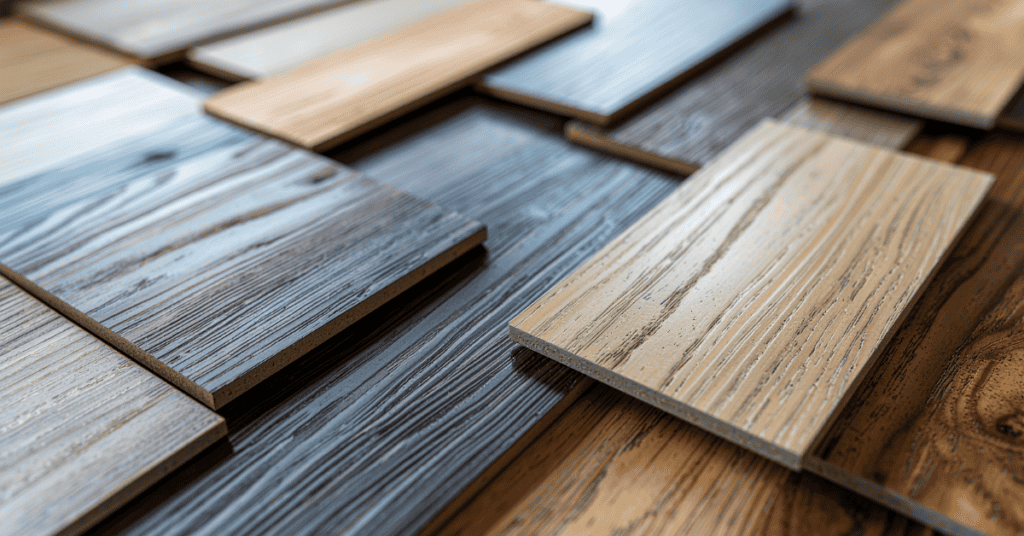
Not all couch frame materials are equal from a healthy home perspective. Some are easier to evaluate because they use fewer added binders.
Others need more label-checking because they depend more on resins and adhesives.
At The Goodness Well, we look less at whether a couch contains “wood” and more at what kind of wood, binders, and finishes are used.
Materials that are usually easier to evaluate include:
- Solid hardwood: often a cleaner frame choice when the brand uses low-VOC finishes.
- Solid pine: can be acceptable, especially in well-built frames, but it may dent or wear faster.
- Certified plywood: can be a practical middle ground when it meets low-emission standards.
Materials that need more careful checking include:
- MDF: made from wood fibers and resin.
- Particleboard: made from wood particles and binders.
- Vague engineered wood: harder to judge when the brand does not name the material.
- Mixed wood frames: may combine solid wood, plywood, MDF, or particleboard.
The reason is simple. MDF and particleboard rely heavily on binders to hold small wood pieces together.
Some pressed-wood products have released formaldehyde indoors, and the EPA explains that pressed-wood products made with certain formaldehyde-based resins can be a source of indoor formaldehyde.
This does not mean every MDF or particleboard couch is a bad choice. It means the brand should clearly state what standard the material meets. If the product page only says “engineered wood,” ask whether it meets CARB Phase 2 or TSCA Title VI formaldehyde limits.
If a product page only says “engineered wood,” ask the brand which engineered wood is used and what emissions standard it meets.
A solid wood frame is also not automatically the best choice. A hardwood couch with a strong-smelling stain or unknown coating may release more VOCs than certified plywood with a low-VOC finish.
For most shoppers, the safer path is to look for three things together:
- A clearly named frame material
- Low-emission composite wood, if engineered wood is used
- Low-VOC or water-based finishes where possible
Certifications That Help

Certifications help because shoppers cannot see resins, binders, or emissions inside a couch frame. A label does not make a couch perfect, but it can make a brand’s claims easier to check.
Look for these when a couch uses plywood, MDF, particleboard, or other composite wood:
- TSCA Title VI: A U.S. rule that limits formaldehyde emissions from composite wood products.
- CARB Phase 2: A California standard for formaldehyde emissions from composite wood.
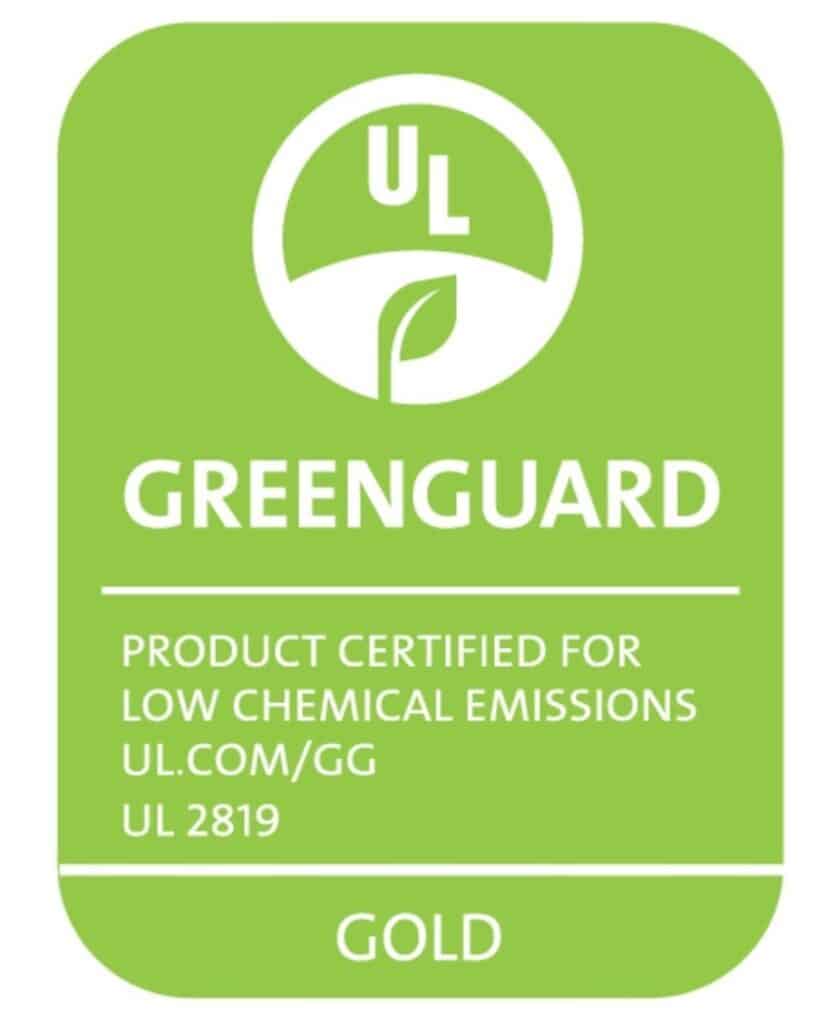
- GREENGUARD Gold: A third-party certification for lower chemical emissions. UL Solutions explains that GREENGUARD Gold sets lower VOC emission limits for products used indoors.
- Low-VOC finishes: Useful for stains, sealants, paints, and coatings used on the frame.
TSCA Title VI and CARB Phase 2 focus on composite wood formaldehyde limits, while GREENGUARD Gold looks at broader indoor chemical emissions.
These labels answer different questions. TSCA Title VI and CARB Phase 2 focus on formaldehyde from composite wood.
Low-VOC finish claims are helpful, but they should be specific. A clear product page may say “water-based finish,” “low-VOC stain,” or “no added formaldehyde” for composite wood.
Vague words like “eco-friendly” or “natural” do not tell you enough.
For couch frames, the most useful label combination is:
- A named frame material
- TSCA Title VI or CARB Phase 2 compliance for composite wood
- GREENGUARD Gold or another emissions certification for the finished product
- Clear information about stains, sealants, or coatings
How to Shop Smarter

A couch label rarely tells the full story.
Choosing a couch with safe materials starts with looking for clear construction details, not just phrases that sound healthy.
Start with the frame material. A helpful product page should tell you whether the frame uses:
- Solid hardwood
- Pine or another softwood
- Plywood
- MDF
- Particleboard
- Mixed engineered wood
If the listing only says “wood frame,” ask for more detail. That phrase does not tell you enough to judge quality or emissions.
Next, check for emissions information. For composite wood, ask whether it meets TSCA Title VI or CARB Phase 2 standards.
For finishes, look for specific wording. Better labels may say:
- Water-based finish
- Low-VOC stain
- Low-VOC sealant
- No added formaldehyde composite wood
- Formaldehyde compliant composite wood
Screenshot or copy the product description before contacting customer support. It makes it easier to ask clear follow-up questions.
Be careful with vague claims. Words like “natural,” “green,” “eco,” or “non-toxic” should come with proof.
The FTC advises that environmental claims should be clear, specific, and supported, not broad or unclear.
Before buying, ask these simple questions:
- What exactly is the frame made from?
- Does the couch use MDF, particleboard, or plywood?
- Is the composite wood TSCA Title VI or CARB Phase 2 compliant?
- Are the stains, sealants, or coatings low-VOC?
- Does the finished couch have an emissions certification?
- Can the brand provide documentation?
If a brand gives clear answers, shopping gets easier. If the details are missing, choose another couch or contact customer support before buying.
For a healthier home, transparency matters as much as the material itself.
Key Takeaway: The best couch choice is the one with clear material details, low-emission proof, and transparent brand answers.
Conclusion
The wood in a couch is only one part of the picture.
Solid wood, plywood, MDF, and particleboard can all appear in couch frames, but the clearest choice is usually the one with transparent materials, verified low-emission standards, and finishes the brand can explain.
You do not need to avoid every engineered wood product.
Just look past broad “wood frame” claims and choose couches with clear construction details and trusted certifications when possible.