The Complete Guide to Non-Toxic Cleaning: From Products to Practices

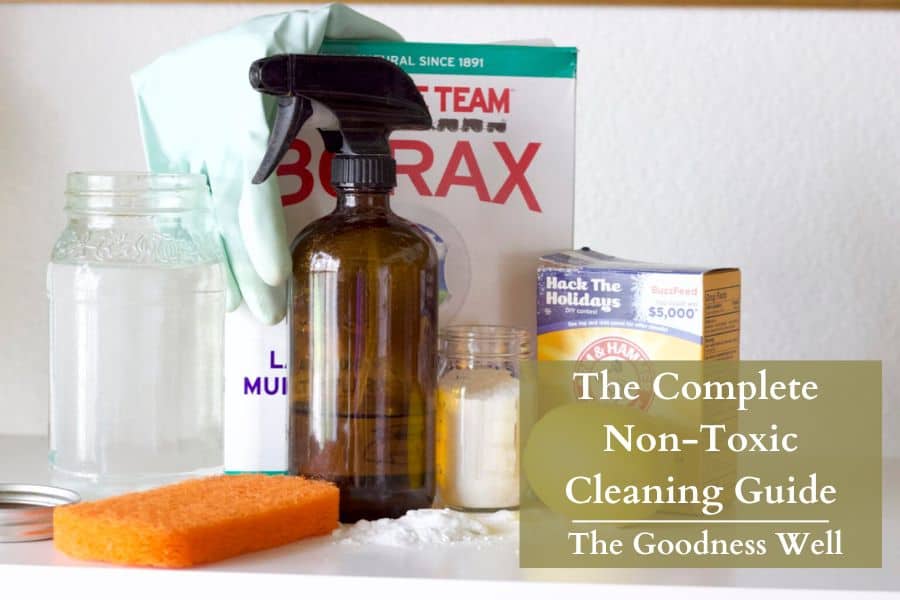
Want to clean more naturally but feel lost on how to start?
We got you covered!
We’ve spent years researching and testing natural cleaning methods for our own home — combining public health knowledge with real, everyday experience. What you’ll find here isn’t just Pinterest ideas — it’s science-backed, practical, and proven.
In this guide, we’ll walk you through everything you need to know about non-toxic cleaning, from understanding what makes conventional products harmful to creating your own DIY effective, safe cleaning products.
The Goodness Well is reader-supported. Some links in this article may be affiliate links, but every recommendation follows our editorial standards and independent review process. Learn more about our editorial standards and review methodology.
Why Make the Switch to Non-Toxic Cleaning?
Before diving into the how, let’s talk about the why.
Research has found that women who regularly use cleaning sprays experience lung decline comparable to smoking a pack of cigarettes a day over 20 years.
Every time you spray that all-purpose cleaner or add fabric softener to your laundry, you could be exposing yourself and your family to substances that can affect respiratory health, hormone function, and overall wellbeing.
The good news? A clean home doesn’t require toxic chemicals.
People have relied on natural ingredients for generations, and when you use the right combinations (which we have recipes for), homemade cleaners can work every bit as well as the products at the store.
Many conventional cleaners release volatile organic compounds (VOCs) that linger in indoor air and can irritate your lungs. Natural ingredients like vinegar, baking soda, and castile soap clean effectively without creating harmful fumes.
Understanding Toxic Ingredients in Conventional Cleaners
Knowledge is power when it comes to protecting your home from toxins.
Conventional cleaning products include phthalates, triclosan, ammonia, chlorine bleach, and synthetic fragrances.
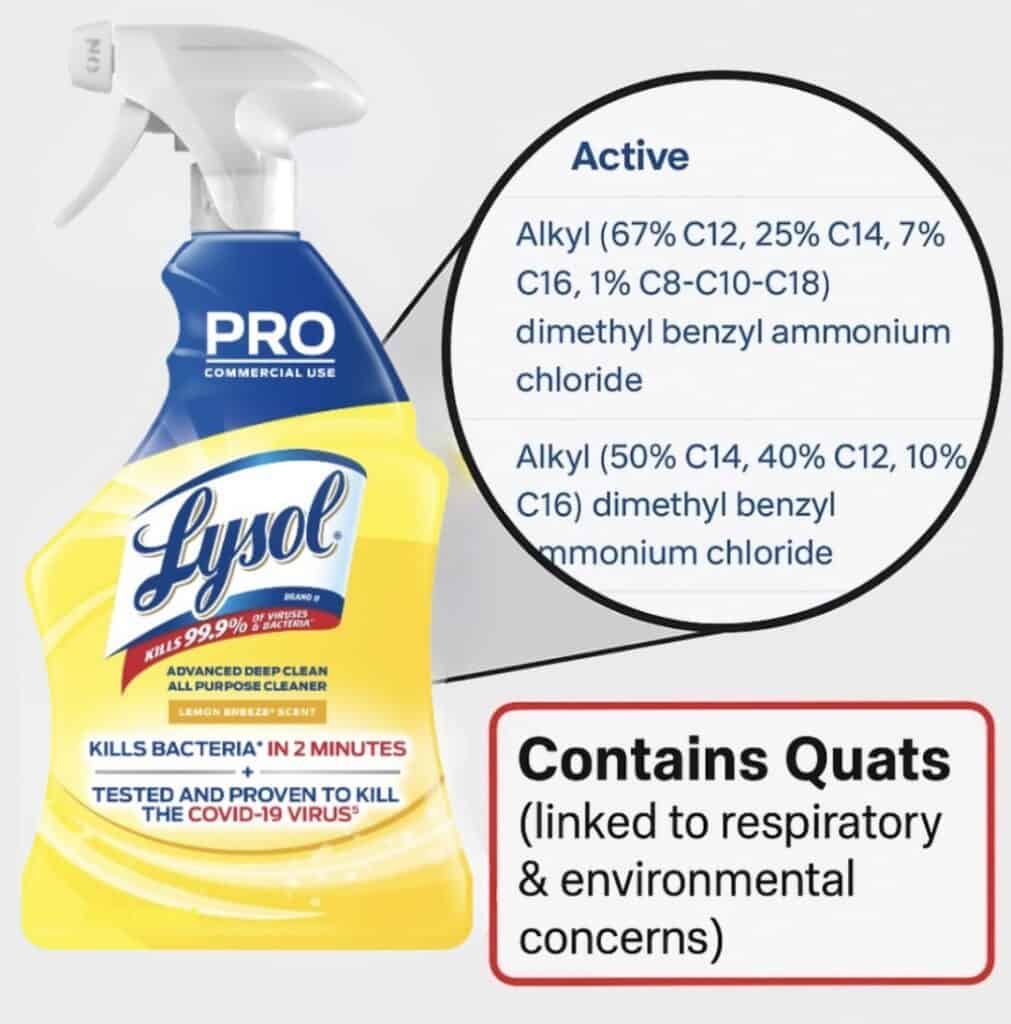
These ingredients have been linked to everything from skin irritation and respiratory issues to hormone disruption and environmental damage.
Many people don’t realize that even products marketed as “green” or “natural” can contain questionable ingredients.
The cleaning product industry is largely unregulated, which means brands don’t have to list all their ingredients on the label.
The cleaning product industry isn’t the only one that can keep secrets — cosmetics, perfumes, supplements, and even air fresheners don’t have to fully list their ingredients either.
This makes it especially important to educate yourself about what to avoid and what actually works as a safe alternative.
The Essential Natural Cleaning Ingredients
Non toxic cleaning can be accomplished with just a handful of simple, affordable ingredients. These natural cleaning ingredients will be your foundation for a toxin-free cleaning arsenal.
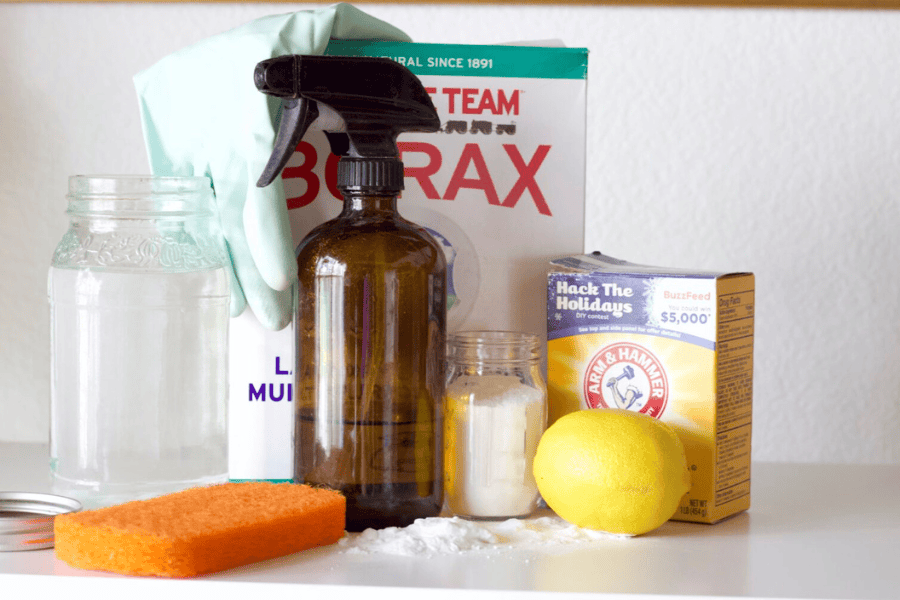
It’s best to buy these in big bulk batches like we do:
🧴 Vinegars acidic nature makes it perfect to cut through grease, disinfect surfaces, and can even be used as a fabric softener!
🥄 Baking soda is one of the most versatile natural cleaners you can keep on hand. It works as a gentle abrasive, deodorizer, and stain remover — and there are countless ways we use baking soda to help clean. From soaking produce and freshening your fridge to scrubbing burnt pans or deodorizing carpets, one small box can replace a shelf full of chemical cleaners.
🧼 Castile soap is a huge staple for us natural cleaning folks. It’s a plant-based, biodegradable cleaning solution that works for everything from dish soap to floor cleaner. It is also our favorite soap to use in the shower (bar soap is best for shower to reduce waste and liquid for cleaning).
🧪 Borax (sodium borate) is great at tackling mold, deodorizing, and cutting through tough stains. You can use it to freshen carpets, clean sinks and toilets, or even boost your homemade laundry detergent.
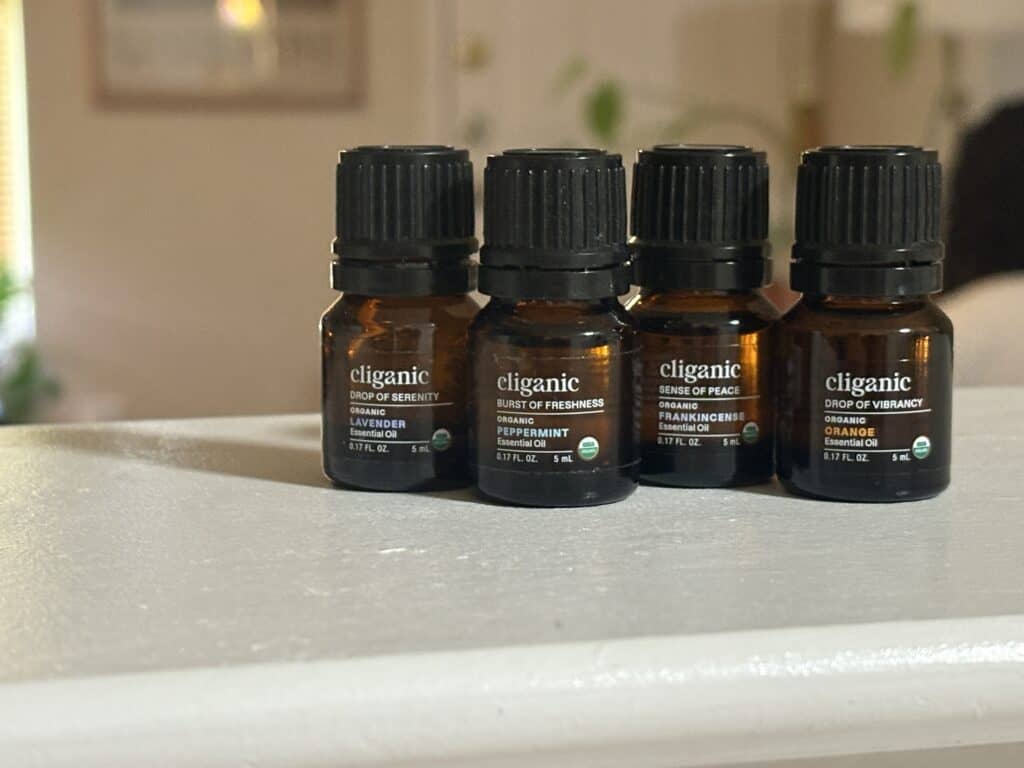
🌸 Essential oils aren’t just for making your home smell good — many actually have antibacterial, antiviral, and antifungal properties that make them great additions to natural cleaners. That said, not all oils are equally effective for cleaning. Check out our guide on the best essential oils for cleaning to see which ones actually work and how to use them safely.
💧 Hydrogen peroxide acts as a natural bleaching agent and disinfectant without the harmful fumes of chlorine bleach. It’s particularly effective for whitening and sanitizing.
🫧 Washing soda (sodium carbonate) is stronger than baking soda and excellent for heavy-duty cleaning tasks as well as boosting your laundry detergent
Check out our full list of natural cleaning materials to get a glimpse of everything you will need- from scrubbers to extra ingredients.
Creating Your Non-Toxic Cleaning Recipes
Once you have your basic ingredients and materials discussed above, you can create simple, effective cleaners for every area of your home just like we do.
Our collection of natural cleaning recipes includes formulas for:
- All-purpose spray cleaners that work on countertops, appliances, and most surfaces
- Glass and mirror cleaners that leave windows streak-free
- Bathroom scrubs that tackle soap scum and mineral deposits
- Floor cleaners suitable for various flooring types
- Kitchen degreasers that cut through baked-on grime
- And more!
Simple Laundry Tips
The laundry room is often the most chemical-heavy areas of the home, but it doesn’t have to be.
Through a lot of trial and error (I mean, a lot!) we’ve made our laundry routine as simple and clean as possible.
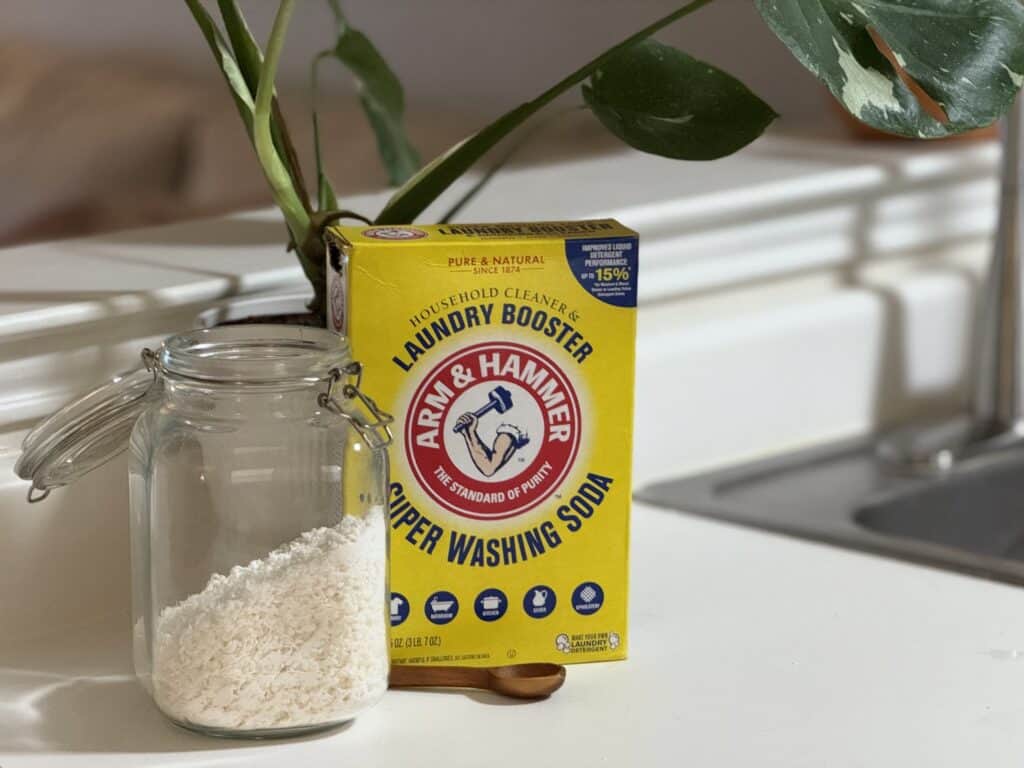
From DIY detergent to fabric softeners, there are natural alternatives for everything you use in the laundry room.
Here are some of the natural laundry hacks you can start with right now!
- Use less (much less!) detergent: most people use wayy too much detergent. You actually only need about 1-2 tbsp per load (no, that is not gross, it works).
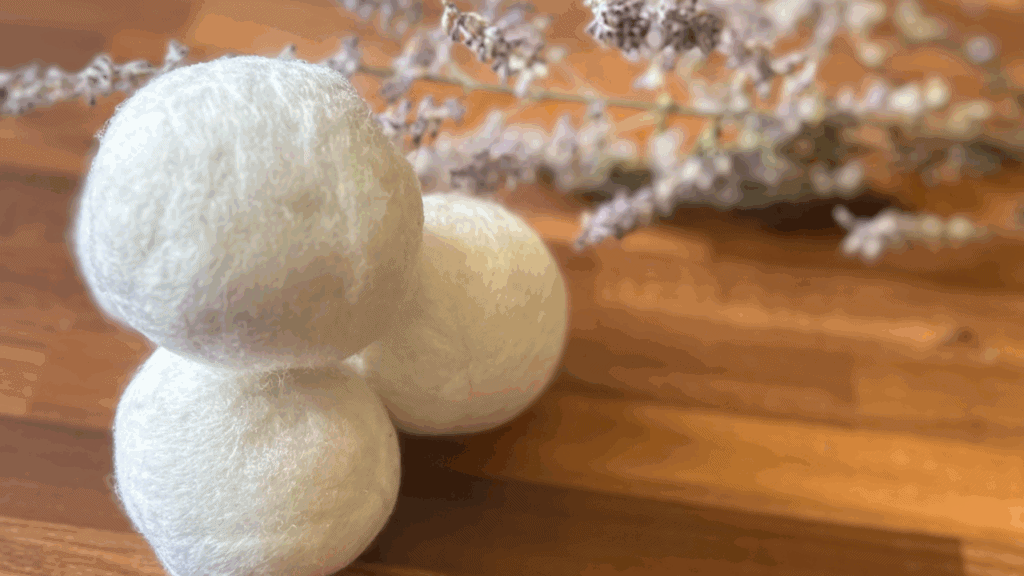
- Use wool dryer balls instead of dryer sheets to reduce static and drying time. They’re reusable for years and are super cost-effective.
- Add white vinegar to the rinse cycle as a natural fabric softener
- Line dry when possible to save energy and keep clothes naturally soft
Room-by-Room Non-Toxic Cleaning Guide
Kitchen Cleaning
The kitchen is one of the most important places to keep clean since it’s where you prep food. Instead of harsh chemicals, stick with our recipes that we linked to earlier in the article:
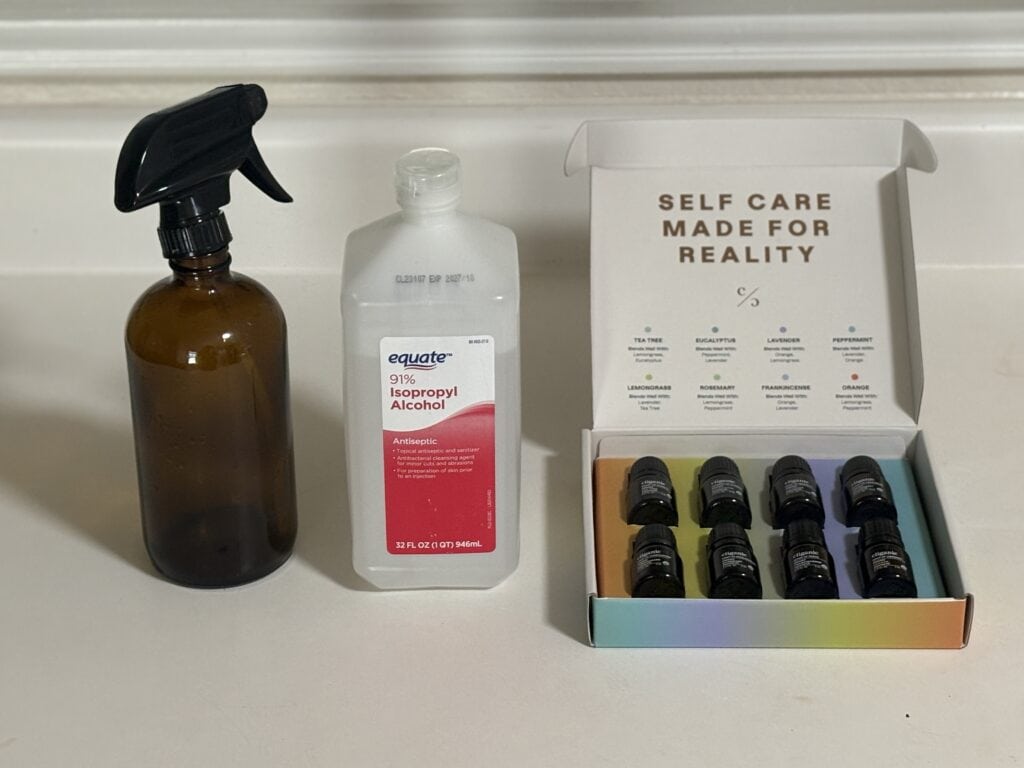
- All-Purpose Cleaner: Use our DIY all-purpose spray (castile soap, rubbing alcohol, and essential oils) for countertops and surfaces.
- Cutting Boards: Rub with lemon, sprinkle baking soda and salt, let sit, then scrub.
- Microwave: Steam-clean by heating a bowl of lemon water, then wipe.
- Drains: For maintenance, try our eco-friendly drain cleaning guide instead of chemical drain openers.
Unlike synthetic detergents, Castile soap is made by saponifying plant oils—a reaction that turns natural fats into cleansing soap and glycerin. The result is a biodegradable, non-toxic cleaner that’s gentle on your skin and the planet.
Bathroom Cleaning
Bathrooms collect soap scum, mildew, and grime, but these recipes still work:
- All-in-One Bathroom Cleaner: A mix of baking soda, vinegar, rubbing alcohol, and castile soap scrubs sinks, tubs, and toilets.
- Grout Cleaner: Blend baking soda, hydrogen peroxide, and castile soap, then scrub with an old toothbrush.
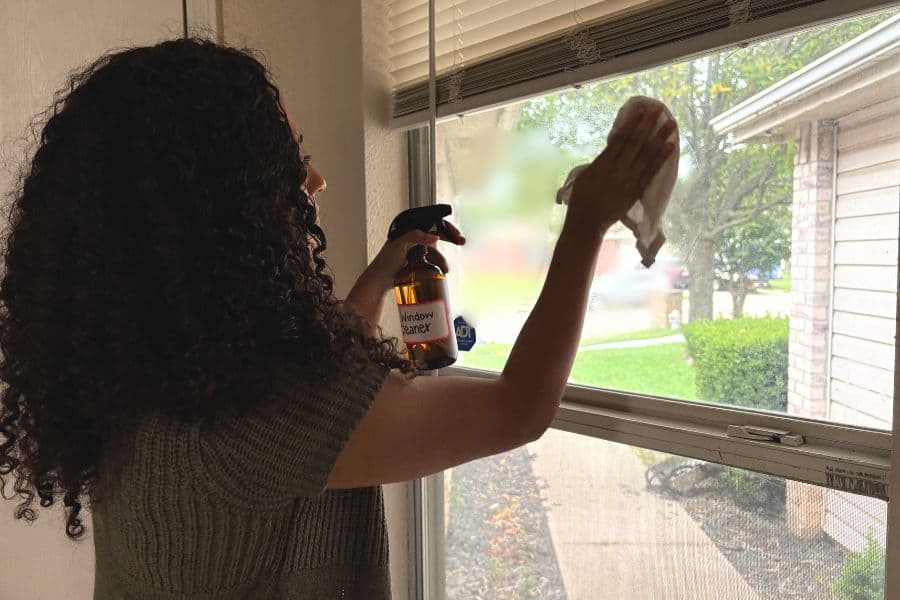
- Glass/Windows: Use our DIY vinegar-and-rubbing-alcohol spray for streak-free mirrors and shower doors.
Living Areas & Bedrooms
These areas mainly need dusting, deodorizing, and freshening:
- Dusting & Surfaces: Microfiber cloths dampened with water or a light vinegar spray work best.
- Carpets & Upholstery: Sprinkle baking soda (add crushed lavender for scent), let sit, then vacuum to deodorize.
- Air Freshening: Try our DIY air freshener spray with essential oils, baking soda, and water for a clean scent without synthetic fragrances.
Floors
Every flooring type can be cleaned naturally:
- Sustainable Swiffer Alternative: Attach reusable cloths or old t-shirts to a Swiffer for an eco-friendly mop pad.
- Tile & Vinyl: Use our DIY floor cleaner (water, rubbing alcohol, castile soap, and lemon essential oil).
- Hardwood: Stick to soap-based cleaners (like diluted castile soap) and avoid excess water.
But Do They Work?
Do These Cleaners Actually Work?
This is one of the most common questions people have when considering the switch.
The short answer is yes—when used correctly, natural cleaners are highly effective.
Are They Better Than Regular Cleaning Products?
“Better” depends on your priorities. If you’re looking at cleaning effectiveness alone, conventional is almost always going to be better at cleaning.
However, if you aren’t dealing with extreme messes or industrial-level cleaning, natural cleaners are more than effective enough for everyday use.
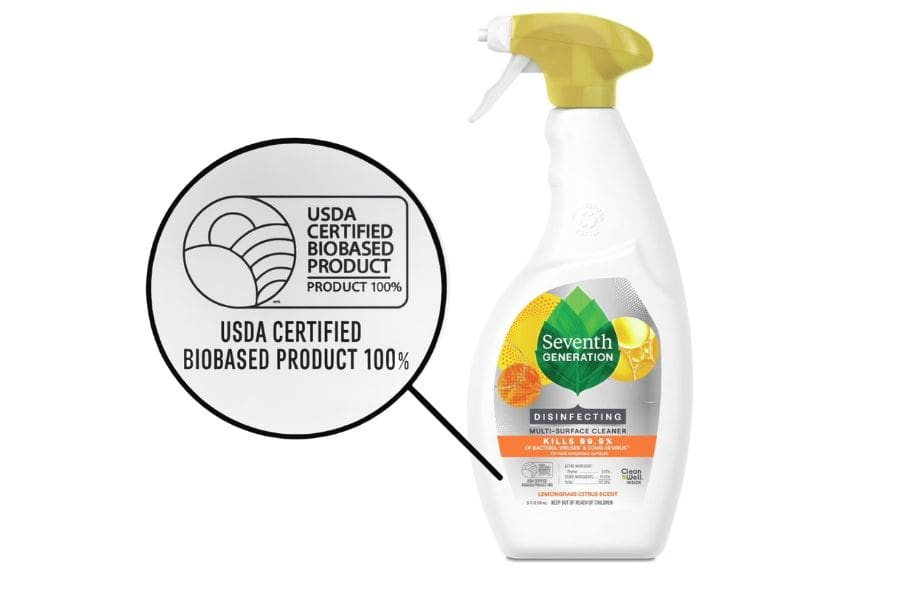
They get the job done while avoiding harsh chemicals that can irritate your skin and lungs or pollute your home’s air quality.
In most households, the trade-off is worth it: slightly less “power” in exchange for a much safer, healthier environment.
Making the Transition: A Practical Approach
Making this switch isn’t going to happen overnight (or shouldn’t).
In fact, a gradual transition often leads to more sustainable long-term habits.
Our guide on transitioning/steps to a toxic free home provides a realistic roadmap for making changes like this at your own pace.
Here are some quick tips for getting started:
- Start with one room or product category. Don’t try to overhaul your entire cleaning routine at once. Pick one area, like bathroom cleaning or laundry, and perfect your new clean routine there before moving on.
- Use up what you have (with exceptions). While you don’t need to immediately throw out all your conventional cleaners, do dispose of anything extremely toxic or irritating. Finish using milder products while gradually replacing them with natural alternatives.
- Invest in quality tools. Good microfiber cloths, spray bottles, and scrub brushes make natural cleaning more effective and enjoyable. Quality tools often mean you need fewer chemical boosters.
- Keep it simple. You don’t need 20 different cleaners! Most homes can be thoroughly cleaned with just 3-5 natural products or DIY recipes we showed you.
- Be patient with yourself. It takes time to learn new techniques and find what works best for your home. Don’t get discouraged if something doesn’t work perfectly the first time.
Studies have found that indoor air can be up to five times more polluted than outdoor air, largely due to conventional cleaning and fragrance products. Switching to natural cleaners helps lower VOC levels and keeps your home’s air safer for your family — especially kids and pets.
The Long-Term Benefits
Beyond the immediate benefits of reducing exposure to toxic cleaners, we’ve found a bunch more benefits of this approach to cleaning:
- Financial savings: Buying a few basic ingredients is MUCH cheaper than stocking up on dozens of “specialized” cleaners — most of which do the same thing. One simple DIY mix can usually replace an entire shelf of products.
- Less clutter: Fewer bottles under the sink means more storage space
- Environmental impact: Natural cleaners break down safer than regular ones and don’t pollute waterways with such toxic chemicals
- Empowerment: Knowing exactly what’s in your cleaning products and being able to make them yourself is super satisfying! It’s given us much more of a sense of control.
- Better indoor air quality: Natural cleaners don’t off-gas harmful chemicals which makes your home’s air cleaner and fresher
Small Changes, Big Impact
Remember, making the switch to a more natural cleaning routine isn’t about perfection—it’s about progress. Every conventional cleaner you replace with a natural alternative is a step in the right direction.
In a nutshell, here’s the approach to take:
- Start with the basics: Check out our natural cleaning materials guide to get all the ingredients and tools you’ll need to begin.
- Mix your first recipe: Try one of the DIY cleaners we shared above—whether it’s an all-purpose spray, a bathroom scrub, or a floor cleaner.
- Build your routine: As you get comfortable, expand to other recipes and explore the specific techniques and tips throughout our full non-toxic cleaning series.
Your home can be both clean and safe—you don’t have to choose between the two!
Thanks for reading!