Is Stain Resistant Fabric Toxic? What to Know Before You Buy

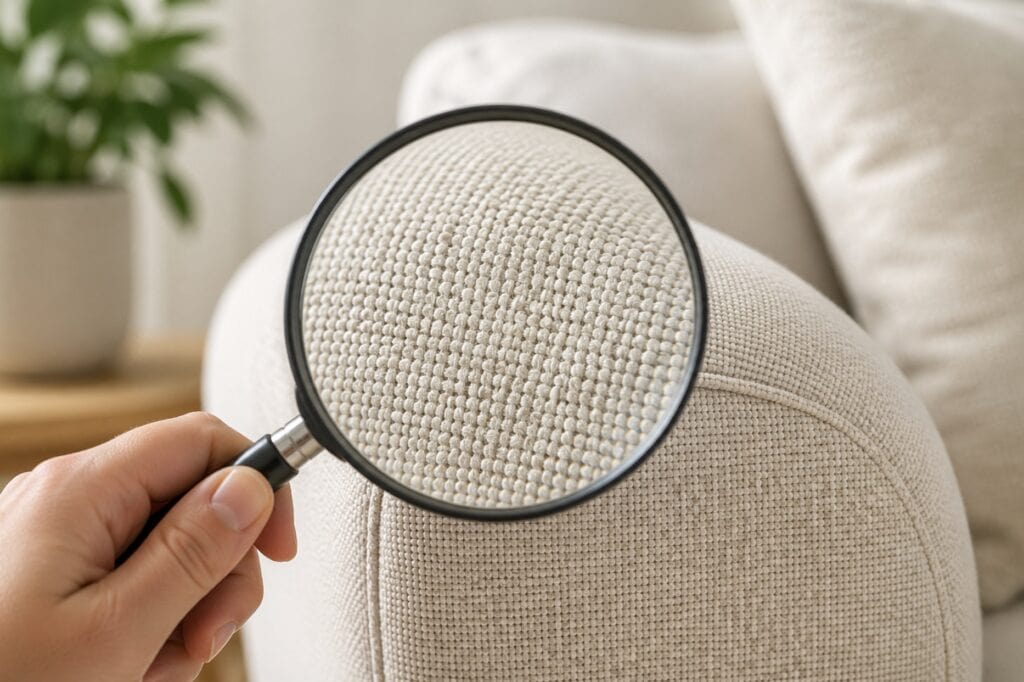
Stain-resistant fabric can be useful in busy homes, but it is worth looking more closely at what gives it that spill-repelling finish.
Some fabric treatments add chemicals that release into indoor air, and the EPA notes that certain everyday products can affect indoor air quality through compounds such as VOCs in the home environment.
In this article, we’ll look at when stain-resistant fabric is more concerning, when it may be a lower-risk choice, and how to shop more carefully.
Stain-resistant fabric is not automatically toxic, but some treated versions use chemicals worth avoiding.
The main issue is usually the stain-resistant finish, not the fabric itself.
A stain-resistant label does not tell you whether the product is PFAS-free, low-VOC, or third-party certified.
When It’s a Concern

Stain-resistant fabric becomes a bigger issue when the stain resistance comes from an added chemical finish, not from the fiber or weave itself.
That is common in upholstery marketed as spill-proof, easy-clean, or performance fabric.
Be more careful when a brand does not explain how the fabric is treated. The risk is harder to judge when the label says “stain resistant” but gives no details about coatings, finishes, or testing.
This matters most in a few situations:
- The fabric uses PFAS-based repellents. These chemicals have been used to repel water and stains. They also break down very slowly and can build up in dust, water, and the body over time. The National Institute of Environmental Health Sciences says research has linked some PFAS exposures to immune effects, higher cholesterol, and other health problems.
- The fabric has a strong chemical smell when new. That often points to added finishes releasing VOCs into indoor air.
- The product is used every day. A treated sofa, dining chair, or headboard creates more routine indoor contact than a rarely used accent piece.
- Kids or sensitive adults use it often. Babies, toddlers, and people with asthma or chemical sensitivity usually spend more time close to furniture surfaces and indoor dust.
New fabric smell often comes from VOCs releasing into the air. The smell itself is not a full safety test, but it does tell you chemicals are off-gassing.
Some newer fabrics are labeled PFAS-free, which is better than older stain-repellent chemistry. But that label does not tell you everything.
The fabric may still use other finishes, and the brand may still leave out VOC testing or full material details.
If a fabric has a strong odor, let it air out before heavy use and keep windows open during the first few days.
What Drives the Risk

PFAS and Repellent Finishes
Some stain-resistant fabrics have used PFAS to make spills bead up instead of soak in. These chemicals are used because they resist water, oil, and dirt very well.
That same durability is the problem. PFAS break down very slowly, so they can stay in the environment and in the body for a long time.
PFAS are discussed so often because they do not break down easily. That means they can stick around long after the original fabric treatment is applied.
The National Institute of Environmental Health Sciences says PFAS exposure has been tied to effects on cholesterol, the immune system, and other health outcomes.
A few practical takeaways:
- Older or vague stain-resistant claims deserve more scrutiny. PFAS-based treatments were used widely for years.
- “Water-resistant” and “stain-resistant” are not the same as “PFAS-free.” A product can repel spills and still use chemistry the brand does not explain.
- A PFAS-free label helps, but it does not finish the job. You still need to check emissions testing and fabric certifications.
VOCs and Replacement Chemicals
PFAS are not the only issue. Some stain-resistant finishes also release VOCs into indoor air, especially when the product is new.
Replacement chemicals add another layer. Some brands have moved away from older PFAS treatments, which is a real improvement.
PFAS-free removes one concern, but other finishes may still be used. The replacement may still use other repellent coatings that the company does not fully explain.
That is why the safest shortcut is not to chase buzzwords. Look for clear disclosure, low-emissions testing, and fewer added surface treatments.
Key Takeaway: A PFAS-free label solves one problem, but it does not tell you the whole story.
Lower and Higher Concern Choices

Not all stain-resistant fabrics are the same. The better question is whether the fabric relies on a heavy chemical finish or on the material itself.
Usually a better bet:
- Untreated cotton, linen, or wool
- Tightly woven fabrics that resist spills because of construction, not a surface coating
- Slipcovered furniture you can wash instead of chemically treating
- Products with clear disclosure about materials and finishes
Be more careful with:
- Mystery “performance fabrics” with no details about treatment
- Synthetic upholstery sold mainly on stain resistance
- Products with a strong chemical odor
- Marketing that says easy-clean or spill-proof but does not explain how it works
When two fabrics look similar, choose the one with clearer material details and fewer treatment claims.
Synthetic fabrics are not automatically worse. Some are made without PFAS and come with strong emissions testing.
A simple rule helps here:
- Best case: untreated or minimally treated fabric
- Middle ground: synthetic fabric with clear testing and disclosure
- Hardest to trust: stain-resistant fabric with vague claims and no certifications
Performance is the tradeoff. An untreated cotton sofa may stain faster than a coated synthetic one. But it is also less likely to depend on a chemical finish to do its job.
REAL-LIFE EXAMPLE

You are shopping for a sofa and compare one labeled “100% cotton slipcover” with another labeled “performance fabric” and nothing else. The cotton option tells you the fabric itself is straightforward, while the performance label only tells you it resists spills in some way. You still need to check whether the performance fabric is PFAS-free and whether the brand shares emissions testing or certifications.
How to Choose Safer Fabric

Labels Worth Looking For
Start with labels that show emissions and material safety.
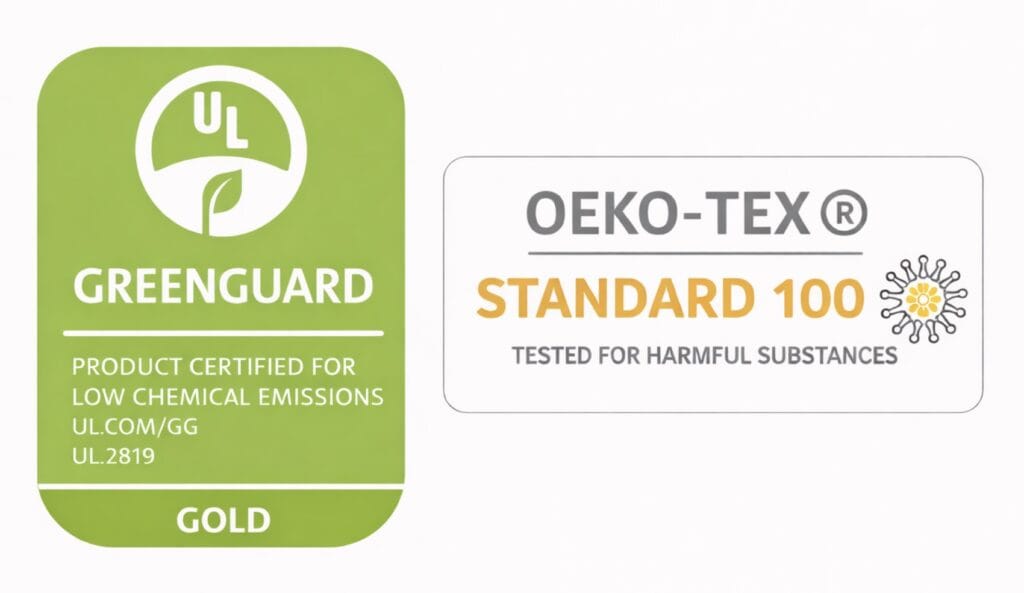
GREENGUARD Gold is useful for indoor air.
UL says this certification sets stricter limits for chemical emissions, including VOCs, and is designed for places where sensitive groups spend time, such as homes, schools, and healthcare settings.
OEKO-TEX STANDARD 100 is useful for the textile itself.
OEKO-TEX says certified items are tested for harmful substances, and the testing covers every component of the product, from the fabric to threads and accessories.
These labels help, but they do different jobs:
- GREENGUARD Gold focuses on chemical emissions into indoor air
- OEKO-TEX STANDARD 100 focuses on harmful substances in the textile
- A product with both gives you more information than a product with only one
At The Goodness Well, we look for the simplest material with the clearest testing first.
Fabric is only one part of the equation. The foam, adhesives, frame materials, flame retardants, and overall chemical emissions can also affect a furniture piece’s safety profile, especially when shopping for a non-toxic couch.
What to Ask Before Buying
A few direct questions can save a lot of guesswork.
Ask the brand:
- Is the fabric treated for stain resistance?
- Is it PFAS-free?
- Is the stain resistance built into the weave, or added as a finish?
- Has the product been tested for VOC emissions?
- Does it have GREENGUARD Gold, OEKO-TEX, or both?
- Can you share a spec sheet or certification link?
Ask for a product page, certificate, or spec sheet. If the brand cannot show one, move on.
The last question matters more than it seems. A real company should be able to point you to a product page, certificate, or testing document. If the answer is vague, skip it.
You do not need a perfect product. You need enough information to avoid mystery coatings, strong chemical odors, and unsupported marketing claims.
Key Takeaway: Clear disclosure makes safer fabric choices much easier.
Conclusion
Stain-resistant fabric is not automatically toxic, but it is worth a closer look when the brand relies on chemical treatments and does not clearly explain them.
The biggest difference usually comes down to how the fabric gets its stain resistance, not just the label on the tag.
You do not need to avoid every treated fabric to make a better choice.
Clear disclosure, fewer added finishes, and solid certifications can help you choose something that works for your home without adding unnecessary guesswork.