The 5 Best Air Purifiers For a Non-Toxic Home (Reviewed)


Dust, pollen, smoke, and other stuff floating around your home can all affect the air you breathe. But finding a good air purifier isn’t as simple as picking one that says it covers a large room.
The EPA explains that air purifiers work best as part of a bigger picture that also includes good ventilation and cutting down on pollution at the source.
For this guide, we focused on the things that actually matter for everyday use: how well each purifier cleans the air, whether it produces very little or no ozone, what materials it’s made with, and how much you can expect to spend on replacement filters over time.
The Goodness Well is reader-supported. Some links in this article may be affiliate links, but every recommendation follows our editorial standards and independent review process. Learn more about our editorial standards and review methodology.
What Should Your Purifier Remove?

Start with the pollutant you want to reduce. Dust and smoke particles call for a different filter than chemical gases and odors. No single air purifier removes every indoor pollutant, so a broad “cleans the air” claim tells you little about how a model will work in your home.
Dust, Pollen, and Smoke Particles
If you’re mainly trying to remove things like dust, pollen, pet dander, or smoke from the air, don’t just look at how many square feet the purifier claims to cover.
One of the more useful numbers to check is its clean air delivery rate (CADR), which gives you a better idea of how much filtered air the purifier can actually move through a room. Even a good HEPA filter won’t do much if the purifier isn’t powerful enough for the space.
If smoke is a big concern, pay particular attention to the smoke CADR, since smoke particles are especially small.
It also helps to think about the actual space the purifier will be cleaning. If your living room opens into the kitchen, for example, you may need to account for both areas rather than just the room where the purifier sits.
And keep in mind that many purifier ratings are based on the highest fan setting. If you plan to run yours on a quieter setting most of the time, it may clean the air a little more slowly.
These were some of the main things we looked at when comparing the air purifiers in this guide.
Chemical Gases and Odors
If you’re mainly trying to deal with things like paint fumes, cleaning-product smells, or other gases, a regular particle filter usually isn’t enough on its own. Look for a purifier with activated carbon or another filter material made to trap gases and odors.
The amount of carbon matters too. A purifier may advertise a carbon filter, but a very thin layer may not do much for strong or ongoing odors. Also, keep in mind that CADR only tells you about particle removal, not how well a purifier handles gases.
If gases are your main concern, look for brands that clearly explain what filter media they use and, ideally, provide testing for the specific chemical you’re worried about. It’s still best to reduce the source of the fumes and bring in clean outdoor air when possible, with an air purifier serving as an extra layer of help.
Does It Add Emissions?

A good air purifier should clean the air without creating extra pollution in the process. It also helps when brands are clear about what the purifier itself is made from, especially if you’re sensitive to that “new product” smell.
Ozone and Certification Claims
Try to avoid ozone generators in rooms where people are spending time. Some ionizers, plasma systems, and certain UV technologies can also produce ozone, so it’s worth checking how the purifier actually works before buying. The EPA notes that ozone can irritate the lungs.
Certifications can be helpful, but they do not all mean the same thing. A CARB listing mainly tells you the purifier meets ozone-emission limits. It does not tell you how well the purifier cleans the air or prove that the whole product is “non-toxic.”
AHAM Verifide is more useful for comparing things like particle-cleaning performance and room size, while ENERGY STAR is mostly about energy efficiency. So instead of assuming one badge covers everything, check what that specific certification is actually telling you about the model.
Housing and Filter Materials
If a brand tells you the purifier has a steel or plastic housing, that gives you some basic information about what the outer casing is made from. But that alone does not tell you whether the purifier gives off very low levels of chemicals or odors.
If a company uses broad terms like “non-toxic,” look for more details. Things like coatings, adhesives, filter treatments, and emissions testing can tell you a lot more than the material name alone.
That same idea guided how we described the products in this guide: we tried to separate what brands clearly disclose from broader safety claims that are harder to prove.
Off-gassing is basically when chemicals are released into the air from a material or product. Paint, glue, furniture, flooring, and other building materials can all release VOCs.
If a recent renovation or new product is what’s causing the smell, the best first step is usually to deal with the source and ventilate the space. An air purifier can help, but it should not be expected to completely solve the problem on its own.
What Will It Cost?

Compare the purifier plus its replacement filters, not just the purchase price. Check each filter’s price and stated replacement interval, then estimate a year of use. A lower-priced unit with frequent replacements may cost more to maintain than its sticker price suggests.
Also consider the setting you can comfortably run for long periods. A quiet setting is useful in a bedroom, but lower fan speeds filter less air. Choose a unit you can afford to maintain and run at a speed that suits the room.
The Best Air Purifiers for a Non-Toxic Home
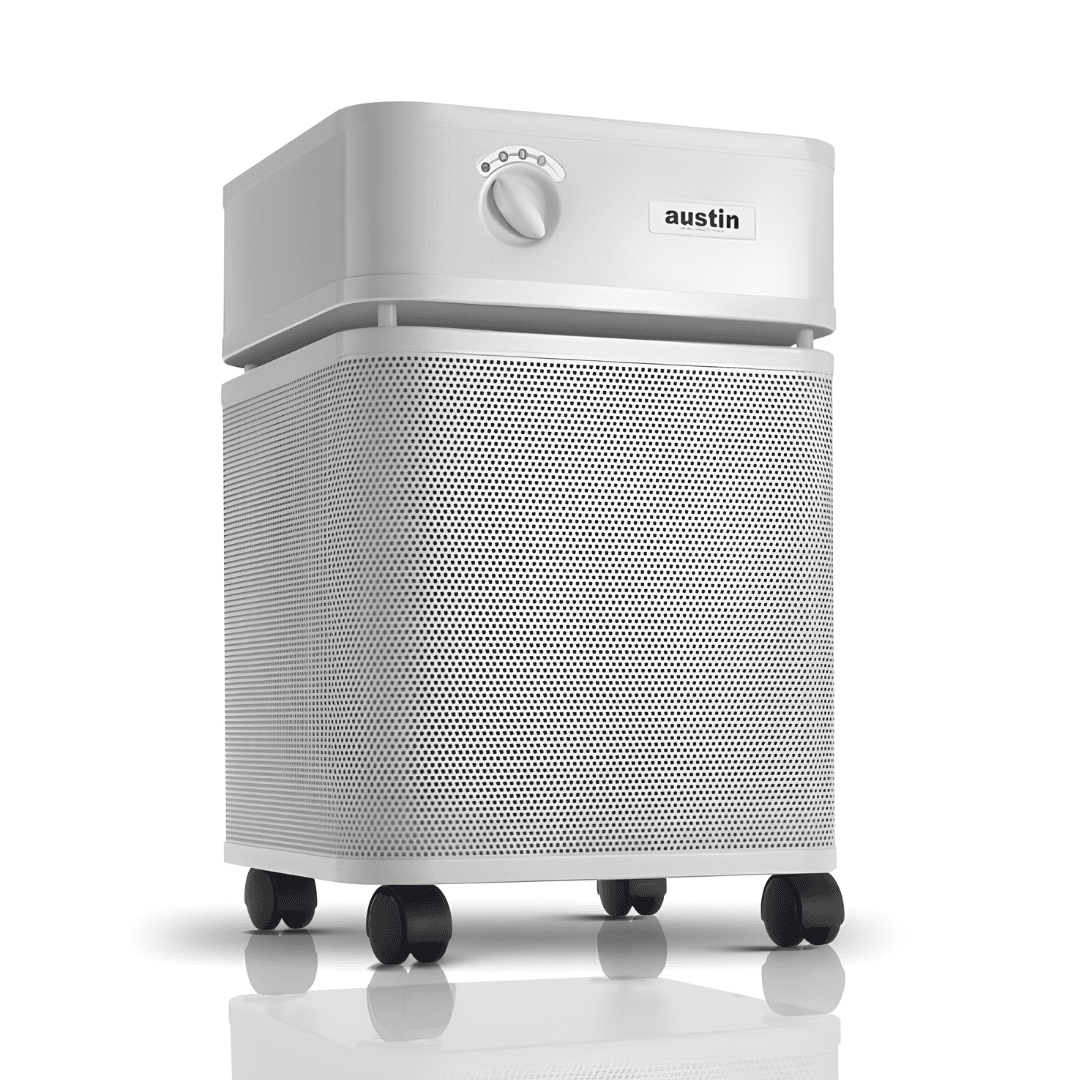
Austin Air
Austin Air is our top pick for people who want a simple, heavy-duty air purifier with a lot of filter material for both particles and odors.
The $845 HealthMate uses HEPA filtration along with activated carbon and mineral-based filter media, so it covers the main things most people are trying to remove from indoor air.
The $895 HealthMate Plus goes a step further with potassium iodide-treated carbon, which makes it worth looking at if things like chemical fumes or wildfire smoke are a bigger concern.
Both models have steel housings, powder-coated finishes, and filters designed to last up to five years with normal home use.
The main downside is that they’re heavy at 47 pounds each, and you won’t get smart features or app controls.
Product Highlights:
- Price: $345–$1,145
- Materials: Steel housing; HEPA, carbon, and mineral-based filter media
- Finish: Baked-on powder coat
- Functionality: Four-stage filtration, 360-degree air intake, three fan speeds
- Model Difference: HealthMate Plus adds potassium iodide-impregnated carbon for chemical and gas filtration
- Made In: Buffalo, New York
- Warranty: Five-year mechanical warranty and prorated five-year filter warranty, subject to the stated conditions
- Best For: Shoppers prioritizing durable construction and filtration for particles and odors
- Downside: High upfront price and heavy units
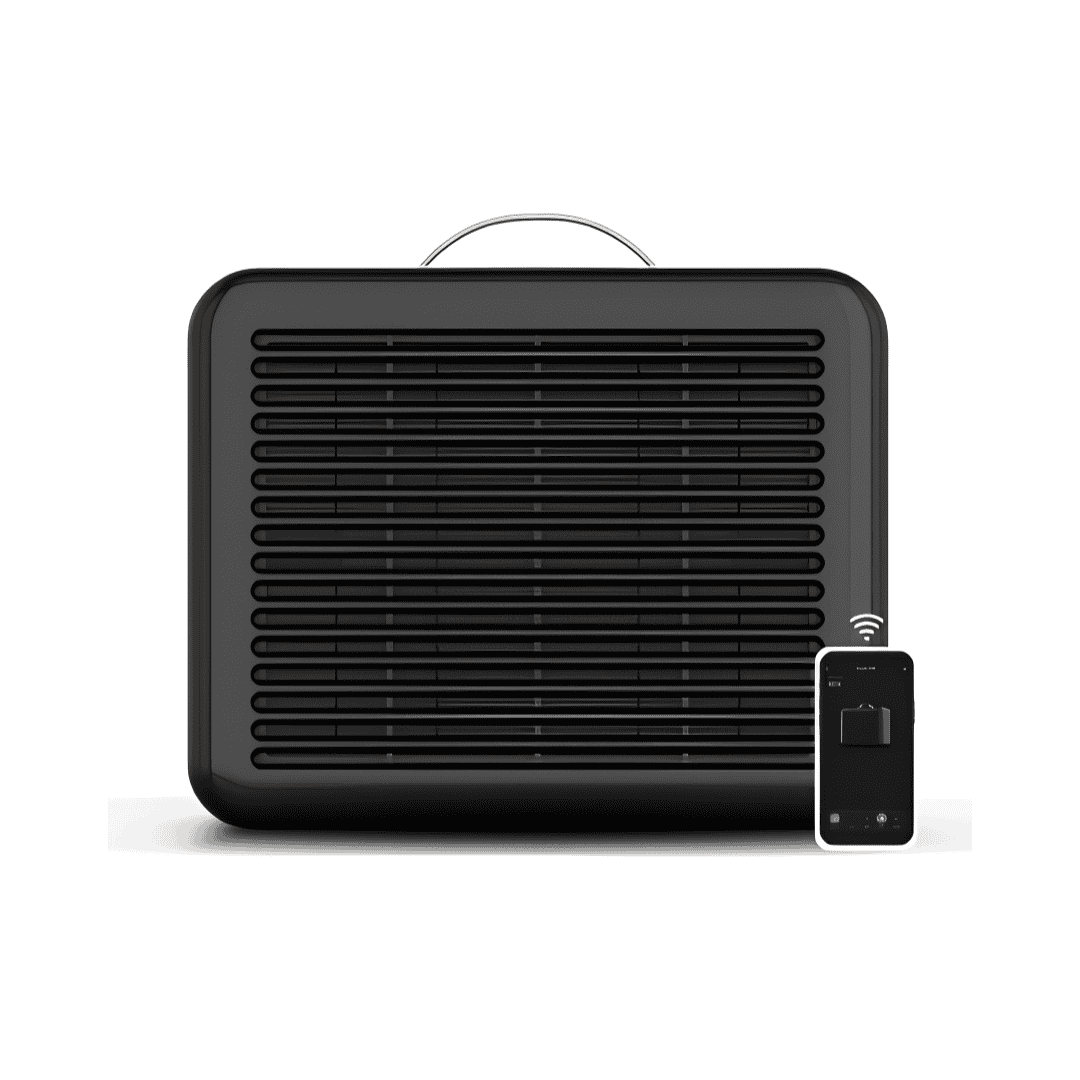
PuroAir
PuroAir is a more affordable option if you mainly want HEPA filtration without spending Austin Air prices.
The compact Lite starts at $69.97, while the 100i costs $109.99 and adds app and voice controls. Both use a pre-filter, HEPA filter, and activated carbon layer to help with particles and everyday odors.
The larger 240 also has an air-quality sensor and an automatic mode that adjusts the fan for you. It costs $199.99, but PuroAir recommends replacing the filter about every three months, so that’s something to factor into the long-term cost.
One thing we wish PuroAir disclosed more clearly is how much activated carbon is actually in the filters and what the purifier housing is made from. Because of that, we like these more for affordable particle filtration and convenient features than for someone specifically trying to tackle heavy odors or chemical fumes.
Product Highlights:
- Price: $69.97–$279.99
- Filtration: Pre-filter, HEPA, and activated carbon
- Functionality: App and voice controls on the 100i; air-quality sensor and auto mode on the 240
- Filter Replacement: About every 90 days for the 100i and 240
- Warranty: Two years, with registration specified for some models; lifetime purifier warranty requires an active filter subscription
- Best For: Affordable filtration for dust, pollen, pet dander, and smoke particles
- Downside: Frequent filter replacements add ongoing cost
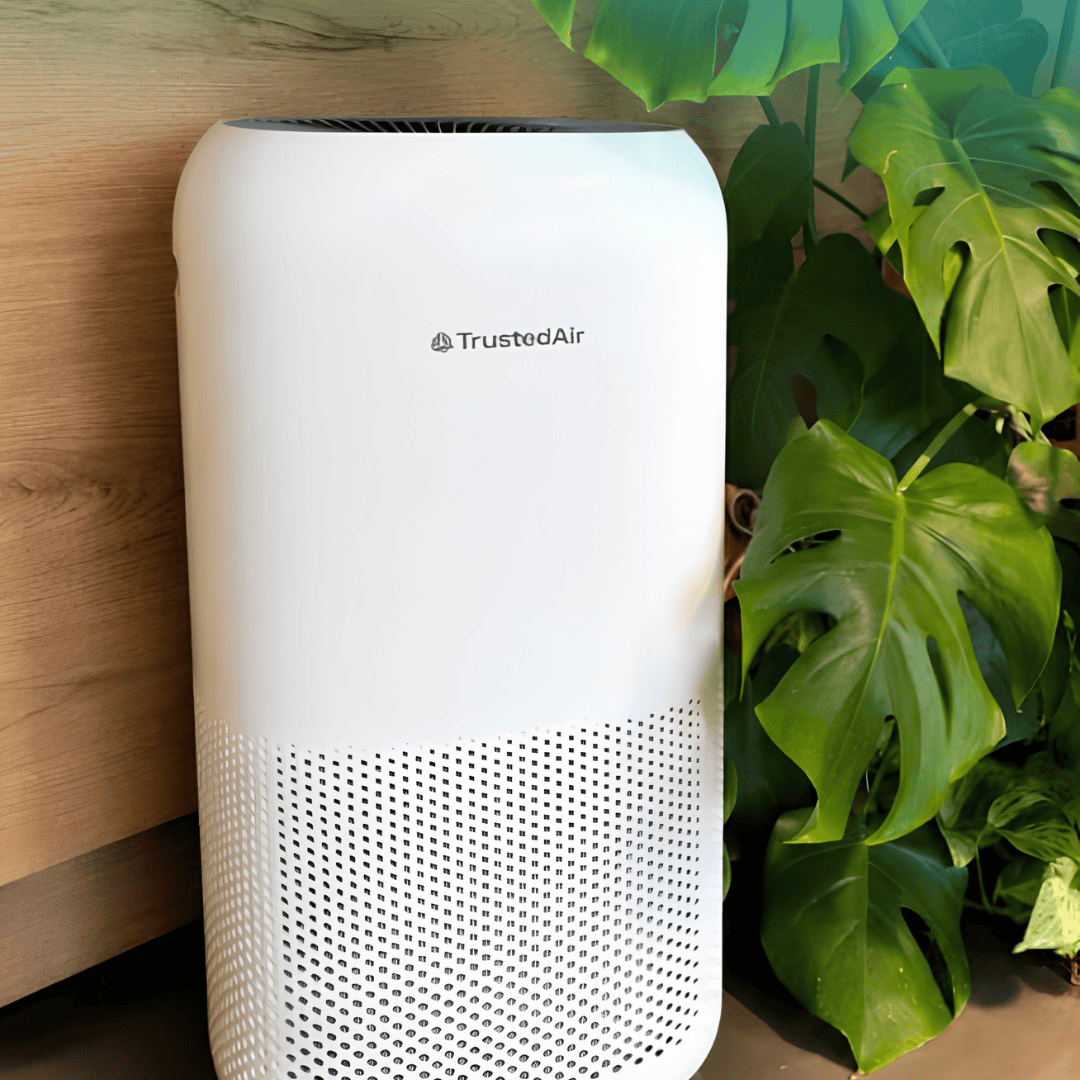
TrustedAir
TrustedAir TruFlow is our best value pick because it gives you strong particle filtration and some useful smart features without getting too expensive.
The TA-300 is listed at $199 on sale and has a smoke CADR of 265 CFM. TrustedAir says that works out to about 414 square feet when cleaning the room’s air 4.8 times per hour.
The filter combines a pre-filter, HEPA, and activated coconut carbon, and the built-in PM2.5 sensor can adjust the fan automatically as particle levels change. The app is optional, but it lets you check air quality, set schedules, and control the purifier from your phone.
Replacement filters are $39 and are expected to last about six to nine months. The main thing missing is more detail about how much carbon is used and what the outer housing is made from.
Product Highlights:
- Price: $199 sale price; $249 regular price
- Filtration: Pre-filter, HEPA, and activated coconut carbon
- Performance: 265 CFM smoke CADR; 414 sq ft at 4.8 air changes per hour
- Certifications: CARB listed; Intertek electrical safety testing and FCC certification stated
- Functionality: PM2.5 sensor, auto mode, optional app, sleep mode, and child lock
- Filter Cost: $39 every six to nine months, as listed
- Best For: Smart controls and published cleaning performance at a moderate price
- Downside: Carbon quantity and housing materials are not disclosed
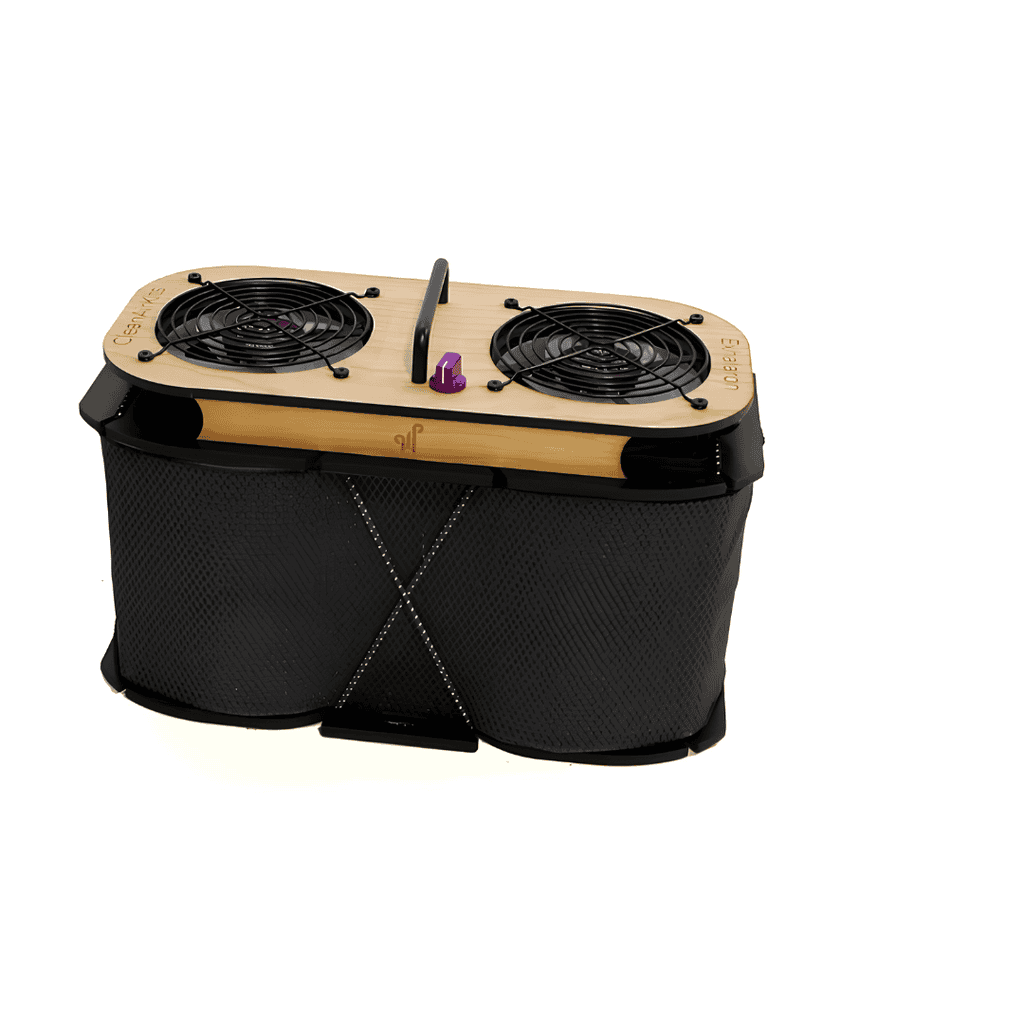
CleanAirKits
CleanAirKits does things a little differently from the typical air purifier. Instead of a traditional enclosed machine, most models use quiet computer-style fans to pull air through large, replaceable filters.
Most of the room-sized models use MERV 13 or MERV 14 filters for things like dust, allergens, and smoke particles, while the smaller Exhalaron uses a HEPA filter.
We also like that the brand publishes clean-air delivery test results for individual models and uses parts that can be replaced over time. That makes these especially interesting if you want something simple that you can maintain instead of replacing the whole purifier later.
Just pay attention to what you’re ordering, since some models arrive fully assembled while others are DIY kits. These are also mainly designed for particle filtration, so we wouldn’t choose one specifically for chemical fumes or strong odors based on the information provided.
Product Highlights:
- Price: $129–$434
- Materials: Wood or plastic enclosures, depending on model; replaceable fans and filters
- Filtration: Primarily MERV 13/14 on room models; HEPA on Exhalaron
- Functionality: Quiet, low-power operation; most room models run at one speed
- Certifications: UL 507 and FCC marks apply to specified fully assembled CoolerMaster-fan models, not every kit
- Made In: American-made enclosures; assembled and packaged in Missouri
- Best For: Particle filtration with repairable components and low power use
- Downside: Some models require assembly and do not target chemical gases
EnviroKlenz
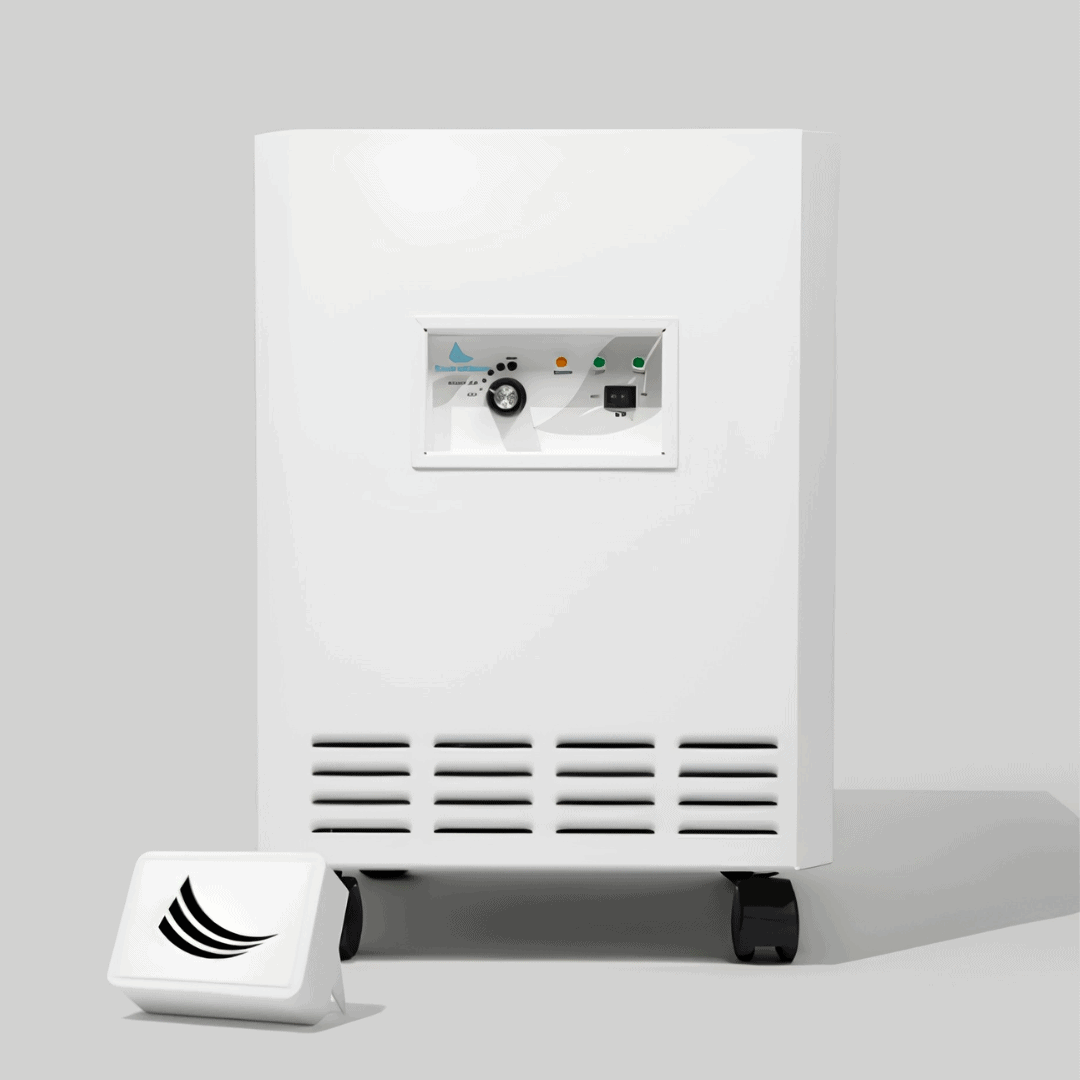
EnviroKlenz is the one we’d look at more closely if chemical odors and fumes are your main concern.
Its air systems use a mineral-based cartridge for gases and odors, along with a HEPA filter for airborne particles. That gives it a different setup from purifiers that mainly rely on HEPA with a thin carbon layer.
We also like that EnviroKlenz provides testing for specific chemicals instead of just making broad claims about removing “toxins.” For example, the brand shares chamber testing showing a reduction in hydrogen sulfide.
The downside is price. The standard Air System costs $748, so this is more of a specialty option than an everyday budget purifier. It’s also worth checking the exact model before ordering because the features and included filters vary across the lineup.
Product Highlights:
- Price: $748–$1,399
- Filtration: Mineral-based chemical filter and HEPA filtration
- Materials: Mineral-based filter media; housing materials not specified in the supplied information
- Functionality: Chemical odor and particle filtration; smart monitoring on select models
- Sustainability: Brand states its mineral technology and manufacturing follow its sustainability program
- Shipping / Returns: Free U.S. shipping; returns require an RMA within 30 days, with return transport costs paid by the customer
- Best For: Households especially concerned about chemical odors or fumes
- Downside: High upfront price