How to Cook With Stainless Steel Without Food Sticking

If you’ve ever tried to flip food in a stainless steel pan and felt it catch on the bottom, you’ve probably wondered what you could’ve done differently.
It took us a little practice to get the hang of cooking with our Caraway stainless steel skillet.
We’ll use a fried egg as our example.
Our photos show what to look for at each step, from warming the pan to lifting the egg and seeing what’s left behind.
1. Warm the empty pan over moderate heat
For frying or sautéing, start by warming the empty skillet over low to medium heat. Stainless steel doesn’t need to be on high for food to brown. A gradual preheat gives you more control, especially with delicate foods that cook quickly.
For the egg in these photos, we set our electric burner to 4.5 out of 10 and warmed the pan for about 2–3 minutes.
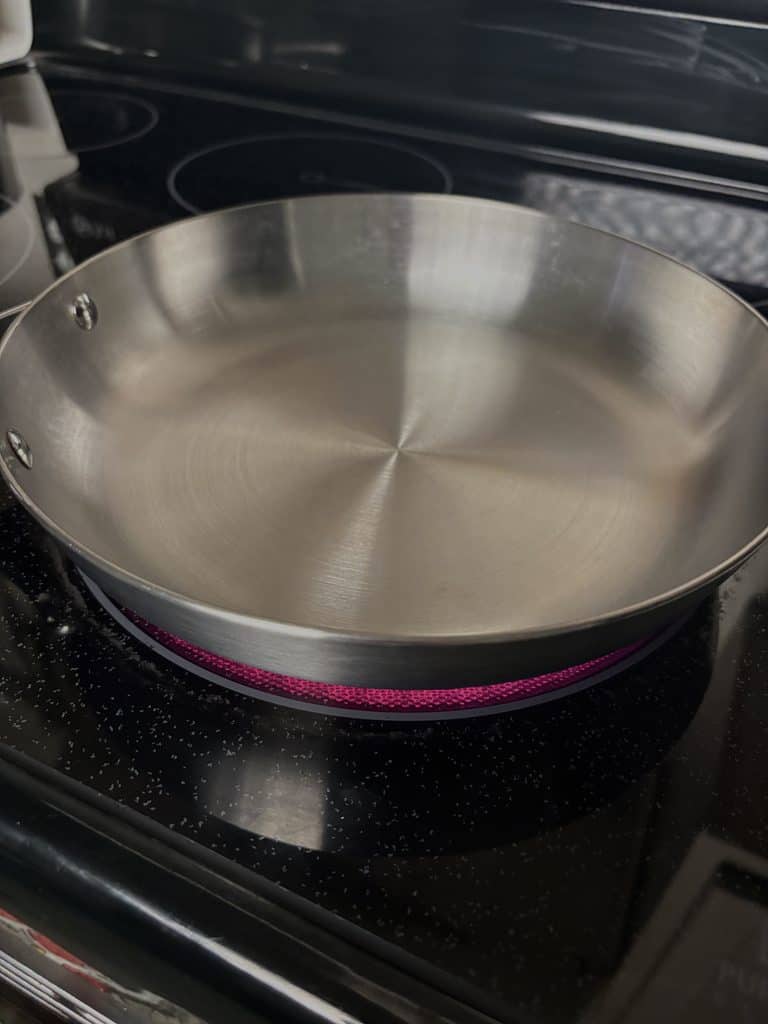
We usually just go by the time. That’s a starting point for our skillet and stove. A thinner pan or a different burner may heat up faster.
The heat you use from there depends on what you’re making.
We leave the burner at 4.5 for an egg because we want the white to set before the underside gets too dark.
2. Add oil and tilt the pan to spread it around
Once the pan is warm, we add olive oil. We usually use about a tablespoon, depending on what we’re cooking.
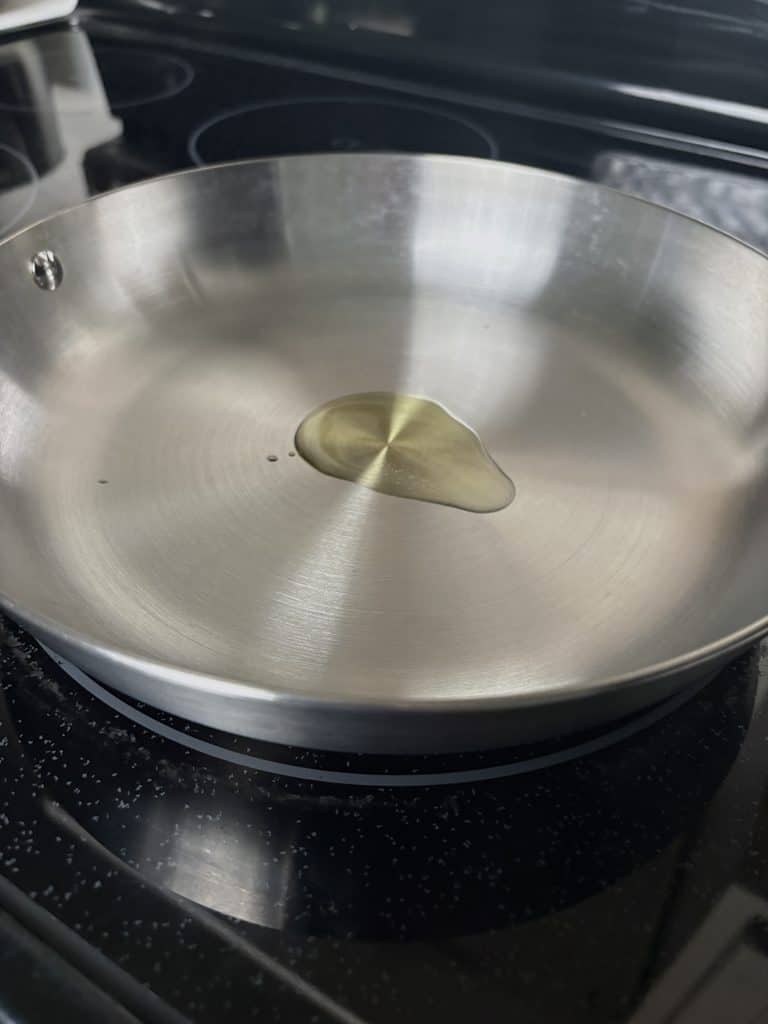
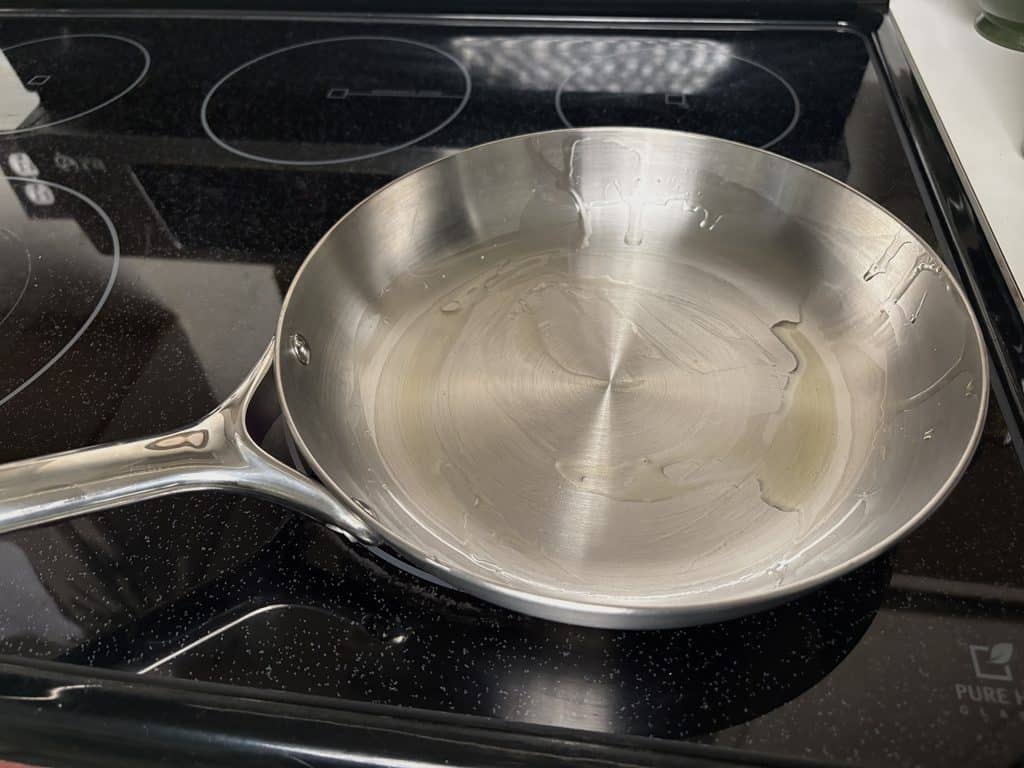
Tilt the skillet until a thin layer of oil covers the cooking surface. In a wide pan like ours, the egg white can easily spread beyond that first puddle of oil.
Egg whites can stick where they touch bare steel. That thin layer of oil helps keep the two surfaces apart.
3. Give the food time to cook before moving it
Once the food goes in, the first side needs some time against the pan.
We crack our eggs straight into the oiled pan.
In the photo below, the thin outer edge is already white and bubbling, but you can still see through some of the white near the yolk.
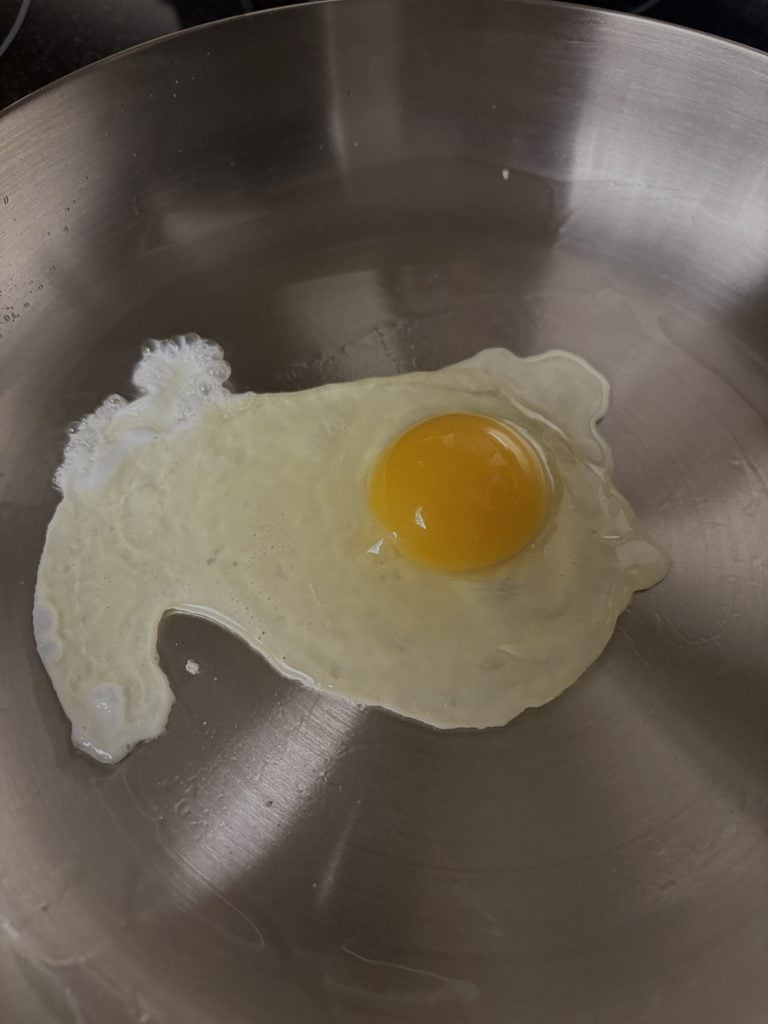
At this point, we leave it alone.
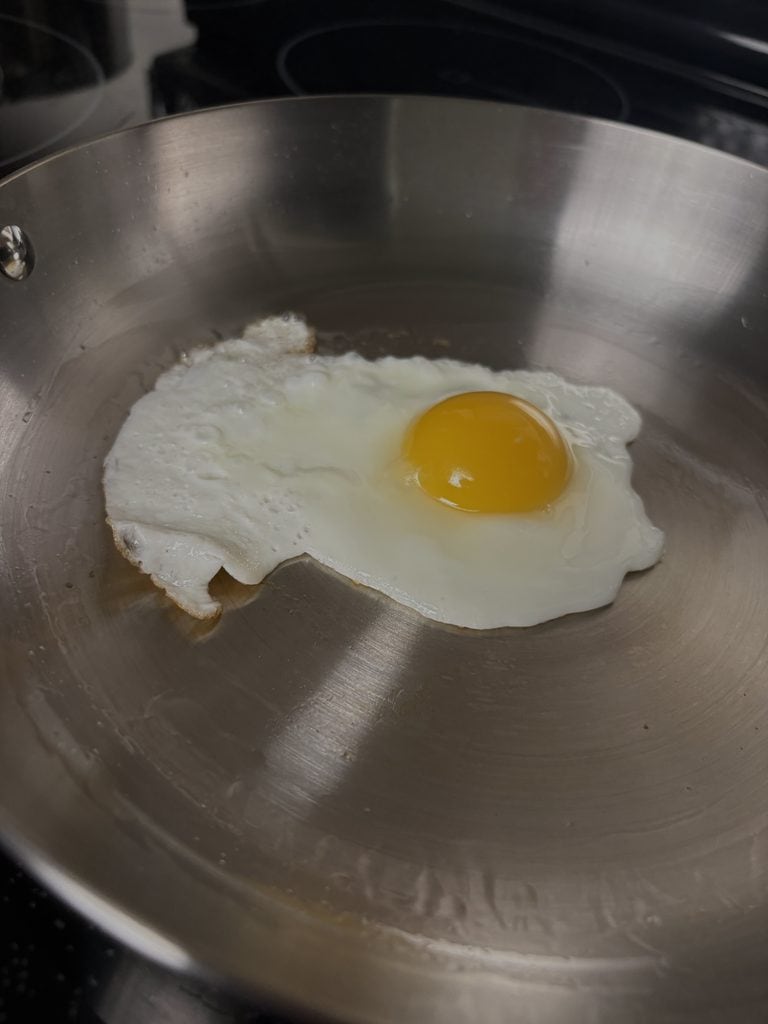
A little later, most of the white has turned opaque and the edge is beginning to brown. Now the egg holds together well enough for us to check underneath it.
4. Test one edge before you flip
Gently ease a spatula under one edge of the food. If it lifts easily, slide the spatula farther underneath and turn it.
If it’s still pale and holding on, give it a little longer. If it’s already getting darker than you want, ease the heat down. Simply waiting longer on the same high heat can take you from browned to burned.
Here’s what that test looked like with our egg.
We gently lifted one edge with a silicone spatula. You can see the golden underside coming away in one piece and the exposed steel beneath it.
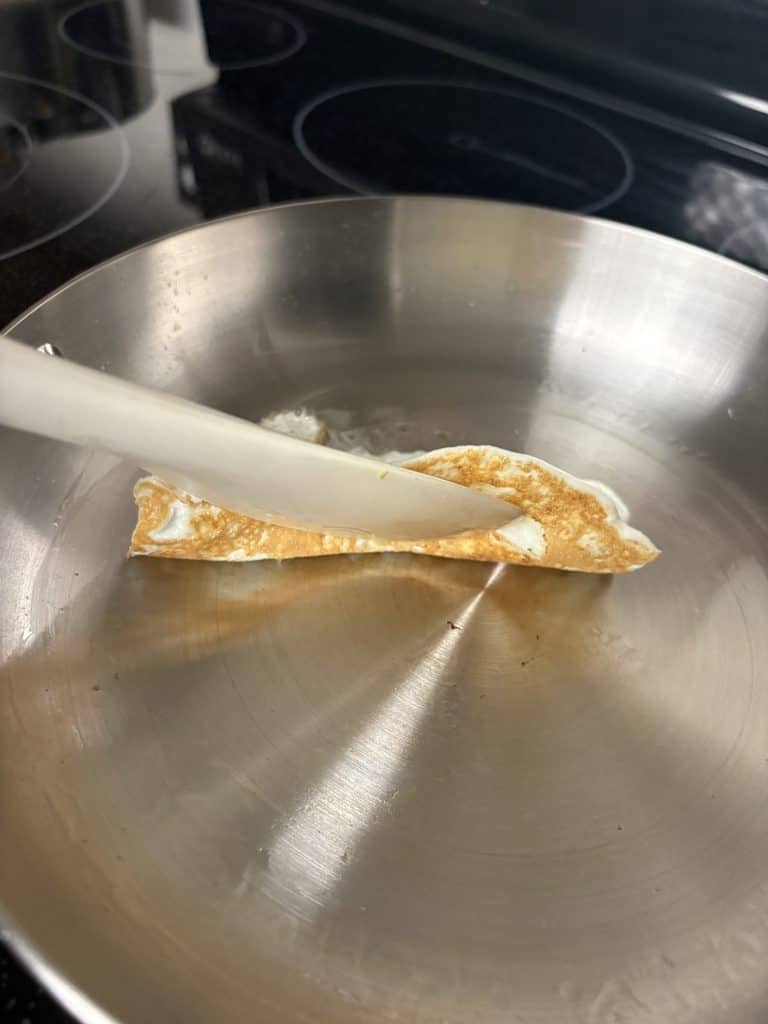
Once the edge lifted easily, we slid the spatula the rest of the way under and flipped it.
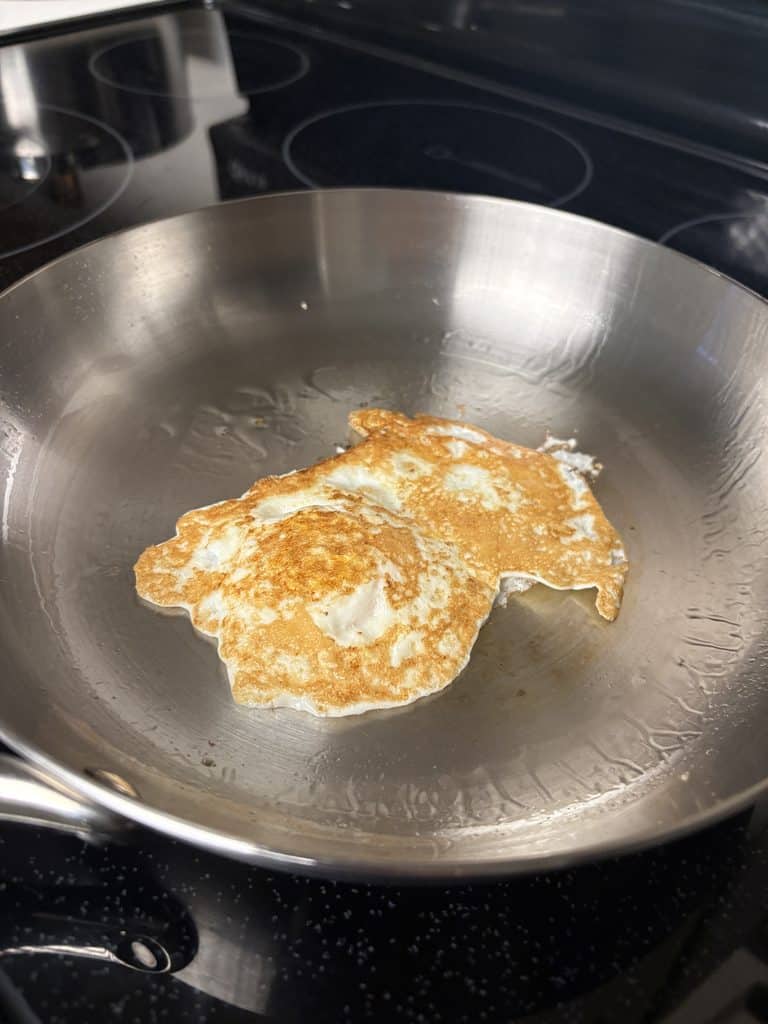
What if a little food stays behind?
Even when food lifts cleanly, stainless steel can have a few browned spots afterward. Here’s our pan right after we removed the egg. There’s a light brown mark and a few small bits, but most of the browned underside came out with the egg.
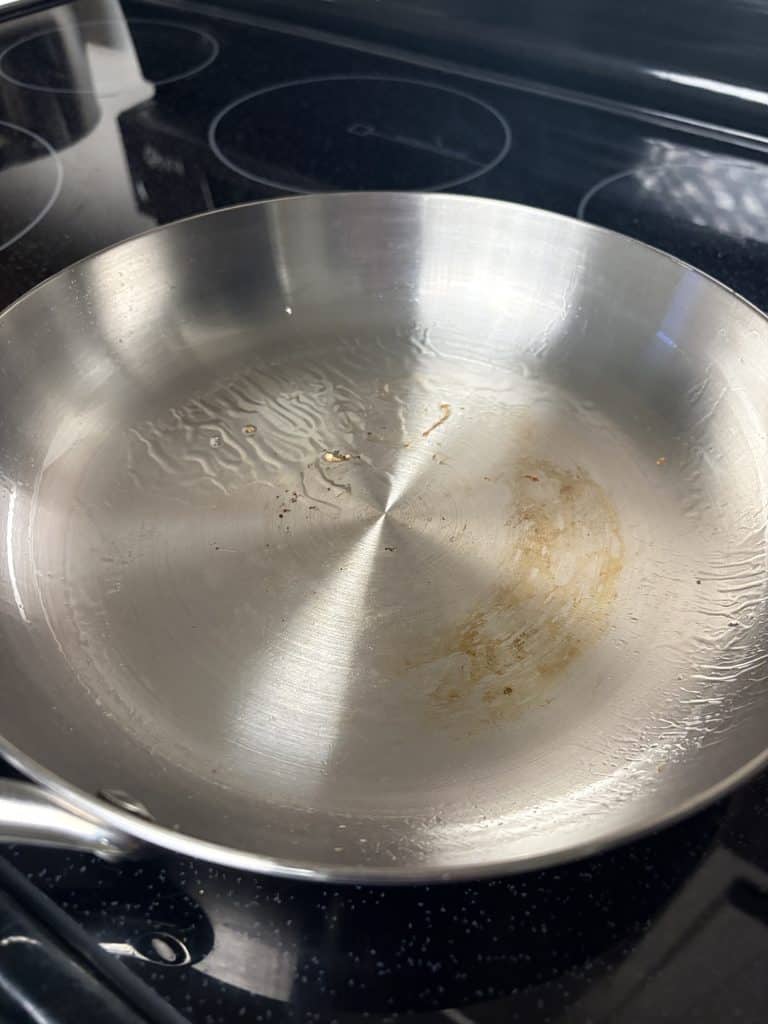
If you’re getting a whole layer of food stuck to the bottom, think back to when it happened. If one piece stuck while the others lifted, check whether the oil reached that part of the pan. If the food tore on the first turn, try waiting a little longer before moving it.
If food gets stuck, let the pan cool a bit, add enough water to cover the stuck-on spots, and simmer for a few minutes. The food will loosen and scrub off more easily.
And if the bottom scorched before the rest had time to cook, start with a lower burner setting next time.
Those clues are more useful than trying to find one heat setting that works for everything.