Is Article Furniture Non-Toxic? What You Need to Know

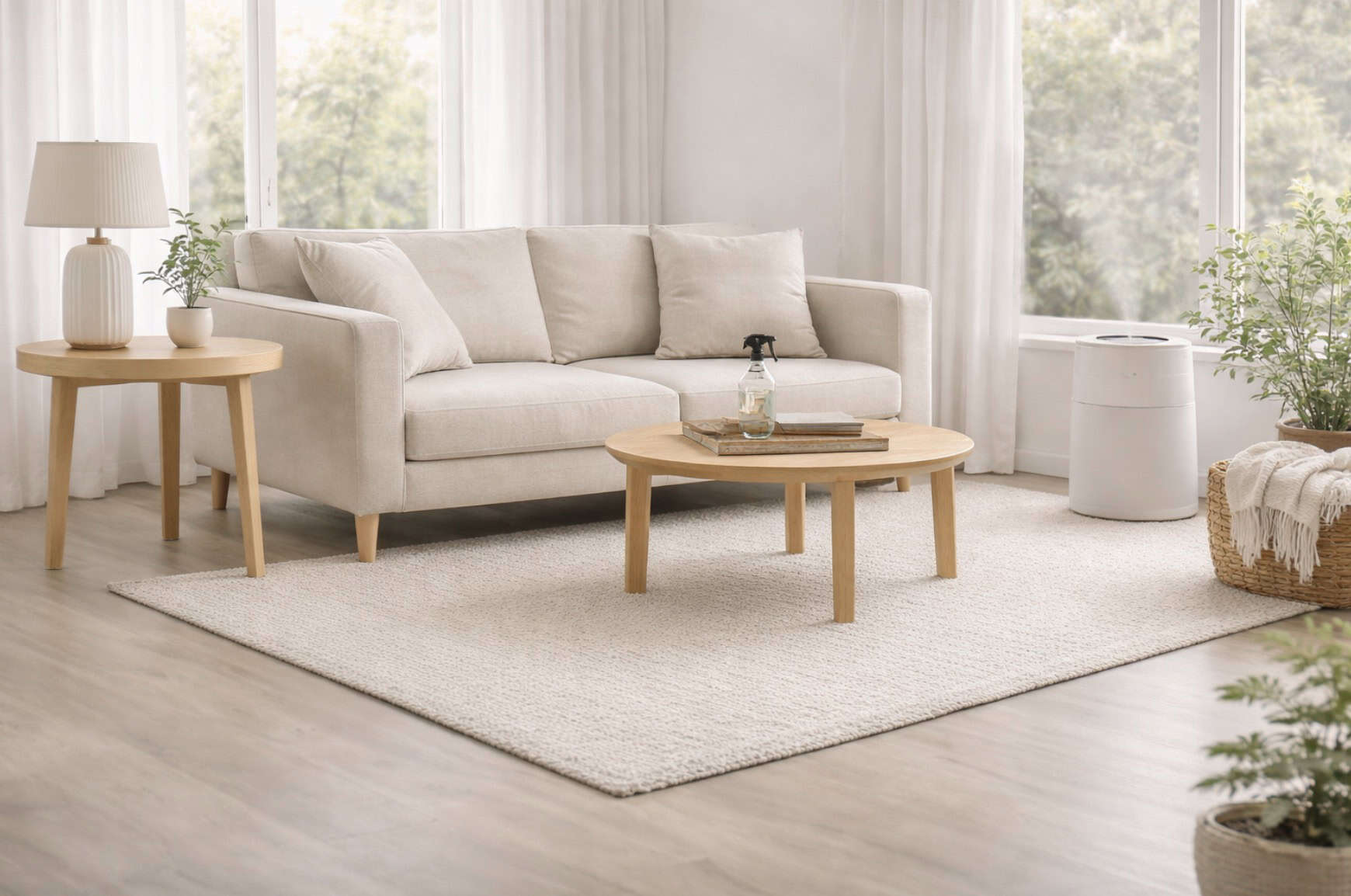
If you’ve ever shopped for modern furniture, you’ve probably come across Article Furniture.
They offer a wide range of stylish indoor and outdoor furniture that’s known for being affordable and design-forward.
But here’s the real question: Is Article Furniture actually non-toxic?
We wondered the same thing, so we dug into their materials, manufacturing details, and overall transparency to see what their furniture is really made of.
(And if you’re comparing brands, you can also check out our full breakdown on whether West Elm furniture is toxic.)
Let’s get into it.
No — Article Furniture is not considered a truly non-toxic furniture brand.
Many of their products use synthetic fabrics (like polyester and acrylic) and engineered wood materials that may contribute to VOC off-gassing and indoor air pollution. Article also lacks consistent transparency and widely recognized third-party certifications (like GREENGUARD) that are typically associated with safer, low-emission furniture.
Non-Toxic Furniture: What it is (and What it Isn’t)

When most people hear the phrase “non-toxic furniture,” they assume it simply means furniture that’s “natural” or “eco-friendly.”
But in reality, non-toxic furniture usually refers to furniture that is made with low-emission materials and avoids common chemicals that can negatively affect indoor air quality.
This matters because furniture isn’t just something you sit on — it’s something that sits in your home 24/7, often releasing small amounts of VOCs (volatile organic compounds) into the air over time.
In general, the most important things to look for are:
- Solid materials (like real wood or metal)
- Low-VOC finishes and glues
- Natural fabrics and foams
- Third-party certifications (when available)
Toxic vs Non-Toxic Furniture Materials
Here’s a simple breakdown of what “toxic” furniture is usually made of versus what you’ll typically see in safer, non-toxic furniture brands:
| Toxic (Most) Furniture Materials | Non-Toxic Furniture Materials |
|---|---|
| Engineered wood(Plywood, MDF, Particle Board) | Made from solid wood, recycled metal, bamboo |
| Polyfoam | Natural Latex Foam |
| Synthetic fabric(polyester, cotton treated with pesticides) | Organic fabric(cotton, wool, hemp, or linen) |
| Glues containing high levels of formaldehyde | Low-VOC or No-VOC Finishes and Glues |
| Chemical Flame Retardants | Plant-based Polishes and Waxes |
| Lead and Mercury in Paints | Paints made without lead |
| PVC and Other Plastic Components | No plastic use |
What Makes Article Furniture Potentially Toxic?
When evaluating whether a furniture brand is truly “non-toxic,” the biggest thing we look at is material transparency.
In other words: Does the company clearly disclose what their furniture is made of, and do they provide proof of low-emission materials?
With Article Furniture, many of their product pages include basic material information, but often leave out important details about foam composition, chemical treatments, and adhesive or finish emissions.
The “new furniture smell” is often caused by VOC off-gassing, which happens when chemicals from glues, finishes, foam, and engineered wood slowly release into the air.
This can make it difficult to verify whether a product is truly low-toxin.
Below are the main factors that may make Article Furniture a less ideal choice for non-toxic homes.
Synthetic Fabrics
Many Article furniture pieces use synthetic upholstery fabrics like polyester and acrylic. These materials are extremely common in conventional furniture, but they are typically petroleum-based and highly processed.
Synthetic fabrics may also contribute to:
- microplastic shedding into household dust over time
- irritation for individuals with chemical sensitivities
- increased exposure to unknown coatings or fabric treatments (if not disclosed)
Engineered Wood + VOC Off-Gassing
Another concern is Article’s use of engineered wood materials such as plywood and composite framing. Engineered woods are often manufactured using adhesives and resins that can release VOCs (volatile organic compounds) into indoor air.
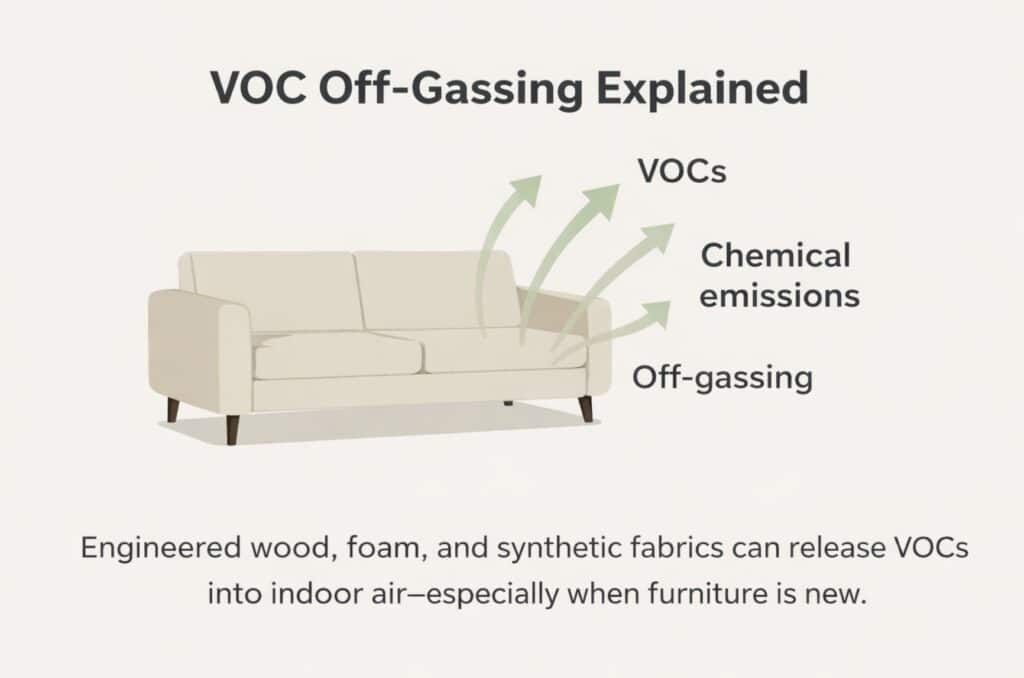
One of the most well-known VOCs associated with engineered wood products is formaldehyde, which is classified as a known human carcinogen.
While not all engineered wood is equally harmful, the main issue is that Article does not consistently provide enough detail to verify low-emission standards across their catalog.
Lack of Certifications
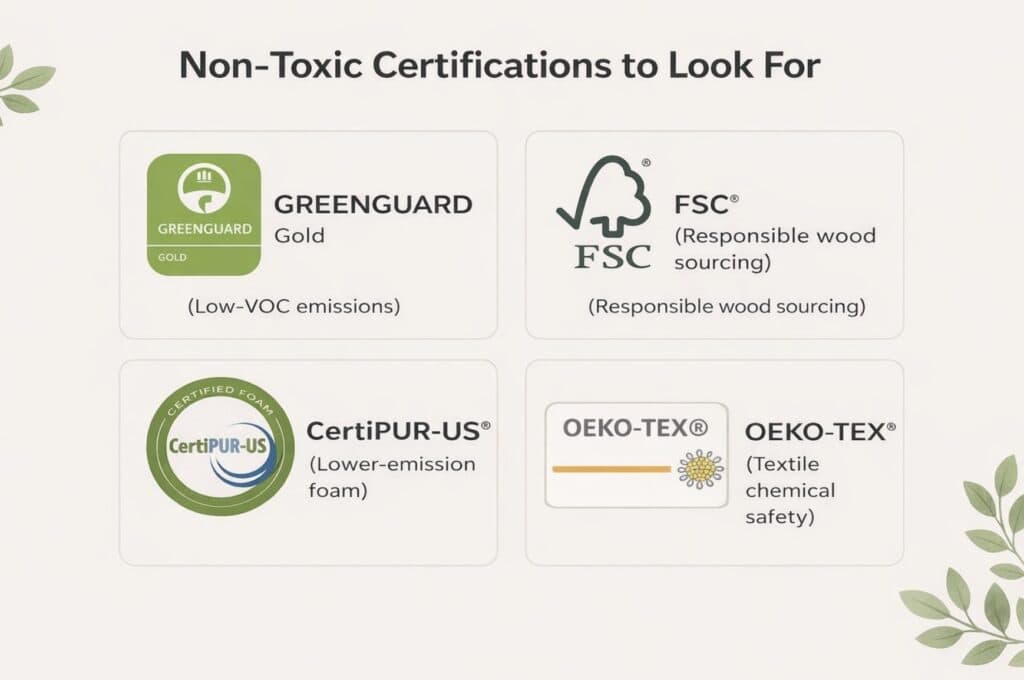
Truly non-toxic furniture brands often provide third-party certifications that help confirm safer materials and lower emissions. These certifications can include things like:
- GREENGUARD Gold (indoor air quality testing)
- FSC Certified wood (responsible sourcing)
- CertiPUR-US (lower-emission foam standards)
- OEKO-TEX (textile chemical testing)
Some companies also carry broader certifications like Certified B Corp (which Article does not), which evaluate a company’s overall social and environmental practices.
Article does not consistently list these certifications across their product lines, which is a major reason we don’t consider them a truly non-toxic furniture company.
Selected using material safety, certifications, and thorough research.

🏆 Best Choice
Made in the USA, Organic & sustainable materials, Transparent, supply-chain controlled

✅ Best Budget
Most Affordable, non-toxic, backed by certifications

⭐️ Top Quality
Made in the USA, certified organic materials, GREENGUARD Gold certified
Examples of Article Furniture Materials
Example #1: Sven Birch Ivory Sofa

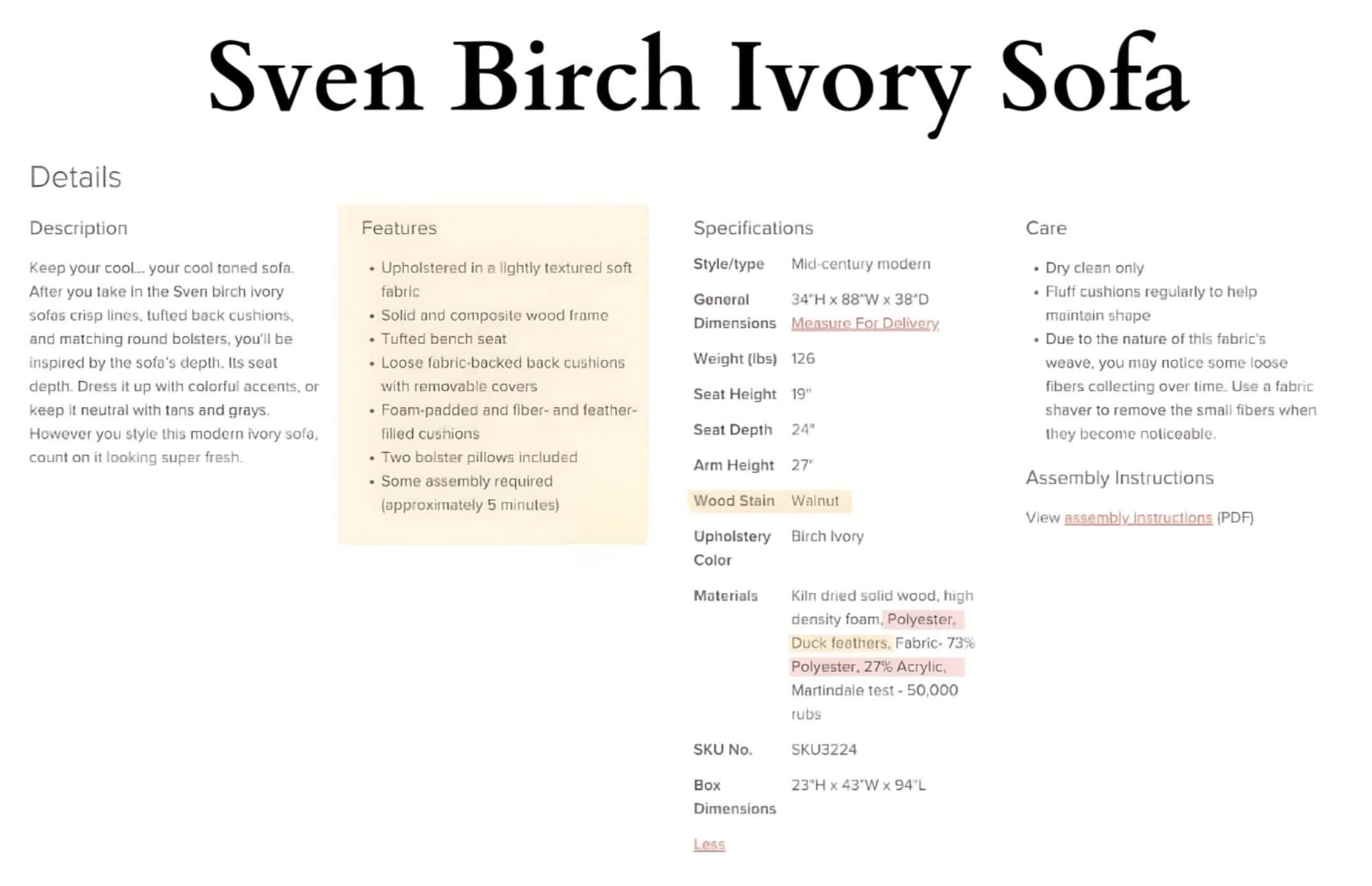
The Sven Birch Ivory Sofa is one of Article’s most popular couches and is marketed as a stylish, modern living room option.
However, after reviewing the materials listed on Article’s website, there are several red flags that may matter if you’re trying to reduce VOC exposure and avoid synthetic materials.
According to Article’s product specifications, this sofa includes:
- Polyester
- Acrylic
- Foam cushioning
- Solid + composite wood framing
Synthetic fabrics like polyester and acrylic are extremely common in conventional furniture, but they are not typically considered ideal for a truly non-toxic home.
If you’re shopping at Article, prioritize pieces made with solid wood frames and avoid upholstery blends that rely heavily on polyester or acrylic.
Potential concerns include:
- Synthetic materials are petroleum-based and highly processed
- They may contribute to indoor air pollution over time
- They can shed microplastics into household dust as the fabric wears
- Article does not clearly disclose whether the fabric contains stain-resistant coatings or chemical treatments
Example #2: Orange Spice Arm Chair

The Orange Spice Arm Chair is another popular piece from Article, and it highlights some of the same material concerns we saw with their sofas.
According to Article’s product specifications, this chair includes:
- Polyester upholstery fabric
- High-density foam
- Plywood frame (engineered wood)
- Solid rubberwood legs
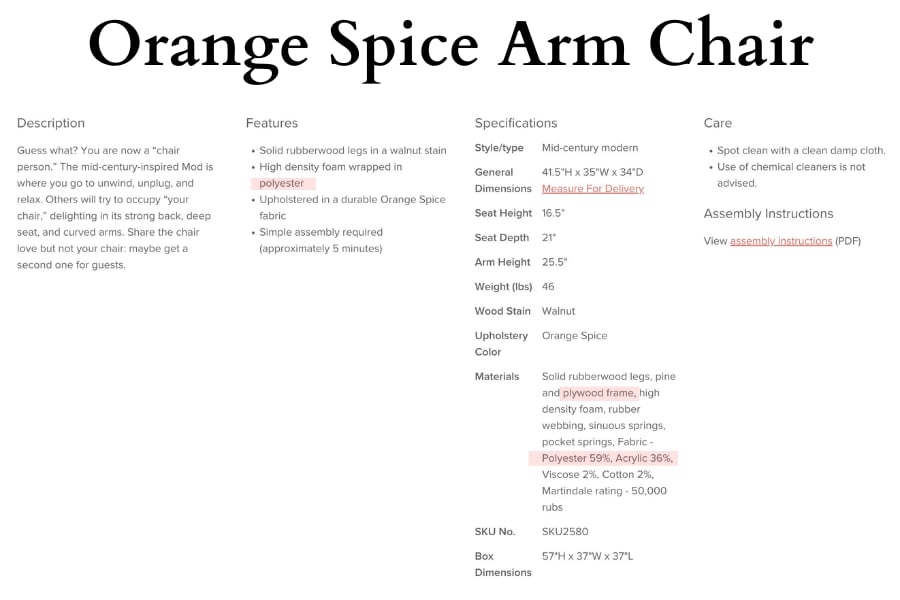
While solid wood legs are a plus, the bigger concern is the use of engineered wood (plywood) combined with synthetic upholstery materials.
Why this matters:
- Engineered wood products like plywood are typically made with adhesives and resins that can release VOCs (volatile organic compounds) into indoor air
- One of the most well-known VOCs associated with engineered wood is formaldehyde, which is classified as a known human carcinogen
- Polyester is a petroleum-based synthetic fabric and may contribute to microplastic shedding over time as it wears
Engineered wood products like plywood, MDF, and particle board can off-gas VOCs for months after manufacturing.
Because Article does not clearly disclose whether this chair uses low-VOC adhesives, chemical treatments, or third-party indoor air quality testing, it’s difficult to verify how “clean” this product really is.
What Can You Do If You Already Have Article Furniture?

If you already own Article furniture, don’t panic — you don’t need to throw everything out.
Many conventional furniture pieces can be made less problematic by improving indoor air quality and reducing exposure to VOCs during the off-gassing period (especially when the furniture is new).
Here are a few practical steps that can help reduce indoor air pollution and chemical odors:
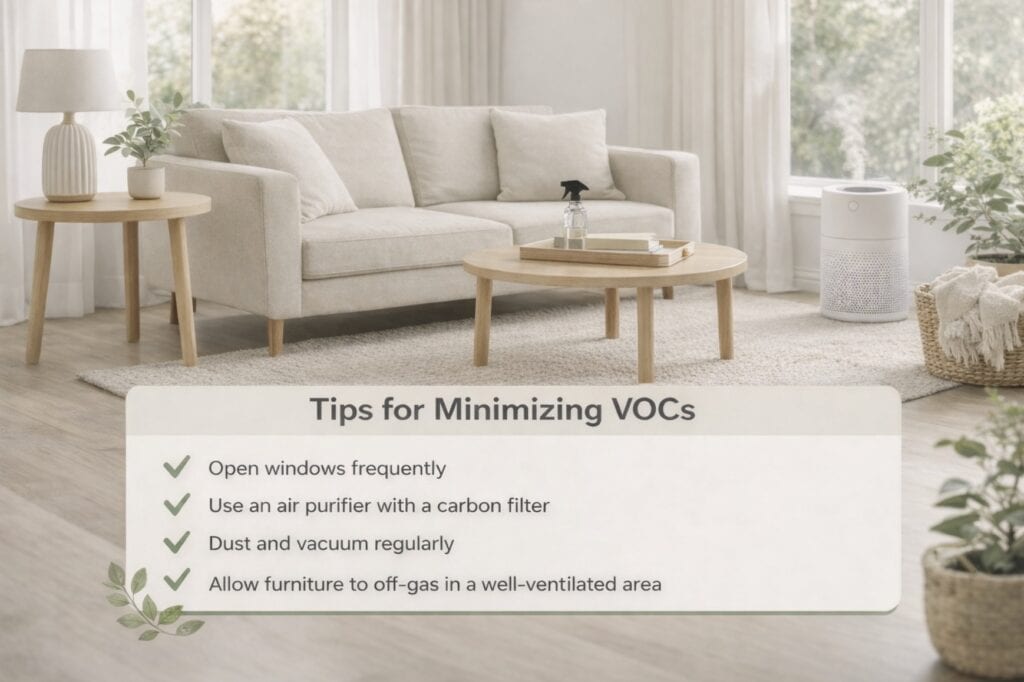
1. Increase ventilation as much as possible
- Open windows daily (even for 15–30 minutes)
- Run ceiling fans to keep air circulating
- If possible, place the furniture in a well-ventilated room for the first few weeks
2. Use an air purifier (ideally with a carbon filter)
A HEPA filter is great for dust, but a purifier with activated carbon is better for odors and VOCs.
If your furniture has a strong chemical smell, avoid placing it in small enclosed spaces (like bedrooms or nurseries) until the odor fades. Better airflow = faster off-gassing and fewer lingering fumes.
3. Speed up off-gassing (carefully)
Heat can increase off-gassing, which can help furniture release trapped odors faster. If weather permits, you can place cushions or smaller items in:
- a ventilated garage
- a covered patio
- indirect sunlight for a short period
(Just avoid leaving furniture outside too long, since UV exposure can damage fabric and discolor wood.)
4. Clean and vacuum regularly
VOCs and chemical residues can settle into household dust. Cleaning can help reduce buildup over time.
- Vacuum frequently (preferably with a HEPA vacuum)
- Dust with a damp cloth instead of dry dusting
- Wash removable cushion covers if allowed
Final Verdict
Article Furniture is not a brand we would consider truly non-toxic.
While Article offers stylish and affordable furniture, many of their pieces use conventional materials such as synthetic fabrics, engineered wood, and foam cushioning, which may contribute to VOC off-gassing and reduced indoor air quality.
The biggest concern is their limited transparency around chemical treatments, emissions testing, and third-party certifications like GREENGUARD Gold.
Overall, Article may work for budget-conscious shoppers, but it’s not the best choice for anyone trying to build a truly low-toxin home.
Frequently Asked Questions
The best way to tell if furniture is non-toxic is to check the materials list and look for third-party certifications. Avoid synthetic fabrics, polyurethane foam, and engineered wood, and prioritize certifications like GREENGUARD Gold, FSC, CertiPUR-US, and OEKO-TEX.
Many mainstream furniture brands use materials like engineered wood, synthetic fabrics, and chemical finishes that may off-gas VOCs. Brands often discussed in the non-toxic community include IKEA, West Elm, and Ashley Furniture, depending on the product.
For a deeper breakdown, check out our full review of Ashley Furniture.