The 5 Best Organic Mattress Toppers of 2026 (Reviewed)



Want a more comfortable bed while being mindful of what you sleep on? An organic mattress topper can add cushioning to a mattress you already own, with options made from materials like latex, wool, and organic cotton instead of conventional polyurethane foam.
But natural materials alone don’t tell the whole story. When shopping for an organic or non-toxic mattress topper, it helps to look closely at what’s inside, which materials are certified organic, and what the certifications actually cover.
We’ve rounded up our top picks with those details in mind, along with comfort, support, and price, to help you find the right fit without replacing your entire mattress.
The Goodness Well is reader-supported. Some links in this article may be affiliate links, but every recommendation follows our editorial standards and independent review process. Learn more about our editorial standards and review methodology.
What Makes a Mattress Topper Non-Toxic?
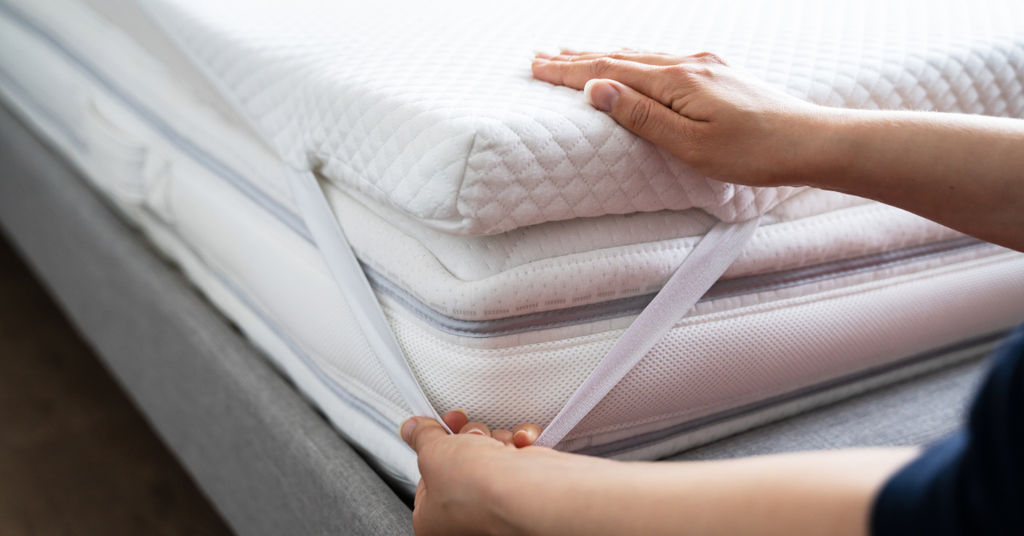
A good place to start is the materials inside the topper, not just the word “organic” on the label. Some mattress toppers use natural latex, wool, and cotton, while others contain polyurethane foam, synthetic fibers, or added chemical treatments.
There’s no single certification that makes a mattress topper completely non-toxic. Instead, look for clearly identified materials, independent testing, and information about anything added during manufacturing.
Safer Materials to Look For
The three main materials worth knowing about are latex, wool, and cotton. Each serves a different purpose, so the best combination depends on how you want your bed to feel.
- Organic latex: Made from rubber tree sap and offers springy cushioning that responds to your movements. It usually feels less sinking than memory foam.
- Organic wool: Adds gentle cushioning while absorbing and releasing moisture. It can help keep your sleeping surface comfortable in different seasons.
- Organic cotton: Commonly used in topper covers because it’s breathable and soft. Look for certifications rather than relying on the word “natural.”
Pay attention to whether the organic material is actually inside the topper. A product can have an organic cotton cover but still contain conventional foam or synthetic filling underneath.
Small amounts of synthetic material can also appear in otherwise natural products. Polyester binding fibers, blended fabrics, and adhesives are worth checking if you’re trying to limit synthetic components.
Certifications Worth Checking
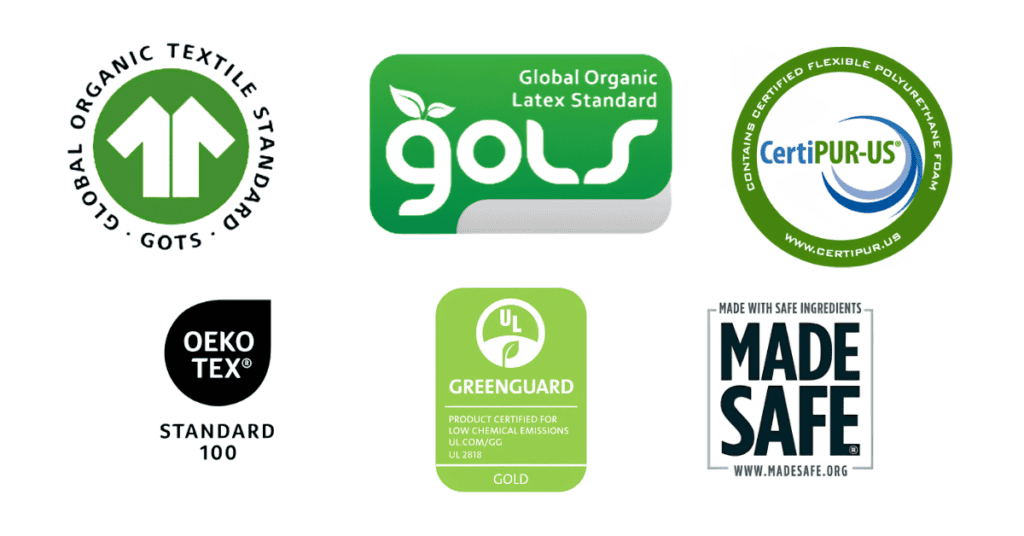
Here are some certifications you want to look for to help identify safer and more non-toxic products.
| Certification | What it tells you |
|---|---|
| GOTS | Organic textile fibers and responsible processing standards |
| GOLS | Certified organic latex with manufacturing requirements |
| GREENGUARD Gold | Tested to meet strict limits for chemical emissions |
| OEKO-TEX STANDARD 100 | Textiles tested for certain harmful substances |
| MADE SAFE | Ingredients and materials screened against its safety criteria |
GOTS (Global Organic Textile Standard) applies to textiles such as cotton and wool. GOLS (Global Organic Latex Standard) focuses on organic latex and its production. Both help shoppers distinguish certified materials from general organic marketing claims.
GREENGUARD Gold looks at chemicals released into indoor air, while OEKO-TEX STANDARD 100 tests textiles for harmful substances. These answer different questions, and neither automatically means every component is organic.
Also, check exactly what the certification covers. A certified cotton cover doesn’t necessarily mean the latex filling has the same certification. This distinction was one of the things we looked at when comparing the mattress toppers in this roundup.
How to Choose Your Topper
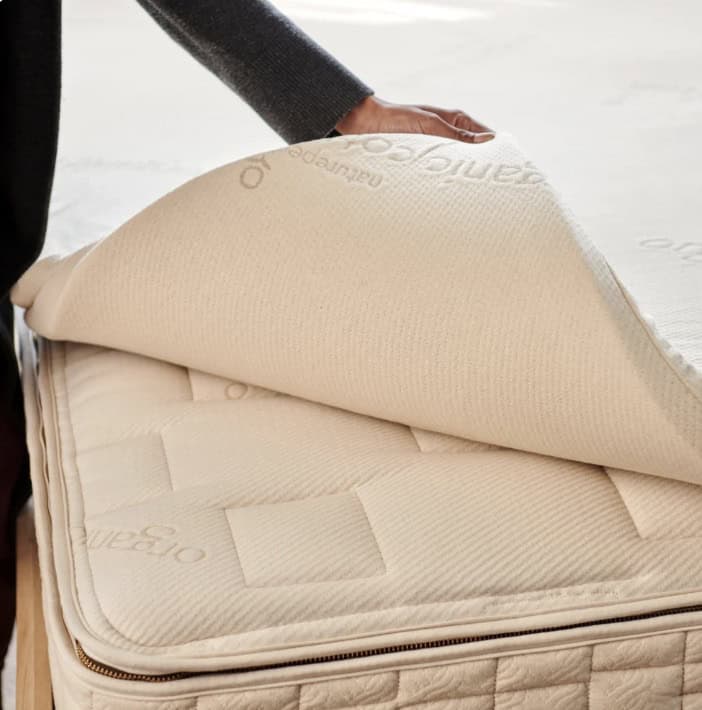
Start with how your mattress feels right now. A topper can change the cushioning on a mattress that’s still supportive, but it won’t repair a sagging mattress or worn-out support layers.
Latex vs. Wool Toppers
Latex and wool can both make a mattress more comfortable, but they feel quite different.
| Feature | Latex topper | Wool topper |
|---|---|---|
| Feel | Springy and responsive | Soft and gently cushioned |
| Support | More noticeable contouring | Less structured support |
| Breathability | Depends on latex design and cover | Naturally manages moisture |
| Durability | Generally resilient | Can compress with use |
| Care | Usually spot clean | Varies; some washable |
If your mattress feels too firm around your shoulders or hips, latex gives you more choices for adjusting firmness. Wool makes more sense if you prefer gentle surface cushioning without the feel of foam.
Neither material guarantees cooler sleep. Your mattress, bedding, room temperature, and personal preferences all affect how warm you feel overnight.
Firmness, Thickness, and Sleep Position
A thicker topper doesn’t automatically mean a softer one. The material and firmness matter just as much.
A 2-inch topper works well if your mattress just needs a little extra cushioning. A 3-inch topper creates a more noticeable change and can help you feel less of the mattress underneath.
Start with what your mattress needs: a little extra cushioning or a bigger comfort adjustment. Choose thickness and firmness together rather than assuming thicker means softer.
Your sleeping position can help narrow things down:
- Side sleepers: Often prefer softer cushioning around shoulders and hips.
- Back sleepers: Usually need balanced cushioning and support.
- Stomach sleepers: May prefer firmer surfaces that limit excessive hip sinking.
- Combination sleepers: Can benefit from responsive latex that makes changing positions easier.
Your body weight and mattress firmness also affect the result. A soft topper over an already soft mattress may allow too much sinking, while a firm topper might not solve pressure discomfort.
The easiest way to narrow your choices is to decide whether you need more softness, a firmer feel, or only a small comfort adjustment before comparing thicknesses.
Before You Buy
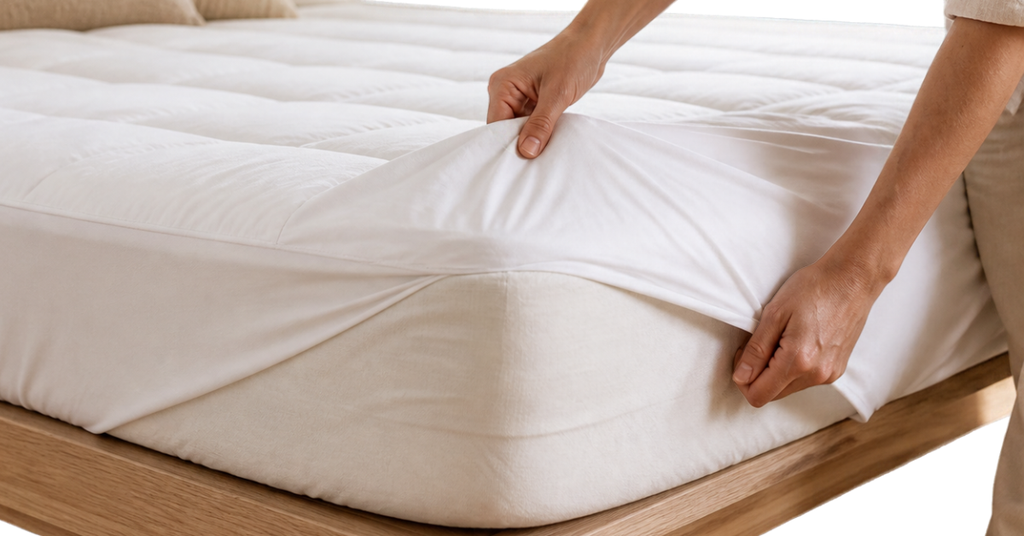
Two toppers might use similar materials, but one could come with a washable cover and free returns while the other offers neither.
Odors, Care, and Returns
A new topper may have a noticeable smell when you unpack it. Natural latex can have a rubber-like scent, while wool may retain its natural fiber smell. An odor doesn’t automatically mean a product is unsafe, and the absence of a smell doesn’t prove it’s free of chemical emissions.
Some bedding materials can also release volatile organic compounds (VOCs), which are gases that enter the air from certain materials or manufacturing ingredients.
To get a better idea of what a topper releases into the air, look for emissions testing rather than going by smell alone.
Check how you’ll need to clean it, too. Latex cores generally need spot cleaning, while some wool toppers require gentle cleaning and occasional airing. If spills are a concern, check whether the cover is removable and washable.
Before buying, double-check these details:
- Total price: Include optional covers, shipping, and other fees.
- Return policy: Confirm whether opened or used toppers qualify.
- Sleep trial: Make sure it applies to toppers, not just mattresses.
- Warranty: Check coverage for sagging, defects, and body impressions.
- Care instructions: Confirm whether washing or spot cleaning is required.
- Product details: Check for synthetic blends or undisclosed adhesives.
We also considered pricing, warranty terms, and return restrictions when comparing our recommendations. A lower starting price doesn’t always mean better value if the topper needs an additional cover or cannot be returned.
Key Takeaway: A low price is less appealing if you still need to buy a cover or can’t return the topper if it feels uncomfortable.
Look for materials you’re happy with, a feel that suits your bed, and the option to return it if it doesn’t work out.
The Best Organic Mattress Toppers
Happsy
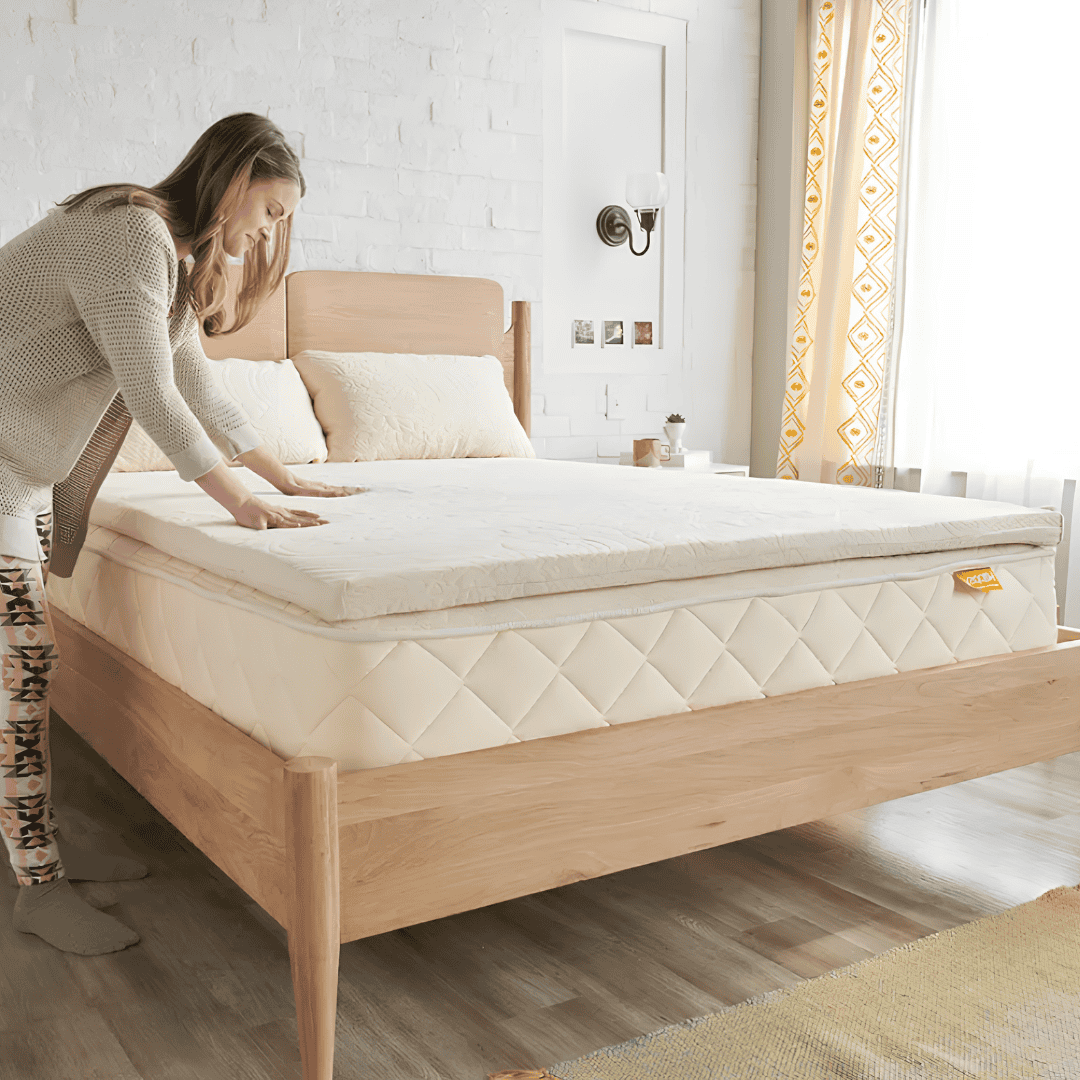
Happsy is our top pick because it combines certified organic materials with a lower price than many of the other options here.
Its 2-inch topper uses GOLS-certified organic Dunlop latex wrapped in GOTS-certified organic cotton, giving a firm mattress a softer, more cushioned feel without polyurethane foam.
It also carries MADE SAFE and GREENGUARD Gold certifications, which are reassuring if you’re trying to reduce exposure to potentially harmful chemicals and indoor air pollutants.
We also like that Happsy offers a 120-night trial, free returns, and a 10-year limited warranty, so you have time to decide whether it feels right.
The main downside is that it only comes in one thickness and doesn’t offer different firmness levels.
Product Highlights:
- Price: $249–$499 (Queen: $399)
- Materials: GOLS-certified organic Dunlop latex, GOTS-certified organic cotton
- Finish / Adhesives: Not specified
- Certifications: GOTS, GOLS, MADE SAFE, GREENGUARD Gold
- Safety: No polyurethane foam, fiberglass, or added chemical flame retardants; GREENGUARD Gold certified for low chemical emissions
- Functionality: 2-inch latex topper, six mattress sizes, added cushioning and responsive support
- Sustainability: Certified organic materials; 1% for the Planet member
- Made In: USA with domestic and imported components
- Warranty / Shipping: 10-year limited warranty, 120-night trial, free returns, free continental U.S. shipping
- Best For: Sleepers wanting a softer mattress feel with certified organic materials
- Downside: No thickness or firmness options
Naturepedic
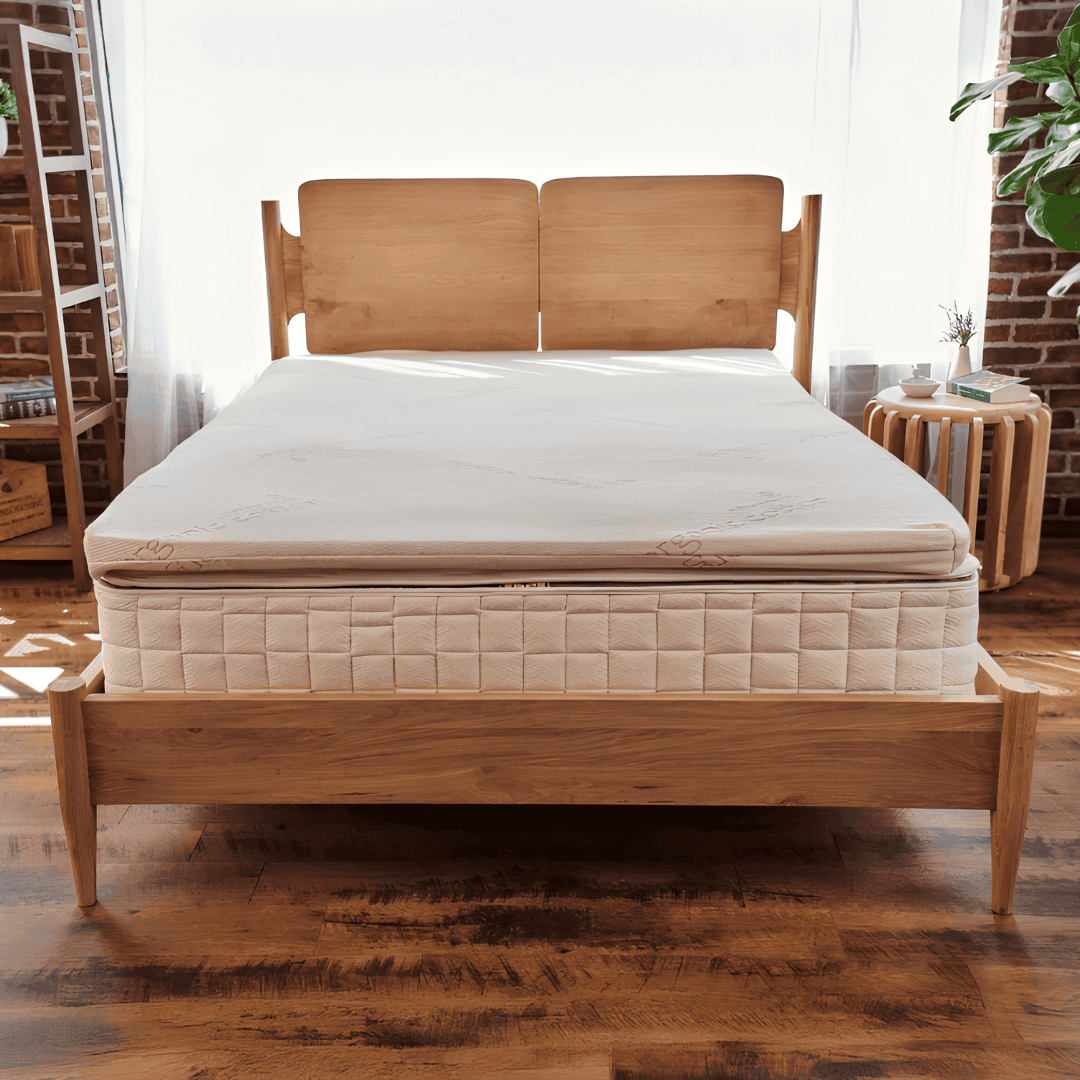
We like Naturepedic for its variety—you can choose from solid latex, shredded latex, wool, or alpaca, depending on the feel you prefer.
Its lineup includes the 2-inch Adagio with solid organic latex, a 3-inch Box-Stitched topper with shredded organic latex, and wool and alpaca options for softer cushioning.
The latex toppers use GOLS-certified organic latex and GOTS-certified organic cotton. If you’re leaning toward wool or alpaca, check that model’s certifications, since they differ.
We also like that Naturepedic avoids polyurethane foam, fiberglass, and added chemical flame retardants, with GREENGUARD Gold and MADE SAFE certifications across these toppers.
The downside is the higher pricing, a shorter 30-night trial than Happsy, and a small amount of polyester binding fiber in the Box-Stitched model.
Product Highlights:
- Price: $399–$999
- Materials: Organic latex, organic cotton, organic wool, alpaca wool; 5% polyester binding fibers in Box-Stitched latex filling
- Certifications: GOTS, GOLS (latex models), OCS (alpaca topper’s cotton), MADE SAFE, GREENGUARD Gold, UL Formaldehyde Free
- Safety: No polyurethane foam, fiberglass, or added chemical flame retardants; certified for low chemical emissions
- Functionality: Solid latex, shredded latex, wool, and alpaca options; 2–3-inch profiles
- Sustainability: Certified organic sourcing, 1% for the Planet member, recycled and reduced-plastic packaging practices
- Made In: Adagio in the USA; Box-Stitched and Wooly in Sri Lanka; Cotton/Alpaca in Peru
- Warranty / Shipping: 10-year limited warranty, 30-night trial, free shipping and returns in the continental U.S.
- Best For: Shoppers wanting different natural cushioning materials and certified low-emission toppers
- Downside: Higher prices and a shorter trial; Wooly currently sold out
PlushBeds
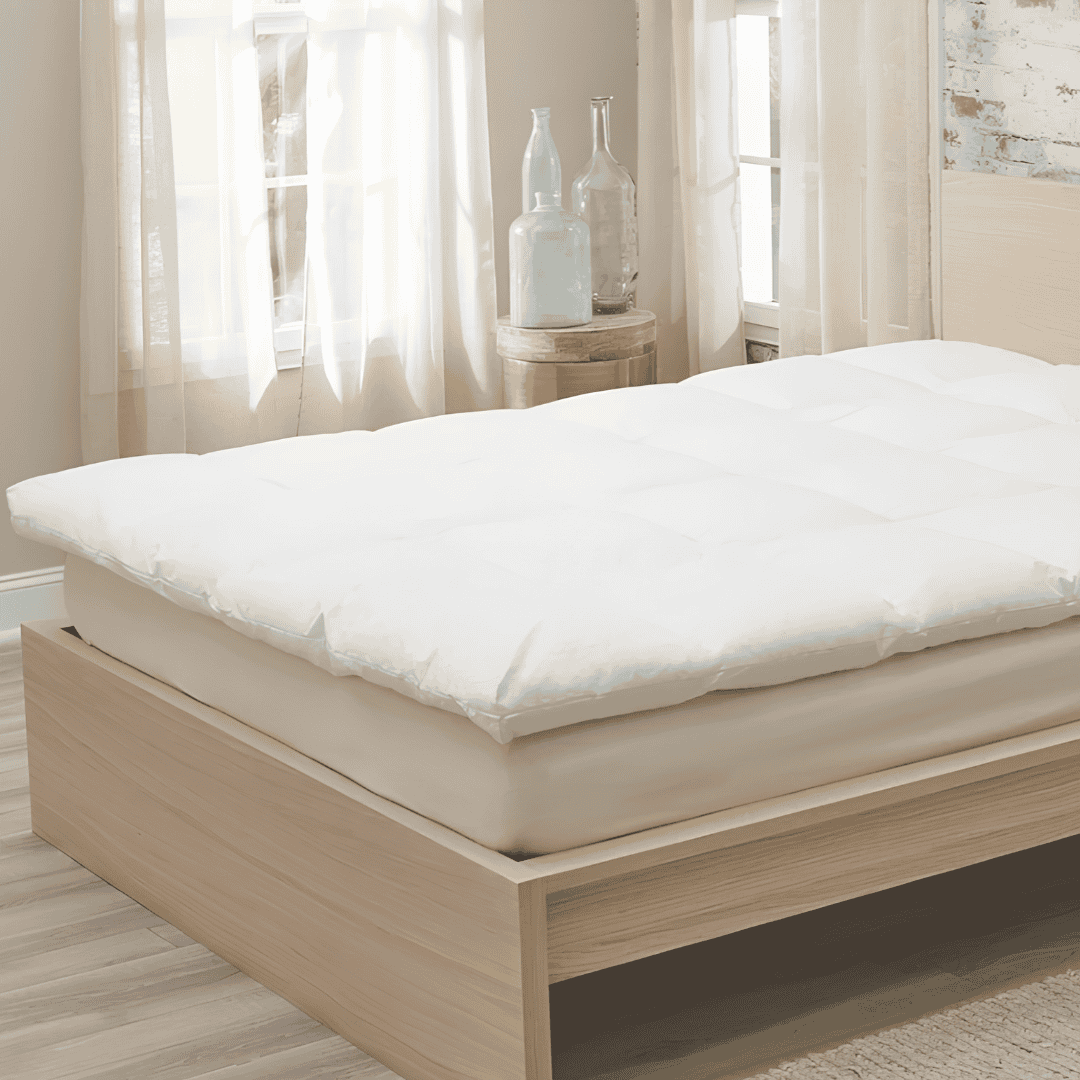
PlushBeds stands out for its firmness options, with five choices ranging from soft to extra-firm.
Its Organic Latex Mattress Topper comes in 2-inch and 3-inch thicknesses and uses GOLS-certified organic latex that’s also OEKO-TEX Standard 100 and GREENGUARD Gold certified.
You can add a GOTS-certified organic cotton cover for $93, or choose the Quilted Organic Mattress Topper, which combines organic latex, wool, and cotton for extra cushioning.
We also like having the choice between a simple organic latex topper and a quilted version with wool and cotton.
Just keep in mind that the basic latex topper doesn’t include a cover, and PlushBeds doesn’t accept returns on its latex toppers, so choosing the right firmness matters.
Product Highlights:
- Price: $204–$1,064 (organic latex and quilted models, sale prices)
- Materials: GOLS-certified organic latex; GOTS-certified organic cotton and wool in quilted models
- Finish / Adhesives: No carcinogenic adhesives reported for organic latex; specific adhesives not disclosed
- Certifications: GOLS, OEKO-TEX Standard 100, GREENGUARD Gold; GOTS for organic cotton and wool components
- Safety: Certified low chemical emissions; organic latex without synthetic latex, fillers, or added chemical flame retardants
- Functionality: 2-inch or 3-inch latex; five firmness options; quilted toppers in 3-inch or 4-inch heights
- Sustainability: Sustainably sourced organic latex, certified organic fibers, factory-direct manufacturing
- Made In: Handcrafted in California, USA
- Warranty / Shipping: 5-year organic latex warranty; free U.S. shipping excluding Alaska and Hawaii
- Best For: Sleepers wanting customizable firmness and thickness with certified organic latex
- Downside: Latex toppers are nonreturnable; organic cotton cover costs extra
Sleep & Beyond
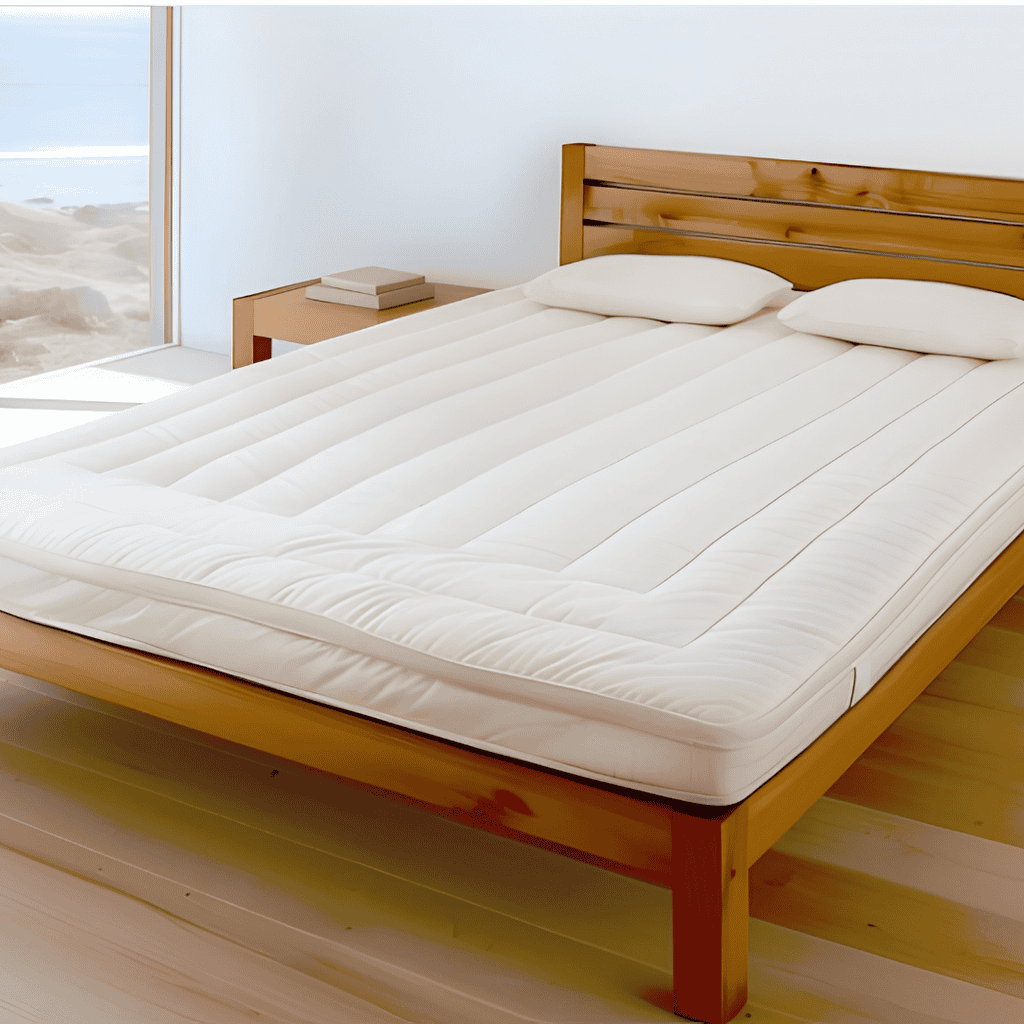
Sleep & Beyond is a great choice if you prefer the feel of wool over latex and want an organic mattress topper at a more affordable price.
Its 1.5-inch myMerino Topper uses GOTS-certified organic Merino wool inside a certified organic cotton cover, offering gentle cushioning while helping manage moisture and temperature throughout the night.
For more cushioning, there’s the 3-inch myWoolly Latex Topper with natural wool and latex filling, while the washable myTopper offers a lower-priced natural wool option without the same organic certification.
We also like that Sleep & Beyond raises its own Merino sheep in Kyrgyzstan and ships its toppers in reusable cotton packaging.
The main downside is that the myMerino Topper isn’t machine washable, and the natural wool and latex alternatives don’t have the same clearly documented organic certifications.
Product Highlights:
- Price: $149–$749
- Materials: GOTS-certified organic Merino wool and cotton (myMerino); natural wool and latex (myWoolly); natural wool (myTopper)
- Certifications: GOTS (myMerino wool and cotton); OEKO-TEX certification listed for natural latex noodles and selected wool materials
- Safety: GOTS-certified organic fibers in myMerino; brand reports passing VOC testing for its myMerino collection
- Functionality: 1.5-inch wool toppers; 3-inch wool and latex option; washable myTopper
- Sustainability: Own Merino sheep farming, reusable cotton packaging, material reuse and waste-reduction practices
- Made In: Brand operates internationally; specific topper manufacturing countries not established
- Warranty / Shipping: 5-year myMerino warranty; free shipping on orders over $500
- Best For: Sleepers who prefer natural wool cushioning and temperature regulation
- Downside: myMerino isn’t machine washable; organic certification varies by model
Sleep EZ
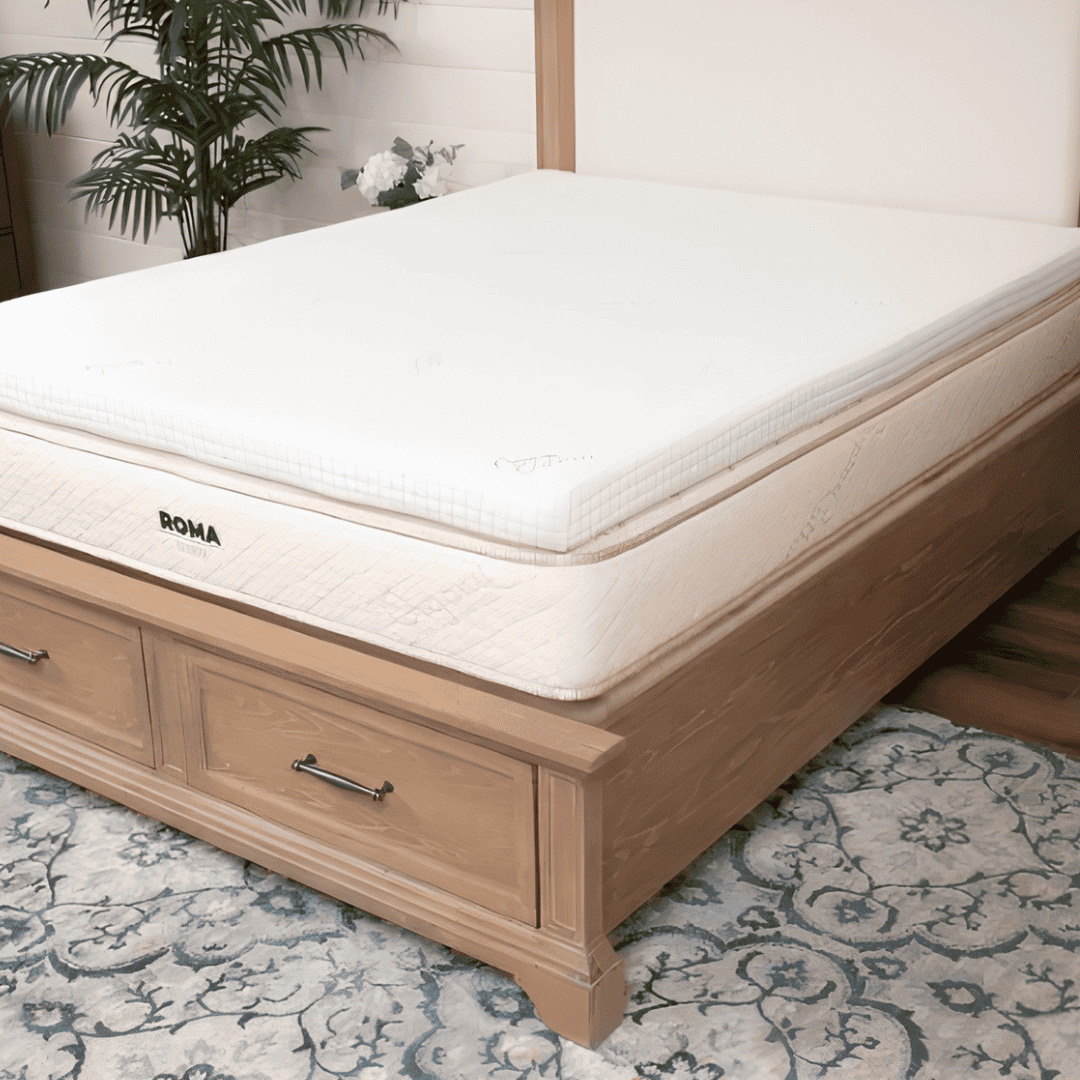
Sleep EZ is worth considering if you want a natural latex mattress topper that you can customize without spending too much.
Its Natural Latex Mattress Topper comes in 2-inch and 3-inch thicknesses, with four firmness options and a choice of natural Dunlop, GOLS-certified organic Dunlop, or natural Talalay latex.
You can also add an organic cotton cover, while the Select Sleep Wool & Latex Topper combines 3 inches of latex with an additional inch of quilted New Zealand Joma wool for a more cushioned feel.
If certified organic latex is a priority for you, choose Sleep EZ’s organic Dunlop option.
Keep in mind that not every latex option is certified organic, and the cotton cover costs extra. We’d also check the topper’s return policy and warranty with Sleep EZ before ordering.
Product Highlights:
- Price: $148–$832
- Materials: Natural Dunlop latex, GOLS-certified organic Dunlop latex, natural Talalay latex, organic cotton, New Zealand Joma wool
- Finish / Adhesives: Specific adhesives and finishes not disclosed
- Certifications: GOLS (certified organic Dunlop option); organic certification for Talalay and Joma wool not established
- Safety: Natural latex alternatives to polyurethane foam; GOLS certification available for organic Dunlop
- Functionality: 2-inch or 3-inch latex, four firmness options, optional organic cotton cover, custom sizing
- Sustainability: Latex sourced from rubber trees in Sri Lanka; renewable natural materials and factory-direct production
- Made In: Handcrafted in Arizona, USA; latex sourced from Sri Lanka
- Warranty / Shipping: 1-year topper warranty stated in FAQ; free shipping advertised
- Best For: Shoppers wanting customizable natural latex at a lower starting price
- Downside: Optional cover costs extra; topper returns and warranty details need clarification