Is Ashley Furniture Non-Toxic? What You Need to Know

If you’re shopping around for new furniture you’ve probably heard of Ashley Furniture.
Like Article Furniture (which we also do a deep dive into), they are one of the largest home furniture manufacturers and retailers in the world.
This review compares Ashley Furniture’s materials and certifications against what is typically expected from truly non-toxic furniture brands.
We went and did A LOT of digging on this one.
Here is what we found.
No, Ashley Furniture is not considered a non-toxic furniture brand.
The company relies heavily on synthetic materials such as polyester and polyurethane foam, uses engineered woods bonded with formaldehyde-based adhesives, and lacks widely recognized third-party certifications that verify low chemical emissions and material safety.

What Is Non Toxic Furniture?
Non-toxic furniture is designed to avoid or significantly minimize the use of harmful chemicals, pollutants, or volatile organic compounds (VOCs) that can off-gas and cause poor indoor air quality.
Made from natural, organic, or sustainably sourced materials, non-toxic furniture is safer than most conventional furniture.
That “new furniture smell” is often caused by VOC emissions, not freshness. Choosing low-VOC or VOC-free furniture helps reduce long-term exposure indoors.
These products avoid synthetic materials, unsafe finishes, glues containing formaldehyde, and flame retardants, all of which are linked to health risks, from skin irritation to, in some cases, cancer.
Lastly, non-toxic furniture brands hold Third-Party Certifications to prove they are safe.
Examples of common third-party certifications include:
- FSC (Forest Stewardship Council)
- GREENGUARD/GREENGUARD Gold
- CertiPUR-US
- Oeko-Tex Standard 100
- TCO Certified
- Cradle to Cradle
- GOLS (Global Organic Latex Standard)
- GOTS (Global Organic Textile Standard)
Is Ashley Furniture Non-Toxic?
No. Ashley Furniture does not meet the criteria of a non-toxic furniture brand.
The company relies heavily on synthetic upholstery materials, polyurethane foam, and engineered woods bonded with chemical adhesives.
Selected using material safety, certifications, and thorough research.

🏆 Best Choice
Made in the USA, Organic & sustainable materials, Transparent, supply-chain controlled

✅ Best Budget
Most Affordable, non-toxic, backed by certifications

⭐️ Top Quality
Made in the USA, certified organic materials, GREENGUARD Gold certified
They also do not consistently provide third-party certifications—such as GREENGUARD Gold or FSC—that independently verify low chemical emissions or responsible material sourcing.
While Ashley Furniture offers a wide range of styles, material safety and chemical transparency do not appear to be a primary focus.
Let’s discuss these materials a little more.
Materials They Use
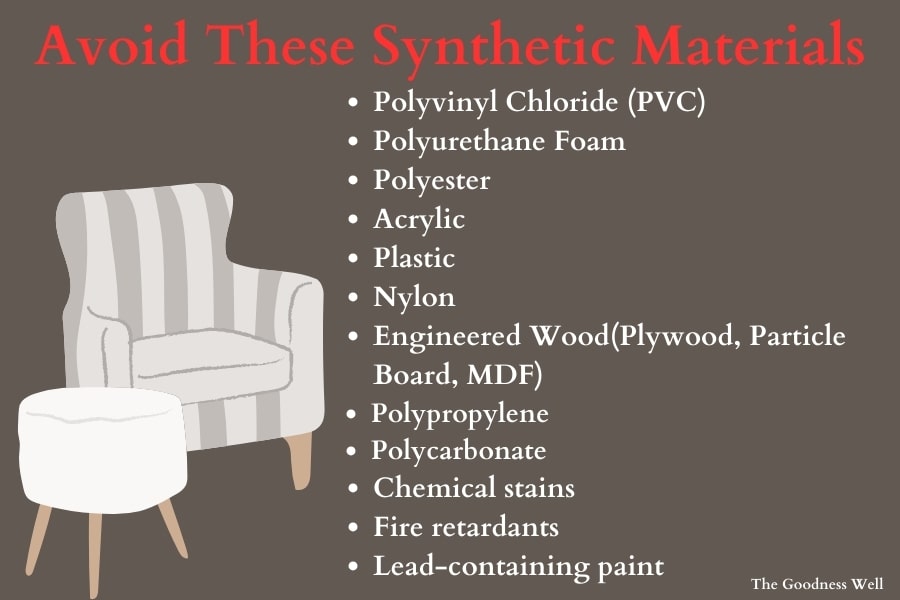
The main problem with their furniture is the heavy use of synthetic materials.
Let’s break them down.
Engineered Wood
Ashley Furniture uses engineered woods such as particleboard and MDF in many of its products.
These materials are bonded with adhesives that can emit VOCs, including formaldehyde, which has been linked to respiratory irritation and cancer in long-term exposure studies.
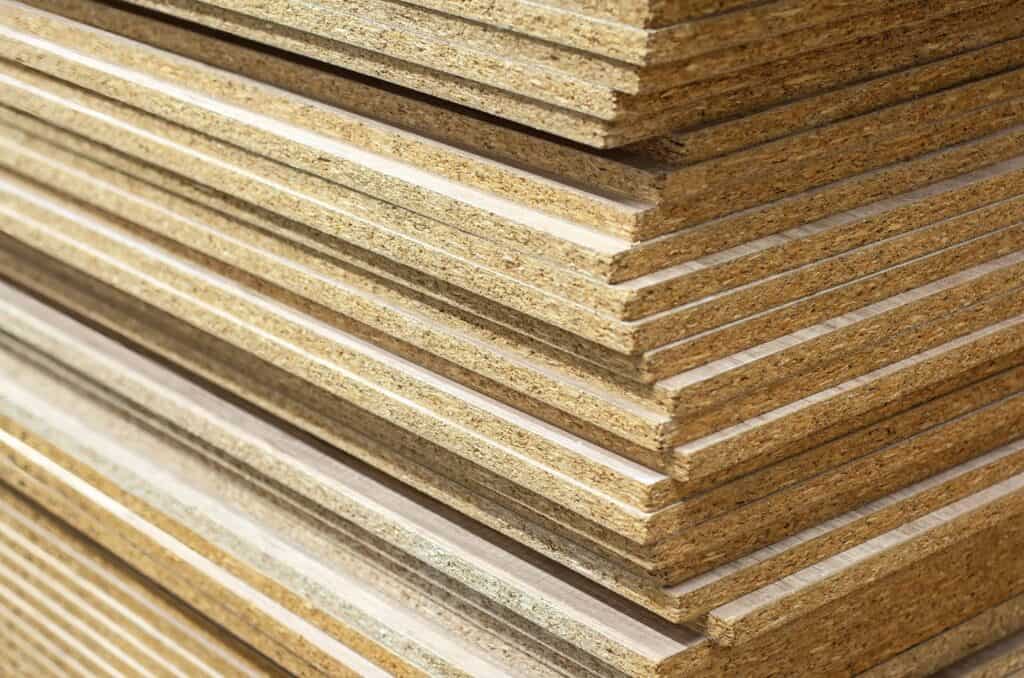
Compared to solid wood, this material is less durable and has a shorter lifespan, making it a less sustainable choice in the long run.
While some products meet California Air Resources Board (CARB) standards, most Ashley Furniture items do not carry GREENGUARD or GREENGUARD Gold certification, which more strictly regulates indoor air emissions.
Synthetic Fabrics
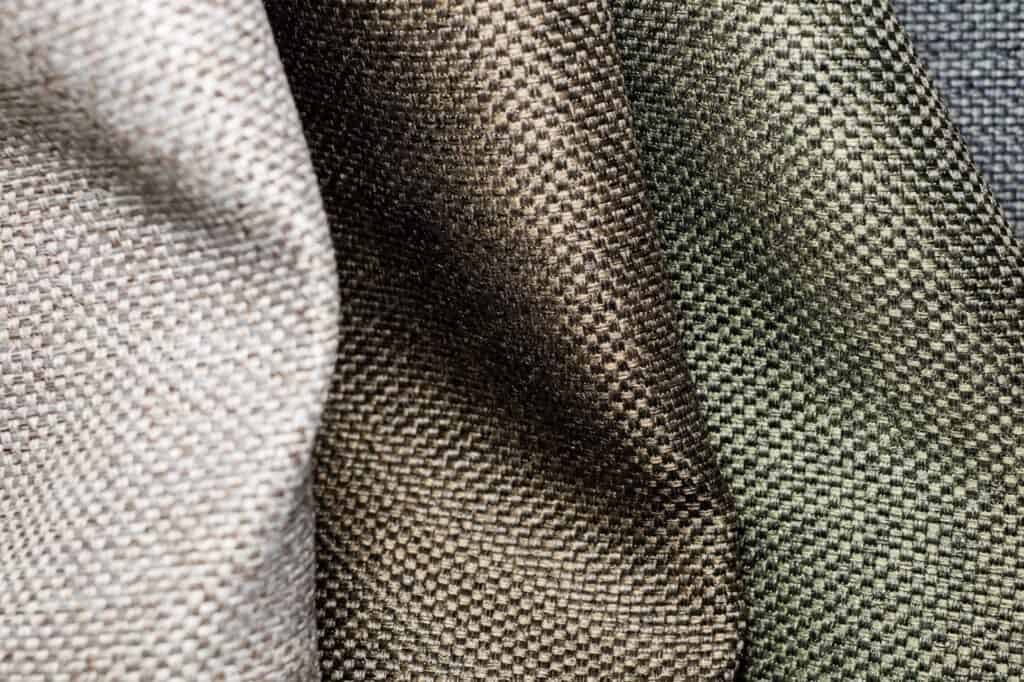
Much of Ashley Furniture’s upholstery is made from synthetic fabrics like polyester and nylon.
These materials are often treated with chemical finishes and are known to shed microplastic fibers, which can accumulate in household dust and contribute to indoor exposure through inhalation or skin contact.
If a furniture brand does not clearly list natural materials like organic cotton, wool, or natural latex, the upholstery is most likely synthetic.
These plastic microfibers are everywhere!
Many plastic items in the home can shed microplastics over time—especially synthetic fabrics and plastics exposed to heat, friction, or wear.
Polyfoam
Polyurethane foam (polyfoam) is usually used in cushions and mattresses for comfort and durability.
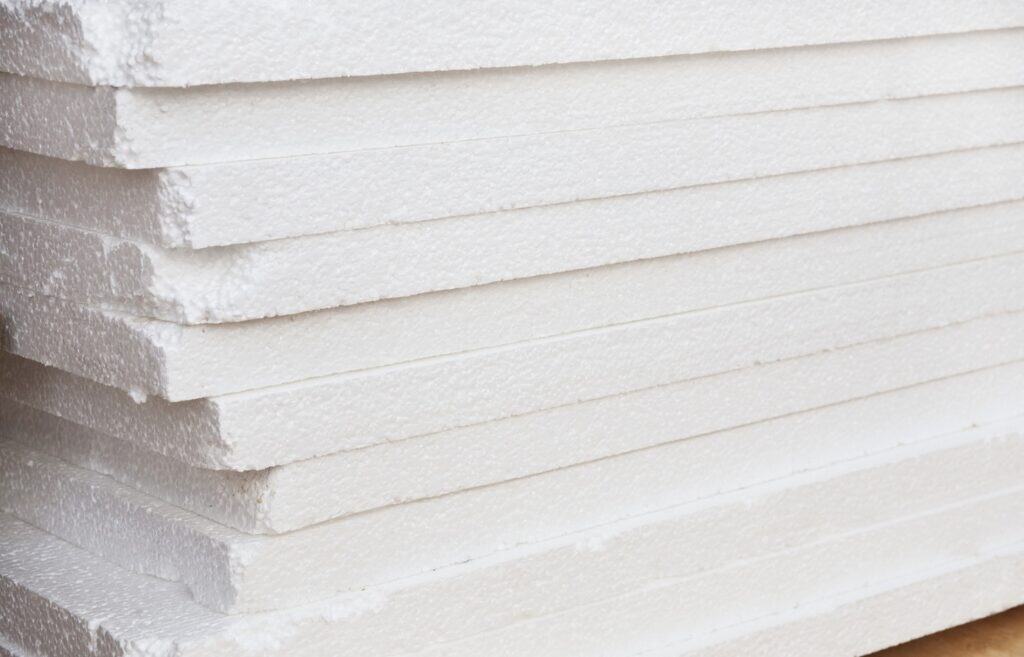
Unfortunately, it is petroleum-based and can emit VOCs over time.
Also, polyfoam has historically contained flame retardant chemicals, including brominated flame retardants (BFRs), which last a very long time in the environment and have raised health concerns.
Metal
Metal is a non-toxic, renewable material.
Many of their modern pieces incorporate metal, which doesn’t off-gas.
Wood
While some Ashley Furniture pieces include solid wood components, these are typically treated with chemical finishes.

We were unable to find consistent evidence of FSC certification, which raises concerns about both chemical treatments and sustainable sourcing.
Solid wood is not automatically non-toxic. Chemical stains, sealants, and varnishes applied to wood surfaces can off-gas VOCs long after purchase.
But don’t just take my word for it, let’s dig into materials used in two examples of their best-selling products.
Examples on Their Site
First Example: The Mahoney Sofa
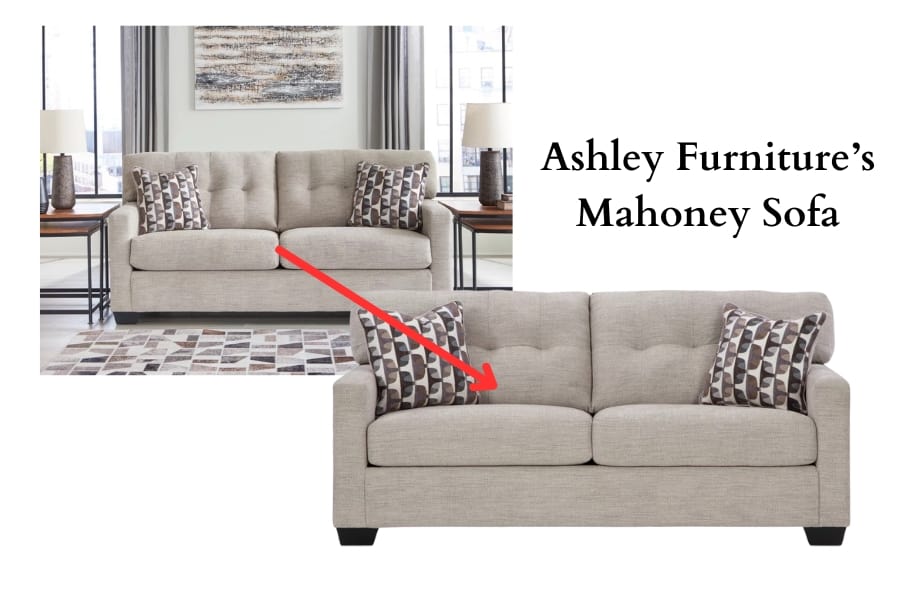
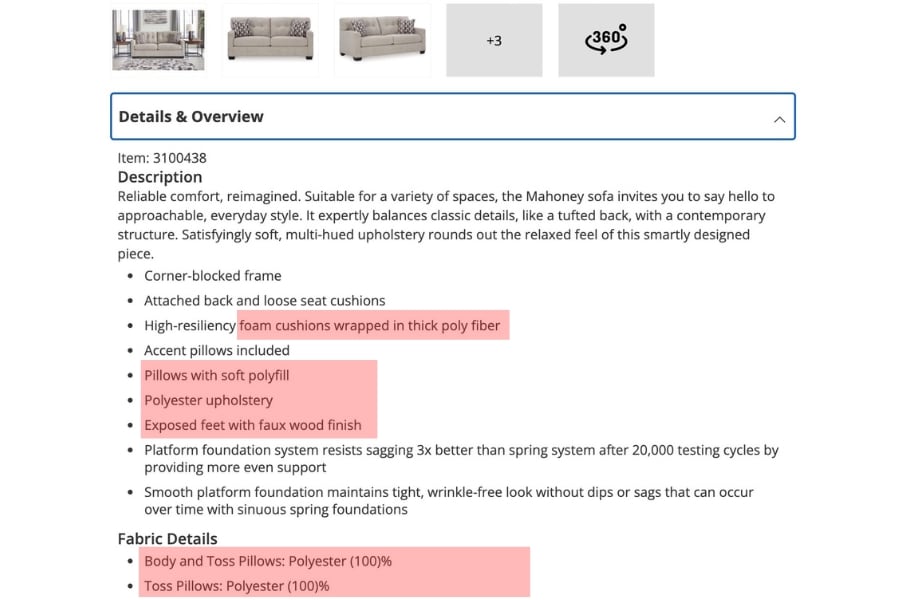
According to the product’s listed materials, this sofa contains polyester upholstery, polyurethane foam cushions wrapped in polyfiber, polyfill pillows, and a chemical faux (fancy word for fake) wood finish.
These materials are typical of conventional furniture but do not align with the standards generally used by non-toxic furniture brands.
Looking at another example we chose one of their top-selling mattresses, the Sleep Essential.
Second Example: The Sleep Essential Mattress.
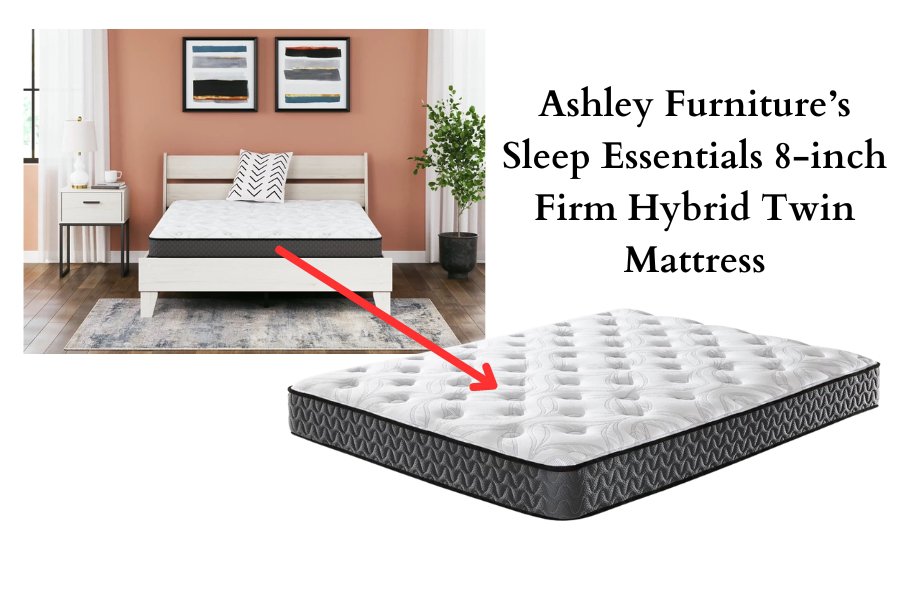
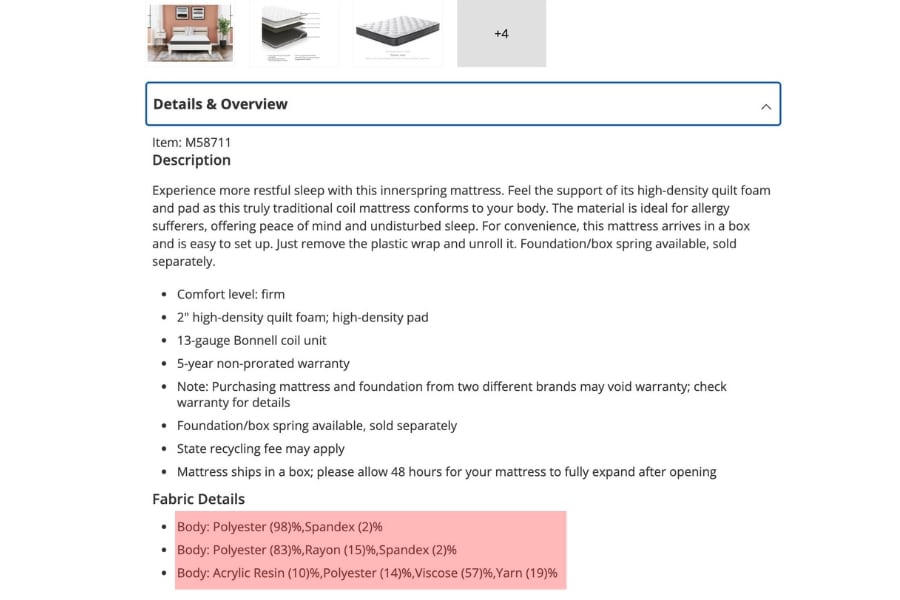
This mattress relies heavily on synthetic fabrics and polyurethane foam, including polyester, acrylic resin, spandex, and viscose blends.
This is standard mainstream mattress material, which is not considered sustainable or non-toxic.
What About Formaldehyde?
Formaldehyde is a common concern in furniture made with particleboard or MDF (medium-density fiberboard).
It’s used in adhesives that bind wood particles together, and over time, these materials can release formaldehyde gas through off-gassing.
Furniture can off-gas formaldehyde for months or even years. In enclosed indoor spaces, long-term exposure may contribute to irritation and reduced indoor air quality.
Ashley Furniture has made commitments to reduce formaldehyde, but this is an ongoing process, meaning many products still contain formaldehyde-based materials.
And while their engineered wood furniture meets CARB standards for emissions, most products do not meet GREENGUARD Gold standards for indoor air quality.
As a result, formaldehyde remains present in many of their products—especially those made with engineered wood.
Final Thoughts
Ashley Furniture, like many large manufacturers, has made strides to make sure their products are becoming safer.
But they’re just not there yet and can’t be considered a non-toxic furniture brand.
The good news is that you live in an era where safe, eco-friendly furniture is becoming a standard and you no longer have to sacrifice safety for style!
Frequently Asked Questions
There are a lot of furniture brands that are toxic and unsafe for consumers. To name a few there’s Article, West Elm, and even IKEA. To learn more about what makes IKEA furniture toxic check out our deep dive into IKEA furniture.
Ashley Furniture has stated that it began phasing out added flame retardants around 2015. However, the company does not clearly disclose whether all product categories are fully free from flame retardants, making it difficult to verify current use.