What Is BIFMA Certification? (Furniture Label Explained)

Furniture listings often use “BIFMA certified” as a trust signal, but the meaning is not always obvious at a glance.
This matters because the right label can help you choose pieces that are built to hold up to real daily use, especially for chairs, desks, and home office setups.
It also matters for wellness-focused homes, since indoor environments can influence everyday exposure, and organizations like the EPA note that indoor air can sometimes be more polluted than outdoor air.
This guide breaks down what BIFMA certification is, what it generally covers, and how to use it as a practical signal when shopping.
BIFMA certification is a set of standards that show furniture meets safety and durability requirements.
It is most common on office-style chairs and desks and signals products built for regular, repeated use.
It does not automatically mean low-emissions, so pair it with material and indoor air details.
BIFMA Certification Basics
“BIFMA” shows up most often on office-style furniture. Think desks, task chairs, and conference tables. It is tied to standards used in commercial settings, like workplaces and schools.
BIFMA is not one single test.
In public health terms, think of it as a performance standard, not a chemical exposure standard.
When a product page says “BIFMA certified,” it usually points to one of three things:
- ANSI/BIFMA standards: performance tests for safety and durability
- BIFMA Compliant: a program that lists products that meet certain BIFMA standards
- LEVEL: a sustainability certification based on the ANSI/BIFMA e3 framework
Because the wording varies, the best move is to look for the exact term used. “Meets ANSI/BIFMA” is different from “BIFMA Compliant” or “LEVEL certified.”
Quick label decode
- “Meets ANSI/BIFMA” often means the maker tested to a specific standard.
- “BIFMA Compliant” suggests a clearer verification path through a public listing.
- “LEVEL” signals a sustainability-focused certification, not just durability.
What BIFMA Covers
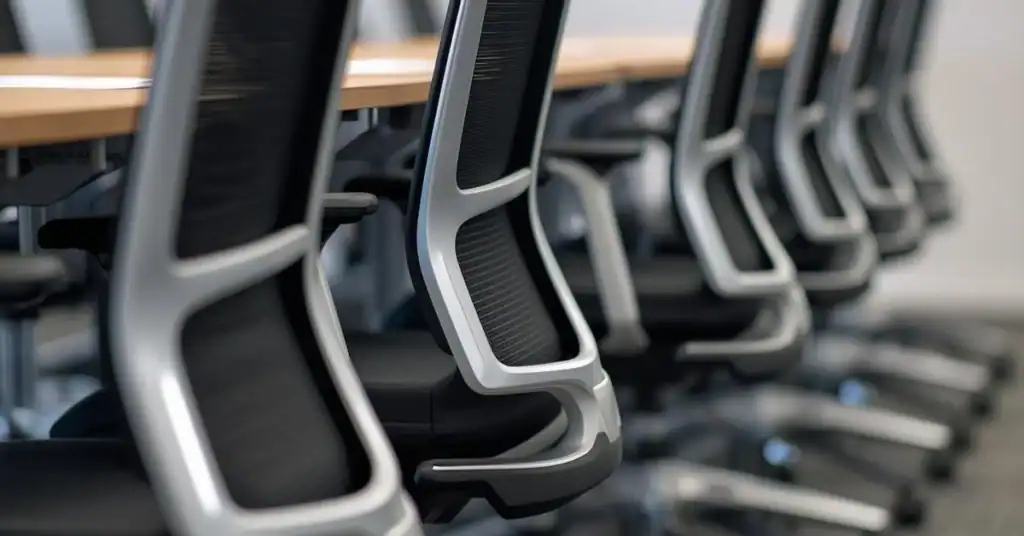
BIFMA-related standards focus on how furniture performs in real use.
They are designed for pieces that get used every day. This is common for office chairs and desks.
Safety and durability
These standards are mainly about strength, stability, and wear. They help reduce the chance that a chair or desk fails under normal use.
Durability tests repeat the same stresses over and over, like sitting, leaning, or rolling, to see what fails first.
BIFMA-style performance testing often checks things like:
- Stability (the item should not tip easily)
- Strength (arms, legs, bases, frames hold up under load)
- Durability (parts keep working after repeated use)
- Basic safety (no obvious break points during normal use)
This matters most for high-contact items. A task chair used for hours a day sees more stress than a side table.
Sustainability and LEVEL
LEVEL is the part of the BIFMA ecosystem that connects to sustainability. It is built on the ANSI/BIFMA e3 framework. It looks at more than “does it hold up.”
At a high level, LEVEL considers categories like:
- Materials and sourcing
- Manufacturing impacts
- Health and wellness factors
- Social responsibility practices
LEVEL does not replace indoor air labels on its own.
Key Takeaway: BIFMA is mainly about how furniture performs under regular, repeated use.
Using BIFMA at Home

BIFMA can be a simple “will this hold up?” filter for home furniture. It is most useful for pieces that get heavy daily use. Think desk chairs, kid homework chairs, and standing desks.
At The Goodness Well, we treat BIFMA as a durability signal first. Then we check indoor air and material details separately.
How to read it fast
Use BIFMA-style claims to narrow choices. Then confirm what the product is actually made of.
A quick approach:
- Start with the label: “Meets ANSI/BIFMA,” “BIFMA Compliant,” or “LEVEL”
- Match it to the item: a task chair benefits more than a decorative stool
- Scan the materials list when available:
- Solid wood vs engineered wood panels
- Fabric vs coated “easy-clean” finishes
- Foam cushions (often polyurethane foam) in padded seating
Common mix-ups
Some listings treat BIFMA like an all-in-one “healthy” badge. It is not used that way.
Here are the mix-ups to avoid:
- BIFMA = low-VOC: BIFMA performance standards do not equal emissions testing
- Commercial grade = safest materials: commercial-grade often means tougher, not cleaner
- One label covers everything: durability and indoor air are usually separate checks
This matters more for items used close to the body. A desk chair has more daily contact than a bookcase.
REAL-LIFE EXAMPLE

A parent is picking a desk chair for a teen’s homework setup. They choose a BIFMA-tested chair for durability, since it will be used daily. Then they check for an emissions label and avoid strong “odor-control” finish claims.
What to pair it with
If indoor air is a priority, pair BIFMA with an emissions-focused label. Look for programs that test or screen for VOC emissions.
Many “cleaner home” shoppers use GREENGUARD certification as that second filter.
Concrete comparison: A BIFMA-rated chair can be built to last. A GREENGUARD-certified chair is more likely to have verified low VOC emissions.
Key Takeaway: Durability signals and low-emissions signals are different, so it helps to check both.
Conclusion
BIFMA is a useful signal that furniture is built to handle real daily use, especially for chairs and desks. It can help you avoid flimsy pieces that wear out fast.
Just keep the label in its lane. BIFMA speaks most clearly to performance, not every “healthier home” concern.
Use it as a strong first filter, then do a quick materials and emissions check so you can choose something that feels solid and comfortable at home.