10 Simple Steps to a Healthier, Low-Toxin Home

When we first committed to living more sustainably and creating a non-toxic home, we quickly realized how much misinformation was out there — and how overwhelming it could feel to know where to begin.
Over the years, through research, trial and error, and sharing our own journey with thousands of others, we’ve learned what truly works (and what doesn’t).
Making the switch to a more natural, eco-friendly home doesn’t have to happen overnight. You don’t need to toss everything and start from scratch — it’s about small, intentional steps that build lasting change over time.
Whether you’re hoping to support your family’s health, manage allergies or sensitivities, or simply reduce your exposure to harmful chemicals, this guide will walk you through the 10 practical steps we’ve used to create a healthier, non-toxic home environment — and that you can, too.
Step 1: Start in Your Kitchen
Your kitchen is where you prepare food for yourself and your family, making it one of the most critical places to start with.
It’s also one of the easiest places to make small affordable changes to start out!
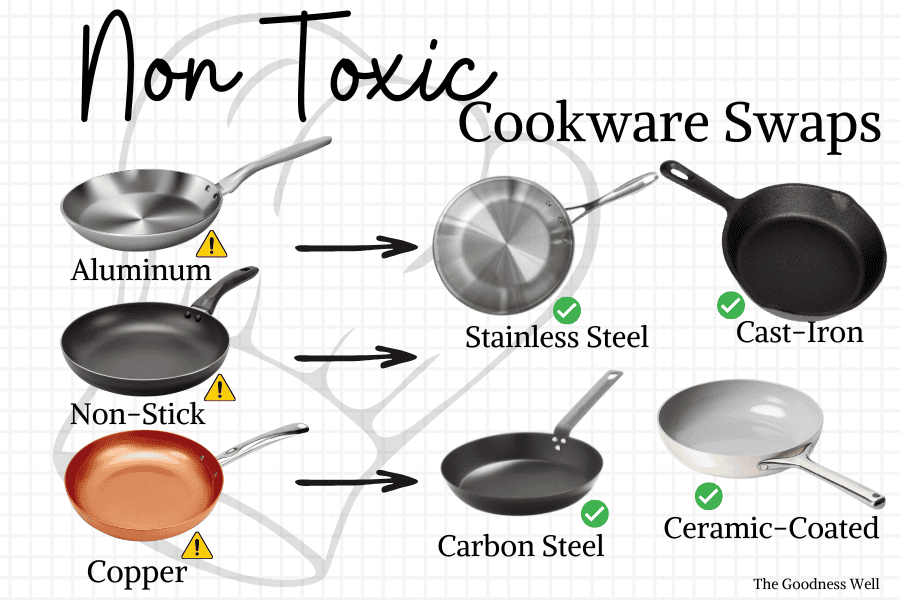
Many cookware items, food storage containers, and kitchen utensils are made from materials that may release hormone-disrupting chemicals into food, especially under heat, or when in contact with acidic or fatty foods — which is backed by controlled experimental studies.
The same non-stick pans and plastic containers we thought were convenient were actually some of the biggest sources of chemical exposure in our kitchen.
The good news is swapping these out is pretty simple.
Start by swapping plastic food storage for glass or stainless steel, replacing non-stick cookware with cast iron or ceramic alternatives, and choosing wooden cutting boards over plastic ones.
Glass, stainless steel, and cast iron can last a lifetime if cared for properly — making them not only safer but also more sustainable (and cost-effective in the long run).
Even small changes like switching to stainless steel or bamboo utensils make a difference.
We break down exactly which kitchen items to swap, safer alternatives, and our favorite tried-and-true product swaps in our Non-Toxic Kitchen Swaps Guide.
Step 2: Rethink Your Cleaning Routine
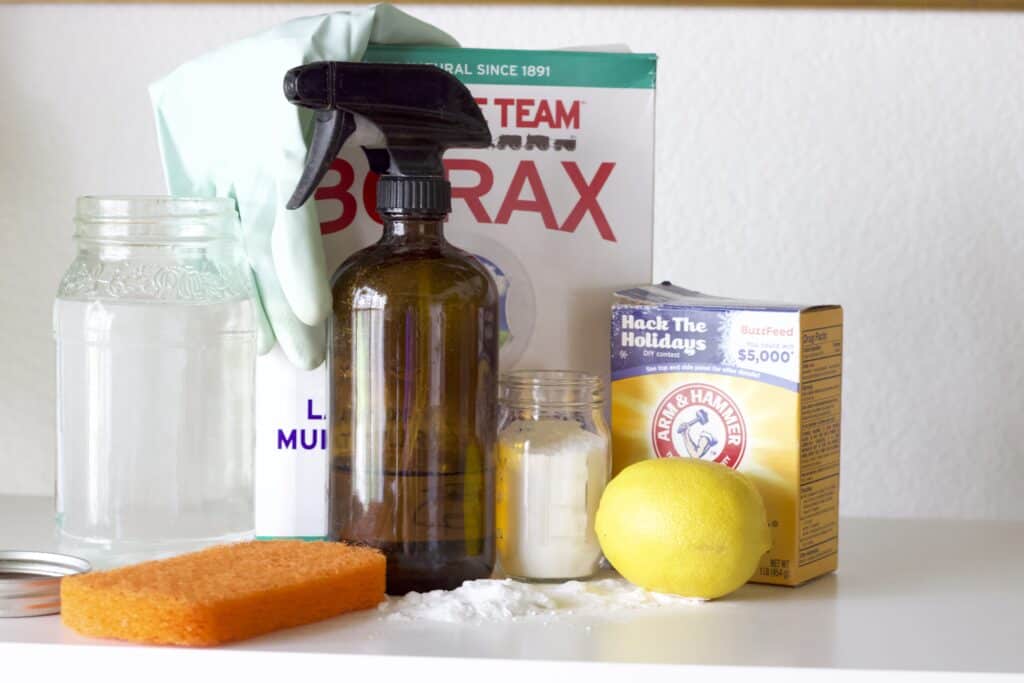
Conventional cleaning products are loaded with harsh chemicals that irritate your skin, lungs, and eyes while leaving toxic residues throughout your home.
Many all-purpose cleaners, laundry detergents, and dish soaps contain endocrine disruptors, carcinogens, and synthetic fragrances that can trigger allergies and asthma.
The good news?
Cleaning more naturally (and effective!) is simpler than you think.
Fragrance blends are often protected as trade secrets, allowing companies to list them simply as “fragrance” or “parfum” without revealing their ingredients. Studies have found that a single product’s scent can contain dozens to hundreds of synthetic chemicals, many of which are undisclosed on labels.
We’ve found that you can clean almost everything with a few basic ingredients like vinegar, baking soda, and castile soap—or choose from a growing number of truly safe commercial brands.
Start by replacing your most-used products: all-purpose cleaner, dish soap, and laundry detergent.
For room-by-room cleaning guidance, DIY recipes, and our favorite safe cleaning brands, check out our Complete Guide to Non-Toxic Cleaning.
Step 3: Purify Your Water & Air
You might not see them, but airborne toxins and water contaminants significantly impact your health.
Indoor air can be 2-5 times more polluted than outdoor air due to off-gassing from furniture, cleaning products, and building materials.
Meanwhile, tap water can contain chlorine, fluoride, heavy metals, and other contaminants that add to your body’s toxic load.

Investing in proper filtration is one of the most practical ways to ensure your water is safe.
We started with a quality air purifier with a HEPA filter for our bedroom and a water filter for our kitchen.
Even countertop water pitchers or under-sink systems make a noticeable difference in water quality and taste.
Prioritize filters where you spend the most time rather than trying to cover your entire home. One HEPA purifier in your bedroom and one water filter in your kitchen often provide the greatest impact for the least cost.
We cover everything from choosing the right water filtration systems to improving indoor air quality and reducing everyday pollutants in our ultimate guide to clean air and safe water.
Step 4: Read Labels and Understand Ingredients
One of the most powerful steps you can take is learning to read and understand product labels.
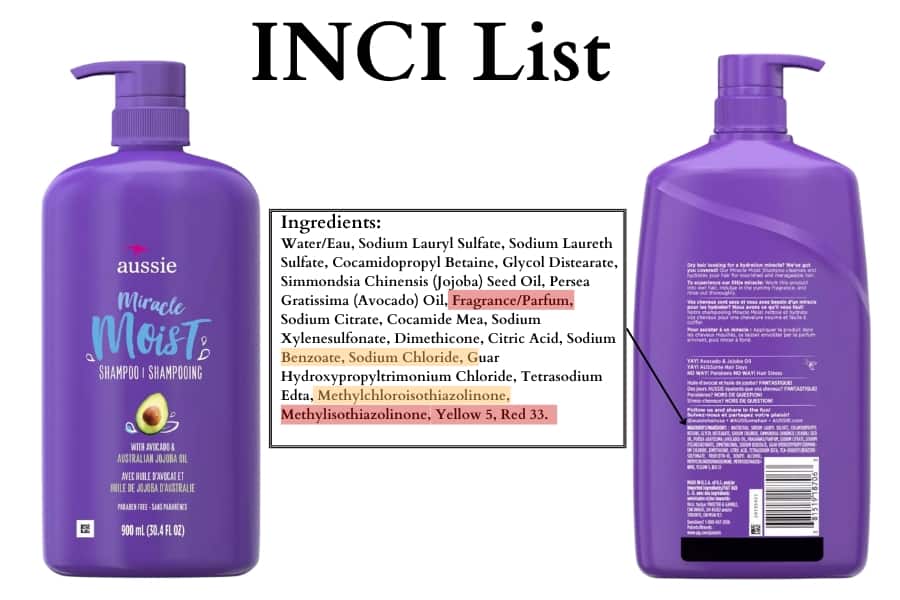
Marketing terms like “natural” or “green” don’t always mean safe — many products still hide questionable or harmful ingredients behind clever branding.
Here’s how to shop smarter:
- 🔍 Know what to avoid: Watch out for common toxic ingredients such as parabens, phthalates, formaldehyde, triclosan, and synthetic fragrances — all of which have been linked to hormone disruption, allergies, and respiratory irritation.
- 📱 Use helpful tools: Apps like Think Dirty, EWG’s Healthy Living, and Yuka let you scan barcodes to instantly see safety ratings and ingredient breakdowns.
- ✅ Trust third-party certifications: Look for seals like MADE SAFE, EWG Verified, or USDA Organic, which ensure products meet strict safety and transparency standards.
Learning to read labels has been a complete game changer for us.
Over time, we’ve learned how to spot the “greenwashed” brands from the truly clean ones — and now it pretty much just takes a quick glance to tell the difference.
Step 5: Choose Safer Furniture and Home Décor

Your furniture might look harmless, but it can quietly impact your indoor air quality more than you realize.
VOCs are notorious in new items — think new car smell, freshly painted walls, new furniture, cleaning sprays, and even scented candles—all releasing invisible gases that can linger in your indoor air.
Many sofas, mattresses, and cabinets are made with synthetic foams, glues, and finishes that release chemicals into your home’s air — especially when new or exposed to heat.
New furniture can off-gas the highest levels of chemicals within the first few months after purchase. Allowing furniture to air out outdoors or in a well-ventilated room before use can significantly reduce exposure to these toxins.
When it’s time to replace or update your furniture, focus on natural and low-toxin materials that won’t pollute your indoor air:
- 🌿 Solid wood furniture instead of particleboard or MDF (which often contain formaldehyde-based glues)
- 🛋️ Natural fabrics such as organic cotton, linen, or wool
- 💤 Natural latex or wool cushions instead of polyurethane foam
- 🪵 Low-VOC finishes and water-based stains
These swaps not only reduce chemical exposure but also help create a cleaner, longer-lasting, and more sustainable home.
We cover this topic more in depth, including the most important switches and all the top brands in the non toxic furniture game in our ultimate non toxic furniture guide
Step 6: Tackle High-Impact Areas First
I’ll say this a few times in this article because it’s that important — you don’t need to detoxify your entire home overnight!
Trying to do everything at once can quickly lead to overwhelm and anxiety, which defeats the purpose of creating a healthier, more peaceful space.
If you can only afford to make a few swaps right now — that’s perfectly okay! Start where it’s most practical, like the kitchen, just like we did. You can replace everyday items there for far less than the cost of something big, like a new mattress or bed setup.
Instead, first focus on the areas where you spend the most time and where toxins have the greatest impact:
- 🛏️ Bedroom: You spend 6–8 hours here nightly, so prioritize organic bedding, a non-toxic mattress, and good ventilation.
- 🍴 Kitchen: Where you prepare and store food — a key place to minimize chemical exposure.
- 🛁 Bathroom: Where personal care and cleaning products can add up fast.
- 🧸 Playroom/Nursery: Children are especially vulnerable to toxins due to their developing systems and tendency to explore with their hands (and mouths).
Step 7: Open Your Windows Daily
One of the simplest and most effective ways to detoxify your home is completely free — just open your windows.
Even cracking them for 5–10 minutes a day allows stale, polluted indoor air to escape and fresh air to circulate in.
If you suffer from allergies or live in an area where opening windows isn’t practical year-round, try running a HEPA air purifier for a few hours a day or using your HVAC system’s “fresh air” or “vent” mode. You’ll still get cleaner indoor air without letting in outdoor allergens or extreme weather.
Indoor air can quickly become stagnant, especially after cleaning, cooking, or bringing in new furniture or products, which often release VOCs and other chemicals.
Regular ventilation helps dilute these pollutants, balances humidity, and can even prevent mold and moisture buildup.
Step 8: Ditch Synthetic Fragrances
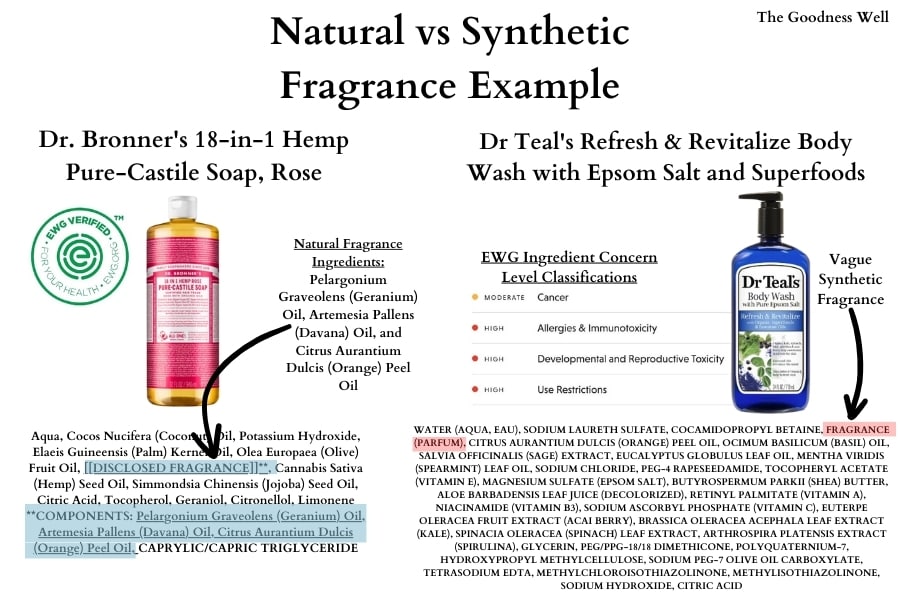
“Fragrance” or “parfum” on an ingredient list can hide dozens or even hundreds of undisclosed chemicals, many of which are hormone disruptors and allergens. These appear in everything from candles and air fresheners to laundry detergent and hand soap.
Replace synthetic fragrances with:
- Essential oil diffusers
- Beeswax candles
- Fresh flowers
- Fragrance-free products
- Natural cleaning methods that eliminate odors rather than masking them
Step 9: Choose Natural and Organic When Possible

While it’s not always feasible to buy everything organic, prioritize natural and organic options for items that directly contact your body or food:
- Organic produce (especially the “Dirty Dozen”)
- Organic cotton bedding, towels, and clothing
- Natural fiber rugs and curtains
- Chemical-free personal care products
- Organic, pasture-raised meats and dairy
Even small swaps in these categories can significantly reduce your toxic load.
Step 10: Make Gradual, Sustainable Changes
Like we’ve said throughout this guide, creating a non-toxic home isn’t about doing it all overnight — it’s about taking it one step at a time. Don’t let perfection be the enemy of progress. This journey is meant to bring peace and health into your home, not stress or pressure.
Making slow, intentional changes not only keeps things affordable but also helps new habits actually stick.
Try this simple approach:
- 🔄 Replace products as they run out
- 🗓️ Make one swap each week or month
- ⚖️ Start with the items that concern you most
- 🎉 Celebrate each small win
- 🕊️ Be patient with yourself
Every small change adds up — and even removing one toxic product from your home is a meaningful step toward a healthier space for you and your family.