
What Is OEKO-TEX® Certified? (Explained Simply)

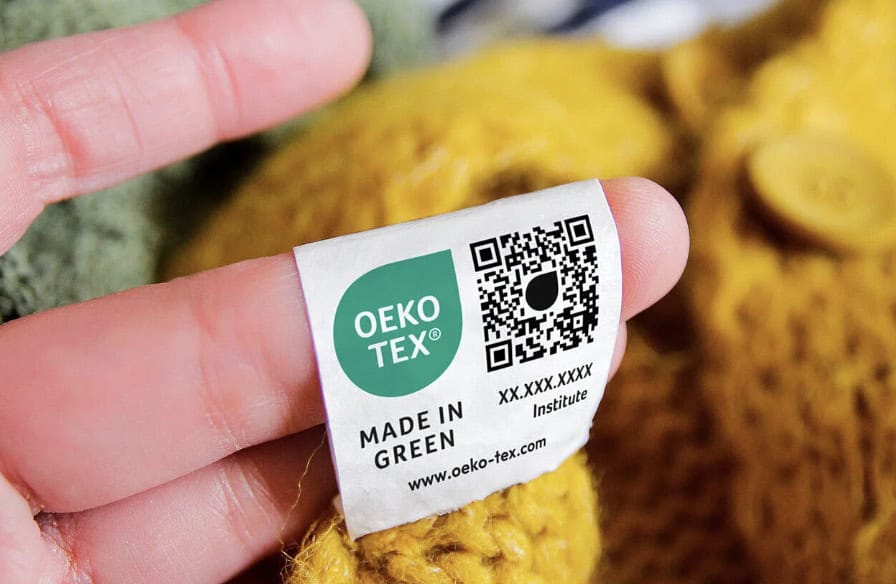
If you’ve ever shopped for clothing, bedding, or home textiles, you’ve likely seen the OEKO-TEX® label and wondered what it actually means.
With growing awareness around chemical exposure in everyday products, certifications like OEKO-TEX® are meant to help consumers make safer, more informed choices.
For example, OEKO-TEX focuses on textile chemical limits, while certifications like MADE SAFE Certified apply more broadly to personal care and household products.
This article explains what OEKO-TEX® Certified really means, why it matters for health and comfort, and how to understand the label without getting overwhelmed.
OEKO-TEX® Certified means a textile product has been tested for chemical safety.
The certification focuses on substances that could transfer through skin contact or everyday use, such as formaldehyde residues.
It helps consumers quickly identify clothing, bedding, and home textiles that meet recognized safety limits.
What Does OEKO-TEX® Certification Mean?
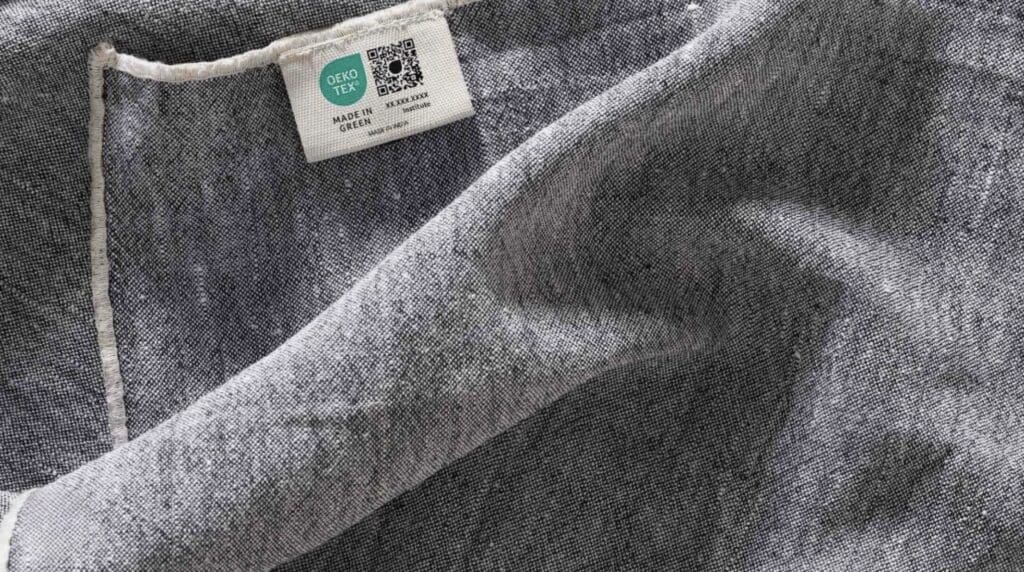
OEKO-TEX® certification is used on textiles to show that a product has been tested for substances that could be harmful during normal use.
It focuses on chemical safety, especially for items that touch your skin or are used daily in the home.
Definition of OEKO-TEX®
OEKO-TEX® is an independent, international testing and certification system for textiles and textile-related products.
Items are evaluated in laboratories to ensure they meet established safety limits for certain chemicals.
What OEKO-TEX® Tests For
Testing looks at whether chemical residues in a textile stay below safety limits for human contact.
This includes substances that could transfer through skin contact, be inhaled from fabrics, or affect sensitive users like children.
Common testing includes:
- Chemicals used in dyes, finishes, and treatments
- Residues that may remain after manufacturing
- Safety limits adjusted by product use (for example, baby items vs. curtains)
OEKO-TEX® testing applies to every component of a product, including threads, buttons, and labels—not just the main fabric.
While the certification does not guarantee a product is completely chemical-free, it does help limit exposure to substances consumers are commonly concerned about.
OEKO-TEX® testing helps ensure textiles stay within safety limits for substances such as:
- Formaldehyde, sometimes used to reduce wrinkles or shrinkage
- Certain heavy metals, which may appear in dyes or pigments
- Azo dyes that can break down into harmful aromatic amines
- Some plasticizers and finishing chemicals used to improve softness or durability
The Different OEKO-TEX® Standards
Not every OEKO-TEX® label means the same thing.
The organization behind the certification—OEKO-TEX—offers multiple standards, each focused on a different part of the textile process.
Understanding which label you’re seeing helps you know what was actually tested.
OEKO-TEX® STANDARD 100
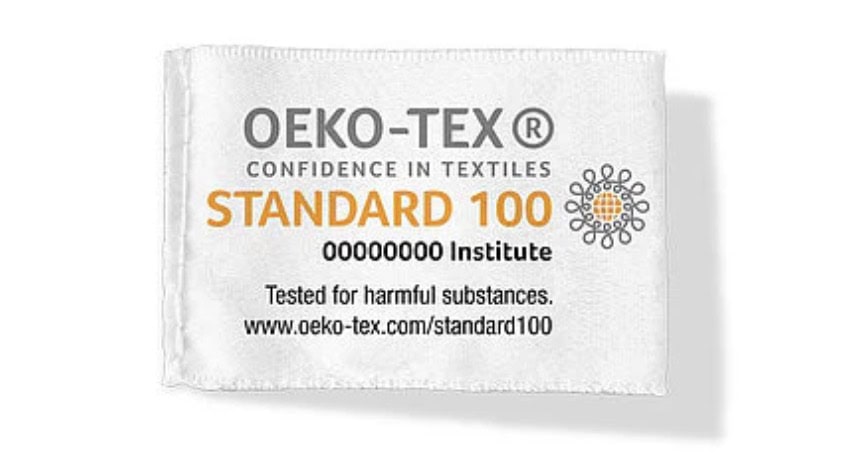
STANDARD 100 is the most common OEKO-TEX® label consumers encounter. It applies to finished textile products and confirms that each component meets chemical safety limits for human contact.
You’ll most often see STANDARD 100 on:
- Clothing and underwear
- Bedding, sheets, and pillows
- Towels, baby items, and soft furnishings
Products are tested based on how they’re used. For example, items designed for babies are held to stricter limits than items like curtains.
Other OEKO-TEX® Labels
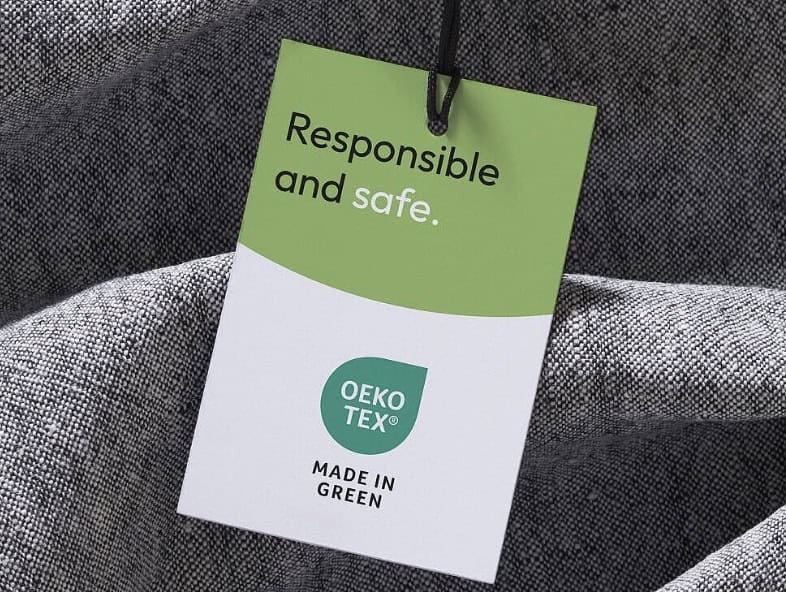
In addition to STANDARD 100, OEKO-TEX® offers other certifications that focus on different stages of production:
- MADE IN GREEN: Combines product safety testing with environmental and social criteria
- LEATHER STANDARD: Applies chemical safety testing to leather goods
- ECO PASSPORT: Screens chemicals used during textile manufacturing rather than finished products
These labels serve different purposes and are not interchangeable.
A product can meet STANDARD 100 requirements even if it is not organic or sustainably produced.
What OEKO-TEX® Certification Does Not Guarantee
OEKO-TEX® certification is helpful, but it’s important to understand its limits.
The label focuses on chemical safety thresholds, not every aspect of how a product is made or how it affects the environment.
This is especially important when looking at materials like upholstery or performance fabrics, where added finishes or treatments may still be used even if the textile meets OEKO-TEX® limits.

Limits of Chemical Safety Testing
OEKO-TEX® certification does not mean a product is completely free of all chemicals. Instead, it confirms that tested substances fall below established safety limits for normal use.
This means OEKO-TEX® does not guarantee:
- Zero chemical exposure
- Long-term environmental impact assessments
- That every possible substance was tested
What OEKO-TEX® Is Often Confused With
OEKO-TEX® is sometimes mistaken for other types of certifications, but it serves a different purpose.
A textile can be OEKO-TEX® certified even if it is made from synthetic fibers.
It does not automatically mean:
- The product is organic
- The materials were sustainably sourced
- Workers were paid fair wages (unless another label states this)
Conclusion
OEKO-TEX® certification can be a helpful tool when choosing clothing, bedding, and home textiles, especially for items that come into regular contact with skin.
It offers a clear signal that a product has been tested to meet recognized chemical safety limits, without requiring consumers to decode complex lab reports.
At the same time, OEKO-TEX® works best when viewed as one piece of the puzzle, not a complete solution.
Pairing this certification with other considerations—such as material choice, product use, personal sensitivities, and complementary standards like GOTS—can support more confident, mindful decisions.