The 6 Best Non-Toxic Cribs (Materials & Certifications Compared)




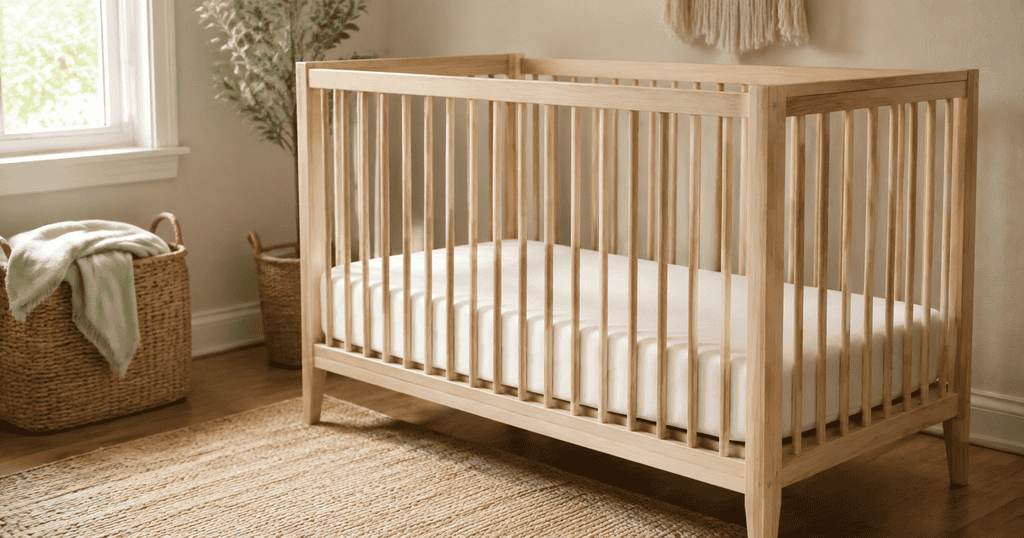
Choosing one of the best non-toxic cribs means looking beyond reassuring labels to consider safety, materials, functionality, and overall value.
Because babies spend so much time sleeping, their crib should provide a secure environment with a firm, flat mattress, as recommended by the NIH Safe to Sleep® program.
However, differences in construction and product transparency can make it difficult to determine which options genuinely support a lower-toxicity nursery.
This guide will help you compare the most important factors without assuming the most expensive crib is automatically the best.
The Goodness Well is reader-supported. Some links in this article may be affiliate links, but every recommendation follows our editorial standards and independent review process. Learn more about our editorial standards and review methodology.
What Makes a Crib Safer
“Non-toxic” is not a regulated guarantee that a crib contains no potentially concerning substances. A more useful approach is to compare the crib’s construction, finishes, adhesives, and mattress materials. Clear disclosure makes those comparisons easier.
Materials and Construction
Solid wood usually requires fewer binders than MDF, particleboard, and some types of plywood. Composite wood often relies on resins that may release formaldehyde and other volatile organic compounds, or VOCs.
Emissions depend on the type of wood, resin, manufacturing process, and any applicable standards.
However, “solid wood” alone does not settle the question. A solid wood crib may still use undisclosed glue, paint, stain, or sealant. Meanwhile, a well-tested engineered wood crib may have verified low emissions despite containing more adhesives.
When comparing construction, look for:
- The exact wood species and components
- Solid wood versus composite wood
- Formaldehyde or resin disclosures
- Details about glue and adhesives
- Replacement parts and repair options
These are some of the same details we considered when evaluating the cribs featured in this guide.
Finishes and Mattresses
Paints, stains, sealants, and adhesives can release VOCs after manufacturing. This release is commonly called off-gassing. Odor may accompany off-gassing, but smell alone cannot confirm whether a product has low emissions.
Look for water-based or zero-VOC finishes supported by specific documentation. Terms such as “baby-safe,” “natural,” and “non-toxic” are less useful without ingredient details or emissions testing.
If a mattress is included, evaluate it separately from the crib frame. Check the core, cover, waterproofing, adhesives, and flame-retardant disclosure. Natural latex, coconut coir, and polyurethane foam differ in feel, weight, durability, and price. A natural-sounding material also does not guarantee that every mattress component is disclosed.
Understanding Crib Certifications
Certifications are most helpful when you know exactly what they measure. They can verify one part of a product’s safety profile, but they rarely cover every material or chemical concern.
Emissions and Safety Testing
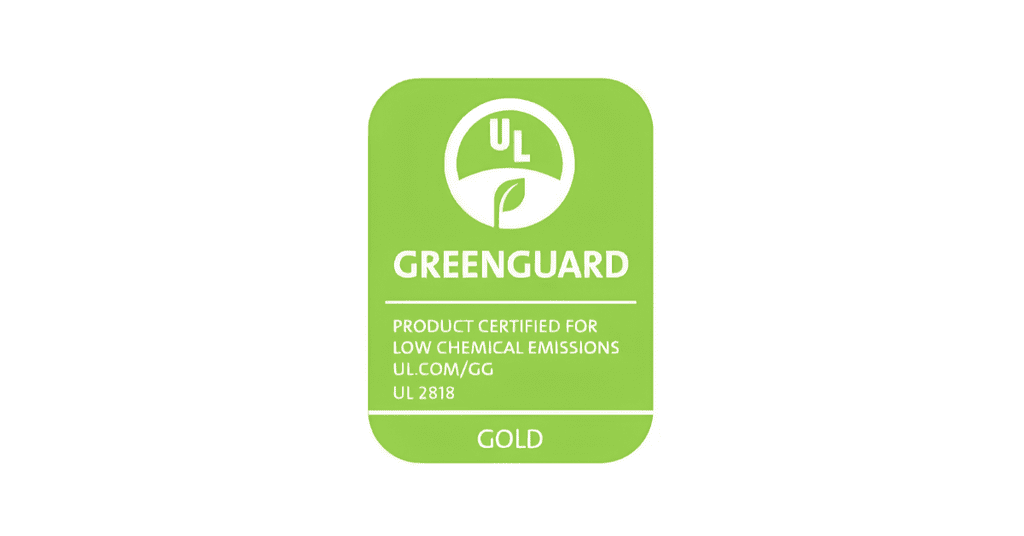
GREENGUARD Gold certification indicates that a finished product meets strict limits for chemical emissions. This can help shoppers compare indoor-air emissions without relying only on brand claims.
Key Takeaway: GREENGUARD Gold verifies low chemical emissions, but it does not guarantee complete material transparency.
It does not mean a crib contains no VOCs, chemicals, engineered wood, or synthetic materials.
Low-emission certification also does not replace material transparency. A certified crib may still leave its wood type, finish ingredients, or adhesives unclear. The stronger disclosure provides both testing and a detailed material list.
Crib safety standards address different risks. CPSC and applicable ASTM requirements cover areas such as structural integrity, slat spacing, hardware, and entrapment hazards.
Third-party verification may confirm compliance with those standards, but it does not automatically indicate full chemical testing.
Check what each certification applies to before comparing products. The crib frame, mattress, sheets, and accessories may not share the same certifications. We also checked this distinction when comparing the recommendations in this roundup.
Compare Function and Cost
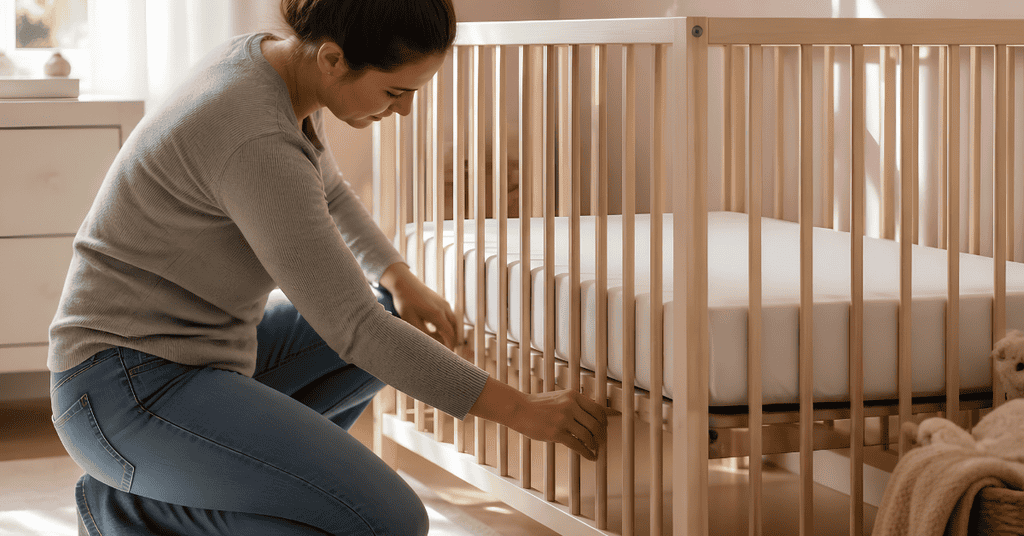
A lower-toxicity crib still needs to fit your space, routine, and budget. Material purity carries less practical value if the crib becomes difficult to use or requires costly additions within a year.
Features Worth Paying For
Begin with the crib’s expected lifespan. Convertible models may become toddler beds, daybeds, or full-size beds. However, some require separate rails, kits, or bed frames. Check their prices and availability before treating conversion as future savings.
Check the price and availability of conversion kits before buying. A convertible crib may cost more over time if essential parts are sold separately.
Adjustable mattress supports can make early use more convenient. The mattress must be lowered once a child reaches the manufacturer’s developmental or height limits. Confirm how many support positions are available and whether adjustments require complicated disassembly.
Portability creates another tradeoff. Travel cribs are lighter and easier to store, but they may have floor-level mattresses and shorter usage windows. Full-size wooden cribs usually provide greater durability but take up more space and are harder to move.
Compare the complete cost rather than the crib’s listed price. Include the mattress, conversion kit, fitted sheets, shipping, and replacement parts. Then consider warranty coverage and return terms.
This approach helps balance material disclosure and verified emissions with durability, daily function, and affordability.
The Best Non-Toxic Cribs
dadada
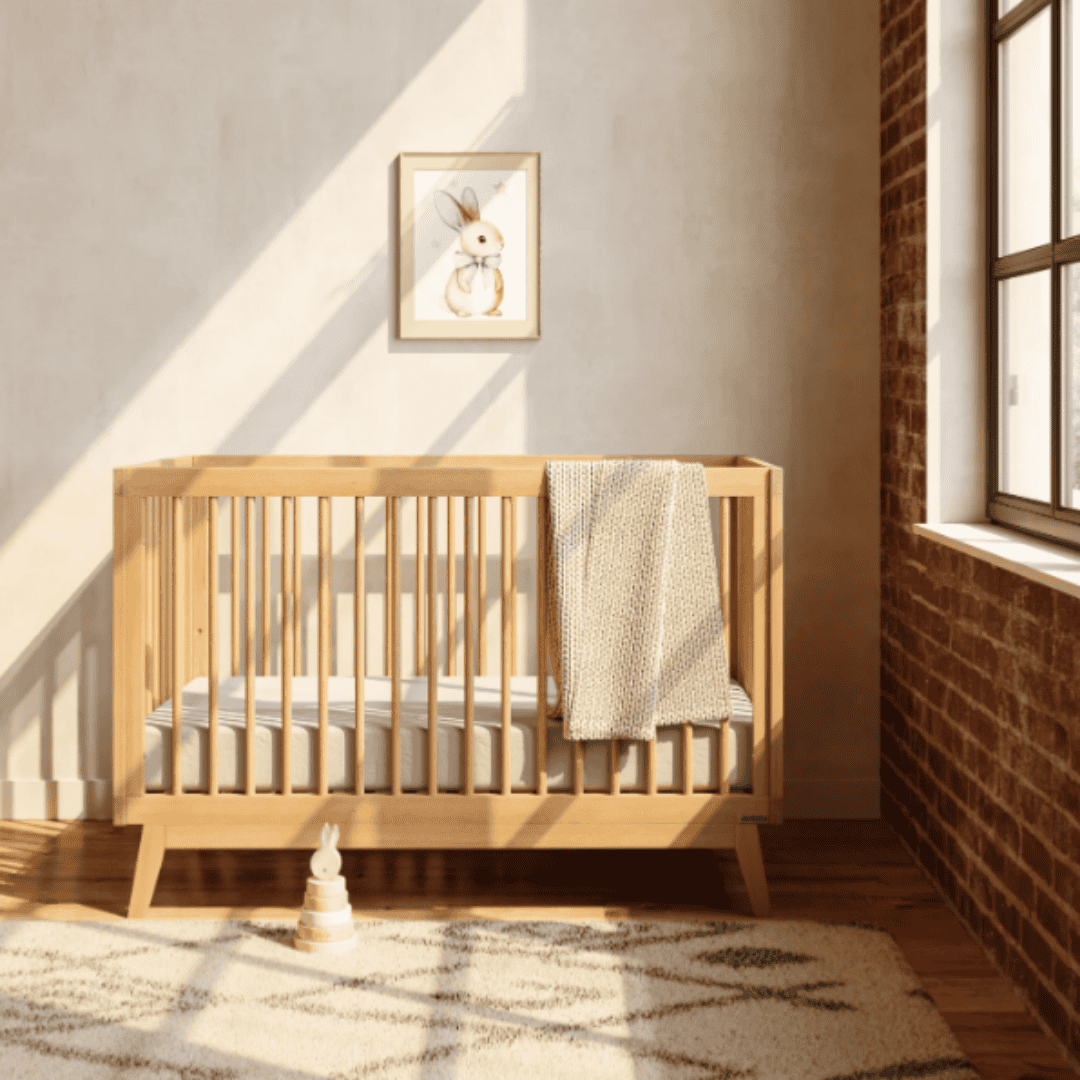
Dadada is our top pick because its crib lineup offers the best balance of solid wood construction, safer finishes, useful convertibility, and affordability.
Every crib is made in Italy from 100% solid European beechwood and is GREENGUARD Gold certified for low chemical emissions.
The brand also states that its finishes contain no added PFAS or PFOA and are free from lead, formaldehyde, and phthalates.
Depending on the model, the cribs convert into toddler beds or floor beds, making them practical for longer-term use.
The main downside is that mattresses are generally not included, and some models require a separately purchased conversion kit.
Product Highlights:
- Price: $459–$999
- Materials: 100% solid European beechwood
- Finish / Adhesives: Baby-safe finishes; adhesives not clearly disclosed
- Certifications: GREENGUARD Gold
- Safety: No added PFAS or PFOA; lead-free, formaldehyde-free, and phthalate-free finishes
- Functionality: Convertible designs with three adjustable mattress heights; select models convert into floor beds
- Sustainability: Locally sourced renewable materials, low-impact production, and resale partnership with REBEL
- Made In: Italy
- Warranty: Two years for cribs
- Best For: Best overall balance of solid wood, lower-emission materials, convertibility, and value
- Downside: Mattress and some conversion kits must be purchased separately
Green Cradle
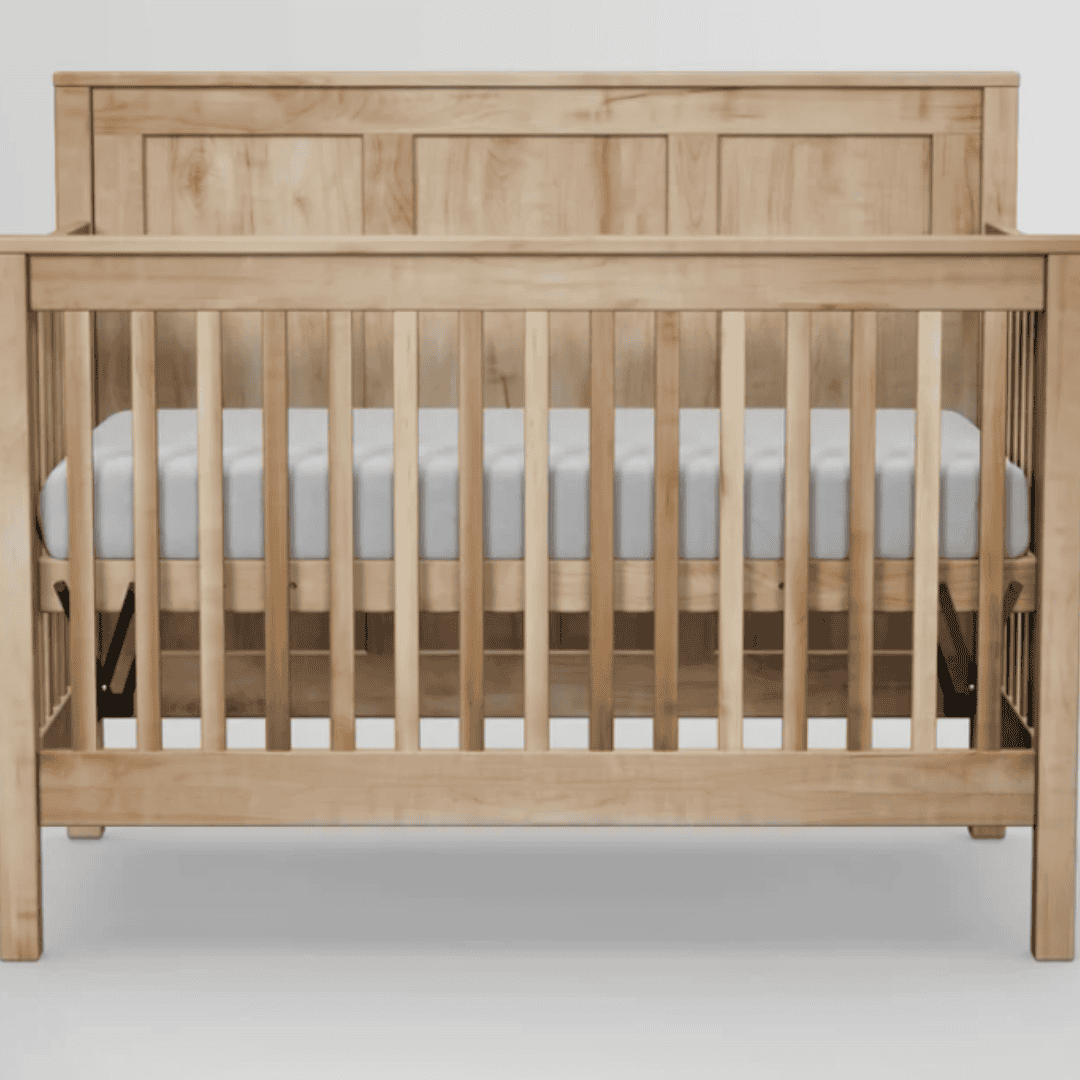
When it comes to the absolute cleanest materials among cribs or any nursery furniture, Green Cradle takes the crown.
Its cribs are handcrafted in the USA from 100% solid hardwood, with no MDF, plywood, particleboard, or veneer.
Buyers can choose an unfinished crib or a petroleum-free, formaldehyde-free, zero-VOC oil finish, and the cribs are GREENGUARD Gold certified.
The lineup includes brown maple, hard maple, red oak, cherry, and walnut options, with convertible designs that can grow into toddler or full-size beds.
This is one of the best choices for avoiding engineered wood and conventional furniture finishes, but the premium materials come with a considerably higher price.
Product Highlights:
- Price Range: $1,075.50–$3,010.50
- Materials: 100% solid brown maple, hard maple, red oak, cherry, or walnut
- Finish / Adhesives: Unfinished or petroleum-free, formaldehyde-free, zero-VOC oil finish
- Certifications: GREENGUARD Gold
- Safety: No MDF, plywood, particleboard, or veneer
- Functionality: 4-in-1 and 5-in-1 convertible designs
- Sustainability: Local, sustainably grown American hardwood
- Made In: USA
- Best For: Premium solid-hardwood materials
- Downside: Expensive, with conversion pieces sold separately
Nestig
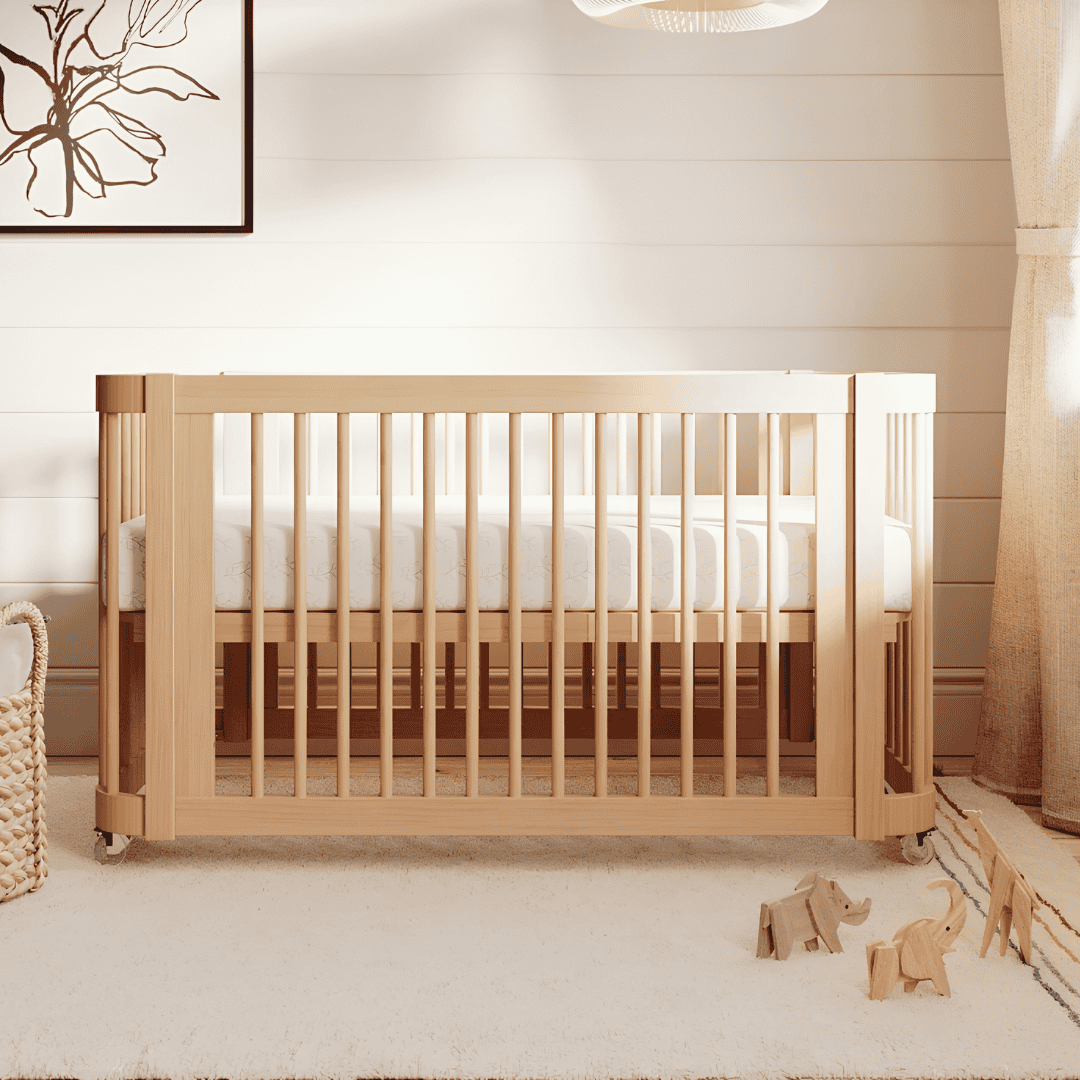
Nestig takes a more flexible approach with cribs designed to change as a child grows.
Most models transition from a mini crib or bassinet into a full-size crib and then a toddler bed, with some offering both raised and Montessori-style configurations.
The cribs use sustainably harvested pine, non-toxic finishes, and eco-engineered wood components, while select models are GREENGUARD Gold certified.
Nestig also tests its cribs to CPSC and ASTM standards and certifies them through the Baby Safety Alliance.
These are some of the most versatile cribs in the roundup, although the engineered wood and polyurethane foam used where applicable may not suit buyers seeking entirely solid-wood construction.
Product Highlights:
- Price: $649–$1,499
- Materials: Pine, eco-engineered wood, steel, cotton, and woven cotton detailing, depending on the model
- Finish / Adhesives: Non-toxic finishes; exact adhesives not clearly disclosed
- Certifications: Baby Safety Alliance; GREENGUARD Gold on select models
- Safety: Meets or exceeds applicable CPSC and ASTM crib standards
- Functionality: Converts from a mini crib or bassinet to a full crib and toddler bed
- Sustainability: Sustainably harvested wood, reforested materials, and low-inventory production
- Warranty / Shipping: 18-year limited warranty; 60-day free returns
- Best For: Versatile convertible cribs
- Downside: Uses eco-engineered wood and polyurethane foam where applicable
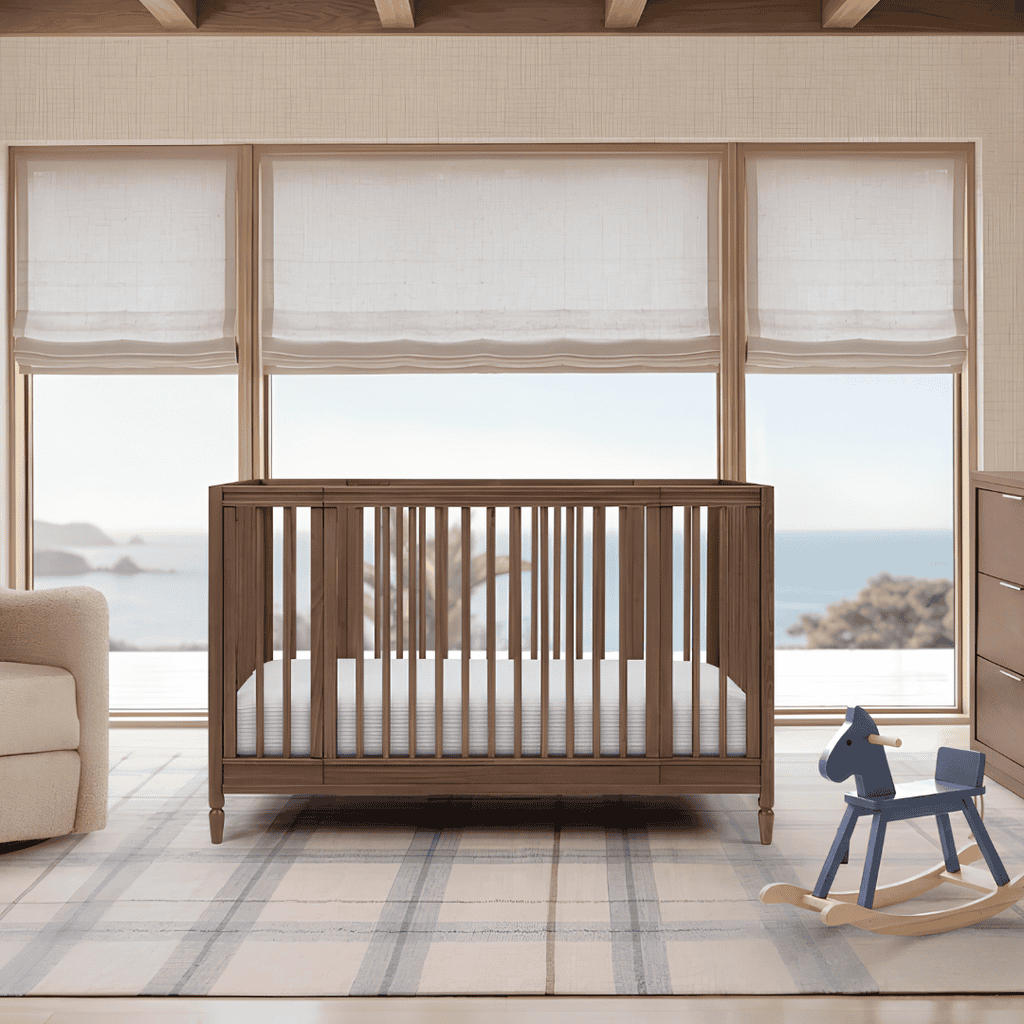
Delta Children
Delta Children stands out as the most affordable brand in this roundup, with several convertible cribs priced under $250.
The brand uses materials such as renewable New Zealand pine, although some models also include engineered wood.
All six cribs shown carry GREENGUARD Gold certification, and Delta states that its products are free from added toxic fire retardants, lead, and phthalates.
The lineup includes 4-in-1, 6-in-1, and 9-in-1 designs that can remain useful well beyond the baby stage, which helps reduce waste.
This is a practical choice for a lower-cost, certified crib, but material and finish details are less transparent than those from the solid-wood brands above.
Product Highlights:
- Price: $179.99–$599.99
- Materials: Renewable New Zealand pine and engineered wood, depending on the model
- Finish / Adhesives: Exact finishes and adhesives not clearly disclosed
- Certifications: GREENGUARD Gold
- Safety: Free from added toxic fire retardants, lead, and phthalates; tested to applicable BSA, CPSIA, and ASTM standards
- Functionality: 4-in-1, 6-in-1, and 9-in-1 convertible options
- Sustainability: Renewable wood and designs intended for longer use
- Best For: Affordable GREENGUARD Gold-certified cribs
- Downside: Some engineered wood and limited material transparency
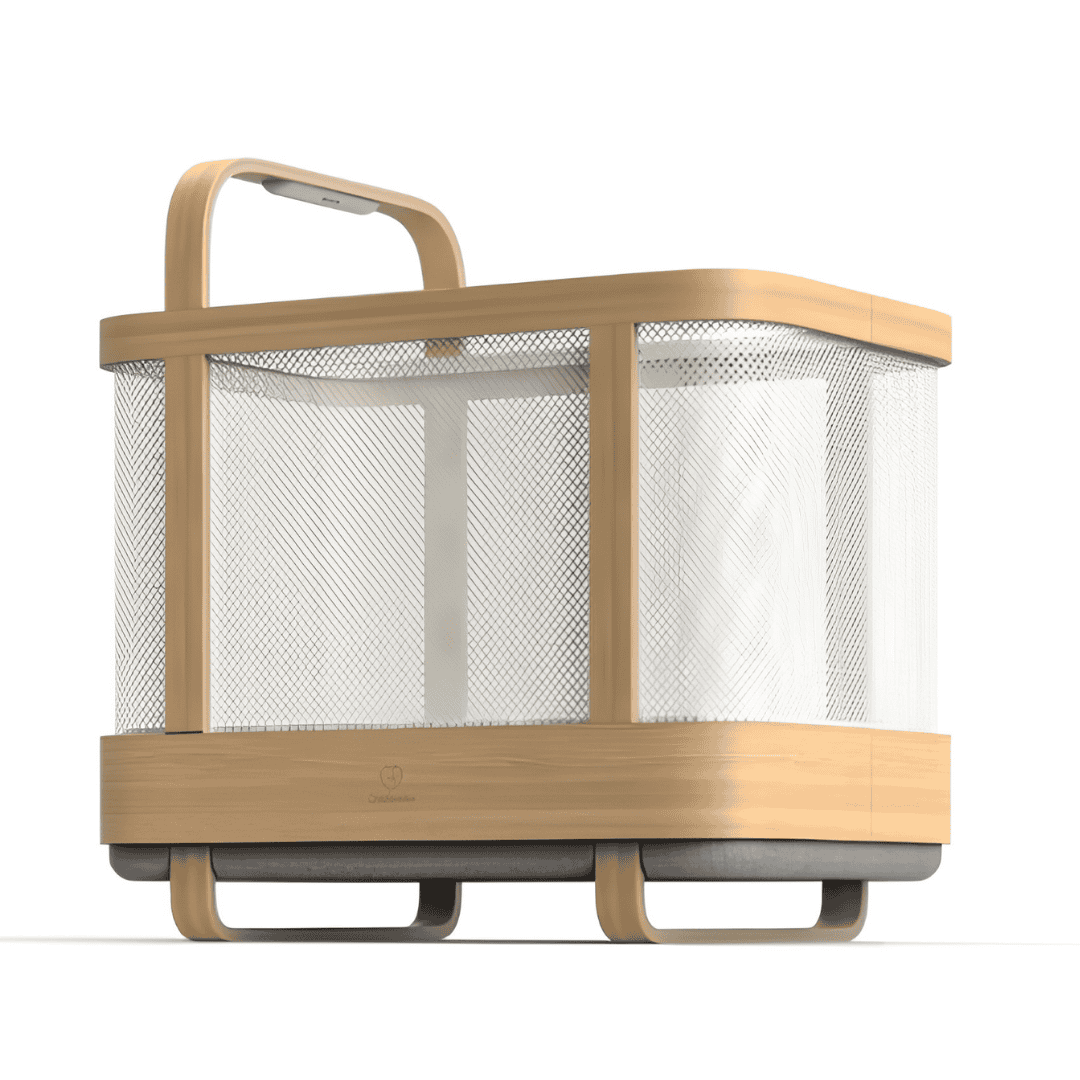
Cradlewise
Cradlewise is the clear choice for parents who want a smart crib that can respond when their baby begins to stir.
It combines a bassinet and mini crib with gentle bouncing, a built-in monitor, sound machine, connected app, and sleep insights.
The included mattress uses biodegradable coconut coir and latex instead of polyurethane foam, while the crib, mattress, and sheets are GREENGUARD Gold certified for low chemical emissions.
It also meets applicable ASTM standards and is verified by the Baby Safety Alliance, making it a well-tested option for a tech-focused nursery.
The biggest drawbacks are its high price and shorter lifespan, since it is designed for use only until around age two or 33 pounds.
Product Highlights:
- Price: $1,499–$1,799
- Materials: Molded plywood with veneer cladding, polyester mesh, and coconut coir and latex mattress
- Finish / Adhesives: Exact finishes and adhesives not clearly disclosed
- Certifications: GREENGUARD Gold, Baby Safety Alliance, FCC, and applicable ASTM standards
- Safety: Composite wood complies with no-added or ultra-low-emitting formaldehyde resin standards
- Functionality: Bassinet-to-crib conversion, responsive bouncing, monitor, sound machine, app, and sleep tracking
- Mattress: Biodegradable coconut coir and latex; free from polyurethane foam
- Warranty / Shipping: One-year limited warranty and 60-night trial
- Best For: Smart sleep features
- Downside: Expensive and usable only until around age two or 33 pounds
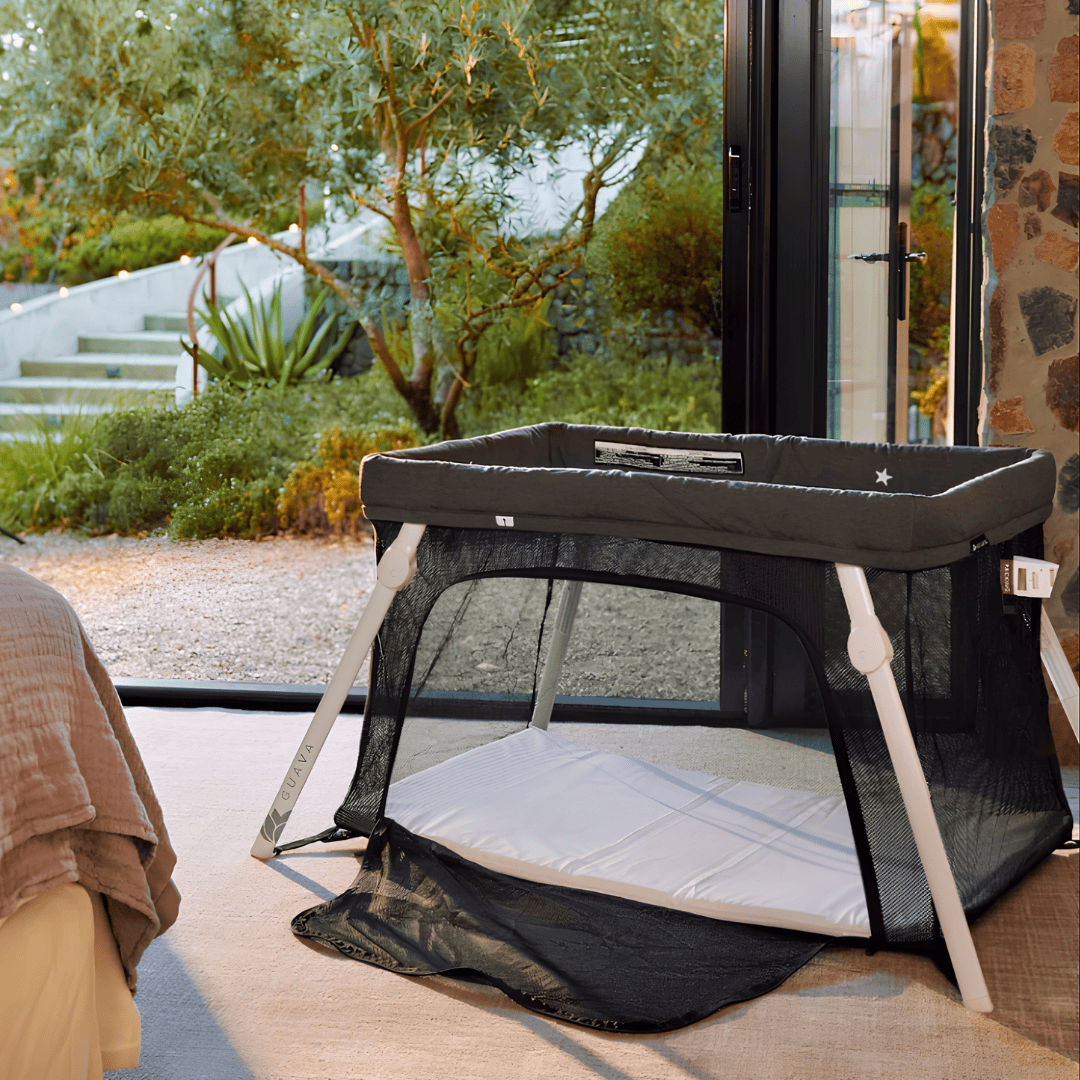
Guava Family
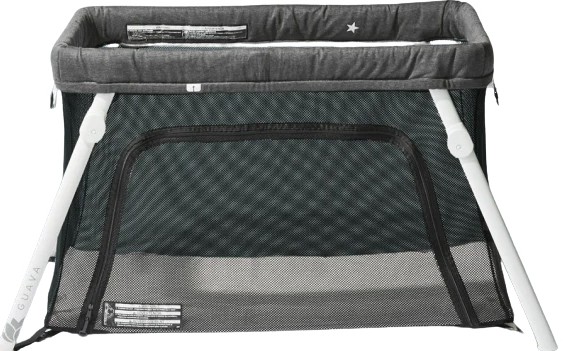
Guava Family’s Lotus is built for travel rather than serving as a traditional nursery crib.
It weighs 15 pounds, folds into an airport-friendly backpack, and includes a side zipper that also makes it useful as a playard.
The aluminum frame, breathable mesh, washable fabric, and low-VOC insulated mattress are GREENGUARD Gold certified.
Guava also states that the Lotus is made without PVC, arsenic, lead, mercury, phthalates, cadmium, formaldehyde, or flame retardants.
This is the best option for families who need a portable sleep space, but its floor-resting mattress may not be as convenient for everyday use as a raised nursery crib.
Product Highlights:
- Price: $279.95
- Materials: Aluminum frame, breathable mesh, washable fabric, and insulated mattress
- Finish / Adhesives: Exact finishes and adhesives not clearly disclosed
- Certifications: GREENGUARD Gold, ASTM F406, 16 CFR 1221, and CPSIA
- Safety: No PVC, arsenic, lead, mercury, phthalates, cadmium, formaldehyde, or flame retardants
- Functionality: Travel crib and playard with a side zipper door
- Portability: 15 pounds, 3D folding design, and airport-friendly backpack
- Warranty / Shipping: Two-year warranty, 60-day trial, free returns, and free U.S. shipping over $50
- Best For: Travel and portable sleep
- Downside: Floor-level mattress and not a traditional nursery crib