Is Couch Foam Toxic? What to Know Before Buying

Couch foam is not automatically toxic, but the type of foam inside your sofa can affect how much chemical exposure it may add to your home.
Most modern couches use polyurethane foam, a soft and affordable material that can release volatile organic compounds, especially when it is new.
Research on flexible polyurethane foam notes that fresh foams can emit VOCs, though emissions often decline over time.
That is why the better question is not simply whether the foam is “toxic,” but whether the foam is certified, low-emission, well-ventilated, and free from unnecessary chemical treatments, since the overall couch materials matter just as much as the foam itself.
Couch foam can be a concern when it uses uncertified polyurethane foam.
New foam, vague material labels, strong chemical smells, and added treatments make it harder to trust.
Safer options use lower-emission certifications, clear cushion details, and fewer unnecessary chemical treatments.
What Couch Foam Contains

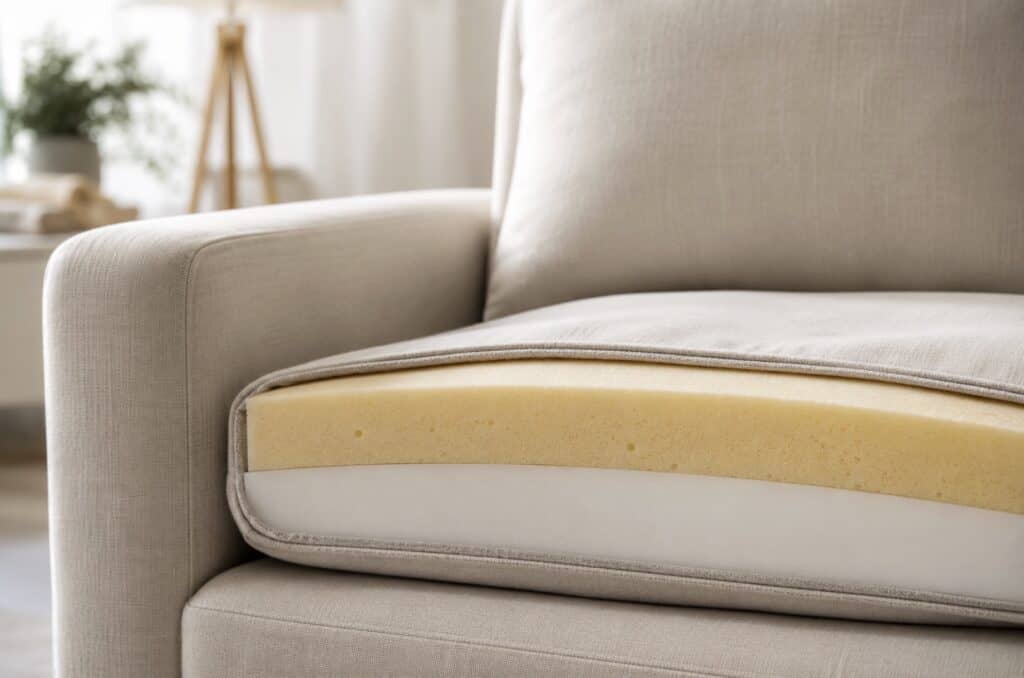
Most couch cushions are filled with flexible polyurethane foam. It is popular because it is soft, springy, lightweight, and affordable.
It also comes in different firmness levels, which makes it easy for furniture brands to use in many sofa styles.
Some couches use other cushion materials, either alone or layered with foam. These may include:
- Memory foam, a softer type of polyurethane foam
- Latex foam, which may be natural, synthetic, or blended
- Polyester fiberfill, often used as a wrap around foam
- Cotton or wool batting, usually used in thinner layers
- Down or feather blends, often used for a softer, plush feel
The foam core is only one part of the cushion. Many couch cushions also include fabric covers, adhesives, fiber wraps, or batting layers.
Key Takeaway: The cushion core, wrap, cover, and added treatments all affect how transparent a couch material really is.
These extra layers affect comfort, durability, and how the cushion holds its shape.
Polyurethane foam is made through a chemical reaction that creates a soft, open-cell material.
Fresh flexible polyurethane foam can release VOCs, which are gases that move from the material into indoor air.
A review in EXCLI Journal notes that fresh polyurethane flexible foams emit VOCs during production and that emissions decline over time.
One couch may use basic uncertified polyurethane foam, while another may use certified low-emission foam or latex-based cushions.
For shoppers, the main takeaway is simple: ask what the cushion core is made from. The word “foam” is not enough.
A couch with certified polyurethane foam, natural latex, or clearly disclosed materials gives you more useful information than a couch that only says “high-density foam.”
Why Some Foam Raises Concern

Some couch foam releases chemicals into indoor air. This happens most often with new polyurethane foam because fresh foam can give off volatile organic compounds, or VOCs.
VOCs are gases that come from certain materials and products. Indoors, these gases can build up more easily than they would outside.
VOCs are gases that leave certain materials and mix with indoor air. New foam usually releases the most VOCs soon after manufacturing or delivery.
Research on indoor VOC exposure has found connections with asthma-related symptoms, wheezing, and throat irritation, especially in sensitive people.
This matters most when a couch has:
- A strong chemical smell
- Brand-new foam cushions
- Uncertified polyurethane foam
- Poor airflow around the room
- Added flame-retardant or stain-resistant treatments
- Little information from the manufacturer
If a new couch smells strong, open windows and increase airflow for the first few days. Then check the product page for foam and emissions certifications.
Older couches can also deserve a closer look. Some older foam products used flame retardants that are no longer common in newer furniture.
Older couches may use different foam formulas than newer couches. If the foam is crumbling or exposed, replacement is usually the cleaner choice.
Newer couches are not automatically a problem. Many brands now use foam that meets stricter emission standards.
Clear material details and trusted certifications make it easier to choose cushions that release fewer VOCs indoors.
When Foam Is Lower Risk

Couch foam is usually less of a problem when the brand gives clear material details. You should be able to find out what the cushion core is made from and whether it has been tested for emissions.
Foam is a better choice when it has:
- Low-emission certification
- No added flame-retardant chemicals
- No added stain-resistant treatments
- Clear cushion material details
- Little or no strong chemical smell
- Good airflow during the first few weeks
Ventilation also helps. New foam releases the most VOCs when it is fresh. Airing out a new couch near open windows can reduce the amount of VOCs you breathe indoors.
A couch may also be a better fit if the brand clearly says it avoids added PFAS, stain guards, and flame retardants.
These details matter because treatments on the fabric or cushion layers can add chemicals beyond the foam itself.
When a new couch arrives, remove packaging quickly and let the cushions air out before heavy daily use.
For families with babies, pets, asthma, or chemical sensitivities, material transparency matters even more.
In those homes, choosing certified foam or natural cushion materials can make the couch easier to feel comfortable with every day.
Safer Cushion Options
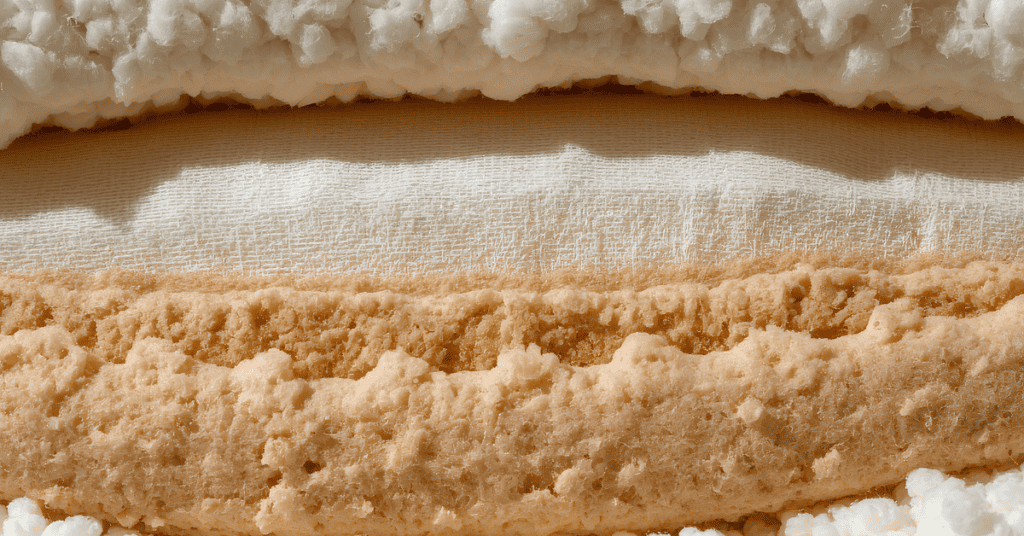
If you want a couch with safer foam, focus on two things: the cushion material and the testing behind it. A couch does not need to be perfect to be a better choice.
Lower-Emission Polyurethane Foam
Some couches still use polyurethane foam, but with better testing. Look for foam that is certified for lower VOC emissions and screened for specific chemicals.
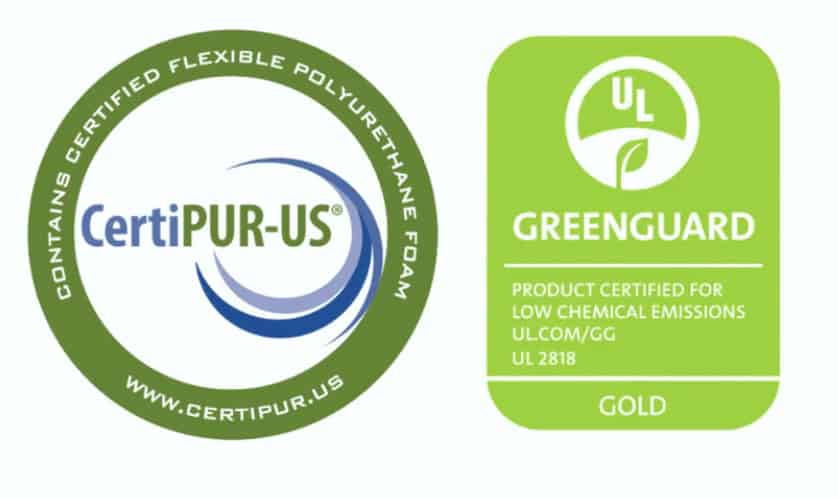
Helpful labels include:
- CertiPUR-US for flexible polyurethane foam
- GREENGUARD Gold for lower chemical emissions from finished products
CertiPUR-US certified foam is tested for low VOC emissions and is made without certain chemicals, including some flame retardants and heavy metals, according to the program’s certification requirements (CertiPUR-US).
This does not mean the entire couch is chemical-free. It only tells you something about the foam itself.
CertiPUR-US focuses on foam, while GREENGUARD Gold can apply to the finished product. These labels answer different shopping questions.
Natural and Certified Materials
Some shoppers prefer cushions made with fewer synthetic materials. These options are often more expensive, but they may be worth it for a couch used every day.
Look for:
- Natural latex foam
- GOLS-certified latex
- Wool batting
- Cotton batting
- GOTS-certified organic fabric or batting
- OEKO-TEX-certified textiles
Natural latex can be a good alternative to polyurethane foam. It is usually springy, durable, and supportive.
GOLS certification adds another layer of verification because it covers organic latex materials, processing, emissions testing, and substance limits.
Key Takeaway: Natural latex, wool, and cotton can reduce reliance on synthetic foam, but clear certification still matters.
Wool and cotton are usually used as wraps, batting, or cushion layers. They are not always as soft or bouncy as foam.
They can still help reduce reliance on synthetic foam when paired with a well-made cushion core.
For the simplest choice, look for a brand that explains the full cushion stack. That means the core, wrap, fabric, and any added treatments are clearly listed.
How to Choose Safer Foam

Choosing safer couch foam comes down to asking better questions before you buy. The goal is not to find a perfect couch.
At The Goodness Well, we look for practical swaps that lower exposure without making a home feel impossible to furnish.
Use this simple checklist when comparing couches:
- Ask what the cushion core is made from.
Look for clear terms like polyurethane foam, natural latex, wool, cotton, or fiberfill. - Look for foam testing.
CertiPUR-US can help when the couch uses polyurethane foam. GREENGUARD Gold can help when you want lower emissions from the finished product. - Check for added treatments.
Avoid couches with added stain-resistant, water-repellent, or flame-retardant treatments when possible. - Ask about PFAS.
Some stain-resistant treatments use PFAS chemicals. The CDC explains that PFAS break down slowly and can remain in people, animals, and the environment over time. - Choose transparent brands.
A brand should be able to explain the foam, fabric, cushion wrap, and any treatments used. - Air out new furniture.
Place the couch in a well-ventilated room when it first arrives. Open windows when weather allows. - Trust your nose, but verify.
A strong chemical smell does not tell you the exact chemical. It does tell you to ventilate and check the product details.
Before buying, ask the brand: “What is inside the cushion, and is the foam certified for low emissions?”
If a brand only says “high-density foam,” ask for more information. That phrase usually describes firmness and durability.
It does not tell you whether the foam is low-emission or free from added treatments.
For most homes, a realistic safer choice is a couch with certified foam, no added stain guard, and clear material details.
If you want to avoid polyurethane completely, look for natural latex cushions with organic or untreated textile layers.