What Is Formaldehyde in Furniture? How It Affects Indoor Air

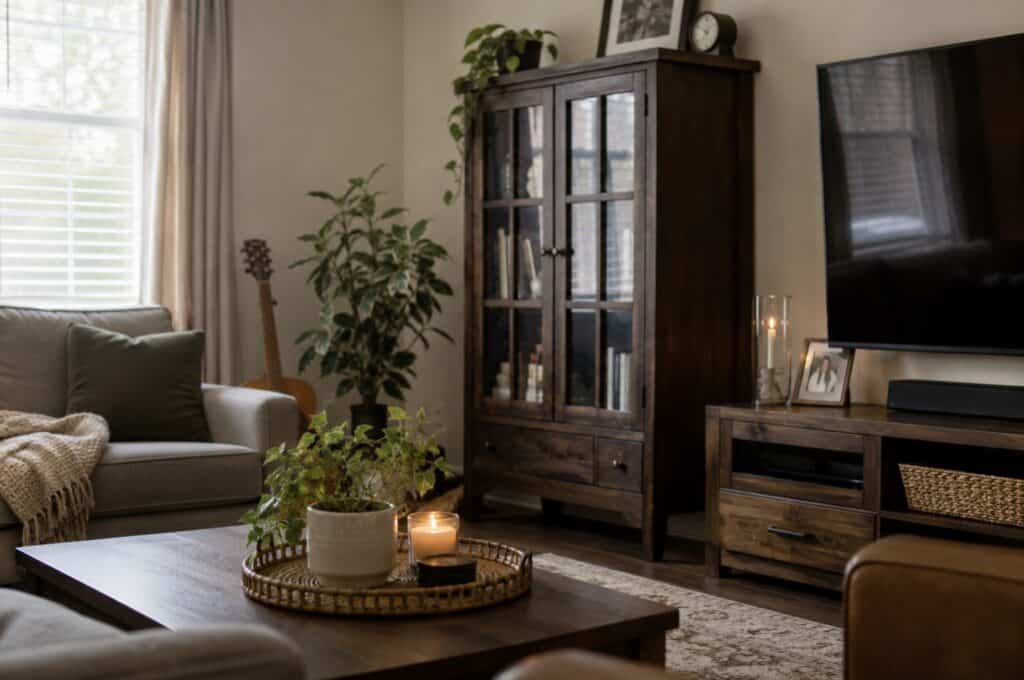
Formaldehyde is one of the most common chemicals people ask about when choosing safer furniture for their home.
It matters because formaldehyde can be released into indoor air from some manufactured wood products, and the CDC notes that newer pressed-wood items can be one source of formaldehyde exposure inside homes.
That does not mean every piece of wood furniture is unsafe or that any detectable amount is automatically a problem.
The key is knowing where formaldehyde is most likely to show up, why it is used, and how to choose lower-emission furniture with more confidence.
Formaldehyde in furniture is a VOC often found in engineered wood adhesives.
It becomes a bigger issue when furniture releases formaldehyde into indoor air, especially when new or poorly ventilated.
For shoppers, it does not automatically mean a product is unsafe, but it does mean you should check materials, certifications, and emission labels.
What Formaldehyde Is

Formaldehyde is a colorless gas with a strong smell. It is a naturally occurring chemical, but it is also made for industrial use.
In furniture conversations, formaldehyde matters because it is a volatile organic compound, or VOC. That means it can evaporate into air at room temperature.
Formaldehyde can also be found in building materials, household products, fabrics, and some wood-based materials.
Formaldehyde is not only used in furniture. It can also appear in building materials, fabrics, and other household products.
Health researchers discuss formaldehyde because breathing higher levels can irritate the eyes, nose, throat, and lungs in some people.
For furniture shoppers, the key idea is simple: formaldehyde is not always a problem by itself. The real question is whether a product releases enough formaldehyde into indoor air to matter.
Where It’s Found in Furniture
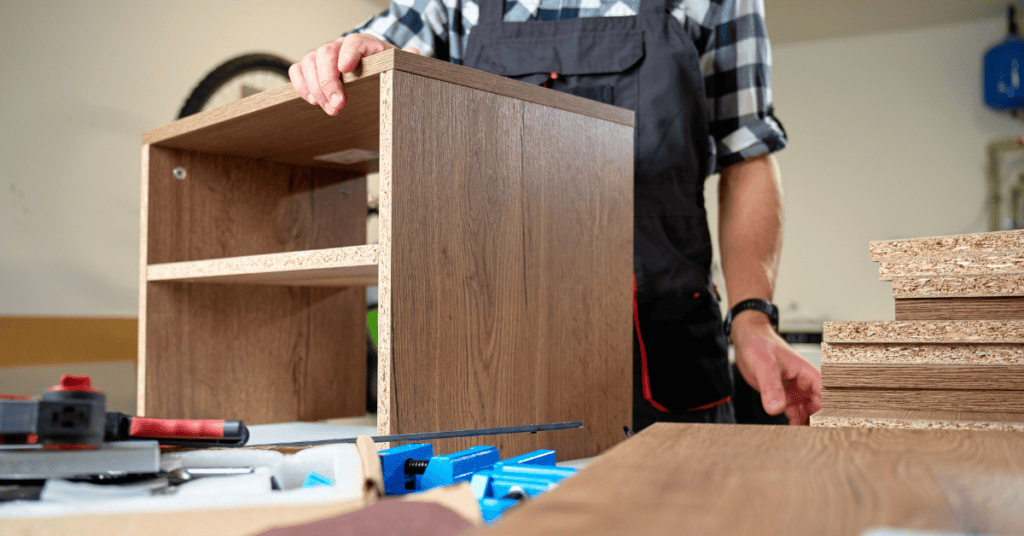
In furniture, formaldehyde is usually found in the materials that hold wood pieces together. It is most often connected to resins and adhesives used in engineered wood.
These materials are common in:
- MDF
- Particleboard
- Plywood
- Veneered wood panels
- Some furniture backs, drawer bottoms, shelves, and hidden structural parts
This is why formaldehyde comes up often with budget furniture, flat-pack furniture, cabinets, desks, dressers, and bookshelves.
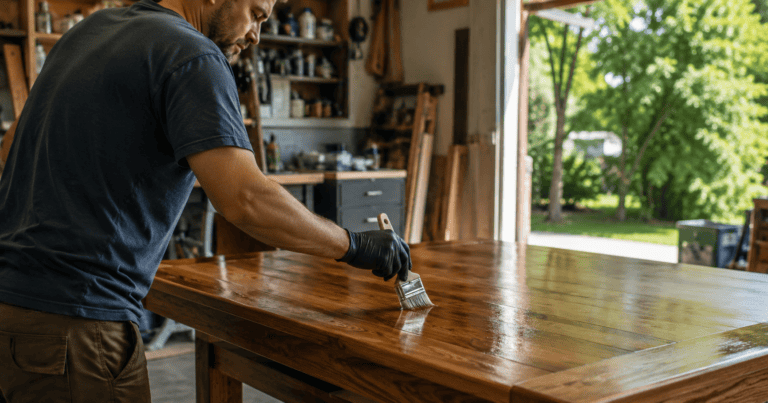
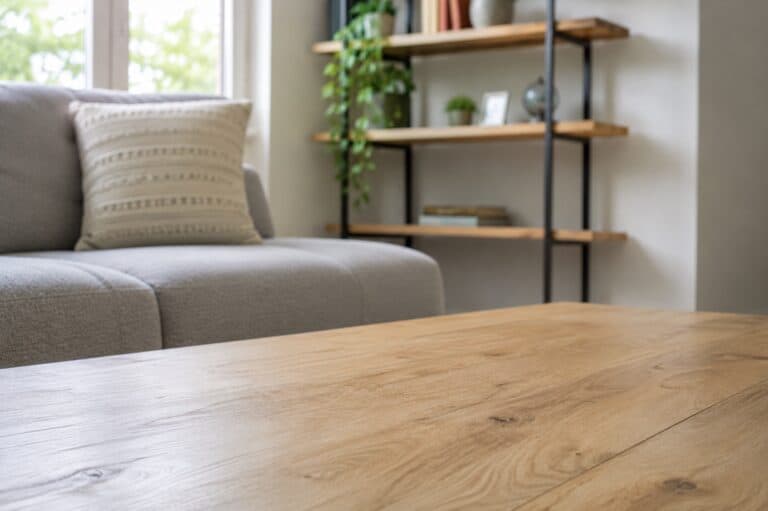
Solid wood furniture is usually not the main source. A solid wood table, for example, does not need the same type of resin-heavy core as particleboard.
Real-Life Example
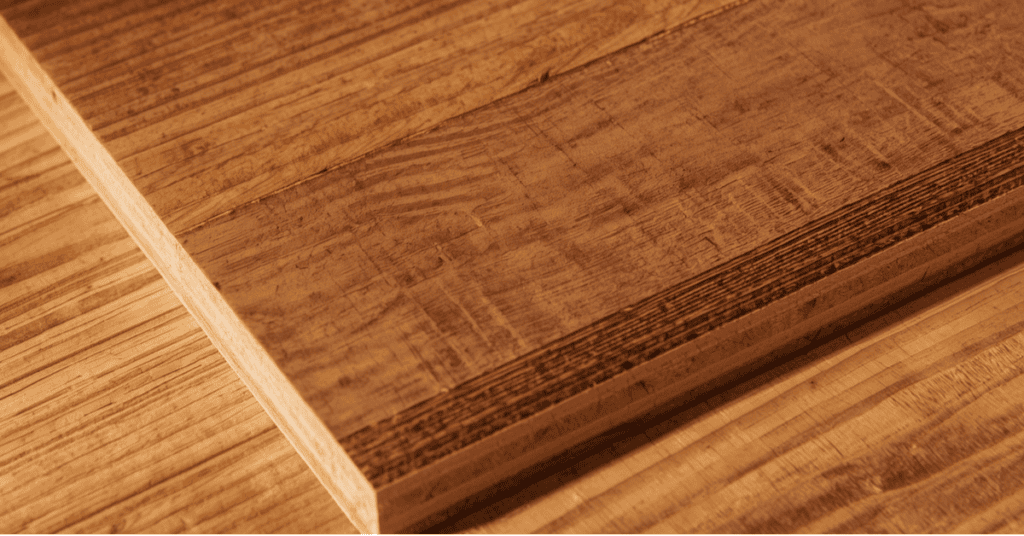
You might see a dresser described as “wood veneer” with an MDF or particleboard core. That means the outside may look like real wood, but the inner panel is made from bonded wood fibers or particles. To understand formaldehyde risk, check whether the core material is CARB Phase 2, TSCA Title VI, NAF, or GREENGUARD Gold certified.
How Off-Gassing Happens
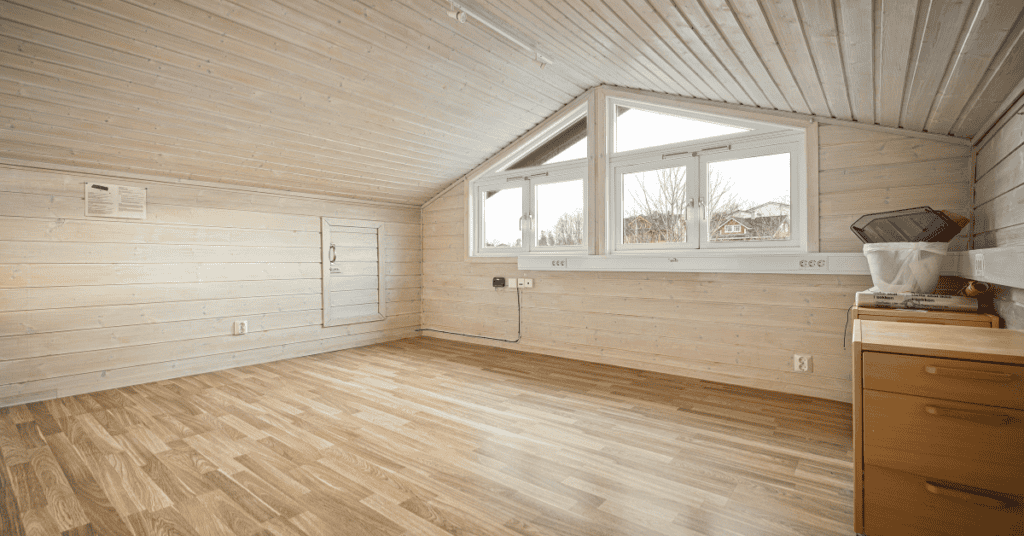
Off-gassing happens when chemicals leave a material and move into the surrounding air. With furniture, formaldehyde can slowly release from certain resins inside engineered wood panels.
Off-gassing simply means chemicals leave a material and enter the air around it. This process can happen slowly over time.
This release is usually stronger when furniture is new. Over time, emissions often decrease as the material ages.
Several conditions can affect how much formaldehyde enters the air:
- Heat: Warmer rooms can increase emissions.
- Humidity: Moist air can make some materials release more formaldehyde.
- Ventilation: Poor airflow allows emissions to build up indoors.
- Product size: A large wardrobe may release more than one small side table.
- Material amount: More engineered wood usually means more potential emission points.
Place new furniture in a well-ventilated room when possible. Opening windows can help move emissions out of the space.
A new dresser in a hot, closed bedroom may release more formaldehyde into the air than the same dresser in a cooler, well-ventilated room.
You cannot always smell formaldehyde at low levels. A lack of odor does not prove a product is emission-free. Certifications and clear material information are more reliable than smell alone.
Should You Be Concerned?

Formaldehyde is worth paying attention to, but it does not mean every furniture item is unsafe. What matters most is how much formaldehyde the product releases into indoor air.
Key Takeaway: Formaldehyde risk depends on emissions, not simply whether the chemical is present.
At The Goodness Well, we look at formaldehyde as something to reduce where practical, not something that should make every furniture purchase feel scary.
A few factors make a bigger difference:
- Material: Products with more pressed wood have more places where formaldehyde-based resins may be used.
- Age: New furniture usually releases more than older furniture.
- Room setup: Small, closed rooms allow emissions to collect.
- Sensitivity: Babies, children, people with asthma, and chemically sensitive people may react at lower levels.
- Ventilation: Fresh air helps move emissions out of the room.
The biggest misconception is that all wood furniture contains high formaldehyde levels.
Solid wood is usually different from engineered wood because it does not rely on the same resin-heavy panel structure.
Another misconception is that any detectable amount means a product is dangerous. That is also too simple. A product can contain or release a tiny amount and still meet strict emission limits.
A detectable amount does not automatically mean a product is unsafe. Some products release very small amounts and still meet strict limits.
For everyday shopping, focus on the product details you can verify. Look for material descriptions, emission certifications, and clear compliance labels.
How to Choose Lower-Formaldehyde Furniture
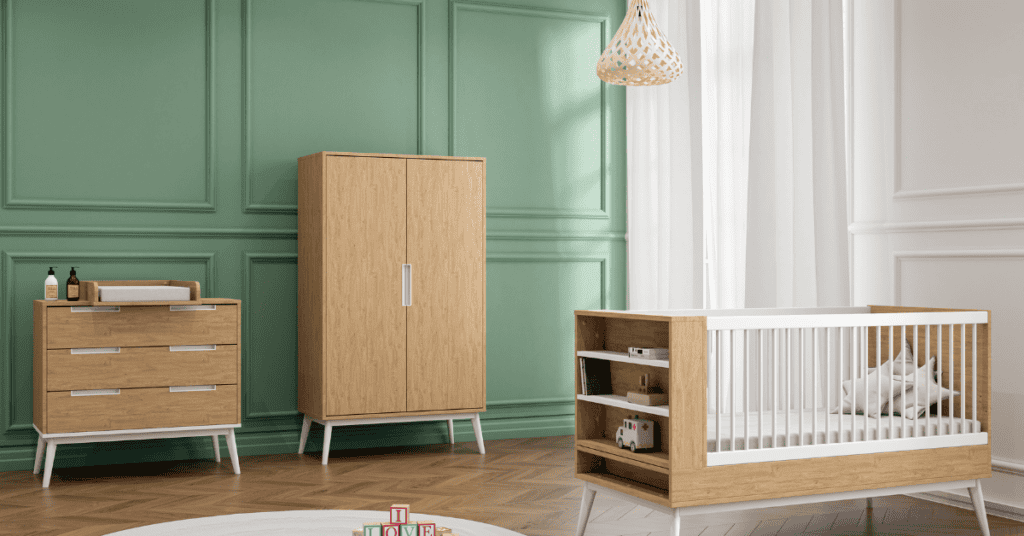
You do not need to avoid every piece of engineered wood furniture. The better goal is to choose products with clearer material details and lower-emission standards.
Start by checking the product description. Look for the core material, not just the outer surface. Words like “wood veneer” or “laminate” describe the outside layer, not always the inside panel.
Look for labels such as:
- TSCA Title VI compliant: Meets U.S. formaldehyde emission standards for certain composite wood products.
- CARB Phase 2 compliant: Meets California’s formaldehyde limits for composite wood.
- GREENGUARD Gold certified: Tested for low chemical emissions into indoor air.
- NAF: Made with no-added-formaldehyde resin.
- ULEF: Made with ultra-low-emitting formaldehyde resin.
For shoppers in the U.S., TSCA Title VI is especially useful.
A few practical steps can help:
- Choose solid wood when it fits your budget and style.
- Choose certified engineered wood when solid wood is not realistic.
- Ask the brand what the furniture core is made from.
- Look for certification details, not just words like “eco” or “natural.”
- Speed up off-gassing by airing out new furniture before putting it in a bedroom or nursery.
- Keep windows open when possible during the first few weeks.
For bedrooms and nurseries, prioritize clearer material details and lower-emission labels. These are spaces where people spend long hours.
That gives you better information than relying on smell, marketing language, or appearance alone.
Conclusion
Formaldehyde in furniture is not a reason to fear every wood product, but it is worth understanding when you are choosing pieces for your home.
Understanding the materials used in furniture can help you make more informed purchasing decisions.
The best approach is simple: check the materials, look for lower-emission labels, and give new furniture time to air out.
These small steps can help you make safer choices without making furniture shopping feel overwhelming.