What Furniture Materials Are the Safest for a Healthier Home?


Furniture can affect more than your home’s comfort and appearance—the materials, adhesives, finishes, and treatments used to make it may also influence indoor air quality.
This matters because people spend long periods near sofas, beds, tables, and other furnishings in enclosed rooms.
The EPA explains that pressed-wood products used in furniture can release formaldehyde indoors, showing why the complete construction matters more than vague claims such as “natural” or “eco-friendly.”
Understanding how common furniture materials compare can help you make safer, better-informed choices for your home.
The safest furniture uses simple materials with fewer chemical treatments and low-emission finishes.
Solid wood, metal, glass, natural latex, and minimally treated fibers are usually the best starting points.
These materials are not automatically non-toxic, so you should still check finishes, adhesives, coatings, and third-party certifications.
Safest Furniture Materials

The safest furniture materials usually require fewer glues, synthetic resins, and chemical treatments. Solid wood, metal, glass, natural latex, and minimally treated natural fibers are strong starting points.
Material choice matters because furniture can release chemicals into the surrounding air. A PubMed Central review found that furniture and finishing materials are significant sources of indoor VOCs.
Choosing simpler, lower-emission materials reduces these indoor sources.
Solid Wood, Metal, and Glass
Solid wood is generally one of the safest choices for furniture frames, tables, cabinets, and bed bases. Unlike particleboard or MDF, it does not require large amounts of resin to bind wood fibers together.
Ask whether a wood item is solid wood, veneer, plywood, MDF, or particleboard. Product listings often use the word “wood” for several different constructions.
Look for:
- Solid hardwood or softwood construction
- Unfinished wood or a clearly disclosed low-VOC finish
- Water-based stains and sealants
- Minimal glued joints
- No strong chemical odor
Metal and glass are also useful choices because they do not need formaldehyde-based binders. They work well for table frames, shelving, desks, and other hard furniture.
Check whether painted metal uses a low-emission coating. Glass furniture may also include glued supports, plastic parts, or coated surfaces. These added components still deserve attention.
Solid wood usually costs more and may require regular care. Metal and glass can feel less warm or comfortable.
However, all three materials often use fewer chemical-heavy components than upholstered or composite furniture.
Natural Latex and Organic Fibers
Natural latex is commonly used in cushions, mattresses, and upholstered seating.
It comes from rubber tree sap and generally uses fewer petroleum-based ingredients than conventional polyurethane foam.
Check that the product uses mostly natural latex rather than a synthetic latex blend. People with a diagnosed latex allergy should also discuss direct or repeated exposure with a healthcare professional.
Natural upholstery fibers include:
- Organic cotton
- Wool
- Linen
- Hemp
These fibers can reduce reliance on polyester, vinyl, and other petroleum-based fabrics. Organic certification may also restrict certain pesticides, dyes, and processing chemicals.
The fiber name alone does not reveal how the fabric was finished. Natural fabric may still receive stain-resistant, waterproof, antimicrobial, or wrinkle-resistant treatments.
Choose untreated fabric when possible and ask the manufacturer to disclose any added coatings.
Wool offers natural moisture and flame resistance, while linen and hemp are durable and breathable. Organic cotton feels soft but may wear faster in high-use areas.
The best choice depends on how the furniture will be used and how often it needs cleaning.
Key Takeaway: Choose simple materials, then verify how they were processed and finished.
Materials That Need More Scrutiny
Some furniture materials require closer review because their ingredients vary widely. Two products with the same material label may use different resins, coatings, or treatments.
Engineered Wood and Foam
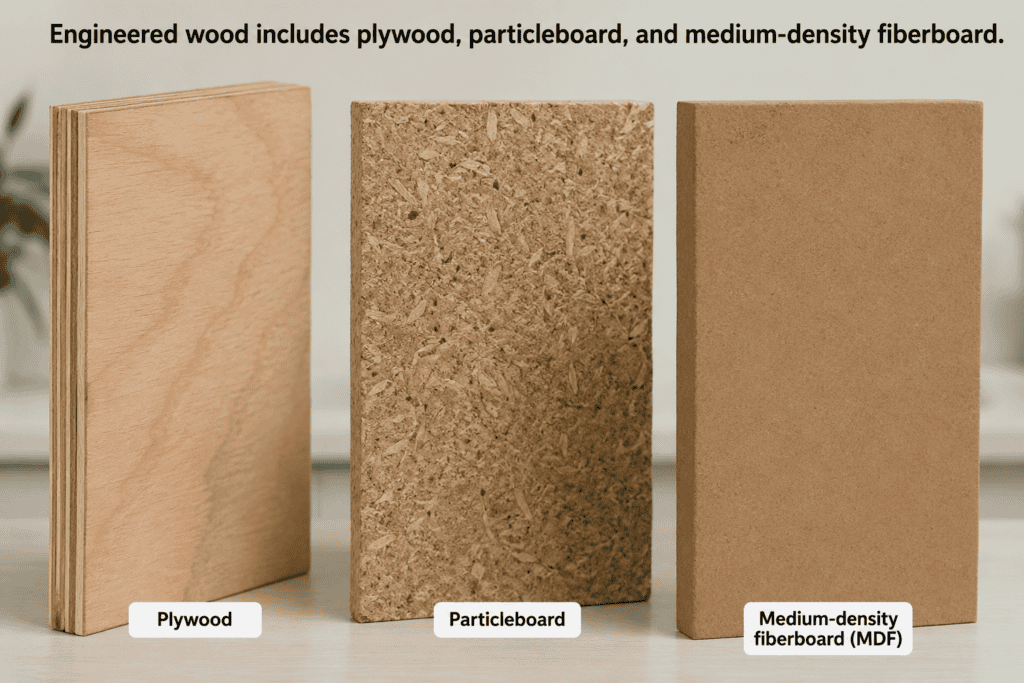
Engineered wood includes plywood, particleboard, and medium-density fiberboard, or MDF. These materials combine wood pieces or fibers with adhesive.
Some adhesives contain formaldehyde-based resins that release formaldehyde into indoor air. The amount depends on the panel type, resin, age, and manufacturing standards.
Engineered wood is made by bonding wood pieces or fibers together. The resin used in that process determines whether the panel releases formaldehyde
Engineered wood is not automatically unsafe. It can also reduce costs and make furniture lighter. When buying it, look for:
- No-added-formaldehyde or ultra-low-emitting panels
- Compliance with federal formaldehyde limits
- Sealed surfaces and finished edges
- Clear information about the resin or adhesive
- Finished-product emissions testing
Polyurethane foam is common in sofas, chairs, and padded headboards. It is lightweight, affordable, and comfortable. However, formulas differ between manufacturers.
Ask whether the foam contains added flame retardants. Also check whether the company tests the finished furniture for VOC emissions.
A foam certification may cover the cushioning without testing the fabric, frame, or completed product.
However, verified low-emission polyurethane foam may be a practical choice when natural latex is too expensive or unavailable.
Plastics and Synthetic Upholstery
Plastic furniture parts and synthetic upholstery are not all made the same way. The exact polymer and surface treatment determine what shoppers need to check.
Common examples include:
- PVC or vinyl upholstery
- Polyurethane faux leather
- Polyester and microfiber fabric
- Plastic frames, legs, and decorative parts
- Laminated or coated surfaces
PVC upholstery may contain plasticizers that keep it flexible. Polyurethane faux leather uses a coated fabric base and may release odors when new. The surface can also crack or peel as it ages.
Polyester and microfiber can be durable and easy to clean. An untreated synthetic fabric may be a better choice than a natural fabric coated with stain-resistant chemicals.
PFAS may be added to upholstery for stain, oil, or water resistance. These chemicals break down very slowly.
The Agency for Toxic Substances and Disease Registry reports that studies have found relationships between exposure to certain PFAS and changes in cholesterol and immune response.
Choose untreated or clearly labeled PFAS-free upholstery when those features are unnecessary.
Ask the manufacturer how a fabric resists stains or water. Look for a direct answer confirming whether fluorinated treatments or PFAS are used.
Synthetic materials may still work well in busy homes. Focus on products that disclose their coatings and avoid unnecessary stain-resistant, antimicrobial, or waterproof treatments.
Hidden Chemicals in Furniture

A furniture label may name the main material but leave out smaller components. These hidden materials often determine whether the finished piece releases chemicals indoors.
Common sources include:
- Adhesives used in joints, veneers, and laminated layers
- Paints, stains, lacquers, and sealants
- Fabric backing and waterproof membranes
- Foam, batting, and cushion wraps
- Flame-resistant barriers or chemical treatments
- Stain-resistant, antimicrobial, and odor-control coatings
Liquid finishes and glues may release VOCs while they cure. Strong odors often fade, but a product can still release low amounts without a noticeable smell.
Ask for finished-product emission testing instead of relying on an odor check.
Some liquid finishes release VOCs as they dry and cure. A fading smell does not prove that emissions have completely stopped.
Flame retardants may be added to foam, fabric, or a hidden barrier beneath the upholstery.
The National Institute of Environmental Health Sciences explains that some PBDE flame retardants are not chemically bound to furniture, so they escape into indoor air and household dust.
Researchers study these chemicals because some types can interfere with normal hormone and nervous system function.
Furniture does not always need added flame-retardant chemicals to meet fire-safety rules. Manufacturers may use smolder-resistant fabric or physical barriers instead.
Ask what method the product uses rather than assuming “meets flammability standards” means chemicals were added.
Descriptions such as “easy-clean,” “performance,” or “water-resistant” also need clarification. These terms describe a feature, not the chemical treatment used to create it.
Ask whether the fabric contains PFAS or other fluorinated coatings.
What Furniture Certifications Mean
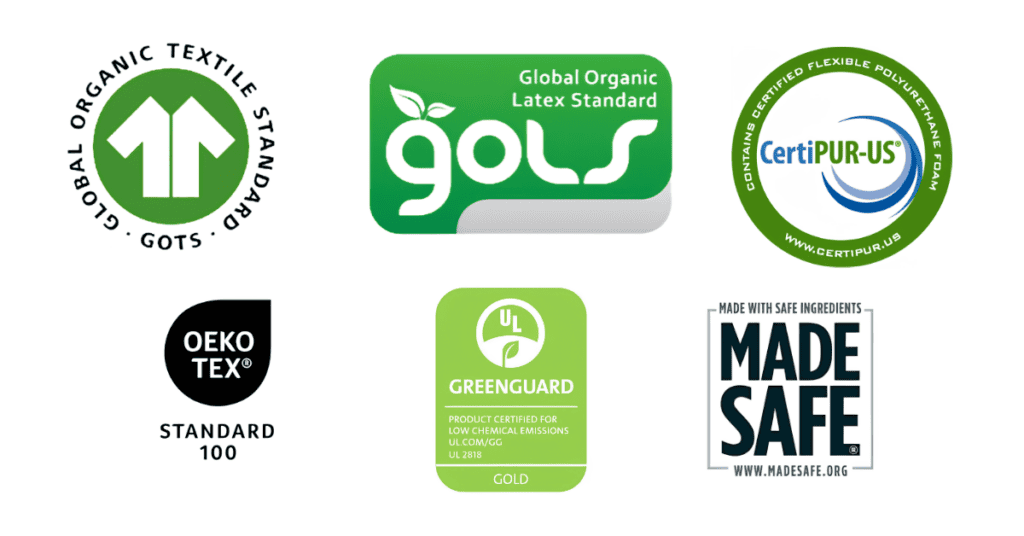
Furniture certifications answer different questions. Some test chemical emissions, while others cover textiles, foam, or responsible sourcing.
A certified component does not mean the entire piece meets the same standard.
Here is what the most common labels tell you:
- GREENGUARD Gold: Tests finished products for limits on chemical emissions. UL states that the Gold standard limits more than 360 VOCs and uses stricter limits for spaces such as schools and healthcare facilities. It does not guarantee organic materials or responsible wood sourcing.
- OEKO-TEX Standard 100: Tests textiles and their components for a range of harmful substances. The testing requirements depend on how closely the material touches the body. It does not mean the fiber is organic or that the finished furniture has low emissions.
- GOTS: Covers certified organic fibers and sets requirements for textile processing. It also includes environmental and social criteria. A sofa with GOTS-certified fabric may still contain uncertified cushioning, wood, or hardware.
- FSC: Verifies that wood comes through a certified responsible forestry system. It focuses on forest management and supply-chain tracking. It does not test furniture for VOC emissions, finishes, or chemical treatments.
- CertiPUR-US: Applies to flexible polyurethane foam. Certified foam is tested for selected substances, emissions, and durability. The certification does not cover the furniture frame, fabric, adhesives, or complete product.
A product may display a certification logo even when only one component, such as the foam or fabric, is certified.
Use certifications together when possible. For example, GREENGUARD Gold can address finished-product emissions, while GOTS or OEKO-TEX can provide more information about the upholstery.
Always check what part of the furniture carries the certification.
Look for a certificate number, search the certification directory, or ask the manufacturer to confirm the certified component in writing.
How to Choose Safer Furniture

Start by checking the full materials list. Product names such as “wood table” or “natural sofa” rarely describe every component.
Use this simple process:
- Identify the main materials. Check the frame, panels, cushioning, upholstery, and surface finish.
- Look for specific details. Clear material names are more useful than claims such as “green,” “clean,” or “eco-friendly.”
- Ask targeted questions. Request information about added flame retardants, stain treatments, and formaldehyde-based resins.
- Verify certifications. Confirm which component is certified and search the certification’s public directory when available.
- Choose fewer treatments. Skip waterproofing, antimicrobial coatings, and stain resistance when you do not need them.
- Prioritize daily-contact pieces. Spend more time reviewing beds, sofas, desks, and nursery furniture.
- Keep records. Save product pages, certificates, and written answers from the manufacturer.
At The Goodness Well, we favor clear material disclosure over broad “non-toxic” marketing claims.
Unpack new furniture in a room with open windows or active ventilation when practical. Avoid placing it immediately in a small, closed bedroom or nursery.
A perfect product may not fit every budget. Focus first on avoiding undisclosed composite wood, strong odors, and unnecessary fabric treatments.
After delivery, unpack new furniture in a well-ventilated area when possible. The EPA recommends increasing ventilation after bringing new formaldehyde sources into the home.
Open windows or run exhaust fans when outdoor conditions allow.
Key Takeaway: Prioritize clear disclosure and fewer unnecessary treatments rather than searching for a perfect product.
Conclusion
The safest furniture choices usually use simple, well-disclosed materials with fewer added treatments.
Solid wood, metal, glass, natural latex, and minimally treated fibers are strong starting points, but no single material or label guarantees a completely non-toxic product.
By checking the full construction, verifying certifications, and avoiding vague marketing claims, you can make a safer and more practical choice for your home.