Caraway Stainless Steel Cookware Review: Our Experience After Months of Use

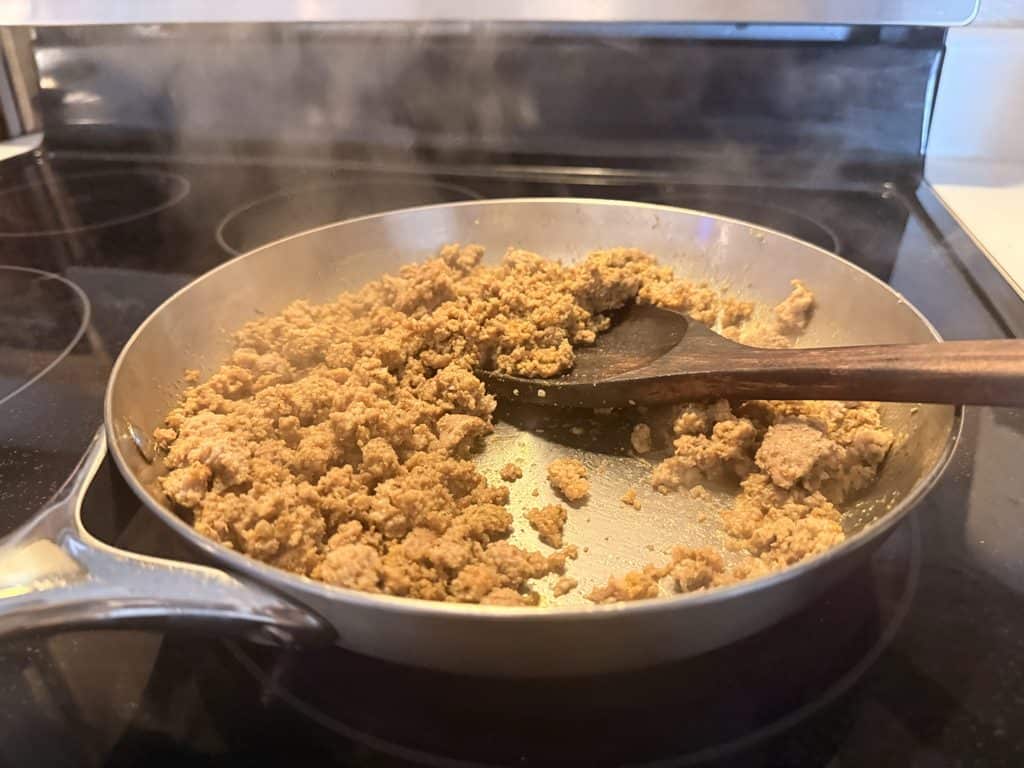
We’ve had Caraway’s stainless steel cookware set in our kitchen for about four to five months now. Between batches of ground turkey, eggs, sautéed veggies, and the occasional pot of pasta or soup, we’ve gotten a pretty good feel for what it’s like to cook with—and clean up afterward.
We also own Caraway’s ceramic pan and mini bakeware set, but the stainless steel has become our favorite cookware from the brand.
There’s a lot we love about it, along with a few things worth knowing before spending that much on a set. (as I know it’s a bit pricey)
Here’s how it’s held up in our kitchen, what takes a little extra effort, and why we’d buy it with our own money.
Caraway gifted us this set. This review is based on our experience using it in our own kitchen.
The Goodness Well is reader-supported. Some links in this article may be affiliate links, but every recommendation follows our editorial standards and independent review process. Learn more about our editorial standards and review methodology.
What’s in Our Set—and What We Actually Use
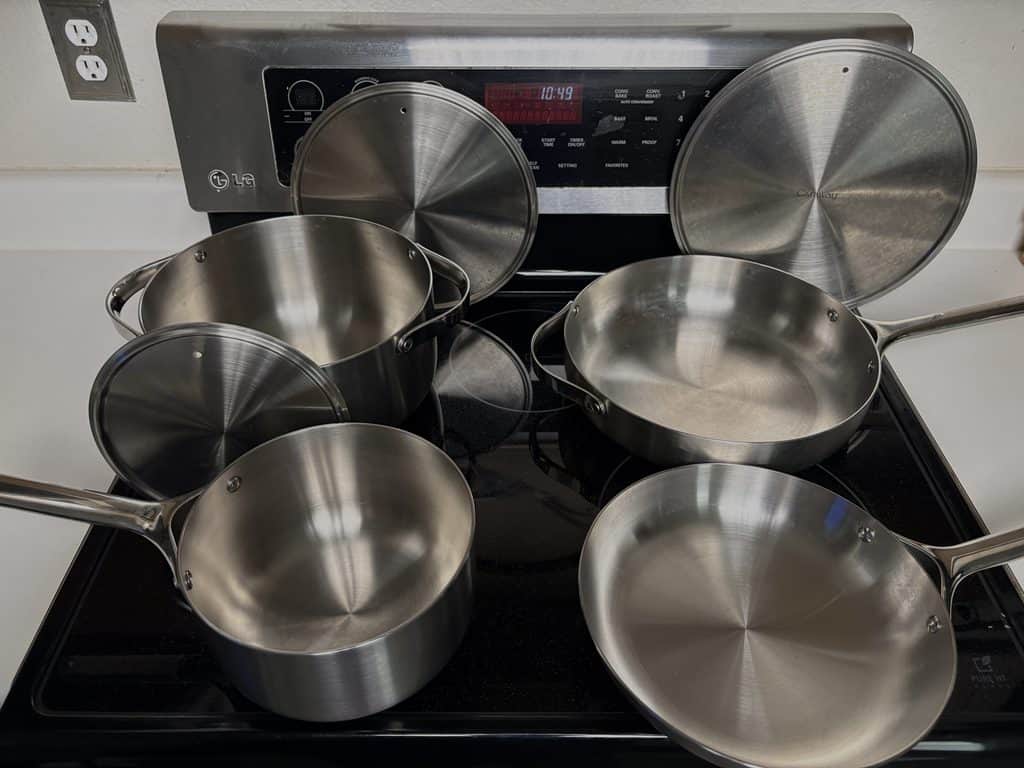
Our set includes:
- Frying pan
- Larger sauté pan
- Saucepan
- A larger pot
- Lids
Between those four pieces, we’ve had what we need for both smaller meals and bigger batches. The lids fit perfect, too!
The two pans get the most use—probably every other day.
We cook eggs, ground turkey, burgers, sautéed veggies, and whatever else we’re making that week.
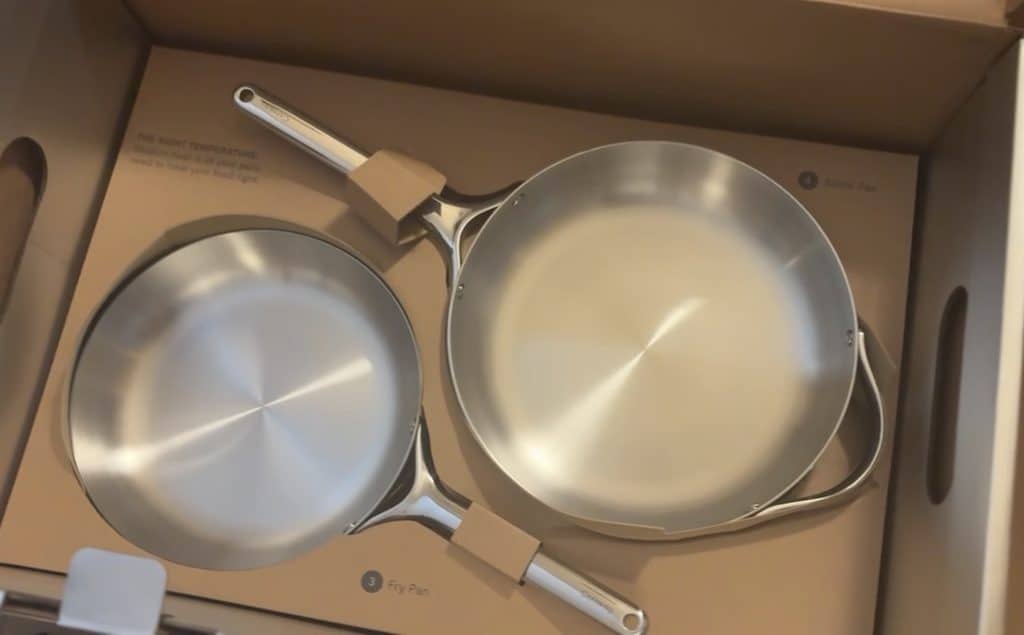
Having the smaller frying pan and the larger sauté pan gives us room to work with depending on how much food we’re cooking.
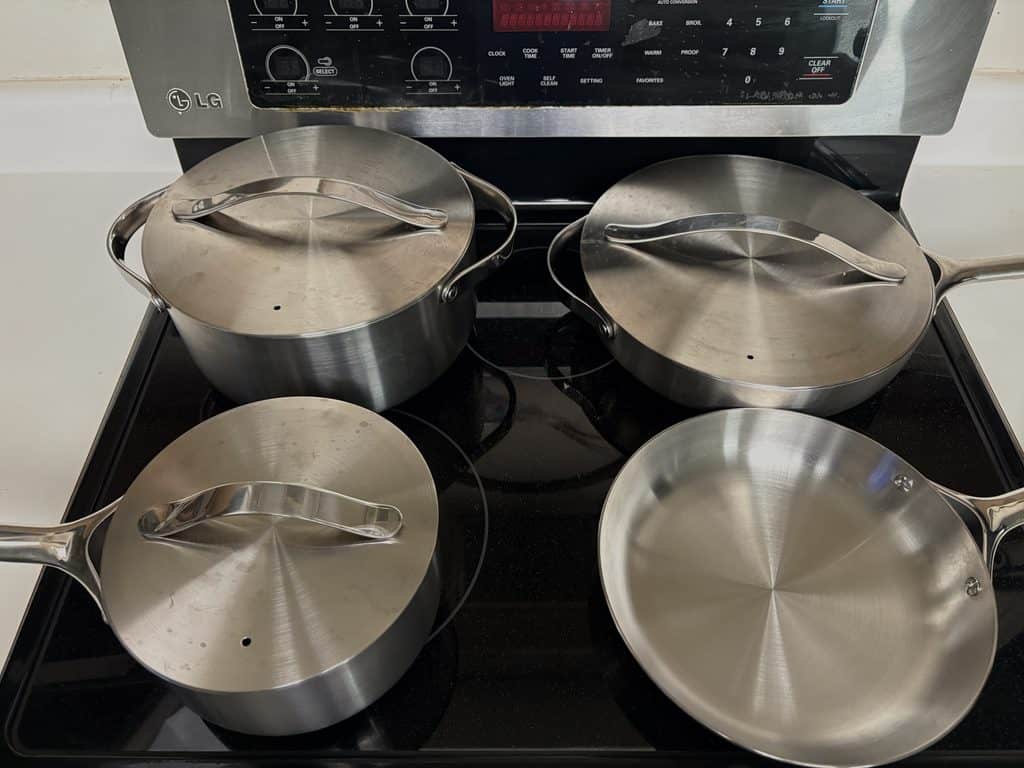
The pots get used about every couple of weeks, usually for pasta, rice, or soup.
We don’t deal with much sticking in those since we’re mostly cooking foods with plenty of water.
We also batch-cook and freeze meals, so we aren’t starting dinner from scratch every night. If you cook every day, you’d probably give the whole set more of a workout than we do!
How the Cookware Feels After Months of Use
One of the first things we noticed was how sturdy these feel compared with other stainless steel pots and pans we’ve owned.
You notice the weight when you pick them up, but even the larger pieces don’t feel too bulky to use. They just feel solid.
After four to five months of use, a few things have stood out:
- The handles feel secure. We haven’t noticed any loosening or wobbling, even with plenty of scrubbing and moving them around the kitchen.
- The pan handles haven’t gotten hot during our stovetop cooking.
- We haven’t noticed any warping or other wear. We haven’t exactly babied these, either.
Caraway uses 5-ply construction (as opposed to most stainless steel cookware that’s 3-ply), which means the cookware is made from five bonded layers of metal.
Those layers help distribute heat and give the cookware its sturdy structure. The cooking surface is uncoated stainless steel.
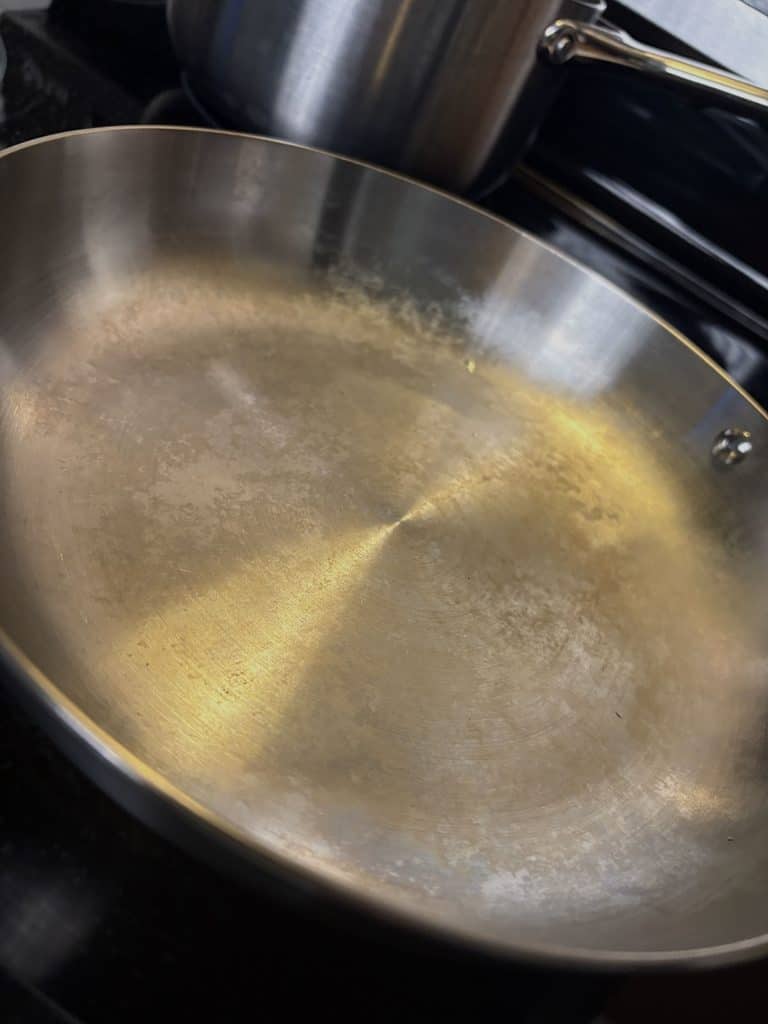
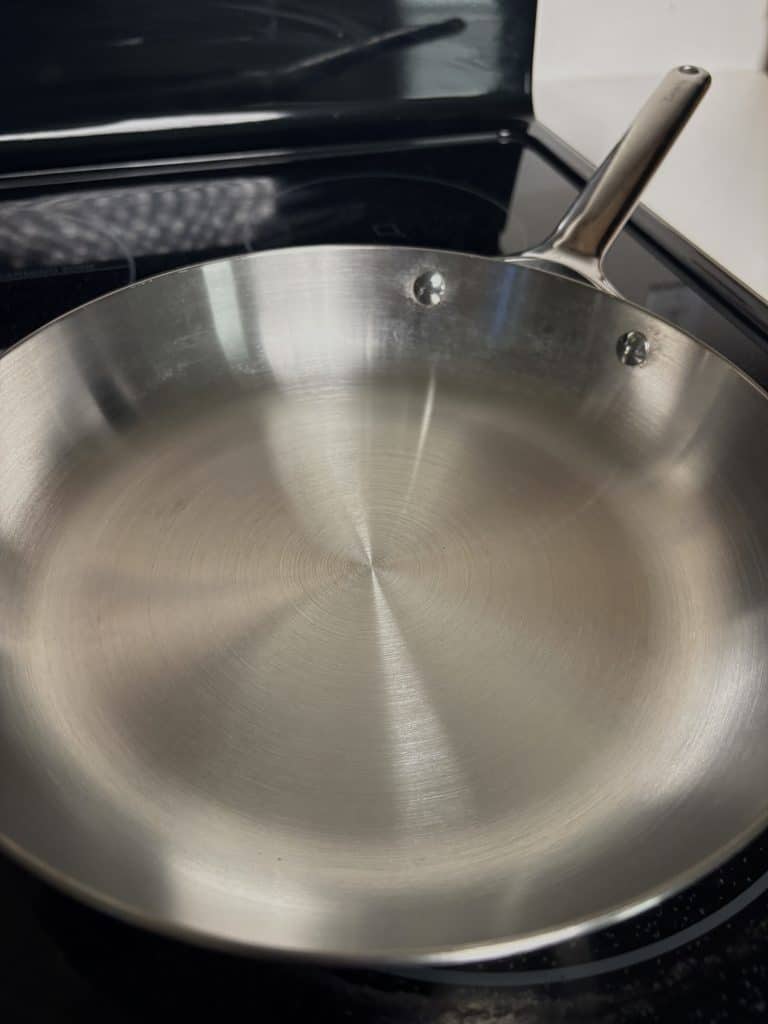
The surface does develop some cloudy marks with use, but those have come off with vinegar.
Seeing how new the pieces look afterward has probably been one of the most impressive parts for us.
What It’s Like to Cook With
Eggs and Getting Food to Release
Eggs are a good example of how well this pan can release food when we take a little time to heat it up first.
We usually set our stove around 4.5 out of 10 and let the pan warm up for two to three minutes before adding olive oil.
We don’t measure the oil—just a quick pour, probably around a tablespoon. Sometimes we forget and add it before the pan heats up, and it still comes out the same.
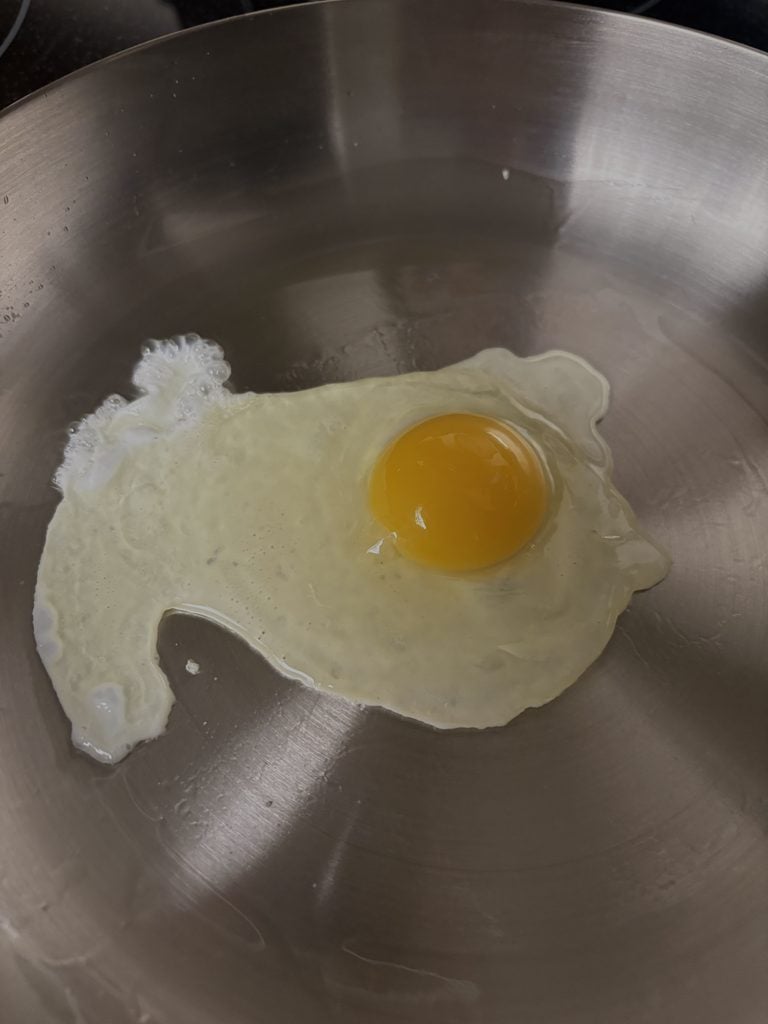
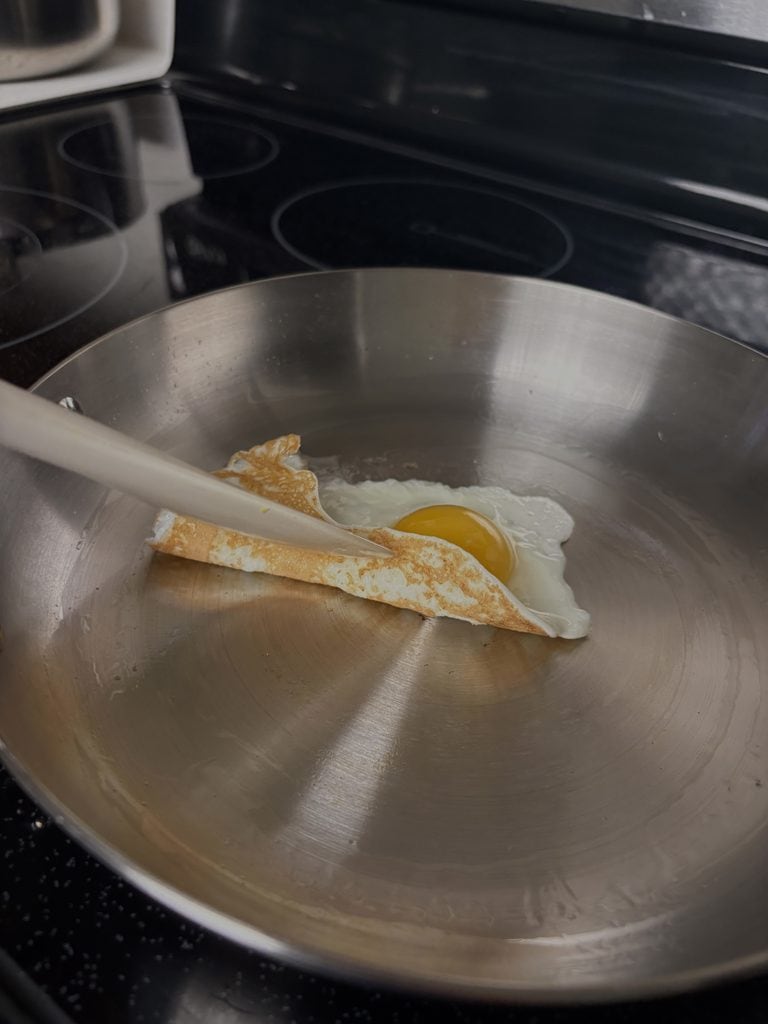
For the egg pictured above, a few spots needed a little loosening with the spatula, but I’m usually able to lift it without leaving half the egg behind.
It’s not completely effortless, but i’m happy with how it releases
That’s been our experience with this pan: good food release is possible, but we still give it some oil, time to warm up, and a little help from the spatula when needed.
Turkey, Vegetables, and Everyday Meals
Beside eggs, we regularly use the pans for ground turkey, sautéed vegetables, burgers, and other meals. And this is where we should admit that we don’t always cook in a way that makes cleanup easy.
We like our ground turkey crispy, so we let it cook longer.
That means more browned, stuck-on food left in the pan once we’re done. The photo below is a pretty honest look at what that can leave behind
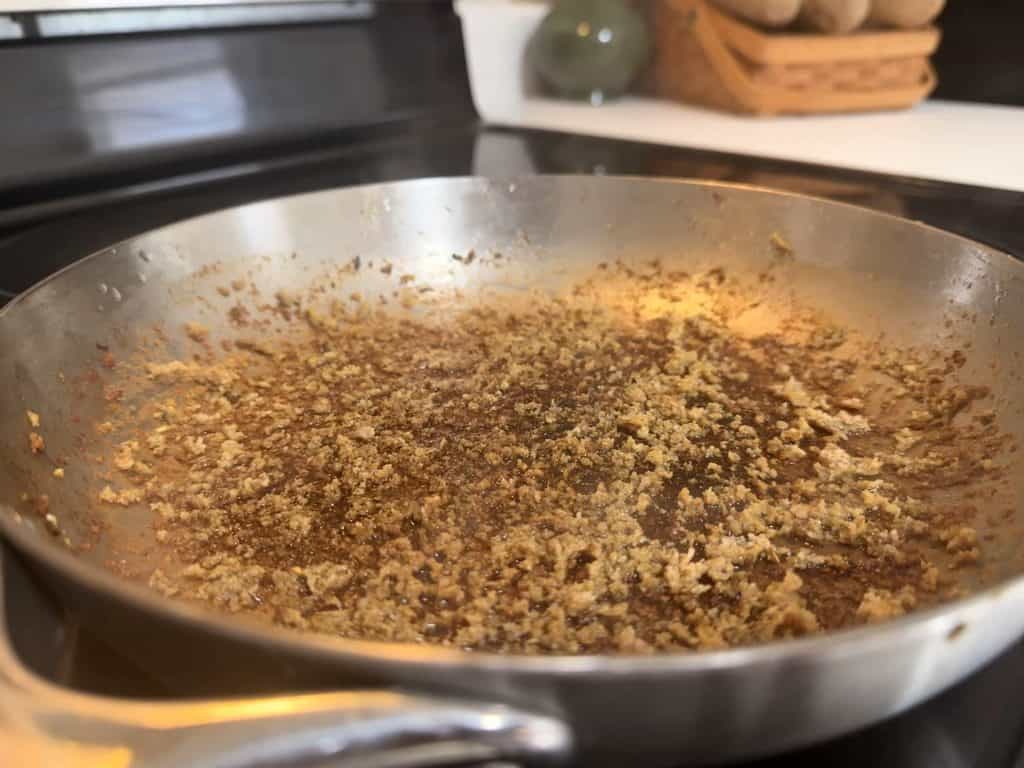
It’s a very different result from the egg photos, but both reflect how we use the set.
Sometimes food comes off with almost nothing left behind. Other times, we leave the pan for a good overnight soak.
A Quick Comparison With Our Other Stainless Steel Pan
We also own a La Sera/Fine Cookware pan from HomeGoods we bought a few years ago, and we’ve found the Caraway easier to cook with.
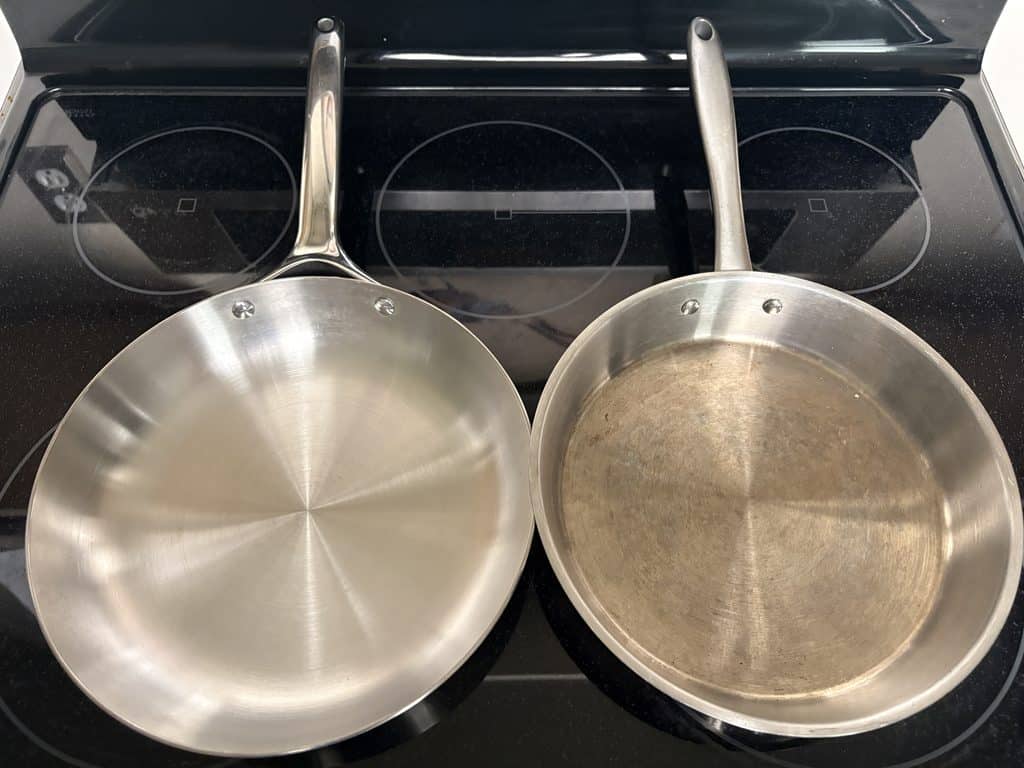
Even when we spread oil evenly across the La Sera, eggs and other foods tend to catch in certain spots.
We tried eggs in both using the same burner, oil amount, heat setting, and timing. I cooked two eggs in the La Sera because I needed two at the time, compared with one in the Caraway.
The Caraway released much more cleanly, while the La Sera left quite a bit of egg stuck behind.
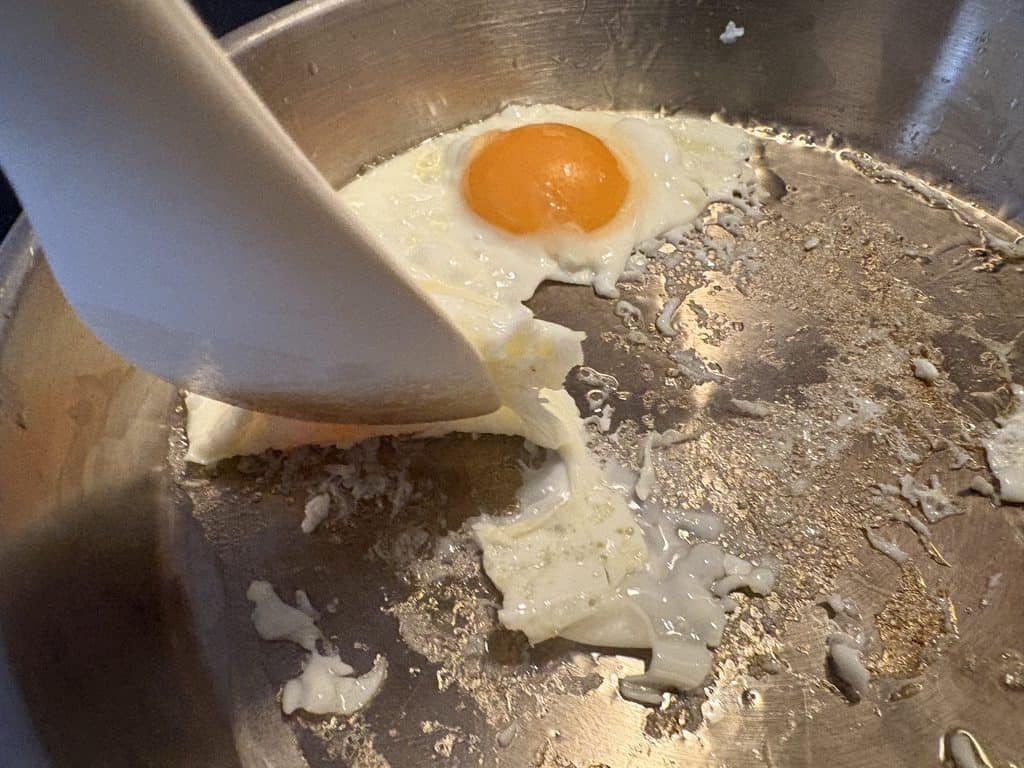
That lines up with our everyday experience, too. Since getting the Caraway set, I barely use the La Sera anymore.
We’ll get into the full comparison in our [Caraway vs. La Sera stainless steel pan review].
How We Clean Them
Usual Cleanup
We handwash all our dishes, and our usual routine with these pans is to let them sit in water overnight.
The next day, we use a stainless steel scrubber to loosen the food, then finish with soap and a sponge.
After soaking, even the stuck-on meat residue comes off fairly easily. It does take a bit of elbow grease and scrubbing if I don’t leave it to soak though.
Compared with other stainless steel cookware we’ve used, these have been easier to clean, even when we’ve really cooked something onto the surface.
We haven’t noticed any damage from our scrubbing so far. That’s our experience with our cleaning routine, though, rather than a claim that the surface can’t scratch.
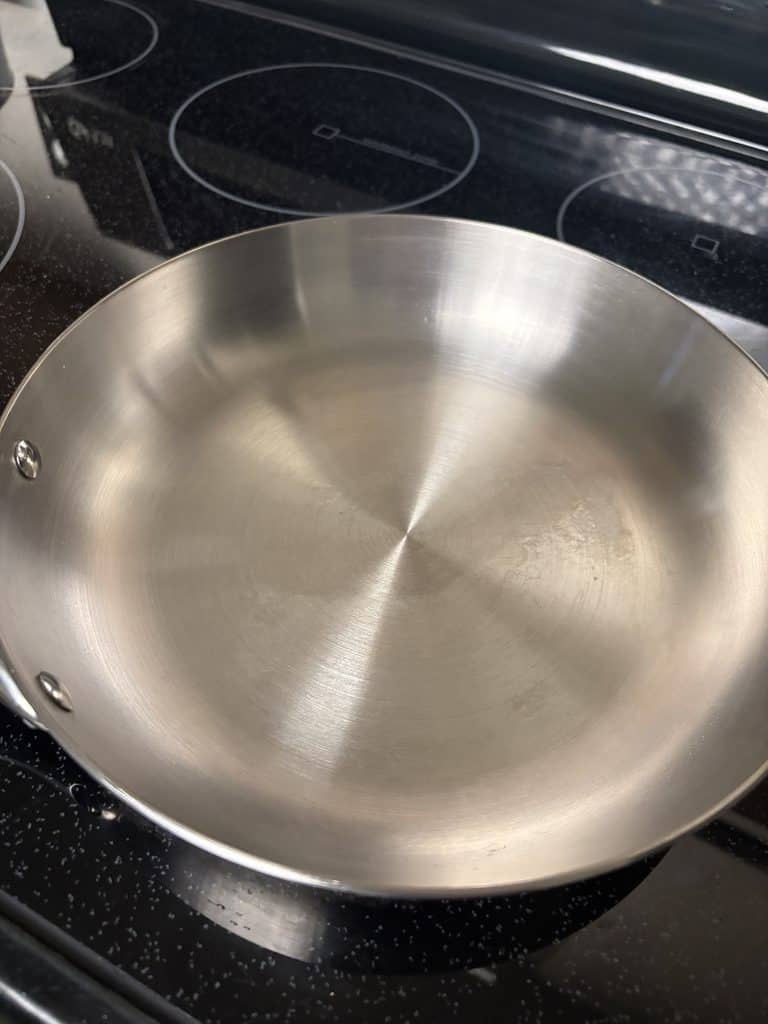
I don’t scrub my ceramic pan this hard. With that one, I’m more careful about preserving the coating.
The durability is one of the main things I love about using stainless steel.
Getting the Cloudy Marks Off
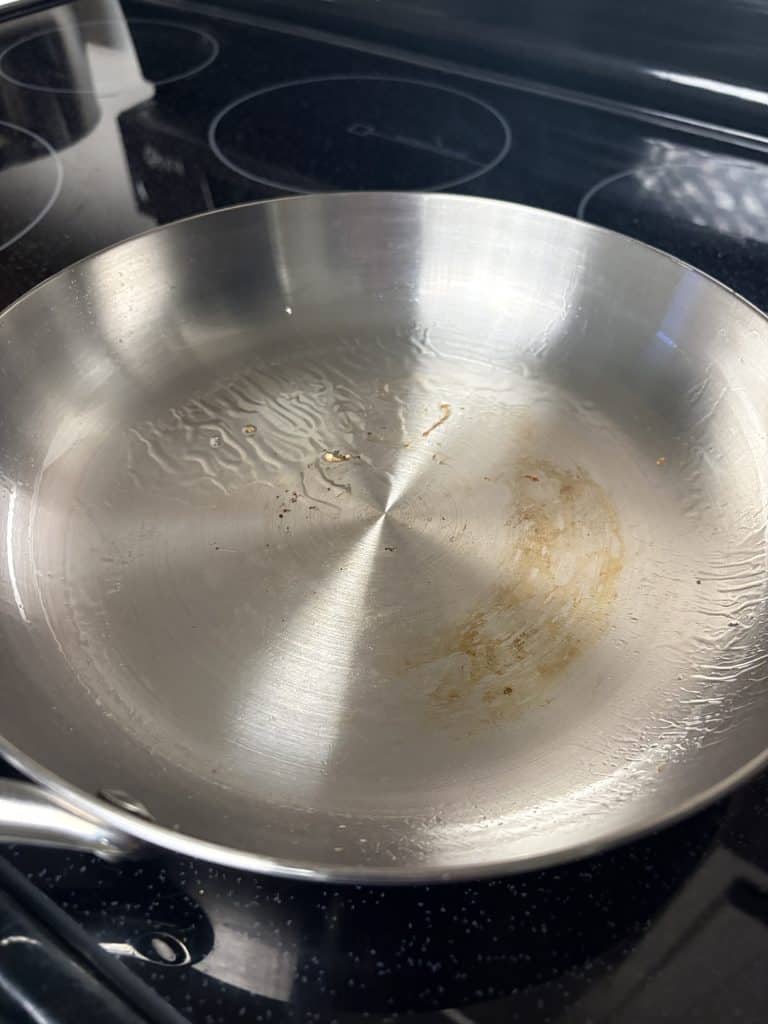
Even after the food is gone and the pan is clean, you can get cloudy marks or discoloration on the surface.
We’ve noticed this on our pots and pans, and regular washing doesn’t always remove it.
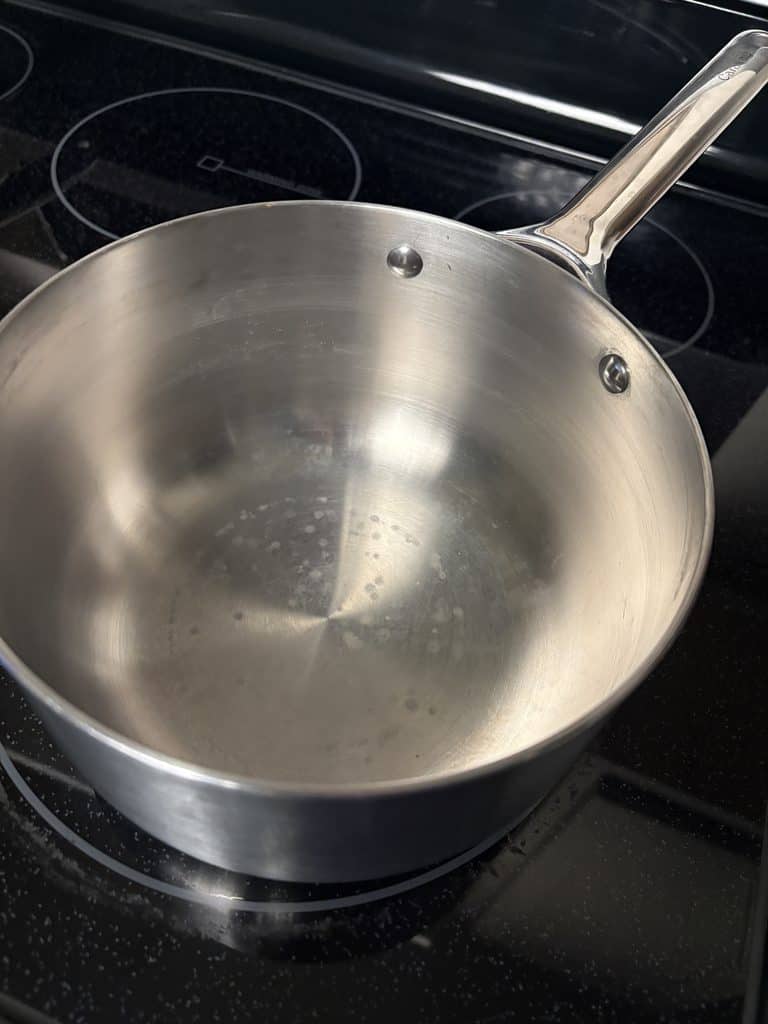
Honestly, it doesn’t really bother me so I don’t do the vinegar trick much.
I mainly did the vinegar treatment for these photos to show how much of a difference it makes.
We let regular vinegar sit in the pan for about five to ten minutes, then rinse it out and wash with soap and a soft sponge. After that, they look practically brand new.
Most of the time, we’re happy to wash the cookware and put it away, cloudy marks and all.
But when we want that shine back, the vinegar has worked really well.
Why We Still Use Our Ceramic Pan, Too
As much as we love this stainless steel set, our Caraway ceramic pan still gets plenty of use.
On busy weekdays or when I’m trying to cook and clean up quickly, the easier food release makes it convenient.
And honestly, sometimes I just grab whichever pan is clean!
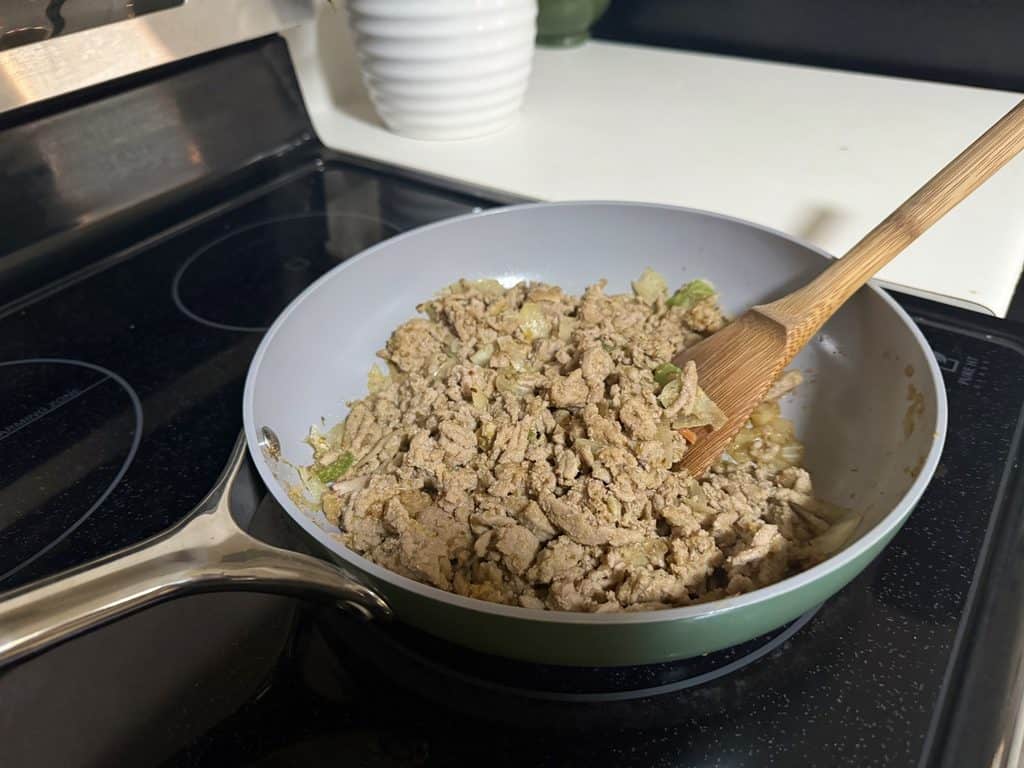
We’ve had the ceramic pan for about a year, and although it has some visible wear, we haven’t noticed a decline in its nonstick performance.
We’re happy with it and would buy it again.
What makes us prefer stainless steel overall is the longer-term durability.
There’s no nonstick coating to wear away, so we expect to have this set for a very long time.
Buying cookware less often matters to us, both for the cost and the waste that comes with replacing it.
For now, we’re glad to have both. The stainless steel asks a little more of us when cooking and cleaning, while the ceramic makes some meals easier.
You can read more about how that pan has held up in our Caraway Ceramic Pan Review.
Would We Buy This Set With Our Own Money?
Yes—we’d buy the whole set.
It’s a lot to spend upfront, but we’d feel good about putting that money toward cookware we expect to keep for many years.
That’s a big part of the appeal for us. We want pots and pans we can keep cooking with instead of eventually replacing because a coating has worn out.
If we’re buying fewer replacements over time, that’s less waste and less money spent, too.
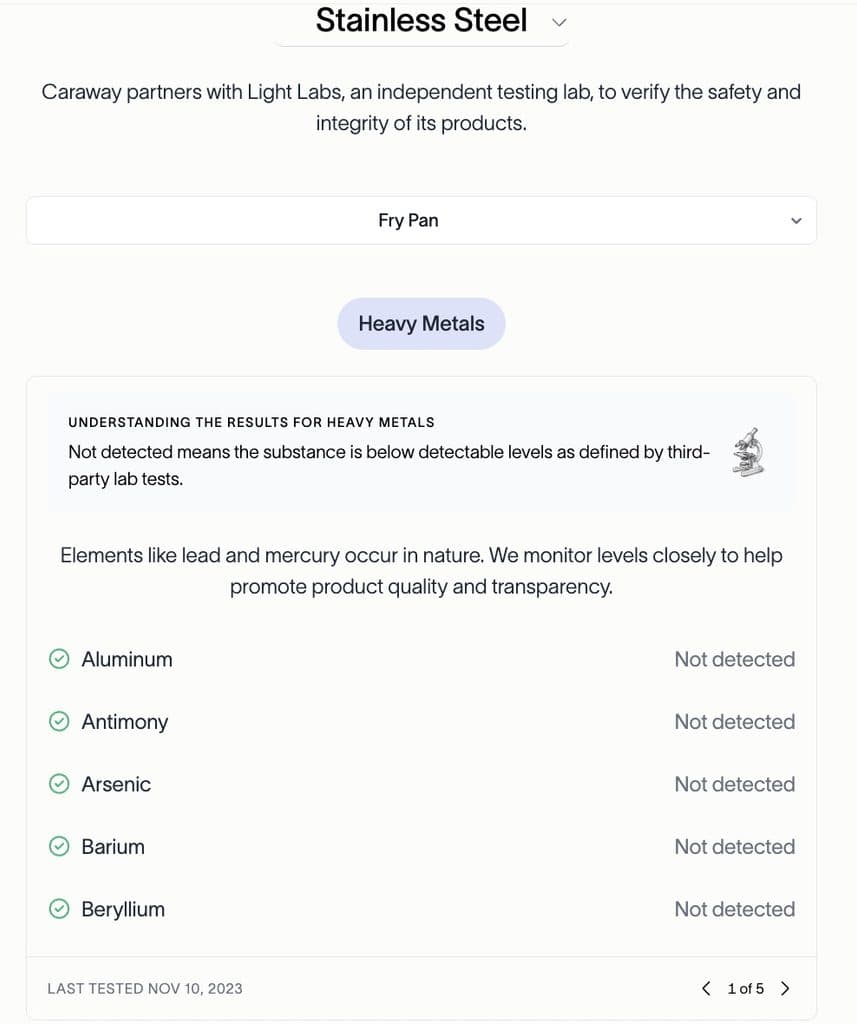
Caraway’s third-party testing is another reason we like the brand. They describe their stainless steel cookware as third-party tested and make testing reports available on their website. Being able to look at that information matters to us when choosing something we cook with regularly.
But we also have to enjoy using it, and we do. The different pieces cover what we cook, they feel sturdy in our hands, and they’ve cleaned up well after months of use—even when we’ve made that cleanup harder on ourselves.
If you want food to slide out with almost no effort and a quick wipe afterward, the sticking and soaking might get old.
But if you’re comfortable giving the pan time to heat up and doing a little extra cleanup, we’ve been really happy with this set. We plan to keep ours in the kitchen for a long time.