Are Polyester Couches Toxic? What to Know Before You Buy

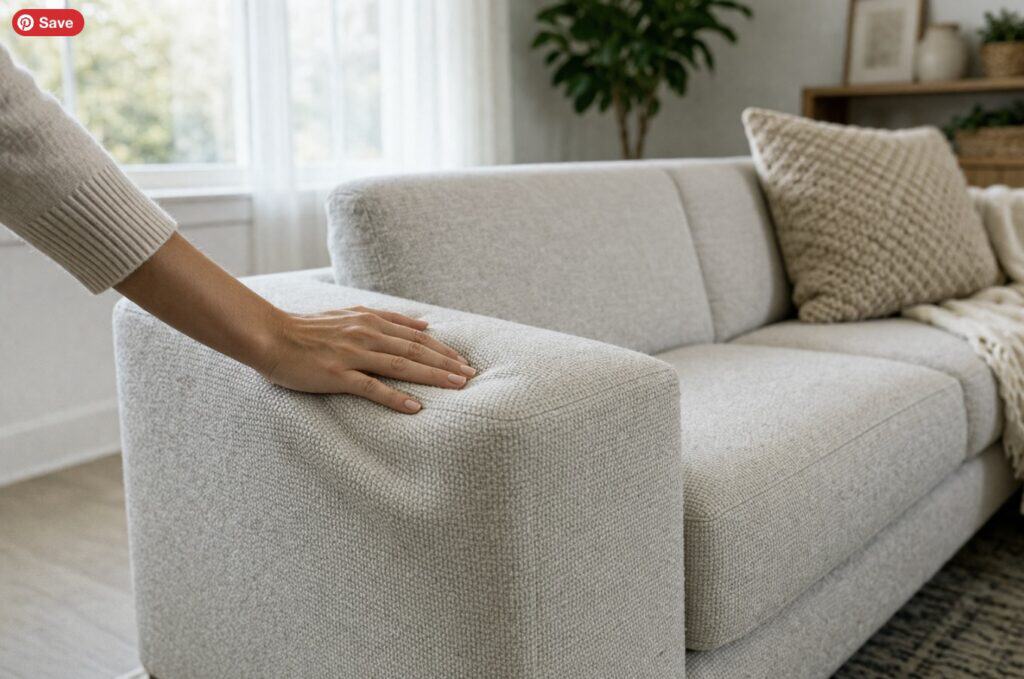
If you are shopping for a sofa and wondering whether polyester is “toxic,” the answer is usually more complicated than the fabric label alone suggests.
In real homes, couches can matter because furniture and other household materials may affect indoor air quality, and the EPA notes that many volatile organic compounds are found at higher levels indoors than outdoors in part because they can be released from common products and furnishings.
This article looks at what polyester does and does not tell you, and how to think more clearly about couch materials without turning the issue into fear-based guesswork.
A polyester couch can be considered toxic because it is made from plastic-based fibers that shed microplastics over time.
These tiny particles can become part of indoor dust and contribute to ongoing exposure in the home.
At the same time, the fabric is only one part of the equation, and finishes, cushion materials, and other components can also influence overall exposure.
The Real Concern With Polyester: Microplastics
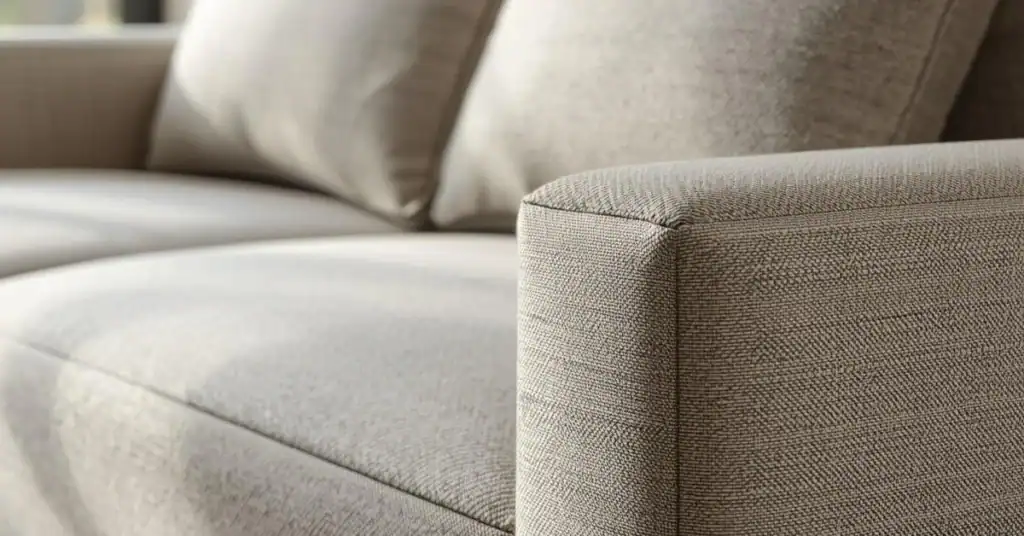
Polyester is a synthetic fiber made from plastic-derived materials, typically produced from petroleum.
Unlike natural fibers, it does not break down easily and is designed to be durable, which is why it is widely used in furniture.
As polyester is used over time, it can shed very small fibers through normal wear.
Sitting, friction, cleaning, and daily use all contribute to this process. Because couches are large, high-contact surfaces, they can contribute more than smaller textiles.
In practical terms, this means polyester furniture:
- is made from plastic-based fibers
- sheds microscopic particles with regular use
- can contribute more due to its size and frequent use
Once released, these microplastics become part of indoor dust and air.
Microplastics from synthetic materials like polyester may contribute to indoor exposure over time, and research suggests they can accumulate in human tissues and may be associated with inflammation and cellular stress.
This leads to a few main exposure pathways:
- accumulation in household dust
- circulation through indoor air
- inhalation and ingestion over time
While a polyester couch is not the only source, it can contribute to the overall level of microplastics present in the home.
What Makes One Couch Worse Than Another

Not all polyester couches are equal, just as other couch materials like leather are not all the same.
While the fabric can contribute to microplastic exposure, the materials used throughout the rest of the couch often determine the overall level of concern.
Fabric Treatments (PFAS)
Many couches are treated with stain-resistant or “performance” finishes. These treatments can include chemicals like PFAS, which are used to repel water and stains but are known for their persistence in the environment.
Common labels to watch for include:
- stain-resistant
- water-repellent
- performance fabric
- easy-clean finish
These terms often indicate added surface treatments that may not be clearly explained.
If a couch does not clearly state it is PFAS-free, it is worth asking the brand for more details.
Foam and Cushion Materials
The cushions inside the couch are often made from polyurethane foam, which can release volatile compounds, especially when new.
Polyester is one of the most common synthetic fibers used in household textiles, clothing, and upholstery.
This can vary depending on manufacturing quality, but in general:
- lower-quality couch foam tends to off-gas more
- adhesives and layered materials can add to emissions
- strong “new furniture” smells are often a sign of this process
Frame Materials (MDF and Formaldehyde)
The internal frame of a couch may include engineered wood like MDF or particleboard. These materials are often made with resins that can release formaldehyde over time.
Things to look for:
- MDF or particleboard in product descriptions
- lack of TSCA Title VI compliance
- strong chemical odor when new
Taken together, these factors often matter just as much—if not more—than the polyester itself. Two couches with the same fabric can have very different exposure profiles depending on how they are built.
Key Takeaway: Polyester couches can contribute to microplastic exposure indoors, but the full material build still determines overall impact.
Who Should Be More Careful

Polyester couches may contribute to microplastic and chemical exposure over time, but some households are more affected than others.
This tends to matter more in:
- Low-ventilation homes, where dust and particles can build up more easily
- Homes with kids or pets, due to higher contact with surfaces and dust
- People with sensitivities, such as asthma or chemical sensitivities
These factors do not make a couch unsafe on their own, but they can increase overall exposure depending on the environment and daily use.
REAL-LIFE EXAMPLE

You are comparing two polyester couches online, and one is described as “stain-resistant performance fabric.” That tells you the fabric may have an added treatment beyond the polyester itself. It does not tell you whether the treatment is PFAS-free, so you still need to check the product details or ask the brand.
How to Choose a Lower-Exposure Couch

If you want to reduce overall exposure, the goal is not perfection—it is choosing a couch with fewer added chemicals and more transparent materials.
Look for couches that:
- are PFAS-free
Stain-resistant or “performance” fabrics often rely on chemical treatments. If a product does not clearly say PFAS-free, it is worth checking with the brand. - contain no added flame retardants
Many modern couches no longer require them, but it is still important to confirm. Look for labels or product details that state no added flame retardants. - have GREENGUARD Gold certification
This indicates the couch has been tested for lower chemical emissions, which can help reduce indoor air impact—especially in enclosed spaces. - use simpler materials
Couches with fewer layers, less adhesive, and less engineered wood are generally easier to evaluate and may reduce overall exposure.
When a product says “stain-resistant” or “easy-clean,” search the page for “PFAS-free” before you buy. If you cannot find it, ask the brand directly.
In general, the more transparent a product is about its materials—and the fewer added treatments it includes—the easier it is to choose a lower-exposure option.
Key Takeaway: The most useful couch labels are the ones that tell you about emissions, treatments, and internal materials.
Conclusion

Polyester couches can contribute to microplastic exposure over time, but the overall impact depends on how the couch is made.
A little label-checking and product-page digging can go a long way. You do not need to find a perfect couch.
You just need enough clear information to choose one that feels like a better fit for your space and your comfort level.