Is Down Alternative Toxic? A Simple Breakdown

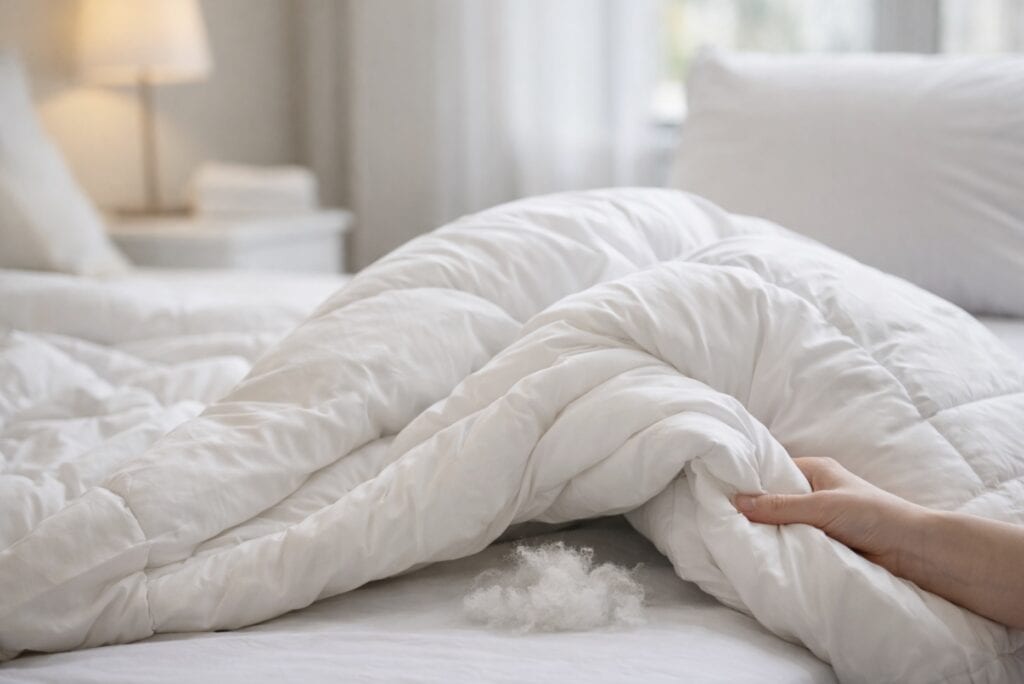
Down alternative sounds gentler than down, but that does not automatically make it non-toxic.
Most down alternative fill is made from synthetic fibers such as polyester, which contributes to everyday exposure to microplastics.
That matters because researchers at the National Institute of Environmental Health Sciences note that microplastics have been detected in human tissues, even though their full health effects are still uncertain.
In this article, we will look at whether down alternative should be a real concern and how to choose lower-risk options.
Down alternative is a synthetic fill made to mimic the softness of real down
It is usually made from polyester or other plastic-based fibers, so it is not fully non-toxic.
For most shoppers, that means the main concern is everyday microplastic shedding and possible added treatments, not that every down alternative product is highly dangerous.
What Down Alternative Is
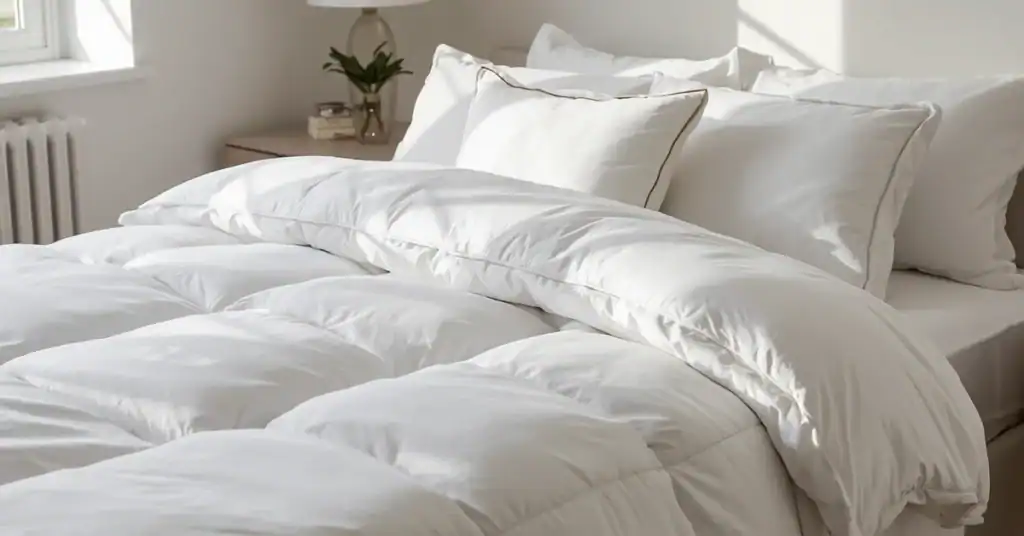
Down alternative is a fill material made to feel fluffy and warm like real down. You will usually find it in comforters, pillows, mattress toppers, and jackets.
Most down alternative products use synthetic fiber fill. Polyester is the most common.
Some products also use blends that mix polyester with rayon, cotton, or plant-based fibers.
Two products can both say “down alternative” on the label while using very different fill materials inside.
In plain terms, down alternative is usually one of these:
- Polyester fill made from fine plastic fibers
- Fiberfill clusters shaped to mimic down
- Blended fill that mixes synthetic and natural fibers
- Recycled polyester fill made from existing plastic materials
Where the Concern Comes From
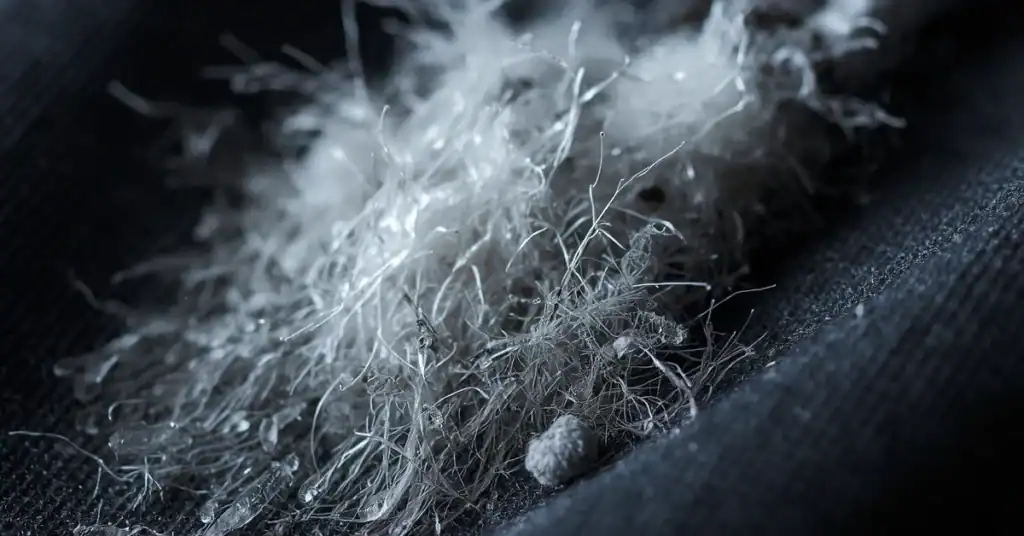
Down alternative bedding gets rubbed, compressed, and washed over and over.
That wear can release tiny plastic fibers into dust, laundry water, and the air close to the bed.
A second concern is added treatments. Some bedding is treated for stain resistance, moisture control, or odor control.
Microplastic shedding happens when tiny bits of synthetic fiber break off during normal use, washing, and wear.
Those finishes vary by product, so the label “down alternative” does not tell you whether extra chemical treatments were used.
Microplastics and Exposure
Exposure can happen in simple ways:
- Fibers break loose during normal use
- Dust builds up on and around the bed
- Washing and drying loosen more fibers
- Older or lower-quality fill may shed faster
The words “down alternative” do not tell you whether a product also includes stain-resistant or odor-control finishes.
Researchers study this because synthetic textiles are a major source of indoor microplastic fibers, and people can inhale or ingest those particles in daily life, as described in this PubMed Central review on microplastics and human exposure.
What the Health Context Says
Microplastics show up in health research for two main reasons:
- They are now found widely in indoor dust, water, food, and human tissues
- Lab and review research has raised concerns about inflammation and oxidative stress
That does not mean a polyester comforter acts like an acute poison. It means repeated contact with shedding plastic textiles adds to your overall plastic exposure at home.
This matters more when several things stack together, such as:
- synthetic bedding
- synthetic carpets or upholstery
- lots of indoor dust
- older products that shed easily
REAL-LIFE EXAMPLE
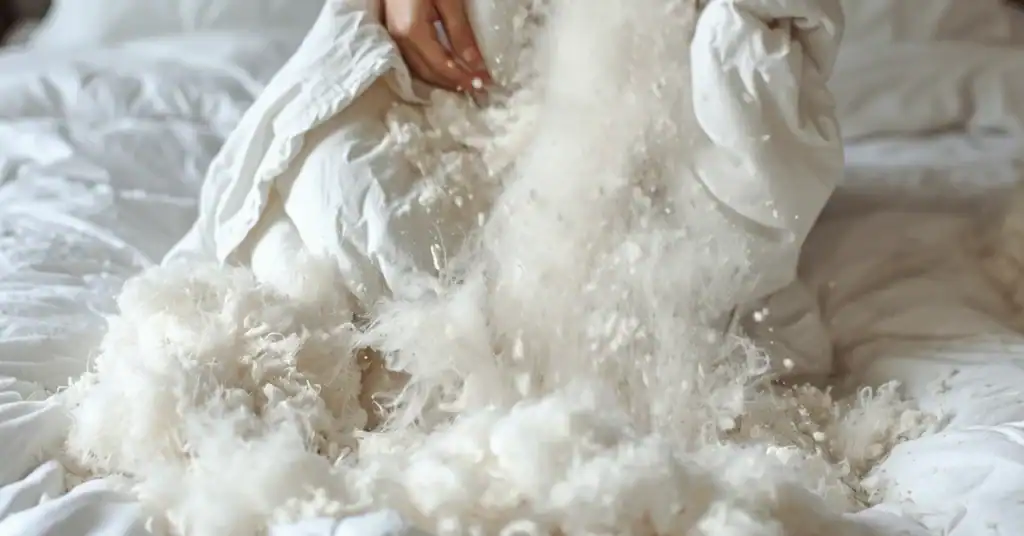
You buy a low-cost “down alternative” comforter online, and after a few months it starts clumping and releasing lint-like fluff when you shake it out. That tells you the fill is breaking down and shedding fibers into your bedroom and laundry. It does not tell you exactly how much exposure that creates, but it does tell you the product is not staying contained well.
When It Matters Most
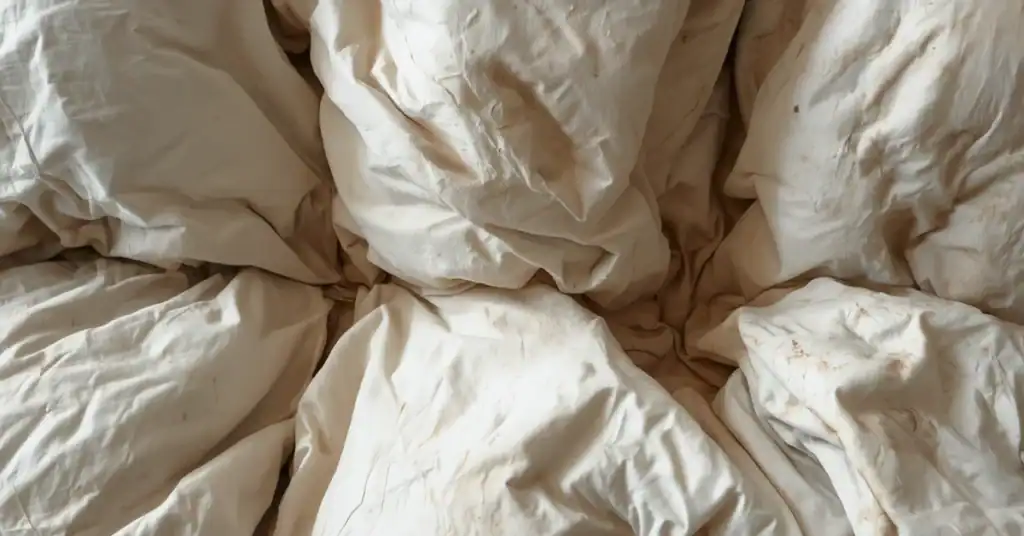
Down alternative matters more when the product sheds easily, traps dust, or includes extra chemical treatments.
It also matters more when the bedding gets heavy daily use, because repeated friction and washing can release more loose fibers over time.
This is usually a bigger issue in these situations:
- the fill feels dusty, clumpy, or breaks down quickly
- the product is very cheap and gives little material detail
- the label mentions stain resistance, odor control, or other added finishes
- the bedding is used every night and washed often
- the room already has a lot of other synthetic textiles
Personal sensitivity also changes the picture. Someone trying to reduce plastic exposure across the home may view polyester bedding very differently than someone who is mainly focused on cost or easy care.
This matters more for babies, young children, and people with asthma or strong dust sensitivity.
These groups spend long hours close to bedding and often react more strongly to dusty indoor environments.
Before buying, check the fill, look for treatment claims, and read recent reviews for words like “shedding,” “lint,” or “clumping.”
On the other hand, a well-made down alternative product with fewer added treatments may be less concerning for many households.
The key question here is not just, “Is it synthetic?” The better question is, “How much contact, shedding, and extra treatment does this product add to everyday life?”
Safer Ways to Choose
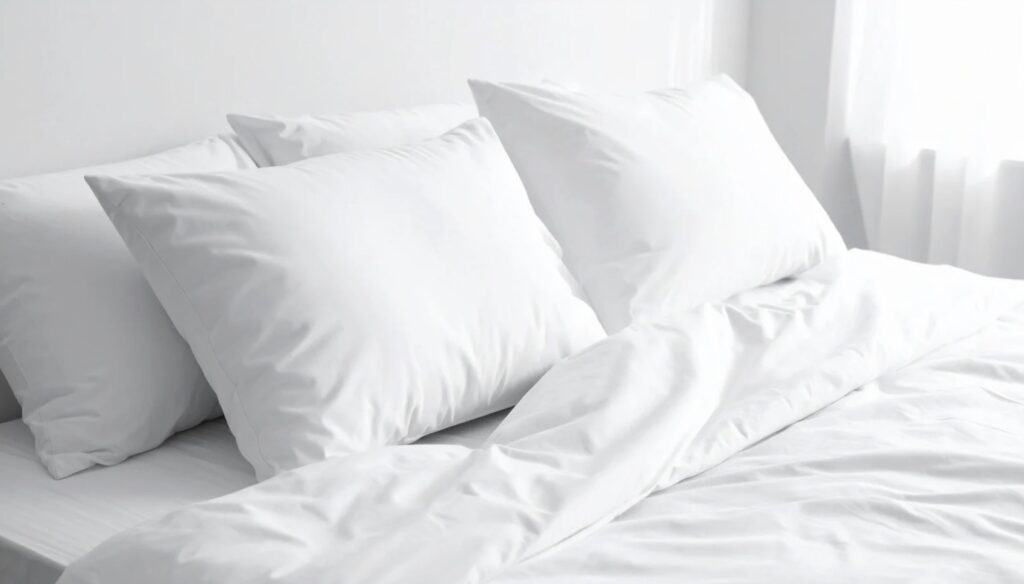
If you want a lower-risk option, start with the material label. Do not stop at the words “down alternative.”
Start with the tag or product details page. If the fill material is missing or vague, move on to another option.
A simpler shopping checklist:
- choose products with clear fill disclosure
- skip bedding with vague claims and no material details
- avoid stain-resistant or heavily treated fabrics when possible
- look for a tightly woven outer shell that holds fill in place
- replace bedding that sheds, clumps, or releases visible lint
Textile treatments can include PFAS, a group of man-made chemicals used for stain and water resistance, and EPA says some PFAS have been tied to harmful health effects and can stay in the environment for a long time.
Certifications can help ensure your product is high quality. Common ones to look for include:
- OEKO-TEX Standard 100 for testing certain harmful substances in textiles
- GREENGUARD Gold for lower chemical emissions
- GOTS if you are choosing organic natural-fiber bedding instead of synthetic fill
Options like cotton, wool, or real down usually contain less plastic than polyester fill.
They also come with tradeoffs such as price, care needs, or allergy concerns.
At The Goodness Well, we look at this as a reduction question, not an all-or-nothing one.
Good upkeep also helps:
- wash bedding gently and only as often as needed
- follow care instructions to reduce fiber breakdown
- vacuum and dust around the bed regularly
- replace low-quality bedding once it starts breaking apart
Conclusion
Down alternative is not the most concerning bedding choice, but it is often made with synthetic fibers, so it is not truly non-toxic either.
The biggest issue is usually ongoing microplastic shedding and, in some products, added treatments, not a dramatic one-time risk.
If that bothers you, you do not need to panic or replace everything at once.
A better next step is to choose simpler, better-labeled bedding over time and focus first on the products you use closest to your body every day.