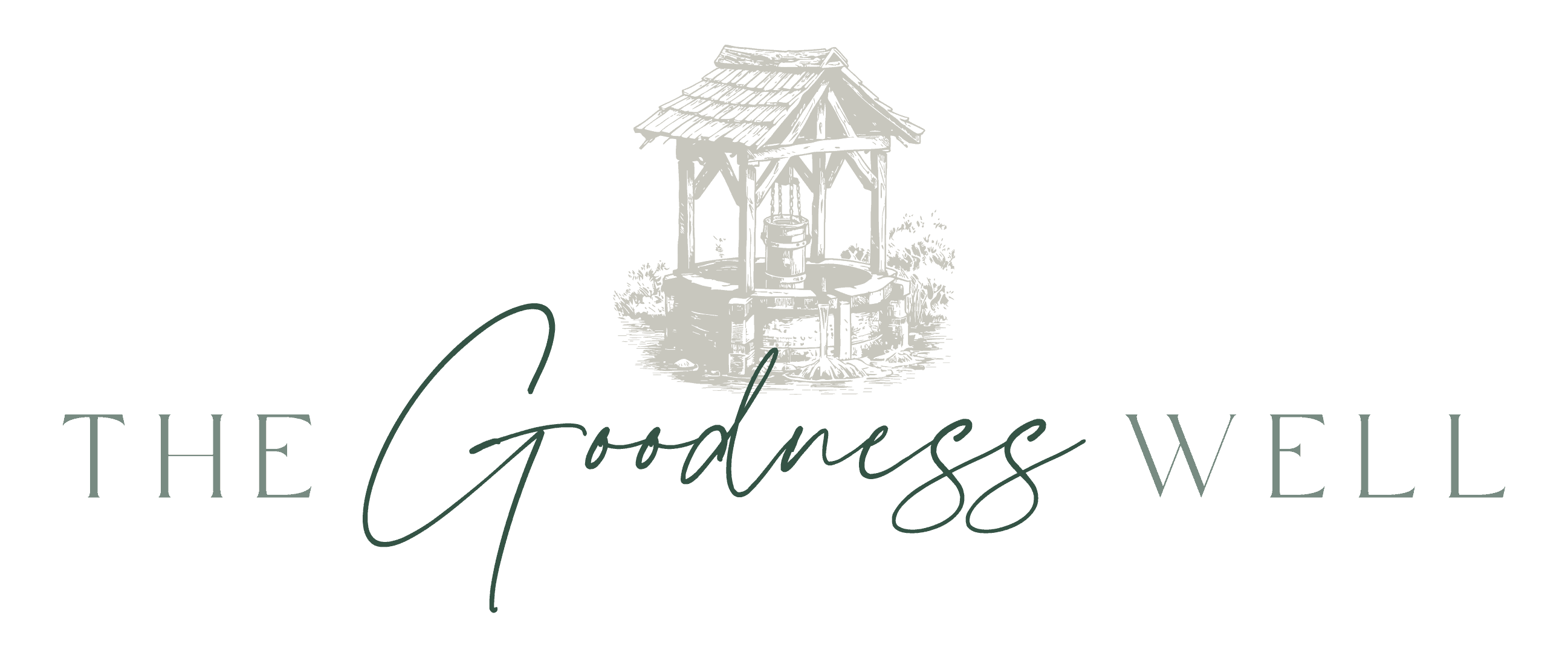
What Does “Non-Toxic” Really Mean?


“Non-toxic” sounds simple, but it is often used in ways that make products seem safer than the term alone can actually prove.
In real life, safety is rarely about whether something contains any chemicals at all. It is more about the kind of exposure, the amount, and who is being exposed, especially since indoor air pollutants can contribute to both short- and long-term health effects.
This article breaks down what “non-toxic” really means and how to judge the claim more clearly when you shop.
“Non-toxic” usually means a product is marketed as low risk for human health or the environment under normal use.
It does not mean chemical-free or completely safe in every situation. Because the term is not strictly regulated, it is best used as a starting point, not proof. To better understand a product’s safety, it helps to look for third-party certifications, clear material disclosures, and how the product will actually be used at home.
Why “Non-Toxic” Gets Confusing
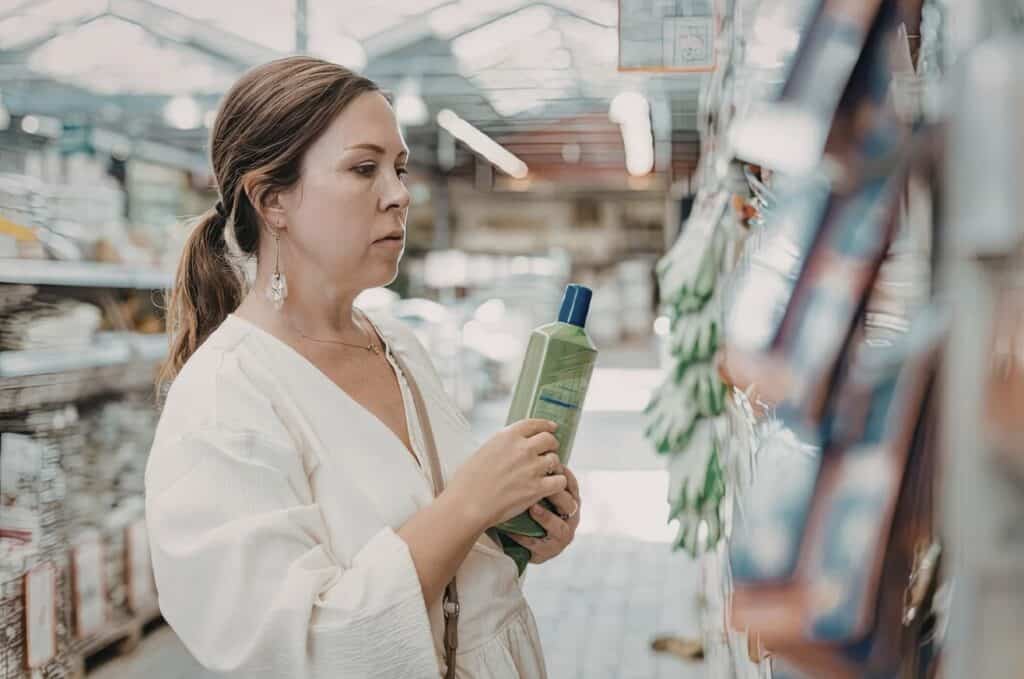
The phrase “non-toxic” sounds clear, but it is not a tightly regulated everyday marketing term. Different brands can use it in different ways.
One company may use it to mean low odor. Another may use it to mean no harsh ingredients were intentionally added.
This can create confusion. The label sounds like a promise, but it often does not explain what was tested, which chemicals were screened, or how the product performs in real use.
Another reason the term gets confusing is that it suggests an all-or-nothing answer. Most products are not “toxic” or “safe” in a simple, absolute way.
A product can still contain chemicals and be lower concern in normal use. A product can also sound clean on the label but still release substances into the air.
This comes up often with VOCs. Some paints, foams, adhesives, and finishes release VOCs into indoor air, and that matters because people breathe those emissions at home, especially in enclosed spaces.
VOCs are chemicals that evaporate into the air at room temperature, which is why some new products have a noticeable smell.
A few things make the label harder to trust on its own:
- It does not mean chemical-free
- It does not tell you the dose or exposure level
- It does not tell you whether the product was independently tested
- It does not tell you which type of harm was considered
- It does not tell you whether the claim covers people, the environment, or both
That is why “non-toxic” works best as a starting point, not a final answer. The useful details usually sit somewhere else, such as the ingredient list, emissions data, or third-party certifications.
Key Takeaway: “Non-toxic” may sound reassuring, but the useful details usually come from testing, disclosures, and certifications.
What Actually Determines Risk
Dose and Exposure
Risk depends on how much contact you have with a substance, how often that contact happens, and how it enters the body.
The same substance can be a very different concern depending on how much reaches your body and how often that happens.
Breathing fumes every day is different from touching a finished surface once. Sleeping on a mattress for years creates more repeated contact than opening a new package for a few minutes.
The same product can create very different exposure levels depending on use. A spray used in a small bathroom creates more inhalation exposure than a cured tabletop across the room.
A new product used in a closed space also tends to matter more than an older product that has already aired out.
New paints, adhesives, and foam products usually release more VOCs at first than they do after time has passed.
This is one reason VOCs show up so often in indoor air research. VOCs evaporate into the air, so people breathe them indoors, especially after painting, installing flooring, or bringing home new furniture.
NIH and related research on indoor air pollution notes that indoor pollutants can cause both short-term and long-term health problems, and newly built or renovated spaces often have higher VOC levels than older rooms.
A few practical examples:
- Closer contact usually means more exposure. A crib mattress affects a baby more directly than a bookshelf across the room.
- Daily use matters more than occasional use. A cleaner used every day creates more repeated exposure than one used once a month.
- Indoor use matters more when ventilation is poor. Closed windows trap more airborne chemicals inside.
- New items often release more at first. Fresh paints, adhesives, and foam products usually off-gas more when first opened or installed.
REAL-LIFE EXAMPLE
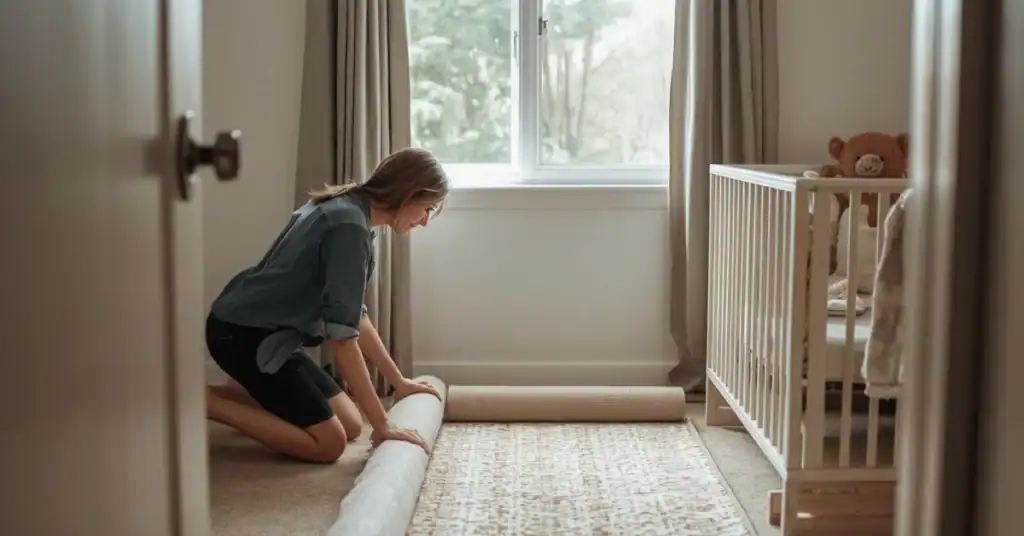
You buy a rug labeled “non-toxic” and unroll it in a small nursery the same day it arrives. That label does not tell you how much it will smell at first or how much ventilation the room still needs. You still need to check for emissions testing or air it out before heavy daily use.
Short- and Long-Term Effects
Short-term effects and long-term effects are not the same. Short-term problems usually show up fast. These can include odor, headaches, or irritation of the eyes, nose, or throat.
Long-term concerns depend more on repeated exposure over time, especially in homes where the same sources stay indoors for months or years.
When bringing home a new product, air it out in a well-ventilated space before using it heavily in a bedroom or nursery.
Sensitive groups also differ. Babies breathe more air for their size than adults. Children spend more time on floors and near fabrics, foam, and dust.
People with asthma or chemical sensitivities may react to levels that others barely notice. NIEHS notes that certain groups, including children, older adults, and people with pre-existing conditions, can be affected more by indoor pollutants.
That is why the same label does not answer the same question for every home.
A product that feels fine in a guest room may deserve closer scrutiny in a nursery, a bedroom, or a small apartment with limited airflow.
What “Non-Toxic” Does Not Tell You
A “non-toxic” claim does not tell you what kind of harm was considered. One product may focus on skin contact. Another may focus on fumes.
Another may say nothing about long-term use, dust, or disposal.
A stain-resistant treatment may raise more concern for persistence in the environment. A label that lumps all of that into one phrase leaves out the details a shopper actually needs.
The term also does not tell you whether the product was checked for human health only, or for environmental impact too.
Those are not the same question. A material can have low odor indoors and still create waste or pollution problems later.
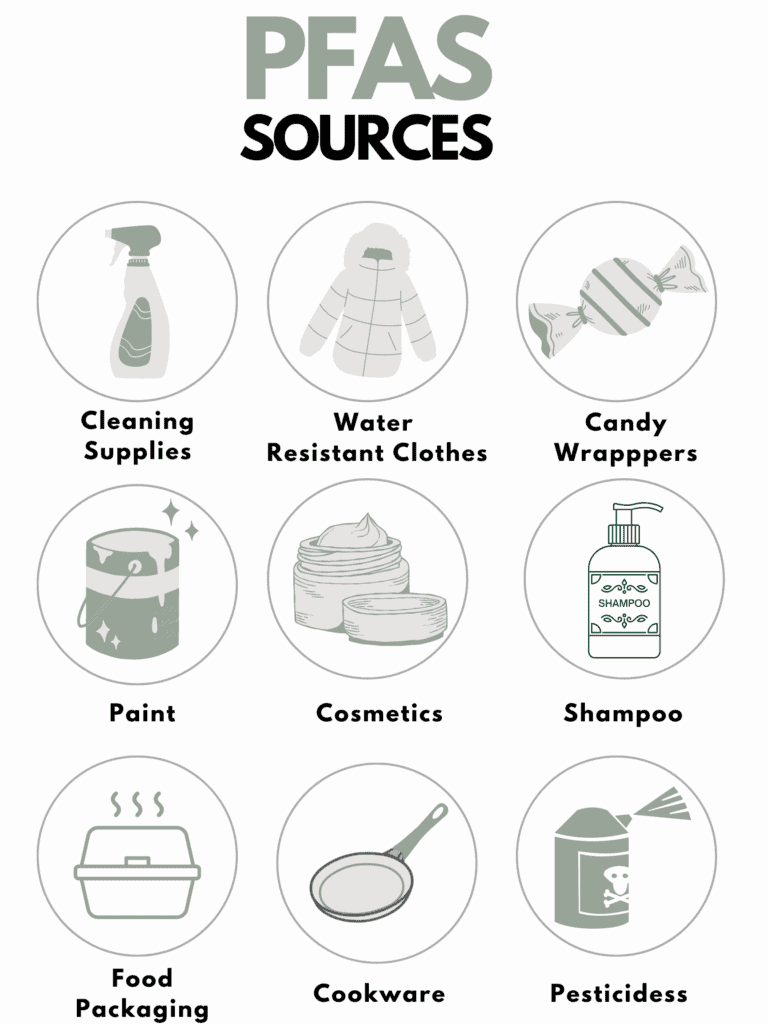
PFAS are a good example. These chemicals are used in some stain-resistant, water-resistant, and grease-resistant products because they work well under daily wear.
But EPA explains that many PFAS break down very slowly and can build up in people, animals, and the environment over time, which is why they are a big deal in both health and environmental research.
Some chemicals are discussed in environmental research not because they smell strong, but because they break down very slowly.
“Non-toxic” also does not tell you how complete the claim is. It may leave out:
- whether the product was tested by a third party
- whether the claim covers the whole product or only one layer
- whether flame retardants, stain treatments, or adhesives were included
- whether the packaging makes a broader claim than the technical documents do
- whether the claim applies to normal use only, not cutting, heating, sanding, or disposal
This gap also shows up often with “eco” or “green” marketing. A product may be marketed as safer for the home because it has low VOC emissions, but that does not answer whether the raw materials were responsibly sourced.
The reverse is also true. A product can use certified wood or fair-trade cotton and still need closer review for finishes, glues, or added treatments.
So when you see “non-toxic,” do not assume it covers every kind of harm. It may refer to one narrow issue while leaving out others that matter just as much.
Key Takeaway: A broad claim can leave out major details about testing scope, product layers, and real-world use.
Certifications That Matter
At The Goodness Well, we always suggest choosing products backed by third-party certifications which give you more to work with than a broad front-label claim.
They do not all check the same thing, though.
Some focus on chemical emissions. Some focus on harmful substances. Others focus on sourcing, labor, or company practices.
Certifications for Indoor Exposure
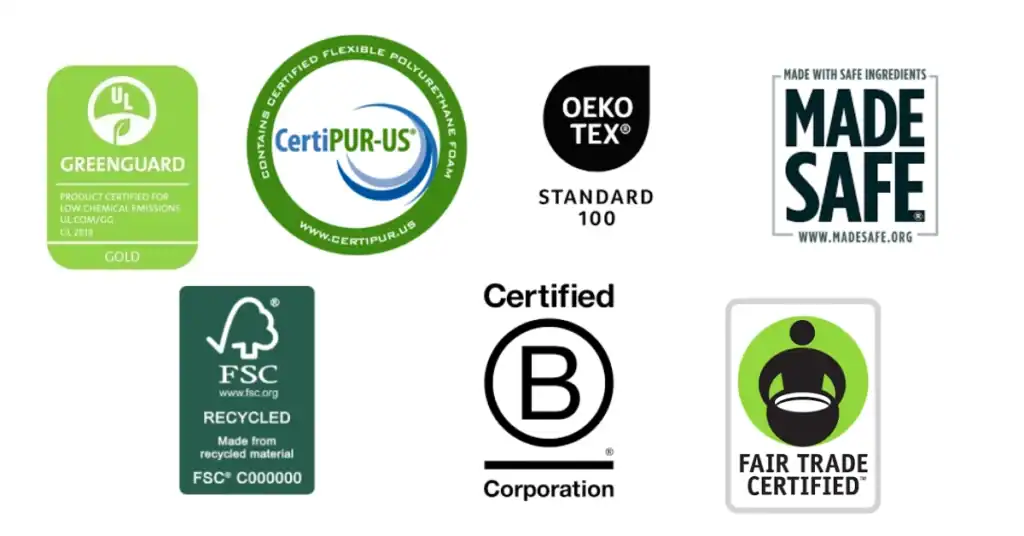
These labels are most useful when you want more clarity about what a product releases indoors or what materials were screened:
- GREENGUARD / GREENGUARD Gold
These certifications focus on low chemical emissions. UL says GREENGUARD products meet chemical emission standards, and GREENGUARD Gold applies stricter limits that are designed for spaces like schools and healthcare settings.
Emissions certifications focus on what a product releases into indoor air, not just what ingredients were used to make it.
- CertiPUR-US
This applies to flexible polyurethane foam used in items like mattresses, toppers, pillows, and upholstered furniture. CertiPUR-US says certified foam meets standards for content, emissions, and durability, including low VOC emissions and restrictions on certain substances such as formaldehyde and certain phthalates. - OEKO-TEX STANDARD 100
This label applies to textiles. OEKO-TEX says every labeled item has been tested for harmful substances, from yarn to the finished product. - MADE SAFE
This certification focuses on ingredient safety for human health and ecosystems. MADE SAFE describes its program as human health and ecosystem-focused, which makes it useful when you want a stricter screen for product ingredients, not just low odor or low emissions.
These labels help answer different questions. GREENGUARD looks more at what a product emits into indoor air. OEKO-TEX looks at harmful substances in textiles.
CertiPUR-US is specific to certain foam components. MADE SAFE looks more broadly at ingredient safety.
Match the certification to your main question. Use emissions labels for indoor air concerns and sourcing labels for materials and supply chain questions.
Certifications for Materials and Impact
These labels matter more when you also care about sourcing, labor, or company behavior:
- FSC Certified
FSC focuses on responsible forestry and forest-based materials. FSC says its system verifies sustainable sourcing through the supply chain, from forest to consumer. - Fair Trade Certified
Fair Trade focuses on livelihoods, working conditions, and supply chains. Fair Trade Certified says its model improves livelihoods, protects the environment, and builds more transparent supply chains. - B Corp
B Corp is a company-level certification, not a product-specific safety label. B Lab says B Corp certification assesses a company’s social, environmental, and governance impact.
A wood dresser with FSC-certified wood may still use finishes or adhesives you want to check. A B Corp brand may run its business responsibly, but that does not mean every product has low VOC emissions.
Use certifications as filters, not shortcuts. The best label depends on what you are trying to answer: indoor air, textile safety, foam content, forest sourcing, labor practices, or overall company standards.
How To Judge A Claim
When you see “non-toxic,” pause before treating it like proof. The better question is: what is this claim actually backed by?
A useful claim should point to something specific, such as a certification, a test standard, or a clear material disclosure.
Start with the details you can verify:
- Look for a named certification. “Non-toxic” means much less than GREENGUARD Gold, OEKO-TEX, or FSC.
- Check what part of the product is covered. A mattress cover, foam core, and adhesive layer are not the same thing.
- Read the material or ingredient information. Brands that share real details make it easier to judge the product.
- Watch for vague wording. Phrases like “eco-friendly,” “safe,” or “clean” often explain very little on their own.
- Match the claim to the use. A nursery item deserves closer review than a decorative item used across the room.
It also helps to ask what kind of exposure matters most for that product. A fabric sofa, for example, creates more daily contact than a wall shelf.
A room spray creates more direct inhalation exposure than a sealed wood frame. The closer and more frequent the contact, the more carefully the claim deserves to be checked.
This is where emissions testing and material disclosure become useful. Products used in bedrooms, nurseries, and small rooms affect indoor air more directly, especially when they are new.
If a brand uses the phrase “non-toxic,” check whether it also shares a certification, ingredient list, or testing details you can verify.
A simple way to judge a claim is to move through this checklist:
- Who made the claim? The brand itself or an independent certifier?
- What does it cover? Emissions, harmful substances, sourcing, or labor practices?
- Where will you use it? Nursery, bedroom, kitchen, or occasional-use space?
- How often will it be touched or breathed around? Daily, weekly, or rarely?
- Is anything missing? No certification, no ingredient list, no test details, or no clear scope
The goal is not to find a perfect label. The goal is to get enough specific information to make a smarter choice. In practice, “non-toxic” should open the conversation, not end it.
Conclusion
“Non-toxic” is not a guarantee. It is a broad claim that only becomes useful when you look at what stands behind it. The details matter more than the phrase itself.
You do not need to get every decision perfect. Focus on the products you use most, look for clear certifications or disclosures, and make the next better choice you reasonably can.