What Mattress Covers Are Most Non-Toxic? Cotton, Wool, and More

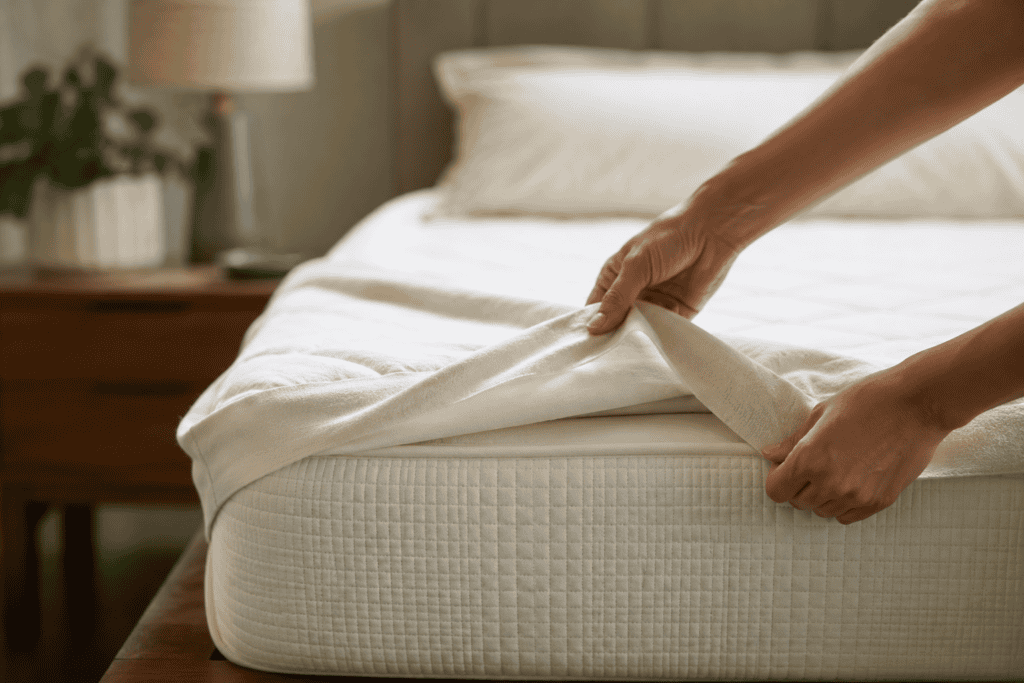
The mattress cover is the surface closest to your body each night, so its fibers, finishes, and added barriers deserve as much attention as the mattress core.
A PubMed-indexed review identifies textiles as a potential pathway for exposure to chemicals and particles, which is why manufacturing and finishing methods matter alongside the fiber itself.
Organic cotton and wool are often strong options, but hemp, natural latex, and waterproof fabrics each come with different benefits and tradeoffs.
This guide compares the most non-toxic mattress cover materials and explains what to look for beyond a “natural” label.
Organic cotton and wool are usually the safest mattress cover materials.
Their safety still depends on dyes, finishes, waterproof layers, and full product construction.
A natural fiber label alone does not guarantee the cover is untreated or fully non-toxic.
Safest Mattress Cover Materials
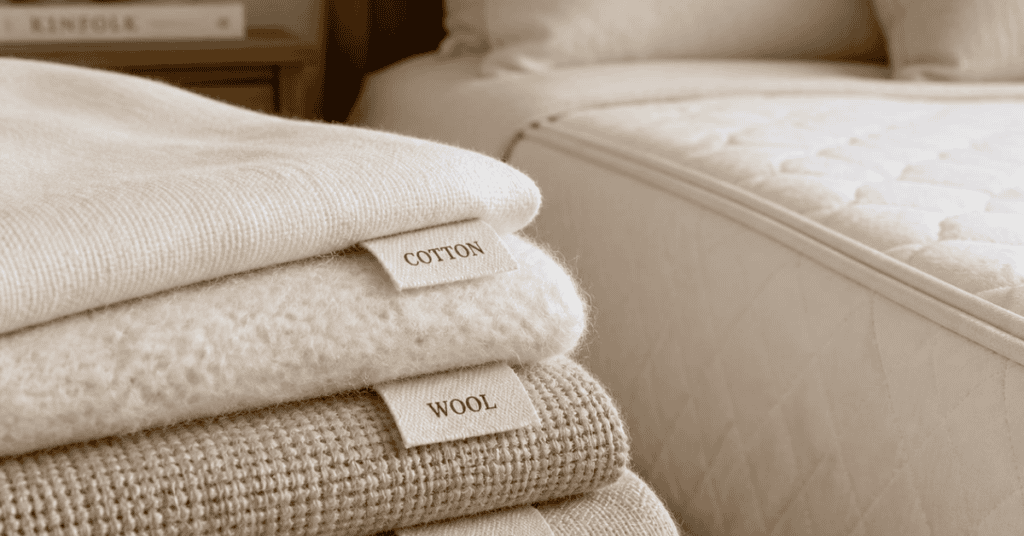
For most shoppers, certified organic cotton and organic wool are the strongest starting points. Both are breathable natural fibers, but they perform differently.
Hemp and linen can also work well, while latex and synthetic fabrics suit more specific needs.
No material is automatically non-toxic. The fiber’s quality, processing, and full cover construction still determine the final product.
- Organic cotton: Soft, breathable, and easy to wash. It works well for sleepers who want a smooth, lightweight surface. Cotton absorbs moisture but may stay damp longer than wool. Look for certified organic cotton rather than an unsupported “natural cotton” claim.
- Organic wool: Regulates moisture and temperature well. It also resists ignition more effectively than cotton or polyester, which helps manufacturers meet flammability requirements without relying only on added barriers. Wool usually costs more and may not suit people with wool sensitivities.
Wool absorbs and releases moisture vapor, helping the sleep surface stay drier when humidity rises.
- Hemp and linen: Durable, breathable, and able to absorb moisture. These fabrics often feel firmer or rougher than cotton, especially when new. They are also less common in mattress covers and may be blended with cotton for softness.
- Natural latex: Usually appears beneath the outer fabric rather than serving as the main cover material. It can add stretch, cushioning, or a protective inner layer. People with a diagnosed latex allergy should verify whether natural rubber latex is present because mattresses containing it can retain allergenic proteins.
Natural latex is usually placed beneath the outer fabric rather than used as the mattress cover itself.
- Synthetic fabrics: Polyester and nylon are durable, affordable, and quick-drying. However, they absorb much less moisture than cotton or wool and may feel warmer against the body. Synthetic fabric is not automatically unsafe, but it offers fewer natural moisture-management benefits.
A review of bedding and sleepwear fibers found that wool buffers more moisture than cotton, while polyester absorbs far less.
Real-Life Example
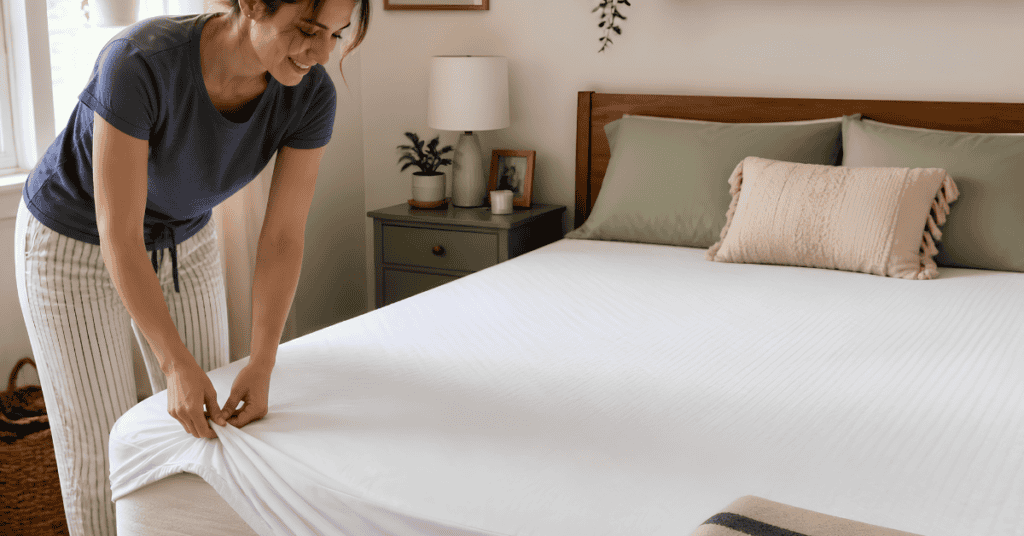
A hot sleeper may prefer breathable cotton or moisture-regulating wool, while a child prone to accidents may need a washable waterproof layer. A “cotton cover” label only identifies the outer fabric, so the shopper should still check what materials are used underneath it. Someone sensitive to wool can choose certified organic cotton or hemp instead.
What Can Add Chemical Exposure
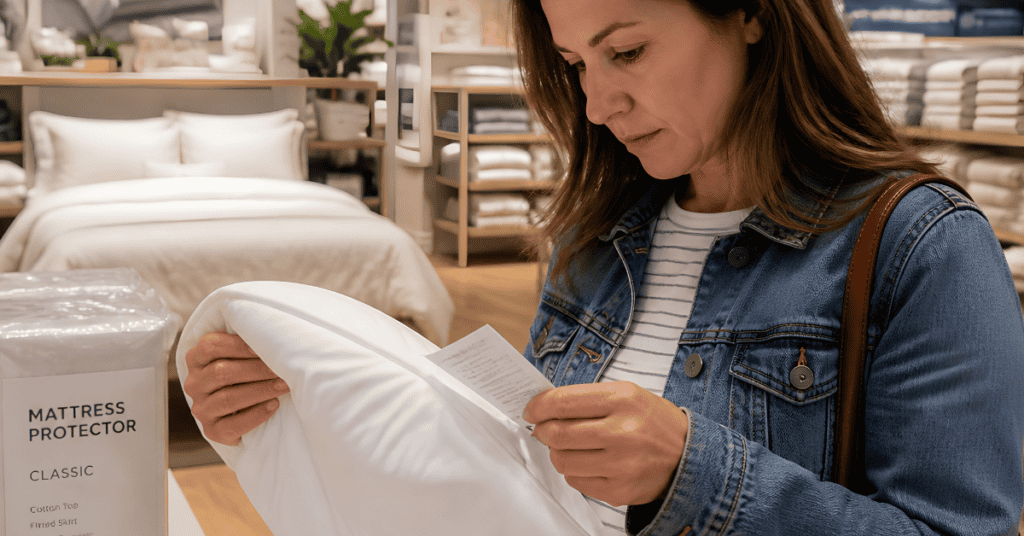
A simple woven cover usually contains fewer components than a waterproof encasement. Extra coatings, barriers, and bonded layers require closer review.
Fabric Treatments
Manufacturers may treat mattress covers to resist stains, odors, microbes, or wrinkles. These features are not essential for most sleepers.
Check for:
- PFAS-based stain or water repellents
- Antimicrobial or odor-control treatments
- Wrinkle-resistant finishes
- Added fragrance
- Undisclosed dyes or finishing agents
PFAS are sometimes used to make textiles resist water and stains. They also break down very slowly. NIH research reviews connect exposure to certain PFAS with reduced immune response and higher cholesterol.
Choose an explicitly PFAS-free cover when possible. A “PFOA-free” claim only excludes one PFAS chemical, not the entire group.
Waterproof Barriers
Waterproofing can be useful for children, allergies, incontinence, or frequent spills. The barrier material matters more than the word “waterproof.”
Common options include:
- Polyurethane membranes: Thin and flexible, but still synthetic. Look for PFAS-free and low-emission testing.
- PVC or vinyl: May contain plasticizers such as phthalates. PVC-free options are easier to evaluate.
- PTFE barriers: Use fluorinated chemistry. Ask the manufacturer whether the finished cover is PFAS-free.
Ask the manufacturer to name the waterproof membrane. A clear material answer is more useful than a general “non-toxic” claim.
Waterproof covers do not need to be avoided altogether. Choose one that clearly identifies its membrane and surface treatments.
Flame Barriers and Bonded Layers
Some covers include flame-resistant fibers or a separate barrier beneath the fabric. Others may use chemical treatments.
The CPSC notes that flame-retardant chemicals may be applied to internal barriers or, in some cases, the mattress cover fabric.
Ask the manufacturer to name the flame barrier rather than accepting “meets federal standards” as a complete answer.
Multi-layer covers may also use adhesives to hold fabrics and membranes together.
Key Takeaway: Extra performance features require closer review because they often add more materials and treatments.
Look for full material disclosure and testing for VOC emissions, especially when the cover has a noticeable chemical smell.
How Certifications Help
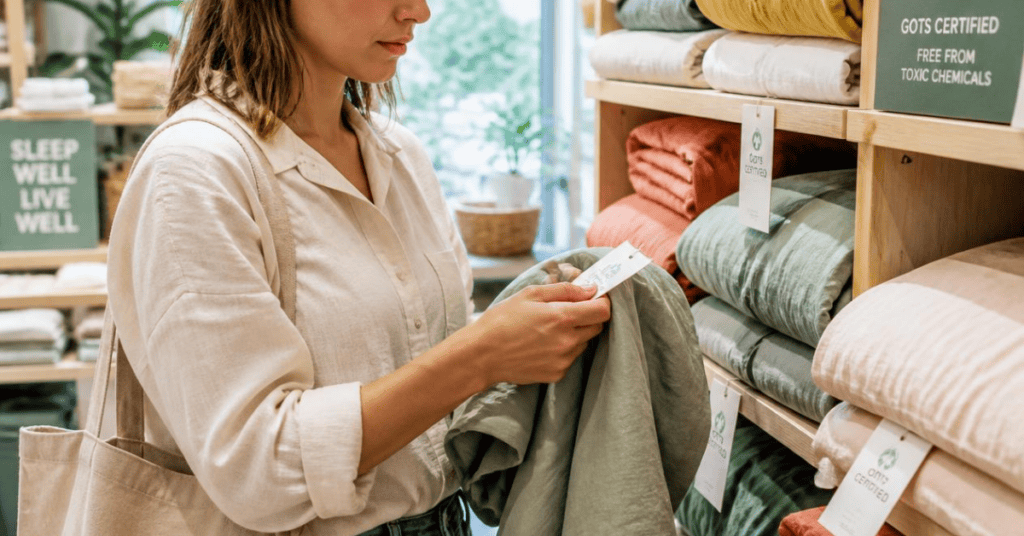
Certifications replace vague marketing claims with defined standards and independent checks. However, each label answers a different shopping question.
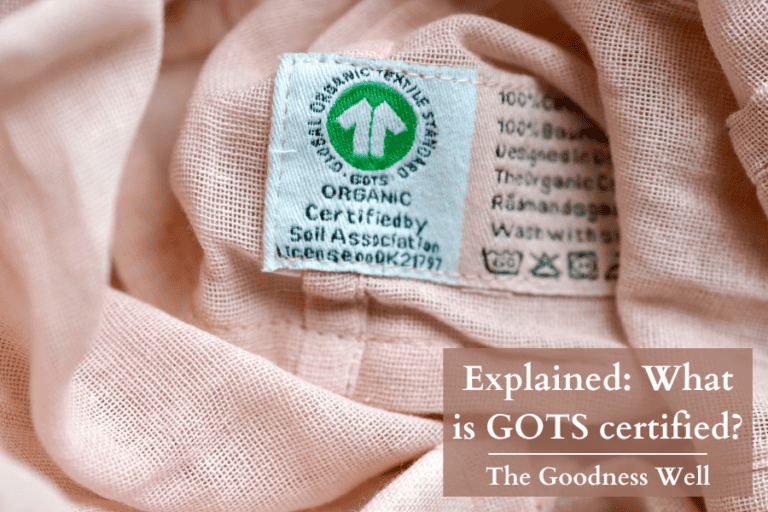
- GOTS: Verifies textiles made with certified organic fibers. It also sets requirements for processing, dyes, finishes, environmental practices, and working conditions. GOTS covers the textile supply chain, not just the raw fiber.
- OEKO-TEX STANDARD 100: Tests textile components for harmful substances. The testing can include fabric, thread, buttons, zippers, and other included parts. It does not prove that cotton or wool was organically grown.
- MADE SAFE: Screens product ingredients and materials against a large restricted-substance list. Its review focuses on human and ecosystem health rather than organic fiber content.
These labels are useful, but they are not interchangeable. A GOTS-certified cotton fabric verifies different qualities than an OEKO-TEX-tested finished textile.
Check which part of the cover holds the certification. A company may certify only the outer cotton fabric, not the waterproof membrane or complete encasement.
Look for:
- The exact certification name
- A certificate or label number
- The certified product or component
- A current listing in the certifier’s database
- Clear wording about whether the whole cover is certified
Enter the certification number in the certifier’s official database instead of relying only on a logo shown online.
OEKO-TEX provides an online Label Check for confirming certificate numbers.
Broad terms such as “organic,” “clean,” and “eco-friendly” do not provide the same verification. A named certification with a traceable number gives shoppers more useful information.
How to Choose Your Cover
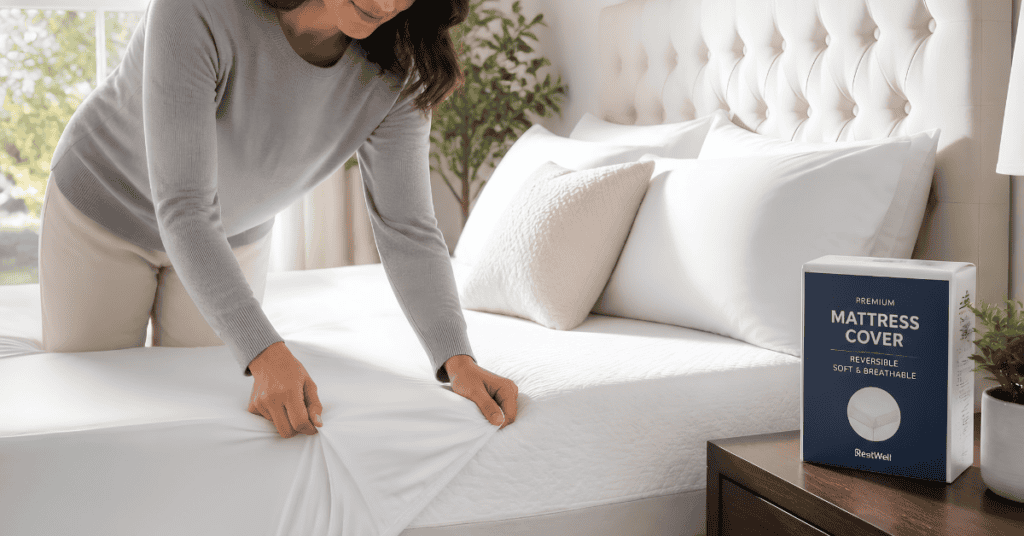
Start with the feature you need most. Then choose the simplest construction that meets that need.
Decide whether you need softness, moisture control, durability, or waterproofing before comparing materials.
- For softness and easy care: Choose certified organic cotton. It feels smooth and works well for most sleepers.
- For moisture and temperature control: Choose organic wool. It handles humidity better and may feel drier overnight.
- For durability: Consider hemp or linen. These fabrics usually feel firmer but hold up well over time.
- For spill protection: Choose a washable waterproof cover with a fully disclosed membrane. Look for PFAS-free, PVC-free, and phthalate-free claims.
- For sensitive sleepers: Avoid added fragrance, antimicrobial treatments, and unnecessary fabric finishes.
Read the complete material list before buying. The front label may describe only the outer fabric.
Ask the manufacturer:
- What is the waterproof layer made from?
- Are PFAS, PVC, or phthalates used?
- Does the cover contain a flame treatment?
- Are antimicrobial or odor-control finishes added?
- Are adhesives used between layers?
- Does the certification apply to the whole cover?
At The Goodness Well, we look for clear material disclosure before relying on words like “natural” or “clean.” A transparent blended cover can be easier to evaluate than a poorly explained all-natural one.
Choose a removable, washable cover when possible. Regular cleaning helps control sweat, dust, and allergens without added antimicrobial treatments.
Regular washing can manage sweat, dust, and allergens without relying on added antimicrobial treatments.
Conclusion
Organic cotton and wool are often the best starting points for a non-toxic mattress cover, but the safest choice depends on the full construction.
Check the materials, treatments, waterproofing, and certifications rather than relying on broad claims like “natural.”
With clear product information, you can choose a cover that fits your comfort needs without overcomplicating the decision.