
Solid Wood vs Engineered Wood Furniture — Safety, Emissions, and Durability

Choosing between solid wood and engineered wood furniture involves more than comparing appearance, price, or durability.
The materials, adhesives, and finishes used can affect what a piece releases into your home, making the decision relevant to indoor air quality.
The U.S. Environmental Protection Agency identifies pressed-wood furniture made with materials such as particleboard, MDF, and hardwood plywood as a potential source of formaldehyde emissions.
Understanding these differences can help you choose furniture that balances lower chemical exposure with performance, longevity, and value.
Solid wood is usually safer, but low-emission engineered wood can also be a good choice.
Safety depends on the adhesives, finishes, and emission testing used in the finished piece.
A “solid wood” label does not guarantee low VOCs, while certified engineered wood does not mean every component is chemical-free.
How the Materials Differ
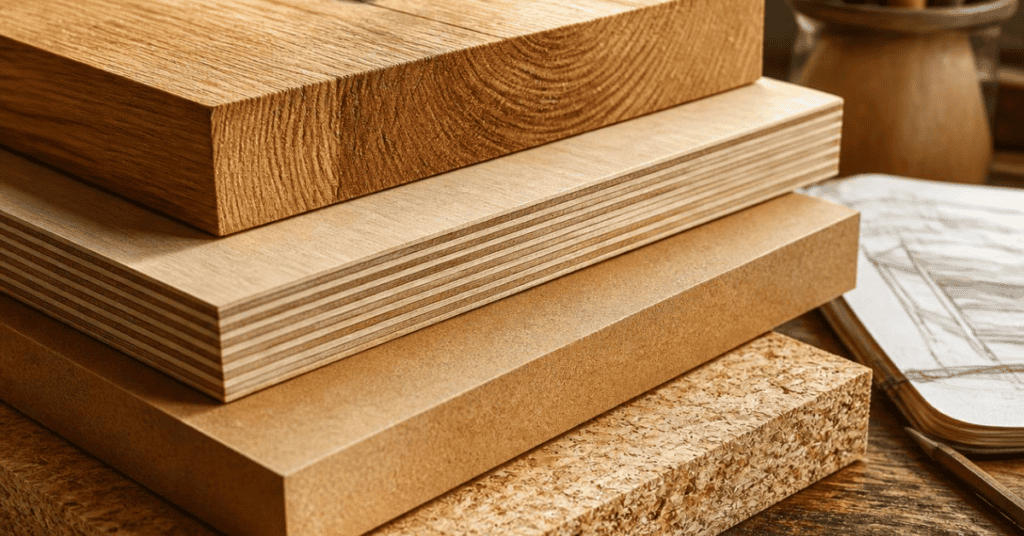
Solid wood and engineered wood come from trees, but they are built differently. These differences affect strength, weight, appearance, and how much adhesive a piece contains.
Solid Wood
Solid wood furniture is made from lumber cut directly from a tree. Common choices include oak, maple, pine, walnut, and rubberwood.
A piece may use one solid board or several boards joined together. Even furniture labeled “solid wood” may contain small amounts of glue in joints or laminated panels.
Solid wood also contains natural compounds that release odors. These are different from the synthetic resins often used to bind engineered wood.
Engineered Wood Types
Engineered wood combines wood layers, fibers, or particles with adhesive. The amount and type of adhesive vary by material.
- Plywood uses thin wood sheets glued in alternating directions. This layered construction provides strength and helps prevent warping.
- MDF, or medium-density fiberboard, combines fine wood fibers with resin. It has a smooth surface that works well for painted furniture.
- Particleboard uses larger wood chips and particles pressed together with resin. It is lightweight and commonly used in budget furniture.
- Veneered panels place a thin layer of real wood over plywood, MDF, or particleboard. The veneer changes the appearance but not the core material.
A real wood veneer can cover plywood, MDF, or particleboard, so the surface does not reveal the core material.
Some resins used in engineered wood release formaldehyde into indoor air.
A review published through PubMed Central explains that formaldehyde commonly comes from the resins used to bind plywood, fiberboard, and particleboard.
This is why the core material and adhesive matter more than a wood-look surface.
Which Material Is Safer?

Solid wood is usually the safer default for indoor air quality. It does not require resin to hold wood fibers or particles together.
Unfinished solid wood with simple joinery will generally release fewer chemicals than MDF or particleboard.
Engineered wood is not automatically unsafe. Its emissions depend on the resin, manufacturing process, and finished-product testing.
MDF and particleboard are more likely to release formaldehyde when new. They use resin throughout the panel to bond small fibers or wood particles.
Formaldehyde receives attention because breathing higher amounts can irritate the eyes, nose, throat, and airways.
The Agency for Toxic Substances and Disease Registry reports that most people do not experience health problems from the small amounts typically found in homes.
People with asthma, children, and older adults may react more easily when indoor levels rise.
Paints, stains, lacquers, and other coatings can release VOCs.
A tested, low-emission engineered wood product may release less than heavily coated solid wood furniture.
For most homes, unfinished or low-VOC solid wood is the safest simple choice.
When choosing engineered wood, plywood and verified low-emission products are usually preferable to uncertified MDF or particleboard.
Key Takeaway: Solid wood is usually the safer default, but tested low-emission engineered wood can also be suitable.
What Changes the Risk
The material name does not reveal how much a finished piece will release into the air. Manufacturing details and home conditions also affect emissions.
Key factors include:
- Adhesives and resins: Urea-formaldehyde resins usually release more formaldehyde than no-added-formaldehyde or ultra-low-emitting alternatives.
- Amount of binder: Panels made from small fibers or particles require adhesive throughout the material. Layered plywood usually needs less binder.
- Paints and coatings: Lacquers, paints, and sealers may release VOCs, even when the furniture underneath is solid wood.
- Exposed edges: Uncovered MDF or particleboard edges allow emissions to escape more easily. Properly sealed surfaces and edges reduce this release.
- Product age: Emissions are usually strongest when furniture is new. They often decrease as the product ages.
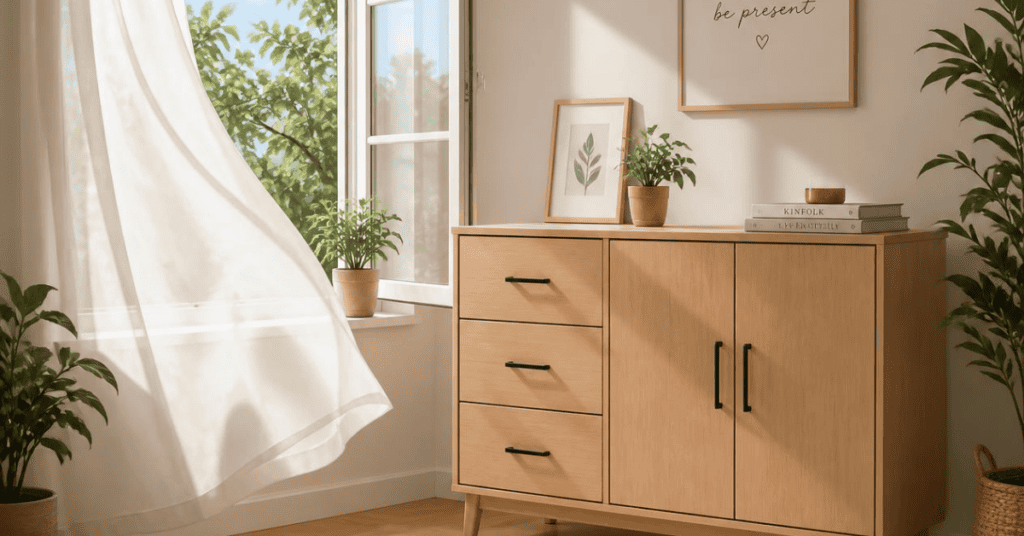
- Room size and airflow: A new piece can create a higher indoor concentration in a small, closed room. Open windows or mechanical ventilation help carry emissions outside.
- Heat and humidity: Warm, humid conditions increase formaldehyde release from some composite wood products. The EPA recommends maintaining moderate temperatures and reducing indoor humidity to help limit these emissions.
Warm, humid air can increase formaldehyde release from some composite wood panels. Cooler, drier conditions help keep emissions lower.
These factors explain why two products made from the same broad material can perform differently. Product-level emissions testing provides more useful information than a material label alone.
Durability and Long-Term Value

Furniture that lasts longer usually offers better value, even when it costs more upfront. Lifespan depends on the material, construction, hardware, and daily use.
Solid wood is often easier to maintain over time. Scratches, dents, and worn surfaces can usually be sanded or refinished. Loose joints may also be repaired without replacing the whole piece.
Surface damage that ruins an MDF or particleboard panel can often be repaired on solid wood through sanding and refinishing.
High-quality plywood can also be strong and durable. Its layered structure helps it hold screws well and resist splitting.
It works especially well in cabinets, drawers, and other furniture that receives regular use.
MDF and particleboard have more limits:
- Water can cause the panels to swell or crumble.
- Damaged corners are difficult to rebuild.
- Screws may loosen after repeated assembly.
- Deep chips cannot usually be sanded away.
- Heavy loads may cause thin panels to sag.
Construction quality still matters. A poorly made solid wood table may fail before a well-built plywood one. Check the thickness of panels, the strength of joints, and whether parts can be replaced.
Solid wood furniture may remain usable for decades and move between homes. MDF or particleboard pieces often need replacement sooner after moisture damage or repeated moves.
Frequent replacement uses more materials and creates more household waste.
Engineered wood can use small wood pieces and manufacturing leftovers efficiently. That benefit is strongest when the finished furniture is durable enough for long-term use.
Key Takeaway: A durable, repairable piece often provides better long-term value and creates less waste.
Choosing Safer Furniture

Start with the materials, then check how the complete piece was made and tested. Product details are more useful than broad claims such as “natural” or “eco-friendly.”
At The Goodness Well, we consider the wood, adhesives, finishes, emissions testing, and expected lifespan together.
Certifications and Standards
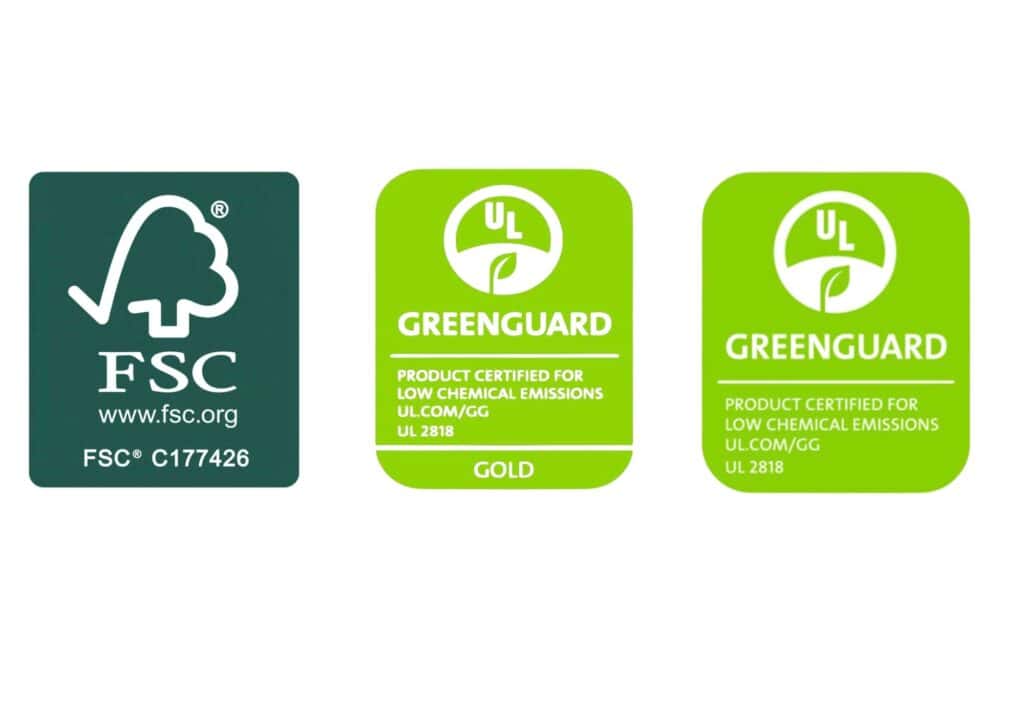
Several labels can help you compare products, but they verify different things:
- TSCA Title VI: Sets federal formaldehyde emission limits for hardwood plywood, MDF, and particleboard. The EPA explains that covered panels and finished goods must meet these standards. This label does not cover every VOC released by the finished furniture.
- CARB Phase 2: Confirms that composite wood meets California’s formaldehyde emission limits. These limits are identical to the federal TSCA Title VI limits.
- GREENGUARD Gold: Tests finished products for low chemical emissions. It uses stricter VOC limits intended for homes, schools, and healthcare spaces.
- FSC: Verifies that wood comes from responsible or controlled sources. It addresses forest sourcing, not formaldehyde or total VOC emissions.
A certification is most useful when it covers the entire furniture piece. A certified panel does not automatically verify the coatings, adhesives, or other components added later.
Shopping Checklist
When comparing furniture:
- Look for unfinished or low-VOC solid wood when it fits your needs and budget.
- Choose plywood over uncertified MDF or particleboard when possible.
- Ask the manufacturer which adhesives, paints, stains, and sealers are used.
- Confirm TSCA Title VI compliance for furniture containing composite wood.
- Give extra weight to GREENGUARD Gold when shopping for a bedroom or nursery.
- Choose sturdy construction that can be repaired instead of quickly replaced.
- Air out new furniture in a dry, well-ventilated space before regular use.
Avoid relying on “non-toxic,” “green,” or “chemical-free” without supporting details. Look for named materials, clear finish information, and recognized third-party testing.
Conclusion
Solid wood is usually the simplest choice for reducing furniture emissions, but the material name alone does not tell the whole story.
Engineered wood can also work well when it meets strict emission standards and uses safer finishes.
Focus on clear material details, trusted certifications, and sturdy construction. With a few careful checks, you can choose furniture that supports both a healthier home and long-term value.