The 7 Best Organic, Non Toxic Bedroom Furniture Going Into 2027 (Reviewed)






Finding genuinely non-toxic bedroom furniture takes more than looking for a “natural” or “low-VOC” label.
Materials matter because common composite woods such as MDF, particleboard, and hardwood plywood are subject to EPA formaldehyde-emission standards, making construction an important part of what you bring into your bedroom.
The best options also balance safer materials and transparent finishes with durability, comfort, style, and a price that makes sense for your home. In this guide, we’ll help you compare the details that actually matter so you can choose bedroom furniture with more confidence.
The Goodness Well is reader-supported. Some links in this article may be affiliate links, but every recommendation follows our editorial standards and independent review process. Learn more about our editorial standards and review methodology.
What Makes Furniture Safer
The best place to start is the construction, not the marketing language. “Natural,” “eco-friendly,” and even “non-toxic” can mean very different things from one product to another.
Start With the Core
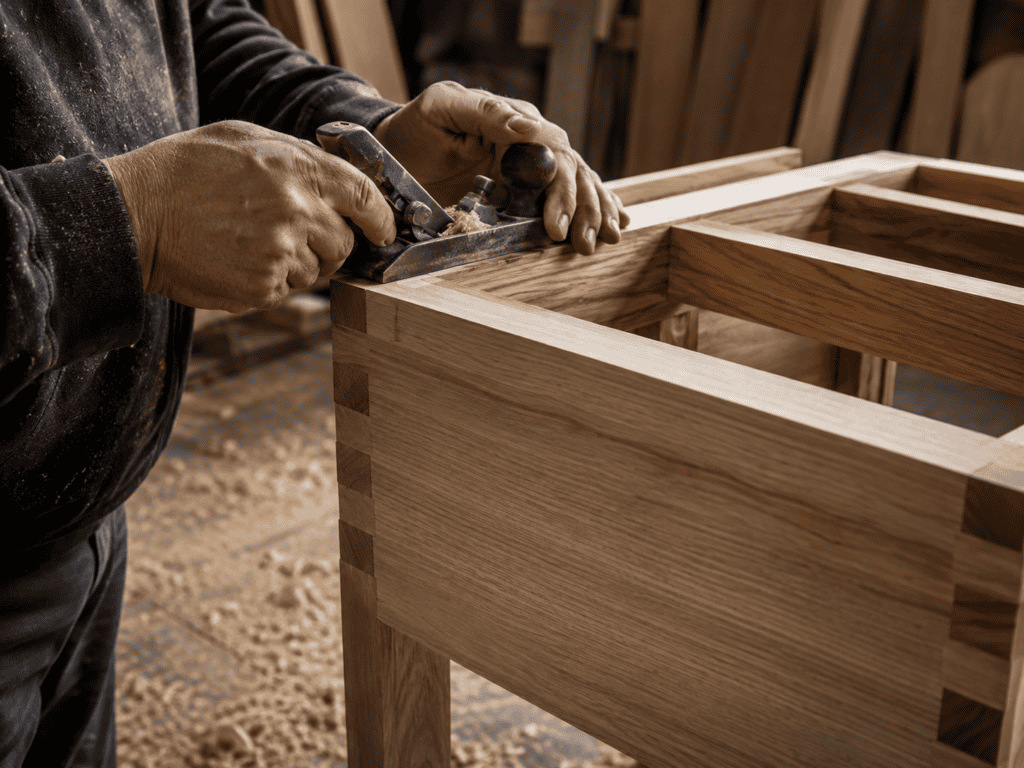
Solid hardwood usually gives you the simplest material profile because there are fewer layers bonded together with resin. MDF, particleboard, and hardwood plywood are different.
These composite woods are manufactured with adhesives, and formaldehyde-based resins have historically been used in pressed-wood products.
That does not mean every piece containing plywood or MDF should automatically be ruled out. In the U.S., hardwood plywood, MDF, and particleboard are regulated under EPA’s TSCA Title VI formaldehyde-emission standards.
Current regulated products should be labeled TSCA Title VI compliant.
When comparing two pieces, we would generally prioritize:
- solid hardwood with clearly disclosed finishes and glues
- lower-emission composite wood with credible testing when solid wood is not practical
- full material disclosure over vague claims such as “eco-friendly wood”
- replaceable or repairable construction over furniture designed for short-term use
This is also why we looked beyond the words “solid wood” when comparing the furniture in this guide. A solid wood frame can still contain adhesives, coatings, upholstered panels, or other materials worth checking.
Check What’s Added
The wood itself is only part of the story. Finishes, stains, adhesives, foam, fabric treatments, and mattress filling can all change the overall material profile.
Before buying, check four things: the core material, the adhesive, the finish, and any added treatments. If one of those is not disclosed, consider that a gap in transparency.
A strong product page should tell you what the finish actually is. Look for specific terms such as water-based finish, natural oil, wax, or a named coating rather than an unexplained “protective finish.” The same goes for adhesives.
If a company makes strong low-emission claims but never identifies its glue or finish, that is worth noting rather than assuming the best.
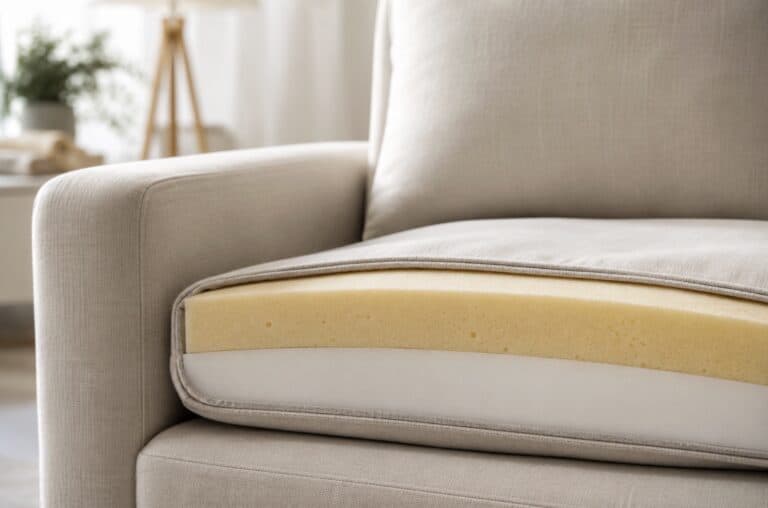
Upholstered furniture deserves an extra look because there are more layers involved. Check the frame, fabric, foam or fill, backing, adhesives, and any stain- or water-resistant treatment.
EPA notes that PFAS have been used in stain- and water-repellent treatments for upholstery, carpets, and other fabrics. If avoiding these treatments is a priority, look for an explicit PFAS-free statement instead of assuming untreated-looking fabric is PFAS-free.
Mattresses add another consideration: the flame barrier. Rather than treating all flame protection as the same, check what the manufacturer actually uses. Some of the products in this roundup disclose wool or plant-based barriers, while others use different constructions.
The useful question is not simply whether a product meets flammability requirements, but what materials are used to meet them.
Certifications Worth Understanding
Certifications are most useful when you know exactly what they cover. No single label proves that an entire bedroom setup is “non-toxic.”
Match Labels to Claims
Here is how to read the certifications that come up most often when shopping for bedroom furniture and mattresses:
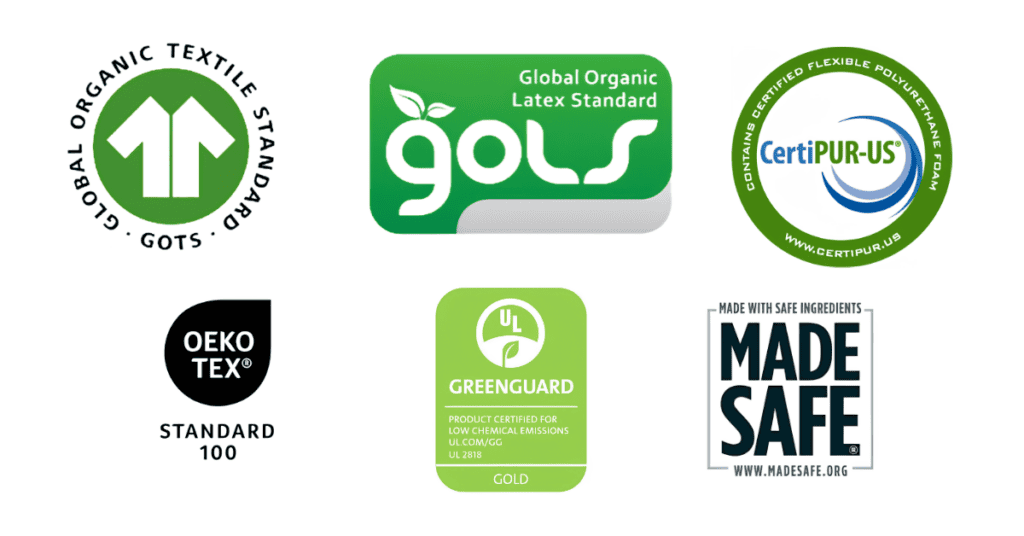
- GREENGUARD Gold: Focuses on chemical emissions from the finished product. UL describes GREENGUARD certification as testing products for low chemical emissions, with the Gold standard using stricter limits intended for sensitive indoor environments. It is useful for furniture and mattresses, but it does not mean every ingredient is natural or organic.
- FSC: Tells you about responsible forest sourcing and chain of custody, not indoor emissions. FSC certification tracks forest-based materials through the supply chain. An FSC-certified wood product can still use finishes or adhesives you may want to investigate separately.
- OEKO-TEX STANDARD 100: Applies to textiles tested for harmful substances. The certification can cover components from yarn through the finished textile product. This is especially useful for mattress covers, bedding, and upholstery, but it does not certify the wooden frame underneath.
- GOTS: Goes further into organic textile processing, including requirements for organic fibers and restrictions on chemical inputs used during processing. Look carefully at whether the finished product is certified or whether the brand is only referring to one GOTS-certified material.
- GOLS: Applies to products made with organically grown natural rubber latex and includes processing requirements. It is most relevant to mattresses and latex cushions, not wood furniture as a whole.
- TSCA Title VI / CARB Phase 2: These relate to formaldehyde emissions from regulated composite wood. EPA currently requires applicable hardwood plywood, MDF, and particleboard products sold in the U.S. to comply with TSCA Title VI. Compliance is useful when engineered wood is unavoidable, but it does not tell you anything about upholstery treatments, finishes, or other materials.
A long certification list is not automatically better. A shorter list that directly addresses the materials in the product can tell you more.
We also looked at whether certifications applied to the finished product, a particular component, or simply the sourcing of a material when comparing the recommendations above.
How to Compare Options
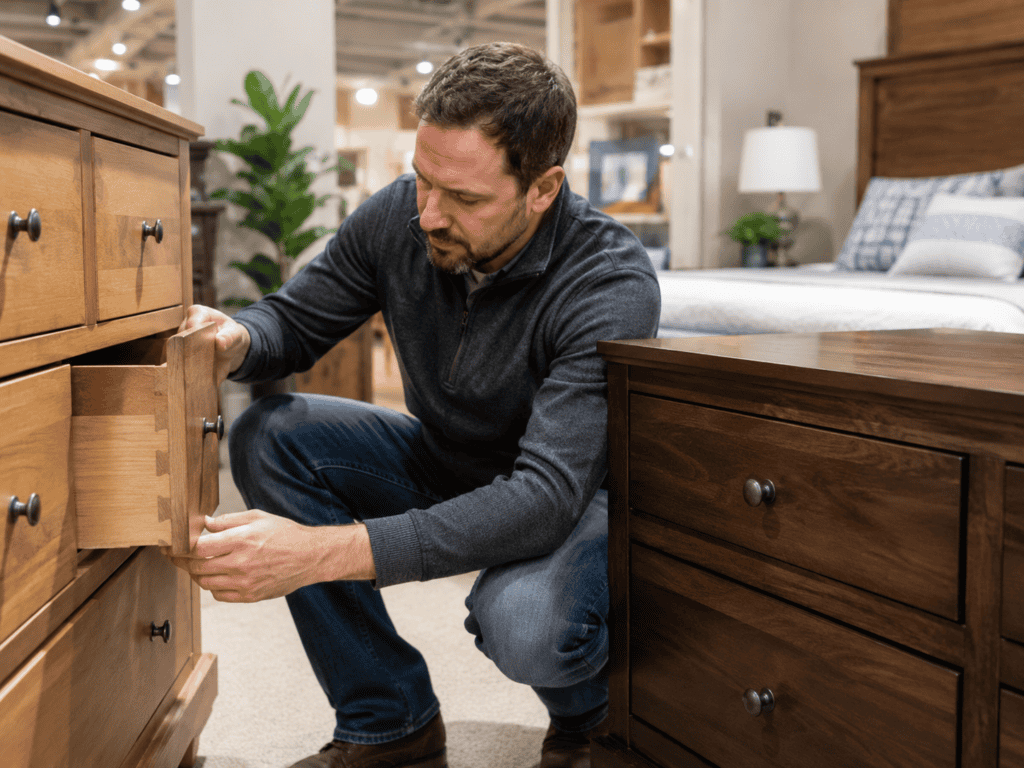
A safer bedroom does not require buying the most expensive piece or insisting that everything be certified organic.
The better approach is to decide where material choices matter most and then compare durability, transparency, and price alongside them.
Balance Health and Practicality
Start with the furniture you will keep for years or spend the most time near. A bed frame, mattress, dresser, crib, or upholstered headboard deserves closer scrutiny than a small decorative accessory.
For wood furniture, ask four simple questions: What is the core material? What holds it together? What is on the surface? Are those details actually disclosed? A solid hardwood piece with a clearly identified finish gives you fewer unknowns.
A well-made composite piece with TSCA Title VI compliance and third-party emissions testing can still be a reasonable alternative when budget, weight, or design matters.
Then consider how long the furniture is likely to work in your space. Replaceable mattress layers, convertible cribs, adjustable desks, and children’s beds that can be reconfigured may cost more upfront but can reduce the need to replace an entire piece later.
That matters for sustainability as much as the raw material itself.
Finally, do not let a single “green” feature outweigh everything else. FSC wood does not tell you about emissions. Organic fabric does not tell you what foam sits underneath it. GREENGUARD Gold does not mean the product contains only natural materials.
Key Takeaway: The strongest furniture choices combine well-disclosed materials, finishes, treatments, testing, and durable construction rather than relying on a single certification or claim.
The Best Organic & Non Toxic Bedroom Furniture
Naturepedic
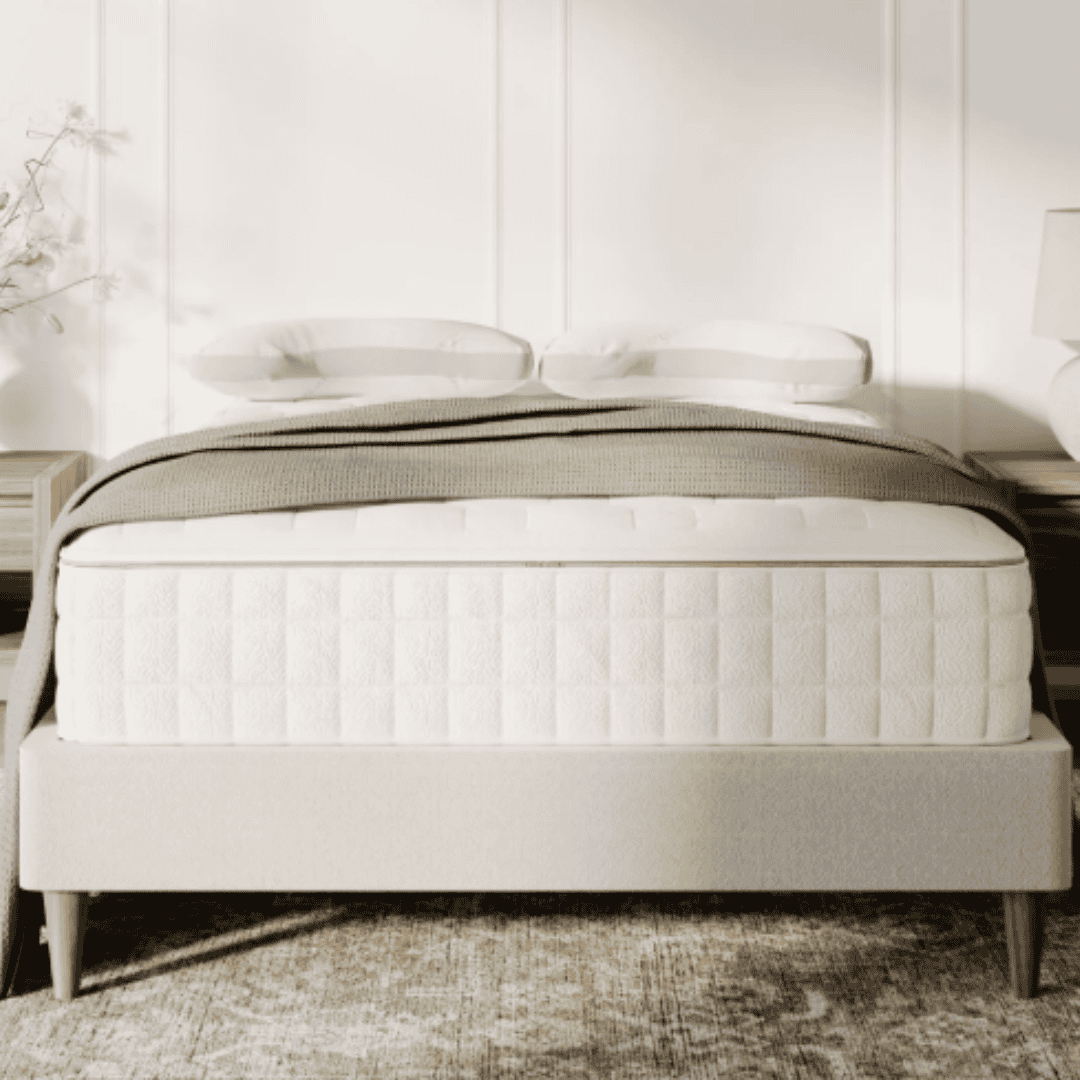
Naturepedic is our top pick because it combines exceptionally strong organic and non-toxic credentials with a broader bedroom lineup and unusually flexible mattresses.
Its EOS Classic uses certified organic cotton, wool, and latex, with certifications including GOTS, GOLS, EWG Verified®, MADE SAFE®, GREENGUARD Gold, and UL Formaldehyde Free.
What really sets Naturepedic apart is the EOS system: you can choose from five firmness levels, customize each side for couples, swap individual layers over time, or choose latex-free and vegan versions.
Beyond mattresses, the brand also sells bed frames and bases, dressers, nightstands, and chests of drawers, giving you more options for furnishing the whole bedroom.
And if you’re looking for organic, non-toxic children’s furniture as well, they’ve got you covered.
Its sustainability efforts are also impressive, including recycled steel, kraft-paper roll packing, material reuse and donation, and a zero-waste goal for 2027.
The main drawback is price, but if certified materials, customization, and long-term flexibility matter most, Naturepedic is one of the strongest all-around choices in this roundup.
Product Highlights:
- Price: Mattresses: $1,119.20–$3,759.20
- Materials: Certified organic cotton, organic wool, GOLS-certified latex, plant-based PLA fiber, and steel coils; furniture pages describe solid or real wood construction
- Finish / Adhesives: EOS Classic uses no glues or adhesives; exact furniture finishes were not specified
- Certifications: GOTS, GOLS, EWG Verified®, MADE SAFE®, GREENGUARD Gold, UL Formaldehyde Free; certifications vary by product
- Safety: EOS Classic is made without flame retardants, fiberglass, polyurethane foam, or glues/adhesives
- Functionality: Five firmness levels, split-side firmness, replaceable layers, latex-free and vegan options, adjustable-bed compatibility
- Sustainability: Recycled U.S. steel, kraft-paper roll packing, material reuse and donation, 1% for the Planet®, zero-waste goal by 2027
- Made In: EOS Classic is made in the USA with domestic and global materials
- Warranty / Shipping: Free shipping and returns, 100-night trial, 25-year limited warranty on the EOS Classic
- Best For: Shoppers who want certified organic materials, extensive mattress customization, and a broader bedroom selection
- Downside: Premium pricing
Plank + Beam
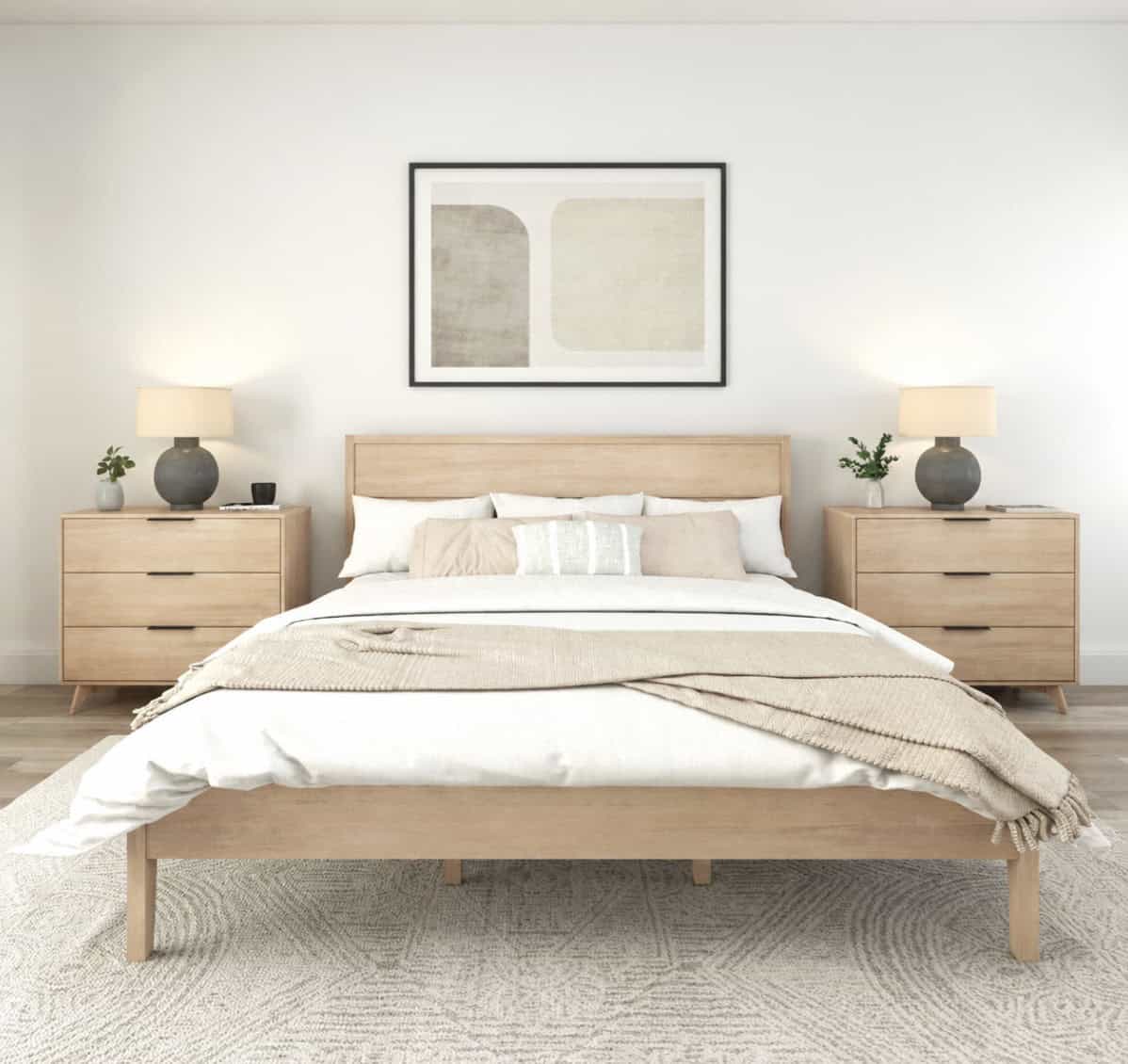
Plank + Beam is our most affordable pick for readers who want wood bedroom furniture with low-emission options.
Its bedroom collection includes beds, dressers, and nightstands, making it easy to put together a coordinated room.
The brand offers GREENGUARD Gold certified bedroom furniture, giving shoppers a clear way to prioritize products actually tested for low chemical emissions.
Its Modern Nightstand, for example, carries that certification and combines solid pine and engineered wood with finishes the brand describes as low-VOC.
That combination of accessible pricing and emissions testing earns it a place in this roundup.
The main tradeoff is that some pieces contain engineered wood, including the Sera Nightstand’s drawer bottom, so check individual descriptions if you want solid wood throughout.
⭐ Product Highlights:
- Downside: Some pieces include engineered wood
- Price Range: $179–$1,029
- Materials: Solid pine with engineered wood components; construction varies by model
- Finish / Adhesives: Brand-described water-based, low-VOC finishes; exact adhesives not identified on the reviewed pages
- Certifications: GREENGUARD Gold on designated bedroom products; check individual listings
- Functionality: Beds, dressers, nightstands, and coordinating sets
- Sustainability: Brand states it sources wood sustainably; specific sourcing certification not established on the reviewed pages
- Warranty / Shipping: 1-year limited furniture warranty; free shipping on contiguous U.S. orders over $400
- Best For: Furnishing a coordinated bedroom on a smaller budget
Avocado
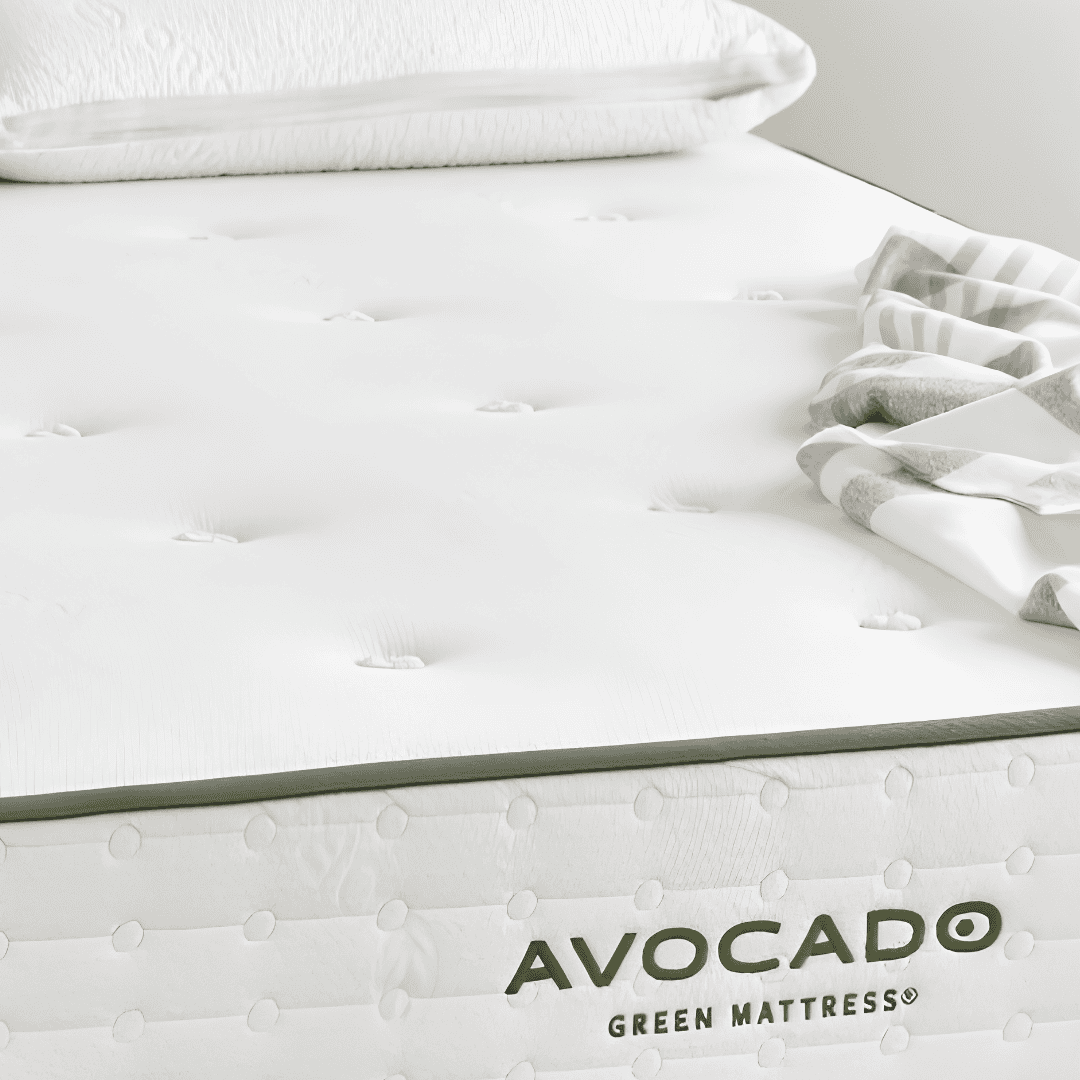
Naturepedic is still the stronger choice for maximum mattress customization, but Avocado is our pick for shoppers who want many of the same organic and non-toxic priorities at a cheaper price.
Every Avocado mattress is GOTS-certified at the finished-product level and also carries OEKO-TEX® Standard 100 Class I, EWG Verified®, MADE SAFE®, GREENGUARD Gold, and UL Formaldehyde Free validation, while its latex is GOLS-certified.
For furniture, Avocado uses solid North American hardwoods such as walnut, oak, alder, and pine, along with reclaimed wood, with hand-rubbed natural oil and wax finishes.
The bedroom selection is broad, with solid wood bed frames, nightstands, foundations, adjustable bases, cribs, kids furniture, and mattresses, including the Eco Organic Mattress starting at $809 in the products shown.
That combination makes Avocado a particularly good value if certified organic materials and real wood furniture matter more to you than having every possible mattress configuration.
The tradeoff is customization: Avocado does have a latex-free Wool Mattress, but it does not match Naturepedic’s split-side firmness, swappable layers, or customizable latex-free EOS setup.
Product Highlights:
- Price: Bedroom furniture starts at $203; mattresses start at $809
- Materials: Solid North American hardwoods including walnut, oak, alder, and pine; reclaimed wood; certified organic cotton and wool; GOLS-certified latex
- Finish / Adhesives: Furniture uses hand-rubbed natural oil and wax finishes; adhesives vary by product
- Certifications: GOTS, GOLS, OEKO-TEX® Standard 100 Class I, EWG Verified®, MADE SAFE®, GREENGUARD Gold, UL Formaldehyde Free; certifications vary by product
- Safety: Mattresses carry multiple organic and low-emission certifications; furniture emphasizes solid and reclaimed wood with natural oil and wax finishes Functionality: Mattresses, solid wood bed frames, nightstands, foundations, adjustable bases, cribs, and kids’ furniture
- Sustainability: Solid and reclaimed wood options; certified organic materials used across the mattress lineup
- Made In: Varies by product
- Warranty / Shipping: Varies by product
- Best For: Shoppers who want certified organic mattresses and solid wood bedroom furniture at a better value than Naturepedic
- Downside: Fewer mattress customization options than Naturepedic
Healthier Homes
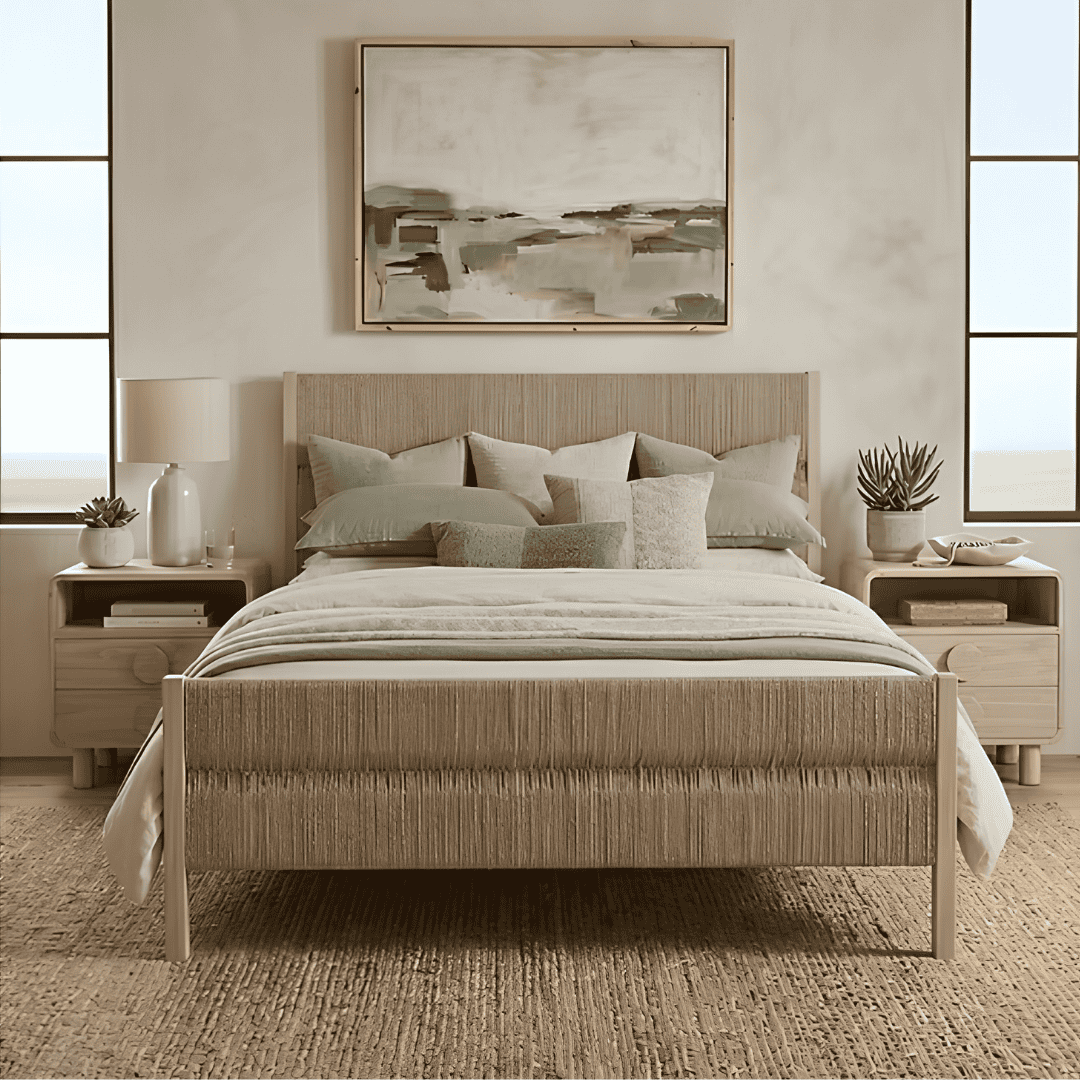
Healthier Homes takes a different approach from Naturepedic and Avocado, giving you much more freedom to create a stylish, coordinated bedroom instead of centering everything around the mattress.
The collection includes wood beds, dressers, nightstands, bedside tables, storage pieces, mattresses, bedding, rugs, and seating across several different design collections.
Its P-I-Y furniture uses rescued Parawood from mature rubber trees, while the wider catalog includes solid and upcycled wood, reclaimed timber, teak, bamboo, cotton, linen, wool, jute, and woven materials.
Healthier Homes says it curates products to avoid synthetic fire retardants, pesticides, toxic solvents, and harmful air pollutants, and the company is a member of the Sustainable Furnishings Council.
This is one of the better options if you want healthier bedroom furniture without being limited to one simple or minimalist look.
The downside is that materials, certifications, finishes, and warranties vary by product, so the level of disclosure is not as standardized as it is with Naturepedic or Avocado.
Product Highlights:
- Price: Furniture shown: $390–$2,998; all bedroom products shown: $45–$6,399
- Materials: Solid and upcycled wood, reclaimed timber, Parawood, teak, bamboo, cotton, linen, wool, jute, rattan, TENCEL™, metal, and other natural materials
- Finish / Adhesives: Vary by product; exact finishes and adhesives are not disclosed across the full furniture collection
- Certifications / Memberships: Sustainable Furnishings Council member; OEKO-TEX appears on select mattresses and bedding
- Safety: Healthier Homes says its curated materials avoid synthetic fire retardants, pesticides, toxic solvents, and harmful air pollutants
- Functionality: Beds, dressers, nightstands, bedside tables, storage, mattresses, bedding, rugs, and seating
- Sustainability: Rescued Parawood, upcycled solid wood, repurposed timber, recycled natural yarns, and recycled packaging materials
- Made In: Varies by product; sourced from domestic and international artisan and supplier partners
- Warranty / Shipping: Free shipping on most items; 30-day return window for eligible products; warranties vary by product
- Best For: Stylish, coordinated bedrooms made with more thoughtfully selected materials
- Downside: Product-level material and certification details vary
Maxtrix Kids
Where Green Cradle is focused on babies and nurseries, Maxtrix Kids is the better fit once you’re furnishing an older child’s bedroom.
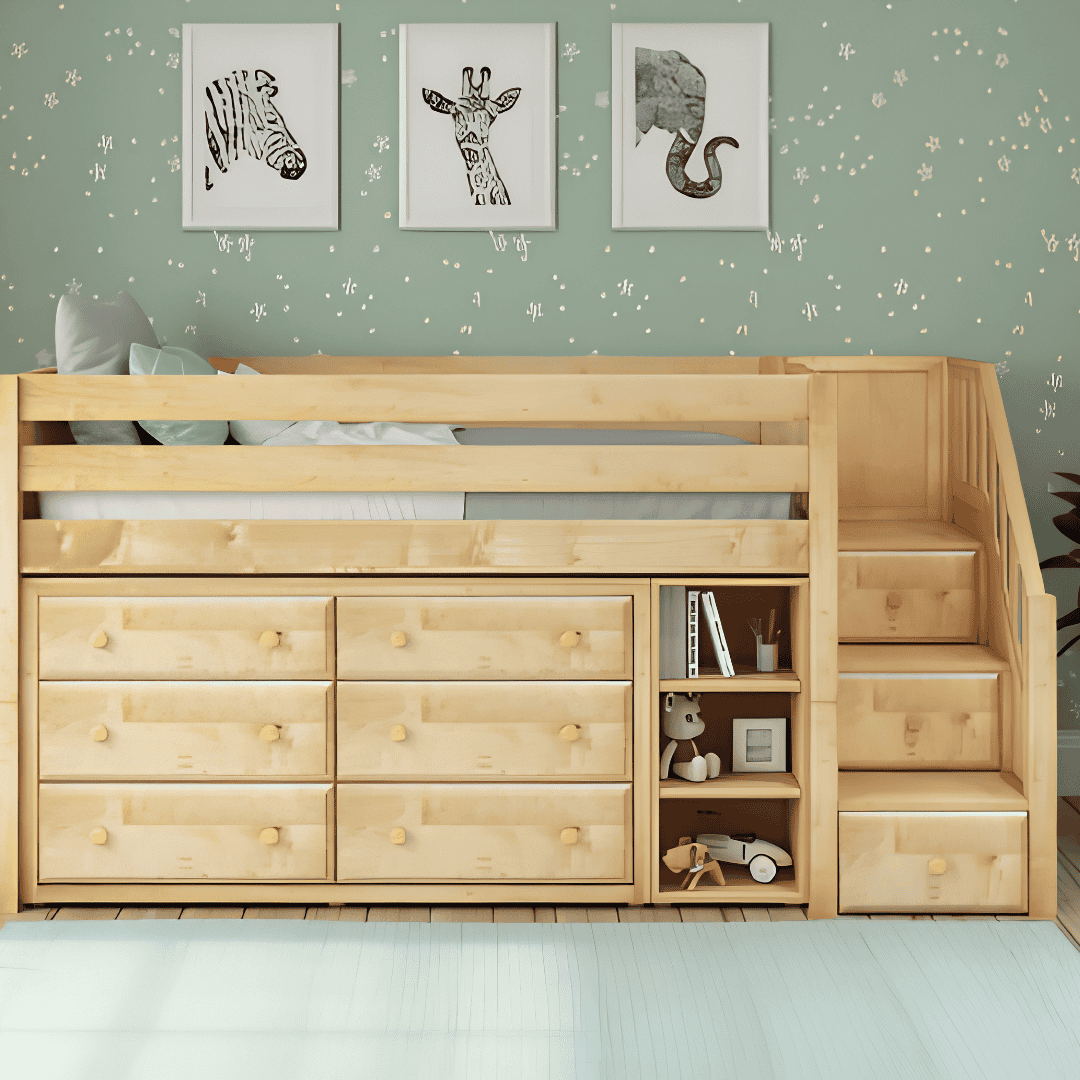
Its lineup goes well beyond beds, with bunk beds, loft beds, dressers, desks, bookcases, nightstands, trundles, and underbed storage that are designed to work together.
The furniture uses sustainably harvested solid Maple, Birch, and Aspen, but Maxtrix also discloses hardwood veneers and engineered wood in some modular designs, so we wouldn’t describe the entire collection as 100% solid wood.
The beds are GREENGUARD Gold certified for low chemical emissions, while the rest of the furniture is still being tested with a goal of full certification by 2027.
What really makes Maxtrix useful is that many bed components can be reused and rearranged as your child grows, turning a starter bed into a bunk, loft, storage setup, or study space instead of replacing everything.
The main downside is that GREENGUARD Gold certification does not yet cover the full furniture collection.
Product Highlights:
- Price Range: $8–$3,199
- Materials: Sustainably harvested solid Maple, Birch, and Aspen; hardwood veneers and engineered wood used in some designs
- Finish / Adhesives: Exact finishes and adhesives are not clearly specified across the collection
- Certifications: GREENGUARD Gold certified beds; remaining furniture undergoing testing
- Safety: Low-emission certified beds; dressers include anti-tip kits; dresser drawers tested through 40,000 opening-and-closing cycles
- Functionality: Bunk beds, loft beds, starter beds, desks, dressers, bookcases, nightstands, trundles, and underbed storage
- Sustainability: Reusable and reconfigurable components; sustainably harvested wood
- Best For: Older kids who need furniture that can adapt as their bedroom changes
- Downside: GREENGUARD Gold does not yet cover every furniture piece
Green Cradle
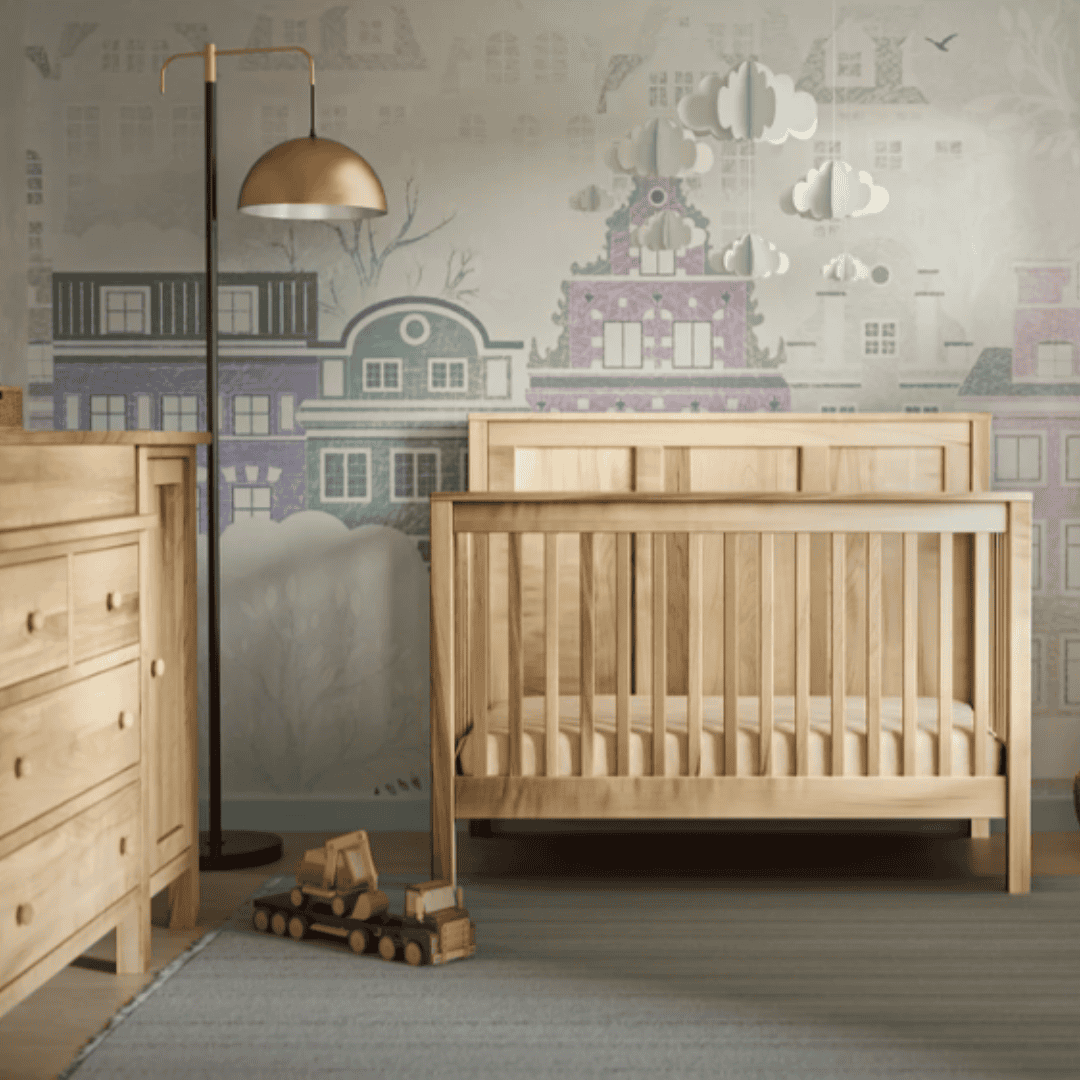
Green Cradle stands out here because it focuses specifically on the nursery stage, with cribs, bassinets, convertible options, changing tables, armoires, bookcases, nightstands, and other storage pieces.
Its nursery furniture is handcrafted in the U.S. from 100% solid hardwood, with Brown Maple, Hard Maple, Red Oak, Cherry, and Walnut available, and the brand specifically avoids MDF, plywood, particleboard, and veneers.
Shoppers can choose furniture unfinished or with a zero-VOC natural oil finish, while its cribs and bassinets are GREENGUARD Gold certified.
The cribs are also designed to grow with your child, with 4-in-1 or 5-in-1 conversion options, and the storage furniture uses details like dovetail joints and solid wood drawer boxes.
This is one of the strongest choices for parents who want to minimize engineered wood and conventional finishes in a baby’s room.
The main drawback is price, with many of the larger nursery pieces costing well over $3,000.
Product Highlights:
- Price Range: $879.12–$3,695.12
- Materials: 100% solid Brown Maple, Hard Maple, Red Oak, Cherry, or Walnut
- Finish / Adhesives: Unfinished or zero-VOC natural oil finish; no MDF, plywood, particleboard, or veneers
- Certifications: GREENGUARD Gold certified cribs and bassinets
- Safety: Avoids engineered wood in nursery furniture; zero-VOC finish options
- Functionality: Cribs, bassinets, mini cribs, changing tables, armoires, bookcases, nightstands, wardrobes, and crib conversions
- Construction: Dovetail joinery, solid wood drawer boxes and fronts, solid wood backing
- Sustainability: Locally sourced solid hardwood; Childspose collection uses sustainably grown trees
- Made In: USA
- Shipping: Free shipping on all orders
- Best For: Babies, nurseries, and parents prioritizing solid wood construction
- Downside: Premium pricing
UPLIFT Desk
UPLIFT Desk fills a different role from the bedroom furniture brands above, and it’s our pick if your bedroom also needs to double as a work or study space.
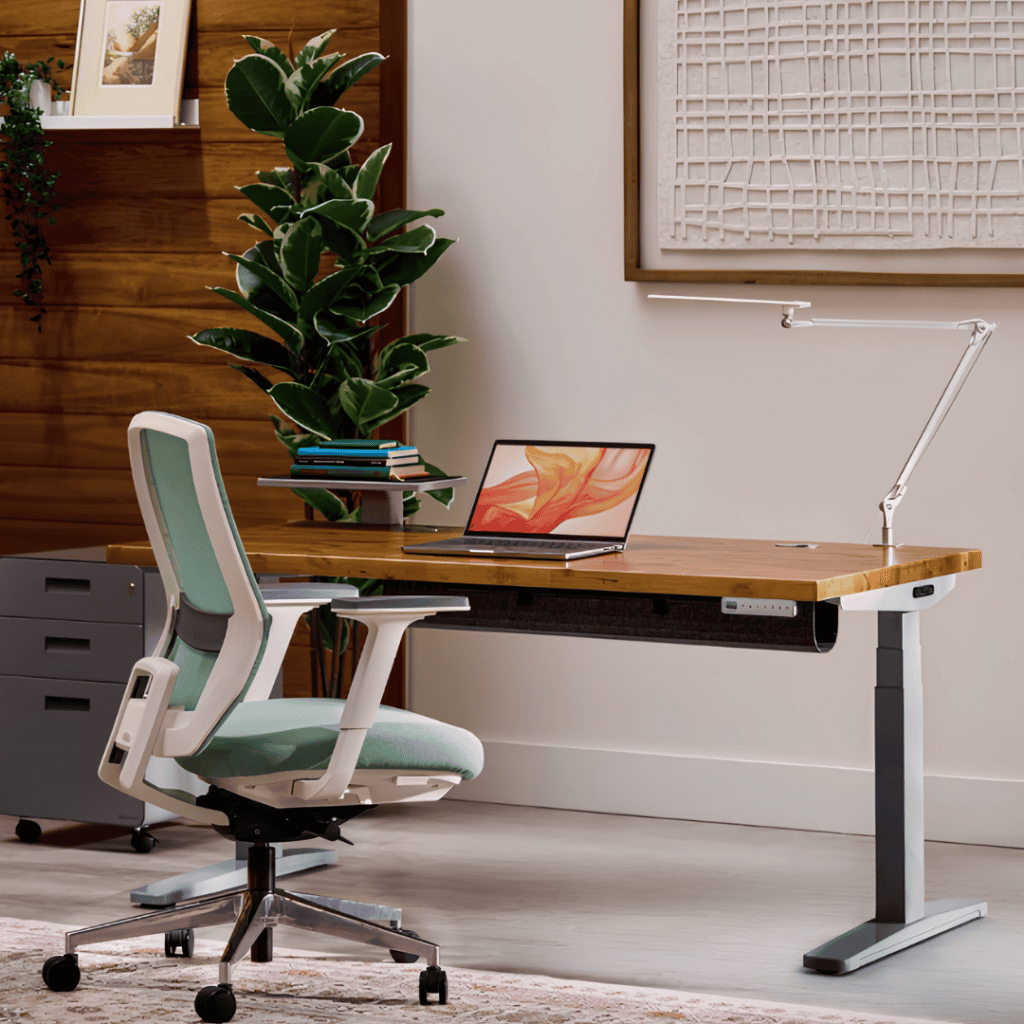
For this roundup, the V3 Standing Desk with an Eco Curve top is the configuration we’d choose: the desktop uses 100% recycled MDF and is described as formaldehyde-free, zero VOC, zero HAP, CARB-2 compliant, and FSC-certified.
It has a durable infrared-cured epoxy finish, while the V3 uses a high-strength steel frame with sit-stand adjustment, anti-collision technology, and a keypad lock.
UPLIFT also designs its desks and tables to meet ANSI/BIFMA strength, durability, and ergonomic standards.
This is a particularly well-vetted option for a bedroom workspace where indoor emissions and long-term durability matter, and UPLIFT backs most products with a 15-year warranty.
The main tradeoff is that many of the pieces use recycled MDF rather than solid wood but this is still a great option compared to conventional desk materials.
Product Highlights:
- Price: $149+–$3,599+ in the desk/table lineup; UPLIFT V3 starts at $599+
- Materials: Recommended setup: 100% recycled MDF Eco Curve desktop and ASTM A36 steel V3 frame; bamboo, rubberwood, solid wood, and laminate also available
- Finish / Adhesives: Eco Curve uses an infrared-cured epoxy powder coat; UPLIFT states its desktops use European E1-level adhesives and protective coatings that do not emit VOCs
- Certifications / Standards: FSC-certified Eco Curve; CARB-2 compliant; UPLIFT desks/tables designed to ANSI/BIFMA standards; GREENGUARD Gold applies specifically to laminate desktops
- Safety: Eco Curve is described as formaldehyde-free, zero VOC, and zero HAP; V3 includes anti-collision technology and a keypad lock
- Functionality: Height adjustable for sitting or standing, cable management, extensive desktop and accessory options
- Sustainability: 100% recycled Eco Curve top, solar-powered Austin operations, five trees planted for every solid wood desktop sold
- Warranty / Shipping: Most products have a 15-year warranty; free shipping to the contiguous U.S.; 30-day free returns on eligible like-new products
- Best For: Work-from-bedroom or study setups
- Downside: Premium pricing
Saatva
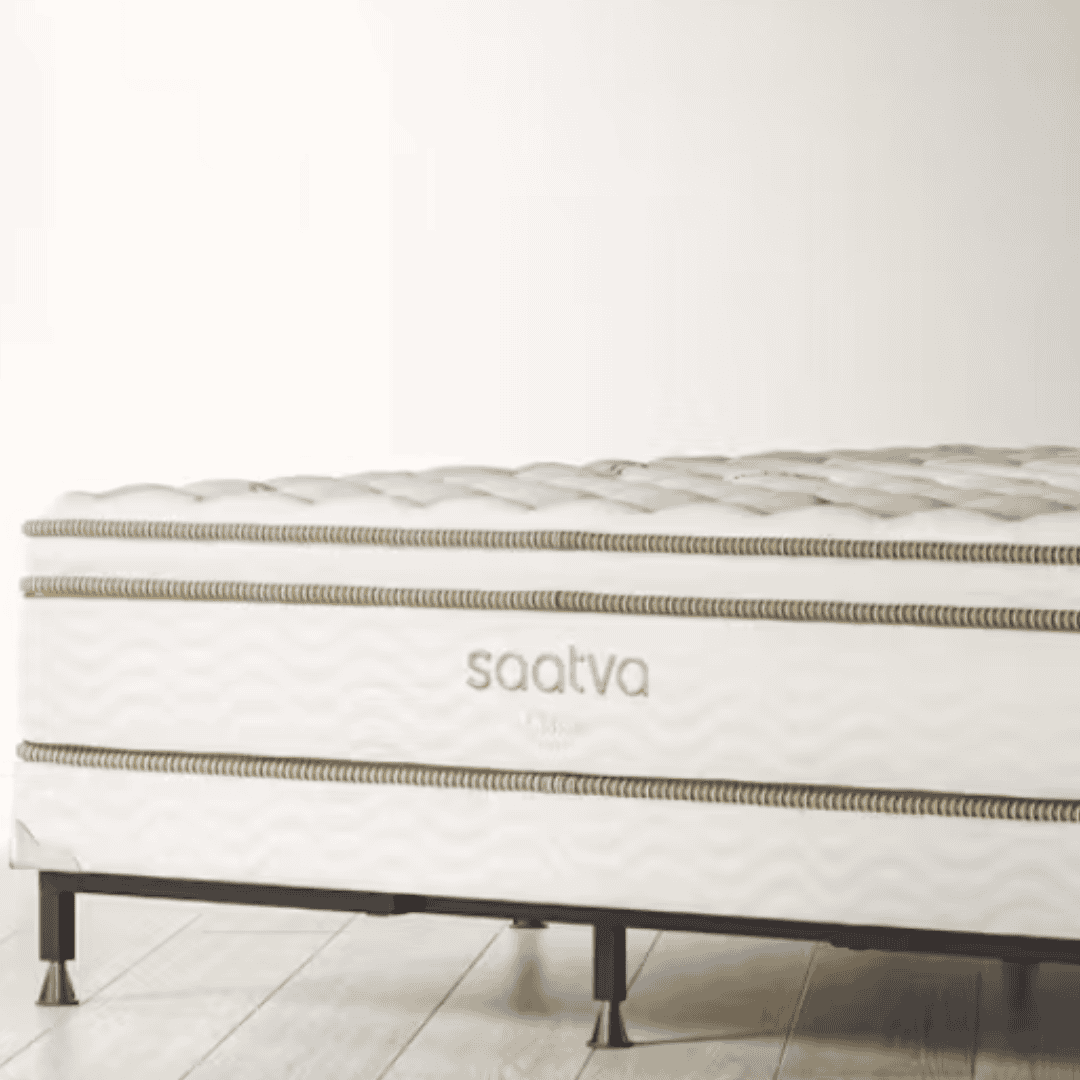
Saatva takes a more design-forward approach than Avocado, making it our pick for shoppers who want a more polished, luxury bedroom rather than the strongest organic-material focus.
Its collection goes well beyond mattresses, with upholstered and wood beds, storage beds, nightstands, benches, ottomans, chairs, rugs, and adjustable bases in materials such as wood, leather, linen, velvet, and bouclé.
Upholstered furniture uses kiln-dried rubberwood or acacia hardwoods, while its mattresses use materials such as organic cotton blends, CertiPUR-US® foams, recycled steel, and natural thistle or organic wool flame barriers without fiberglass or toxic chemical flame retardants.
The mattress lineup also gives you plenty of comfort choices, from innerspring and memory foam to natural latex and adjustable-firmness models, while free in-room delivery, setup, and furniture assembly make the buying experience noticeably more convenient.
Saatva still earns a place in a non-toxic-minded roundup thanks to its certified mattress and bedding materials, Sustainable Furnishings Council membership, recycling initiatives, solar-powered manufacturing, and other sustainability efforts.
The tradeoff is that its strongest organic and low-emission certifications apply mainly to mattresses and bedding, so furniture-specific material and emissions details are less consistent than Avocado’s natural-material approach.
Product Highlights:
- Price Range: Furniture & decor: $40–$3,870; mattresses: $155–$6,473; bedding: $35–$1,165
- Materials: Wood, kiln-dried rubberwood, acacia hardwood, leather, linen, velvet, bouclé; mattresses also use organic cotton blends, recycled steel, natural latex, and foams
- Finish / Adhesives: Exact furniture finishes and adhesives are not clearly disclosed across the full collection
- Certifications: CertiPUR-US® foams; GOLS-certified natural latex; GREENGUARD Gold and eco-INSTITUT certified latex mattresses; GOTS and OEKO-TEX Standard 100 certified bedding; varies by product
- Safety: Mattresses contain no fiberglass or toxic chemical flame retardants; natural thistle pulp and organic wool used as flame barriers
- Functionality: Mattresses, platform beds, storage beds, upholstered beds, nightstands, benches, ottomans, chairs, adjustable bases, rugs, and bedding
- Sustainability: Recycled steel, manufacturing scrap recycling, solar-powered New Jersey factory, made-to-order mattresses, tree planting, Sustainable Furnishings Council membership
- Made In: Mattresses assembled in the U.S. with domestic and globally sourced materials; furniture origin not clearly specified across the collection
- Warranty / Shipping: Mattresses include a 365-night trial and lifetime warranty; free in-room delivery and setup for mattresses and furniture; bedding has 45-day free returns and a 1-year limited warranty
- Best For: A polished, luxury bedroom with coordinated furniture and premium delivery service
- Downside: Furniture-specific certifications and material details vary by piece