The 5 Best Non Toxic Rugs Brands Going Into 2027 (Reviewed)

Rugs add warmth and comfort to a home, but their fibers, backing, dyes, and treatments can affect how safe and sustainable they are.
Many conventional rugs are made from plastic-based fibers like polyester, nylon, and polypropylene, which can shed synthetic fibers and microplastics as they wear.
Rugs can also collect dust, allergens, and other indoor pollutants, a particular concern in homes with children or pets who spend more time on the floor.
The best non-toxic rugs prioritize safer materials and transparent production while balancing durability, care, and cost. This guide compares the leading options and what to consider before buying.
The Goodness Well is reader-supported. Some links in this article may be affiliate links, but every recommendation follows our editorial standards and independent review process. Learn more about our editorial standards and review methodology.
What Makes Rugs Safer
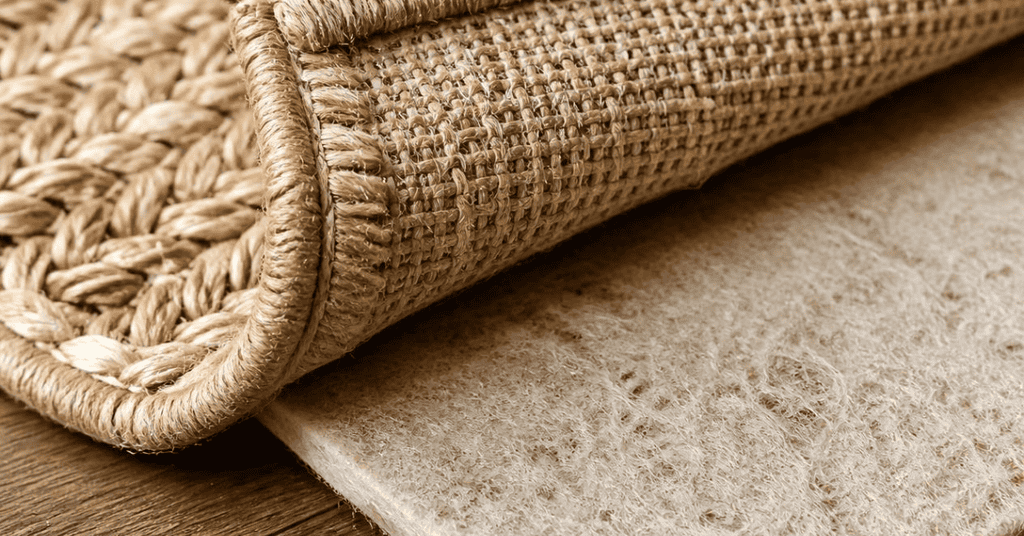
A rug is more than its visible surface. Fibers, dyes, backing, adhesives, and added treatments can all affect its chemical profile. Even a natural-fiber rug may contain synthetic backing or adhesives.
Look for rugs that clearly disclose their materials and construction, ideally using natural fibers like wool, cotton, jute, or sisal with minimal synthetic components.
Also consider how the rug is dyed and finished, and look for specific claims such as “no added stain treatments” rather than broad terms like “green” or “eco-friendly.”
Check Every Rug Layer
Start with the face fiber, then examine what sits underneath it. Backings may contain synthetic rubber, plastic, or adhesives that release odors after unpacking. A separate rug pad can introduce another source of synthetic materials.
For a lower-emission setup, look for:
- Natural or organic face fibers
- Natural latex or jute backing
- Water-based or disclosed adhesives
- Untreated or minimally treated fibers
- Dyes with clear safety information
- PFAS-free stain protection
- Full backing and pad disclosure
Ask for the complete material list, including the backing, adhesives, surface treatments, and rug pad.
Stain-resistant, water-resistant, and flame-retardant treatments deserve closer attention. PFAS have been used to provide stain, oil, and water resistance in textiles, including carpets and rugs. Ask whether these finishes are added instead of assuming “easy care” means treatment-free.
Off-gassing usually comes from volatile chemicals in dyes, adhesives, backing, and surface finishes. A strong odor does not identify a specific chemical, while an odor-free rug is not automatic proof of safety. Ingredient disclosure and independent certification provide better evidence.
These were some of the same details we checked when comparing the rugs featured in this guide.
Choosing Rug Materials
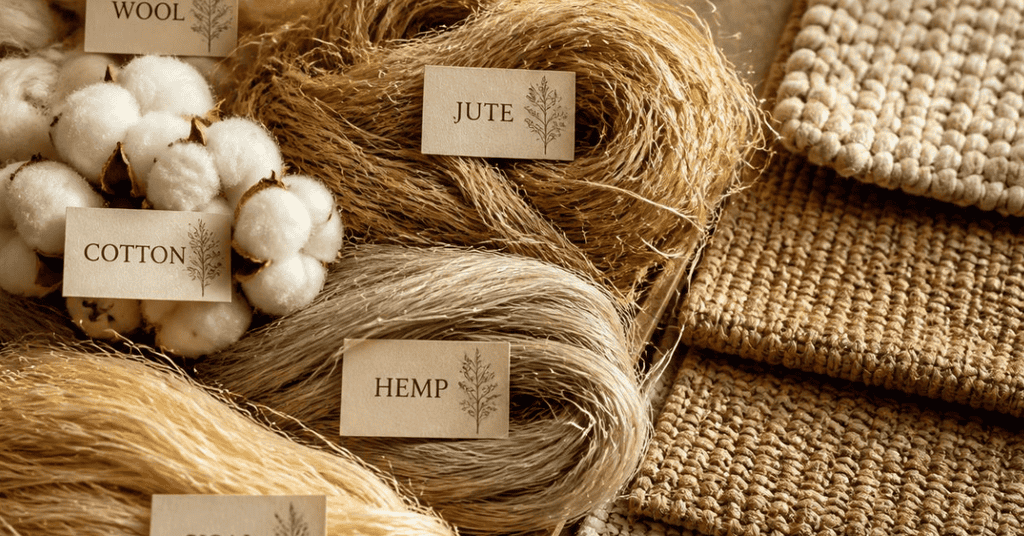
Natural fibers are a useful starting point, but the right choice depends on where the rug will be used. A soft bedroom rug faces different demands than an entryway rug exposed to dirt and moisture.
Natural Fiber Tradeoffs
Wool combines softness with strong wear resistance, making it suitable for living rooms and bedrooms. New wool rugs may shed, especially when hand-tufted, so construction matters alongside fiber content.
Cotton is lighter and often easier to wash. However, it may flatten or wear faster in busy areas. Washable cotton works well where spills are common, provided the rug’s dimensions fit your washing machine.
Jute, hemp, and sisal provide a firmer, more textured surface. They usually suit dry, high-traffic areas better than damp bathrooms or spill-prone dining spaces. Their rougher feel may also be less comfortable for crawling children.
Recycled fibers can reduce demand for virgin materials, but sustainability and non-toxicity are not interchangeable.
Recycled PET is still plastic and may not suit shoppers specifically avoiding synthetic fibers. This distinction shaped how we evaluated natural and recycled options in the roundup.
Key Takeaway: Choose rug materials based on traffic, moisture, comfort, cleaning needs, and your preference for natural or synthetic fibers.
Match Construction to Use
Construction affects durability, cleaning, shedding, and price as much as the fiber itself.
- Hand-knotted: Durable but usually expensive
- Hand-woven: Often flatter and lower-profile
- Hand-tufted: Soft, but may shed
- Flatweave: Easier to vacuum and move
- Washable: Practical for spills and pets
- High pile: Softer but harder to clean
For children and pets, prioritize cleanability over a deep pile. Low-profile rugs are easier to vacuum, while washable designs simplify accident cleanup. Check whether “washable” means machine washable or only suitable for professional cleaning.
Room size also affects value. Compare prices using the same dimensions because a low starting price may apply only to a small mat. Include the cost of a safer rug pad when comparing totals.
Understanding Rug Certifications
Certifications help verify specific claims, but no single label covers every concern. Check what the certification evaluates and whether it applies to the finished rug or only one component.
Safety and Organic Standards
Global Organic Textile Standard certification covers organic fibers and processing throughout the textile supply chain. GOTS products must contain at least 70% certified organic fibers, while its “Organic” label requires at least 95%. This makes GOTS useful when organic content and processing standards are priorities.
OEKO-TEX STANDARD 100 means the certified textile was tested against limits for harmful substances. It does not automatically mean the fiber is organic, natural, biodegradable, or ethically produced. Confirm whether the certificate covers the complete rug rather than only its yarn or fabric.
GoodWeave focuses on labor conditions. Its label provides assurance that child, forced, or bonded labor was not used in a certified product. It supports ethical purchasing but does not, by itself, verify organic fibers or chemical safety.
Before buying, verify the exact certification name and look for a certificate number or traceable product label. Then check the remaining details separately: fiber content, backing, adhesives, treatments, care requirements, and warranty.
That combination provides a clearer picture than any single eco-friendly claim.
The Best Non-Toxic Rugs
Home of Wool
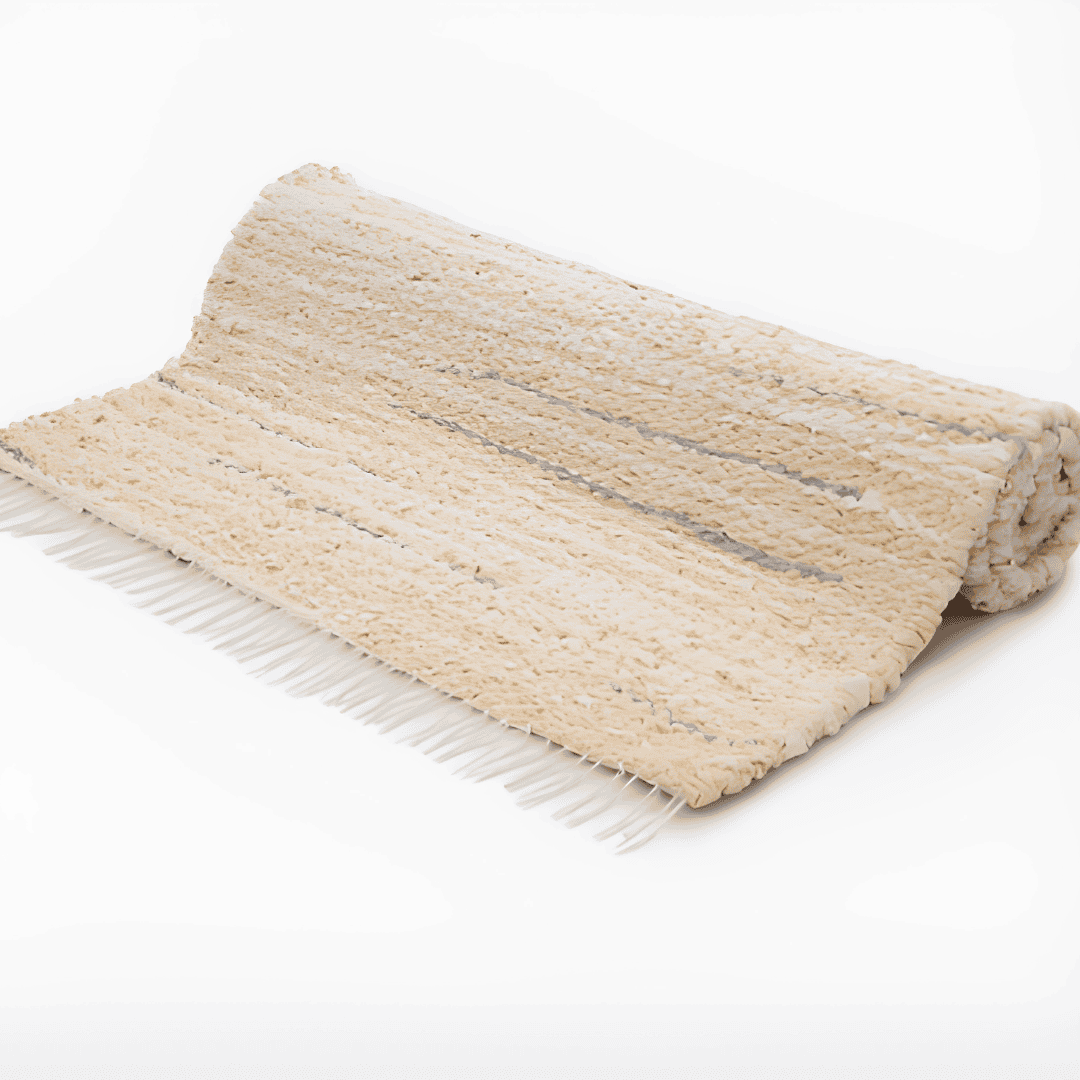
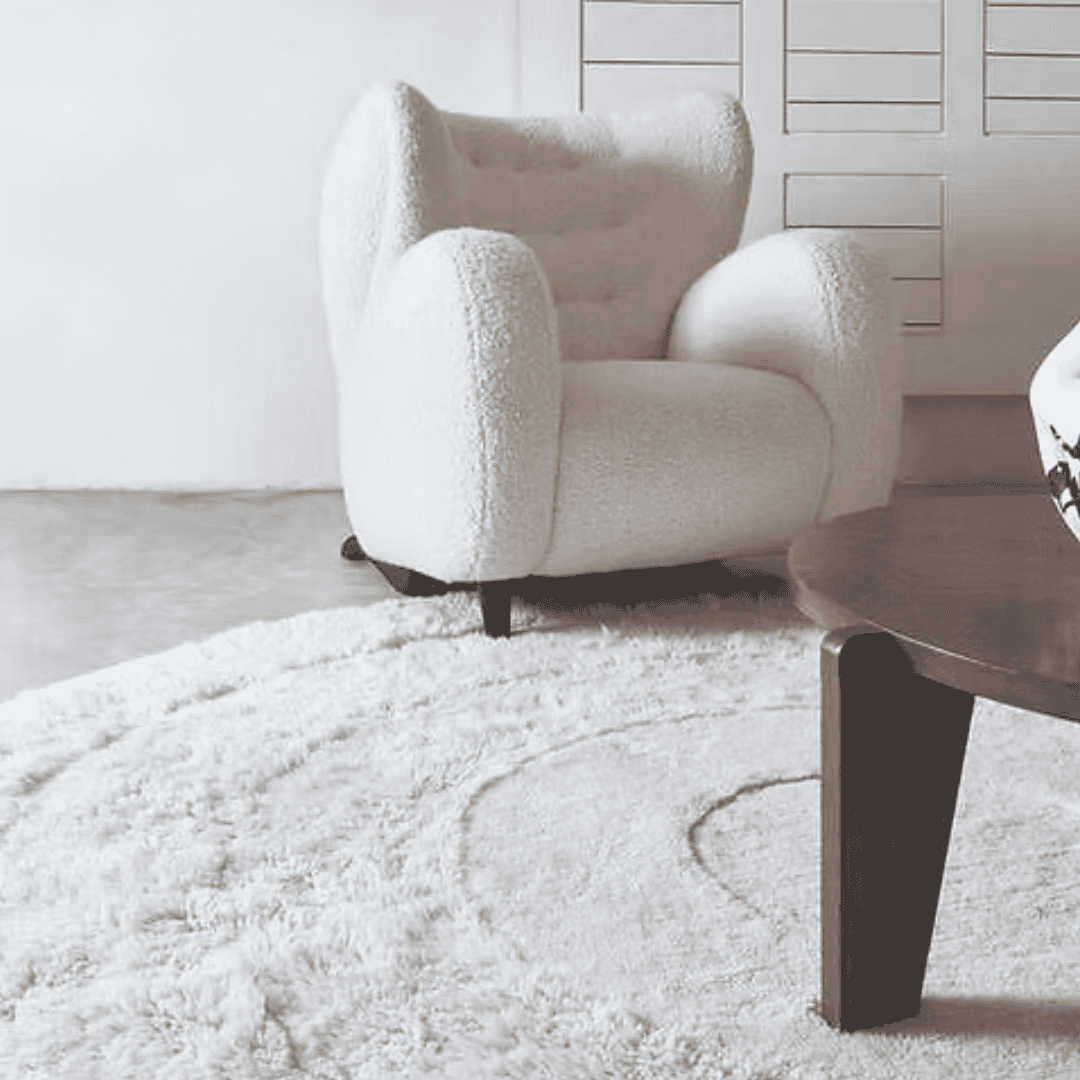
Home of Wool is our top pick for natural rugs because every option is handmade from wool, linen, cotton, or reclaimed fabric scraps without synthetic fibers.
The collection includes pure undyed wool rugs alongside zero-waste designs made from leftover materials, with no dyes, coatings, or chemical treatments.
Each rug is made to order, and custom sizing makes it easier to get the right fit for your space.
Prices are also relatively affordable for handcrafted natural rugs, starting at $202 with free worldwide shipping.
Also, be sure to use the code “thegoodnesswell” at checkout for 10% off!
The main downside is the limited selection, with only three rug styles available.
Product Highlights:
- Price: $202–$801
- Materials: Wool, organic wool, linen, cotton, and reclaimed natural fabric scraps
- Finish / Adhesives: No dyes, coatings, or chemical treatments; adhesives not disclosed
- Safety: VOC-free, chemical-free, synthetic-free, and naturally hypoallergenic
- Functionality: Made to order with custom sizing and optional fringe on select rugs
- Sustainability: Reclaimed production scraps, biodegradable materials, and zero-waste manufacturing practices
- Shipping: Free worldwide shipping
- Best For: Handmade natural rugs at a relatively accessible price
- Downside: Only three rug styles available
Healthier Homes
Healthier Homes is another brand you really can’t go wrong with if you want more variety than our top pick.
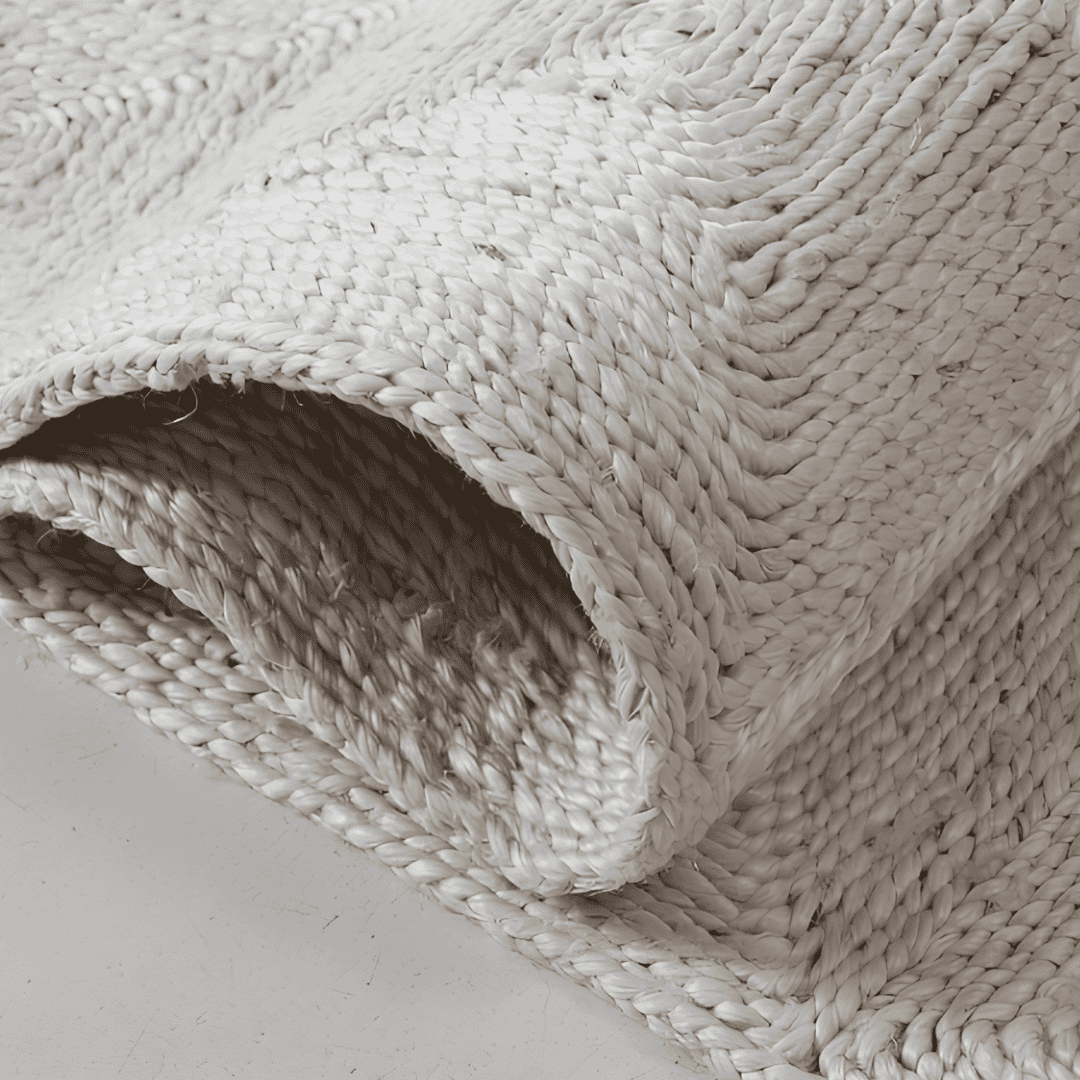
Its rug collection includes cotton, wool, bamboo-based viscose, and other natural-fiber options in a wide range of colors, shapes, and sizes.
The brand says its rugs use non-toxic dyes, natural backings, and no chemical treatments, while some designs are also handmade, handwoven, or washable.
It is a strong option for shoppers who want natural rugs at different price points, with entry-level styles starting at $90 and free shipping available.
However, materials vary between designs, so you should still check the individual rug listing before buying.
Product Highlights:
- Price: $90–$1,015
- Materials: Cotton, wool, bamboo-based viscose, and other natural fibers
- Finish / Adhesives: Non-toxic dyes and natural backings; specific adhesives not disclosed
- Safety: No synthetic fire retardants, pesticides, toxic solvents, or harmful air pollutants
- Functionality: Area rugs, runners, bath mats, round rugs, and washable options
- Sizes: Extra-small bath mats to rugs over 11 feet long
- Sustainability: Renewable materials, recycled natural yarns, closed-loop plant-based textiles, and repurposed packaging
- Certification / Membership: Sustainable Furnishings Council member; partners supporting GoodWeave
- Construction: Handmade and handwoven options
- Shipping: Free shipping
- Best For: A larger selection of natural rugs across multiple sizes and price points
- Downside: Materials and construction vary, so each product requires individual checking
LOOMY
LOOMY is the premium pick in this roundup, with one of the largest and most design-focused rug collections.
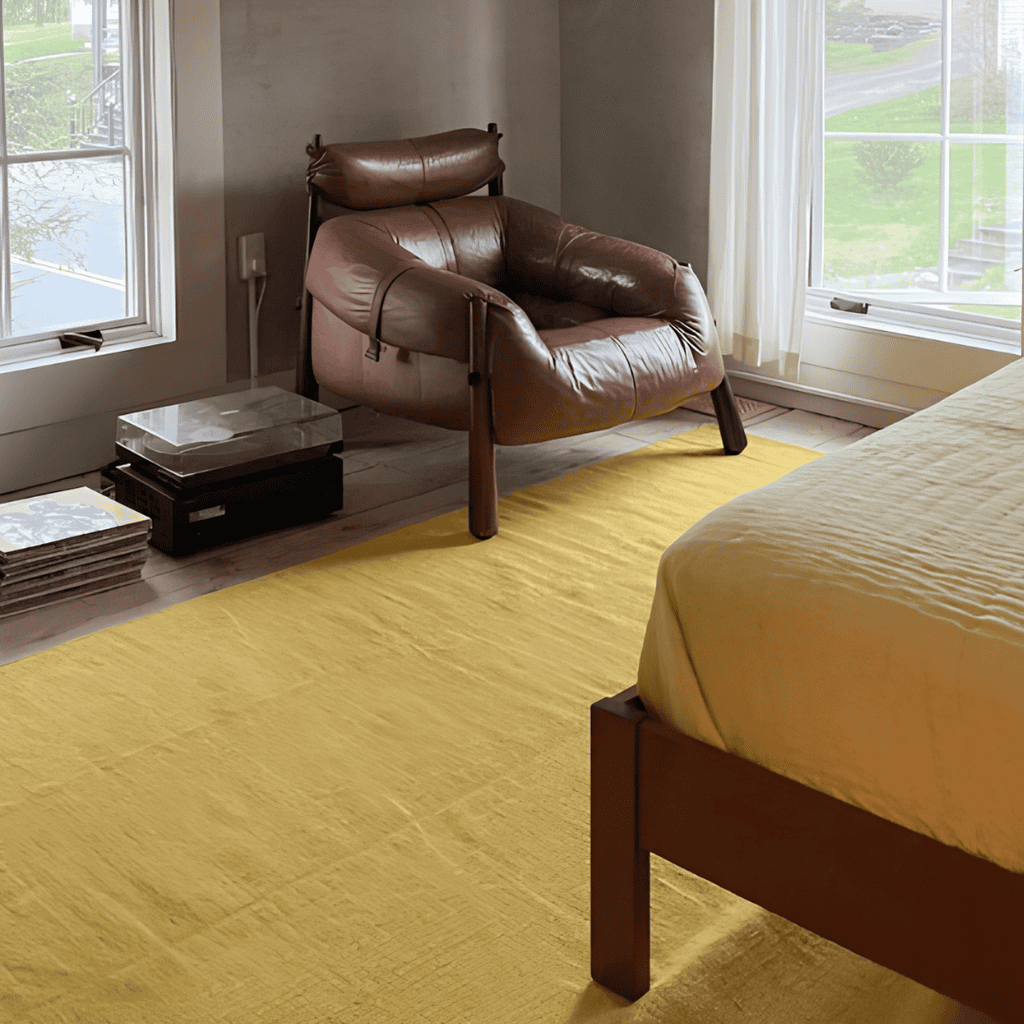
Every rug is handmade without mechanical weaving, using materials such as wool, jute, cotton, hemp, banana silk, viscose, and recycled fibers.
The brand says its performance technologies are free from VOCs, formaldehyde, phthalates, and flame retardants.
Custom sizing and options for living rooms, bedrooms, dining rooms, entryways, kids, pets, and outdoor spaces make the collection especially versatile.
The main tradeoff is the higher price, and shoppers avoiding plastic should note that its outdoor rugs use recycled PET.
Product Highlights:
- Price: $169 to $8,298
- Materials: Wool, jute, cotton, hemp, banana silk, viscose, and recycled PET
- Finish / Adhesives: Specific dyes and adhesives not disclosed
- Safety: Free from VOCs, formaldehyde, phthalates, and flame retardants
- Functionality: Area rugs, runners, round rugs, outdoor rugs, and custom sizes
- Sizes: Standard sizes from 3′ × 5′ to 12′ × 15′, plus runners and custom sizing
- Sustainability: Natural, biodegradable, eco-friendly man-made, and recycled materials
- Construction: Exclusively handmade without mechanical weaving
- Made In: India, Turkey, Portugal, Nepal, and Morocco
- Durability: Expected to last 5–10 years with proper residential care
- Best For: Premium handmade rugs with a large choice of materials and designs
- Downside: Expensive, and some outdoor rugs contain recycled plastic
Cold Picnic
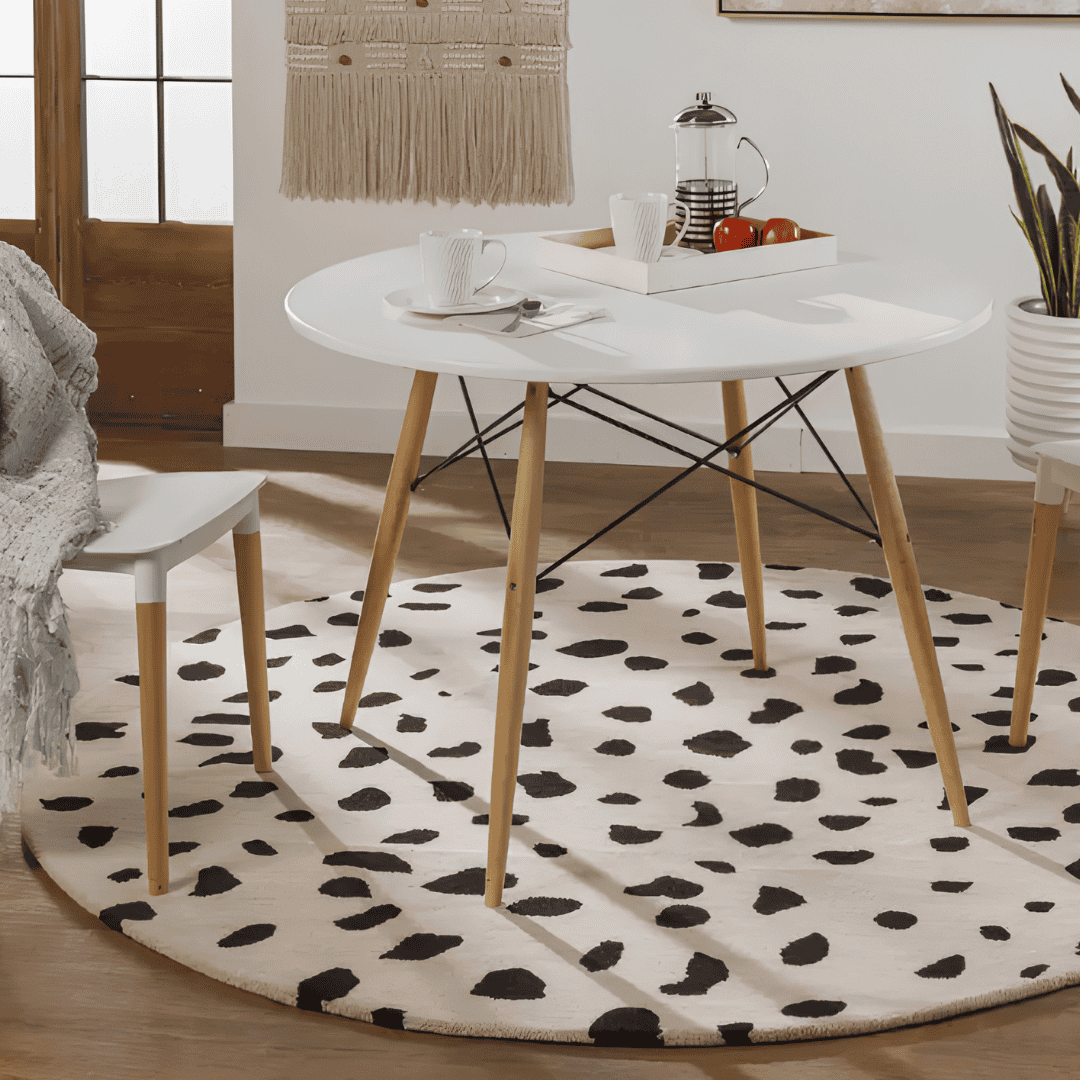
Cold Picnic stands out for its artistic rugs inspired by nature, film, mythology, and playful abstract design.
Its handmade collection includes Tex wool, organic cotton, hemp, bamboo silk, and wool-nylon rugs, all dyed with eco-friendly pigments and left free from chemical coatings.
The rugs are made by skilled artisans in India at a GoodWeave and Care & Fair-certified factory powered entirely by solar energy.
Different constructions suit different spaces, from durable flatweaves and hemp rugs for busy rooms to softer bamboo silk and high-low wool rugs for lighter use.
The main drawback is that some rugs contain nylon, while hand-tufted wool styles may shed for the first few weeks or months.
Product Highlights:
- Price: $65–$2,100
- Materials: Tex wool, organic cotton, hemp, bamboo silk, wool-nylon blends, and deadstock yarn
- Finish / Adhesives: Eco-friendly dyes; no chemical, stain-resistant, or flame-retardant coatings; adhesives not disclosed
- Certifications: GoodWeave and Care & Fair
- Safety: Free from added chemical coatings and treatments
- Functionality: Hand-tufted, flatweave, hemp, washable cotton, runner, and custom-size rugs
- Sustainability: Solar-powered production, biodegradable hemp, and limited-edition deadstock yarn rugs
- Made In: India
- Best For: Artistic statement rugs with several natural-material options
- Downside: Some styles contain nylon, and hand-tufted wool may initially shed
Boutique Rugs
Boutique Rugs has one of the broadest selections in this roundup, with hundreds of designs, sizes, shapes, and patterns in its eco-friendly collection.
The best options for a lower-toxicity home are its wool, jute, cotton, and other natural-fiber rugs.
The collection also includes recycled PET styles for shoppers comfortable with recycled synthetic materials.
Select rugs are labeled eco-friendly and carry OEKO-TEX and Amfori certifications.
However, materials, construction methods, certifications, and safety information vary by product.
Some rugs contain polyester, polypropylene, nylon, or blended fibers, so shoppers should review each listing rather than assuming every rug meets the same non-toxic standards.
Product Highlights:
- Price: $49–$3,399
- Materials: Wool, jute, cotton, natural-fiber blends, recycled PET, polyester, polypropylene, and nylon
- Finish / Adhesives: Dyes, chemical treatments, backings, and adhesives are not consistently disclosed
- Certifications: Select rugs are OEKO-TEX and Amfori certified; certifications vary by product
- Safety: Natural-material and certified options are available, but chemical-safety information varies by rug
- Functionality: Area rugs, runners, and round, square, oval, and specialty-shaped rugs
- Sizes: Approximately 2′ × 3′ to 12′ × 15′, depending on the product
- Construction: Hand-knotted, hand-woven, hand-tufted, and machine-made options
- Sustainability: Natural-fiber and recycled-material collections; select products are labeled eco-friendly
- Made In: Primarily India, with additional rugs made in Turkey and China
- Shipping / Returns: Free shipping and 60-day returns
- Best For: A wide selection of natural-fiber rugs at different prices and sizes
- Downside: The eco-friendly collection includes synthetic and blended rugs, while certifications and chemical-safety disclosures are not consistent across all products