The 5 Best Non-Toxic Dining Tables & Chairs Brands (Compared)






Dining tables and chairs are used every day and often remain in the home for years, making both their health and environmental impacts worth considering. The EPA identifies pressed-wood furniture as a potential source of formaldehyde, while glues, stains, paints, and finishes can also contribute to indoor VOC exposure.
Sustainability matters too. Responsibly sourced wood, recycled or renewable materials, lower-impact finishes, durable construction, and transparent manufacturing can help reduce a piece of furniture’s environmental footprint and extend its useful life.
The best non-toxic dining tables and chairs balance safer materials and finishes with sustainability, durability, style, and price. This guide compares the leading options to help you find the right fit for your home and budget.
The Goodness Well is reader-supported. Some links in this article may be affiliate links, but every recommendation follows our editorial standards and independent review process. Learn more about our editorial standards and review methodology.
What Makes Furniture Safer
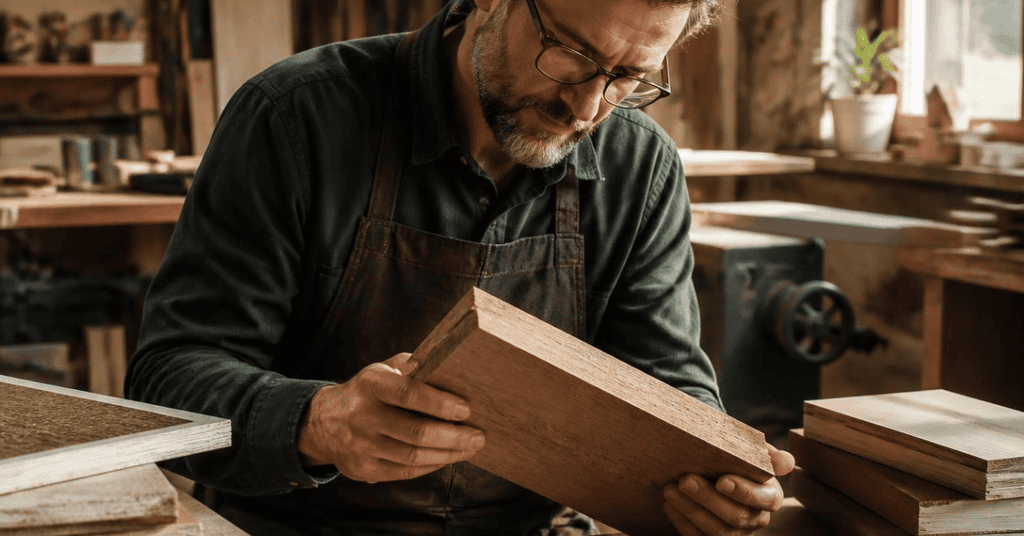
A non-toxic dining table or chair should reduce unnecessary chemical exposure without sacrificing durability. Solid wood helps, but wood type alone does not determine whether furniture is lower-emission. Finishes, adhesives, upholstery, and material transparency matter too.
Solid vs. Engineered Wood
Solid wood usually requires fewer binding adhesives than particleboard or MDF. It also lasts longer and can often be sanded or refinished. Oak, walnut, maple, pine, teak, and cherry are common choices.
However, “solid wood” does not always mean every component is solid. A table may have a solid top with veneered legs, plywood supports, or an engineered extension leaf. Chairs may combine solid wood frames with plywood seats.
Check the specifications for these terms:
- Solid wood
- Solid wood frame
- Wood veneer
- Engineered wood
- MDF or particleboard
- Plywood or composite wood
Veneer is not automatically unsafe or poorly made. The concern is usually the core material and adhesive underneath it. A well-disclosed, low-emission plywood component may be preferable to an unexplained “wood” construction.
These material distinctions were among the factors we considered when comparing the furniture in this guide.
Finishes, Glues, and Off-Gassing
Unfinished wood has fewer added coatings, but it needs more care around spills and heat. Finished dining furniture is easier to maintain, so the goal is not always to avoid finishes. Instead, look for clear information about what was applied.
Lower-emission options can include:
- Water-based stains and sealants
- Plant-based hardwax oils
- Raw linseed oil finishes
- Beeswax or carnauba wax
- Verified low- or zero-VOC coatings
Natural finishes also need closer examination. A product described as “plant-based” may contain solvents or other additives unless the full formula is disclosed.
Adhesives deserve the same attention. Tables may use glue in joints, veneers, or engineered components. Upholstered chairs may contain additional adhesives beneath the fabric. If a company discusses its finish but says nothing about glue, consider that a gap in transparency.
Fresh furniture odors may come from coatings, adhesives, foam, or treated fabrics. Ventilation can help reduce odors, but it does not change the materials used. Buyers with chemical sensitivities should prioritize detailed product-level disclosures before ordering.
Understanding Certifications
Certifications are useful shortcuts, but each one answers a different question. A sustainability label does not necessarily confirm low emissions. Likewise, an emissions certification may say nothing about forestry or labor practices.
What Each Label Covers
Here is what common labels generally help verify:
- FSC or PEFC: Responsibly managed wood sources
- GREENGUARD: Products tested for chemical emissions
- GREENGUARD Gold: Stricter emissions limits
- Fair Trade: Labor and production standards
- B Corp: Company-wide social and environmental practices
- Climate Neutral: Measured and addressed carbon emissions
- SFC membership: Participation in sustainable furnishings initiatives
- Rainforest Alliance: Responsible sourcing under applicable programs
Key Takeaway: Certifications are most useful when they apply to the exact product or material you are considering.
Always check what the certification applies to. A company may be B Corp certified while an individual table has no emissions testing. A chair fabric may carry GREENGUARD Gold certification without the frame, foam, finish, or adhesive being certified.
Certification pages can also list programs that apply only to selected materials. Look for the label on the product page or ask the retailer to confirm its scope. We also considered whether certifications applied directly to the dining furniture or only to the wider brand.
How to Compare Options

The safest-looking product is not always the best purchase. Dining furniture must also withstand spills, movement, heat, and daily cleaning. A delicate unfinished table may have fewer coatings but require more maintenance than a sealed low-VOC table.
Tables and Chairs Checklist
For dining tables, compare:
- Solid, veneered, or engineered construction
- Finish and adhesive disclosures
- Heat and water resistance
- Fixed or extendable design
- Available lengths and seating capacity
- Repair and refinishing options
- Structural warranty
Extendable tables require extra attention. Ask whether the leaves, rails, and internal supports use the same materials as the tabletop.
Dining chairs have additional components to evaluate:
- Solid wood or plywood frame
- Seat and back adhesives
- Foam or natural latex filling
- Fabric treatments
- Leather tanning and finishing
- Removable or replaceable cushions
- Weight capacity and frame warranty
Performance fabrics may resist spills, but the treatment should be identified. Look for PFAS-free claims or third-party textile certifications when available. For upholstered chairs, examine the frame, filling, covering, and finish separately.
Finally, compare the price against expected lifespan. Lower-cost solid wood furniture can provide strong value, even with fewer customization options. Higher prices make more sense when they include verified materials, repairable construction, longer warranties, or made-to-order craftsmanship.
Check the tabletop, extension leaves, chair frames, upholstery, and internal supports separately. Different parts may use different materials and finishes.
Before buying, ask three direct questions: What is the core material? What finish and glue are used? Which certifications apply to this exact product? Clear answers make it much easier to separate a genuinely lower-emission piece from vague sustainability marketing.
The Best Non-Toxic Dining Tables & Chairs
Healthier Homes
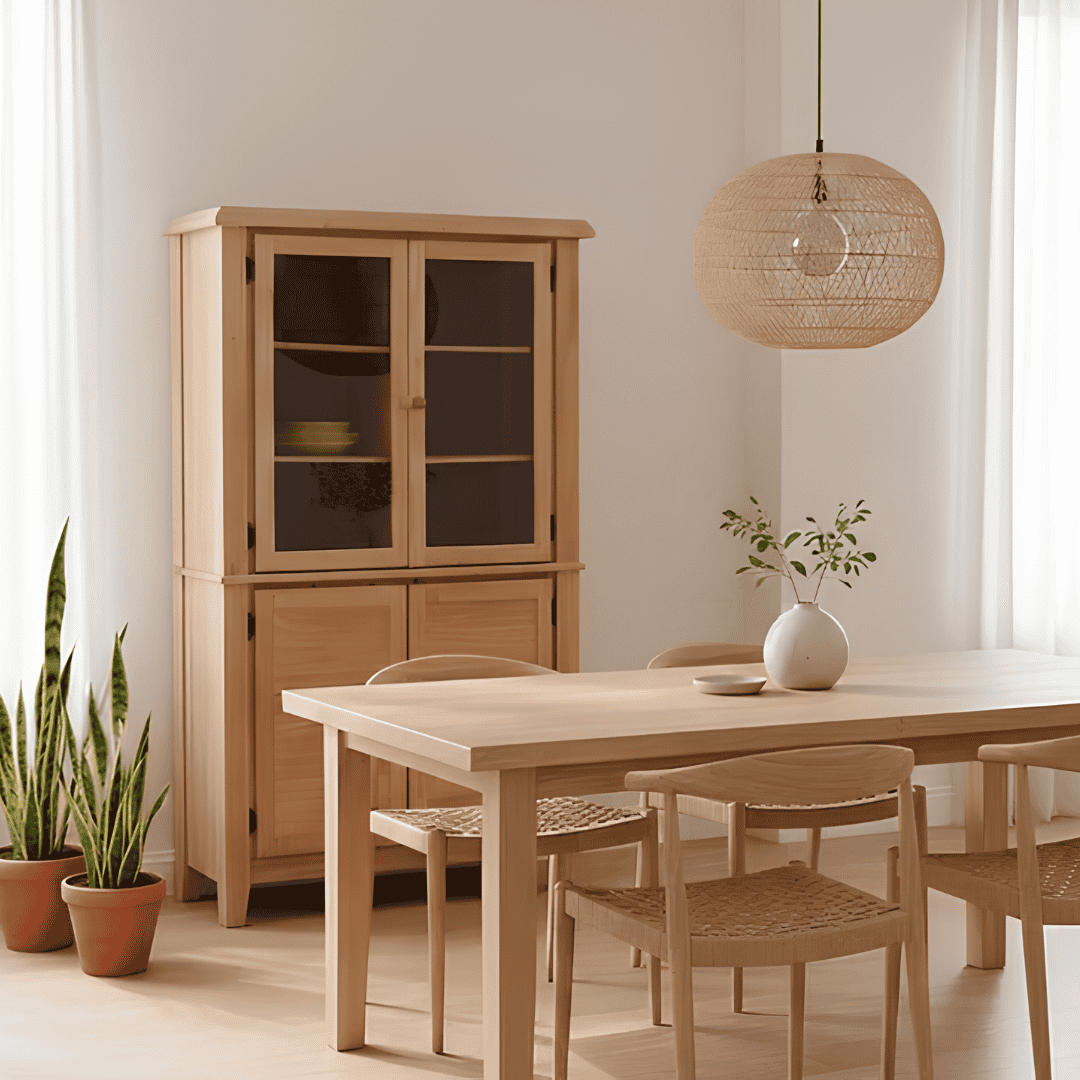
Healthier Homes is our top pick because its kitchen and dining collection combines a strong selection with carefully chosen natural materials.
The lineup includes solid wood tables, chairs, kitchen islands, storage cabinets, bar furniture, and other substantial pieces made from responsibly sourced wood, stone, metal, leather, teak, and woven materials.
Some solid oak pieces are FSC-certified, while its teak furniture includes reclaimed and SVLK-certified Indonesian teak.
The brand also uses non-toxic stains, paints, and sealants or leaves pieces uncoated, making this one of the strongest choices for shoppers trying to avoid conventional finishes and cheaply made composite furniture.
The main drawback is that exact finishes and adhesives are not clearly disclosed for every individual piece.
Product Highlights:
- Price: $80–$2,970
- Materials: Solid wood, reclaimed wood, oak, teak, rubberwood, mango wood, stone, marble, metal, leather, rattan, and woven materials
- Finish / Adhesives: Non-toxic stains, paints, and sealants or no coating; exact adhesives not clearly disclosed
- Certifications: FSC-certified solid oak pieces and SVLK-certified Indonesian teak
- Safety: No synthetic fire retardants, pesticides, toxic solvents, or harmful air pollutants; product-specific details may vary
- Functionality: Dining tables, chairs, kitchen islands, storage, shelving, and bar furniture
- Sustainability: Responsibly sourced and rescued wood, reclaimed teak, reduced packaging, direct shipping, and Sustainable Furnishings Council membership
- Made In: Sourced and handmade through domestic and international partners
- Warranty / Shipping: Free shipping on most items; most in-stock parcel items leave the warehouse within 5–10 business days
- Best For: The best overall selection of natural kitchen and dining furniture
- Downside: Product-specific adhesive and finish details are not always listed
Plank+Beam
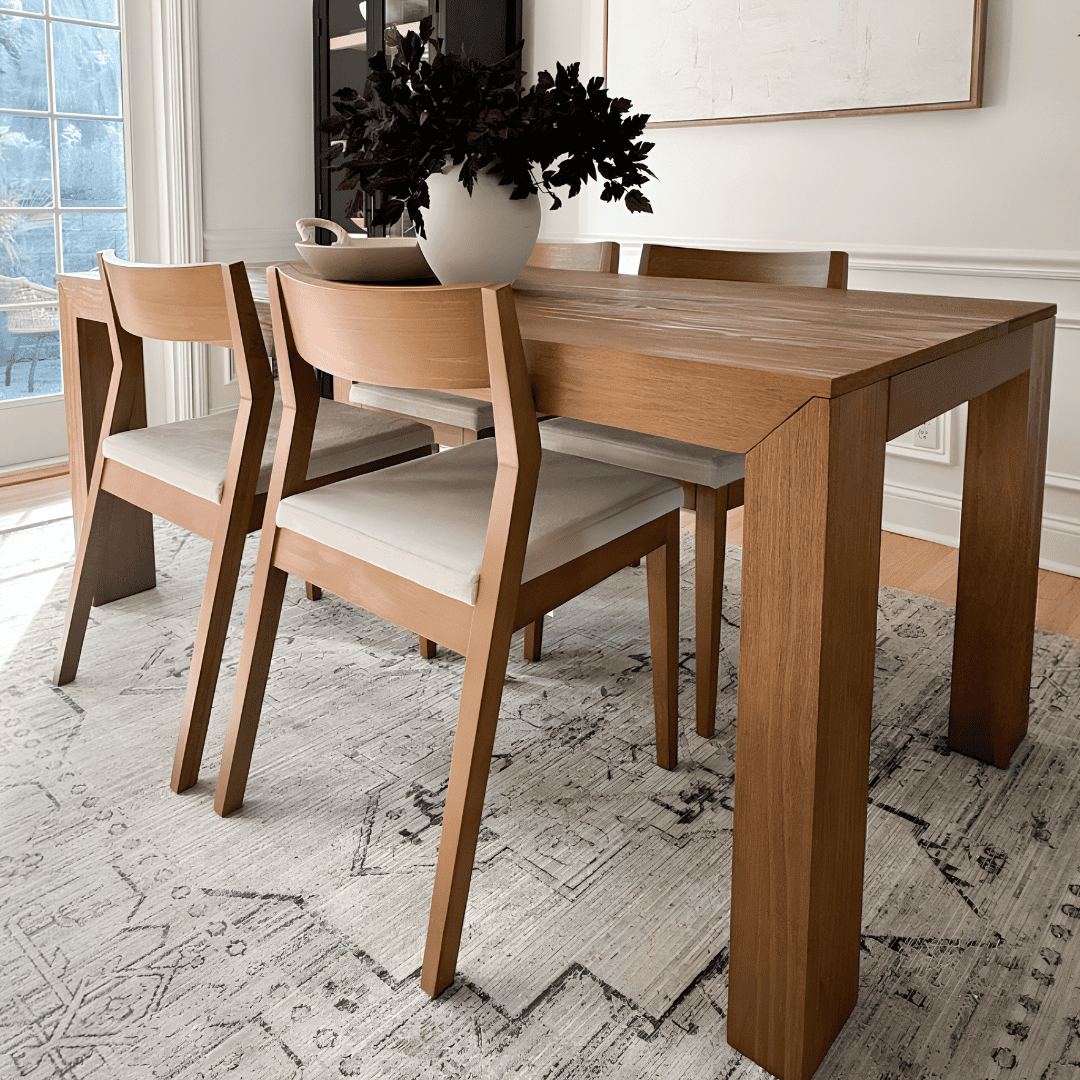
Plank+Beam is the standout budget-friendly option in this roundup, with solid wood dining tables starting at just $149.
Its tables are made from knot-free pine and use low-VOC finishes, a more affordable alternative to conventional composite furniture.
The selection includes round, rectangular, counter-height, and large dining tables, along with coordinating solid wood chairs and benches.
Plank+Beam is working toward GREENGUARD Gold certification for every product by 2027, but its dining tables are not currently certified. So far, certification is limited to select beds, dressers, and nightstands.
This is still a strong option for real wood dining furniture at some of the lowest prices in the roundup, although the exact adhesives are not disclosed.
Product Highlights:
- Price: $149–$799
- Materials: Solid knot-free pine wood
- Finish / Adhesives: Low-VOC finishes; exact adhesives not disclosed
- Certifications: Dining tables are not confirmed as GREENGUARD Gold certified; brand-wide certification is planned by 2027
- Functionality: Round, rectangular, counter-height, and large dining tables with coordinating chairs and benches
- Durability: Solid wood construction designed for daily use
- Made In: Designed in-house in Charleston, South Carolina; manufacturing location not specified
- Warranty: One-year warranty covering defects in materials or workmanship
- Best For: Affordable solid wood dining tables
- Downside: Dining tables are not yet confirmed as GREENGUARD Gold certified
Castlery
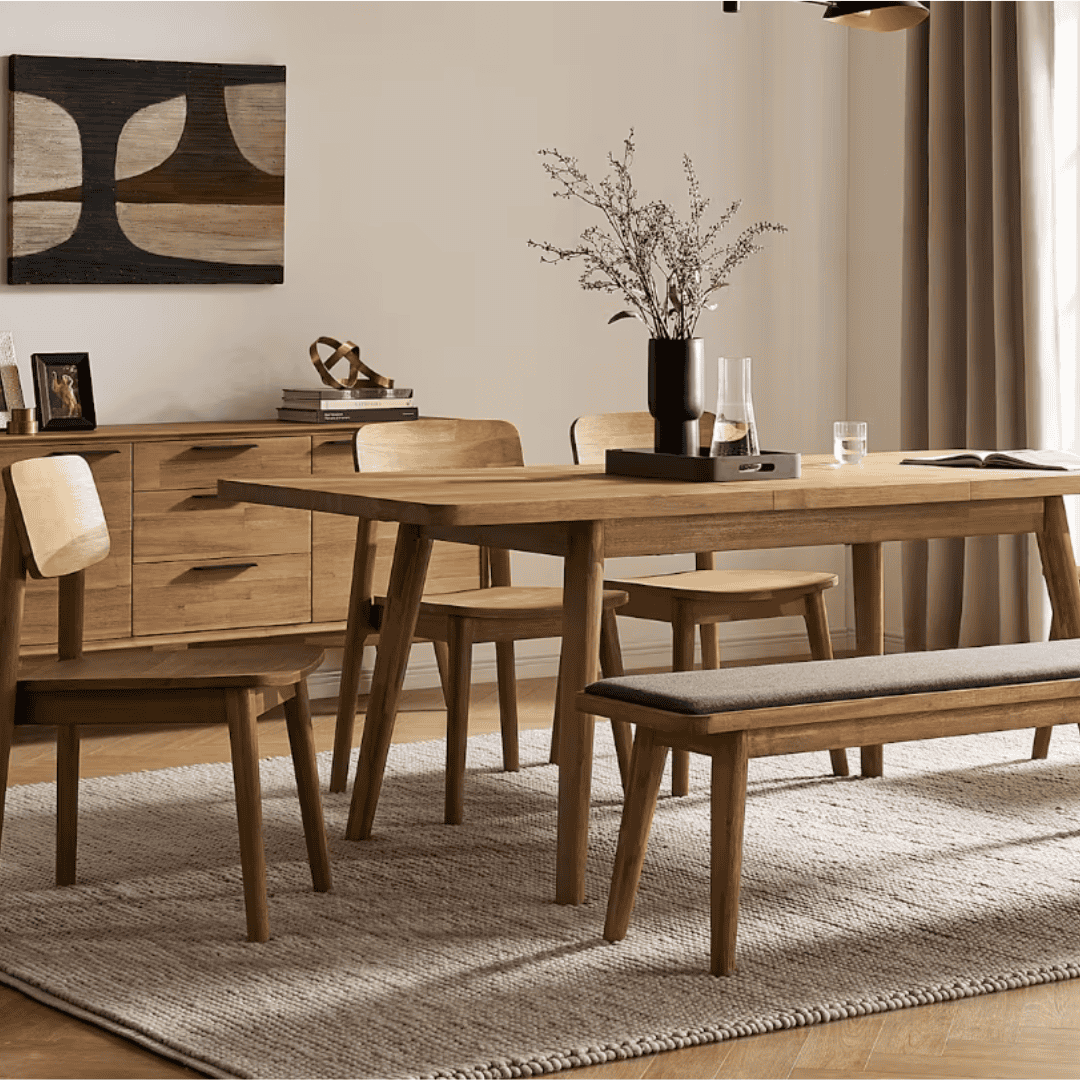
Castlery takes a more design-focused approach, with coordinated dining sets that make it easy to match tables, chairs, and benches.
The collection includes solid wood, oak veneer, performance fabric, top-grain leather, cane, metal, sintered stone, and glass options.
Castlery is a certified B Corp and says 100% of its timber comes from legal, verified sources.
Applicable upholstered pieces use CertiPUR-US-certified foam, while the brand also prioritizes durable designs, replaceable components, and reduced packaging waste.
This works well for shoppers who want a stylish, coordinated dining space, although Castlery does not clearly disclose the exact finishes or adhesives used in these pieces.
Product Highlights:
- Price: $638–$2,939
- Materials: Solid wood, oak veneer, fabric, performance fabric, top-grain leather, cane, metal, sintered stone, and glass
- Finish / Adhesives: Exact dining furniture finishes and adhesives not clearly disclosed
- Certifications: Certified B Corp; CertiPUR-US-certified foam in applicable upholstered pieces
- Safety: Fabrics, foams, and finishes are held to global safety standards; product-specific details vary
- Functionality: Dining tables, dining chairs, table-and-chair sets, and table-and-bench sets
- Sustainability: Timber from legal, verified sources, durability testing, repairable components, reduced packaging waste, and cleaner ocean freight
- Warranty / Shipping: Limited warranty varies by product; free shipping on orders over $1,399 in eligible delivery areas
- Best For: Stylish, coordinated dining furniture sets
- Downside: Some pieces use veneer, and exact glues and finishes are not disclosed
Medley
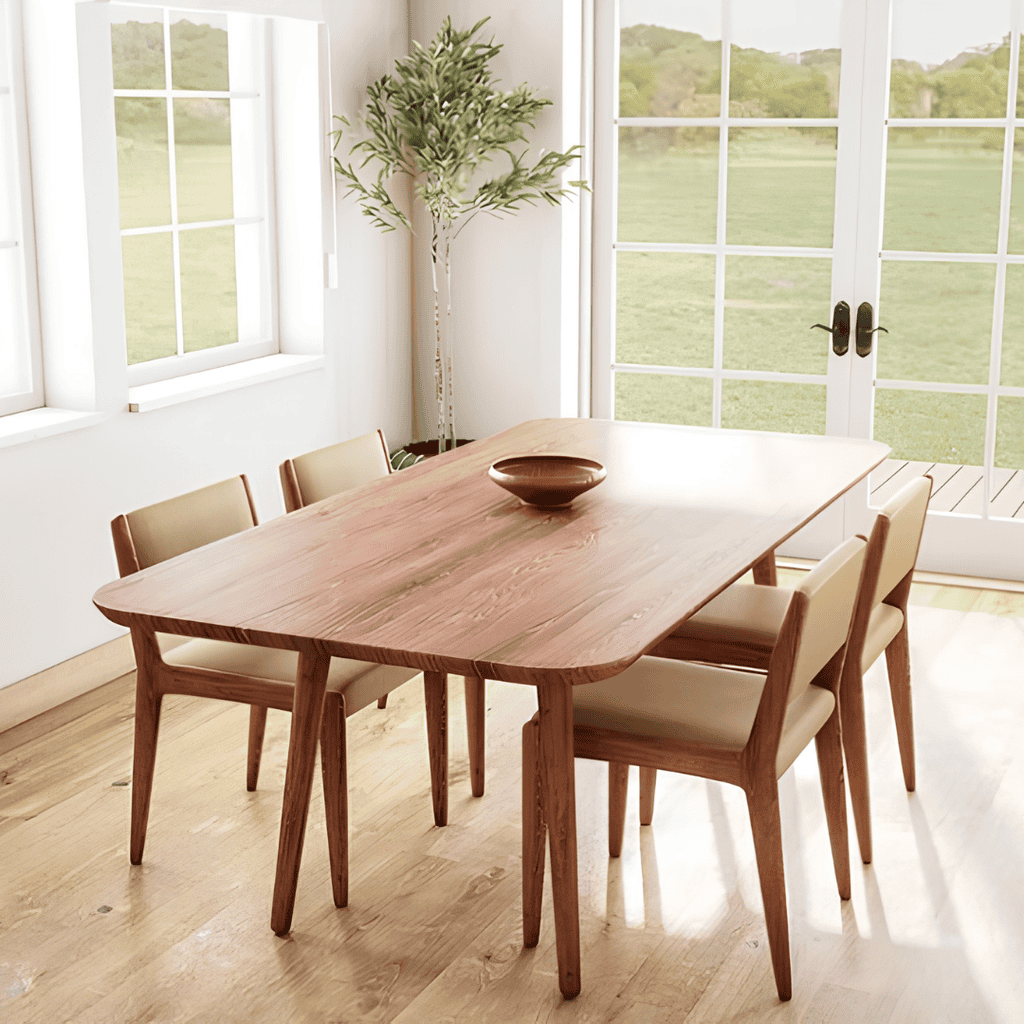
Medley stands out for combining solid wood dining furniture with much clearer material and finish information than most brands.
Its tables and chairs use domestically sourced, FSC-certified walnut, maple, or white oak, with low- or zero-VOC glues and finishes.
Tables are protected with an odorless, plant-based hardwax oil, while upholstered dining chairs can include GOLS-certified natural latex and certified fabrics or Red List Free leather.
Every piece is handcrafted to order in the U.S., and Medley plants three trees for every tree used in production.
This is an excellent option for buyers who want well-documented materials and long-lasting construction, but prices are considerably higher than the brands above.
Product Highlights:
- Price: $1,070–$7,195
- Materials: FSC-certified solid walnut, maple, and white oak; natural latex, certified fabrics, and leather
- Finish / Adhesives: Odorless plant-based hardwax oil; low- or zero-VOC glues and finishes
- Certifications: FSC, GOLS, GREENGUARD Gold, OEKO-TEX Standard 100, Declare Red List Free, and Clean Air Gold, depending on the material
- Safety: Low-VOC finishes, certified natural latex, and independently tested upholstery options
- Functionality: Dining tables, extendable tables, dining chairs, counter stools, armchairs, and credenzas
- Sustainability: Domestic FSC-certified wood and three trees planted for every tree used
- Made In: Handcrafted to order in the United States
- Warranty / Shipping: Lifetime structural and hardware warranty; 30-day in-home trial
- Best For: Premium dining furniture with strong material transparency
- Downside: Significantly more expensive than most options
Urban Natural
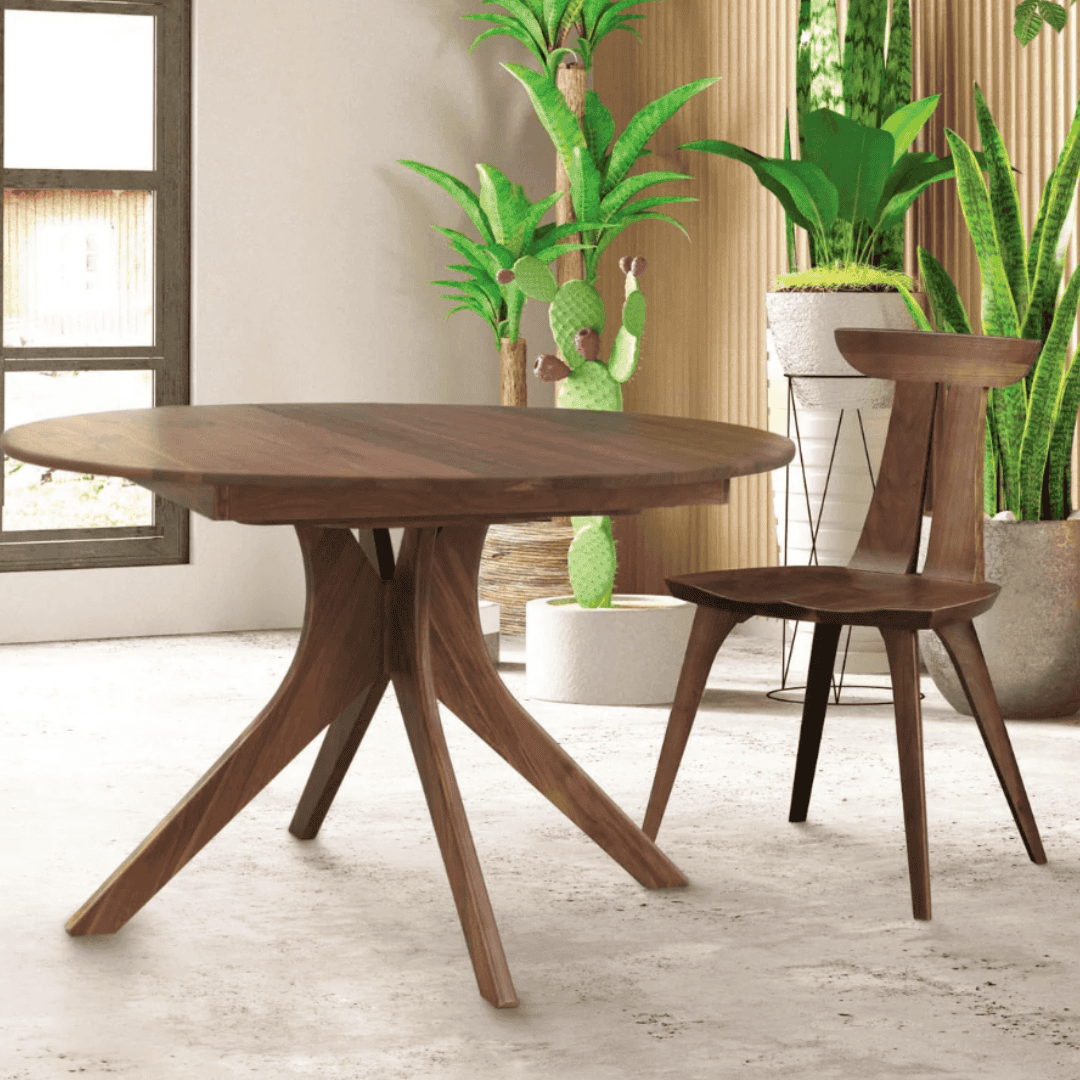
Urban Natural Home works differently from the brands above by curating dining furniture from several independent workshops.
Its large selection includes dining tables, chairs, benches, stools, buffets, cabinets, consoles, and sideboards made with natural and responsibly sourced materials.
The retailer vets every workshop partner against values such as ethical sourcing, handcrafting, organic materials, sustainability, and U.S. manufacturing.
Material standards vary by maker, with options such as GREENGUARD-certified finishes from Copeland, zero-VOC linseed oil finishes from Maple Corner Woodworks, and FSC-certified wood with water-based stains from Cisco Home.
This is a strong place to compare handcrafted, lower-toxin dining furniture, but buyers should check each product page because certifications, finishes, and materials are not consistent across the entire collection.
Product Highlights:
- Price: $379–$9,535
- Materials: Solid wood, teak, natural fabrics, metal, FSC-certified wood, organic latex, jute, hemp, cotton, and wool, depending on the workshop
- Finish / Adhesives: GREENGUARD-certified varnish, zero-VOC linseed oil, and water-based stains available from select partners; adhesives vary
- Certifications: FSC, GREENGUARD, GOTS, GOLS, PETA, MADE SAFE, and CertiPUR-US, depending on the product and workshop
- Safety: Workshop partners are vetted for safer, natural materials; product-specific details vary
- Functionality: Dining tables, chairs, benches, stools, buffets, cabinets, consoles, and sideboards
- Sustainability: Handcrafted furniture, responsibly sourced materials, recycled production waste, and Sustainable Furnishings Council membership
- Made In: More than 90% of workshop partners are based in the United States
- Best For: Comparing handcrafted dining furniture from multiple responsible makers
- Downside: Safety details and certifications vary significantly by workshop