Caraway Stainless Steel vs. Ceramic: Our Experience Using Both

Been considering a pan from Caraway but unsure whether to get stainless steel or ceramic? We have both and have spent plenty of time cooking with them—and cleaning up afterward.
We’ve used our ceramic pan for about a year and our stainless steel cookware for four to five months, making everything from eggs to chicken and ground turkey.
Here’s what we like about each, what’s been a little annoying, and what we’d want to know before buying one.
Caraway gifted us both products. This comparison is based on our experience using them at home.
The Goodness Well is reader-supported. Some links in this article may be affiliate links, but every recommendation follows our editorial standards and independent review process. Learn more about our editorial standards and review methodology.
What’s Actually Different About These Pans?
The biggest difference is the surface you’re cooking on:
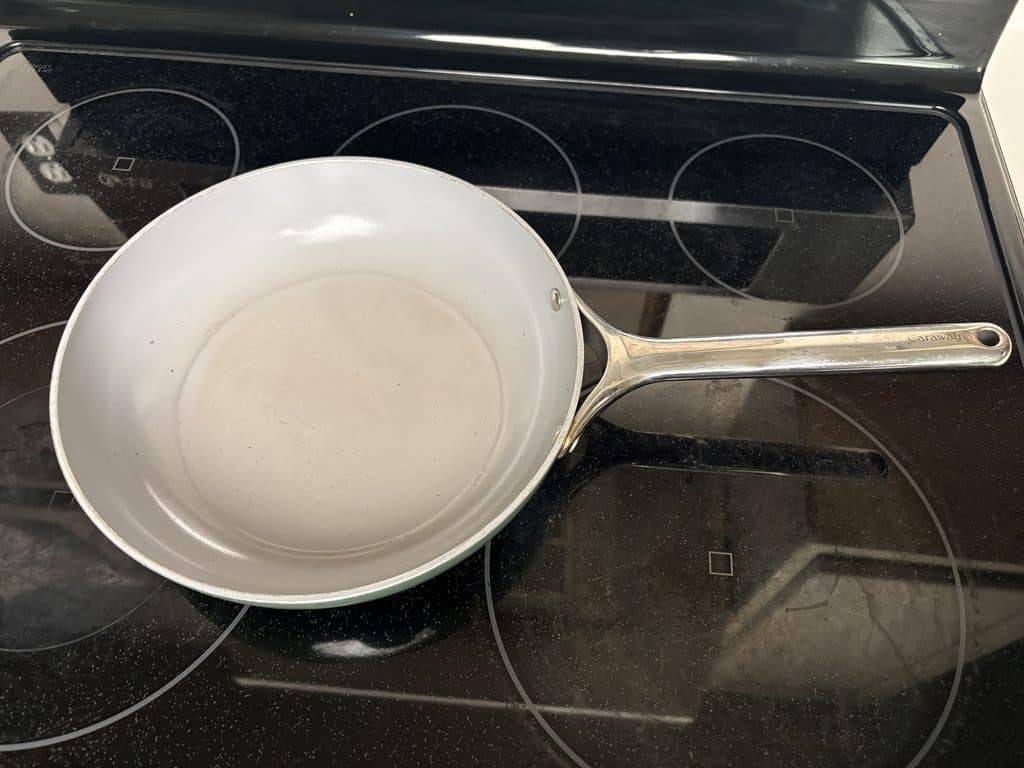
- Caraway ceramic: An aluminum pan with a ceramic nonstick coating. So when we say “ceramic,” we’re talking about the coating—the whole pan isn’t made of ceramic.
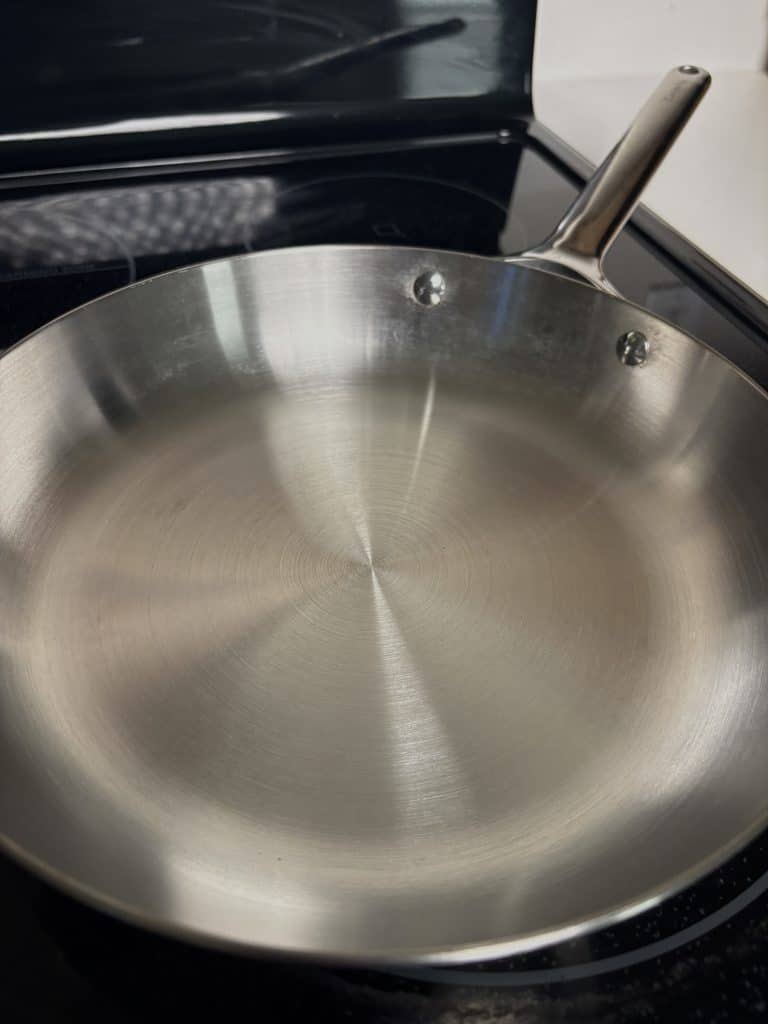
- Caraway stainless steel: Five bonded layers of metal, which is what “five-ply” means, with an uncoated stainless steel cooking surface. There’s no nonstick coating to wear away.
With ceramic, that coating helps food release. With stainless steel, getting food to release takes a little more attention to how you heat and use the pan. We’ll get into what works for us below.
Our stainless steel frying pan also feels a bit heavier, though neither feels too bulky to cook with.
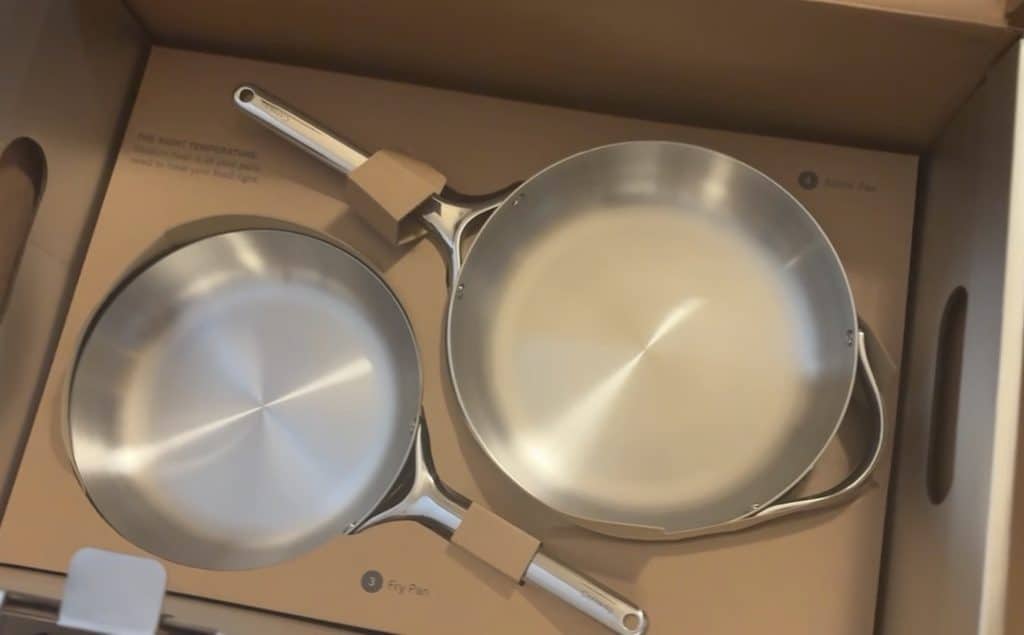
We own Caraway’s full stainless steel set, but here we’re mainly comparing its frying pan with our 10.5-inch ceramic frying pan. Those are the pieces we reach for regularly.
Does Food Cook Differently?
We cook eggs, chicken, ground turkey, and vegetables in both pans, and honestly, we haven’t noticed a difference in how the food turns out.
We don’t have certain meals we save for stainless steel or others we only cook in ceramic. Most days, we just grab whichever one is clean.
We also batch-cook and freeze meals, so these pans get used for more than a single serving here and there.
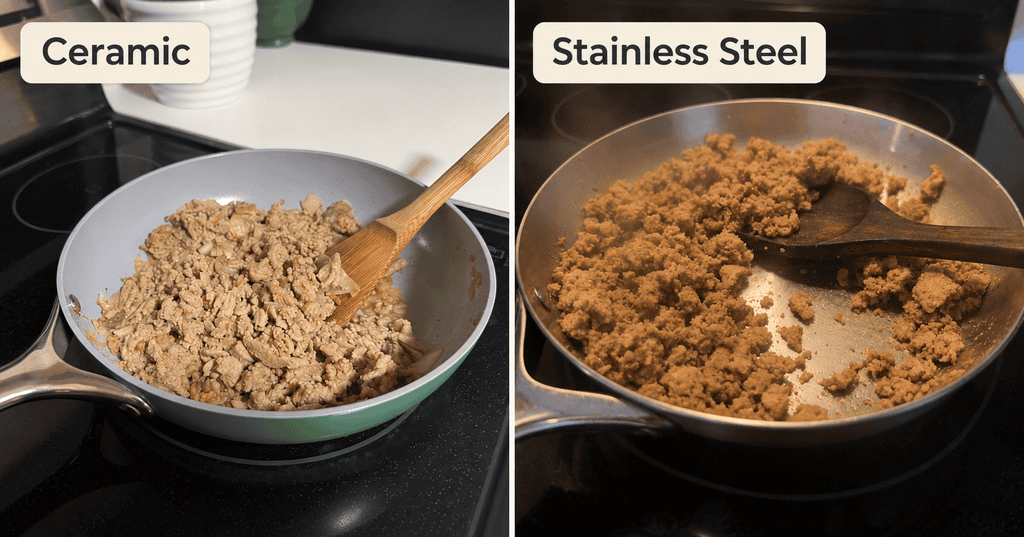
We like our ground turkey crispy and tend to leave it cooking a little longer, whichever pan we’re using.
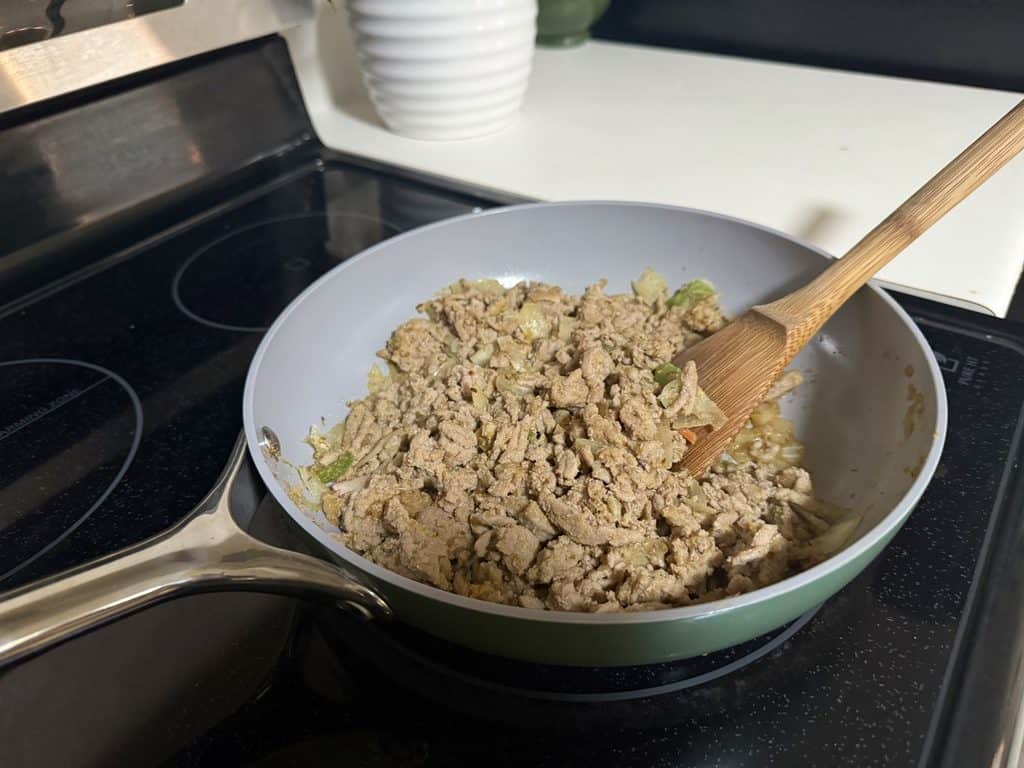
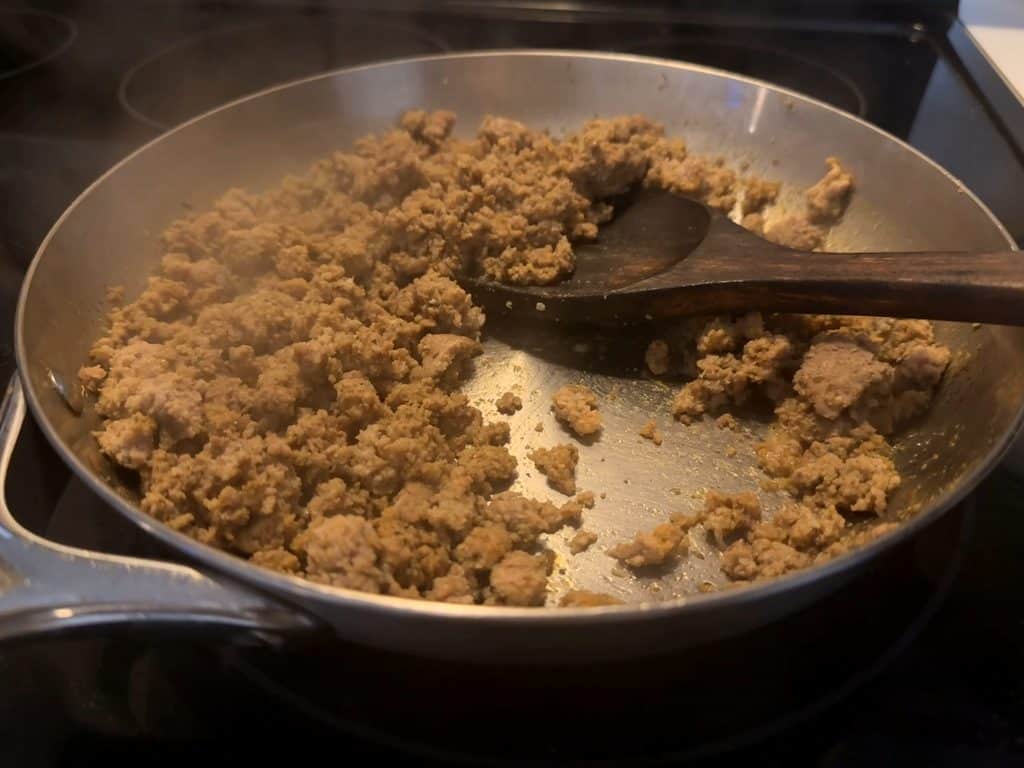
Both have been straightforward when it comes to adjusting the heat. We haven’t noticed a big difference in how quickly they heat up or cool down during our usual cooking.
Where we do notice a difference is when it’s time to stir, flip, or lift food out. The meal might turn out the same, but getting it out of the pan takes more work with stainless steel.
Ceramic Releases Food More Easily
If both pans are clean, we usually grab ceramic.
Food comes off more easily, and we don’t have to pay as much attention to preheating or getting the temperature just right. We usually use less olive oil in it, too.
Eggs sometimes need a little help from a silicone spatula in either pan. The whites can stick in a few spots, but we generally have an easier time getting them out of ceramic.
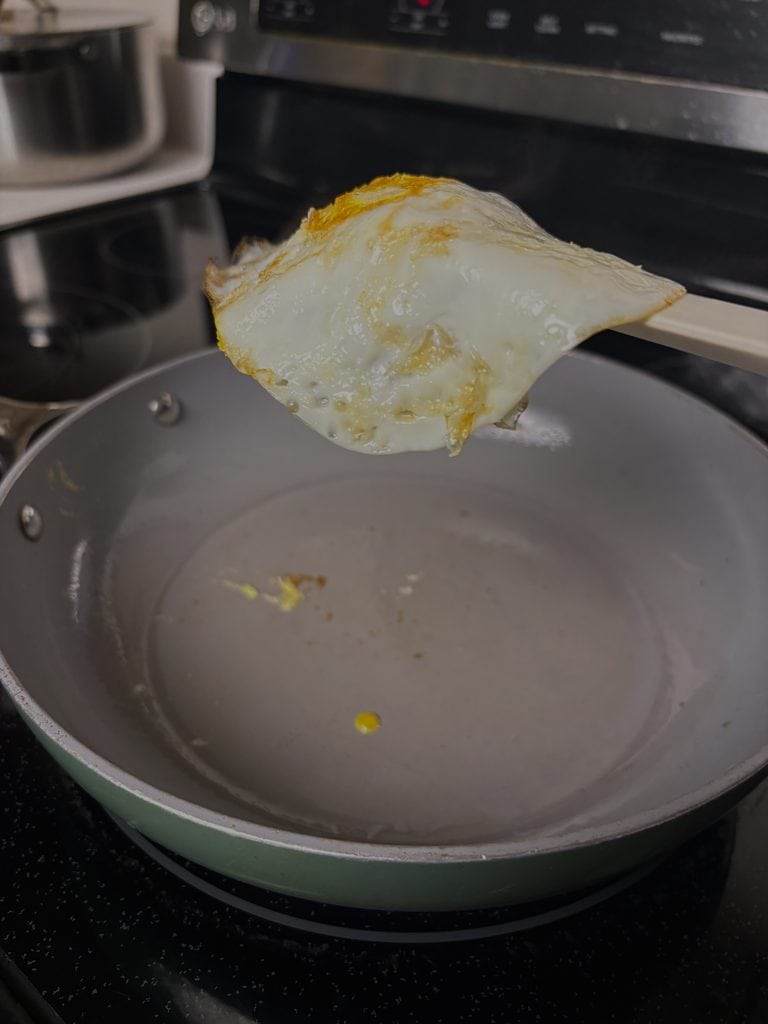
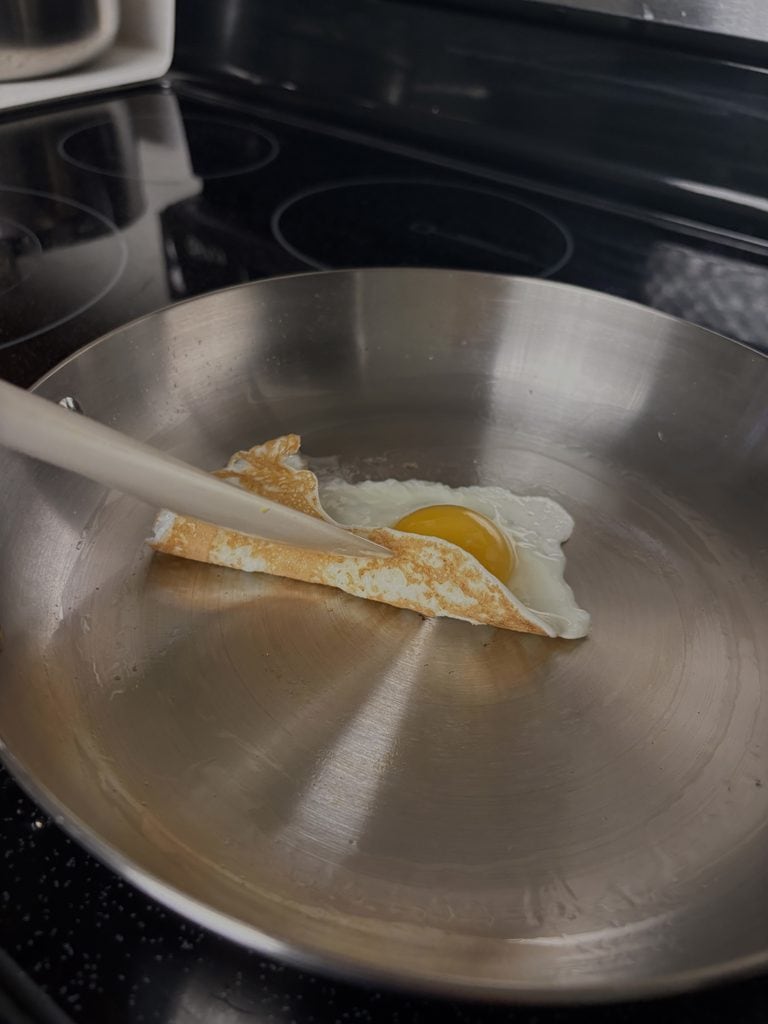
We know—the stainless steel actually looks less sticky in these pictures!
The ceramic has a few bits left behind, while the part of the stainless steel pan you can see under the egg looks pretty clean.
The stainless steel did well here. When we preheat it properly and get the heat right, we can lift an egg out without leaving much behind. But we don’t get that result every time. Ceramic usually sticks less, even when we don’t get the heat or preheating quite right.
How We Get Food to Stick Less in Stainless Steel
Taking a few minutes to warm up the stainless steel pan makes a big difference. Here’s how we usually do it:
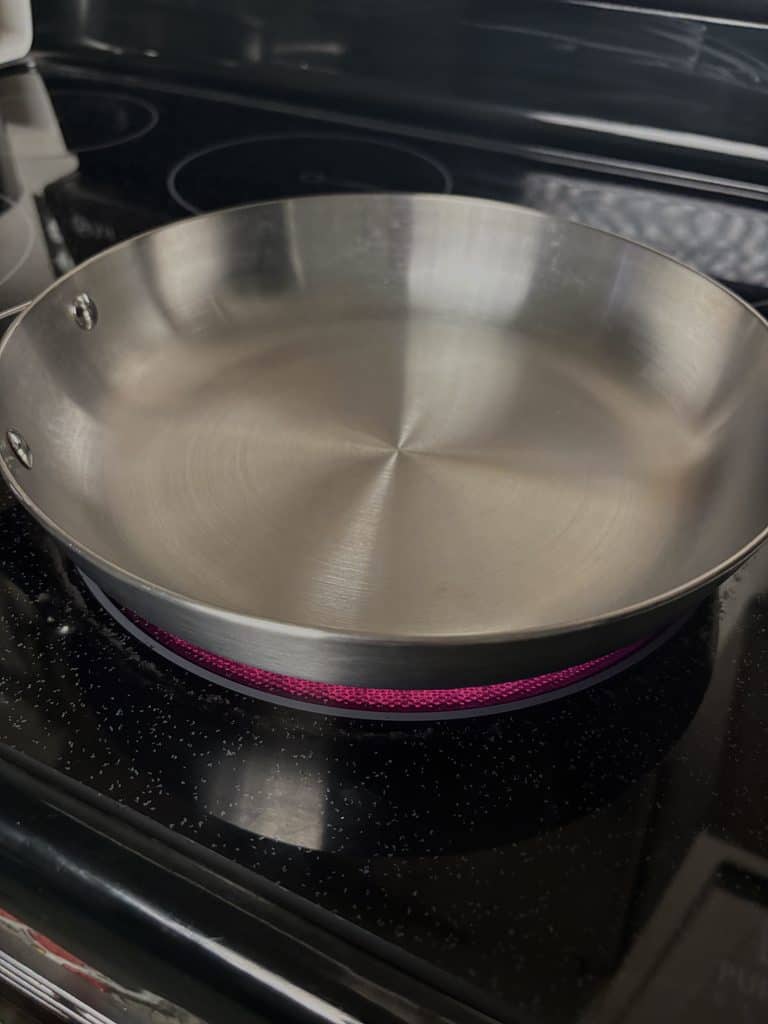
- Warm the pan over low to medium heat. We give ours about two to three minutes at around 4.5 out of 10 on our stove. Yours might heat up faster.
- Add olive oil and spread it around. We usually pour in about a tablespoon, depending on what we’re cooking.
- Keep the heat moderate. We’ve noticed more sticking when we turn it up too high.
- Let the food cook before trying to move it. With eggs, we wait for the white to set, then gently slide the spatula underneath.
Sometimes we forget and add the oil before the pan warms up. It’s still worked out fine plenty of times, so we’re not following an exact routine every time we cook.
But stainless steel does take more attention. With ceramic, we kind of just go right into cooking and it doesn’t stick almost at all.
Cleanup Is Where Ceramic Makes Life Easier
Our ceramic pan almost never needs a soak. We let it cool while we eat, then come back and wash it by hand with soap and a sponge. Most of the time, that’s enough.
If we’ve cooked something over high heat for too long, we’ll sometimes leave it soaking overnight. But that doesn’t happen nearly as often as it has with stainless steel.
We like our ground turkey crispy, so we tend to leave it cooking longer. That can leave plenty stuck to the stainless steel pan, and until recently, our usual solution was an overnight soak followed by a good scrub.
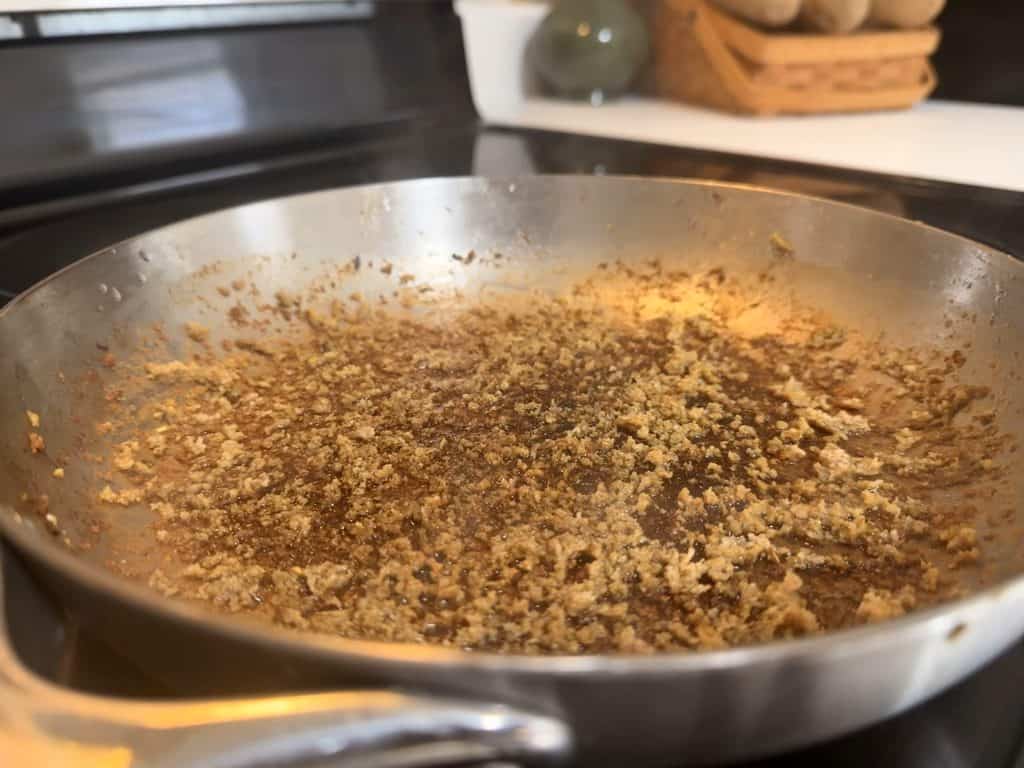
We recently tried something that’s made this much easier: adding water to the pan and boiling it on the stove for a few minutes. After that, we turn off the heat and let it sit for a bit (I usually do this while I’m washing other dishes after I’m done cooking).
The stuck-on food comes off so much more easily, sometimes before the pan has even finished cooling.
A few minutes of boiling water loosens the food that would otherwise take a lot of scrubbing. We let the pan cool enough to handle before washing it with soap and a sponge.
Ceramic still takes less work to wash after most meals. But now that we’ve tried this with stainless steel, a pan full of stuck-on turkey doesn’t automatically mean leaving it in the sink overnight.
How They’ve Held Up So Far
Our ceramic pan definitely looks more used than our stainless steel.
We’ve had it for about a year compared with four to five months for stainless steel, so it’s had more time to get knocked around in our kitchen.
And we haven’t exactly babied it.
Ceramic: Scratched, but Still Cooking Well
The ceramic pan has scratches inside, wear around the rim, a few dings on the sage exterior, and plenty of brown discoloration underneath.
We usually use a silicone spatula, but we’ve sometimes grabbed a wooden utensil or a metal spatula when the silicone one was dirty. It also shares cabinet space with our other cookware, without much protection between pieces.
Those habits probably haven’t helped.
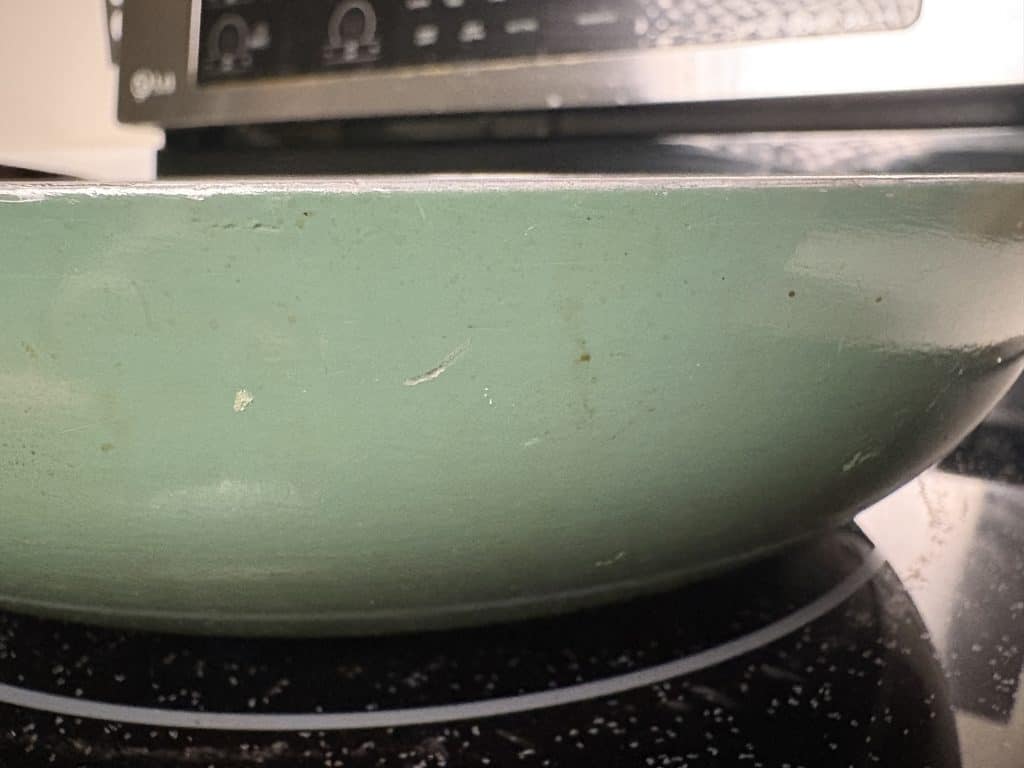
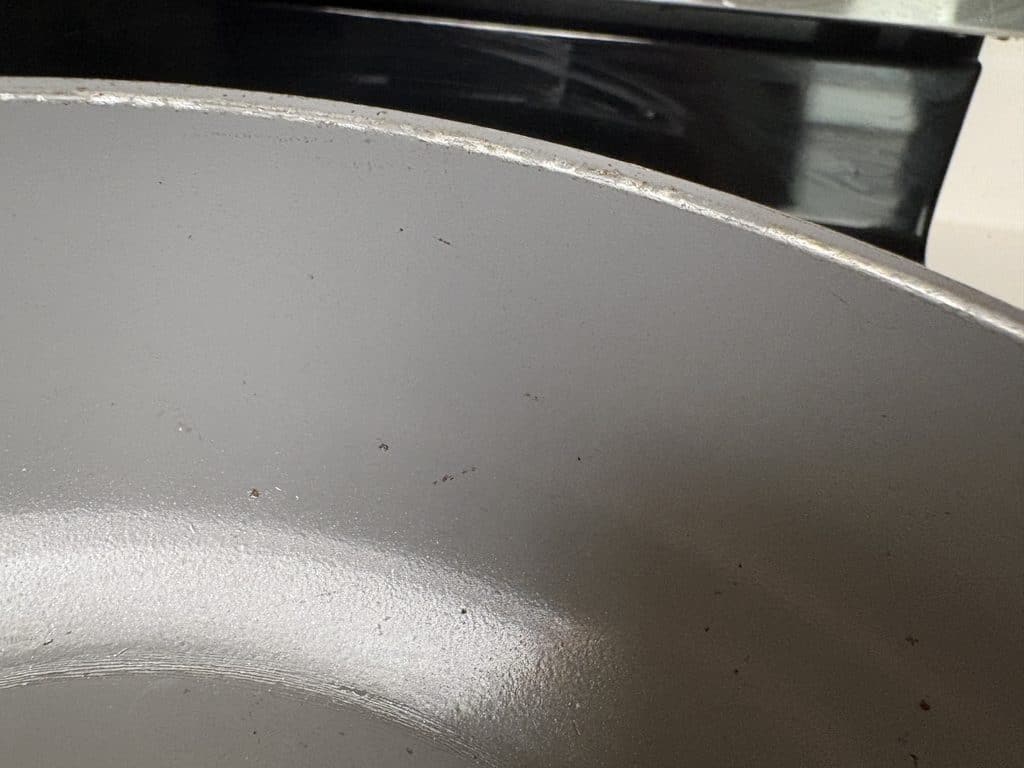
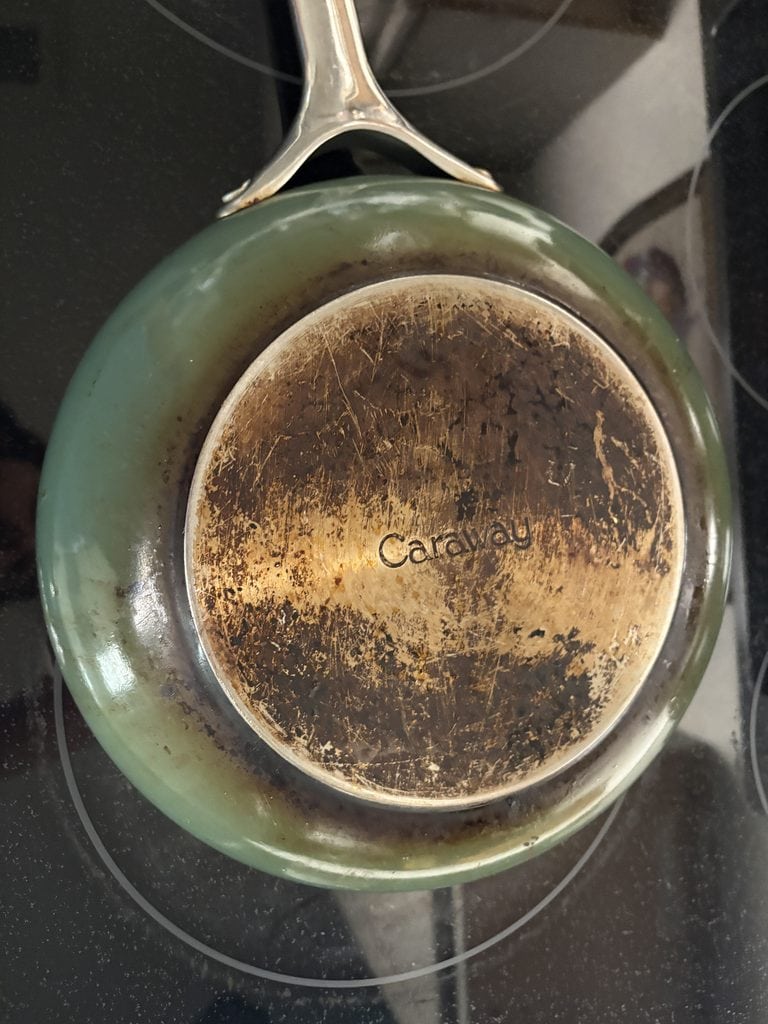
We have noticed a little more sticking than when it was brand new. If we called its nonstick performance 100% at the start, we’d put it around 90% now. That’s just our way of describing the difference, not something we’ve measured.
It’s still very nonstick overall and easier to cook with than our stainless steel pan. We just have to help food along with the spatula a little more than we used to.
We’d be more careful with utensils and storage if we were starting over. But these photos show how ours has held up with the way we actually use it.
Stainless Steel: Cloudy Marks That Clean Up Well
Our stainless steel has held up well so far. We haven’t noticed warping, wobbling, or loose handles, even with regular cooking and scrubbing.
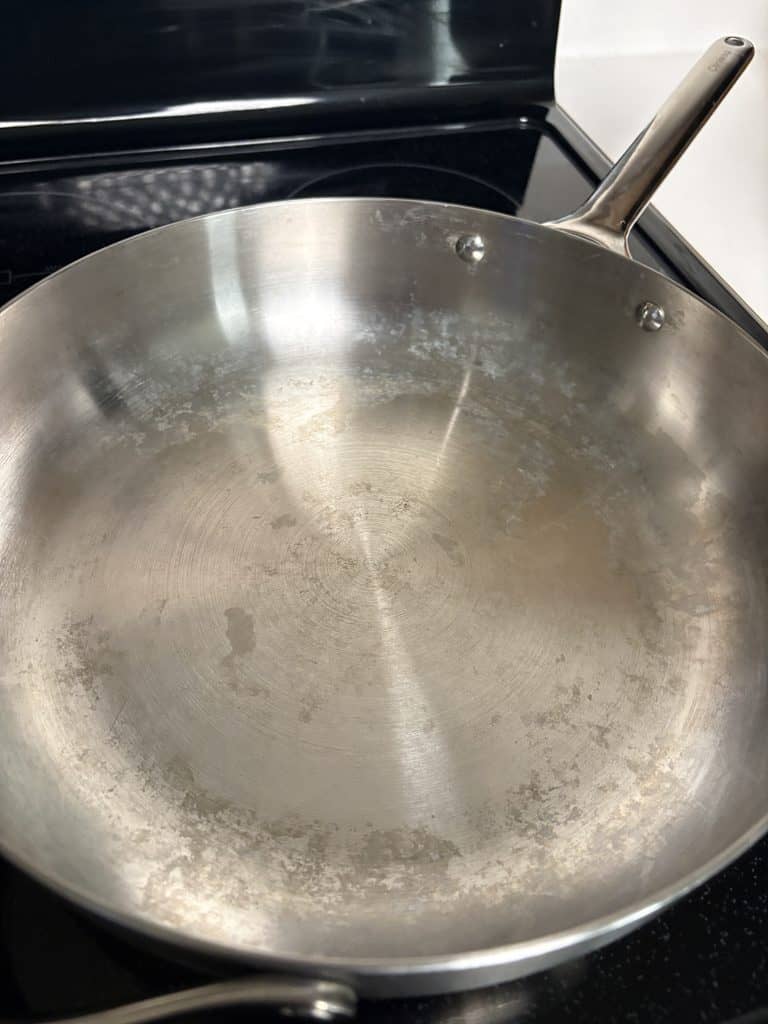
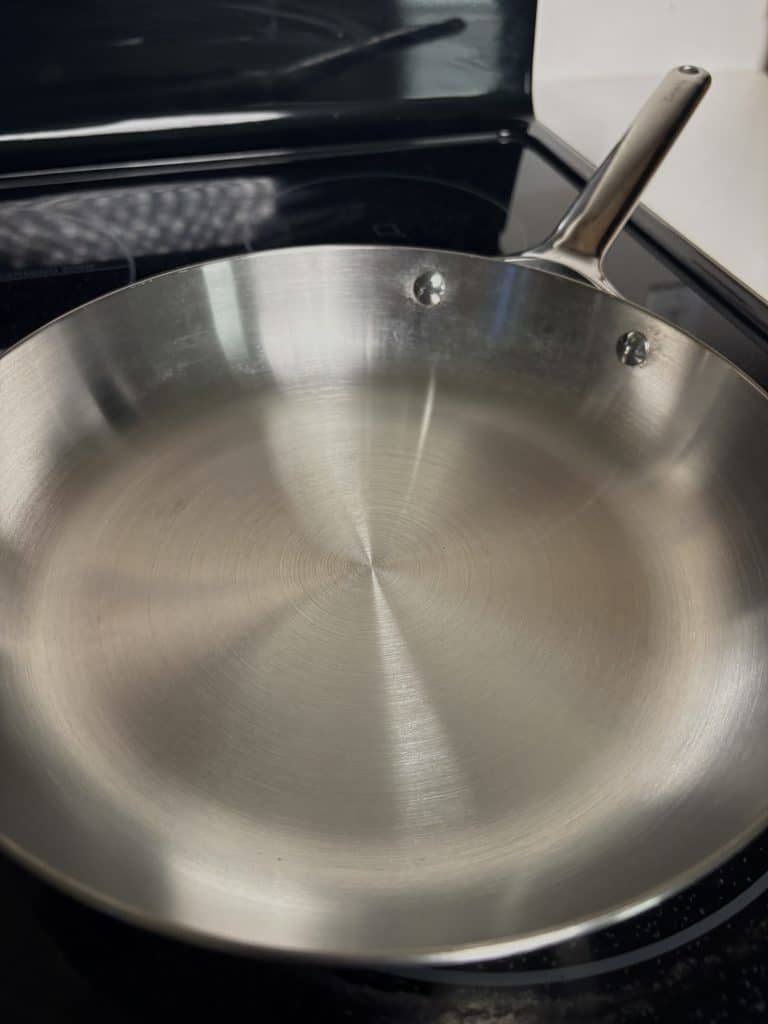
It does get cloudy marks and discoloration that don’t always come off with soap and water. What surprised us was how easily vinegar took those off.
We let regular vinegar sit in the pan for about five to ten minutes, then rinsed it out and washed it with soap and a soft sponge. It looked practically brand new afterward.
Why Stainless Steel Is Still Our Long-Term Pick
As much as we like cooking with ceramic, stainless steel is the one we’d put our money toward first. We want cookware we can keep using for years, and having no nonstick coating to wear out is a big part of that.
Our ceramic pan still releases food well after about a year. But we don’t expect that to last forever. At some point, the coating will wear enough that we’ll lose the easy cooking and cleanup we bought it for.
With stainless steel, there’s no coating to replace.
We’ve only had ours a few months, so we can’t speak from decades of use, but there’s no reason for us to believe this won’t last for a very long time.
Buying fewer replacement pans matters to us. It means less money spent over time and less cookware thrown away.
We also like that Caraway shares third-party testing information for both types of cookware. Being able to look at those reports matters to us when choosing something we cook with regularly. That’s one reason we like the brand, though it doesn’t make us choose stainless steel over ceramic.
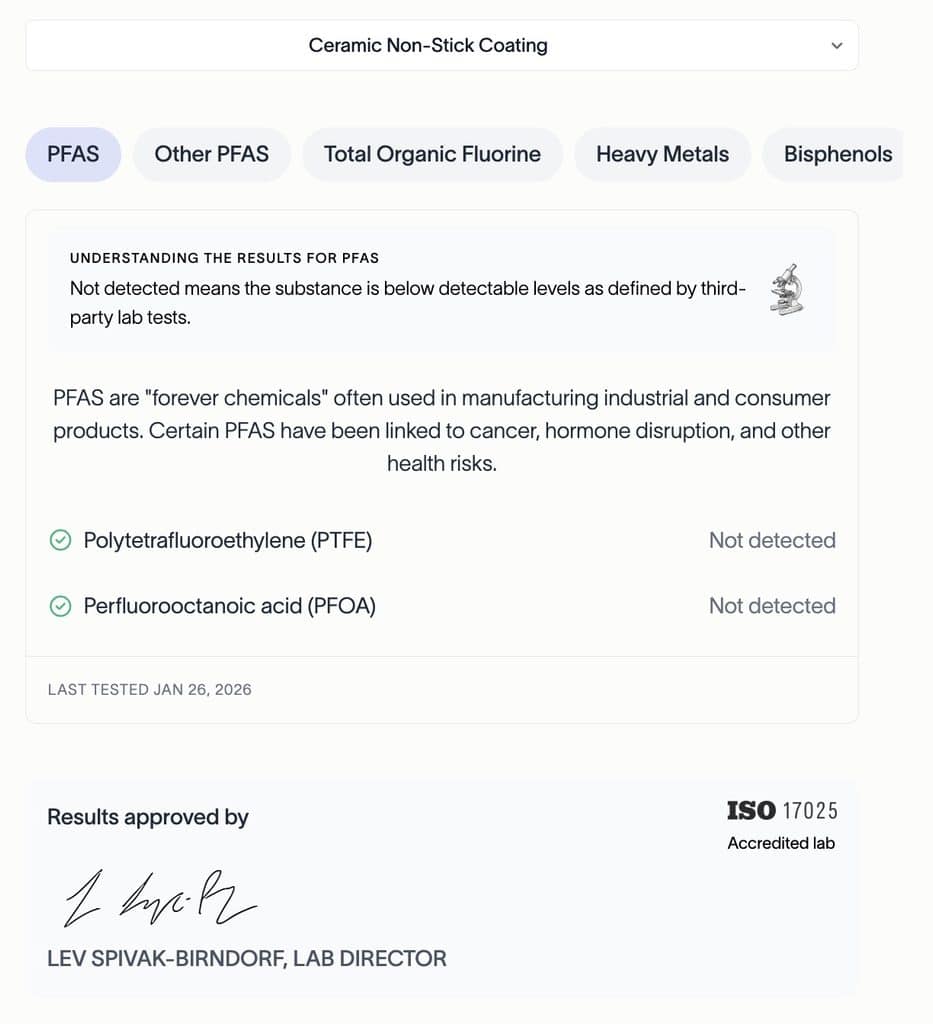
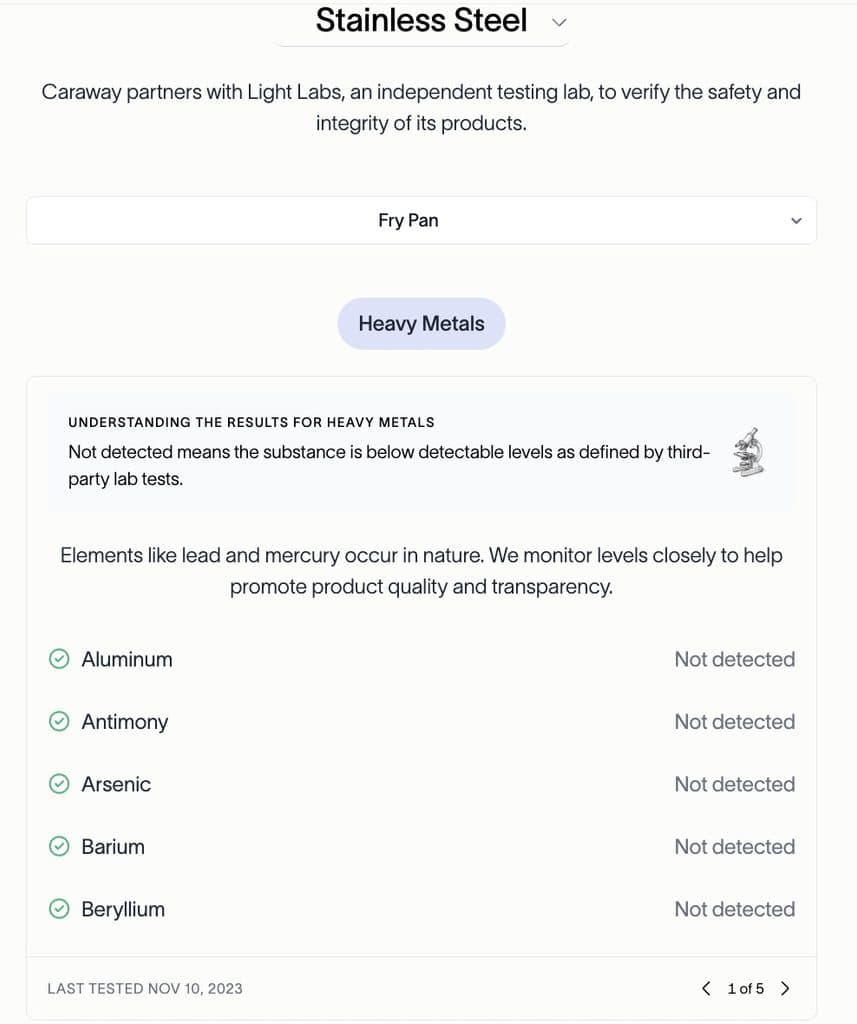
For us, that choice comes back to how long we hope to keep the pan. We’d rather learn to cook well with stainless steel than keep replacing a coating once it stops doing its job.
Which One Would We Buy?
We’d buy both again. The choice really comes down to whether you’d rather put in a little more work each time you cook or replace your pan eventually.
- Choose stainless steel if you want a pan you could keep for decades, possibly a lifetime. Getting food to stick less takes proper preheating and attention to the temperature, and cleaning can take more work. But there’s no nonstick coating to wear out, which makes it our pick for the long run.
- Choose ceramic if you want cooking and cleanup to be quicker and easier. Food releases with less effort, and we rarely need to soak ours. You just have to be comfortable knowing the coating won’t last forever and you’ll likely need a new pan down the road.
Our ceramic pan is still cooking well after about a year, so we’re not looking to replace it anytime soon. We just see it differently from our stainless steel: we’re buying ceramic for the convenience and stainless steel to keep.
For a closer look at either one, read our Caraway Stainless Steel Cookware Review or Caraway Ceramic Pan Review.