What Is PFAS in Furniture? A Simple Guide for Shoppers


You may have heard PFAS referred to in the news as “forever chemicals” because they break down very slowly and can stay in the environment for long periods of time.
In furniture, PFAS may show up in certain fabrics or protective treatments, which is one reason more people are starting to ask questions about what is actually in the products they bring into their homes.
That matters because PFAS are persistent chemicals, and the EPA notes they have been widely used in consumer products for decades.
This article will help you understand what PFAS in furniture means and how to think about it in a practical, everyday way.
PFAS in furniture are a group of man-made chemicals sometimes used in fabrics or coatings to repel stains and water.
They are typically applied to upholstery or fabric treatments, not the entire furniture piece.
Shoppers trying to reduce exposure often look for furniture labeled PFAS-free or made without stain-resistant treatments.
PFAS in Furniture

PFAS are sometimes used in furniture to make materials resist stains, water, or oil. You will not usually see them in the wood or metal frame.
They are more often linked to surface treatments and coated materials.
In furniture, PFAS may show up in:
- Upholstered fabrics
- Stain-resistant finishes
- Water-repellent treatments
- Some rugs and padded home furnishings
- Certain performance textiles
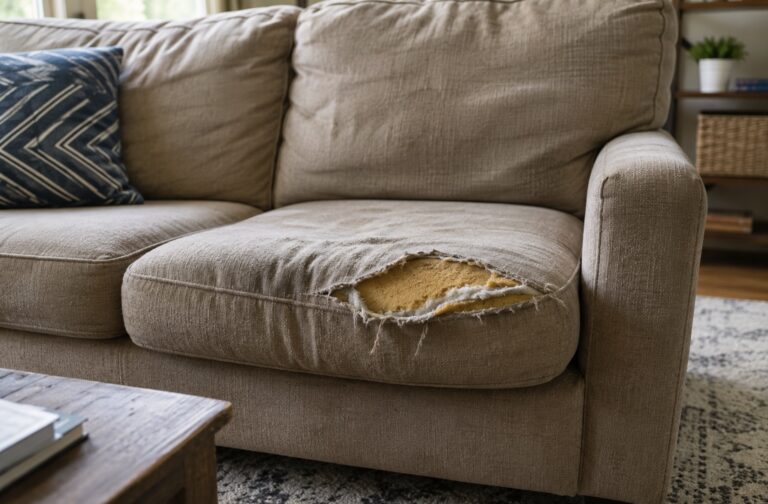
A sofa can look completely ordinary and still contain stain- or water-resistant chemical treatments that are not obvious from the label.
This is one reason a couch, chair, or ottoman can look ordinary but still include added chemical treatments. The PFAS are not always obvious from the label alone.
You may be more likely to run into PFAS in furniture marketed with terms like:
- Stain resistant
- Water repellent
- Spill resistant
- Performance fabric
- Easy clean
PFAS are often used because they help fabrics repel liquids and oils, which is why they are tied to “easy-clean” features.
These claims do not automatically mean PFAS are present. But they can be a clue to look closer.
A sofa is not “made of PFAS,” but some parts of it may be treated with them.
The question is not whether every piece of furniture is unsafe. The more basic question is whether added stain or water resistance is worth it for your home.
That is often where PFAS enters the conversation.
Why PFAS Raises Concern

PFAS have received attention because they break down very slowly in the environment.
For this reason, they are often called “forever chemicals.”
Research has linked certain PFAS exposures to potential health concerns, including:
- Possible links to some cancers
- Increased cholesterol levels
- Changes in immune response
- Effects on thyroid function
This does not mean every product containing PFAS creates the same level of risk.
Exposure depends on how much PFAS is present and how people come into contact with it.
This is also changing quickly—especially as new laws begin to limit PFAS use in furniture over time.
Avoid furniture with PFAS in bedrooms, nurseries, and living rooms as they often get more daily contact than decorative pieces in low-use spaces.
Presence, exposure, and risk are not the same thing.
- Presence means PFAS may be in the product
- Exposure means people come into contact with it over time
- Risk depends on how much exposure occurs and how often
This difference helps keep the issue practical. A treated couch is not an emergency. But it can still be one small part of a larger exposure picture inside the home.
Furniture can matter more in rooms where people spend a lot of time, such as:
- Living rooms
- Bedrooms
- Nurseries
- Playrooms
- Home offices
It can also matter more for items used every day, like sofas or upholstered dining chairs.
What to Watch Out For

Shopping for lower-tox furniture often starts with the product description. The most useful clues are usually in the finish or fabric claims.
Watch for terms like:
- Stain resistant
- Water repellent
- Spill resistant
- Performance fabric
- Easy clean
- Soil resistant
When you see a performance claim, check the product page or FAQ for clear wording like “made without intentionally added PFAS.”
These phrases do not confirm PFAS on their own. But they can signal added treatments worth checking.
Clear language is better than vague language. “Made without intentionally added PFAS” is more helpful than broad claims like “eco-friendly” or “safer choice.”
A simple comparison helps here:
- Clear claim: made without intentionally added PFAS
- Vague claim: non-toxic, green, clean, conscious
The first tells you something specific. The second may not.
You can also look for extra detail on:
- Upholstery materials
- Fabric treatments
- Care instructions
- Product FAQs
- Brand chemical policies
Natural materials can still have added finishes. A couch with cotton or linen upholstery may still be treated for stain resistance.
Practical Steps for Your Home

You do not need to replace every piece of furniture at once. A better approach is to focus on the items your family uses most.
Furniture that gets daily contact usually matters more than decorative pieces that sit mostly untouched.
What to Do With Current Furniture
If you already own furniture that may contain stain-resistant treatments, replacement is usually not necessary.
A more practical approach is to make gradual improvements over time.
Start with the furniture your family uses every day instead of trying to replace everything at once.
Start by focusing on the pieces your household interacts with the most, such as:
- Sofas
- Upholstered bed frames
- Dining chairs
- Playroom seating
- Nursery gliders
If your current furniture is in good condition, keeping it and making better choices with future purchases is often the most practical approach.
Small improvements over time still add up.
A product used every day has more chances to contribute to your indoor environment than one that sits mostly untouched.
Buying New Furniture

When shopping for new furniture, transparency from the manufacturer is one of the most helpful signals.
At The Goodness Well, we generally recommend avoiding large furniture manufacturers that are not transparent about their materials or chemical treatments.
Brands that clearly disclose their materials or use third-party certifications provide more insight into what is actually in the product.
When evaluating furniture, look for certifications such as:
- GREENGUARD Gold — tests products for low chemical emissions indoors
- OEKO-TEX® STANDARD 100 — verifies textiles are tested for harmful substances
- GOTS (Global Organic Textile Standard) — certifies organic fibers and restricted chemical use
- MADE SAFE® — screens products for ingredients linked to human health concerns
- FSC® (Forest Stewardship Council) — ensures wood materials come from responsibly managed forests
When companies clearly state that their furniture is made without intentionally added PFAS or provide verified testing, it becomes much easier for shoppers to make informed decisions.
A practical goal is progress, not perfection. If you are buying new furniture, look for clear PFAS-free language first.
If you already own treated furniture, you can still make thoughtful choices going forward.
REAL-LIFE EXAMPLE

A family is comparing two upholstered sofas at the same price. One is described as “performance fabric” with no chemical details. The other says it is made without intentionally added PFAS, so they choose the second one for clearer information.
Helpful ways to keep the process manageable:
- Prioritize new purchases instead of replacing everything at once
- Choose brands with clear material disclosures
- Look for certifications such as GREENGUARD Gold when available
- Focus on rooms where your family spends the most time
- Skip extra stain treatments unless you truly need them
Tradeoffs are real. Spill-resistant fabric may feel convenient for homes with kids or pets. But a simpler fabric without added treatments may be a better fit if reducing chemical inputs is your goal.
Small changes still count. One better furniture choice in a living room or bedroom can be more useful than chasing perfect materials in low-use spaces.
Conclusion
PFAS in furniture usually comes down to added stain- or water-resistant treatments, not the whole piece itself.
That does not mean every treated item is a major problem, but it can be one part of the bigger exposure picture at home.
The good news is that you do not need to handle it perfectly. Clear product information and a few thoughtful choices can go a long way.