Do Mattresses Off Gas? What to Know About VOCs and New Mattress Smell

A new mattress can be exciting, but that “new bed” smell often raises a fair question: is it releasing chemicals into your bedroom air?
Many mattresses can off-gas, meaning some materials release gases such as volatile organic compounds, or VOCs, after manufacturing and unboxing.
This matters because VOCs are an indoor air concern, and the EPA explains that some VOCs may have short- and long-term health effects.
The good news is that not all mattresses off-gas the same way, and understanding materials, certifications, and ventilation can help you choose a lower-emission option.
Yes, many mattresses off-gas, especially when they are new.
This means materials inside the mattress release gases into the air, often from synthetic foams, adhesives, or treatments.
It does not automatically mean a mattress is unsafe, but shoppers should check materials, certifications, and ventilation needs before buying.
Why Mattresses Off-Gas

Mattresses off-gas because some materials release gases into the air after they are made. These gases can include volatile organic compounds, or VOCs.
This is most noticeable with a new mattress. A mattress may be compressed, wrapped in plastic, boxed, and stored before it reaches your home.
Once you open it, trapped odors and gases can escape into the room.
Common sources include:
- Synthetic foams
- Adhesives between mattress layers
- Some flame barriers
- Certain fabric finishes or treatments
- Plastic packaging that holds odors in place
VOCs are discussed in indoor air research because people spend many hours breathing air inside their homes.
Smell is not a perfect measure of VOCs. A mattress can smell strong because of odor-producing compounds, but that does not always mean it has the highest emissions.
Key Takeaway: Mattress odor and VOC emissions are related, but they are not the same thing.
A mattress can also have little odor and still release some VOCs.
The main takeaway is simple: off-gassing is common with many new mattresses, but the amount depends on the materials, construction, and testing behind the product.
Materials Most Likely to Off-Gas
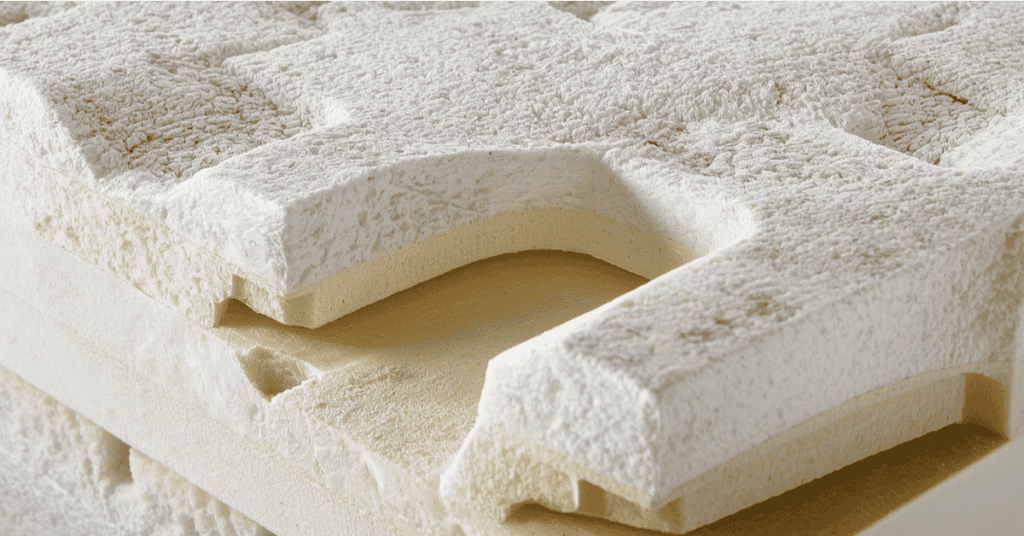
Some mattress materials release more odor and VOCs than others. This depends on the materials used, how the mattress is built, and whether it has been tested for low emissions.
Synthetic foams
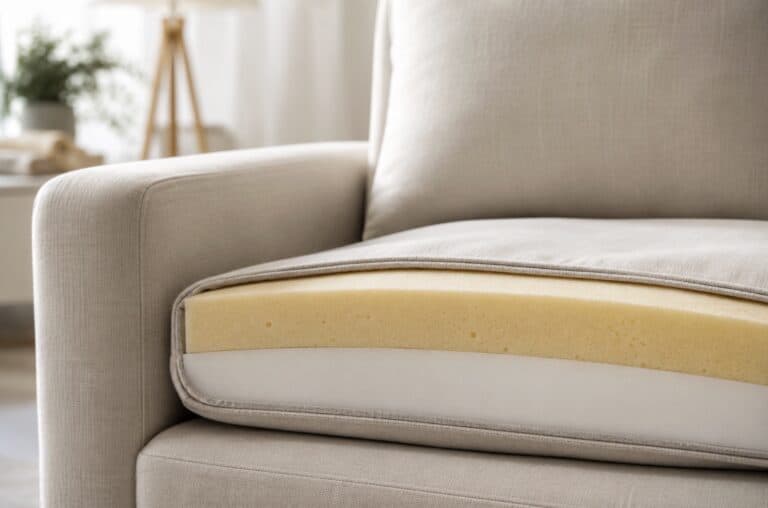
Memory foam and polyurethane foam are the most common materials linked with new mattress smell.
A PubMed Central review on polyurethane foam emissions explains that fresh flexible polyurethane foams can emit VOCs, and those emissions usually decline over time.
Synthetic foam mattresses are more likely to off-gas when they are:
- Shipped compressed in a box
- Made with several foam layers
- Used in a warm, poorly ventilated room
- Not certified for low VOC emissions
Adhesives and treatments
Many mattresses use adhesives to hold layers together. This is common in foam mattresses and hybrid mattresses with several comfort layers.
Adhesives may be used between:
- Foam layers
- Fabric and foam
- Foam and coil systems
- Pillow-top sections
Some mattresses may also use fabric finishes, flame barriers, or stain-resistant treatments. These vary widely by brand.
A mattress with vague language like “performance fabric” or “treated cover” should come with clear details about what was used.
If a brand uses vague fabric language, look for a clear material list or ask what treatment was used.
Natural materials tend to have less off-gassing potential when they use fewer synthetic layers and fewer adhesives.
Examples include certified organic latex, wool, and cotton. But even natural mattresses can have some odor from rubber, wool, packaging, or storage.
When Exposure Matters Most
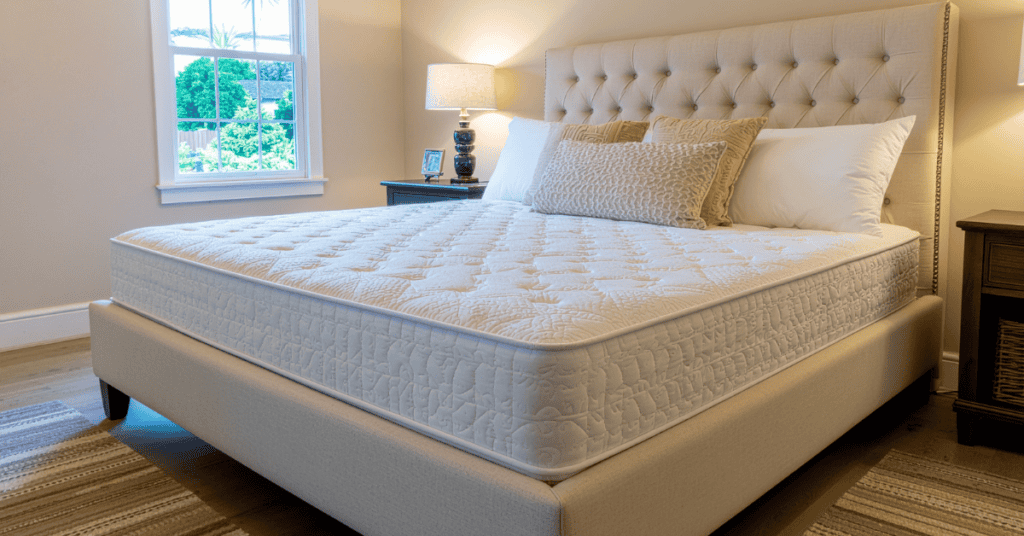
Exposure usually matters most in the first few days after unboxing. This is when the mattress is new, sealed odors are released, and the room may smell strongest.
The amount you breathe indoors can increase when:
- The bedroom is small
- Windows stay closed
- Airflow is poor
- The room is warm
- The mattress is used the same night it is opened
Open the mattress in the morning if possible, so it has several hours to air out before bedtime.
Heat can make some materials release gases faster. Poor airflow keeps those gases in the room longer. This is why airing out a mattress works better in a room with open windows or a fan.
Some people may notice symptoms sooner than others. This includes:
- Babies and young children
- Pregnant people
- People with asthma or allergies
- People with migraines
- People with chemical sensitivities
- People with breathing conditions
VOCs are studied because indoor exposure can affect breathing comfort.
A PubMed Central meta-analysis on indoor VOC exposure found that indoor VOC exposure was a moderate risk factor for asthma-related symptoms, including wheezing and throat irritation.
For most healthy adults, a short airing-out period and good ventilation can reduce exposure.
For a baby’s room or a sensitive sleeper, it is better to choose a certified low-emission mattress and let it air out before use.
Key Takeaway: Ventilation and timing matter most during the first few days after unboxing.
Certifications Worth Checking

Certifications help you look past words like “clean,” “eco,” or “non-toxic.” They tell you what was tested and which part of the mattress the label covers.
At The Goodness Well, we look for certifications that match the material, not just labels that sound healthy.
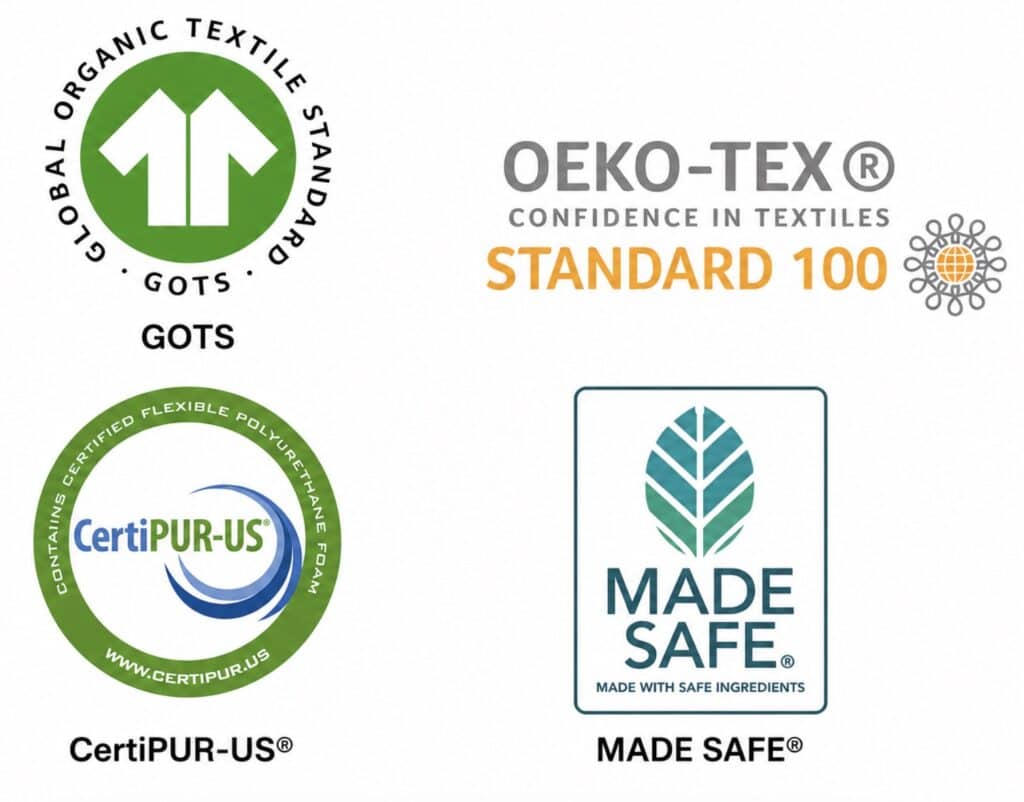
Useful mattress certifications include:
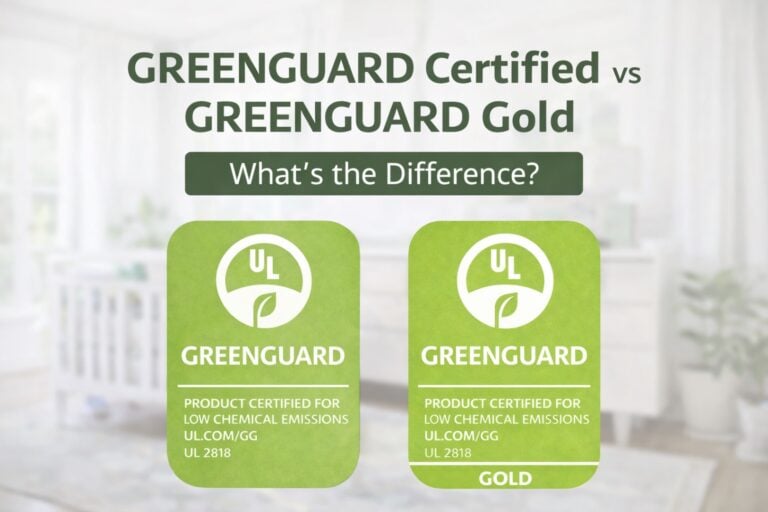
- GREENGUARD Gold: This checks a finished product for low chemical emissions. UL says GREENGUARD Gold sets stricter VOC limits for sensitive indoor spaces.
- GOTS: This applies to organic textiles, such as cotton or wool. It helps verify organic fiber content and processing standards.
- GOLS: This applies to organic latex. It is most useful when you are shopping for a latex mattress or latex comfort layer.
- OEKO-TEX Standard 100: This checks textile materials for certain harmful substances. It is helpful for covers, fabrics, and other textile parts.
- CertiPUR-US: This applies to flexible polyurethane foam. It sets standards for foam content, emissions, and durability.
These labels do not all mean the same thing. A foam mattress with CertiPUR-US certified foam is not the same as a full mattress with GREENGUARD Gold certification.
A mattress can have one certified layer without the entire mattress being certified.
A mattress with organic cotton is also not automatically a fully organic mattress.
When comparing products, check:
- Whether the certification applies to the whole mattress or one layer
- Whether the brand shows a current certificate
- Whether the certificate matches the exact product
- Whether the mattress uses certified foam, latex, wool, or cotton
- Whether adhesives, covers, and flame barriers are clearly described
For off-gassing, GREENGUARD Gold is one of the most direct labels to check because it focuses on emissions from the product.
How to Reduce Off-Gassing

You cannot stop a mattress from releasing gases after it is made. But you can lower how much you breathe in your bedroom.
Start with airflow. The EPA explains that too little outdoor air can allow indoor pollutants to build up, so ventilation matters when bringing new products into the home.
Helpful steps include:
- Unbox the mattress in a well-ventilated room.
- Open windows if outdoor air quality is good.
- Use a fan to move air toward a window.
- Let the mattress air out before sleeping on it.
- Keep sheets and bedding off during the airing-out period.
- Wash removable covers if the care label allows it.
You can also speed up off-gassing so VOCs are released more quickly during the initial airing-out period.
If the smell is strong, give the mattress more time before using it. Some people air out a new mattress for 24 to 72 hours.
A longer airing period may help if the mattress is for a child, nursery, or sensitive sleeper.
When shopping, choose materials and construction that match your comfort level. Certified organic latex, wool, and cotton usually use fewer synthetic foam layers.
Mattresses with simpler construction may also need fewer adhesives.
For foam mattresses, look for low-emission testing. For natural mattresses, check whether the latex, wool, or cotton is certified.
A product page should clearly explain the mattress layers, cover, flame barrier, and certifications.
Avoid relying on smell alone. A mattress that smells strong may improve after airing out. A mattress with little odor should still have clear material details and current certifications.
Conclusion
Mattress off-gassing is common, especially with new mattresses that use synthetic foams, adhesives, or added treatments.
The amount can vary widely, and smell alone does not tell you everything about emissions.
The best approach is to choose well-labeled, certified materials when possible and give any new mattress time to air out in a ventilated room.
With a little planning, you can make a more informed and comfortable choice for your home.